“Wicked Conclusions” (2016), a twelve-minute and forty-four second short picture from resident Pennsylvanian and co-writer-director Phillip G. Carroll, Jr., is a tense, taunt and thoroughly satisfying horror entry. It tells the tale of Amber (in an always captivating and credible turn from Chloe Hendrickson) and Henry (in a masterful portrayal from Boy-Yo Korodan that treads effortlessly on the line of child-like naivete and unsettling menace). They are imprisoned in the basement of their captor, Ben (in a well-rounded depiction from Erik Searle that conveys the conflicts of his imagined persona in a way that colors him brilliantly as both possible protagonist and antagonist for the bulk of the piece). Such instantaneously garners our attention by opening with a disarmingly light set-up. This includes an unseen individual putting up a sign for a lost dog. During this time, a surprisingly upbeat number pours from the soundtrack. The next scene carries on this impression. Such transpires in a bit which involves Ben making pancakes while casually conversing with an unseen entity. This arrangement is interesting because of the immersive and magnificent angle in which it is shot. It is one which only shows the side of Ben’s face and focuses in mainly on his mouth. Because of this, Carroll immediately defies our expectations. Yet, when Amber and Henry are introduced in the next scene, the invention becomes increasingly engrossing for far more grim reasons. This is as Carroll smartly tackles the afore-mentioned question of Ben’s true intentions. He also engages spectators in a nail-biting tug of war. This is until the rousing, if ultimately predictable, climax. All the while, we attempt to figure out who to root for. This is by mentally reiterating the tagline of the labor: “Who’s the real monster here?”
This is as much a courtesy of Carroll and Roman James Hoffman’s breakneck paced, smartly-written screenplay as it is Carroll’s claustrophobic, stylish and accomplished direction. Carroll seems intent on taking a familiar arrangement, such as the one inherently held in his narrative, and making it rise. This is from its endlessly empathetic shifts in perspective alone. Such twists in viewpoint are administered triumphantly. Carroll and Hoffman’s dialogue also helps matters. This is by being both believably straight-forward and powerfully delivered by those on-screen. Consequentially, the illusion of watching the ghastly scenario that is unfolding before the eyes of the audience is never broken. These items, along with the clues that are casually issued early on as to what is truly transpiring, make the endeavor more clever and easy to admire. But, what works best of all is the masterful handling and staging of the fearful elements themselves. They are beautifully, seamlessly implemented into the account. This is in a manner that never feels artificial. Likewise, it is never as if these pulse-pounding constituents exist to momentarily upstage the character-oriented focus of the exertion. This act itself is something of a rarity in cinema nowadays.
Budgeted at a mere $800, this PGC Studios, Fear Crypt Productions and Frank Horror fabrication also benefits from Sasikumar B’s sharp and assuredly effective music. The cinematography from Ryan Geffert is dark, brooding and impressive. Carroll’s editing is equally striking. Samantha Morris’ sound work is crisp and remarkable. The three-person camera and electrical department further enhance the all-around quality of the enactment.
These components all come together to compliment the unbroken atmosphere of dread Carroll engineers throughout the photoplay. With his tenth stint as behind the lens administrator, Carroll has crafted a balanced, memorable and monumentally mounted fusion of talent. It is one which, in the tradition of the best brief fictions, does not have one extraneous ingredient. Everything directly correlates with the unraveling of the yarn at hand. Most importantly, it does this while being massively entertaining. Carroll has evoked a wonderfully harrowing, haunting, vivid and visceral voyage into darkness. It is one which is also noteworthy for its restraint. This is exemplified via its ability to terrify without ever dissolving into excessive violence. For this, as well as its brash displays of bravado and storytelling prowess, the Halloween day released “Wicked Conclusions” is an unshakably solid addition to Carroll’s filmography. It refreshingly enthralls from start to finish. Simultaneously, it operates as a victorious orchestration of progressively bleak tone. In so doing, it comes with my highest recommendation to genre fanatics. Carroll is a silver screen chairman to be watched.
Paul Verhoeven’s Elle (2016) is terrific. It is a slyly crafted, endlessly enigmatic, Hitchcockian thriller that operates just as well as a character-oriented drama. Yet, Verhoeven’s tale works so luminously because it is smart enough to hand the audience the pieces while allowing them the breathing room to put the puzzle together themselves. Such makes for an increasingly engrossing narrative. It is one that casually twists and turns throughout its one hundred and thirty-one minute runtime. This is without ever betraying the life projecting mirror it is holding up to bystanders. It also never once compromises itself to the expectations of either of its primary genres. This is as much a compliment of Verhoeven’s brilliant, nuanced direction and David Birke’s masterfully constructed screenplay as it is Isabelle Huppert’s triumphant, and Oscar nominated, turn as our lead, Michele LeBlanc. The ability of the picture to defy standards of structure at nearly every turn is just as admirable as the pitch perfect note it ends on. In turn, Verhoeven has given us one of 2016’s many highlights. ****1/2 out of *****.
Get Out (2017) more than satisfies as both social commentary and as a slow burn horror film. The first two acts are terrifically mounted. Moreover, they sport terrific performances. The same can be said of the writing and directing from Jordan Peele. But, the problem is the comparatively unfocused third act. Here Peele finds himself utilizing far more of the familiar genre elements he largely avoided beforehand. The flat finale, as well as the constant comic relief we find in the character of Rod Williams (Lil Rel Howery), further hinders matters. Because of this, the last thirty-five minutes become an intermingling of sequences that are hit and miss; a roadblock that steers Peele’s production to a solid overall sensation. Such is somewhat disappointing given the path to greatness that the effort seemed destined to reach in its earlier stretches. Get Out doesn’t quite live up to the hype. Still, for most of its one hundred and four minute length, it is engaging, enigmatic, well-made and certainly worthy of our time. **** out of *****.
Intimate, in-depth, engaging and massively inspiring, the PBS documentary Maya Angelou: And Still I Rise (2016) is an all around exceptional portrait of an American icon. 113 minutes. ***** out of *****.
Passengers (2016) works remarkably well as romantic science-fiction in the first hour. With its constant character focus, leisurely and unforced pace and overall likability, the affair almost appears as if it beats with the heart of a quiet, intimate indie film. Than disappointment kicks in during the second half. This is as the picture largely abandons these carefully constructed elements for more of the expected big-budget genre schtick. From herein, the effects, Morten Tyldum’s direction and Jon Spaihts’ writing are clunky and ill-conceived at best. The same can be said for its hackneyed stabs at tension building. Even the sheer charisma of the movie’s leads (Chris Pratt and Jennifer Lawrence) sharply diminishes in this later stage. But, it isn’t a complete bust.There are a few interesting ideas sprinkled throughout this faultering section. Yet, this is hard to fully embrace as Tyldum’s exertion steamrolls to its pre-conceived and predictable conclusion. The result is familiar, but fair enough, entertainment. 116 minutes. *** out of *****.
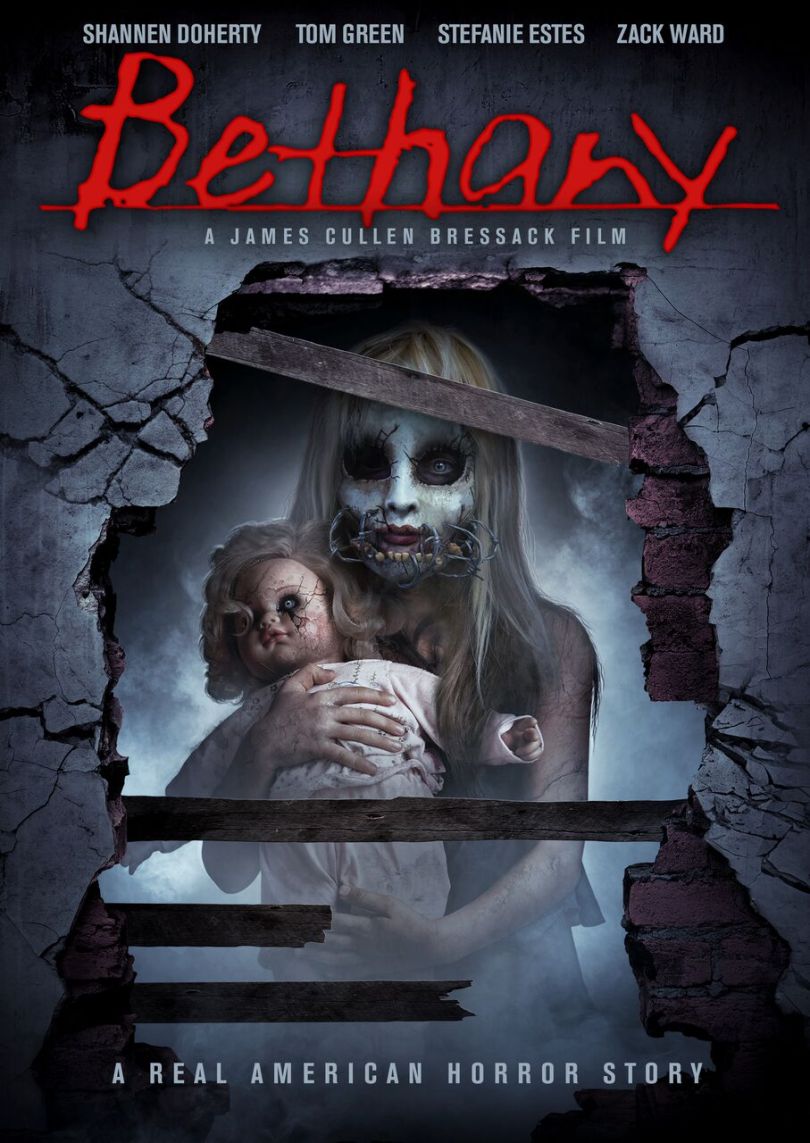
Bethany (2017), a full-length feature from the prolific twenty-four-year old writer-director James Cullen Bressack, is a surreal nightmare; an unnervingly successful contortionist’s act that ranges between past and present traumas. At a brisk ninety-minutes in length, Bressack luminously crosses these stages in time. Such accrues with a seamless mixture of classic gothic horror and modern shock. What is just as striking is how stalwartly Bressack’s latest endeavor aligns itself to the supernatural subtleties of author Shirley Jackson’s The Haunting of Hill House (1959). Such transpires in its earlier stretches. There are even bits which splendidly capture what can be deemed a modern sense of Jackson’s storytelling refinement. Once the presentation nears the second act, the photoplay becomes a nail-biting chain of ghastly, genre-related set-pieces. Each one is more creative and aggressive than the one prior.
Such commences with a distressing, aptly composed sequence at twenty-two minutes in. This segment oversees our troubled heroine, Claire (in a wrenching and ever-believable embodiment by Stefanie Estes) grimacing. This is as she unveils an unexpected crunch in her cereal. As she looks down, she sees roaches climbing out of the bowl. These events only spiral more wildly out of control. Such erupts as Claire’s grip on reality becomes more questionable. Until the comparatively tepid final fifteen minutes, Bressack brings forth a vivid extravaganza of these ethereal proceedings. The majority are made increasingly more delightful. This is in the method in which they constantly called to mind the fictions of Clive Barker. There are also many incidents which made me reflect upon the imaginative celluloid of Wes Craven. Primarily, Nightmare on Elm Street (1984) and New Nightmare (1994). Tobe Hooper’s masterpiece, Poltergeist (1982), was also a frequent echo found within the effort. Moreover, there is a memorable and jarring episode near the half hour mark. It involves Claire pulling on her cheeks. Such made me think a section in Brian Gibson’s Poltergeist II: The Other Side (1986). This is where the braces of Robbie Freeling (Oliver Robins) took on a life of their own. This only augmented the sheer joy the cinephile in me uncovered in the project.
Bressack is clearly inspired. Still, every shot and every scare emerges in a manner that makes it increasingly easier to gaze through Claire’s eyes. When the deftly executed plot begins to unfold, Claire finds herself moving back to her youthful abode. This is with her husband, Aaron (co-scripter Zack Ward in a layered and commanding depiction), in tow. Almost immediately, Claire hears the title personality, an entity that was once thought to be “an invisible friend”, calling her. Making matters worse are the visions of her mother, Susan (in a masterful depiction from Shannen Doherty), which gradually plague the woman. Haunted by flashbacks, which also operate as a gripping form of delivering exposition, the circumstances around Claire become ever more violent and bizarre. With Aaron and Claire’s psychologist, Dr. Brown (in a riveting enactment from comedian Tom Green), desperately seeking to disclose what is ailing Claire, she simultaneously questions her sanity and reality. This is as once buried affairs make their way back into her existence.
Despite this firm, but familiar, foundation, the characters and their motivations are stock. On a similar note, most of the dialogue which dominate Bressack and Ward’s otherwise astounding screenplay are archetypical. Yet, the narrative moves at such a breakneck pace that such demerits seem petty in comparison. Best of all, Bressack and Ward never once lose their fixation on the richly developed personas. The same can be said for the psychologically torturous atmosphere of terror the offering evokes. Such is induced in its opening: A quietly chilling two-minute long arrangement. This portion involves Young Claire (in a turn by Anna Harr that is dazzling), a stuffed bear and an unseen presence by the name of Bethany(which Harr portrays just as unflinchingly as the previously addressed portrayal). After this attention-garnering jolt, Bressack’s endeavor only gains a riveting, imagery-laden momentum. This is as it pushes forward. In so doing, Bressack and Ward offer an all-inclusive catalogue of tropes and uniquely apprehensive notions. Such is increasingly entertaining. This is without ever feeling excessive. A variety of the twists, such as one unveiled circa the halfway point, fall into the category of the tried and true. Still, it does little to damage the evocative, technically impressive nature of this Uncork’d Entertainment distribution. Bressack’s bravura guidance of the tale, as well as the concluding credits, carry this feeling to the last frame of the picture.
Continuing to help matters is the claustrophobic and skin-crawlingly resonant music, a medley of pianos and violins, from Alex Csillag. Likewise, John DeFazio orchestrates cinematography that is brooding gorgeous, suitable and consistently terrific. The editing from Bobby K. Richardson is sharp and seamless. Tiffany K. Wong’s production design, Ryan Henneman’s art direction and Alycia Belle’s costume creation is similarly exceptional. Furthermore, the make-up, sound and camera and electrical squad are captivating. Another marvel is the certainly eye-popping and credible work of the visual and special effects crew. Correspondingly, Leon Russom as Doctor Merman, Kevin Porter as Nurse Foster and Keith Jardine as Harrison reiterate the overall strength of the chronicle. This is with their high-quality performances. Felissa Rose as Janice the Realtor, Kristy Hill as Maternity Nurse and John Murray as Mr. Hodges are also phenomenal. Tiana Whitley as Young Susan, Ellen Gerstell as Marcy and Timmy Pistol as Carl only expand the transcendent edge of the cast.
The result of these herculean components is a configuration that redefines the term “white-knuckle”. Bressack’s item is both sophisticated and grueling. This ultimately exhibits the deft balance of the antiquated and the contemporary approaches to trepidation conjured in this undertaking. But, what is most remarkable is that Bressack, who also plays a hospital visitor, makes us care for Claire. This is also true of those close to her. Such is of the utmost necessity. This is for bystanders to be as absorbed and enthralled as possible as Claire undergoes hell itself. Consequently, the flick rises as resoundingly as a drama as it does a venture into the brooding heart of apprehension. Because of this, Bressack has crafted an exuberant display of talent; a surefire winner. Fellow aficionados of fright will want to check this highly-recommended tour de force out for themselves. You can do so when Bethany, a Brilliant Screen Studios and Grit Film Works fabrication, arrives in theaters April 7th, 2017.
Two of the most celebrated ingredients in cinematic horror are flesh and blood. Peelers (2016), a wildly entertaining ninety-five-minute feature from director Seve Schelenz and writer Lisa DeVita (who also did the casting), submits this in gleeful excess. Such is most notable in the all-embracing structure. Schelenz and DeVita set the affair up in a semi-traditional manner. This transpires within the initial forty-minutes. These flashes operate as a collage of sumptuously staged and captivatingly shot strip show sequences. This is mixed in with an equal dose of slyly delivered character and story development.
Utilizing nearly the initial half of the film to revel in the formerly stated attribute could’ve easily become monotonous. It could’ve also slowed down the fluent, meticulous pace of the effort immeasurably. But, there is a range of certainly unique themes that accompanies these segments. Never once are any of these notions repeated. Such a decision helps save the undertaking from such a fate. These sections fuse with the aforesaid exposition seamlessly.
The consequence of such an action paints a more thorough portrait of the occupational lives of our leads. For many related entries in the field, this would be enough to sell the flick. Yet, Schelenz’s project has a consistently successful wit. There is also an abundance of creative ideas coursing throughout the exertion. Not to mention, the progressive build-up of terror events unveiled in this section are just as effectively and organically administered as those stated above. For example, there is a memorable third act happenstance which incorporates these components. It involves our central figure, Blue Jean Douglas (in a charismatic and ever-watchable performance from Wren Walker), taking out an infected antagonist with a baseball. The brilliance of this bit, besides being a nod to her former profession, is that it is modeled after the conventional slow-motion sports-associated pitch commonly elucidated in movies. Much of the last fifty-five-minutes function just as well in this fashion. This is as the proceedings are crafted into an all-out parade of gore, grandiose fright and brilliantly honed humor. This is even if the configuration proves somewhat more engaging early on. Such is because of the method in with relationships bud and circumstances unveil in predictable fashion in the latter portion. Yet, the work never fails to be anything less than raunchy, low-budget fun. Best of all, it rarely resorts to artificial jump scares to punctuate its various episodes of intensity.
The narrative commences with an ominous and certainly attention-garnering scene. It transpires in a hospital. Over the course of its two-and-a-half minutes, the macabre allure of this piece establishes a jolting, though quietly eerie and foreboding, tone. Such becomes an early highlight of the venture. This is as it suggests the variety of great things to come. Simultaneously, it immediately begins to form questions in our mind as to what exactly we are seeing and why. It is a masterful foundation. Schelenz follows this up with a visually stunning arrangement that mechanizes just as triumphantly. There is a smooth marriage of music and sensual imagery augmented in this composition. Such particulars make the configuration play like a bravura inaugural extract of cast and crew recognition from an X-rated installment in the James Bond franchise. Moreover, LaLaa Love’s body language expressive presentation as the dancer viewed in this unit compliments the sheer artistry at hand. Such creates the ingenious rhythm of alternating fear and sensuality upon which the design stands.
As the tale unfolds, we find manager Blue Jean quietly pining. It is her last day as owner of The Happy Hour. Such is the erotically charged club where the narrative solely takes place. A nefarious businessman known as Chromagnum (in an exhibition from Al Dales that spectacularly personifies the efficiently sinister rich man archetype), has bought her out. He intends on using the building to his own whims officially at the stroke of midnight. When a group of miners arrive at the area, it is soon noted that these individuals seem to be covered in a strange ooze. Striking up conversation with one of the laborers, it is discovered that this group believes to have struck oil. They also state that they are planning to go back tomorrow. This is to see if they can uncover more of the presumed liquid. Such explains their festival-like spirit. It is also cause for their reasoning for stopping at Blue Jean’s venue. Yet, this scheme is abruptly halted. This is as the substance morphs these toilers, and everyone else in the building, into infected, zombie-like monsters who hurl black and green fluids. Such erupts moments prior to transformation.
Such is a simple, but surely intriguing, impetus for a chronicle such as the one Schelenz conveys. It is a fiction that garners supplementary points by drawing a definitive parallel to John Gulager’s stupendous Feast (2005). This is in its general setting and zany, go-for-the-jugular demeanor. Furthermore, our protagonists are all likable and diverse in personality. Best of all, they are undeniably outstandingly etched. The antagonists are also exceptional. This is especially true when considering them as a masterful illustration of the collaborative contribution of the thirty-eight people who make up the effects team. Though the look of the undead is a bit conventional, a mixture of the dark eyes uncovered so habitually in modern cinema and the writhing ick of a similar opus from the 1980’s, they are still an enjoyable departure. This is from the stiff and unimaginative veneer of so many mutants perceived in today’s full-length provisions. Correspondingly, the method devised to slaughter these entities is both convenient and clever. But, what shines the most is the endlessly confident and stylish direction from Schelenz. DeVita’s screenplay continues to assist and augment the quality of the attempt. This is primarily with credible, yet often hilarious dialogue. There is also a smart balance of the serious and the comic, the bold and the interesting inherent in the penned material. Such makes the predictably wicked intentions Chromagnum has with Blu Jean’s edifice, which are exposed in the final twenty-minutes, quickly forgivable.
The doggedly skillful on-screen portrayals only boost these sensibilities. Kirsty Peters as Licorice/ Carla, Nikki Wallin as Baby/ Elaine and Victoria Gomez as Tina are excellent in their principal roles. Caz Odin Darko as Remy, Madison J. Loos as Logan, Cameron Dent as Tony and Momona Komagota are also fantastic. Rafael Mateo as Pablo, David Torres as Mario, Edwin Perez as Jesus and Andrea Rosolia as Panuche are just as phenomenal in their respective enactments. The same can be said for Manny Jacinto as Travis, Emma Docker as Aja, Rob Scattergood as Officer Karl Robinson and Katherine Blaylock as Officer Simone Lacey. Lauren Martin as Nurse and Megan Duquette as Nasty Nanda are also impressive in their brief turns. The secondary cast of bar patrons, cooks (Jason Mullen, Chadderton W. Thornton and Mike Hurley in slight, but transcendent, parts), a deejay (voiced by Tim Chisholm) and a waitress (in a magnificent demonstration from Tatyanna Prior) enrich this already layered endeavor. Additionally, Schelenz is scene-stealing in his representation of Officer Carter.
Schelenz also provides sharp and remarkable editing. The cinematography from Lindsay George is gorgeous and ever-immersive. Nikki Blais’ costume as well as Todd Giroux and Schelenz’s production design is authentic and inventive. The seven-person make-up squad offers terrific input. Vincent Mai’s music, though evidently modeled after the conventional mechanisms of the genre score, is moody and unnerving. The art, electrical and camera, animation and sound department all afford an influence that is startlingly good.
Recorded in Vancouver, British Columbia, Canada, this Uncork’d Entertainment distribution and Pound (LBS) Pictures co-fabrication, is interminably delightful, amusing and relentless. It is everything audiences seek when searching for escape via celluloid. There are instances of intentional camp. But, it is not so much that it weighs down the wallop Schelenz packs when he yearns to subject bystanders to genuine shocks. This poise makes the sum increasingly well-rounded and easy to admire. The open to interpretation shot which arises before the concluding acknowledgments only adds to this category. Such is only a warm-up round for the astonishing mid-credits passage that is glimpsed later. When these become mutual with the last second jolt which finishes the photoplay, we smirk all the wider. This is as Schelenz appears to culminate the climax of his brainchild with another wholly new one. Such a radically over the top decision suits the overall attitude of the depiction beautifully. The title, an analogy that applies to the heroines as well as the overtaken, is just as perfect. When integrated, the outcome is an assuredly crowd-pleasing tour de force; a blood-soaked and ceaselessly engrossing reminder of why I originally fell in love with the genus of tongue-in-cheek revulsion. For those with similar affinities, this will prove to be one of the best movies of the year. I highly recommend seeking this out. You can do so when Peelers arrives on Video on Demand March 28th, 2017.
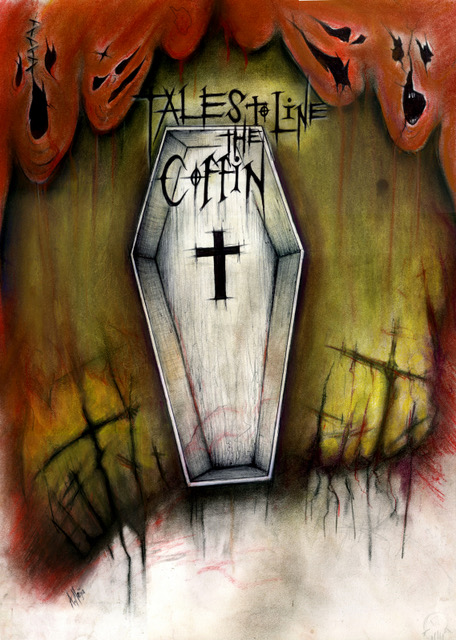
Writer-director Evan Schneider’s thirty-six- minute debut short film, “Tales to Line the Coffin” (2017), wonderfully calls to mind classic television shows like Tales from the Darkside (1983-1988). It also summons the endearing funhouse shock of same said features such as George A. Romero’s Creepshow (1982). Schneider’s suitably dark, smoky cinematography only aesthetically reiterates such a comparison. Such adds a low-key, nostalgia-laden charm to all we encounter. The minute and a half long commencing segment oversees a man, Tales Host (in a phenomenal turn from Peter Lewis Walsh that is reminiscent of Angus Scrimm’s iconic role as The Tall Man in the five film Phantasm series), in a mortuary contemplating death. This section is assuredly ominous and chill-inducing. With its issuance of soft, but menacing, lighting and poetic, alluringly penned and inquisitive dialogue it immediately hits a perfectly macabre note. The result is an assuredly attention-garnering sequence. Such is one that is beautifully made. It acts as the perfect introduction to this two-story anthology. When punctuated by the moody and memorable piano driven score from Denis Mikhailov, as well as an inventive and stylish opening and closing title shot, the aforesaid alignment to 80’s horror is complete.
The narratives which unfold are “Road Less Traveled” and “Tickled”. What ties these accounts together is the tried and true theme of vengeance. Moreover, the central figure in each account is the direct result of a history of bullying. In our initial venture, “Road Less Traveled”, a tormented high-school teen, Sam Wise (in a wrenching and fantastic enactment from Noah Tully Sanderson), ditches his persecutors in the woods. In so doing, he comes across Robert Raimi (in a representation by Paul Taft, who also appears in “Tickled” as Diner Patron Husband, that is both stalwart and charismatic). Telling young Sam about an ethereal entity that is said to haunt the area that surrounds them, a trail of anger fueled murder soon follows. This transpires to those who find themselves in the area Sam has stumbled upon. In the concluding anecdote, “Tickled”, a woman, Diane (in a riveting portrayal from Abigail Jean Lucas), goes on a breakfast date with a madman by the name of Devin (in a haunting and always gripping enactment from Nathaniel Glein Scott). He is plagued by nightmarish visions from his past. His short temper when he thinks he is being laughed at makes things even worse. As these elements take over Devin’s mind, the meeting between the two quickly takes a wickedly violent turn. This is when Vanessa asks Devin to go home with her.
Though the final moments of “Road Less Traveled” suggest a revelation, and come up flat and abrupt, the open-ended nature of this section is certainly appreciated. It is an awkward halt to an otherwise engaging, if routinely fashioned and paced, yarn. There is also an impalement late in this originating fiction which comes off as not entirely believable. Yet, it remains a stirring portrait. Regardless, “Tickled” is the best of the pair. Its restaurant set commencement serves as terrific character and narrative development. There is also a triumphant blending of humor and quietly ominous tone. This is woven into the early instances of this latter labor. Likewise, its dark, basement set finale is excellent, effective and intense. The climactic appearance of Vanessa’s wisecracking father, Officer Faulkner (in a scene-stealing depiction from Mark Davies), adds a welcome burst of well-timed guffaws. This settles nicely with the modern Fatal Attraction (1987) meets Saw (2004) measures found within the exertion.
From a technical standpoint, the endeavor is just as rousing. For instance, Marcus Blair, Daniel Delosh and Evan Schneider’s editing is assured and skillful. Amanda Koker’s costume design is authentic. Krystle Feher and Danielle Schneider offer an outstanding contribution with their make-up work. The same can be said for the sound department. It is composed of Jonathan Millett, Brianna Shockley and Haroon Wahid. Such a quality is sharp, suitably unnerving and awe-inspiring. Feher and Danielle Schneider’s special effects are largely convincing. The nine-person camera and electrical crew compliment Evan Schneider’s stylish and nostalgia-inducing direction beautifully. Though the screenplay he solely authored for “Road Less Traveled” falls prey to an over-excessive use of the many degrading terms which sadly arise with plotlines involving adolescent intimidation, it is still solid and smart. This is in the way it makes its clichés come across as impressively new. Yet, the script for “Tickled”, which Schneider co-authored with Isabella Deslandes and Christopher Rennie, is fantastic. It is fun, fast-paced and slyly introspective. But, one thing that is conceived spellbindingly well in each respective tome is the placement and build-up of the fear-invoking circumstances. Behind the lens maestro Evan Schneider also presents them just as mesmerizingly. Such occurs with an intricately mounted and ceaselessly nail-biting design.
The acting fares just as well. Elle Doucette as Vanessa and Amber Namery as Chelsea are exceptional. Colleen McGovern as Samantha, Brendon Sanderson as Blair Marder, Wolfgang Schuler as Devin’s Father and Marty Smith as the Diner Waitress in “Tickled” are sensational. Christie Devine as Diner Patron Wife and Taft’s Diner Patron Husband are just as memorable. In this aforesaid segment, they portray an aggressive couple. Their dynamic with one another is successfully played for laughs. It also mechanizes as an example of how well director Schneider handles scares and humor. This is as this section transpires while Devin is having tragic flashbacks to his youth. Correspondingly, Andrew P. Marsden as Joe Plaza and Brendan Fromm as Devin (Child) are enduringly notable and striking in their brief turns.
This Hop Top Films co-production and distribution, budgeted for approximately $10,000, is ambitious in scope and feel. Yet, there is a continuous focus to the various personas on-screen that guides it each episode. Such also etches in the sum an incredible intimacy. This balance is perfect for an affair of this ilk. There are also subtle links to each chronicle, such as seeing some of the cast of “Road Less Traveled” reappear in “Tickled”, which is a clever wink to the audience. In turn, “Tales to Line the Coffin” is the best type of retro genre effort. It blurs the lines between the antiquated and the modern. This is administered without ever appearing to instill artificial movements to its arc, as is often the case with similar photoplays, to do so. The result is a wonderfully done demonstration of talent all around. Schneider and crew have crafted a tour de force; an enjoyable love letter to terror compilations that fellow genre addicts are sure to admire. This is well worth seeking out.
The official Facebook page for the film can be found here.
VooDoo (2017), the eighty-four-minute full-length feature debut from writer-director Tom Costabile, is a surreal, delightfully disturbing and triumphantly terrifying midnight movie. It is also wickedly entertaining. Likewise, the HyperCube Films production hits a stride in its second half. This is with a relentless unveiling of gothic horror events. All of which perpetually calls to mind Sam Raimi’s masterpiece The Evil Dead (1981). Additionally, there is a midway instance that showcases a door slamming shut by itself. We are also given a dark entity with red eyes in this section. Such adds to the sheer cinephile delight on-screen. This is as such tried and true genre tropes, all of which are well-done and are presented in a manner that feels consistently fresh and new, draw a distinct parallel to Stuart Rosenberg’s classic adaptation of Jay Anson’s iconic best-seller, The Amityville Horror (1979). Yet, the last half hour is full of haunting, jarring, claustrophobic scenarios and images. All of which seem immediately pulled from the zenith of brimstone and hellfire that is Dante Aligheri’s epic poem, The Divine Comedy (circa 1308-1320). Such makes this assuredly entertaining release increasingly enjoyable. Best of all, Costabile, through his dazzling and taunt guidance of the project, mounts these sequences brilliantly. In the tradition of the greatest endeavors into celluloid fear, the scares begin with a fun, but effective, approach. Yet, as they go on they become far more unnerving. This is with each proceeding fright becoming more unsettling and memorable than the one which we encountered previously. It ends on a note that, though respectful to the foundation laid down by countless other found footage style flicks such as this one beforehand, is perfectly eerie. In turn, Costabile finds a punctuation point to his terrific endeavor that is hauntingly constructed. Moreover, it is guaranteed to leave audiences with a lingering sense of unrest long afterwards.
Costabile wraps these beautifully executed occurrences around an intriguing, if familiar, plot. The narrative concerns Dani Lamb (in a credible performance by Samantha Stewart that vibrantly captures the personality of her innocent, southern girl lead). She imparts on a vacation to Los Angeles. Here she stays with her cousin, Stacy Cole (in a depiction by Ruth Reynolds that is every bit as charismatic and well-wrought as the portrayal exhibited by Stewart). While exploring the city, a sinister link from Dani’s past finds them. Soon Dani finds herself in an apprehensive situation that quickly spirals out of control. After her daylong journey through “The City of Dreams”, Dani returns to Stacy’s quaint home. This is to be greeted by a black magic fueled nightmare.
The Costabile penned screenplay for this tale is structured, paced and characterized routinely. Yet, it is so tremendously put together that these attributes do little to tarnish the overall quality of the exertion. For example, after a genuinely chilling opening portion which depicts the abduction and ritualistic slaying of a young child, the affair provides exposition in the expected manner. This is as Dani and Stacy merrily discourse among one another as they discreetly drink Bloody Marys, sunbathe and immerse themselves in the sights of local California. The often jovial banter among the duo is also rooted among commonplace grounds. Much of the first forty minutes of the endeavor goes about in this fashion. Yet, these moments work. This is because there is an organic chemistry of friendship and likability to Dani and Stacy. When combined with the natural allure of the views the two partake in, the effort is breezily engaging. Because of this, Costabile’s motion picture rises where many similar entries fail. This is in getting us to genuinely become enraptured in the plight and care for our central figures. Given how gorgeously conceived the apprehensive components of this presentation is, such makes the balance between terror and real-life drama even more impressive and well-rounded.
Both the upbeat and seriously dread-inducing segments of the opus are masterfully erected. This is via David M. Brewer’s suitably gritty, yet consistently impressive, cinematography. Costabile and Alec Justin Henderson (who also takes on the role of “Sunset Playboy” nicely here) administer editing that is terrific. It is at times deliberately ragged. This is most evidently perceived in the aforestated commencing bit. Such a finely honed detail adds a sense of mounting intensity. This is built upon the confusion of the unexpected. It is what both potential victim of the account as well as patrons may be undertaking when witnessing such a scene unfold.
Furthermore, Christian Alexander, Albert Adams Polinsky, Adam Rettino and Seth Thomas exhibit incredible set decoration. Dean Guilotis, Bo Howe, Lior Molcho and Frank Synowicz distribute hallucinogenic, top-notch visual effects. The eight-person sound department, the camera and electrical as well as the make-up team all offer proficient turns. Melanie Macugoski’s costumes are rich and authentic. Composers Michael Dino Boito and Nathan Kwan reinforce the ominous atmosphere of the release magnificently. This is with a score that is sparse, but surely operative. It has such an instantly legendary impression that you can almost imagine Dracula himself playing the tune on a creaky, old piano.
Correspondingly, Dominic Matteuci is phenomenal in his representation of Spencer Boyd. Daniel Kozul as Trey Neil, Richard Krey as Bum and Constance Strickland as Serafine L’Amour are solid in their respective arrangements. Timothy Patrick O’Neill is exceptional as Uncle Jake. A cameo where Ron Jeremy plays himself, spied at sixteen and nineteen-minutes in, is smirk-inducing; a pleasant wink to the audience. The gathering of those who bring the assorted demons, minions and nefarious figures unveiled herein to life are all responsible for wonderful enactments. They vastly enhance the grim tone the photoplay gives way to in its later stretches.
The result is an undergoing that is sure to delight both budding and seasoned aficionados of nail-biting, supernatural cinema. With this excellent composition, Costabile has established a command of mood and buildup. This can also be attributed to the seemingly unproblematic fashion in which he develops his on-screen personas. Such makes it easy to state that Costabile is a director to be watched. His cast and crew prove themselves just as capable. He has evoked a heart-pounding rollercoaster ride of a movie. To its further benefit, it has a plethora of ghastly circumstances and ideas. But, it never falls into the trappings of being excessively graphic to illuminate these notions for maximum impact. Such is one of a variety of wise moves in a labor filled with such smart decisions. It all comes together to generate a wonderful exercise in cinematic anxiety. Such is one addressees will undoubtedly want to return to repeatedly. VooDoo hits select theaters across America on February 24th, 2017.
“Leftovers” (2017), an utterly absorbing twelve-minute and forty second short film from director and co-writer Tofiq Rzayev, is sobering, heart-wrenching and undeniably powerful. It brings into account a meditation on the hellfire and purgatory one must endure for atrocious actions. Namely the rape and murder of an eight-year old girl. But, it is as adamant at addressing how such measures of wickedness immediately affects those who are closely tied to the situation. This is in both a familial and occupational sense. Much in the manner Rzayev issued with his previous entries from 2016, “Nihan: The Last Page”, “In a Time for Sleep” and his dazzling debut invention with Fidan Jafarova, “Araf”, the affair focuses on grief. Yet, this is without such primary agony ever becoming the sole selling point of the composition.
We note this most evidently in the method in which Rzayev, utilizing a bold and intelligently arranged screenplay he crafted with prior literary collaborators Alsen Buse Aydin and Mehmet Faith Guven, develops the personalities of the fiction magnificently. Such transpires via their reactions and mannerisms over the horror they encounter. This now trademark Rzayev storytelling device is spellbinding. It immerses viewers in the emotion overflowing from those on-screen to captivating effect. This is while simultaneously respecting the perpetually solemn tone Rzayev has so beautifully and carefully constructed. In turn, the harrowing impression of watching real life unfold never wavers. As a matter of fact, these wise narrative choices only amplify these attributes. The result is a mesmerizing masterpiece; a harrowing cinematic glimpse into the oft gloomy mechanisms of the human spirit.
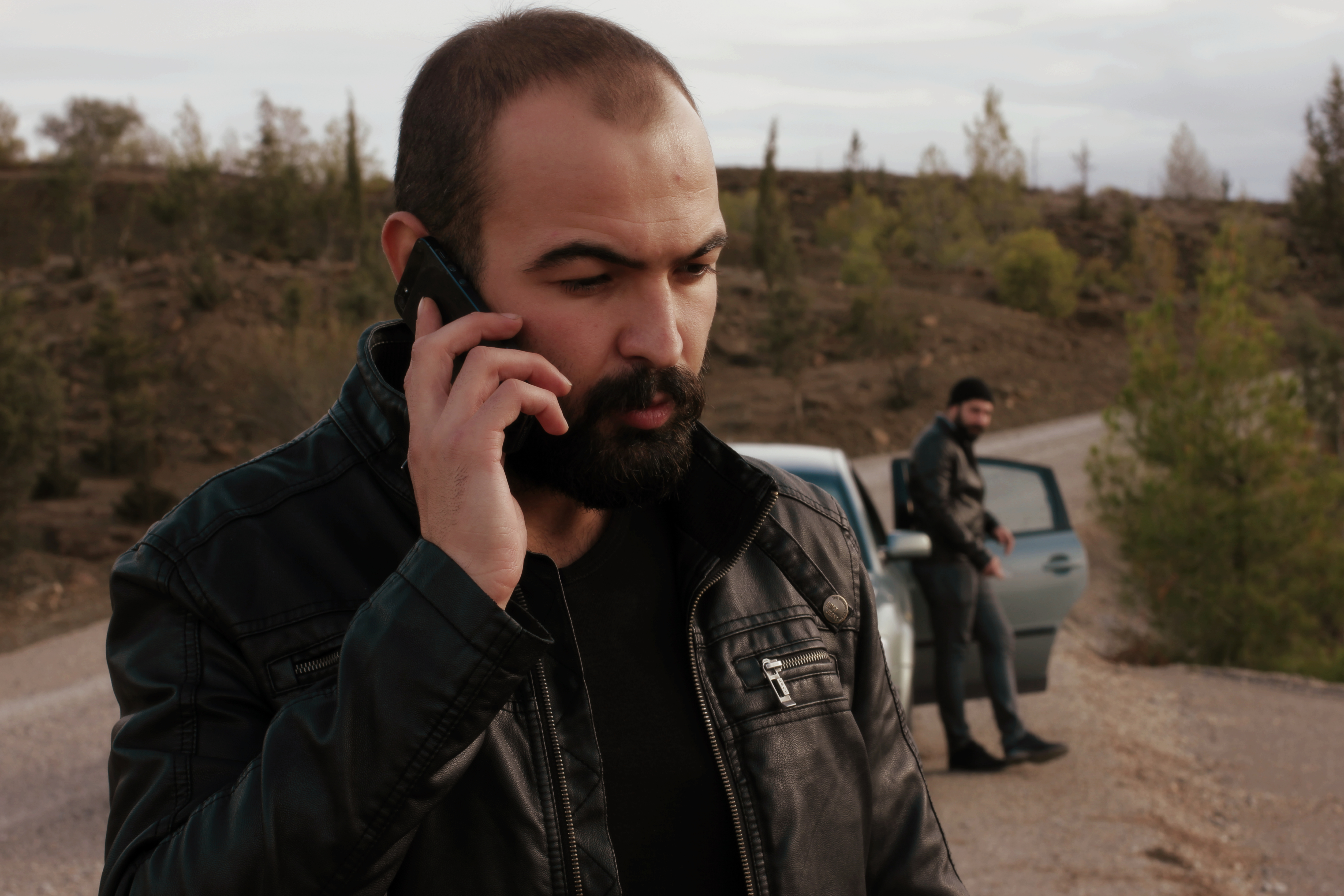
Set in the Turkish Mountains, this Angry Student Films Production concerns two civil police (in fantastic portrayals by Ismail Mermer and Erhan Sancar that further etch the rugged authenticity at hand). They are in the process of taking a highly troubled and distressed person, credited here as The Individual (in a genuinely moving and emotionally riveting performance by Gokberk Kozan), to identify a body at a crime scene. Upon stopping to allow their passenger to collect himself, a series of foreboding turns enter the narrative. From herein, sentiments, motivations and judgments take hold. This is as the drama hits a brooding zenith. Such sets the stage for a second half that unflinchingly focuses on the reactions to the abovementioned tragedy. This is with anger and heartache almost always at the forefront. The ardor-laden intensity in this section is made progressively palpable. Such transpires alongside Rzayev’s decision to keep the entirety of these measures in the confines of an isolated location.
Originally titled “Geride Kalanlar”, Rzayev weaves an increasingly gripping, brilliantly paced and executed chronicle. It begins strikingly. This is with an incredibly done shot from the backseat of a moving vehicle. Such suggests that we, the audience, are a silent passenger to the alternately poignant and unnerving circumstances which are about to occur. An immediate interest such as this only grows as the scant runtime unfolds. It is pushed to an undeniably haunting, open-ended concluding sequence. This is a perfect departure for a composition such as Rzayev’s latest creation. Such is so because it forces bystanders to become ever-involved in what is being depicted. This is a courageous, evocative choice. It is one that also pays off handsomely. In turn, the overall success of the endeavor is even more vivid and astonishing.
From a technical angle, the opus is just as mesmerizing. Rzayev, who also produced, issues masterfully constructed editing. His brooding cinematography is exceptional. It holds a mirror to the life imitating qualities of both the tone and the account itself spectacularly well. This can also be spoken of the clean, quiet, phenomenally arranged and fitfully reverential concluding credits segment. Likewise, Zahit Battal Sari demonstrates a compelling presence as the voice of The Commissioner. Additionally, the script audibly rings with ruggedly poetic dialogue that is filled with sly introspection and keen observations. All of which are cut from the everyday. These remarkable details are all perpetual evidence of the sheer craftsmanship which pulsates hypnotically throughout the exertion.
More than anything, Rzayev’s guidance of the project is utterly triumphant. “Leftovers” continues to carry on an undeniable parallel to Swedish moviemaking auteur Ingmar Bergman. Such an awe-inspiring comparison helped make his sixteen prior efforts so memorable. Yet, his style remains distinctly his own. At a mere twenty-two years of age, Rzayev has already cemented himself as a modern maestro of the moving picture form. His material is consistently central figure-oriented, meditative and unafraid to peer into the most unpleasant of social issues. Rzayev’s material, a reflection of his own personal reservations, engraves a certain wide-spread intimacy because of this factor. It is a detail that visibly resonates through one of his undertakings. He speaks to the humanity in us all. This is while simultaneously articulating to the mind. Rzayev’s most current tour de force is no exception. This is unquestionably one of the best efforts of its type of the year.
It has been a breakout year for both up-and-coming as well as established talent. This is especially true in the medium of the short film. From heart-wrenching and experimental dramas, to mind-bending multi-genre tales, horrifying chronicles of fear and uproarious comedies, here is the list of my twenty favorite related works in this field from 2016. Please note that the name of the director of the piece is provided after the title of the production. Enjoy!
“Hand In Hand” (2016), a six minute and fifty second short from producer-director Haley McHatton and writer Kris Salvi, is definitive proof of the high-level of dramatic tension that can still be derived from a classic thriller set-up. This design is that of an unhinged man, Mike (in an unflinching and captivating portrayal from Justin Thibault). The account finds him kidnapping his former lover, Anthony (in a gripping and ever-watchable enactment from Salvi), in a jealous rage. After doing so, Mike takes Anthony out into the most abandoned regions of the nearby woods. With a gun pointed at Mike’s head, Anthony commands him to dig his own grave. Such morphs into a fascinating, argumentative speech between the duo. This inevitably unveils pent-up emotions. With these once concealed sentiments also comes a flurry of secrets and suspicions. All of which are rivetingly administered to the audience. This is in a manner that is as cryptic as it is nail-biting. In this discourse, Anthony sees signs of potential weakness in Mike. Anthony senses this feebleness as a chance to take the upper-hand. In so doing, Anthony may have a potential chance to get out of the situation. This is with his life intact.
Such twisty, expository banter forms the pushing force of the chronicle. Credibly and powerfully issued, this item proves to be one of the most suspenseful and enthralling components in its cinematic catalogue. It also showcases how well-delivered lines, which balance unforced character development and gradually tease motivations, can be ruthlessly engaging. This is far more so than the splashy, big budget special effects and overblown action sequences that may be incorporated in a lesser effort of this ilk as a substitute for craftsmanship. A splendidly piqued attribute such as this adds an accruing element of surprise to what could’ve easily been an all too straightforward narrative. Such arrives via Salvi’s gritty, meticulously manufactured and tautly paced script. It is also a courtesy of McHatton’s masterful, wisely uncluttered and focused handling of the material.
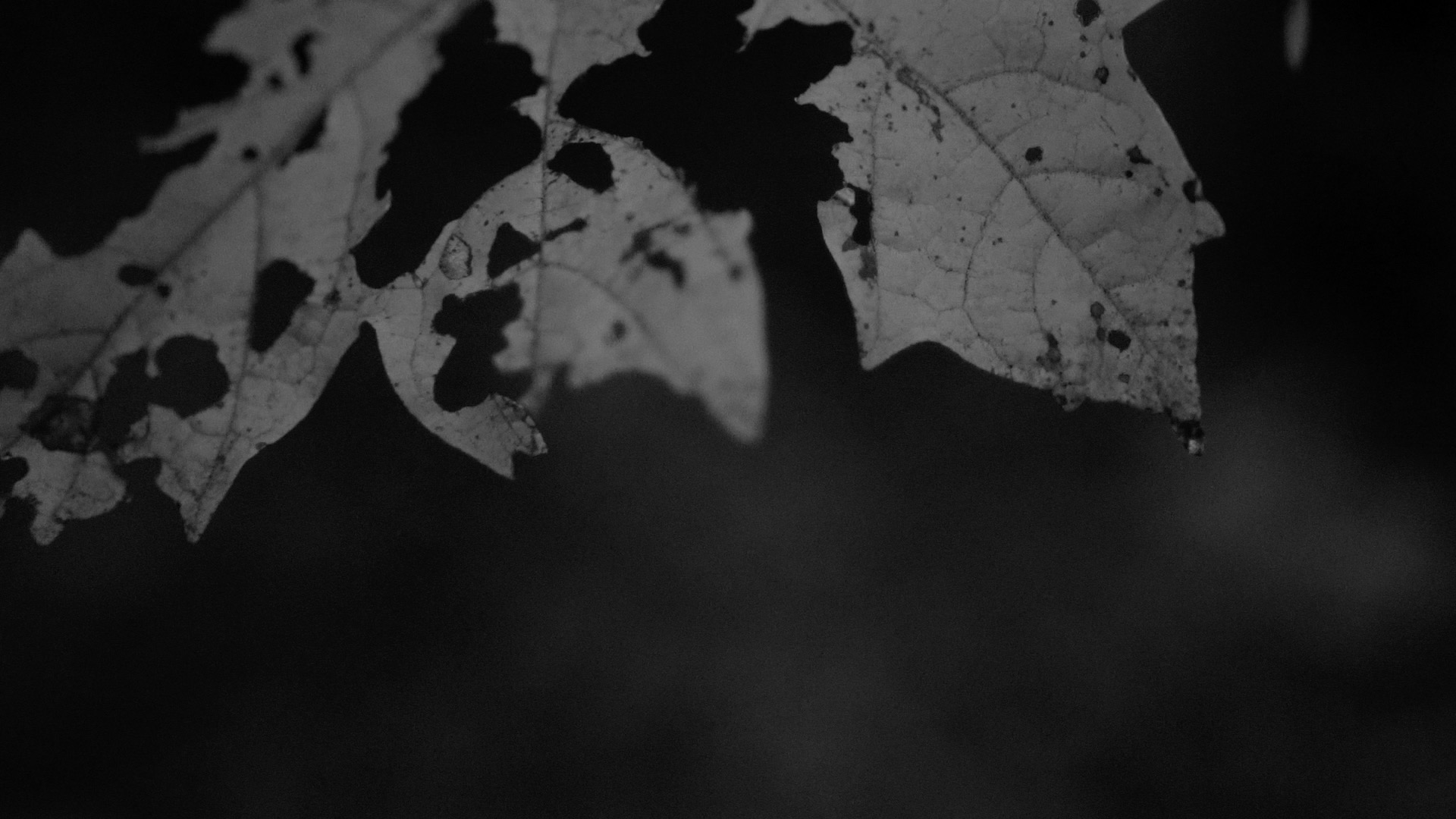
These potent articles have an augmented luster. This is when mixed with Mitch Severt’s spectacular cinematography. Severt exposes a bravura capacity to catch the multitude of shades, primarily the dark reds and gentle yellows illuminated from the fallen leaves glimpsed in the backdrop of the exertion. Such transpires in an undeniably immersive, eye-catching and gorgeous fashion. Other natural structures casually spied in the area fare just as wonderfully. For instance, the endless rows of sinewy trees, which also can be viewed as a perfect symbol of the general seclusion of the location, visibly looming behind Mike and Anthony at most moments. Yet, Severt’s work, as beautiful as it is, never defies the no-nonsense, white knuckle atmosphere which is unwaveringly orchestrated throughout the fabrication. Such is certainly a feat worthy of praise. The piece is further enhanced by the proficient and sharp editing from the team of Steve Polakiewicz, Carlo Barbieri and McHatton. Kyle Joyce’s audio is herculean. Jeremy Arruda’s brilliant, Ennio Morricone-esque piano driven score, which sweepingly echoes through the stylish and splendidly erected concluding acknowledgments, splendidly exhibits the technical prowess at hand.
Likewise, the plot, perfect for a single location and extended solo scene undertaking such as this, grips us from Anthony’s attention-garnering, opening quip to Mike. This is: “I guess you didn’t think it would go down like this, huh? Keep walking”. From herein, the interest and intensity amplifies continuously with each respective frame. Such gives way to a climax that is foreseeable. Yet, it is so well-engineered and resonant that it is easy to look past such comparatively miniscule details. All of this is propelled by authentic, well-etched leads. Our protagonist, Anthony, and antagonist, Mike, are amended great dimension and depth. Consequently, they avoid becoming mere genre archetypes at every turn. Based on the staggering strength of the depictions of these personas, we find ourselves readily seeing and understanding both the measures and reasoning behind the pair we follow on- screen. Such is as much a testament to Salvi’s impactful authorship as it is the same said performances themselves.
The result of this official selection of The Massachusetts Independent Film Festival, and Hatt On Productions presentation, is pure magic. It is a violent tale. Yet, it doesn’t rely solely on its inherent ferocity to weave or sell the fiction. Such is as refreshing as it is rare. Moreover, the exercise organically and competently builds the intrigue of its story. This can also be stated when considering the sly unfurling of events as well as brisk runtime of the endeavor. Such is elucidated without ever overreaching in its successful attempts to convey its message. This is also accurate when pondering its ability to fluently generate intensity. Additionally, the vehicle is slick. This is without ever being so glossy in appearance as to betray the believability it calmly evokes. It is just as smart in its execution. There is a plethora of intelligent creative choices and obvious skill for making fiction demonstrated here. Because of this, “Hand In Hand” serves as an absolute bulls-eye. McHatton, Salvi and crew have constructed an awe-inspiring triumph of simultaneous entertainment value and moving picture dexterity. It is one that fellow bystanders are guaranteed to admire and reflect upon long after their sit down with the arrangement is complete.
Writer-director Christopher Di Nunzio’s four minute and forty-three second short film, “Kinnari” (2016), is a powerful, gripping and abstractly eloquent meditation on the harsh, yet wondrous, journey of life into death. The latter of which is occasionally referred to throughout the affair itself as “the great nothingness”. Di Nunzio’s composition is just as adamantly concerned with how the boundaries of these two oft addressed subjects intermingle. It is as apt to ponder how these opening and closing portions of our being are frequently blurred. This is especially true when spied through a retrospective lens. Particularly, the viewpoint of a man who may be mentally peering at such sights amid his final moments. Such is illustrated as a dream-like trek to enlightenment. This overtakes the bulk of the narrative. It is sewn with a plethora of poetic wisdoms and long pined over inquiries. In turn, Di Nunzio provides an adventure of self-discovery. It is one which is steered by time cemented perspective and experience. A knowingly anti-corporate and media outlook, the basis of an enthralling monologue around the one minute mark, pushes such perceptions to tremendous effect. This emanates intriguingly from our ruggedly engaging narrator and lead, David (in a brilliant, unflinching and always watchable enactment from David Graziano). These traits he has acquired during his singular voyage through the planes of existence.
Such is perpetuated by a fateful meeting. This takes place in a stark and gorgeously realized instance near the mid-way point. It involves the rediscovery of the title entity (in a portrayal by Jamie Joshi which is quietly striking and consistently mesmerizing). She is the crucial persona in David’s illumination. Her name also shares that of a topically proper noun, largely used to describe a half-human and half-horse or half-bird hybrid, in Buddhist mythology. This is of an archetypical lover. Such is consistent with the story Di Nunzio paints. The same can be articulated for the paradigms that are encountered upon her arrival.
Our hero describes her as a “goddess”. In a manner befitting to such consecrated figures, David moves with Kinnari through a surreal landscape. These are a collection of beautifully structured, yet appropriately earthly, set-ups. They all hypnotically personify the stages of David’s physical span. As she pulls him deeper into this realm, the sum becomes progressively complex, abstract and cerebral. A staggeringly staged, near-climactic arrangement oversees David shadowing Kinnari up a winding, ostensibly endless flight of steps. Such personifies both the photographic and demonstrative core of the entire effort.
Additionally, there is a character to audience discourse which builds the foundation of the project. Such is triumphantly carried on throughout. This is a whispery, yet friendly, source of personal development. It victoriously aids in conveying a well-rounded glimpse into the inner-workings of our protagonist. Such heightens the intimacy, honesty and profundity at hand immensely.
Likewise, this fascinating plotline is given meticulous, pensive craftsmanship. Such is via Di Nunzio’s smartly paced screenplay (supervised by Christine Perla). His dialogue cracks with ingenuity, credibility and mature observations. It is also remarkably introspective. All the while, it comes across as deceptively casual. Such is much in the way of a stream of spoken conscious. Given the general format of the article, this approach is undeniably operative. This stands as an obvious signpost of Di Nunzio’s outstanding capacity for authorship. It is just as much a marker of recognition for the natural relatability inherent in Graziano’s outstanding delivery of his interchanges. Such qualities align themselves in the spectacular custom Di Nunzio displayed with the modern noir, A Life Not to Follow (2015). It was also at the at the forefront of his avant-garde horror invention Delusion (2016). In both cases, Di Nunzio scripted as well as served as administrator.
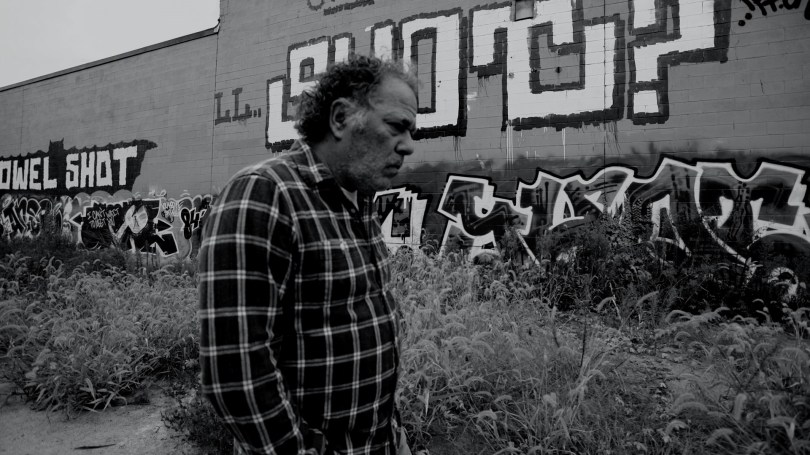
Much in line with these prior presentations, the story is smartly and smoothly paced. It is guided by Di Nunzio’s Lynchian sensibility for haunting, yet memorable and alluring, imagery. Correspondingly, the entirety of the exertion is slickly designed. This is so easily evident that even early, close-up shots of David’s coffee seem to be a mirror image of the bleak places in his soul. There are other relatively commonplace segments, such as a bit involving David walking on a presumably abandoned train track with a brick wall of graffiti looming closely behind him, that appear just as much like a grim visage. Such aspects appear as if they are taken directly from a waking nightmare. This is only amplified by Di Nunzio’s masterful framing. Such fashions an undeniably arresting style. It is one which makes the labor even more immersive and remarkable.
Such appeal is also punctuated by Di Nunzio’s seamless editing. His gently used, yet incredibly melodic and mood-setting, music also aids this factor outstandingly. Similarly, Nolan Yee’s cinematography, offered in the standard 16:9 HD aspect ratio, is somberly atmospheric. It is also elegant and thematically apt. Christopher Hallock’s astonishing assistant camera contribution is fabulous. Such augments the phenomenal nature of Di Nunzio’s expertly staged sequences. This is in terms of their stark believability and dazzlingly skillful construction. The culmination of these attributes make the sheer artistry which resonates through every frame of this Somerville, Massachusetts recorded drama increasingly palpable.
Di Nunzio issues a somber, intellectual tone that never once wavers throughout the duration. What establishes this atmosphere so immediately is the implementation of a monochrome title card. It is held on-screen for seven seconds. A single, thunderous chord is distantly heard in the background. The simplicity of this arrangement is the first of the many wise decisions and courageous moves Di Nunzio orchestrates. The final credits scene, proceeded by David’s harrowing realization that “Only me and beauty exist”, succeeds in the same arenas as those discussed above. These two sections evoke perfect bookends for the tale this item uncompromisingly and attractively tells. Moreover, Di Nunzio has an instinctive knack for what is to be glimpsed as well as left away from the eyes of onlookers. Such makes the proceedings progressively captivating. It is also proficient and enigmatic. The outcome of which makes the chain of events as unpredictable as they are perpetually enchanting.
Such creates an arc for that account which is impeccable. It is akin to a cinematic puzzle. Di Nunzio has gifted his spectators with a tour de force on all fronts. This Creepy Kid Productions release soars as an exhibition of temperament, moving picture bravura and intellectual yarn-spinning. It is also a standout performance piece for Di Nunzio’s recurrent collaborator, Graziano, as well as newcomer Joshi. Di Nunzio’s latest further astounds with the questions it poses as well as the answers it commands us to form. This is a rare work of celluloid prowess. It is one that will unveil new wonders and insights with each accruing sit through. Di Nunzio has formed an absolute bulls-eye; one of the best configurations of its type I have witnessed all year.













 awordofdreams.com