“Hunting Grounds” – (Movie Review)

hunting-grounds-pic-1

By Andrew Buckner
Rating: **** out of *****.

Hunting Grounds (2015), the ninety-one-minute full-length debut feature from writer-director John Portanova, proves that there is still much cinematic life to be derived from the ever-audience alluring legend of Bigfoot. Originally titled Valley of the Sasquatch, Portanova has implemented a rugged, character-oriented thriller. It is one that seamlessly blends both modern and old-fashioned narrative ingredients. Such is crafted into a purely entertaining and largely credible blend. Best of all, it looks to its enigmatic antagonist with equal doses of awe and fear. The tribe of Northwest America based organisms at the core of Portanova’s labor do not merely function as the primal animals in which they are far too often portrayed. Instead they are demonstrated as noticably human. This is visible in both their general gestures and attitude. Such benefits the configuration spectacularly. To its continued credit, Portanova’s classically designed and meticulously paced screenplay is well-researched. It incorporates an obvious knowledge and affinity for its potentially truth based villain. This is slyly sprinkled into the dialogue. All of which is as cut from the everyday, unforced and operative as its rounded and smartly developed central figures.

Such distinctly separates Portanova’s installment from the hefty volume of thematically related tales. More specifically, the low-budget photoplays that have been curiously spiking in cinema over the last decade. Outside of the beasts which torment our protagonists, Portanova yearns to showcase the violent monster in mankind. This he brilliantly ties around the argumentative and money woe infused relationship between widower Roger Crew (in a highly effective performance from Jason Vail) and his introverted son, Michael (in a quietly poignant enactment from Miles Joris-Peyrafitte). Such adds an increasingly taunt level of emotional intensity to the enduring suspense already at hand. Moreover, the discussions of the relationship between Roger and his deceased wife that transpire early in the work form a wrenchingly sentimental angle. This splendidly showcases Portanova’s penchant for solidly delivered, engaging exposition. Simultaneously, it illuminates the damaged, father and child rapport between Roger and Michael.

Authentically administered arrangements such as these keep the heart of the undertaking much in check. Such makes the sum of the endeavor more well-rounded and harrowing. This is as it gets us to root for and understand our everyday heroes, which is pivotal. Especially before the tense life or death scenarios, which Portanova orchestrates just as masterfully as these establishing episodes, that befall them in the second and third acts. The best evidence of this rests in the last twenty-minutes. This section is especially well-made and unnerving. It oversees both the affectionate and more generally electrifying rudiments of the account simultaneously reaching a zenith. Such is made increasingly imposing as several truly unexpected twists take flight.

hunting-grounds-pic-5

Among such evidently wise decisions, is that the beasts herein are only partially glimpsed or, as is frequently the case, left in the shadows for nearly an hour into the runtime. Such calls to mind the tactic brought forth in films such as Ridley Scott’s groundbreaker Alien (1979) and Steven Spielberg’s same said Jaws (1975). Despite how often a device such as this has been issued, its effectiveness is again confirmed by Portanova as timeless. A slow reveal such as we see here, as well as the earlier stated masterpieces, is a proven path to success. It also makes the initial sight of the fiend in full even more astounding. Such is also established as triumphant in Portanova’s motion picture. For when it inevitably occurs, in a section which sees Mike waking up to a Sasquatch that is practically face to face with him, bystanders are given one of the most unforgettable and pulse-pounding segments in the movie.

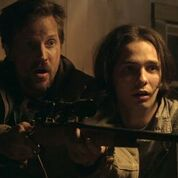
Portanova sets these events up just as smartly. Such is incorporated with a five-minute opening sequence that is as ominous as it is perfectly mood-setting. After this memorably striking instant, Portanova sets up an engaging, if familiarly rooted, plot. In the fiction, Roger and Mike go to a secluded, family owned cabin in the woods. This is after their prior home was tragically destroyed. Two pals, Sergio Guerrero (in a stalwart depiction from David Saucedo) and Will Marx (in a riveting and sincere portrayal by D’Angelo Midili), soon arrive. They carry on alongside the duo. Shooting local game is the shared focus. This is until the group inexplicably arouses the sights of a community of ape-like brutes. All of which eerily resemble the indigenous Yeti. Soon those who went into the woods expecting to showcase their proposed dominance over nature find themselves symbolically on the other side of the rifle. This is as the gathering of simian-like brutes demonstrate that they will gladly kill to protect their homeland.

hunting-grounds-pic-4

Recorded in Snoqualmie Pass and Roslyn, Washington, this Uncork’d Entertainment distribution release boasts seamless and remarkable visual effects from David Phillips. This October People and Votiv Films production also benefits from John Bash’s haunting music. Furthermore, Jeremy Berg’s cinematography is as organic and darkly beautiful as the material demands. Phillips’ editing is skillful and deft. The make-up team, concocted of Doug Hudson and Sarah Prevo, offer terrific input. Correspondingly, the sound from Jens Larsen and the costumes and wardrobes from Audrey Frances Abeyta are sharp and impressive. The seven- person camera and electrical crew, as well as Jerry L. Buxbaum and Vail’s incredible stunts, enhance Portanova’s confident guidance of the project splendidly. Tim Keaty, Regan MacStravic, Madeline Sadowski and Montana Tippett form a powerhouse art department.

The secondary cast is just as strong. Connor Conrad exhibits that he is an undoubtedly imposing force. This is unveiled in his ruthless depiction of The Beast. Additionally, Jordan Neslund is phenomenal in her brief turn as Town Girl. Bill Oberst Jr. augments the plausible edge of all we encounter with his ever-watchable representation of Bauman.

The consequence of these wondrous technical aspects and smart storytelling moves is certainly deserving of acclaim. Having won the Best Feature Film Award at Boise’s 2015 Idaho Horror Film Festival, the narrative, which was also graced with myriad nominations in similar commemorations, is guaranteed to also be a knockout with general spectators. This is because Portanova is unafraid to present flawed, yet richly settled, on-screen personas. All of them will prove, in one way or another, to be relatable to onlookers. Even when triumphantly issued action bits are the focus of the piece, as is largely the case with the second half of the exertion, the effort never forgets the motivations and plight of the protagonists. Such makes for a bit of celluloid that soars as stalwartly as a drama as it does a survival yarn. Portanova has evoked a genre entry that is unflinching and gripping; a must-see. You can do so yourself when Hunting Grounds becomes available via video on demand February 7th, 2017.

hunting-6


“Bornless Ones” – (Movie Review)

bornless-ones-pic-4

By Andrew Buckner
Rating: ***1/2 out of *****.

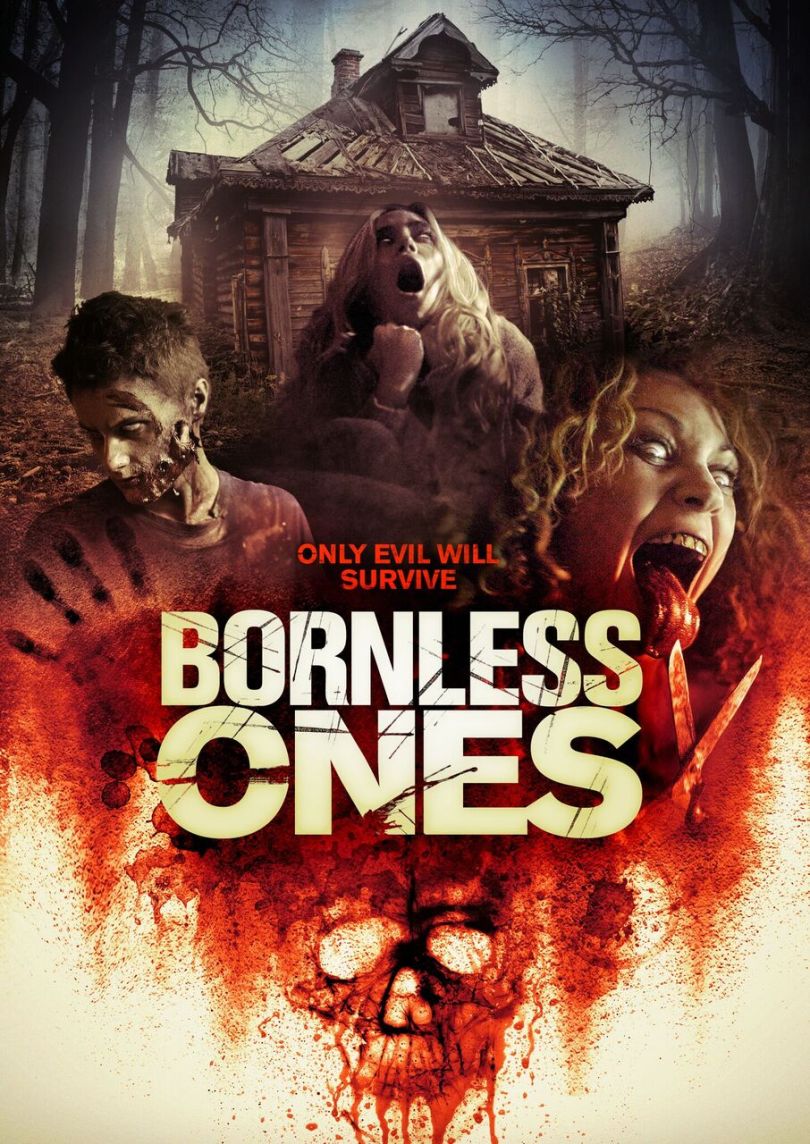
Bornless Ones (2016), the eighty-minute full-length feature debut from writer-director Alexander Babaev, summons the spirit of Sam Raimi’s seminal horror classic, The Evil Dead (1981), spectacularly well. Respecting the foundation laid down by Raimi, Babaev has crafted a rollercoaster ride of gore. It is one which is propelled by increasingly ghastly coincidences. Furthering this parallel is that these fearful events revolve around a batch of ruthless demons. All of whom are summoned to a secluded cabin the woods. Additionally, Babaev’s structure and general build-up of the presentation, alongside the previously stated mechanisms of the tried and true plot, are also reminiscent of Raimi’s tale. This is with the first half of the endeavor being more character-oriented. To its further favor, it is also noticeably well-mounted. In this early section, Babaev, whose direction is taunt and quietly stylish throughout, successfully executes a continuous sense of ominous dread. Once the runtime passes the halfway mark, the film tilts into full gear. From herein, it hits a momentous creative stride of claustrophobic, apprehension-inducing sequences that never wavers.

Likewise, Babaev fills each frame with inventive images and scenarios to brilliant consequence. They, in turn, make the unfolding chaos ever-present ever more tense and palpable. A memorably macabre moment at forty-two minutes in, which involves the torturous sight of a deceased child in a bath tub, is definitive proof of such a statement. It is also a testament to the largely convincing nature of Artem Miroshin’s accomplished visual effects. The idea Babaev conceives of “demons who heal”, as it is described by an individual in the effort itself, is especially novel. It further showcases the inventive spin Babaev puts into the standard mechanisms of such a rigorously held terror formula. In so doing, Babaev incorporates an even balance of promise and pay-off. Such works as well in Babaev’s narrative as it did when Raimi incorporated such a manner of account telling stability thirty-six years prior. Yet, the sum of Babaev’s affair isn’t entirely reliant on these imitative attributes to establish its high-quality. As a matter of fact, Babaev’s deft screenplay is decidedly fashioned more from the modern cinematic approach to the genre. This is in regards to the fact that it delves deeper into the brooding and often pained backstories of its leads. Such is in comparison to the previously stated Raimi authored groundbreaker. Yet, the configuration as a whole is, ultimately, hindered by occasionally tiresome dialogue. This is most visible when such celluloid derived speech lapses too often into the repeated question of “What’s wrong with you?”. This is projected as a go-to reaction to the revulsion-laced happenstances our central figures undergo in the later stretches.

bornless-ones-pic-3

Babaev’s routinely erected on-screen personas, none of whom may prove as iconic as Raimi’s hero from The Evil Dead, Ash (Bruce Campbell), are united by a variety of past tragedies. This is both openly articulated among some and with others initially kept secret. Such issues a perfect pulpit to develop ever-enigmatic personalities. All of whom constantly keep audiences intrigued. Simultaneously, this gives Babaev an opportunity to erect several genuinely surprising dramatic twists. These are positioned throughout the undertaking. Such authentically gasp-worthy instances beautifully compliment the unnerving tone of the construction. Moreover, they bring a human allegory to the frightful fiends that dominate the fiction. These elements assist the exertion in showcasing that it is much its own entity. Such transpires to great consequence. This is while keeping its obvious inspirations much in check. It makes for a well-rounded, delightfully entertaining exercise in dread. Such is one which is capped off by an ingenious final scene. In this brief bit, Babaev issues a clever and sinisterly smirk-inducing change in roles and perspective. Such represents a deliberate turn from the expected. Though Babaev can never completely liberate himself from such trappings, the sum of the exhibition remains potently engaging because of such unique components.

After a tense, gorgeously realized and attention-garnering opening section, Babaev focuses in on Emily (in a credible and charismatic performance from Margaret Judson). She has been left to care for her cerebral palsy afflicted brother, Zach (in a depiction by Michael Johnston that is towering and powerful; the emotive driving force of the labor). We follow her and group of her friends. This is as they help Zach, Emily and her boyfriend, Jesse (in a stalwart enactment from Devin Goodsell) settle down in their new abode. Yet, almost immediately the group uncovers strange symbols and handwritten notes. Making matters worse is the discovery of a satanic mural. All of which are strewn throughout the edifice. These are signposts related to the catastrophic circumstances, unknown to Emily and her confidants, which were inflicted upon those who owned the house previously. All the while, Zach seems to be undergoing sudden, miraculous improvements in regards to his condition. Yet, once an effort is made to remove these bizarre markings seven so-called “guardians”, ominous defensive entities, begin to gather outside. Such is another emblem. It is one personifying the chaos that is about to be unleashed.

bornless-ones-pic-2

Relatedly, this Uncork’d Entertainment distribution and Black Drone Media production, mostly shot in California’s Pine Mountain Club, is a triumph in the performance arena. It is graced with a hilariously energetic portrayal from David Banks. He plays the quirky, eccentric real estate agent, Richard Alonzo Jr. III. Mark Furze as Woodrow, Bobby T. as Michele and Victoria Clare as Christina are all wonderful in their portrayals. Gwen Holloway is particularly striking in her brief turn as Emily’s mother. Nick Saso as Dennis, Rob Tepper as Dr. Weisenberg and Svetlana Titova as Dolores are terrific. Pony Wave as Sarah and Greg Travis as Billy all bring distinctly remarkable life to the personas they embody.

From a technical standpoint, it is just as accomplished. The music by Paul Hartwig is compellingly constructed and masterfully moody. Correspondingly, the cinematography from Egor Povolotskiy is phenomenally proficient. Babaev’s editing is seamless. The camera and electrical department, make-up crew and sound team all deliver impeccibly in their specific categories. Augmenting this appeal is Catelin Dziuba’s fresh and exciting costume design. Similarly, Carlos Cortez’s art direction is eye-popping.

Such results in a flawed, but certainly admirable and worthwhile attempt. Many of the story beats ring with a sense of deja vu. For example, the anticipated episode early on where the team arrives at a rundown gas station. Such is a time-tested trademark often spied in motion pictures such as these. But, Babaev proves unafraid to boldly touch upon sobering subjects etched from real life fears and atrocities. Such illuminates and gives purpose to our protagonists. It makes us care for them even more because of this decision. We understand their motivations. Because of this, we feel the intensity of their plight. This is as they combat the otherworldly wickedness at hand. Such makes the suspense Babaev generates so ceaselessly here more profound and nail-biting. The pedigree of invention Babaev registers further elevates the material. Moreover, there are other slyly positioned winks to other entries in The Evil Dead series outside of the original. There is one especially smirk-inducing moment involving the tongue of the possessed and a pair of open scissors seen in the last act of Babaev’s latest. Such calls to mind Fede Alvarez’s 2013 remake of Raimi’s masterpiece. The voices of the overtaken in the oddly titled Bornless Ones, though not wholly believable and shakily dispensed, also seem to mirror such a trait in the three film (or four if you count Alvarez’s previously addressed reboot) series. Such adds an extra undercurrent of fun, especially for fellow cinephiles, to the proceedings. Because of such measures Babaev proves all that can be done with a familiar plot and set-up. The culmination of these minutiae is certainly worth seeing for yourself. You can do so when the movie arrives in select theatres and is simultaneously released on video on demand on February 10th, 2017.

The Facebook page for the photoplay can be found here.

The Twitter page for the flick can be found here.

bornless-ones-pic-1

“Night Job” – (Movie Review)

By Andrew Buckner
Rating: ****1/2 out of *****.

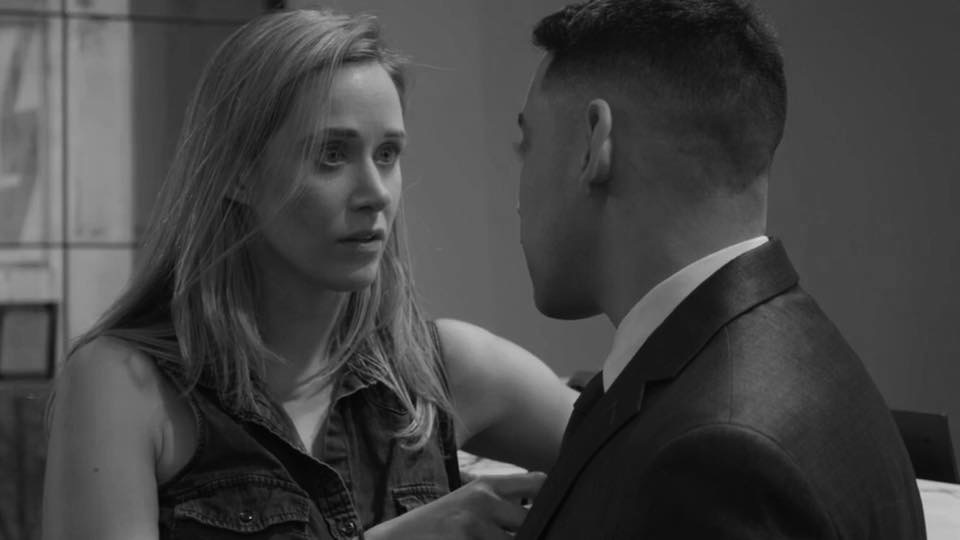
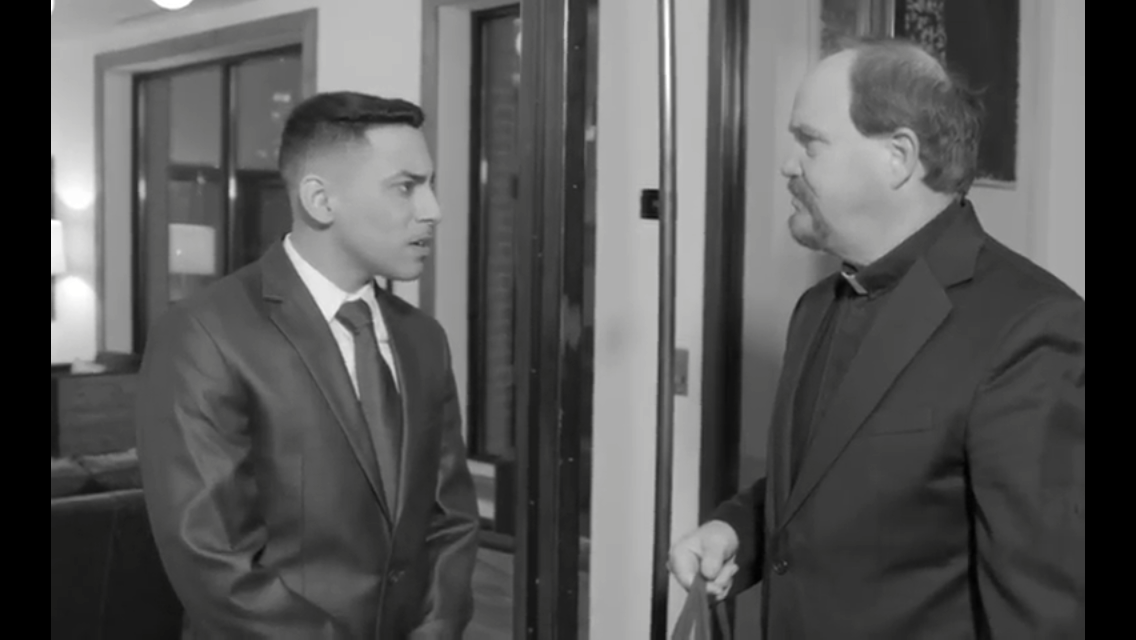
The strength of writer-director J. Antonio’s eighty-five-minute debut feature, Night Job (2017), is built on the unpredictable. More specifically, the various encounters with a wide assortment of individuals our ever-likeable hero, James (in a charismatic and always watchable personification of a fictional persona by Jason Torres), encounters. For example, he faces, in one of the most unexpected and amusing flashes in the invention, a priest (in a terrific depiction from Robert Youngren). The man of God has been summoned to James’ building to perform an exorcism. Likewise, one of the climactic passages, which involves an accusatory homeless man (in a smirk-inducing and wonderfully eccentric performance from Brignel Camilien), works just as well in this respect. Along the way, James meets a psychic by the name of Josephine (in an excellent representation from Shanane Christine Harris), a con man (Adam P. Murphy, who is terrific) and an adult DVD Vendor (in an extraordinary presentation from Lester Greene). There is even a woman that incites in James a flirtatious rapport. Her moniker is Catherine (in an endearing and proficient turn from Stacey Weckstein). Such transpires late in the endeavor.

These sections are all beautifully done. Moreover, they make the demonstration layered, rich and full of life. Adding to the mix are equally well-timed and successfully uproarious sequences involving various partygoers, cops and relationship related spats. Yet, each accruing happenstance is so apparently random that it makes the sum of the picture consistently entertaining. It also mirrors a certain reality. This is one that folks in twenty-three-year old James’ situation, whose first night shift as a temporary doorman in a Manhattan high-rise apartment building is the unique focus of the composition, must constantly undergo. This is as one of the various unwritten demands of his current employer.

night-job-pic-1

But, what is just as pleasantly erratic is the tender sequences of heartfelt depth. These are seamlessly peppered among the many effectively humorous instances that run through the bulk of the composition. The most noteworthy of these items is a discussion with our central figure and a near blind woman, Stella (in a quietly powerful, consistently credible and charismatic performance from Bettina Skye). In this exceptionally harrowing bit, which comes right before the hour mark, we learn of James’ literary dreams. Stella makes this portion increasingly enchanting. This is with her shared life learned lessons and positive reinforcement of James’ ambitions. The segments involving Stella and James are the cornerstone of the movie. They tap into an emotional honesty that is natural, graceful and transcendent. These qualities enhance the variety. They also touch upon themes that will assuredly prove relatable to a widespread audience. The sole color configuration in the photoplay, which comes immediately after the portion involving James and Stella, is both smirk-inducing, eye-popping and heart-stirringly ambitious. Here James sees himself as the poised individual he could be. Such an image is conjured by Stella’s optimistic words. In this sense, Antonio seems to be balancing out the oddness of those James meets with an underlying message concerning the kindness and unexpectedly hope instilling measures of strangers. Such only adds to the sly profundity at hand.

Such a stalwart attribute is also a courtesy of Antonio’s smart, honest, confidently paced and surprisingly bold screenplay. His dialogue is perfect for the material. It elucidates the small talk and other commonplace discussions strangers engage in among one another splendidly. His characterizations are proudly born from this existence mirroring trait. Such details make it easy to understand the motivations and the frequent confusion James alternately embodies throughout the construction. The deliberate, meticulous pace of the script augments these physiognomies masterfully. The result, when combined with Antonio’s luminous and assured guidance of the project, is an endeavor that promotes a great new cinematic craftsman. Simultaneously, it summons the soaring charming inherent in the greatest independent films.

night-job-pic-2

Also, building upon this magnificent foundation is the herculean impact of the enactments. Besides those mentioned above, Timothy J. Cox is brilliant in his fleeting role of Mr. Jones. Brandon J. Shaw, credited here as “Apartment 718”, fares just as well. Greg Kritikos as Romeo, Una Petrovic as Charlene and Carmen Borla as Olivia are also remarkable. The same can be said for Laeticia De Valer as Kelly, Steven L. Coard as Mark and Jose Espinal as Eddie. It is a distinctively large cast for an exertion that feels so intimate. Everyone involved delivers spectacularly. In turn, the labor is amended another of its many superior charms.

The crew is just as indispensable in creating the high-quality art that proudly radiates through every frame on-screen. T.J. Wilkins’ jazzy music is tone-setting and undoubtedly appropriate for the material. We notice this in the opening moments, which when combined with Valentin Farkasch’s immersive black and white cinematography, is guaranteed to generate nostalgia in fellow cinephiles. This is as an undeniable alignment to an old-fashioned noir from the 1930’s or 1940’s becomes evident. Such an impression is lifted throughout this comedy-drama. This is even when modern components which seem to dictate otherwise meet the bystanders’ gaze. Such an atmosphere is riveting and endlessly admirable. The seamless and sharp editing from Sam Druckerman makes this allusion complete. Correspondingly, Magda Suriel’s make-up is top-notch. Jennifer Humala and Luis Inestroza offer a crisp issuance of sound. Kyle Brown’s visual effects are a marvel. Unlike many modern mainstream undertakings, they do not take you out of what is occurring. Instead they vastly enhance the viewer absorption. Jonathan Alvarez’s camera department contribution is just as deft, capable and exciting.

Antonio has crafted a memorable masterpiece of movement and interaction. It calls to mind Kevin Smith’s ground-breaking debut, Clerks (1994). Not only is this noteworthy in its general focus on the inner-workings of a young man (or men as in Smith’s case), but it is true in the way it effortlessly develops its protagonists. This is while simultaneously diverting spectators via purportedly routine occupational dealings. Enhancing this comparison, is that in neither venture do any of the happenstances feel forced or inorganic. There is a low-key beauty to both, especially in its clever banter-oriented emphasis, that will keep cinema patrons repeatedly returning to the narrative. Such makes Antonio a promising talent. He has arranged an affair that is victoriously witty, graceful, funny and inspiring; a tour de force that onlookers will delight in seeing. Night Job, a Sacred 9 Films production, is scheduled to be released in November of 2017.

The Facebook page for the flick can be found here.

The Twitter page for Sacred 9 Films can be found here.

night-job-pic-3

“The Covenant” – (Movie Review)

By Andrew Buckner
Rating: **** out of *****.

The Covenant (2017), an eighty-seven-minute full-length film from co-writer and director Robert Conway (2016’s Krampus Unleashed), is a moody and effective take on the frequently utilized demonic possession tale. It establishes its captivating grip on its audience as well as its impeccably honed atmosphere of ever accruing dread instantaneously. This is with a handsomely fashioned and somber opening bit. Such is as devastatingly emotive and haunting as it is surprising and well-made. From herein, Conway and fellow scripters Owen Conway and Christopher L. Smith relentlessly build on this palpable sense of mounting dread spectacularly. This is with a deft balance of the familial slant between our two leads. As is expected with narratives such as these, it is also demonstrated with an ongoing theme of personal religious faith. All of which propel and richly convey an incredible impression of meditation and genuine concern for our central figures. This is while, as is most obviously illustrated in the last thirty-five-minutes, fascinatingly enlightening us about informatory details of prior cases of diabolical control. These formerly stated attributes endure stalwartly in the duration of the fiction. This is without ever ignoring the imaginatively issued and taunt string of supernatural events that unravel throughout the exertion. This makes for a fun, petrifying and incredibly well-rounded genre composition. The FunHouse Features production and Uncork’d Entertainment distribution proudly towers over most entries of its ilk. This is through its victorious poise of account driven elements alone.

Yet, this is far from the sole selling point of the endeavor. The screenplay is intelligent, luminously erected and confidently paced. Correspondingly, it is filled with credible dialogue that is just as believably delivered. Moreover, the material often breaks out of the general arc of related horror items. Such transpires with groundbreaking results. This factor presents to bystanders a work of celluloid that proves to go into courageous, yet genuinely chilling and disturbing, avenues on its own accord. A wonderfully unexpected and terrifyingly conceived twist early in the second half, which drastically changes the stakes and potential outcome of the chronicle, more than prove the victoriously operative nature of this distinguishing factor. Such leads to a nail-biting, potent resolution. The final twenty-minutes, though generally rooted in the situations we have come to expect from such an affair, are more than satisfying. This is from a character-oriented perspective. It is also true of its victorious execution of the various happenstances of unholy phenomena that are brought to life herein. The last sequence is especially unnerving and brilliant. Such is most evident when considering how it turns what would be an otherwise wholesome situation quietly into a shudder-inducing nightmare.

The plot is equally intriguing. Conway focuses on our lead, Sarah Doyle (in a terrific, harrowing enactment by Monica Engesser). Suffering and vulnerable from the drowning death of her Leukemia afflicted daughter, Elizabeth (in a turn by Amelia Habberman that showcases a range far beyond her young years), as well as her husband, Adam (in a riveting interpretation by Chris Mascarelli), Sarah moves into the home of her youth. Accompanying her is Sarah’s brother, Richard (in an absorbing and marvelously wrought depiction from Owen Conway). Almost immediately upon her arrival, she begins to hear voices. Most menacing of all, she repeatedly sees her deceased child swinging and singing the traditional kid’s tune “London Bridge is Falling Down” before her incredulous gaze. A segment in the first act, where Sarah looks out her window onto such an ethereal view, is gorgeously crafted. It makes unsettling use of such a happenstance. As the runtime endures, odd acting townspeople seem drawn to Sarah. They also feel the need to warn her brother of impending danger. These proceedings become increasingly more bizarre and violent. This is as the “hellish creature”, as it is described late in the photoplay, takes hold. Upon doing so, it incites within Sarah an outlandish fixation with her own death. It is a dark obsession that could well give way to the demise of those around her.

The Globe, Arizona recorded venture also boasts exceptional representations from the entire cast. Clint James is stellar as Father Francis Campbell. His persona often calls to mind Jason Miller’s iconic treatment of Father Karras in William Friedkin’s immortal adaptation of William Peter Blatty’s best-seller, The Exorcist (1973). Likewise, Sanford Gibbons is just as sensational in his unflinching illustration of Father James Burk. Maria Olsen as Holly Manning, Shawn Saavedra as Gerry and Richard Lippert as Man in Black are equally enthralling. The same can be said for Greg Lutz’s embodiment of Detective. Sedona Feretto as Lilith and Josh Schultz as Nurse are memorably transformative in their brief secondary roles.

The technical details are just as masterful. Gian Marco Castro’s music is perfect for the material. Travis Amery’s cinematography is illustrious and foreboding. It reiterates the often hopeless tone of the labor splendidly. Justin L. Anderson and Robert and Owen Conway issue editing that is sharp and proficient. The make-up department, formed by Cat Bernier and Cory VanDenBos, is exceptional. This trait is most obvious in the conclusion. In this stage, our heroine is at her most overtaken by the savage monstrosity inside her. Jessica MBah enhances the potency at hand during these sections as well. This is with visual effects that are seamless and spellbinding. Furthermore, Benson Farris and Kenny Mitchell deliver an amazing issuance of sound. The costume and wardrobe design from Lore Haberman augments the everyday authenticity we encounter spectacularly.

More than anything, the effort is reimbursed in quality by the noteworthy chemistry between those who portray Sarah and Richard. Consequently, there is not a second we are not engrossed. There is a conviction that pulsates through the arrangement. It stems from the magnitude of concern we invest in this aforesaid duo. It is just as unmistakable in Conway’s remarkable and stylish, without ever being distractingly so, guidance of the project. The plentiful set-pieces of trepidation are also cleverly administered. Best of all, Conway keeps them coming within the first few minutes. From this point on, he sustains such a dispersal of ghoulish measures at a fervent clip. Yet, it never feels as if he is sacrificing storytelling for such plentiful pulse-pounding manifestations. Instead they are organically taken from the circumstances Conway conceives in the yarn itself. Even the more tried and true scares, such as an instance within the first half hour where a door moves by itself, come off as vigorous and fresh. This is without the undertaking ever resorting to cheap jolts or unnecessary red herrings to heighten the impact of the presentation. Such is a true testament to Conway’s storytelling skills. It is also an unspoken testimony to the high-value of this alluringly built exercise in apprehension. The Covenant is an instant classic. You can experience the terror for yourself when the movie hits video on demand on February 7th, 2017.

“VooDoo” – (Movie Review)

voodoo-pic-1

By Andrew Buckner
Rating: **** out of *****.

VooDoo (2017), the eighty-four-minute full-length feature debut from writer-director Tom Costabile, is a surreal, delightfully disturbing and triumphantly terrifying midnight movie. It is also wickedly entertaining. Likewise, the HyperCube Films production hits a stride in its second half. This is with a relentless unveiling of gothic horror events. All of which perpetually calls to mind Sam Raimi’s masterpiece The Evil Dead (1981). Additionally, there is a midway instance that showcases a door slamming shut by itself. We are also given a dark entity with red eyes in this section. Such adds to the sheer cinephile delight on-screen. This is as such tried and true genre tropes, all of which are well-done and are presented in a manner that feels consistently fresh and new, draw a distinct parallel to Stuart Rosenberg’s classic adaptation of Jay Anson’s iconic best-seller, The Amityville Horror (1979). Yet, the last half hour is full of haunting, jarring, claustrophobic scenarios and images. All of which seem immediately pulled from the zenith of brimstone and hellfire that is Dante Aligheri’s epic poem, The Divine Comedy (circa 1308-1320). Such makes this assuredly entertaining release increasingly enjoyable. Best of all, Costabile, through his dazzling and taunt guidance of the project, mounts these sequences brilliantly. In the tradition of the greatest endeavors into celluloid fear, the scares begin with a fun, but effective, approach. Yet, as they go on they become far more unnerving. This is with each proceeding fright becoming more unsettling and memorable than the one which we encountered previously. It ends on a note that, though respectful to the foundation laid down by countless other found footage style flicks such as this one beforehand, is perfectly eerie. In turn, Costabile finds a punctuation point to his terrific endeavor that is hauntingly constructed. Moreover, it is guaranteed to leave audiences with a lingering sense of unrest long afterwards.

Costabile wraps these beautifully executed occurrences around an intriguing, if familiar, plot. The narrative concerns Dani Lamb (in a credible performance by Samantha Stewart that vibrantly captures the personality of her innocent, southern girl lead). She imparts on a vacation to Los Angeles. Here she stays with her cousin, Stacy Cole (in a depiction by Ruth Reynolds that is every bit as charismatic and well-wrought as the portrayal exhibited by Stewart). While exploring the city, a sinister link from Dani’s past finds them. Soon Dani finds herself in an apprehensive situation that quickly spirals out of control. After her daylong journey through “The City of Dreams”, Dani returns to Stacy’s quaint home. This is to be greeted by a black magic fueled nightmare.

voodoo-pic-3

The Costabile penned screenplay for this tale is structured, paced and characterized routinely. Yet, it is so tremendously put together that these attributes do little to tarnish the overall quality of the exertion. For example, after a genuinely chilling opening portion which depicts the abduction and ritualistic slaying of a young child, the affair provides exposition in the expected manner. This is as Dani and Stacy merrily discourse among one another as they discreetly drink Bloody Marys, sunbathe and immerse themselves in the sights of local California. The often jovial banter among the duo is also rooted among commonplace grounds. Much of the first forty minutes of the endeavor goes about in this fashion. Yet, these moments work. This is because there is an organic chemistry of friendship and likability to Dani and Stacy. When combined with the natural allure of the views the two partake in, the effort is breezily engaging. Because of this, Costabile’s motion picture rises where many similar entries fail. This is in getting us to genuinely become enraptured in the plight and care for our central figures. Given how gorgeously conceived the apprehensive components of this presentation is, such makes the balance between terror and real-life drama even more impressive and well-rounded.

Both the upbeat and seriously dread-inducing segments of the opus are masterfully erected. This is via David M. Brewer’s suitably gritty, yet consistently impressive, cinematography. Costabile and Alec Justin Henderson (who also takes on the role of “Sunset Playboy” nicely here) administer editing that is terrific. It is at times deliberately ragged. This is most evidently perceived in the aforestated commencing bit. Such a finely honed detail adds a sense of mounting intensity. This is built upon the confusion of the unexpected. It is what both potential victim of the account as well as patrons may be undertaking when witnessing such a scene unfold.

Furthermore, Christian Alexander, Albert Adams Polinsky, Adam Rettino and Seth Thomas exhibit incredible set decoration. Dean Guilotis, Bo Howe, Lior Molcho and Frank Synowicz distribute hallucinogenic, top-notch visual effects. The eight-person sound department, the camera and electrical as well as the make-up team all offer proficient turns. Melanie Macugoski’s costumes are rich and authentic. Composers Michael Dino Boito and Nathan Kwan reinforce the ominous atmosphere of the release magnificently. This is with a score that is sparse, but surely operative. It has such an instantly legendary impression that you can almost imagine Dracula himself playing the tune on a creaky, old piano.

voodoo-pic-2

Correspondingly, Dominic Matteuci is phenomenal in his representation of Spencer Boyd. Daniel Kozul as Trey Neil, Richard Krey as Bum and Constance Strickland as Serafine L’Amour are solid in their respective arrangements. Timothy Patrick O’Neill is exceptional as Uncle Jake. A cameo where Ron Jeremy plays himself, spied at sixteen and nineteen-minutes in, is smirk-inducing; a pleasant wink to the audience. The gathering of those who bring the assorted demons, minions and nefarious figures unveiled herein to life are all responsible for wonderful enactments. They vastly enhance the grim tone the photoplay gives way to in its later stretches.

The result is an undergoing that is sure to delight both budding and seasoned aficionados of nail-biting, supernatural cinema. With this excellent composition, Costabile has established a command of mood and buildup. This can also be attributed to the seemingly unproblematic fashion in which he develops his on-screen personas. Such makes it easy to state that Costabile is a director to be watched. His cast and crew prove themselves just as capable. He has evoked a heart-pounding rollercoaster ride of a movie. To its further benefit, it has a plethora of ghastly circumstances and ideas. But, it never falls into the trappings of being excessively graphic to illuminate these notions for maximum impact. Such is one of a variety of wise moves in a labor filled with such smart decisions. It all comes together to generate a wonderful exercise in cinematic anxiety. Such is one addressees will undoubtedly want to return to repeatedly. VooDoo hits select theaters across America on February 24th, 2017.

The Facebook page for the film can be found here.

voodoo-pic-4

“Leftovers” – (Short Film Review)

leftovers-pic-3

By Andrew Buckner
Rating: ***** out of *****.

“Leftovers” (2017), an utterly absorbing twelve-minute and forty second short film from director and co-writer Tofiq Rzayev, is sobering, heart-wrenching and undeniably powerful. It brings into account a meditation on the hellfire and purgatory one must endure for atrocious actions. Namely the rape and murder of an eight-year old girl. But, it is as adamant at addressing how such measures of wickedness immediately affects those who are closely tied to the situation. This is in both a familial and occupational sense. Much in the manner Rzayev issued with his previous entries from 2016, “Nihan: The Last Page”, “In a Time for Sleep” and his dazzling debut invention with Fidan Jafarova, “Araf”, the affair focuses on grief. Yet, this is without such primary agony ever becoming the sole selling point of the composition.

We note this most evidently in the method in which Rzayev, utilizing a bold and intelligently arranged screenplay he crafted with prior literary collaborators Alsen Buse Aydin and Mehmet Faith Guven, develops the personalities of the fiction magnificently. Such transpires via their reactions and mannerisms over the horror they encounter. This now trademark Rzayev storytelling device is spellbinding. It immerses viewers in the emotion overflowing from those on-screen to captivating effect. This is while simultaneously respecting the perpetually solemn tone Rzayev has so beautifully and carefully constructed. In turn, the harrowing impression of watching real life unfold never wavers. As a matter of fact, these wise narrative choices only amplify these attributes. The result is a mesmerizing masterpiece; a harrowing cinematic glimpse into the oft gloomy mechanisms of the human spirit.

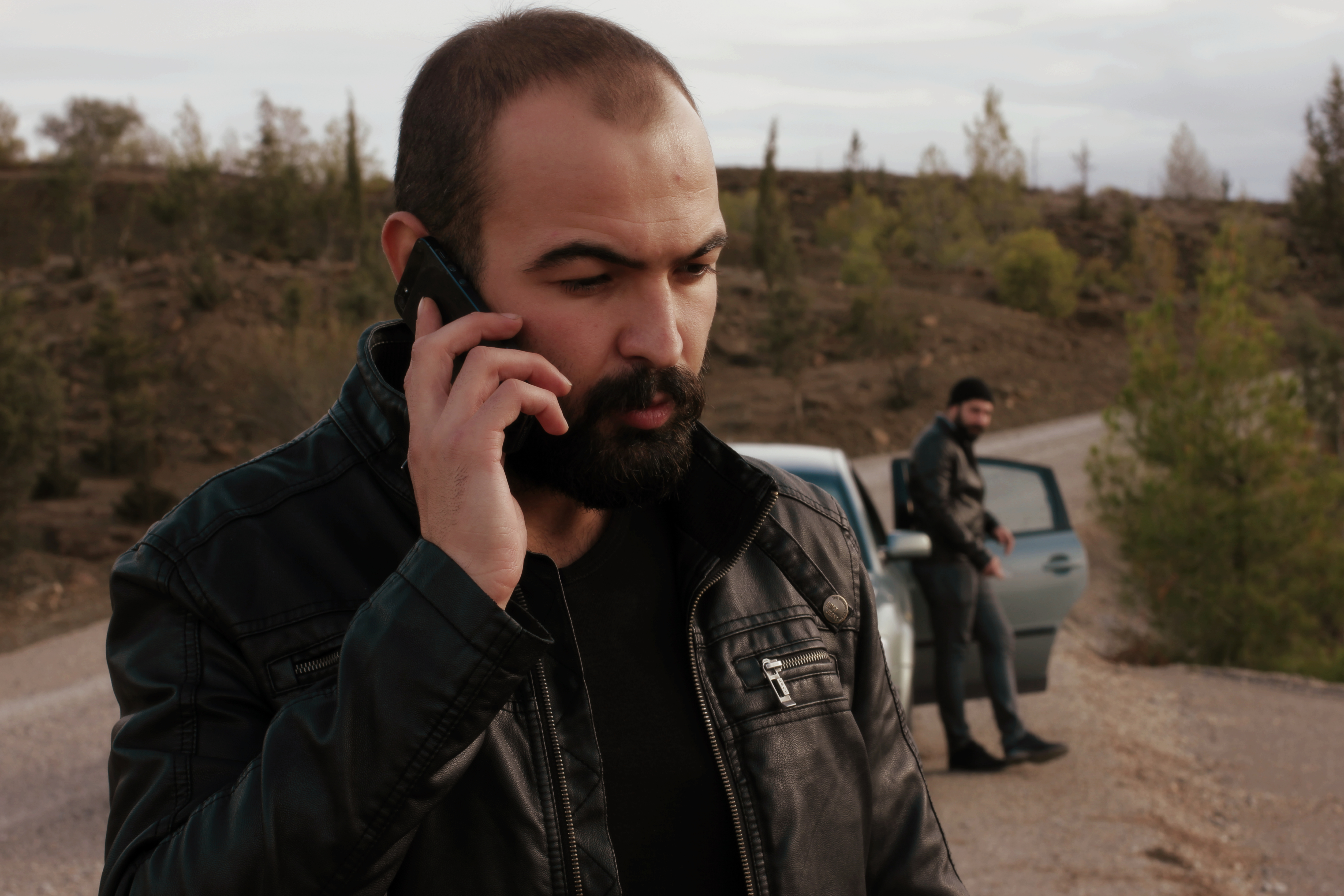
Set in the Turkish Mountains, this Angry Student Films Production concerns two civil police (in fantastic portrayals by Ismail Mermer and Erhan Sancar that further etch the rugged authenticity at hand). They are in the process of taking a highly troubled and distressed person, credited here as The Individual (in a genuinely moving and emotionally riveting performance by Gokberk Kozan), to identify a body at a crime scene. Upon stopping to allow their passenger to collect himself, a series of foreboding turns enter the narrative. From herein, sentiments, motivations and judgments take hold. This is as the drama hits a brooding zenith. Such sets the stage for a second half that unflinchingly focuses on the reactions to the abovementioned tragedy. This is with anger and heartache almost always at the forefront. The ardor-laden intensity in this section is made progressively palpable. Such transpires alongside Rzayev’s decision to keep the entirety of these measures in the confines of an isolated location.

Originally titled “Geride Kalanlar”, Rzayev weaves an increasingly gripping, brilliantly paced and executed chronicle. It begins strikingly. This is with an incredibly done shot from the backseat of a moving vehicle. Such suggests that we, the audience, are a silent passenger to the alternately poignant and unnerving circumstances which are about to occur. An immediate interest such as this only grows as the scant runtime unfolds. It is pushed to an undeniably haunting, open-ended concluding sequence. This is a perfect departure for a composition such as Rzayev’s latest creation. Such is so because it forces bystanders to become ever-involved in what is being depicted. This is a courageous, evocative choice. It is one that also pays off handsomely. In turn, the overall success of the endeavor is even more vivid and astonishing.

From a technical angle, the opus is just as mesmerizing. Rzayev, who also produced, issues masterfully constructed editing. His brooding cinematography is exceptional. It holds a mirror to the life imitating qualities of both the tone and the account itself spectacularly well. This can also be spoken of the clean, quiet, phenomenally arranged and fitfully reverential concluding credits segment. Likewise, Zahit Battal Sari demonstrates a compelling presence as the voice of The Commissioner. Additionally, the script audibly rings with ruggedly poetic dialogue that is filled with sly introspection and keen observations. All of which are cut from the everyday. These remarkable details are all perpetual evidence of the sheer craftsmanship which pulsates hypnotically throughout the exertion.

More than anything, Rzayev’s guidance of the project is utterly triumphant. “Leftovers” continues to carry on an undeniable parallel to Swedish moviemaking auteur Ingmar Bergman. Such an awe-inspiring comparison helped make his sixteen prior efforts so memorable. Yet, his style remains distinctly his own. At a mere twenty-two years of age, Rzayev has already cemented himself as a modern maestro of the moving picture form. His material is consistently central figure-oriented, meditative and unafraid to peer into the most unpleasant of social issues. Rzayev’s material, a reflection of his own personal reservations, engraves a certain wide-spread intimacy because of this factor. It is a detail that visibly resonates through one of his undertakings. He speaks to the humanity in us all. This is while simultaneously articulating to the mind. Rzayev’s most current tour de force is no exception. This is unquestionably one of the best efforts of its type of the year.

leftovers-pic-2

The 20 Best Short Films of 2016

By Andrew Buckner

It has been a breakout year for both up-and-coming as well as established talent. This is especially true in the medium of the short film. From heart-wrenching and experimental dramas, to mind-bending multi-genre tales, horrifying chronicles of fear and uproarious comedies, here is the list of my twenty favorite related works in this field from 2016. Please note that the name of the director of the piece is provided after the title of the production. Enjoy!

1. “Maya” (Veemsen Lama)
2. “Araf” (Fidan Jafarova, Tofiq Rzayev)
3. “Strawberry Lane” (Jeremy Arruda, Aaron Babcock)
4. “Chyanti” (Veemsen Lama)
5. “Kinnari” (Christopher Di Nunzio)
6. “Nihan: The Last Page” (Tofiq Rzayev)
7. “Numb” (Penelope Lawson)
8. “Dirty Books” (Zachary Lapierre)
9. “Here Lies Joe” (Mark Battle)
10. “The Deja Vuers” (Chris Esper)
11. “Tastes Like Medicine” (Steven Alexander Russell)
12. “Come Together: H&M” (Wes Anderson)
13. “In a Time for Sleep” (Tofiq Rzayev)
14. “Sisyphus” (David Graziano)
15. “Trouser Snake” (Alex DiVencenzo)
16. “Mail Time” (Sebastian Carrasco)
17. “Hell-Bent” (Foster Vernon)
18. “Hand in Hand” (Haley McHatton)
19. “Menu” (Matt Shaw)
20. “Last Night” (Tal Bohbot)

“The Deja Vuers”- (Short Film Review)

By Andrew Buckner
Rating: ****1/2 out of *****.

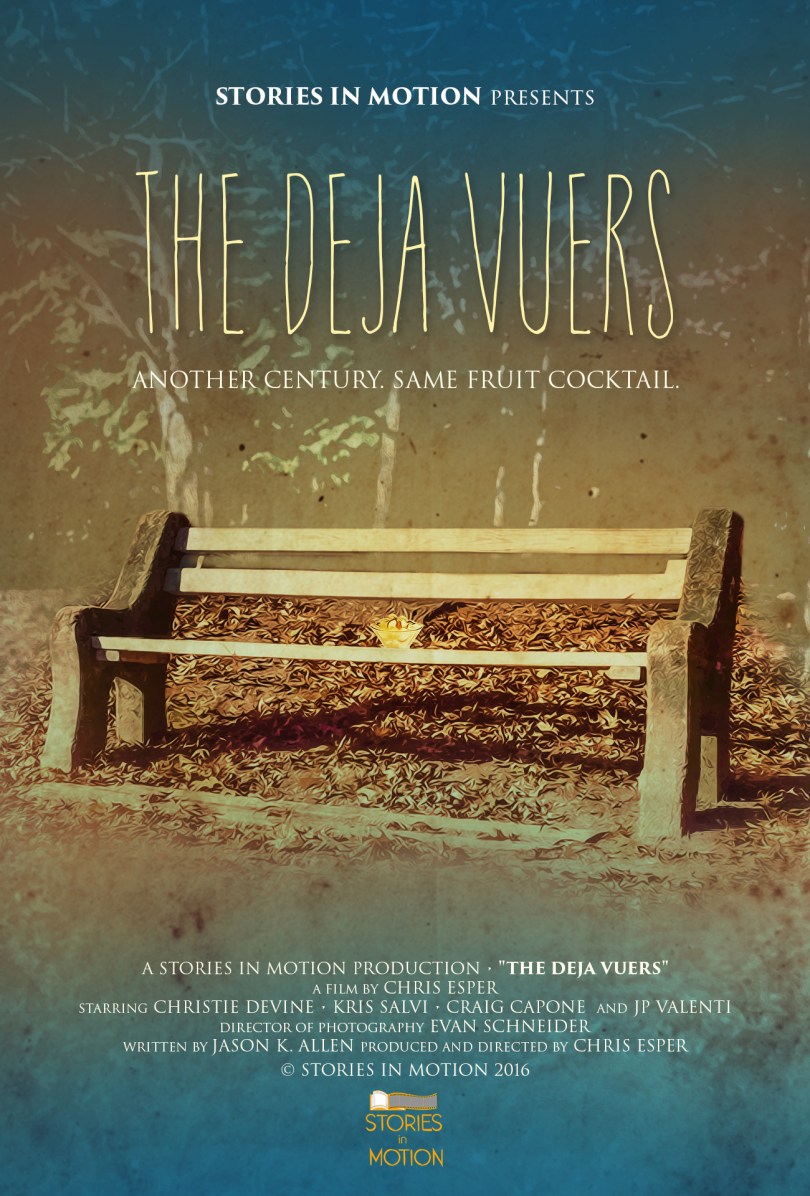
“The Deja Vuers” (2016), an eight-minute short picture from director Chris Esper and screenwriter Jason K. Allen, is a charming, frequently funny and endlessly engaging experience. It is ingenious in the way it takes a commonplace set-up, a man approaching a woman on a park bench, to comically absurd levels. This is without it ever becoming too over the top. Simultaneously, Esper and Allen inject trademark components of fantasy and science-fiction, time travel and dreams, into an undertaking that is consistently fresh and exciting. This is while maintaining its commonplace relatability. Likewise, it never once utilizes humor that isn’t naturally born from the unfolding circumstances of the plot itself. With these un-related items, a balance of the mundane and the fantastic is seamlessly created. It is one that is built on dialogue. The articulations heard throughout are rich in everyday observations, exchanges and quiet insights. Furthermore, Allen’s penned characterizations are accessible. This is without coming across as archetypical or lacking in dimension. Such is certainly a tremendous feat unto itself.

The attribute apparent in the writing of the protagonists is amplified by the herculean strength of the lead performers we follow on-screen. Christie Devine is outstanding in her enactment as Morgan. Kris Salvi is phenomenal in his portrayal of Chuck. Yet, even the comparatively smaller roles, such as Craig Capone as Elias and J.P. Valenti as “Repairman”, offer well-rounded and memorable depictions. Adam Miller as “Teenager” fares just as well.

The potency of these qualities is vastly a courtesy of Esper’s masterful administrative hand. It is just as evident in Allen’s sharply designed and intelligent authorship of the material. The duo immediately establishes, via their respective contributions, a quietly whimsical tone for the piece. It is propelled in the opening moments by the smoothly upbeat music of Steven Lanning- Cafaro. This can also be said for Evan Schneider’s sumptuous, vibrant and suitably cheery cinematography. Schneider’s influence also benefits from taking full advantage of the natural beauty of its budding fall backdrop. The result is a smartly penned and honed, effortlessly enjoyable production. It is one that visibly triumphs from both a technical and narrative stand-point.

Esper, who also produced, and Allen chronicle Chuck coming across Morgan in a chance assembly. He has never met her before. Yet, a reverie Chuck had from the night before, where Morgan is sitting in the precise location she is at that initial instant and with an identical expression of the confused look that overtakes her countenance, makes him come up to Morgan and address her in conversation. While the explanation of such an act itself could easily be perceived as a pick-up line, it is immediately conveyed that Chuck and Morgan both find each other “repulsive”. But, Chuck states, in one of the many efficaciously guffaw-inducing bits herein, that the mutual unattraction between the two doesn’t mean they shouldn’t be intimate. This is just on the off case that a bizarre fate is bringing them together. Soon after this smirk-inducing gag is administered, a chain of circumstances, often built around loose connections and clever ironies, amusingly unfurls. This begins with something as small as a container of fruit cocktail. Soon it evolves into an assortment of individuals from bygone eras and lives. Included in the mix is a personality who could well be conjured from a vision induced through slumber itself. It isn’t far into these episodes before Morgan and Chuck realize that there may be more to this sense of de ja vu than a vague sense of familiarity. It is than a portal unveils. Such an incidence threatens to pull Chuck and Morgan apart from their moment together. In so doing, it promises to bring them to a place and time more matched to their personal desires.

This Stories in Motion production, budgeted for $2,000 and shot in Attleboro, Massachusetts, further benefits from this truly original plot. The single position found in the piece is also impeccable for a celluloid invention such as this. Moreover, it activates intriguingly and ends much in an equivalent fashion. This is on a wildly satisfactory note of paradoxical enigma. This stretch is also striking in that it seems to express the general outlooks of the personalities viewed in this pre-closing acknowledgments succession. This is through decision over exposition. Best of all, it incorporates this without being obvious about its intentions. The construction is just as confident in its pacing as it is in its sly execution of such happenstances. Such an affair issues a commencing and concluding credits segment that is as quaint, stimulating to the eye and proficient as the sequences these portions bookend. Correspondingly, Esper’s editing as well as the optical effects from Robert L. Lopez are outstanding. Andrew P. Marsden provides deftly issued sound. Danielle Schneider’s make-up is expertly fashioned. These ingredients are eye-catching on their own. When combined, these details illuminate and augment splendidly the effortlessly admirable appeal of all we encounter herein.

Esper’s latest accomplishes an incredible amount in its brief run time. It efficaciously juggles a multitude of genres and ideas. All of which are difficult enough to pull off individually. Yet, with all these various foundations at play: there is an undeniable air of gentle romanticism to the proceedings. This is fitting and welcome. The composition is much like Esper’s “Please Punish Me” (2015) in this respect. This is also accurate when pondering its ability to explore human interactions and regressed passions. Such occurs in a package that operates equally well as both an unexpectedly cerebral character study and as a witty comedy. In turn, “The Deja Vuers” is a wonderful display of talent and wise storytelling moves all around. It continually exhibits Esper’s as a craftsman of the photoplay at every turn. The work also serves as perpetual evidence of the equally deft capabilities of his cast and crew. More than anything, the exertion reminds us of the illimitability and experimental nature inherent in arrangements such as these. Because of this, Esper and company have erected a must-see; another fantastic addition to his increasingly spellbinding filmography.

The Top 20 Albums of 2016

By Andrew Buckner

From time-proven legends to up-and-coming independent artists, here is A Word of Dreams’ list of the twenty best albums of 2016!

1. We Got it From Here…Thank You 4 Your Service – A Tribe Called Quest

2. Black America Again – Common

3. 1992 – The Game

4. Everything is Nah Bro -Sean Strange

5. Everything in Between – Ugly Heroes

6. Beautiful Disaster – Jonezen

7. Instinctive Drowning – Red Pill

8. The Storm – Tech N9ne

9. Good Versus Evil – Kxng
Crooked

10. MartyrLoserKing – Saul Williams

11. A Fistful of Peril – Czarface

12.  And the Anonymous Nobody…- De La Soul

13. Anything But Words – Banks and Steelz

14. Top of the Line – Rittz

15. The Blank Face LP – Schoolboy Q

16. Malibu – Anderson .Paak

17. Natural Causes – Skylar Grey

18. The Easy Truth – Apollo Brown & Skyzoo

19. The Healing Component – Mick Jenkins

20. Go – Krizz Kaliko

“Do You Dream in Color?” – (Movie Review)

By Andrew Buckner
Rating: ***** out of *****.

Directors Abigail Fuller and Sarah Ivy have crafted a genuinely uplifting and moving masterpiece with their seventy-six-minute documentary, Do You Dream in Color? (2015). The Final Cut production and Uncork’d Entertainment distribution release is a brilliantly and briskly paced, always engaging and meditative manufacture. Concerning the lengths four blind teens will go about to achieve their ambitions, Fuller and Ivy have presented audiences with an immediately intriguing and gripping focus. It is one which is made more so as we follow the varied, likable and charismatic lead personalities on-screen. This is as they endure the alternately inspiring and heart-wrenching circumstances they encounter. Such transpires as they attempt to bring their hopes to fruition.

do-you-dream-pic-3

In the demonstration, Sarah Wright imagines traveling the world. Her initial step on this venture is the reverie of going to Portugal, Spain during her senior year in high school. Carina Orozco wants to achieve the honor of being the first individual in her family to graduate from the previously stated institution. Connor Head yearns to be a skateboarder. His plight is finding a sponsor for his desired activity. Nick Helms, who has his own alternative band, wants to make it as rock n’ roll musician. With the interconnecting of these accounts, Fuller and Ivy invoke a colorful, lively and compassionate group; a celluloid palette conceived of charismatic souls. They are easily relatable. Such makes it effortless for patrons to become swept up in their happenstances. This is true from the opening frame to the last. The result is an endeavor that is as emotional and harrowing as it is consistently entertaining and enlightening.

do-you-dream-pic-2

What is just as fascinating and powerful is the denouncement of the public education system found herein. This is a massive obstacle for several of our protagonists. Some of the most riveting and poignant instances in the affair are derived from the fight several of these youth wage. This is to get more relevant resources for the unsighted into their own personal learning assembly. The labor than becomes as much about their ability to shatter the faux notion of limitation. They all yearn, regardless of their drive, to be perceived as every bit as capable of understanding and obtaining knowledge as their collective peers. This is the cause of the most captivating illustrations in the second half of the arrangement. In this section, those inflicted with this predicament try to do the best they can with the limited resources their scholarly place administers. Yet, Fuller and Ivy are not set to outright vilify. This specific area is presented with the same respect and dignity that the rest of the non-fiction projects onto all its various subjects. It yearns to make a change. This it succeeds monumentally at doing. All the while, it exudes the same reverence and bravery our central figures confidently carry. This is also a testament to Fuller and Ivy’s mature, appropriate, proficient and intelligent handling of the material. With this a quietly compelling tone is concocted. It illuminates all we come across. In turn, the spectators become an unbroken link to the singular viewpoints of those who deftly articulate their tales and experience in this sharply honed effort.

do-you-dream-pic-1

Much in the manner of similar exertions, the chronicle is complete with its sporadic implementation of pictures of Sarah, Carina, Nick and Connor in their prior days. It also contains other related documents of our chief characters. There are also narrative voice-overs from our heroes and heroines themselves. Such heightens the intimacy stemming unbridled from the attempt itself. We are given stories about our main characters from the relatives who witnessed such occurrences firsthand. This effectively ties in to the plethora of perspectives and vibrant voices which flesh out Fuller and Ivy’s well-rounded, gripping tour de force. Many of these expository instances, especially those that dominate the first half hour, are undeniably touching. The various recounts of the birth, and the instant the kin who is articulating the anecdote found out their son or daughter could not see, are especially stalwart. But, there are quieter bits sprinkled about that are just as stirring. For instance, there is a segment that fits in this early framework. It showcases Sarah and her brother, Sam, going through a well-kept album of photographs. He describes who and what he is seeing to Sarah. Her smiling face often showcases the delight we all feel when pondering beloved memories of the past. Near the hour mark, there is a scene involving Carina searching for a dress with the assistance of those around her. These episodes are reminders of the brute influence of simplicity. It also exposes the beauty such a component derives when untouched. Such a quality resonates fiercely throughout the exhibition. Additionally, a near climactic portion displays Nick writing his own lyrics and explaining their therapeutic value and importance. This is in preparation for a show inside a Hot Topic location where he will debut the track. These are equally mesmerizing. This is for much the same modest reason as that stated above. Such also makes the movie about another permanently vital issue. This is the supreme healing nature of art.

do-you-dream-pic-4

The Dallas International Film Festival and Big Sky Documentary Film Festival award-winner is as much a technical triumph as it is a transcendent, victorious summoning of the human spirit. Robert Lam delivers cinematography that is crisp and eye-popping. Simultaneously, this visual angle compliments the authentic veneer Fuller and Ivy provide spectacularly well within the recording. Sarah Devorkin and Mary Manhardt’s editing is phenomenally and seamlessly orchestrated. Arthur Baum, Michael Carmona, Gabe Salo and Wilson Stiner form a tremendous sound department. Their contribution consistently shines throughout the construction. Alice Gu, J. Christopher Miller, Christian Moldes and Arthur Yee incorporate hypnotic and proficient camera and electrical work. Furthermore, the music from Andrew Barkan is mesmerizing. It is the perfect soundtrack for the fearless folks at the heart of this breathtaking, real life opus.

do-you-dream-pic-5

Though the year has just begun, I have no problem stating that Do You Dream in Color? is one of the best features of 2017. This is because I can’t imagine a movie accomplishing as much as Fuller and Ivy have here. Such a proclamation is especially accurate given the brief runtime of the endeavor. The depiction, which arrives on video on demand February 10th and hits select theaters afterwards, compels addressees to examine themselves and their own ambitions. More than that, it urges them to peer past any obstacles placed in their path that they deem “too daunting”. In so doing, it encourages them to move forward with their goals. It is a rarity nowadays that an arrangement of cinema contains such motivational control. Such is especially true when considering the overwhelming positivity this affair leaves audiences feeling. This is long after its terrifically satisfying, yet suitably open-ended, conclusion. Yet, the photoplay is expertly designed and thoughtful at every stage. There is genuine substance to the proceedings and the general impression it conveys. Fuller and Ivy want to alter, not only the broken system of edification and how those with disabilities are perceived, but how we look at ourselves. Because of this, Fuller and Ivy have created a must-see; a benchmark for honesty in cinema. This is the brand of drama that watchers of all ages and in all phases of life can benefit from witnessing for themselves. With all the negativity brimming in the world today, we desperately need more optimistic, rousing, message-minded and all-inclusive films like this one.

do-you-dream-6