“Blair Witch” – (Movie Review)

blair-witch-pic-1

By Andrew Buckner
Rating: ***1/2 out of *****.

The imagination is the most terrifying place of all. It generates maniacal boogeymen out of distant sounds; unfathomable nightmares out of obscurity. This is why horror, especially in an optical medium, is most effectually drawn from what is left in the darkness. Daniel Myrick and Eduardo Sanchez provided brilliant proof of this with their ground-breaking, $60,000 budgeted psychological terror fabrication, The Blair Witch Project (1999). It was a marvel in this artistic department. Such a sensation was propelled by its insistence on letting the slowly unraveling minds of its three central figures, Heather (Heather Donahue), Josh (Joshua Leonard) and Michael (Michael C. Williams), augment this already hypnotic susceptibility. This aspect only accrued as they all found themselves lost in the indistinguishable surroundings of The Black Hills near Burkittsville, Maryland in 1994. To its continued credit, Myrick and Sanchez’s debut presentation was a stroke of genius in its marketing. The same could be said for the rarely used, at least at the time, found footage motif. A web site for the big screen arrangement (http://www.blairwitchproject.com/), which now advertises the new movie, aided in swaying audiences to believe what they were viewing was real. This was with announcements of the leads of the endeavor being declared missing. The sheer authenticity visible in every frame of the 81 minute, Haxan Films construction did little to dissuade this belief.

After uncountable imitators’ dabbled in this sub-genre, fellow cinephiles have been showing fatigue for the gimmick Myrick and Sanchez made so instrumental in contemporary attempts at trepidation. The hurried sequel, Book of Shadows: Blair Witch II (2000), didn’t even try to duplicate Myrick and Sanchez’s triumph. This was most accurate in these previously stated arenas. So after a sixteen year absence, director Adam Wingard and scripter Simon Barett, who have teamed up previously on You’re Next (2011) and The Guest (2014), have successfully given the once dormant series the addition it needed. This is with the third installment in the franchise, Blair Witch (2016).

Wingard and Barett return to the roots of the commencing undertaking. This is by bestowing its evidence with conviction. Such is also unveiled in the gradually unnerving manner we have come to expect. This is in a modus which, parallel to the initial opus, forces patrons’ minds to fill in the blanks. It demands that the viewers become one with what is on-screen. Yet, there is a downfall to the 89 minute picture. This is that the piece isn’t as confident in itself and its spectators. There is significant emphasis on sudden, head-splitting crashing noises. These mechanize better than expected in execution. Regardless, they retrospectively come off as a cheap stab at suspense building. The episode is also watered down by an onslaught of garden variety jump scares. This is especially perceptible in the first half. Such is a sad replacement for the subtle, proficient, psyche-bending shock of The Blair Witch Project. The Lionsgate, Room 101, Snoot and Vertigo Entertainment release, on this occasion financed at $5,000,000, is weighed down by the overwhelming impression projected onto uncountable developments. This is that a lingering feeling of déjà vu hangs over much of what we encounter.

Such is noteworthy in its insistence on reconstructing many of the iconic events from The Blair Witch Project. This transpires repeatedly in its inaugural thirty-five minutes. Likewise, the final twenty-five minutes, though tense and intriguing, showcases the identical destination as Myrick and Sanchez’s tour de force. Such deflates much of the nail-biting and unexpected elements that made the end of the aforesaid effort so genuinely chilling and memorable. In comparison to the sparse several minutes that posed the finale of Myrick and Sanchez’s creation, Wingard’s climax is overblown. But, it never feels that way. It gives us an extended chance to explore this ethereal, haunting, yet simple, setting The Blair Witch Project introduced late in its last act. Though the ultimate fate of our chief players foreseeable from a title card early on, we are constantly permitted to be one with, and undergo, what the protagonists are enduring. Most enthrallingly, it gives us an opportunity to explore these familiar surroundings deeper. This certainly is in its favor. It also benefits Wingard’s affair. This is in becoming simply a pale imitation of a vastly superior model.

blair-witch-pic-2

These moments are certainly deftly crafted. Such is the case with the notion of time manipulation and disorientation. It allows us to analyze certain sequences in The Blair Witch Project in a different light. Such also brings forth a whole array of fresh inquiries into what exactly is going on. This makes the primarily overwhelming belief that this is as much a carefully packaged remake as it is a supplement easily fade. Such occurs when we see what Wingard and Barett are doing with the material. The several fascinating twists, and the induction of different notions which occur largely in the second act, assist in making for a follow-up that is stronger and bolder than anticipated.

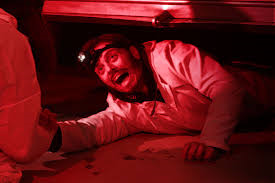
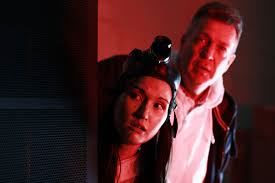
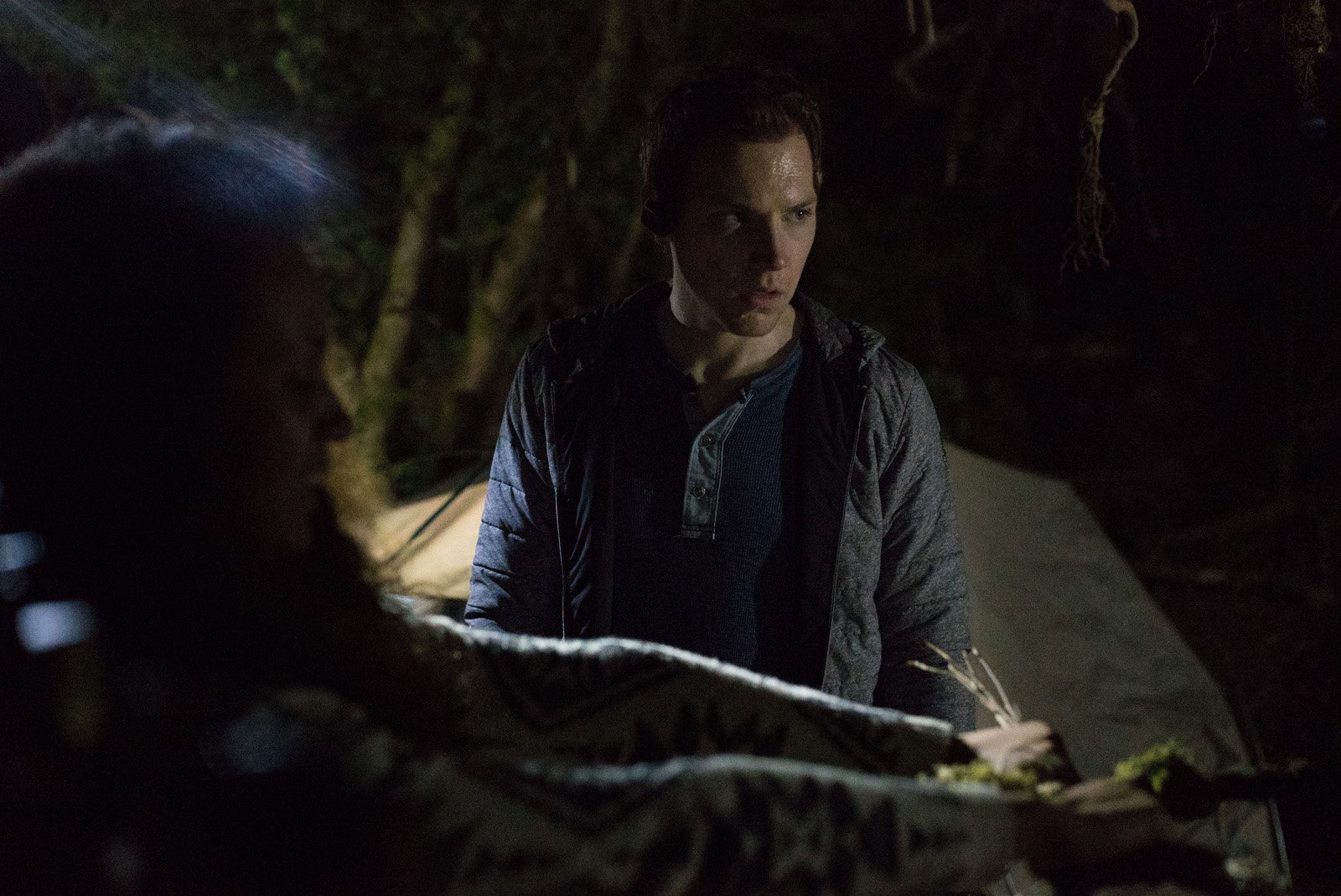
The narrative is admittedly thin. The flick opens with the ill-fated heroine of the foremost venture, Heather, being spied in an online video by her brother, James (James Allen McCune). This exhibits that which closed Myrick and Sanchez’s exercise. Trusting this is a sign that she may still be alive, James rounds up a crew of individuals. They want to document his trip to find his sister. These are Lisa Arlington (Callie Hernandez), Ashley (Corbin Reid) and Peter (Brandon Scott). Those responsible for putting the recorded material which heralded this journey on YouTube, Lane (Wes Robinson) and Talia (Valorie Curry), eventually meet the group. Soon the presence of the title character is noticeably felt. Our amateur documentarians discover themselves running into the problems which gripped those in Myrick and Sanchez’s outing. This quickly spirals out of control. They frantically utilize the HD cameras, iPads, GoPros and even the drone they brought along (which is pivotal in an unusually frightening instance at about the 2/3 mark involving the climbing of a tree), to capture and understand the increasingly bizarre measures as they unfold. But, it isn’t long before they uncover that their technical prowess is no match for the wickedness they disclose.

All of the enactments are fair and watchable. But, the human entities that populate what we see in Blair Witch are all one-note stereotypes. In modern fashion, they are merely potential victims. They are treated like pawns. All of whom we hardly get to know before The Blair Witch begins her systematic slaughter. None of the everyday realism engraved into the charismatic personalities in Myrick and Sanchez’s classic are evident in any shape or form in Wingard’s undertaking. Their motives are equally rote. Because of this, they are largely predictable. This also hurts the composition. Such is distinguished when the dreadful circumstances begin to unfurl. This is because we don’t care for them above the garden variety genre personality. The dialogue, and the story arc itself, courtesy of Barett trails suit with the average, commonplace excursion into fear. Still, Barett’s screenplay takes chances, issues sufficient innovative thoughts (particularly in the second act), and offers some genuinely surprising twists. In turn, Barett moves the narrative onto its own path respectably.

Wingard’s claustrophobic, immersive behind the camera flare is undoubtedly the impetus of the photoplay. He knows how to erect a startle. Even the most tired ones appear vigorous and novel. There is a wall of intensity he victoriously instructs. It is one which is largely unwavering throughout most of the production. But, unlike Myrick and Sanchez’s contribution in The Blair Witch Project, Wingard makes the proceedings seem a bit too comparatively artificial, false and photographic.

The positive nature of these qualities are all greatly heightened by Robby Baumgartner’s sharp, lush cinematography. Louis Cioffi’s editing is stalwart. That is if you can accept the obvious faults inherent in this section from its primary conceit. Wingard’s music is appropriate and evocative. Kate Marshall’s set decoration, Sheila Hailey’s art direction, Hayley Miller’s make-up and Katia Stano’s costume design all fare as well. The special and visual effects, a combined involvement from a half a dozen personages, are vastly plausible and impressive.

Blair Witch, formerly called The Woods, can be straightforwardly coined: “a true extension of its source material.” It re-introduces much of what we learned prior interestingly enough via casual conversation. This never feels forced. Yet, it expands this data, and the general mythology itself, with further details about the protagonist of the tale. Such will guide those who have not yet experienced Myrick and Sanchez’s masterpiece. This is while operating as a pleasant reminder to those who have seen the arrangement. Those who expect to be as thrilled, and view something as inventive as The Blair Witch Project, may be disappointed. Wingard and company spend too much of the bulk tracing the footsteps of Myrick and Sanchez’s introductory chapter for such an accomplishment to take flight. Moreover, the novelty of the concept has run its course. Yet, those of us who are willing to accept this and overlook these shortcomings should be satisfied. This is in favor of a few beautifully honed jolts and a correspondingly alluring aura of ever-mounting dread. Others may want to simply re-watch the original with the lights off and the volume turned up. In so doing, they can fully recall the full degree of fright they once felt.
blair-witch-pic-3

“The Neon Dead”- (Movie Review)

neon-dead-pic-1

By Andrew Buckner
Rating: ****1/2 out of *****.

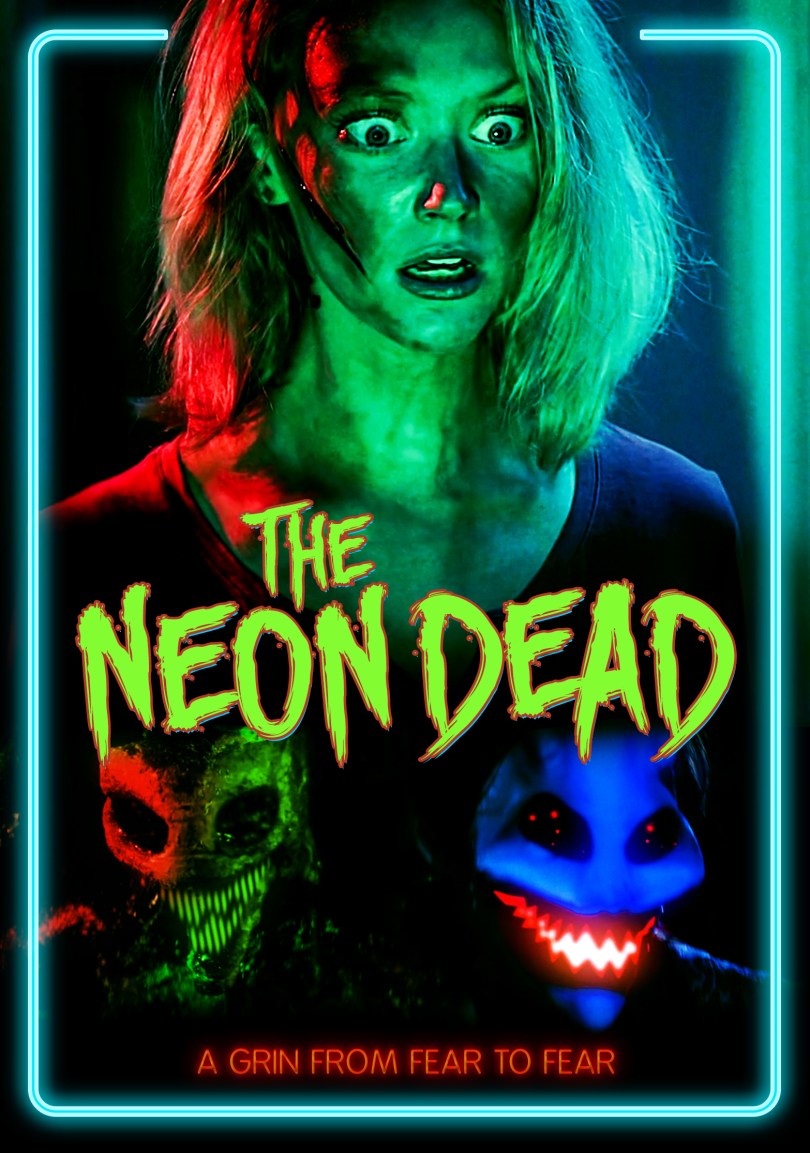
Writer-director Torey Haas vividly captures the campy, often excessive, spirit of playful exuberance that fueled the 1980’s with his full-length feature debut, The Neon Dead (2015). Distributed through Wild Eye Releasing and produced through MonsterBuster Entertainment, Haas has crafted a briskly paced, 80 minute delight. This is an unassuming and consistently engaging gem. It is one which incorporates many of the most memorable cinematic attributes of the previously stated bygone decade. The most notable of this is the often impressive, frequently cartoonish, but always enjoyable effects. They run the gambit of different brands of graphic illusions. This is with a range echoing from more practical designs to computer generated imagery. This comes courtesy of Tricia Gaulesky, Lane Force, Fred Grant and the long proven maestro of such visual components himself, Haas.

What is just as triumphant: there is a wonderful balance continuously drawn throughout the exertion. It alternates between deliberately tongue in cheek, and mostly inoffensive, humor and largely same said horror. Such an ambiance impeccably parallels VHS classics like Sam Raimi’s masterpiece, The Evil Dead 2 (1987). John Carpenter’s alien invasion opus, They Live (1988), Dan O’ Bannon’s schlock tour de force, Return of the Living Dead (1985), Stephen Chiodo’s laughter fueled cult model, Killer Klowns From Outer Space (1988), and Stuart Gordon’s magnificent H.P. Lovecraft adaptation, The Re-Animator (1985), also come to mind. There are also touches heavily reminiscent of bigger budgeted pictures. For instance, mirrors to Ivan Reitman’s ground-breaking Ghostbusters (1984) and Tobe Hooper’s Poltergeist (1982) are reflected throughout the fiction. Nick Lauinger emphasizes Haas’ obvious inspiration. This is with cinematography that is every bit as flashy, colorful and bright as the popular accessories, clothing, music videos and cinema that were so prevalent in the last five years of the 80’s. Similarly, Hsiang-Mieng Wen utilizes heavily rock influenced music. These arrangements fit each segment fabulously. Eric Davis, Katelyn Brammer, Nick Amideo and Haas provide editing that is proficient. Much in the manner of most of the aforementioned accomplishments, these elements are all a brilliant match for the mood of the piece.

The charming characterizations, though intentional stereotypes, can also be taken from various genre appropriate entries from thirty years ago. They are just as suitably cut for any number of John Hughes’ teen angst comedies. Adding to this antiquated appeal is that there is even an amusing battle at about an hour in. It plays like a pleasantly constructed, micro-budget rendition of the light saber battle between Luke Skywalker (Mark Hamill) and Darth Vader (David Prowse). This transpired near the iconic finale of The Empire Strikes Back (1980). If you are like me, and have a soft spot in your heart for any or all of these endearing gems, you will absolutely adore The Neon Dead.

Haas tells the tale of a Fairview State University graduate by the name of Allison Hillstead (in an ever-likable performance by Marie Barker). She is searching for a job. After being invited to an interview at noon that day for an assistant manager position at Saucy Jack’s, for which she boldly promises to be there a half hour prior, her immediate future seems certainly promising. That is until an undead woman is spied brushing her blood red hair, much of which comes off with her scalp, in the bathroom of Allison’s household. Fear soon gets the best of her. Trepidation turns to impatience. Such occurs as this otherwise horrifying moment is interrupted by a young Wilderness Scout of America, Ashley Amberson (in a wonderful turn from Josie Levy). Insisting on staying until she can receive a donation from Allison, Ashley unveils Allison’s worried plight. This is when she is informed of, and eventually contacts, a pair of paranormal investigators. These are Desmond (in a winning portrayal by Greg Garrison), a slacker/boy next door type, and the bookish Jake (in a depiction by Dylan Schettina that matches Garrison’s representation in quality and amiability). They are employed at a video rental department inside a local Save More grocery store. After this, Allison and Ashley head back upstairs to see what the so called “zombie” is up to. That is when Desmond and Jake, who quickly abandon their behind the register positions, arrive at Allison’s residence. From herein, the situation turns to an otherworldly battle. This is among the leader of the takeover, Guysmiley, the demonic “sons of Z’athax” and our iodized salt armed band of intrepid human heroes.

The result is an absolute joy for B-movie fans. This is an endlessly, uproariously fun, and never overly graphic (though you may think you have seen more gore than you actually have), experience. Though it is structured conventionally, the economically priced epic can easily be dubbed: “a non-stop the rollercoaster ride”. This certainly mechanizes spectacularly to the favor of the film. This is also thanks to ardent, commanding direction from Haas. The screenplay he erected for this $17,000 budgeted affair avoids the pretention, self-awareness, tired gimmicks and dead seriousness common in modern fare. In turn, we are awarded a plethora of successfully clever jokes. There is also plenty of equally victorious flashes of spirited dread. A concluding scene, which revolves around the “life goes on” ideology, is especially humorous. The dialogue, though familiar, is smartly written and delivered. There is also just enough exposition to be satisfactory. This is without weighing down the general story arc and movement of events. Likewise, such an aspect keeps our leads relatable to a large net of onlookers. Though the undertaking never aims to be outright terrifying, many of the early shots of the creatures veiled in the shadows, their eyes glowing voraciously in the background, are genuinely effective.

neon-dead-pic-2

But, what is best of all is that Haas doesn’t rely solely on the herculean sense of past longings ever-present within the framework of his narrative. He has a wild array of ideas in store. This he executes with feverish gusto and glee. Furthermore, Haas bucks the long-exhausted traditions and standard expectations of the returning corpse genus at every turn. A running gag concerning who the unholy entities really are can be seen as another sly wink at Haas’ audience in that respect. Comparatively, there is also an extended incidence involving a talking, decapitated head. This portion further proves the fusion of smiles and inventiveness at hand. It all enhances the nostalgia. This is as it evokes fond recollections of a similar manifestation unveiled in the final half of Ridley Scott’s Alien (1979).

Though Haas keeps his antagonists limited in number, there are a multitude of smaller roles which make a comparably abundant impression. John Reed as Big Z, Andrew Puckett as Drake Hillstead and Candace Mabry as Belle are all terrific. The other technical angles are just as accomplished. Breanna Thompson’s set decoration and Sean Michael Patton’s costume design beautifully retain the everyday details and cheery aesthetic of the piece. The make-up department, composed of Gaulesky, Jeremy Ledbetter, Christine Nguyen and Kate Northcutt, is both natural and radiant. Haas’ animation and Quyen Tran’s sound are just as awe-inspiring. Brian Hardison and John Holbrook issue masterful art division work. Hardison completes the illusion of stepping into the 80’s with a poster that is as ingenious, fluorescent and eye-catching as the fiendish specters who inhabit the movie itself.

This is pure escapist entertainment. It endures as one of the best “throwback” love letters in recent recollection. Haas showcases a wide knowledge of the era he is sending up. This is from the deceptively low-key opening. Such a sensation endures throughout the presentation. Moreover, the climax is solid. It is also, refreshingly, anything but overblown. Haas even gives us a pleasant bit of information in a post-credits scene that is sure to make your expectations for what is on the horizon blossom. It is also guaranteed to make your overall admiration for the endeavor all the grander.

The brief duration also helps. We leave the photoplay wanting more. This is while admiring the noticeable lack of fat on the celluloid bones of the flick. These are all wise decisions. They all come together to celebrate Haas’ talent, the great new feature he has woven and a period often described as “the neon decade” with precision and heart. Haas has also unquestionably proven that there is still plenty of life left in the often autonomous subject of the recently resurrected. This is the type of offering those of us who often haunted local video stores as often as possible and spent untold hours studying scarce titles often dream about making a comeback. The Neon Dead is reminiscence inducing, independent art. It is the type of moving fabrication you will gladly feel compelled to return to again and again. This is as the years move on and a longing for old-fashioned comforts begins to settle once more into your bones.  Such is the definition of an instant classic!

neon-dead-pic-3


“Hotel Inferno” – (Movie Review)

By Andrew Buckner
Rating: **** out of *****.

Rarely since Peter Jackson’s Dead Alive (1992) has a silver screen horror reveled in the gory inventiveness of writer-director Giulio De Santi’s third full-length feature, Hotel Inferno (2013). The 77 minute opus of murder and madness largely gains such ingenuity from the conceit of being, as the photoplay’s original tagline read, “The first and only splatter film in ‘first person point of view’.” This was a full two years before Ilya Naishuller used this perspective, so common among video games, successfully in the action romp Hardcore Henry (2015). Though both depictions involve similar protagonists, men trained in lethality who find themselves on personally risky assignments, Hotel Inferno is a completely different experience. It is darker, bolder and more foreboding than Naishuller’s labor. It may not have the sharper veneer of Naishuller’s $2,000,000 budgeted endeavor. Still, this works grandly in its favor. It’s often grainy luster, courtesy of the ambient cinematography of Stefan bergi, adds a continuous sense of claustrophobia and intensity to the proceedings. This highly victorious element of the Necrostorm, Ledick Filmhandel, Wild Eye Releasing and Eclipse distribution is only heightened by De Santi’s brutally stirring direction. Likewise, his script is a well-constructed presentation. The dialogue in this Tunisia, North Africa and Rome, Italy recorded account is minimal. It is also rudimentary and straight to the point. But, this mechanizes to its favor incredibly. The result is an opus that, though occasionally plagued by a sense of routine familiarity, is certainly memorable. This is despite the actuality that it is never overly terrifying.

Furthermore, the story is kept deliberately thin. But, there is a mercilessly taut arc to the application. Such makes these otherwise minor criticisms all the more arbitrary. This is when we realize that these afore-mentioned components are deliberately erected this way. It is done in order to help craft the movie into such a consistently entertaining parade of extreme graphic violence. De Santi also deliberately induces layers of enigma by what he leaves unsaid. This is as true as it is when considering what is directly communicated to De Santi’s spectators. It accomplishes this in savage spades. Such is utilized with attitude in abundance.

The gimmick of De Santi’s production is just as immersive, and used just as imaginatively, as in Naishuller’s later developed undertaking. Both flicks issue a breakneck pace. This is via an immediate jump into their respective optical extravaganzas. It is one that pulls us in as soon as the effort commences. Also paralleled in both Hotel Inferno and Hardcore Henry, the particular head of the fiction remains shadowy throughout. Moreover, the appearance of each specific principal entity is often deliberately hidden.

For example, De Santi provides an early second act instance in his exertion, unveiled at twenty-seven minutes in, which finds his hero unwrapping a bloody bandage. His hands are stretched out in front of a bathroom sink. Yet, his head is cocked down to avoid the mirror. This, we can only presume, is above this basin. Such smaller details showcase the creative flare this decision conjures. It makes it all the easier to see the extended tips of his extremities as being our own. The outcome of this is deft. It gives the production the illusion of being almost interactive. Not only is this stimulating to the eye, but it also enhances the undeniable factor of fun, present throughout, immensely.

Despite this intentional vagueness, we can still sense the urgency behind the central figure of each involvement. On some vastly unspoken level, the bare-bones information we are given is more than satisfactory. This is demonstrated so skillfully that the illusion of becoming one with the lead, sharpened through the ploy at hand, is all the more seamless. Consecutively, we find ourselves thinking, questioning and assessing each situation. This is as the main character must be doing himself. Such is just another signpost of the daring instincts courageously instilled into each affair.

In De Santi’s account, contract killer Frank Zimosa (in a gripping portrayal by Rayner Bourton), checks into a room. This is in the sprawling building referenced in the title. Here he receives instructions, supplied through a pair of experimental glasses, which inform him that he must kill two people. They also have recently checked into the area. Given precise details as how to slaughter this duo, one of whom is a crime boss by the name of Jorge Mistrandia (a sparse, but absorbing, enactment by Michael Howe), he immediately fails to carry out the specific manner of killing. From herein, his rules of delivering death fade away. In turn, so do the once limited instruments he can use to evoke such bloody deeds. But, soon Frank finds out that something unholy and otherworldly is going on amid his surroundings. This is when his mission turns into a living nightmare. It is one that he finds himself struggling to survive at all costs.

This is an intriguing concept. It is one that is benefited by being beautifully, cryptically mounted. The plot unfolds in the fashion of a puzzle: piece by piece. What augments the quality unveiled throughout is the stellar performances. Jessica Carroll as Frank’s Girlfriend, Christian Riva as The Plague Spreader and the Huge Female Henchmen are terrific. This is despite the fact that their roles are as limited in their development as that of Frank. The same sentiment is echoed in the representations of Wilmar Zimosa as Gomorra and Monica Munoz as the Female Serial Killer. Riccardo Valentini as Henchman in Good Health, Bonini Mino as Henchman with Chainsaw and Enrique Sorres as Sacrificial Human carve a lasting impression. This is all the more incredible given the brevity of their individual turns.

The technical details are just as stalwart. Protector 101 and Razzaw’s fierce and combative music delivers a perfect ambiance for De Santi’s cinematic bloodbath. David Borg Lopez and Sigma4’s special, and De Santi, Piranhasoldier and Tintapiatta’s visual, effects are vastly credible. Additionally, the make-up from Mo One is exceptional. The editing is just as phenomenal. De Santi, Piranhasolider, Secret Plant and Tintapiatta’s contribution to the animation department is equally spectacular.

Hotel Inferno begins and ends strongly. This is with eye-catching, repellently gruesome images. These can be seen as attention-garnering bookends. What is unveiled in between is every bit as uncompromising and grimly alluring. De Santi also presents to his audience patrons starting and concluding credit sequences that are indisputably stylish and striking. Similarly, the outdoors arrangements late in the third act are gritty, expertly shot and pulse-pounding. A segment involving an evil cultist drawing satanic figures in a room swarming with flies is one of the most hypnotic items in De Santi’s terror arsenal. Yet, there is a specific rhythm, a repetition to some of the scenes. These suggest a purgatory for Frank. This is amid the earthly hell he finds himself unwittingly drawn into.

Such items, along with the various qualities stated prior, brand this much more than a victorious cry of delight for fellow on-screen carnage fanatics. Much of De Santi’s big screen journey finds a fine balance between violent genre traditions. Yet, one would be hard-pressed to find a moment that doesn’t satisfy, enchant and encapsulate on a primal, visceral level. There also isn’t a second here that doesn’t excite or fail to feel fresh and new. Because of this, De Santi has surpassed the trappings of low-budget trepidation. All the while he simultaneously respects them. He has presented a vigorous ploy for moving picture fear. It is one that may prove to be as longstanding as the concept of found footage was when it initiated its heyday in the late 90’s. The recent announcement of an upcoming sequel, called Hotel Inferno 2: The Cathedral of Pain (2016), makes me all the more eager to see what De Santi has in store.

“Chyanti” – (Short Film Review)

chyanti-pic-1

By Andrew Buckner
Rating: ***** out of *****.

Director Veemsen Lama and screenwriter Sampada Malla’s thirty minute short (the pre-premiere, work in progress cut of which I was sent via email and base this review upon), “Chyanti” (2016), concludes with the resonant lyric: “It is the hopes that keep us alive.” This is a perfect reiteration of the overall theme of this subtle, emotionally honest and undeniably human work. Such is most perceptible in our protagonist, Ram (in an enactment by Shyam Khadka that is every bit as credible, mature and understated as Lama’s endeavor itself). He is a man who, despite the hardships placed before him, regularly reassures his wife, attributed here simply with the designation of “Mother” (an incredible, alternately wounded and strong portrayal by Babita Tamang) that their personal situation will get better next year. This is when Ram believes the regulatory landscape surrounding his kin will greatly alter in their favor.

It is this idealism amid grueling circumstances which helped make Lama’s prior masterpiece, “Maya” (2015), so endlessly relatable. The consequence of that sixteen minute affair was a harrowing reminder of the transcendence of pure cinema. It also helped make us care all the more for those Lama centered his narrative around. Such also made the overall experience gripping, heart-breaking and soul-stirring. We felt the disappointment of every low-point. In addition, our cores radiated with joy when fate appeared to be favoring the leads. The same is true of “Chyanti”. In many ways, Lama’s latest can be seen as a companion, especially in tone and in contemplation of the many of the subjects addressed, to “Maya”. This is especially accurate when noting the humanity that courses grandly through every frame of both productions.

chyanti-pic-2

This is largely thanks to Lama’s aesthetically breathtaking, yet remarkably intimate, behind the camera influence. It is also as much courtesy of an ingenious and genuine script that, much like the aforementioned chronicle, never wavers from its character-oriented emphasis. Malla’s penned construction, from an inspired by factual occurrences story that is credited to Lama himself, is confidently, smartly paced. It rings with authentic dialogue, proceedings and is graced with a highly unpredictable story arc. Also akin to “Maya”, Lama and Malla successfully offers charismatic, yet flawed, down to earth heroes and heroines. All of which are spectacularly realized and cut from the everyday. They are undoubtedly a representation of the reality Lama is obviously striving for throughout this stupendous exertion. Such makes the manufacture as a whole increasingly vivid, tear-jerking and entrancing.

Lama’s tale takes place during The Maoist Revolution. A commencing title card informs the viewer that such an event transpired in the South Asian country of Nepal. This was in the years spanning from 1996-2006. We also learn that this was a civil war. It was one involving the Nepalese government and the Maoist Communist Party. Such a combat left many homeless and took the lives of thousands of individuals. After a minute and a half of beautifully shot arrangements, all of which follow Ram coming home for the festival of Dashain, we witness firsthand the desperate financial situation his flesh and blood find themselves in. A distressing line of dialogue between Ram and Mother tells us that their daughter, Sani (in an exceptional depiction by Sangita Tamang), is about to begin school. Yet, Mother is unable to afford the food for dinner that night. Because of matters such as these, she cannot attain any of the niceties that the other children involved with Sani’s education faculty will be enjoying. This is when Ram and Mother look to selling Sani’s beloved goat, whose name is that of the configuration, to relieve some of this fiscal anxiety. Most of Lama’s undertaking revolves around the manner in which to do this without Sani becoming aware of what is really going on. This heads to an expertly done, sentimentally taxing sequence at twenty-five minutes in. At this point, we see the results of this difficult decision. This is through Sani’s innocent eyes. Such creates a mesmerizing conclusion to a brief photoplay where the word “unforgettable” certainly applies.

chyanti-pic4

Lama peers unafraid to inquire endlessly into complex issues of morality with this riveting endeavor. But, the cornerstone is Lama’s unflinching glimpses into what one man would do to provide for his loved ones. Such focus only heightens the quietly contemplative nature unveiled herein. It captivates us with its daring sensibilities. Lama has, in turn, provided an impeccable blend of intelligence, craftsmanship and sincerity. These are all ingredients Lama fluently distributes to his spectators. What is all the more amazing is that the opus doesn’t weigh itself down in the political aspects of the undertaking.
“Chyanti” is just as dazzling from a technical angle. Ben Winwood musically evokes the low-key demeanor of the presentation. This is with often gentle, but always ear-pleasing and appropriate, orchestration. Arran Green delivers gorgeous cinematography. Uhjwal Dhakal and Eriks Mickevics’ editing is terrific. Michael Ling’s sound is sharp and impressive. Babita Tamang, Khadka and Malla’s costume design is superb. Kaushal Pandit is tremendous. He leaves a lasting imprint with his short-lived turn as a goat seller. Ben Allinson’s visual effects fare just as wondrously. These meticulously erected elements all come together both seamlessly and authentically.

The Javiya Films and 360 Degree Mountain Films release is another confirmation of Lama’s intense talent. His knack for optical storytelling is ever-abundant. The effort is luminously framed throughout. This is in a fashion which infinitely amplifies the exquisiteness at hand. We see this in the jaw-dropping lensing of the natural surroundings of the account. Such is also accurate of the allure inherent in the various layers of the saga itself. This is an astonishingly accomplished demonstration. It is one of the increasingly rare creations that satisfies on all levels. Lama has amended a triumph of invention and honesty. “Chyanti” will undoubtedly please wide-audiences. It just as assuredly continues to establish him as a modern major of the moving picture art form. Because of the sheer magnitude of these achievements, “Chyanti” easily stands among the best featurettes of the year!

chyanti-pic-3

*All pictures included herein are the copyright of Javiya Films.

“Dark Romance” – (Short Film Review)

dark romance pic 1

By Andrew Buckner
Rating: **** out of *****.

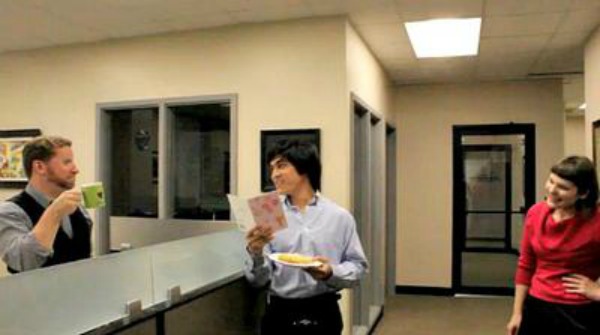
“Dark Romance” (2013), the debut short from co-writer and director Matthew Mahler, accomplishes in eight minutes what most thriller features need approximately an hour and a half or more to do. It tells a complete tale, albeit a familiar one, without the excess often utilized in a full-length fiction. But, the most intriguing element about Mahler’s account is that there is a considerable build-up. There is a high level of of suspense generated in its brief run. We, as cinematic patrons, are also offered a consistent focus on the obsessive signposts of affection directed toward our lead, Tim Cooper (another remarkable portrayal from Timothy J. Cox). They begin simply enough. But, soon they spiral quickly, wildly out of control. On Monday, Tim is given a card with a poem inside. They announce the regards of a mysterious someone in his office. By Tuesday, the chain of events have become violent. Wednesday is the bleakest day of them all. Thursday unveils a darkly smirk-inducing epilogue.

This condensed frame works beautifully. It also helps keep the intensity and pace wire tight. This also assists, in the tradition of the best white knuckle fabrications, in keeping our interest piqued to increasing levels throughout. Mahler makes the scenes showcasing the rapidly bizarre episodes for each of the previously stated spells as diminutive and to the point as possible. This narrative modus strengthens all of the aforementioned components terrifically well. Such is utilized via Mahler’s smart and claustrophobic direction. It is also strikingly unveiled in the sturdy screenplay he co-wrote with Ross Mahler. We are only allowed enough space in each sequence to see how unhinged Tim’s admirer is becoming. Before we can begin to fathom what is occurring, Mahler moves onto the next cringe-worthy instance. This makes for an undertaking that certainly delivers the exciting, expected ingredients of its genre.

To its discredit, the central figures are vaguely etched. Nevertheless, we know enough to care for them. It more than suffices given the scant duration of the piece. This is especially true of our labor-minded advertising executive antagonist. But, Cox more than makes up for this by being continuously affable. He fluently projects the type of managerial individual everyone at any place of employment, be it genuine or imagined, would like to have making the daily decisions. Tim’s secretary, Tiffany (Tiffany Browne-Tavarez), shares nearly as much screen time as Cox’s character. She proves herself to be a capable counterpart to Tim. This is with a simultaneously vulnerable, unflinching and bravura enactment. Though she is as broadly authored as the personality Cox brings to life, the duo both make their respective interpretations feel clearly unique. Because of this, we are more than willing to overlook the expository gaps in the Mahlers’ script. The proceedings are so well-done that we can also forgive another lingering sensation. This is that there is nothing new about the Fatal Attraction (1987) style confines of the straight-forward story arc. The twists are mostly expected. Correspondingly, the reveal of Tim’s devotee is obvious.

But, Mahler, who also provides the impressive cinematography and editing found herein, builds a plethora of memorable horror moments in an undersized expanse. Aside from the depictions and technical aspects, with Brian Shields and Ross Mahler both giving stirring turns in brief roles, this is where the real strength of the photoplay lies. Besides the already noted finale, what occurs on Tuesday is macabrely amusing. It is also masterfully designed. The segment optimizes its impact by eluding, but never glimpsing. Wednesday proves an appropriately unsettling, and grandly designed, climax. This arises as it more than ups the ante on the murderous crush taking place. The more light-hearted occasions of Monday mechanize just as well. They add a natural sense of enhanced disposition to Tim, Tiffany, and fellow employee, Cam (in a likable, credible and proficient representation by Cameron Rankin). It also adds similar personality to the composition as a whole. This is reflected in the natural, jesting banter that we hear early on. Such an attribute is just as active when the speech is more somber and terrifying in the advanced stretches.

Mahler has offered an all-around solid exertion with “Dark Romance”. The 8mm Films production, made for a mere $500 as a part of The 48 Hour Film project, excels as an exhibition of perpetually worrisome mood. It lacks the visual potency and risk-taking apparent in Cox and Mahler’s later collaboration, “What Jack Built” (2015). In this concoction not a word was spoken. Furthermore, the entirety of its eleven minutes was a one man display. Still, this is a gripping effort. The New York shot opus intends to both entertain and frighten. This is while summoning a vibrant aesthetic and authentic sensibility. It does this splendidly. The chemistry between Cox and Mahler, as well as the crew and their spectators, is more than visible in every frame. There is abundantly enough here to recommend this labor of fanatical love. The devotion to the craft from all involved resonates throughout. “Dark Romance” is a true gem. Because of this, I greatly anticipate seeing what Cox and Mahler’s next collaboration, “Finality” (2017), brings about.

dark romance pic 2

“Exorcist: The Fallen” – (Movie Review)

exorcist fallen pic 2

By Andrew Buckner
Rating: ***1/2 out of *****.

Exorcist: The Fallen (2014), the debut feature from writer-director Garrett Benach, opens, after a stimulating glimpse of scripture from 1 Peter 5:8, with a sequence which signifies the various observations ever-present in its scant eighty-one minute runtime. In this segment, Father David (in a stalwart performance by David Withers) initially confronts the manipulated Victoria Martin (in a commanding turn by Tara Marie Kirk which blends the vulnerable and manic elements of such a role impressively). The internal struggle Victoria is having with the biblical Book of Revelation entity, Abaddon, is present early on. It is also beautifully, hauntingly portrayed. As the sight progresses, she becomes wide-eyed and spasms, with blood dripping down her mouth. In these later expanses of the division, Victoria’s appearance calls to the similarly overtaken Regan MacNeil (Linda Blair) in William Friedkin’s unparalleled, The Exorcist (1973). When Victoria speaks the initially innocent and, eventually, raspy and vulgar tones she elucidates also mirrors Regan’s mannerisms in Friedkin’s ground-breaker. It does this tremendously. Such is issued in a sharp display of Shawn Willis’ technically proficient sound. It almost makes us briefly forget that Benach’s application is only affiliated with Friedkin’s composition in content. The same is true of its deceptively comparable title.

The two minute and ten second prologue, glimpsed around the conclusion, is uncommonly effective. It sets the stage for another example of the classic battle between the earthly and the otherworldly fabulously. Yet, one cannot deny the overwhelming familiarity which hangs over the proceedings. This is undoubtedly brought upon by the flux of correspondingly themed efforts which have come to fruition in the forty plus years since the release of Friedkin’s tour de force. It can also be seen in the general design of the story arc. Yet, it still entertains. Benach’s piece resonates with B-movie charm. The Wild Eye Releasing distribution and Garrett Benach Films manufacture is an admirable spectacle. It pulls great punches without an over reliance on gore. Such is also in line with its treatment of overdone shock motifs.

Originally titled Victoria’s Exorcism, Benach’s tale follows the title lead and her family. After playing with an Ouija board one night with a group of friends, Victoria begins to act strangely. This is captured in a passage, seen at fifteen minutes in, which showcases Benach’s knack for making discussions between individuals simultaneously intimate and intense. The portion is also an incredible example of how Benach weaves suspenseful tropes, such as the circumstance itself, into a configuration that feels fresh. As the narrative progresses, Victoria finds herself sleepwalking at night. The next morning, she has no recollection of the event. Further along, she unveils a strange figure, in another terrifically concocted bit, through her window. It is not much longer until Abaddon takes hold. Victoria’s brother, Glen (in a representation by Rollyn Stafford that is proficient throughout), experiences these happenings upfront. After failing to get Victoria to believe her own actions, he is the one who summons help. This is where Father David enters. Soon the duo begin their battle for both Victoria’s physical state and her immortal soul.

This leads to an engaging third act. It is more traditionally driven than that spied in the near hour beforehand. Regardless, it never defies what was so meticulously erected prior. This is by never going overboard with its paranormal situations. Instead, it finds a comforting balance between its alternating emphasis on theology, domestic interests and the pivotal terror aspects. This section respects the small scale, largely subtle scares and ominous, foreboding atmosphere Benach has deliberately crafted. There is also a consistent focus on how these abhorrent proceedings strengthen Victoria’s non-religious family. It also provides some intriguing, contemplative morsels of conversation between the Martins. This dramatic cornerstone, essential in accounts such as these, mechanizes to enhance the investment of its spectators luminously. Such emotive intensity in this arena helps make the final ten minutes especially riveting. This particular strength also finds Victoria contemplating the consequences of her actions. The aforementioned prompt occurs right before the credits roll. Such a post-tragedy look back from the formerly controlled is highly infrequent in related productions. Because of this climactic bout of meditativeness, Benach leaves his audiences on a high note. This is with several concluding scenes that are easily among the highlights of the endeavor.

However, the human renderings in Benach’s otherwise solid screenplay are largely genre stock. This is most visible in Victoria’s friends. Such is especially clear in the originating stretches. Not to mention, Victoria herself is given sparse exposition. What we do learn in this respect is largely of the garden variety genus. This attribute is also just as remarkable in the dialogue, motivations and situations that arrive before Abaddon’s inevitable entrance. Still, we find those we are surrounded with on-screen relatable and compelling. This is because these fictional personalities are expertly performed. Justin Hall as Mark Russell, Petra Boyd as Victoria’s mother, Susan, and Todd A. Robinson as Victoria’s father, John, fare phenomenally. Tom Slater as Joey Prentice, Theresa Park as Kristen Gario and Tony Teach as Martin Lamos deliver. This is with equal doses charisma and power in their individual depictions. The same can be said for Benach’s high-caliber interpretation of Robert Fox. Justys Spencer as Young Emily and Raegyn Spencer as Young Victoria are brilliant in their fleeting parts.

exorcist fallen pic 5

Benach’s direction is taunt. It is also consistently striking. With the accompaniment of Michael Weiss’ appropriately shadowy cinematography, Benach’s aptitude to stage an arrangement dripping with a rugged atmosphere of dismay is ever-apparent. There is even a dazzling reverie segment at forty minutes in. This part, with its eye-catching use of the color palette to add artistry and accrue sheer terror, immediately calls to mind Italian Giallo maestro, Dario Argento. It’s a bold bit that lasts approximately thirty seconds. Nevertheless, it leaves an indelible impression. This is the showiest exhibition of Benach’s talent found in this feature. Hitherto, his capabilities in this arena are visible throughout. Best of all, he builds his fright tactics organically. Rarely are we given a cheap jolt. This is as much courtesy of Benach’s behind the camera work as it is his deft scripting facilities.

Contributing to the technical impact at hand is Torrey Richard’s pulse-pounding and successfully dread inducing music. Damien Brooksbank gives us impressive special effects. They certainly augment the realism Benach is striving to project with this photoplay. Shawn Willis’ sound is sharp and terrific. It punctuates the hints of trepidation in the attempt all the more. Carrie Brandon’s animation is superb. Meg Gamez provides wardrobes that are magnificent. This quality boosts the everyday charm of our antagonist and those who surround her beautifully. Gamez’s art direction and Benach’s editing are also tremendous. They instantly grab our attention with their acclaim worthy merit. This distinction is carried unblemished throughout.

Benach’s Portland, Oregon shot opus is a gripping, worthwhile entry in its particular field. The sum of Exorcist: The Fallen is comparable in scope, pace and build-up to Ole Bornedal’s The Possession (2012). One can likewise find numerous parallels to Oren Peli’s original Paranormal Activity (2007). Benach’s stab at evoking alarm lacks the ground-breaking approach of Jordan Galland’s excellent comic fear composition, Ava’s Possessions (2015). The same can be said when aligning Benach’s affair with Daniel Stamm’s well-done found footage release, The Last Exorcism (2010). Benach doesn’t hit the visual pinnacle of Mikael Hafstrom’s criminally underrated, The Rite (2011). But, there is a contemporary gothic approach to the endeavor that is timeless. Most importantly, Benach genuinely cares for his heroine. Because of this, patrons will find themselves doing the same. We are with Victoria and her grief-stricken kin every painful step of the way. In a world where such traits are often given a cold shoulder in exchange for upping the ante on cheap shock, Benach’s labor rises far above the competition because of this concern. We are acquainted with all that transpires herein. But, the pieces of the puzzle are fascinating. Moreover, they fit grandly into place. These are all signs that both Benach and unholy proprietorship stories such as these will continue to thrive and enjoy the wonderfully long cinematic life remaining ahead of them.

exorcist fallen pic 6

“KillerSaurus” – (Movie Review)

By Andrew Buckner
Rating: **** out of *****.

Near the mid-way point of writer-director Steve Lawson’s unapologetically entertaining, science-fiction/ horror undertaking, KillerSaurus (2015), Jed Bailey (in an amusing and ruggedly charismatic portrayal by Kenton Hall) dryly quips: “What do they got in there, King Kong?” As is well known, the quote originates from the iconic Chaos Theory-minded mathematician, Dr. Ian Malcolm. Such an immortal bit was previously delivered through Jeff Goldblum’s brilliant enactment of the eccentric personality. This was in Steven Spielberg’s timeless rendition of Michael Chrichton’s best-selling masterpiece, Jurassic Park (1993). Such a line, though obviously recycled, brought me an ever-broadening smile. This is because I am one of the legion who continues to look at Spielberg’s feature, and dinosaurs in general, as enduring personal favorites. To me, they remain an unbroken link to the merriment and wonder of childhood. This quality alone propelled my enthusiasm for Lawson’s already striking photoplay. Yet, the relentlessly smoky, dark and playfully foreboding tone, refreshingly etched characterizations and the sparse, but mostly striking, uncredited effects are far more reminiscent of an entirely different moviemaking endeavor. This is legendary craftsman Roger Corman’s enchanting camp classic, an adaptation of a 1984 novel by Harry Adam Knight (whose real name is John Raymond Brosnan), Carnosaur (1993).

Regardless of the way it attaches itself to these past nostalgias, lofty ambition and imaginative inklings are clearly visible. This further punctuates the highly charming, made for the drive-in sensibility that pulsates throughout. Likewise, much of the banter, especially when describing the creation of a Tyrannosaurus Rex with the aid of a 3-D printer, is fascinating. The specifics which accompany this particular invention, spread throughout the labor largely via Professor Peterson (a watchable enactment by Steven Dolton which captures all the attributes of the modernized ‘mad scientist’ persona splendidly), are equally gripping. They triumph at filling in the backstory gaps in an intriguing fashion. It is done in a manner which, simultaneously, isn’t extraneous. Also, it doesn’t bog down the continually smooth pace.

killersaurus pic 1

Additionally, these notions, especially the formation of the carnivore itself, are also clever. Much in the same vein, they are intellectually stimulating theories to ponder. This comes off as highly comparable to Jurassic Park in another arena. This is to that of billionaire John Hammond’s own personal modus of bringing to life these long extinct beasts. The use of frogs is existent in Lawson, Chrichton and Spielberg’s fabrications. Still, the number never fully relies on this parallel to enthrall audiences. Lawson has gleefully utilized these conversant elements to build an alternately meditative and engaging opus. It is one which is distinctly its own entity. Such a sensation broadens in a certain moment where information about the final vision concerning  Professor Peterson’s menace is unveiled. A late third act issued fact about this creature brings this impression especially forward. This data mirrors the terrific fourth installment in the Jurassic Park franchise, Jurassic World (2015). Such a recollection arises when we find out that the resurrected relic is being planned to be used as a war weapon. This is courtesy of a mysterious governmental organization. We eventually learn that they are funding Professor Peterson’s project.

Lawson commences the narrative of his sixth cinematic venture with a tense, attention-garnering and technically impressive on all avenues ten-minute opener. During this sequence, tragedy befalls Professor Peterson’s secret research facility. This is when the above-mentioned fossil reptile slaughters many of the members of the area of “The Center”. After a skillfully designed, and spectacularly visual acknowledgements scene, we move forward in time. From this point, we uncover that our protagonist, Kayleigh Ma (in a finely wrought and multi-dimensional depiction by Helen Crevel), has been forced to sign a non-disclosure agreement. This is concerning the horrific dealings in Peterson’s building. Frustrated, she hesitantly goes back to the place of the initial bloodshed alongside blogger Bailey. Soon the two are drawn back into the life Ma was forced to not discuss. From herein, concealed intentions are exposed. Just as terribly, the vicious creature proves to be as much of a ravenous threat as beforehand. Inevitably, a fight for survival ensues. This is as both the sixty-five million year old fiend and the association that is backing Professor Peterson makes their presence increasingly known.

killersaurus pic 2

Though the plot seems fashioned from the same related sources as it winks at in both sights and dissertation, the Creativ Solutions production and Wild Eye Releasing and 88 Films distribution never seems that way. This is because Lawson has given us a late-night delight. It is one which has a balance of wit and will. This is despite its obvious financial restraints. The composition also wisely subscribes to a proven adage. This is that the act of making your audience wait to see the beast shall increase effectiveness and unease. Such an approach summons the ideology behind another Spielberg tour de force: Jaws (1975). As a matter of fact, we do not see the Tyrannosaurus Rex in full until forty-four of its seventy-four minutes have passed. Yet, the elusions to the ferocious mammal generates an ominous ambiance. It helps us anticipate the visage of the upper-Cretaceous Period giant all the more. When we finally do view the ancient terror, it only enhances the impact enormously. Such appearances are kept to a minimum. Proving these tested guidelines of similar exertions correct, this elevates the interest and investment in what is accruing on-screen. Best of all, it shapes the intensity perceived within into an ever-palpable and taunt construction.

This bareness is riveting for most of the sit-through. Such is especially true when the minimalism present is issued in relation to the limited personalities in the tale itself. It also is just as accurate in consideration of the few locations used. This makes the piece all the more claustrophobic and resourceful. Even the small scale and infrequent action segments, which are both nail-biting and inventive in their own right, carry a charm that any measure of overwrought, multi-million dollar spectacles will never know. For example, there is a late second act passage involving Bailey being locked in a room with the villainous theropod. This is a deft illustration of how impeccably these components combine in such instances. In retrospect, Lawson’s effort is a masterclass in this avenue. This is until this strength of the slight is interjected to concoct an abrupt, and relatively, limp finale. Such an incident occurs at sixty-eight minutes in. It, rather cleverly in hindsight, intends to elude to what happens solely through a single item of speech. This is provided as a replacement to showcasing these motions.

killersaurus pic 5

Still, the arrangement remains stalwart as a whole. This is shaped tremendously by the assistance of the likable, high-caliber turns from everyone involved. Julian Boote as Andrews, Adam Collins as Sergeant, Vicki Glover as Amy and Marc Hamill as Laser Technician all offer credible, proficient representations. They bring life to individuals that could’ve easily become genre stock. Lawson’s crisp, clean and immersive cinematography, editing, camera work and sound contribution are spectacular. His direction and writing are equally sharp and stylish. Furthermore, Alex Young’s original score is thrilling. It perfectly complements the material. Kevin McLeod’s end montage music fares just as well.

Though the story arc is as familiar as the twists which are found within, Lawson has delivered a superior B- gem. There is a welcome and appropriately retro feel to the the proceedings. Such an impression remains unwavering. This is even when modern touches, such as the flashes of various explosions spied in the climax, are visibly computer generated. These minor glitches are easy to forgive. It is because KillerSaurus is consistently fun. The account never gives into being too self-aware. In the tradition of the best entries of its ilk, it is somber in mood yet, doesn’t take itself too seriously. Even if the culminating result isn’t as close to Spielberg as it would like to be, there is an abundance of ingenuity and talent operating on various levels throughout. Such makes Lawson’s exertion a magnificent case of all that can be completed without fiscal excess. It is also an exhibition of what can be instituted when deprived of an overabundance of special effects and gore to substitute excellence. Of the catalogue of accomplishments Lawson derives, this is the most necessary and incredible of them all.

killersaurus pic 3

“The Convict” – (Short Film Review)

By Andrew Buckner
Rating: ***** out of *****.

“The Convict” (2014), the third short film from writer-director Mark Battle, deftly moves through its taut, claustrophobic man on the loose set-up to an undoubtedly human and incredibly satisfying conclusion. Such makes the closing instants of the twenty minute composition all the more intimate, poetic and resonant. This potent resolve makes our cinematic expedition with the lead of the narrative, David Eller (in a presentation by Dean Temple that fantastically conveys the commanding, yet broken, presence of so many genre heroes in a largely wordless portrayal), all the more triumphant and tear-jerking. The overall outcome is the structure of a filling novel or epic photoplay condensed to showcase the most important events in the fiction as playing one after another. In such a brief span, Battle tells a complete yarn. It is one made all the more varied by the wide range of sentiments it musters. This is true both in what is projected in the tale and within the hearts of its astonished spectators.

Battle heightens the intrigue by smartly only feeding us small details of David’s past. This is while keeping larger attributes, such as why he was incarcerated in the first place, an enigma. Such wise decisions keep us studying what transpires inside the affair. This is while searching what Battle gives us for answers to the many questions about this particular individual we are following. Such only keeps our interest piqued to ever-accruing levels throughout. An example of the strength of these attributes can be found at a sequence at nine minutes in. The scenario here finds David a passenger in a vehicle with a believed stranger named Buddy (in an enactment by Travis Mitchell which is just as watchable, gritty and impressive as Temple’s depiction). He seems to know much more about the title escapee than David could’ve ever imagined. Such cranks the ever-piquing interest and intensity on-screen, propelled by a rocket-like pace that never wavers, to increasingly unbearable levels.

When many of the pieces come together late in the last act, the journey is looked back upon as all more harrowing and personal. Though the personalities unveiled herein are purposefully more straight-forward and less banter driven than those perceived in Battle’s later masterpiece, “Here Lies Joe” (2016), it lacks none of the visual or emotional impact. Moreover, Battle paints the canvas of the screen with the same arresting, proficient and visceral style which has made his entire catalogue so incredible. Battle’s script share many of the same high-caliber attributes. It is also backed with an always reality based edge. This is in both characterizations, with David being himself being terrifically developed and alternately mysterious enough to add to the suspense, and situations. The Sweven Films release and winner for Best Short Drama in the Somewhat North of Boston Film Festival for 2014, is a perpetually athletic sprint of moviemaking muscle. It is one built with sheer craft and intelligence.

convict pic 1

Battle commences this riveting tale with a well-executed and attention-garnering arrangement. This concerns David breaking into an apparently random home. His intentions, whether they are villainous or heroic, remain secluded. With this pivotal bit kept deliberately cryptic, Battle travels as a silent partner alongside our protagonist during the runtime. We learn that he has escaped prison due to a parole denial. Yet, as he travels the wintry New England roads in hiding from the authority figures who are aiming to haul him back from where he once came, there are tender moments which come unexpectedly. They suggest David is aiming for more than a taste of freedom from reformatory bars with his dangerous travels. Such is evident in an interesting, and well-done, scene at six minutes in. In this section, David risks being seen. This happens as he walks into a local store to do a seemingly simple deed. This is to buy flowers for an unknown recipient. We are left wondering who these are for. Such is an inquiry we are not provided until the rousing final minutes unveil.

Such a brilliantly conceived modus to tell an intentionally thin chronicle such as this is made all the more remarkable by the amazing, starkly life mirroring performances and technical components all around. For example, Kieran Battle as Cameron, Suzanne Bryan as Mary and Michael Anthony Coppola as The Parole Board Chairman are all exceptional. Kevin Haverty as Store Clerk and Robin Ann Rapoport as Wife are equally spectacular. They all make a shining impression. This is in the small flash of screen time they are given. Additionally, Michael Beal III creates an impeccable atmosphere with the soundtrack he has conjured. All the tunes herein compliment the seamless genre shifts of this dramatic thriller magnificently. Correspondingly, “On My Knees”, written and performed by Dave Munro, sets the ambient tone for the essential segments it is played in beautifully. This is organized to wrenching consequence. Battle’s editing, visual effects, cinematography, art and set decoration are also top notch. His camera department work is just as striking. Similarly, Nicole Celso does a wonderful job with her make-up contribution.

The result is the raw, yet easy to look at and ponder, veneer of a multi-million dollar action production. The undertaking is all the more notable upon realizing that it was conceived with financially far less. Such is just one of the many jaw-dropping elements this ingenious endeavor radiates admirably through its every frame. Battle has issued an account that more than satisfies in all of its genre aspects. “The Convict” is a well-rounded, heart-pounding and heart-breaking opus. It is one which is as much about getting the pulse racing as it is in exposing the lengths one would go for a few fleeting seconds of love. Both are time honored fundamentals of storytelling. Rarely do they both combine so well. Battle has erected a tour de force. This is a masterful example of a white knuckle odyssey that stupendously elucidates genuine bite and soul. Fellow cinephiles take note: this is mandatory viewing.

convict pic 3

An Interview With “Maya” Director Veemsen Lama

Lama pic 3

By Andrew Buckner

Today I have the honor of talking to filmmaker Veemsen Lama! Welcome! Can you tell us about yourself?

I was born in Nepal and moved to the UK when I was 18. I am a storyteller, a filmmaker, and a YouTuber. I make a new video and upload it onto YouTube every week (www.youtube.com/veemsenlama) – they include short films, music videos, vlogs, etc.
When I was in Nepal and still a kid, we used to watch many Bruce Lee, Jackie Chan and Van Damme films, which have had a huge influence on me and made me want to tell my own stories. Once in the UK, I had the opportunities to both study film and start making short films.

You taught yourself how to be a filmmaker through YouTube videos and tutorials and similarly themed books while in the British Armed Forces. Later, you studied Digital Film Production at Ravensbourne in London. What was this process of education like for you?

When I was learning from the Internet and books, it was not formal education. Joining Ravensbourne gave me more confidence, more opportunities to network with other filmmakers. Filmmaking is all about teamwork and collaboration.

Film school also gave me the opportunity to use more kits such as good cameras, lighting kit, studios, sound gears etc.

How do you feel your work in The British Armed Forces helped shape the types of tales you tell as well as the narratives you choose to evoke through the medium of the screen?

I think my experience and journey in the military helped me to create and relate many stories. Filmmaking is all about teamwork and collaboration and I learnt exactly the same thing whilst I was in the army. Filmmaking and military exercises are similar in that sense. Also, neither is easy! I think a good director is a good leader because many people rely on his idea, and if he fails with his vision, then the whole film fails and so will the whole team. This is how we learn to complete a mission in the army – with good leadership, good planning, and good preparation, we achieve our aims and it is exactly the same in the filmmaking process.

Lama Maya pic

What brought you to create your wonderful 2015 short, “Maya”?

A couple of years ago, when I went to Nepal, I took a picture of some street kids sleeping next to dogs. I spoke to them on one of the following days and they told me they were homeless, but they still had those dreams, those hopes of being happy, of having a good life. And after that day, I told myself I wanted to make a film about street children, who -despite their horrible situation- still had simple and beautiful hopes and dreams.

There is obviously a theme of love and optimism amid darkness and danger in “Maya” that makes it all the more emotionally stirring. This is also a common theme in your catalogue. What draws you to these topics?

I just want to tell simple stories, stories of those who are poor, those who are suffering and those who keep dreaming no matter what, those who fight and are hopeful in their everyday lives. I like to tell stories people will be able to relate to easily and get involved emotionally with too.

“Maya” is still doing well in film festivals. Congratulations! How vital are these types of gatherings to a filmmaker? Why?

Thank you so much. Stories and films are like our babies. We spend a lot of time in pre-production, production and post-production. We – as filmmakers and storytellers – give our hard work, our sweat, our time and our everything in order to bring our characters to life.

The filmmaking journey itself is an emotional one that is connected to our life, our family and our dreams. It feels relaxing and pleasurable when you know your hard work is appreciated.

I think, as an independent filmmaker, I need this sort of recognition to encourage me to do more, always work harder, and simply keep going.

You have a new short coming out called “Chyanti”. It is currently in post-production and is scheduled to be coming out in the summer. What else can you tell us about this project?

“Chyanti” tells the story of Ram, a guerrilla fighter, a father and a husband who – in the midst of the Maoist revolution – returns home to celebrate the festival of Dashain, only to realize that if he is to feed his family and send his daughter to school, he must sell Chyanti, the family goat, so beloved by his daughter, Sani.

“Chyanti” was really hard to shoot and became a very expensive short film too. I wanted to capture the beautiful mountainous landscape because landscape is one of the characters of the film.

We had to travel to a remote Nepalese village, which was a 10-hour drive from Kathmandu. Furthermore, there were no proper Internet connection, phone signals and electricity. Those really were the main challenges! And then, all of the sudden, the crew started to get altitude sickness too and had to be evacuated by rescue helicopter.

But it was worth it – despite of all those problems, we completed the shoot and returned to Kathmandu safely.

Lama Chyanti poster

Also, you have your own production company. It is called Javiya Films. How did this come about?

I’ve always wanted to have my own production company and when I was in film school it just kind of happened and I created my own brand, which I named after my daughter, Javiya. She is my lucky charm.

You also have a feature length film in the works. What can you tell us about this?

We are in pre-production of some horror projects at the moment and planning for drama films.

What words of advice would you give those who are trying to get started in filmmaking and don’t know where to start?

Technology has made our life much easier, allowing anyone to tell stories, whenever and wherever. So my advice would be: Don’t make excuses if you really want to make films – just tell your stories! Find the best story that’ll get your audience connected and involved. If the story is poor, it doesn’t matter how good the actors are or what cameras you have used, it will fail. Finally, don’t talk about it, just do it. Take action and action creates results.

You have sixteen shorts under your belt. Your earliest was in 2013. It was called “Neema”. How do you think you have grown as an artist in the three years since this project was released?

In 3-4 years, I think I have learnt a lot. All the short filmmaking was part of the learning process. I feel more grown up, more mature in storytelling. I used to focus on cameras and gears but now I mainly care for the quality of the story and the best way to tell it.

Let me give you an example- A film is like a bus and the director is like the driver. All the passengers are like your audience. Once they are on the bus, they care about the journey from A to B. They forget about whether they are standing or sitting when the bus starts. As the driver of the bus, I have to make sure my passengers feel comfortable throughout the journey. Making a film is all about the journey and if the journey (story) is bad, then you’ll have a disappointed audience. It’s as simple as that.

Once your audience is connected and involved in the story, they can forget everything else. Nobody will care what camera you have used or what lighting you have used if the story is good. So the story is –in my opinion- the very first priority.

veemsen pic 2

You are also a screenwriter, cinematographer, producer, actor, assistant director and camera operator. What draws you to these particular facets of moviemaking?

As an independent filmmaker, you should be able to do a bit of everything, I guess. Sometimes, you might have to act as one army man and if you are lucky then you will have a team of 20-100 people, who will make your life easier and help you turn your vision into a potential blockbuster. It is always good to put yourself in other people’s shoes in filmmaking, but I’d say directing is my bag.

I actually started filmmaking as a cinematographer and I think a cinematographer is the eye of a film; he or she is the one responsible for the visual elements of a film. And I personally like the visual side of filmmaking better than the storytelling. I think I can show more. Which is why it is easy for me to communicate with my cinematographer about what kind of shots I want.

Also, I normally create my own story so that it is easier to envision a film. I am a good screenwriter but I am still learning to write. And if I can write a great screenplay then I won’t have to explain each and every element of my vision to the screenwriter, which would speed up the process.

I don’t like producing because I don’t really enjoy logistics, paperwork, finding funds, etc. I love to be creative and I like that creative process! However, should there be no producer, I’d know how to do the job as I have done that job before.

I played in a few films too when I was at film school and we couldn’t find actors, but I am not really a great actor.

lama pic 6

What modern artists (may it be writers, fellow directors, actors etc.) are you most inspired by? Why? Do you see yourself collaborating with any of these individuals in the future?

Alejandro Inarritu, James Wan, Christopher Nolan have always been massive inspirations. These storytellers have different styles of storytelling. Alejandro Inarritu’s Babel and 21 Grams are so unique in the sense that he connects many stories in one. James Wan style of horror has always inspired me and made me want to make horror films. The way he uses the camera slowly and smoothly, rather than making a lot of cuts, creates scary situations that make people scared and affect them psychologically. Christopher Nolan’s Inception is mind blowing. That will stay in my mind for the rest of my life. I want to make a film like that, one that people will never forget.

You have worked in the genres of romance, action, horror and drama. Is there any other categories you see yourself branching out into? Why?

I am a big fan of horror and drama films. So I will probably start with the horror genre and move to drama and why not become an actor later. Horrors can be done with a smaller budget, so it might be a good way to start.

Do you have any other upcoming projects you would like to discuss?

We are working on some horror features at the moment and plan to shoot next summer. I can’t disclose further information though.

Do you have any final thoughts for us?

Thank you so much for giving me this opportunity to share my story and my thoughts. Cheers to you guys for supporting and helping independent filmmakers!

Thank you for your time! I look forward to checking out your upcoming projects!

Lama selfie

*The pictures utilized throughout are credited to ©Javiya Films (http://www.javiyafilms.com/).


“Model Hunger” – (Movie Review)


By Andrew Buckner
Rating: **** out of *****.

Model Hunger (2016), the eighty-four minute full-length directorial feature debut from veteran actress Debbie Rochon, is cinematic madness. This is true in the gleefully off the rails tone Rochon so wonderfully presents. Such brilliantly intertwines the dark comedy of John Waters with the detailed splatter of an early tour de force from director Peter Jackson. There is also more than a touch of Troma Entertainment head, Lloyd Kaufmann. Ironically, the previously stated low-budget craftsman, and related company, Rochon has starred in more than a few films for. There is also a clear inspiration from the Italian maestros of terror, Lucio Fulci and Dario Argento, stylistically perceivable herein.

Such a component is also strikingly evident in Lynn Lowry’s vivid, increasingly unhinged performance. Lowry ever-intriguingly portrays the lead murderess with a deceptively gentle southern exterior, Ginny Reilly. But, one of the most remarkable feats Rochon and screenwriter James Morgart evoke is the delicate balance of adult humor and occasionally tongue-in-cheek, but largely serious, horror. The two complement one another throughout. Most remarkably, they are often orchestrated in the same sequence. Such only heightens the sensation of continually mounting lunacy which accompanies Reilly’s mannerisms. This is made all the more observable as the meritoriously made movie runs towards its sinisterly smirk-inducing climax. In addition, the effortless command Rochon and Morgart have over the material run far beyond the victorious interchanges and juggling of atmosphere and categorical shifts.

model hunger pic 3

Rochon and Morgart begin the tale by following a pair of Spartans cheerleaders, Katie and Missy (Samantha Hoy and Lisa Dee, who both give determined renditions of the stereotypical genre teen), to Reilly’s door. In a narrative shift reminiscent of Alfred Hitchcock’s Psycho (1960), the focus for the rest of the affair turns suddenly away from these potential heroines. After several minutes we find ourselves unexpectedly following the villanious protagonist, and cannibal, Reilly. Embittered from the rejection she has received from the business which was supposed to welcome her with open arms, she enacts violent revenge on those who might’ve passed the modeling industry’s rigorous standards. Reilly’s secret doings, most of which involve inflicting pain upon her victims before killing them in her basement, are threatened when Sal Lombardo (an enactment by Carmine Capobianco that is commanding and proficient) and Debbie (an exhibition by Tiffany Shepis that is ever-engaging) arrive in the community. Slowly, suspicions arise. As the high body count of this presentation rises, this mutual misgiving only accumulates.

The story itself, perfect for a grindhouse undertaking such as this, has been done in various manners beforehand. Regardless, the structure Rochon and Morgart evoke is so unique, wholly original and unpredictable that such a criticism is decidedly minor. Moreover, the pace is breakneck. Reilly’s good natured façade is broken early. This is signaled as the bloodbath imparts at a mere eleven minutes in. Afterward, the progression of such terrifying instances rarely wavers. This is as the chronicle continually twists and builds upon itself. All the while, we are given just enough exposition into Reilly and Debbie to care for the both of them. This is considering the personal faults the fiction makes clearly visible throughout. This is done without breaking up the interestingly mounted arc and general movement of the plot.

We are given two key flashback sequences of exposition. One can be found around the twenty-five minute mark. The other is arises a little over an hour into the production. Both are well done. They sting with the disapproval of body shaming, as well as the equally odious idea of beauty and parental disapproval, which has leaves many so acrimonious. Still, the photoplay doesn’t weigh itself down with its social conscious. This is an entertaining, old-school, late-night fright flick. It simply uses this as a window into understanding the various psychosis that the labor concentrates upon. Such is also utilized as a potential key into the obsessions, a product of the aforementioned delirium, the depiction is concerned with unveiling.

It is mirrored through a program, which always seems to be about to air, called Suzi’s Secret. The show is played for laughs. It also triumphantly generates them. Regardless, it also potently and powerfully brings forth through the aforementioned modus. This item reinforces how the strict guidelines of appearance affects, not only some of those present in the fiction, but society as a whole. Such is another of the many remarkable feats this terrifically conceived opus naturally pulls off.

model hunger pic 1

Similarly, Rochon’s behind the camera work is edgy and claustrophobic. Likewise, Morgart’s script is excellent. It provides the perfect celluloid playground for the players who inhabit the roles Morgart has penned to have wild fun with their turns. This is something everyone involved certainly notices and brings forth tenfold. To its further credit, the script also cracks with witty dialogue and characterizations. The piece walks the fine line between believability and the incredible. Despite this, it never breaks away from either. What is just as striking is Morgart’s clever and intelligent use of the age-old voice-over trope. Such narration comes from Reilly. This element is used in a manner that often reminded me of many of the nasty tidbits Margaret White would spout at her most overzealous in Stephen King’s classic novel, Carrie (1974). It also mechanizes expertly to augment the sense of Reilly’s perspective which radiates stalwartly throughout the picture. The incorporation of Michael Winters (a depiction by the continually fantastic Michael Thurber which matches Lowry’s portrayal in eccentricity and sheer bravura), as an initially pesky and almost voyeuristic neighborhood resident, adds to the bizarre intrigue transcendent through every frame. Simultaneously, the deaths are increasingly elaborate and imaginative. There is a torturous segment in the finale involving a virginal, “Restorationist” youth that is especially cringe-worthy. This particular section is as taunt, suspenseful and fantastically engineered as they come.

The New York shot and Wild Eye Releasing distributed account also sports an original score from Harry Manfredini, who is known for his legendary theme for Friday the 13th (1980). He gives us an illuminating, almost visceral orchestration. It resonates spellbindingly. The composition is frantic, complex and undoubtedly masterful. It, in the tradition of the greatest musical numbers in moving picture history, almost seems to jump right out of the framework and into our minds. Comparably, Wolfgang Meyer’s cinematography is grim and gritty. It gorgeously enhances the resonate mood of the endeavor. The same can be said for the smooth display of editing Darryl Leblanc provides. Relatedly, the sound, art, camera, costume and make-up department deliver in their respective fields spectacularly. Rochon’s exertion is impeccably cast by Richard Egbert. Suzi Lorraine, as the guffaw-inducing personality credited as TV Show Host Suzi, issues an endearing, standout demonstration. Additionally, David Marancik as Officer Jason O’ Bannon, Robert Bozek as Reginald Burke and Bette Cassatt as Chloe are phenomenal. This B-grade gem also showcases impressive special effects by Rod Durrick, Leblanc, Paul Mafuz and Ingrid Okola. The visual aspect of such a constituent, also constructed by Leblanc, is just as extraordinary.

With 246 acting gigs under her belt over a thirty-four year span, Rochon is more than acquainted with what makes audiences scream in both consternation and joy. She is also just as familiar with the inner-workings of the big screen itself. This is more than perceivable at any given interval of Model Hunger. Rochon has gifted her spectators, fans new and old, with a perpetually solid and dazzling addition to her ever-expanding catalogue. The photoplay is brutal, darkly comic, tightly-knit, thoughtful and engaging in equal strides. It is also more than willing to plentifully offer what viewers have come to commonly expect in the category of revulsion. It is rare that we get such a captivating combination of all these arrangements. Such is especially accurate of a gore drenched midnight movie. What is just as infrequent is for someone to prove their operative abilities on both sides of the lens so stirringly. Rochon, who remains a marvelous and ever-evolving talent, does just that and more. This is a winner. It will more than delight those who are left famished from the current trend of limp, anemic entries filling theaters as of late. Feed your appetite for a slickly erected and professionally made journey into insanity. See this delightfully morbid configuration at all costs.

model hunger pic 2