“Kinnari”- (Short Film Review)


By Andrew Buckner
Rating: ***** out of *****.

Writer-director Christopher Di Nunzio’s four minute and forty-three second short film, “Kinnari” (2016), is a powerful, gripping and abstractly eloquent meditation on the harsh, yet wondrous, journey of life into death. The latter of which is occasionally referred to throughout the affair itself as “the great nothingness”. Di Nunzio’s composition is just as adamantly concerned with how the boundaries of these two oft addressed subjects intermingle. It is as apt to ponder how these opening and closing portions of our being are frequently blurred. This is especially true when spied through a retrospective lens. Particularly, the viewpoint of a man who may be mentally peering at such sights amid his final moments. Such is illustrated as a dream-like trek to enlightenment. This overtakes the bulk of the narrative. It is sewn with a plethora of poetic wisdoms and long pined over inquiries. In turn, Di Nunzio provides an adventure of self-discovery. It is one which is steered by time cemented perspective and experience. A knowingly anti-corporate and media outlook, the basis of an enthralling monologue around the one minute mark, pushes such perceptions to tremendous effect. This emanates intriguingly from our ruggedly engaging narrator and lead, David (in a brilliant, unflinching and always watchable enactment from David Graziano). These traits he has acquired during his singular voyage through the planes of existence.

Such is perpetuated by a fateful meeting. This takes place in a stark and gorgeously realized instance near the mid-way point. It involves the rediscovery of the title entity (in a portrayal by Jamie Joshi which is quietly striking and consistently mesmerizing). She is the crucial persona in David’s illumination. Her name also shares that of a topically proper noun, largely used to describe a half-human and half-horse or half-bird hybrid, in Buddhist mythology. This is of an archetypical lover. Such is consistent with the story Di Nunzio paints. The same can be articulated for the paradigms that are encountered upon her arrival.

kinnari-pic-4

Our hero describes her as a “goddess”. In a manner befitting to such consecrated figures, David moves with Kinnari through a surreal landscape. These are a collection of beautifully structured, yet appropriately earthly, set-ups. They all hypnotically personify the stages of David’s physical span. As she pulls him deeper into this realm, the sum becomes progressively complex, abstract and cerebral. A staggeringly staged, near-climactic arrangement oversees David shadowing Kinnari up a winding, ostensibly endless flight of steps. Such personifies both the photographic and demonstrative core of the entire effort.

Additionally, there is a character to audience discourse which builds the foundation of the project. Such is triumphantly carried on throughout. This is a whispery, yet friendly, source of personal development. It victoriously aids in conveying a well-rounded glimpse into the inner-workings of our protagonist. Such heightens the intimacy, honesty and profundity at hand immensely.
kinnari-pic-5

Likewise, this fascinating plotline is given meticulous, pensive craftsmanship. Such is via Di Nunzio’s smartly paced screenplay (supervised by Christine Perla). His dialogue cracks with ingenuity, credibility and mature observations. It is also remarkably introspective. All the while, it comes across as deceptively casual. Such is much in the way of a stream of spoken conscious. Given the general format of the article, this approach is undeniably operative. This stands as an obvious signpost of Di Nunzio’s outstanding capacity for authorship. It is just as much a marker of recognition for the natural relatability inherent in Graziano’s outstanding delivery of his interchanges. Such qualities align themselves in the spectacular custom Di Nunzio displayed with the modern noir, A Life Not to Follow (2015). It was also at the at the forefront of his avant-garde horror invention Delusion (2016). In both cases, Di Nunzio scripted as well as served as administrator.

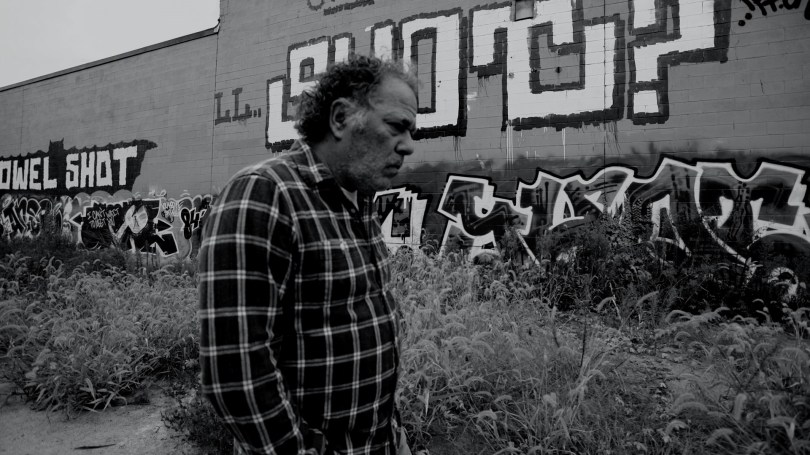
Much in line with these prior presentations, the story is smartly and smoothly paced. It is guided by Di Nunzio’s Lynchian sensibility for haunting, yet memorable and alluring, imagery. Correspondingly, the entirety of the exertion is slickly designed. This is so easily evident that even early, close-up shots of David’s coffee seem to be a mirror image of the bleak places in his soul. There are other relatively commonplace segments, such as a bit involving David walking on a presumably abandoned train track with a brick wall of graffiti looming closely behind him, that appear just as much like a grim visage. Such aspects appear as if they are taken directly from a waking nightmare. This is only amplified by Di Nunzio’s masterful framing. Such fashions an undeniably arresting style. It is one which makes the labor even more immersive and remarkable.

Such appeal is also punctuated by Di Nunzio’s seamless editing. His gently used, yet incredibly melodic and mood-setting, music also aids this factor outstandingly. Similarly, Nolan Yee’s cinematography, offered in the standard 16:9 HD aspect ratio, is somberly atmospheric. It is also elegant and thematically apt. Christopher Hallock’s astonishing assistant camera contribution is fabulous. Such augments the phenomenal nature of Di Nunzio’s expertly staged sequences. This is in terms of their stark believability and dazzlingly skillful construction. The culmination of these attributes make the sheer artistry which resonates through every frame of this Somerville, Massachusetts recorded drama increasingly palpable.

kinnari-pic-2

Di Nunzio issues a somber, intellectual tone that never once wavers throughout the duration. What establishes this atmosphere so immediately is the implementation of a monochrome title card. It is held on-screen for seven seconds. A single, thunderous chord is distantly heard in the background. The simplicity of this arrangement is the first of the many wise decisions and courageous moves Di Nunzio orchestrates. The final credits scene, proceeded by David’s harrowing realization that “Only me and beauty exist”, succeeds in the same arenas as those discussed above. These two sections evoke perfect bookends for the tale this item uncompromisingly and attractively tells. Moreover, Di Nunzio has an instinctive knack for what is to be glimpsed as well as left away from the eyes of onlookers. Such makes the proceedings progressively captivating. It is also proficient and enigmatic. The outcome of which makes the chain of events as unpredictable as they are perpetually enchanting.

Such creates an arc for that account which is impeccable. It is akin to a cinematic puzzle. Di Nunzio has gifted his spectators with a tour de force on all fronts. This Creepy Kid Productions release soars as an exhibition of temperament, moving picture bravura and intellectual yarn-spinning. It is also a standout performance piece for Di Nunzio’s recurrent collaborator, Graziano, as well as newcomer Joshi. Di Nunzio’s latest further astounds with the questions it poses as well as the answers it commands us to form. This is a rare work of celluloid prowess. It is one that will unveil new wonders and insights with each accruing sit through. Di Nunzio has formed an absolute bulls-eye; one of the best configurations of its type I have witnessed all year.

kinnari-pic-1

“Strawberry Lane” – (Short Film Review)

By Andrew Buckner
Rating: ***** out of *****.

“Strawberry Lane” (2016), the outstanding and enigmatic twenty-three minute and fifteen second debut from writer-directors Jeremy Arruda and Aaron Babcock, is thematically and visually designed to unnerve. Arruda and Babcock have created a living nightmare on celluloid. This is via a collection of sinisterly striking images. All of which, even down to the otherwise simplistic visage of the child’s doll and ventriloquist’s dummy casually spied in the second half, are guaranteed to linger in the subconscious long after they are viewed. The upshot of these brilliantly delivered constituents is undoubtedly an extension of horror in its purest sense. We, the audience, are continually made to feel uncomfortable, apprehensive and alarmed. Yet, we are wholly engaged and intrigued throughout. This is by the notions and scenarios that are unfolding. Likewise, those that could potentially be right around the corner. In an era where most related yarns are more than content to go the safe route, with jump scares and routine motions galore, Arruda and Babcock give us a presentation of credible, sobering and unwavering darkness. It is one that is anything but predictable. The unsettling quote from American serial killer Albert Fish glimpsed in the opening moments set the clinical atmosphere and violent chain of events which are to follow quickly and proficiently.

Adding to the tonal ingenuity at hand, this wonderfully creepy concoction derives heavy inspiration from avant-garde maestro David Lynch, most notably Eraserhead (1977), as well as the chairman of many controversial comedies, John Waters. The eerily erected commencing and closing credits, made increasingly incredible and unflinchingly bizarre by the deliberately old-fashioned music from Arruda, make this point sharply evident. Such augments an endlessly intense, marvelously macabre impression. It is one which pulsates proudly through every frame of the proceedings. Such beautifully mirrors the exploitation features of the 1970’s. This is with Tobe Hooper’s quintessential masterpiece, The Texas Chain Saw Massacre (1974), frequently coming to the forefront. Yet, the anti-heroes that pose as our leads are appropriately repulsive, menacing and impossibly mesmerizing. Such is in the tradition of the best cinematic villains. The duo of murderers who form this uncommon “love story”, as it is declared in the sub-title of the depiction, Harry Meyland (in a performance by Kris Salvi that is terrific) and Billy (in an enactment by Justin Thibault that is just as accomplished as that of Salvi) summon a certain parallel to Hannibal Lecter and Buffalo Bill. Such iconic entities were found in Jonathan Demme’s Best Picture Academy Award- winning  The Silence of the Lambs (1991). These aforesaid mirrors to the past also provide an undercurrent of nostalgia to the piece. Such makes the overall feel of the labor akin to watching a long-lost classic for the first time.

strawberry-lane-pic-3

All of this is punctuated, memorably and appropriately, by an extended, ardently gut-wrenching and impressive finale. Such readily calls to mind the oft banned invention of fright, Nekromantik (1987), from German auteur Jorg Buttgereit. The combination of these influences results in an artistically satisfying and courageous endeavor. Such is especially true when considering that these sights are set within the haunting, gorgeously gritty cinematography conducted by Babcock. This is also an undeniably potent display of the behind the lens capabilities Arruda and Babcock encompass. Their tough, taut and meticulously paced script, co-authored by Dave Orten, compliments these attributes splendidly. Arruda and Babcock utilize a uniquely fashioned, boldly constructed narrative. It is one that wisely leaves as much to the captivated psyche to ponder as it paints explicitly blood red. The team craft sparsely delivered, but authentic, dialogue. Such casts a painstaking eye for believability in all details of the effort. The plot, which contains just a touch of pulp, is gripping. Such makes the undertaking seamless; a deft exhibition of raw, uncompromising aptitude.

Arruda and Babcock chronicle an unexpected conflict that erupts with the introverted transvestite Harry Meyland. He is a psychotic maniac. More specifically, one who abducts and slaughters the women of the local Magdalene Escort Service. This act is made more dangerous by the fact that it is where he is employed. All the while, the near demonic sounding voice of his mother (exceptionally issued by Arruda) guides him along. Yet, he encounters a grave challenge. This is as Billy, who delights in the same fatal indulgences, takes Harry’s work into his own hands. What starts as a competition between Harry and Billy soon evolves into a strange affinity; one that is as strangely absorbing and twisted as the fiction itself.

strawberry-lane-pic-4

The composition also benefits from other various components that are just as attention-garnering. Crystal Correa is phenomenal as Trisha. Geneve Lanouette is just as astounding in her turn as The Captive Woman. Carlo Barbieri III, Arruda and Kristen McNulty play Masked Figure 1-3 respectively. Their presence is unforgettable. They are seen fleetingly in an assembly of surprising instances which are heavily reminiscent of Bryan Bertino’s criminally underrated The Strangers (2008). Such apparently random illustrations hypnotically reinforce the brute, jarring strength of the visuals herein. A death sequence that transpires in the beginning minutes, worthy of Hitchcock in conception and delivery, only reaffirm this trait. Such is greatly enhanced by the slickly constructed editing Arruda and Babcock invoke.

Shot over the course of two years, this Zeta Wave Productions release is guaranteed to be a new favorite of fellow genre addicts. More importantly, it signifies the arrival of a tremendous pair of filmmakers. Both of whom have an obvious admiration for and wide-reaching knowledge of the history of moving picture terror. Best of all, they are equally versed in how to evoke fear and confidently, expertly project it on-screen. “Strawberry Lane” confirms this at every turn. The outcome of this is an astonishing tour de force; a brief affair that is far more satisfying, evocative and in-depth than most full-length exertions. That only offers further proof of their photographic command. Because of this, I greatly anticipate what gruesome marvels Arruda and Babcock bring to life in upcoming collaborations.

strawberry-lane-pic-2

“Araf” – (Short Film Review)


By Andrew Buckner
Rating: ***** out of *****.

“Araf” (2016), an eight-minute and forty-five second collaborative short from writer-directors Fidan Jafarova and Tofiq Rzayev, is a masterful meditation on pain and suffering. It is also a heart-wrenching example of moving picture art beautifully evaluated through the lens of human tribulation. Such is phenomenally expressed through the underlying theme of the incredible tolls of war on mankind. This is signified by several distinctly woven personalities. The Angry Student Films, Synaps Production and Fidan Jafarova release, made for 1,000 AZM in the Eurasian country of Azerbaijan, also brilliantly elucidates echoes of Swedish cinematic auteur Ingmar Bergman’s tour de force, Cries and Whispers (1972). This is especially evident in its mature, sobering handling of grave subject matter. These are all articulated unflinchingly, yet respectfully. Such transpires with the topics of disease and dying at the forefront. Furthering this correlation, is the concentration in both endeavors on the measures and sentimental outcomes such unavoidable trials brings about on the family members which dominate each singular tale. Given that the term “araf” is often utilized to reference the Muslim borderlands between heaven and hell, instituted for neither the wholly good or wicked, there is also a religious constituent to the proceedings. This connects Bergman’s material with Jafarova and Rzayev’s latest in this respect as well. Likewise, the character-oriented emphasis is credibly etched in these accounts. This technical component is so well formulated that this quality alone carries each corresponding composition to greatness.

Additionally, the performances in each item are exceptional all around. This is with the incorporation of a superb balance between the photographic, the everyday and the theatrical. Also, the cinematography in each respective entity, with that in “Araf” stemming from Rzayev and that from Bergman’s construction from Sven Nykvist (who won an Academy Award for his work on the aforesaid invention), is gorgeously grim and appropriately bleak. There is a brooding, meditative color palette shared between these undertakings. Such is undeniably striking and ambient throughout. Yet, in Jafarova and Rzayev’s brief effort, the general veneer arises as more shadowy, stylish and thriller oriented. The constant rumble of thunder and the highly demonstrative sights of the rain hammering outside, which creates a breathtaking image which opens and closes the piece, spectacularly heightens this attribute. Thus, when the fabrication slides into an unanswered question of actuality, ghosts or delusions, all through the eyes of daughter Feride (in a captivating enactment by Konul Iskender), the progression is simultaneously natural and complimentary. This transpires to alluring consequence in the second half. There is also a countless deal of symbolic imagery laced into practically every frame of these presentations. At the heart of this is a focus on feminine strength, vulnerability and courage amid nearly impossible circumstances. Enduring this representative correlation, there is a concentration on inner-wars. This is noticeable, in one manner or another, through every disposition dominating these already addressed exertions. These are both unspoken or verbalized. In “Araf”, this figure is physically embodied. This is via an unnamed combat with an unspecified menace. It is frequently discussed but never seen. Yet, we ceaselessly impress upon ourselves the unnerving ideology that this brutality is inching ever closer to the treacherous mountains our protagonists call home. In so doing, the incorporation of this abhorrent item akin wonderfully increases the previously mentioned allegory. It also makes it all the easier to delve into the uncertain psyches of those we follow within the chronicle.

The story, credited to Rzayev, concerns a son, Ali (in a phenomenal turn from Adil Damirov), who becomes caught up in the previously addressed violence. Early on, the plot oversees the young man’s Mother (in a gripping, quietly commanding portrayal from Basti Jafarova) tending to her sickly husband. He is credited here simply as Father (an emotionally gripping turn from Sabir Mammadov, which triumphantly communicates his anguish largely through tormented grunts and groans). Enhancing the strain upon Mother and her kin is that her blood relations are all nearing starvation. It is also an ever-present fear for Ali. With this in mind, Mother braves departing her nearby loved ones. This is after defiantly declaring to Feride: “My other child…is out there fighting against the enemy and has nothing to eat. I cannot accept them both suffering hunger. You just don’t be afraid.” Such brings Mother on a quest to uncover a source of nourishment for those she is leaving behind. Feride than takes up Mother’s position. Almost immediately, the anxiety stemming from the unseen confrontations outside is personified in increasingly unique ways. This occurs as the situation around her instantly begins to deteriorate.

araf-pic-1

Such is a genuinely intriguing premise. It is one which requires much insight into both the psychology and attitude of those living under the persistent threat of real life terror. This is to be as successful as it obviously strives to be. Jafarova and Rzayev offer exactly that with their intelligent and richly constructed screenplay. They concoct personas, situations and dialogue that are as fully-realized, elegiac and memorable as any Bergman production. Regardless, their use of deceptively straight-forward discourse is meticulously sharp and profound. For instance, the commencing narration pronounces that “In these mountains…it always rains a lot. It’s unfortunate that we cannot hear it anymore”. Such a sweeping declaration draws us in instantly. But, when contemplated in retrospect, this line exemplifies tremendously just how far-reaching the apprehension is that our leads are under. Continually, the arc is largely unpredictable. This is without ever becoming implausible. Jafarova and Rzayev also unveil a perfectly even, cerebral pace for the brief opus. It is one that compliments the atmosphere splendidly. This is without weighing down the overall progression of events. Such is an astonishing feat itself.

All of this is made progressively encapsulating and hypnotic by Gergo Elekes’ remarkably emotive, piano driven score. Simuzar Aliyeva provides fantastic costume design. Shahmal Novruzlu and Kamil Ismaylov evoke a sound department contribution that is illimitably crisp and undoubtedly attention-garnering. The same can be said for the seamless visual effects from David Kislik. Jafarova’s editing is just as stellar. Similarly, Mitch Davies’ use of premiere stock footage is thoughtfully delivered.

At only twenty-two years of age, Rzayev has reflected his big screen heroes Andrei Tarkovsky (1975’s The Mirror, 1986’s Sacrifice) and Stanley Kubrick (1971’s A Clockwork Orange, 1987’s Full Metal Jacket) with deft precision. Such is seen in the plethora of unique camera angles, the experimental nature of his celluloid catalogue and in the sheer prowess in guiding the project at hand. “Araf” is no exception. Prior depictions, such as “In a Time For Sleep” (2016) and “Nihan: The Last Page” (2016), only re-enforce this factor. With sixteen scripting and directorial recognitions already to his name in only a five- year span, he is incessantly re-affirming that he is a talent far beyond his years. The same can be spoken of twenty-one-year old, Jafarova. This is her third such labor. The $500 budgeted documentary “Nagillar Alemine Seyahet” (2016) and the autobiographical “Fidan Jafarova Film Portrait” (2016) arrived previously. Given the evident might between these moviemaking forces, and the all-around excellence of this first alliance, I sincerely hope that the ingenious “Araf” marks the commencement of many future pairings among the duo. What they have created here is enlightening, profound and engaging. It is indisputably one of the best entries in its genre of the year.

araf-pic-4

“The Girls Were Doing Nothing” – (Short Film Review)

girls-were-doing-nothing-pic-2

By Andrew Buckner
Rating: ***** out of *****

Thirty-something Marta (in a commanding, beautifully formed depiction from Katie Alexander-Thom), the heroine of “The Girls Were Doing Nothing” (2017), has a sharp retort concerning the debut title of writer-director Dekel David Berenson’s short film (the twenty-one minute work in progress “press preview” cut of which I base this review upon). It comes while Marta regales her similarly aged husband, Jake (in a quietly stalwart turn from Malcolm Jeffries), with a yarn from her youth. In this tale, the boys in her school would go out to play football. She goes out of her way to affirm that they would engage in such an activity in even the harshest snows of winter. While watching them busily go about their sports, Marta’s teacher would pose a question to the young ladies of the learning institution. This was why they “weren’t doing nothing.” Here the thesis statement of this slyly enigmatic, deeply meditative and highly symbolic production arrives. This is when Marta, with agitation visibly growing in both her voice and eyes, declares: “We weren’t doing nothing. We were watching”.

Such directly explains the hypnotic, subtle and clandestine tone of this erotically charged tour de force. Previously titled “The Vacation”, this presentation calls to mind Stanley Kubrick’s underrated masterpiece Eyes Wide Shut (1999) and Lars von Trier’s same held Nymphomaniac Vol. 1 and 2 (2013). This parallel is visible in the sheer craftsmanship on display. It can also be spotted in its mature handling of carnal subject matter. In retrospect, Berenson is providing the audience the opportunity to tread in the footsteps personified by the young ladies in Marta’s chronicle. Yet, this accrues in an undoubtedly adult world. We view the measures of Marta’s daily life, whether she is going through photographs or trying to quietly provoke her husband’s sensual passions, without the component of clarifying precisely what is transpiring at every narrative twist. Given that this element is far too prevalent in cinema nowadays, the decision to excise what most would deem pivotal makes the proceedings even more riveting. It also comes across as refreshing and natural. Keeping true to this structure, the credible and gorgeously penned dialogue (which was partially inspired by psychologist Carol Gilligan) is kept to a minimum. Such makes the results increasingly voyeuristic and addictively appealing. The concluding sequence, which wordlessly proposes what is too come, is especially brilliant and captivating.

Despite this brave stylistic approach, another telltale sign of Berenson’s incredible risk-taking capabilities, the engaging plot thread is never lost. Even when we find ourselves unsure of why some sights are unfolding, Berenson forces our imagination to fill in the blanks. Moreover, our interest, our glimpse into Marta’s world of luxurious restaurants, private gyms and high-paying professional positions adds to the fascinating rhythm of the demonstration. All of this is punctuated further by the Marta’s inner-struggles to overcome the commonplace motions of her marriage. It makes the piece as much an exhibition of routine as it is a meditation on how to break out of such a monotonous extension of events. Marta and Jake find it in their charismatic neighbor, Andrea (a well-rounded, extraordinary enactment from Jolie Sanford). This occurs when she asks the couple to do a favor for her while she is on vacation. Such an invite becomes an unexpected chance to add both variety, spontaneity and intimacy to their lives. Yet, they soon learn the paradox of this meticulously paced fiction. This comes in the form of a quote from psychotherapist Esther Perel, which is exposed in the opening moments of the invention. This is that “Love longs for closeness, desire thrives in distance. And therein lies the rub”.

girls-were-doing-pic-1

Adding to the sheer excellence at hand is the highly representative imagery. For instance, there is a shot near the commencement which also closes the effort. This is of a sugar cube absorbing. It is ultimately spied as a perfect mark of Marta’s bland, imprisoned outlook on life slowly wilting away. Additionally, it declares her willingness to find the exhilaration in being by seizing new prospects when they arise. There are several sequences involving Marta’s blood which are powerfully indicative of feminism. Aside from this, the undertaking is further graced by sensational editing from both Fabrizio Gammardella and Berenson. Phillip Quinton’s sound issuance is spectacular. The camera crew, consisting of Pete Blakemore, Melanie Jansen and Tom Blount, provides a spellbinding contribution. Elizabeth Hedley’s make-up design is stellar. Lem Lawrence’s visual effects significantly enhance the authenticity radiating from every frame. Kamil Lemie’s scant appearance in a role dubbed “1920’s Guy” and Samantha Whaley’s bit as a retail assistant are both deft and intriguing. The costumes by Britt Seel are superb. Such an ingredient fits the contemporary impression of the sum grandly. Music consultant Heather Hadar Gallar incorporates an operatic soundtrack. This only strengthens the overall imprint. It also impeccably reinforces the attitude of the exertion beautifully. Likewise, Berenson’s screenplay and guidance of the project is proficient and carefully constructed. The cinematography by Ruaraid Achilleos-Sarll is sumptuous and sweeping. These greatly piqued qualities aid mightily in making Berenson’s latest an absolute knockout. This is guaranteed to be a surefire hit with spectators once it begins its run at cinema festivals.

“The Girls Were Doing Nothing” is the first of three similarly brief, unified compositions. All of them deal with intense notions of fondness, lovemaking and personal bonds in one manner or another. These are collectively known as The Eros Trilogy. The next two labors, continuations of the account set forth with this initial undertaking, are “Borderlines” (2017) and “The Surface of All Things.” No due date has been given for the final segment.

This is more than a reason for excitement. The characters in this initiating episode are genuinely etched. Berenson is unafraid to paint real people on his celluloid canvas. Everyone we encounter, Marta and Jake especially, have flaws and likable traits woven in equal ration. Yet, the air of mystery in this 168 Wardour Filmworks, Bekke Films and Radiator IP Sales release is palpable throughout. It suggests many different directions that Berenson can pilot the opus in upcoming episodes. This is so much so that one cannot help but anticipate seeing where he takes the fabrication. What elevates this anticipation is that Berenson’s latest affair is among the most memorable and outstanding concoctions of its type I’ve witnessed all year. Berenson has an undeniable knack for storytelling. Such is boosted by his gifted team and their respective donations. These essentials fill the screen with ongoing resonance and awe. Rich in mentality, emotion and subtext, Berenson has evoked a winner on all fronts.
girls-were-doing-nothing-pic-3

“Gary From Accounting” -(Short Film Review)


gary-from-accounting-pic-2

By Andrew Buckner
Rating: ****1/2 out of *****.

The title character of director Daniel Lofaso’s smart and darkly comedic five-minute and eight second short film, “Gary From Accounting” (2016), is an unassuming and mostly unwilling hero. He is not the same first named individual who our lead, Nathan (in another of Timothy J. Cox’s various show-stopping, wholly gripping performances), has thought to have developed such a strong rapport with via their respective occupations. Hence, his confusion and wrongful invitation to the incident that is about to unfold. Still, he is, nevertheless, forced to partake in an intervention which confronts Nathan’s alcoholism. This event has been put together by Nathan’s wife, Hannah (in a brilliantly realized and believable depiction from Thea McCartan). Upon entering his home, Nathan is met with heart-rendering declarations that would move even the stoniest of centers. For instance, Nathan’s sister, Belle (in a riveting enactment by Jake Lipman), cries out: “I can’t sleep at night because I worry about you driving drunk!” Hannah declares immediately afterward: “I have no one to talk to because you are out drinking every night!” Uncomfortable and desperately trying to find a way out of the situation, Gary (in an uproarious, bulls-eye representation from Mark Grenier), meekly chimes in with: “Your expense reports are sometimes a little late.” The rest of the tale teeters on this sharply established, seriocomic edge. This is as Nathan’s kin confront him with genuinely troubling episodes based on his intoxicating habits. All the while, Gary, whose presence Nathan seems solely enthusiastic and truly supported by, struggles to come up with something a fraction as unnerving as the myriad tribulations Nathan’s relatives are hurling at him.

Such is a distinctly clever premise. It is made more so by first time screenwriter Phoebe Torres’ and Lofaso’s decision to plant Gary, a highly likable persona who would fit all too contentedly in a working-class sitcom, in a circumstance of somber beings and high drama. The well-penned dialogue from Nathan’s loved ones is wrenching; full of pain and grief. Their embodiments of these entities are equally gripping. The centerpiece of this is a terse instance at around the three-minute mark. At this moment, Nathan’s children, cited as Little Boy and Little Girl (Christopher John and Rhea Kottakis respectively, in roles which showcase talent beyond their young years), confess to their father the difficulties he has inflicted on their lives. Despite the undeniable poignancy of these illustrations, Lofaso and Torres make an almost acrobatic exercise out of the composition. The effort finds just the right tone and balance for its affected and guffaw-inducing components. Such is instituted immediately. From this perfectly symmetrical juggling act it never wavers. It makes this briskly paced, well-penned and stalwartly guided affair even more masterful in both presentation and construction. Consequently, the laughs become increasingly triumphant. They hit us all more potently because of this divide. This is because we find ourselves snickering at subjects that otherwise would be met with the gravest approach.

Assisting matters is Jesse Bronstein’s handsome cinematography. It is accessed on an atmospherically appropriate palette; a beautifully blended collage of dusky colors and cheery hues. Such creates a wondrous visual interpretation of the opposing moods of the piece. Additionally, Gusta Johnson provides sensational editing. Cecilia Lewis’ makeup is every bit as exceptional as these aforementioned traits. Joseph Iacobazzo’s sound is top-notch. The proficient turns from the camera and electrical department, which consists of Mihai Bodea-Tatulea and Adehm Geller, heightens immeasurably the intimacy evident in this gathering. They help construct a closeness so palpable that one can easily relate to all who try to pull Nathan from his addiction in one manner or another. This makes the relation between viewer and narrative personality continually taut. It is so much so that its spectators can naturally find themselves sitting alongside these fictional protagonists; a silent bystander.

This Brooklyn, New York shot winner and Chirality Films release is also a masterclass in the power of brevity. In its brief runtime, Lofaso and Torres also successfully tackle the notion so prevalent in our society of feeling more of a bond, an excitement towards the proceedings of a popular television program than their our own personal measures. Such is utilized as an entry into the underlying commentary concerning the disconnect many of us impress upon ourselves. This is from the happenstance of our own existence. Perhaps this is an insight into Nathan afflictions. Either way, Lofaso and Torres have given us a chance to find the humor in ourselves. Yet, there are countless opportunities to reflect. All of this is implemented in a manner that is always respectful to the stern core of its commanding central themes. This is without ever falling into the trap of being pretentious, preachy or overwrought. What we are, ultimately, given is a largely dynamic, warm and inviting affair. This is a herculean display of cinematic storytelling and aptitude at its finest.

gary-from-accounting-pic-3

“A Midsummer Night’s Dream (2016)” – Movie Review

By Andrew Buckner

Rating: ***** out of *****.

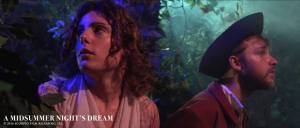
Writer-director Richard Griffin’s adaptation of William Shakespeare’s circa 1590-1597 penned romantic comedy, A Midsummer Night’s Dream (2016), pulsates with magic, splendor and eloquence. It is a passion project the Providence, Rhode Island born craftsmen has been attempting to bring to fruition since 2000. This is highly visible in the final product, which burns with the ardor of a long spent wish finally realized. The Scorpio Film Releasing distribution is both a beauty of sight and of sound; a searing triumph of frisky, smoothly paced entertainment. This is as much a courtesy of Jill Poisson’s rich, hypnotic cinematography and Griffin’s lively, astonishing handling of the production as it is the unmistakable, Early Modern English language of The Bard himself. Such an element Griffin takes directly from the original work. Even though Griffin has moved the central action from Ancient Greece, in an unspecified year, to Athens, Massachusetts in 1754: the rhythm, and amusing nuance (which is often innuendo based), of Shakespeare’s opus remains intact. All of this combines to create an affectionate, faithful homage to the source material. Yet, it distinctly resonates with the core of a Griffin construction. It is both radiant, sidesplitting, cutting edge, a bit old fashioned and affecting. Regardless, there is an innocence to the labor that showcases the sheer variety Griffin, who has toiled largely in the cinematic horror genre, is more than capable of conducting. Griffin, whose first celluloid tour de force was a modernized version of Shakespeare’s roughly 1588-1593 scribed tragedy Titus Andronicus (2000), is obviously well-versed in the narrative. This knowledge accentuates the sum of the vehicle. It makes its humor even more affective. This evident wisdom makes its message all the clearer. Moreover, its dramatic intervals are increasingly stalwart and wrenching. In turn, we are amended what is a highlight in Griffin’s multi-faceted career. This is undoubtedly one of the best pictures of the year.

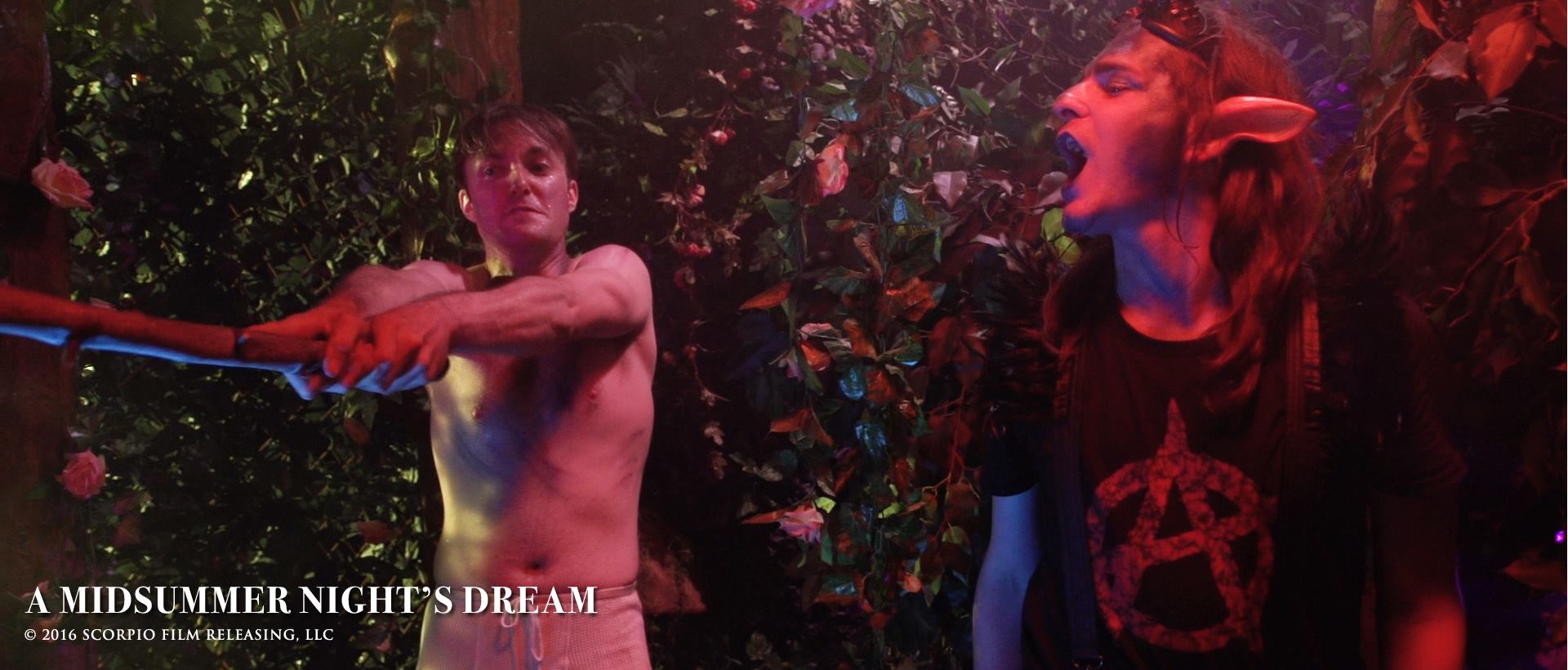
Heightened by a few sly modern touches, such as a quick midway gag involving our obviously enthralled characters passing along a bowl of popcorn to one another, the sum of the effort is a wholly fresh and unique experience. It is as much a testament to Shakespeare’s sustained relevance as it is a display of Griffin’s endearing charms. Moreover, the theatrical roots of the exertion are more than perceptible. It is seen in the larger than life, yet still delightfully intimate, representations from everyone involved. This is as notable in Anna Rizzo’s riveting portrayal of the Queen of the Fairies, Titania, as it is with Johnny Sederquist’s punk rock take on the English mythology based elf, Puck (who is also known by the moniker of Robin Goodfellow). The more straight-forward presentations, such as Steven O’ Broin’s terrific and mature depiction of Theseus, balance out pleasantly the plethora of more light-hearted entities which dominate the affair.

midsummer pic 1

There is a wide range of categorical beats and themes, with the reversal of gender roles, transformation, the supernatural and the pursuit and nature of amour being at the forefront, that must be successfully orchestrated. Yet, the entire cast pulls it all off as if it as natural as breathing. Jamie Dufault as Demetrius, Laura Pepper as Robin Starveling, Aaron Andrade as the comical Snout and Elizabeth Loranth as Helena are especially good. The same can be said for Alexander Platt as Oberon, Josh Fontaine as the man turned donkey, Nick Bottom, Lee Rush as Hippolyta, Lydea Irwin as Mustardseed, Bruce Church as Egeus, Christin Goff as Rita Quince and Ashley Harmon as Hermia. She is the conflicted admirer of both Lysander (in an entrancing turn from Charlie Ferguson) and Demetrius. These stretches mechanize terrifically due, in part, to the fact that the chemistry between Harmon and Ferguson is palpable. This makes the numerous sequences revolving around their relationship even more hypnotic, wrenching and stunning.

What is just as incredible is that the 105-minute feature, despite its $25,000 price tag, remarkably comes off as if its budget is as gargantuan as its upbeat, often seductive, spirit. This manifests immediately in an impressively showcased, 65 second opening credits arrangement. With its cheery palette and blue lettering, it quickly captures the mystical disposition at the center of the narrative. Everything in this section seems bathed in moonlight. This integral ingredient is a mood-setting fixture in the initial literature itself. The plentiful shots of this aforesaid nighttime glimmer hovering above the forest in the presentation are equally intoxicating throughout. This commencing scene also comes across as strikingly retro. Such a visage could easily fit within the confines of a 1980’s style photographic opus. Given Griffin’s penchant for mirroring the look and feel of silver screen marvels from past decades, this similarity could be intentional.

midsummer pic 2

Advancing the overall appeal is the extraordinary effects from Torey Haas and John Dusek. They backup these prior addressed, bygone qualities spectacularly. Simultaneously, Griffin’s editing is top notch. Chad Kaplan’s Cupid animation is sensational. Margaret Wolf provides stellar, era appropriate costume design. Furthermore, the makeup from Jaquelyn Fabian, Scott C. Miller and Sissy O’ Hara is phenomenal. The Shakespeare writ “Lullaby”, wonderfully composed by Mark Cutler and captivatingly performed by Rizzo, Irwin and Harmon, is elegantly designed and delivered. Likewise, both the gentle and emotive Cutler authored, put together and sung “In My Dreams” as well as Daniel Hildreth’s ambient music augments perpetual lavishness to the project.

Griffin, whose script for this crowd-funded undertaking is both robust and brilliant, handles the various interconnected plotlines of this complex affair splendidly. The first of these are Hermia’s refusal to marry Demetrius. Such transpires due to her strong affinity for Lysander. Additionally, there is the creation of the play Nick Bottom, Snug (in a bravura role from Christian Masters), Tom Snout, Robin Starverling and Francis Flute (in a terrific enactment by Ryan Hanley) plan to act in for the Duke and Queen’s wedding. Many of the early guffaws triumphantly derive from this account. King of the Fairies, Oberon, and his  summoning of Puck to concoct a love potion, which gradually goes out of control, is spectacularly issued. Some of the most visually and sentimentally dazzling bits in the fabrication stem from these segments. Hermia and Lysander’s escape into the same area where Titania resides becomes a focal point. This is for the assembly of all these previously stated anecdotes into one setting. It is all punctuated by a final monologue by Puck that is assuredly smirk-inducing. Such also offers a grand climactic point. This instant reiterates the enchanted atmosphere of the undertaking masterfully.

In a filmography that ranges from fun, 1950’s modeled alien invasion illustrations (2010’s nostalgia fueled Atomic Brain Invasion), John Waters Reminiscent comedies (2014’s ingenious Accidental Incest) and 1970’s grindhouse brand B-movies (2011’s The Disco Exorcist), Griffin’s vision of A Midsummer Night’s Dream fits comfortably in the inarguably varied body of his career. His stamp is on every achingly alluring frame of his latest endeavor. There is also a delicate gentleness to the proceedings, an attention to detail and an admiration and pride for the centuries old text which pulsates proudly through the duration. Such helps bring the composition to life in a way unseen in preceding interpretations of the fiction. This is as much a thanks to his cast of frequent collaborators, all of whom continue to prove their flexibility and variability with the diversity of roles Griffin has handed them throughout the years, as it is solid proof of Griffin’s own multi-faceted talents. With his latest contribution, Griffin soars and astounds. All the while, he also makes us laugh, contemplate and reflect. Though the words and events may be that of Shakespeare, the voice we hear radiating through the entirety is distinctly that of Griffin. What Griffin provides here, besides another example of his absolute command of form, is a masterclass in how to take an oft told tale and make it solely your own.

midsummer-pic-3


“Queen’s Mile” – (Short Film Review)

By Andrew Buckner
Rating: ****1/2 out of *****.

“Queen’s Mile” (2016), the debut short from actor turned writer-director Martin Delaney, is as much a testament to the abounding beauty of simplicity within a film narrative as it is a meditation on love and loss. The work is also a stunning showcase of the countless layers of depth that can be attached to an otherwise straightforward story. This is when both dialogue and exposition, all of which are credibly designed and delivered in Delaney’s labor, are kept to a minimum. In the place of such faux ‘necessities’ of cinema as those stated above, we learn as we witness. Such occurs as viewers silently follow our visibly depressed protagonist, known here as The Girl (in an incredibly wrought depiction by Emerald O’ Hanrahan that is simultaneously passionate and mournful). This is as she retreads the once joyous and now bittersweet steps, both literally and symbolically, of a relationship abruptly brought to a fatal halt. This transpires in a tourist destination along London, England’s Southbank. It is an area regarded as The Queen’s Walk. Delaney takes full advantage of the organic splendor of the various locations found within this promenade. This action only amplifies the breathtaking essence of The Girl’s surroundings immeasurably.

The nine minute and twenty-seven second construction, released through Mini Productions and budgeted at approximately 5,000 pounds, instantaneously sweeps spectators up into a varying sea of emotion. These are the sentiments brimming within our wounded heroine. Such comes to fruition through Delaney’s uncluttered, classically striking behind the lens style. This is also true of his smartly honed, focused and naturally gifted scripting sense. Cinematographer Tom Cullingham, who arrives later on in a terrifically rendered secondary role as one of several shutterbugs The Girl comes across, compliments the many triumphant and brave risks Delaney conjures. This is by injecting a veneer into the project. It is one which is as consistently gorgeous and effortlessly involving as Delaney’s aesthetic approach. Yet, Delaney lets the poignant, ambient soundtrack articulate much of what The Girl is enduring internally. It is a certified risk which pays off handsomely. “Forest Fires”, written by Lauren Aqulina, and “The World At Large”, penned and composed by Dann Gallucci, Eric Judy and Isaac Brock, instill continued intimacy into the presentation. Their sonic contributions greatly enhance the affectionate pulse. Such elevates all we encounter. Consequentially, the overall results are all the more urgent, relatable and immersive.

Delaney’s endeavor opens with quiet intrigue. In a brilliantly done bit, which immediately establishes the achingly wistful tone of the exertion, The Girl wanders to a pier. It is one overlooking the nearby Thames River. Gradually, she looks over the edge. A grimace of obvious regret and pain strikes her face. Finding a man (in a skillful enactment by Rez Kempton that assists mightily in projecting the sheer realism at hand) close to her, she has the individual take her picture. In the next sequence, we see her applying the recently recorded image to a worn scrapbook. The bulk of the affair moves in this captivatingly cryptic manner. This is as The Girl encounters crowds of people. There is even a merry group of musicians and dancers early on. Such gives way to restaurants and cafes. All of which are, at least as spied through the unique knack for both character and perspective Delaney elucidates throughout, teaming with apparently upbeat souls. Yet, our lead always seems distant and lonely. She remains vulnerable. This is despite the livelihood of those around her. We can’t help but wonder why. Such an inquiry increases our fascination. This is as the well-paced runtime guides us to the heart-wrenching answer.

queens-mile-pic-2

Such begins to unveil around the five minute mark. It is in another of the many telltale signs of happiness The Girl sees as an agonizing symbol of bygone days. This is in a bouquet of flowers. It is an elegiac sight which propels the viewers to an extended flashback arrangement. Such awards an appropriately ardent climax. It is one which is as haunting as it is hopelessly romantic. Moreover, this segment, like the entirety of the presentation, is technically spectacular.

This previously mentioned quality arrives via a brief, but integral, demonstration from Amrita Acharia. She alluringly portrays the object of The Girl’s affections, Ania. Watchers are also offered a display of smooth, seamless and proficient editing from co-producer Simon Pearce. Nicholas Collins issues an exceptional involvement in the sound department. Veemsen Lama and Cullingham heighten the immaculate nature of these proceedings. This is with their spellbinding camera operation.

Such creates a resonant masterpiece. This is most readily perceptible when pondering all of the varied levels of the account. Delaney has attempted to reflect on often confusing impressions. These are the imprints which emerge long after bidding farewell to someone you adore. It is an impetus, a connection to onlookers that Delaney utilizes to make us care for The Girl and her grief-stricken quest all the more. This he victoriously administers throughout the undertaking. Such ensues without a mere instance of the heavy-handed melodrama such a plot could’ve easily descended into. What is even more worthy of acclaim is that Delaney doesn’t rely solely on this aforesaid extension to the events on-screen for sheer impact. The gentle reserve within this photoplay succeeds immensely on its own fundamental merits. The composition also appears wonderfully old-fashioned. Such is especially accurate when pondering its general structure and evident lack of contemporary cynicism. The latter is all the more of a feat when considering its somber subject matter. In turn, Delaney has provided a searing exhibition of sincerity and aptitude. “Queen’s Mile” is a guaranteed weeper.

*The images included herein are the copyright of Protean Pictures.

queens-mile-pic-3

“Numb” – (Short Film Review)

By Andrew Buckner
****1/2 out of *****.

“Numb” (2016), the third short film from writer-director Penelope Lawson, is an intriguing study in temperament. It is one which is much in line with Steve McQueen’s controversial, NC-17 rated tour de force, Shame (2011). The ten minute production, budgeted at $10,000, follows Astrid (in a harrowing portrayal by co-producer Rebecca Martos). She is an emotionally distant, yet unusually relatable, protagonist. Throughout the course of Lawson’s engaging assembly, this factor is backed up by the several sexual relationships she engages in. These are all with the random men she encounters. Yet, a genuine connection between any of them is obviously lacking. As a matter of fact, much of the piece seems to be a reflection on the individuals she meets. There seems to be a new entity arriving with each scene. Often these people reach out to her anyways. Yet, the title adjective of the narrative remains true for our heroine. Their calls for assistance slips away silent, unnoticed. This might even be a deliberate ignorance on Astrid’s behalf.

Such heightens the shroud of mystery hovering over her personality. We find ourselves caught up in the proceedings of Lawson’s well-paced, intelligently penned affair. Such transpires to the point that we always ponder the incredible insights Astrid might unveil. This is if she were to actually confront her feelings instead of purposefully avoiding them. This is to both her spectators and about herself. Lawson’s exercise meditates on this fine line. It is one most folks find themselves forced to walk. Such accrues to spectacular effect. It is this impetus, along with the catastrophic episode which made Astrid so hollow within (which is wisely kept a mystery until the seven and a half minute mark), that helps make Lawson’s work so fascinating.

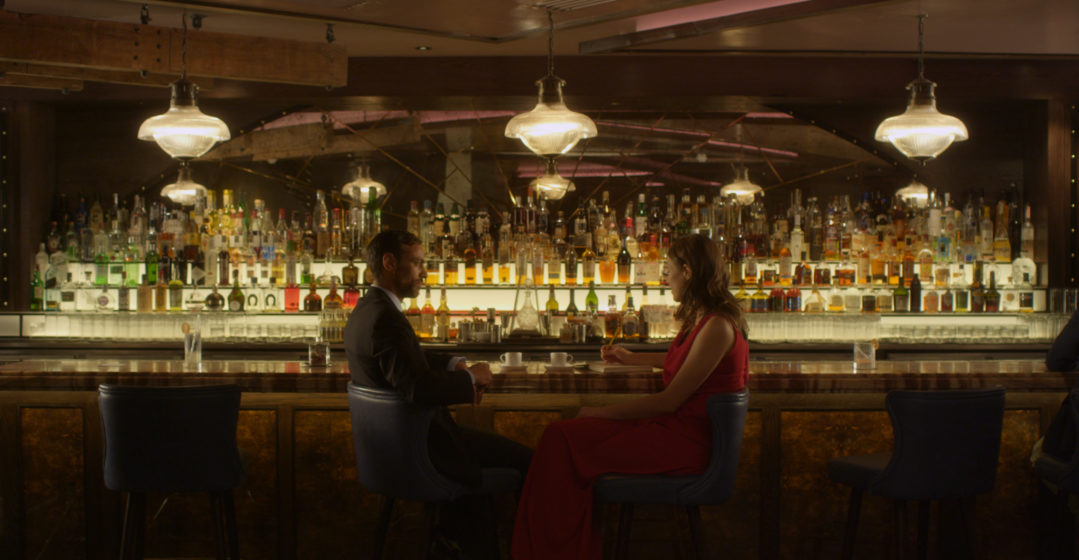
When we first meet Astrid, she is sitting in an exotically designed, presumably high-end, restaurant. This sequence is duplicated in part later on to great magnitude. This is a striking way to immediately draw the audience into Astrid’s world. It is also instrumental in conveying the repetition of similar events that is her days. This is a recurrence that is not only powerful, especially when it is recalled, but also suggests that Astrid’s existence is in a stationary state. Such is another way of relating to viewers her expressive roadblocks. Continuing this example is another early segment. It finds Astrid passively attending an Alcoholics Anonymous meeting. The bit features one of the attendees mentioning how he admired how the intoxicants which brought him to the gathering made him “numb”. It is this word, and the manner it is presented, which seem to be speaking as much for the young man as it is for Astrid.

numb-pic-2

Lawson’s brilliant screenplay wisely leaves out the specifics of how Astrid came to be at such a place. Yet, the dialogue, which is as authentic in this instance as it is throughout, certainly allows the mind to put the enigmatic pieces together themselves. It is this inscrutable nature, which also holds a mirror to the personality of Astrid, which forces the watcher to interact. In turn, we become all the more involved in this stirring drama. Punctuating this actuality is an indeterminate finale. What it suggests is haunting. The manner in which it is projected, with the results presumable prefaced through a single line of speech, makes it all the more so.

All of this is further complimented by the subtle, realistic atmosphere Lawson evokes. This comes from both her natural, accomplished behind the lens style. The same can be said for her storytelling capacity. There is never a moment, a situation or action that seems artificial. The existence of these items is never simply, as it would be in lesser hands, to move the plot forward. Such is indefinitely worthy of attention and respect. These are just a few of the many signposts of Lawson’s gargantuan talent planted along the way.

There is tangible beauty, amid the emphasis on the secrets many keep, here. Such is made all the more visible by Matthew Mendelson’s dark, moody, somber and illustrious cinematography. His sharp editing fares just as well. Jamie Sonfroniou’s art direction and wardrobe are exceptional. Darlene Spennato’s make-up is gorgeous. Silvio Canihuante Fernandez provides crisp, proficient sound. The camera department, composed of a personnel of eight, is masterful. “I Can Change” by LCD Soundsystem, “Five Seconds” by Twin Shadow and “Lamb’s Canyon” by Evan Louison and Mendelson provide a riveting sonic ambiance. But, the heart of the success of the labor, aside from Lawson’s contributions, are the stellar performances. Jason De Beer as Matt, Daniel Deutsch as Mark and Nicolas DiPierro as Mike are terrific. They reflect the commonplace mechanisms of the tone exceptionally. Melissa Johnson as Ellen, Travis Mitchell as James and Olivia Sharpe as Maddie grandly enhance the overall quality of the depictions.

Such creates a well-rounded, technically solid slice of life. Lawson avoids the theatrical techniques that could’ve easily been applied to a chronicle such as this at every turn to falsely increase resonance. The result is a fabrication that is all the more rich, varied and bold because of such a decision. A meticulous eye for forthright characterization, all cleverly introduced with nary a wit of exposition, makes Lawson’s abundant aptitude all the more visible. This is a peerless representation of art imitating our existence. With “Numb”, Lawson has crafted a cerebral visual tome; a surefire winner.

The official Facebook page for the project can be found here.

numb-pic-3

“31” – (Movie Review)

31-pic-1

By Andrew Buckner
Rating: *** out of *****.

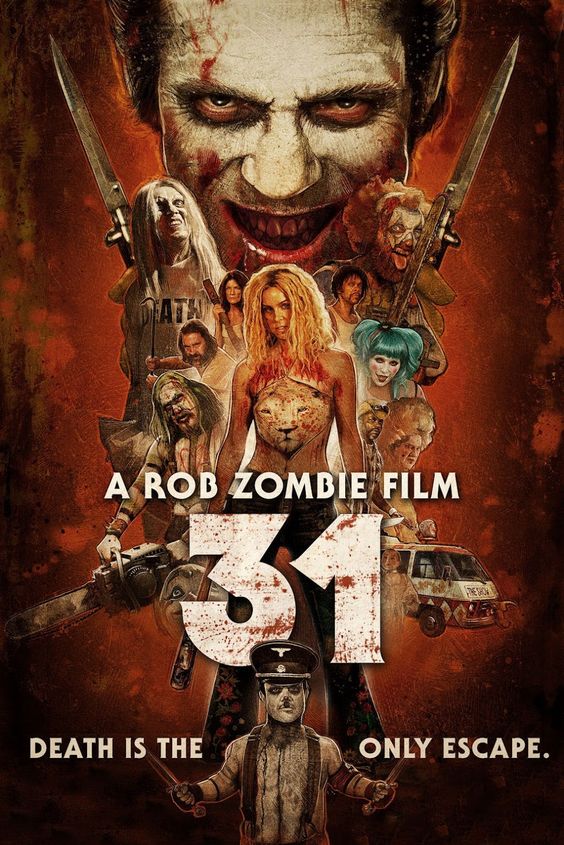
The tenth full-length feature from heavy metal rocker turned writer-director Rob Zombie, 31 (2016), plays it too safely to be anywhere near as effective as the 102 minute undertaking clearly desires to be. Coming recently off of the subtle, restrained and daring The Lords of Salem (2012), Zombie’s latest seems like a jumbled montage; a collection of greatest cinematic hits. Regardless, the grainy, brazen approach of uncountable films from the 70’s is utilized beautifully throughout the presentation. Such is present in nearly all of Zombie’s big screen thrillers. Even though this particular focus has become a familiar staple of his photographic vision, it is a consistently strong point of the production. The gorgeously gritty cinematography from David Daniel makes this aforementioned attribute all the clearer. With some classic tunes fueling the soundtrack, courtesy of Chris Harris, John 5, Bob Marlette and Zombie himself, the illusion of stepping backwards four decades becomes all the more immersive. But, there is a reinstatement of such Zombie tropes as maniacal clowns, road trips, a simple set-up and a Halloween setting. Such restrains the imagination, and overall enjoyment, greatly. We are even awarded the obligatory first act gas station stop, another Zombie and general fear narrative practice, before the terror commences.

What also hurts the labor, and endures as another Zombie custom, is the frequently trite dialogue. The speech hits all the expected expository topics. But, it does it without a shred of thoughtfulness or insight. Such is especially suspect given that the endeavor opens with an appropriate, haunting quote from the German-language auteur, Franz Kafka. Such gives way to what is undoubtedly the highlight of the movie. This is a disarmingly twisted, attention-grabbing address to the audience. Such is via the most fascinating antagonist we uncover, Doom-Head (in an arrestingly berserk portrayal by Richard Brake which gives us one of many glimpses into what this endeavor could’ve been). The sequence is also artistically gripping. Shot in stark black and white, it promises much more than what Zombie ultimately delivers. Though the guttural energy evident herein is fairly unwavering throughout, we can’t help but feel disappointed. This is as the rest of the affair gives us nothing else that garners our interest so ruthlessly.

Yet, the biggest obstacle here is not so much these elements. It is Zombie’s refusal to give his protagonists any dimension. Such is all the more perplexing when he goes out of his way to infuse an extraordinary amount of invention into every one of the myriad villains which dominate his latest project. Moreover, the central characters are treated, in another manner frequently found in the grindhouse fashion Zombie is going for, as no more than possible victims. Though such completes his B-grade, antiquated prospect, it makes it impossible to become fully engaged in what is occurring. Adding to this distraction is Zombie’s difficulty in building and sustaining a continual wall of suspense. The most we get is an incredible idea, image or quick, sadistically gratifying moment of slaughter before the story goes back on itself. From this point it plods along. This is until Zombie’s next stab at trepidation fills the screen.

Zombie chronicles Charly (in a depiction by Sheri Moon Zombie that is watchable but, never harrowing or unique). Alongside four other carnival folk, she is, in an arrangement so quick and vague that it successfully captures the confusion the team five entities must be feeling, kidnapped during the early hours of October 31st, 1976. True to the custom of photoplays like James Wan’s brilliant Saw (2004) and Paul Michael Glaser’s adaptation of Stephen King’s The Running Man (1987), those who have been abducted are made to take part in a wicked game. The name of such, which we learn little more about than the fact that it signifies “war”, grips the title. What else we unveil about 31 is that the five unwilling players must survive twelve hours. This is in a desolate building, the ins and outs of which they know nothing about, against an endless landscape of fiends with masks and painted faces. All of which are out to kill them.

31-pic-3

The story is routine. Yet, it has a likelihood to be worthwhile. Zombie’s fairly resourceful, yet never bold enough, screenplay has its impressive morsels. But, the arc holds to the basic structure of so many horror exertions beforehand. This can be seen as another of the genre customs Zombie appears so intent on respecting. But, such creates an equally standard pace. This is evident as much of the first half hour rolls by with our leads driving along in a white van. During this era, we cover the essential informal bits, and playful subject matter, noteworthy in far too many slasher efforts of the past. The esteem Zombie parades in such an arena is appreciated at times. Yet, there is too much of an over-reliance on it here. Such is unsatisfactory given the sheer creativity we know Zombie is capable of evoking. His striking, frequently lavish, direction only proves the flare he contains in this area. To its credit, the ending is solid. This is as much in what it tells us as what it leaves unsaid.

All of the actors and actresses we encounter are obviously enjoying their turns. Malcolm McDowell as the eccentric Father Murder, who acts like one of the privileged and powerful French aristocrats in a novel by the Marquis de Sade, is the most proficient and intriguing in this category. Jane Carr as Sister Serpent and Judy Geeson as Sister Dragon follow suit in somewhat similar roles. The more blatantly unhinged representations, such as Pancho Moler as Sick-Head and David Ury as Schizo-Head, fare nearly as well. The victimized Jeff Daniel Phillips as Roscoe Pepper, Lawrence-Hilton Jacobs as Panda Thomas, Meg Foster as Venus Virgo and Kevin Jackson as Levon Wally bring remarkable life to their one-note classifications.

Likewise, the editing by Glenn Garland is spectacular. The art contribution from Kevin Houlihan is certainly eye-catching. Siobhan O’ Brien’s set decoration and Carrie Grace’s costume design are equally stunning. The make-up department, composed of a dozen individuals, is undoubtedly a highpoint. Zombie leans on them throughout, expressly with his antiheros, and they deliver delightfully well. Zak Knight’s special effects are seamless and credible. The optical component of this group, the collective contribution from eleven people, is just as authentic. In terms of sound, stunts and camera usage: the piece is just as operative.

Though this is a mid-level opus, I enjoyed it as a whole. This is despite the fact that it is oddly timid. Such is in the liberal use of gore one would expect from Zombie. Much of this, I presume, would have to do with the several cuts made to the flick. This was done to avoid the NC-17 rating. Maybe if a version with everything intact was offered it would make the endeavor feel more singular, comprehensive and courageous. But, I don’t know if it could completely take away from the commonplace sense which hangs over the proceedings. Being among those who can say they helped crowdfund some of the $1.5 million dollar budgeted epic, I am still full of pride for my involvement in this construction. But, there is also a part of me that cannot deny that this is a stylistic regression for Zombie. He stays unwaveringly in the comfort zone. This is where he provides solely what he believes fans want from his moving tales. It may be pleasing, but it feels like compromise. It is this silent pandering which keeps this merely good exercise from living up to its potential as a great one.

31-pic-2

“Shadows Fall” – (Movie Review)

shadows-fall-pic-1

By Andrew Buckner
Rating: ****1/2 out of *****.

Director Aditya Vishwanath has crafted an unusually successful blend of love spectacle and haunted house narrative with his ingenious feature-length debut, Shadows Fall (2016). Co-written by Raj Jawa and Kuber Kaushik, the ninety minute production takes inspiration from Bram Stoker’s Dracula (1897). It also aligns itself to the works of David Lynch. Vishwanath makes these encouragements continuously apparent. This is with a focus on the themes of marriage, life after death and good in the sway of evil. These were among the focal points of Stoker’s classic text. Vishwanath’s bold, immersive and stylish approach, along with the Jawa and Kaushik’s manner of storytelling, erect an always striking Lynchian parallel. It is one which makes the material jump off the screen. These constituents demand our attention through the duration. What is most stunning is that, while the respect and knowledge of Stoker and Lynch is perceptible, the outcome never comes off as pure imitation. Vishwanath gives us a truly haunting, memorable saga. The Garaj Pictures production can be seen as a far more mature version of what Hollywood often tries to recreate from young adult novels. This is on vastly expanded budgets. The results have only accrued increasing failure and box-office fatigue. But, Vishwanath excels where these exertions fail. This is because the essence of his yarn never feels artificial or pre-calculated. It also genuinely cares for the plight and circumstances of its protagonist.

Likewise, Vishwanath grips his addressees straightaway. This is via his daring, incredibly bravura direction. Such occurs with a brilliant opening five and a half minutes sequence. This segment fuses a sophisticated commencing credit bit with the voices of the two leads, Senka (Dylan Quigg) and Jonas (Jener Dasilva). They offer engaging exposition into their private lives. We ultimately learn of how the two met and the various stages of their relationship. Yet, the truly extraordinary item is that the bit is cut as if the duo are having a nostalgia permeated conversation with one another. This is as images of Senka and Amis in their younger days resonate before our eyes. Such transpires to remarkable significance. It also immediately sets an inventive, ardent air. This is one that showcases a deft balance between the heart-stirring and the heart rendering. Such endures as stalwart once the supernatural terror sections are put into place. This ensues promptly.

Vishwanath tale is led by Senka. She makes a deal with the demon, Amis (in a depiction by Christian Wennberg that efficiently drips with wicked charisma). This is to have some more time with her deceased husband. True to the tradition of similar tales, there is unforeseen consequences. Such finds Senka imprisoned in her home. What is all the more terrifying is that she seems to be caught in a torturous state. This is a purgatory where her most treasured instances with Jonas are measured with the sheer wickedness that Senka willingly welcomed into her life. Worst of all: Jonas appears to be someone completely different from the attentive individual Senka once knew him to be. Ultimately, Senka realizes that the only manner to find out what is going on with Jonas is to further communicate with the fiendish Amis.

shadows-fall-pic-2

It is a gripping, if at its core occasionally familiar, account. The dialogue is a mixture of the mundane and the poetic. To its fault, it is occasionally melodramatic. Regardless, it commonly flourishes as a modernized extension of its motivations. Vishwanath keeps the pace quick. The mood remains intense and captivating. This is without feeling rushed. Moreover, it is never as if the auteurs are ignoring character development to do so. As a matter of fact, such progress is satisfactorily, credibly mixed into the proceedings. The atmosphere is unwavering. This is even in the more theatrical stretches of the chronicle. Such creates a visually and audibly pleasing script. It is one that is made all the more  impressive with its incorporation of several unexpected and enthralling twists. This is despite the fact that it is plagued by a generally routine arc.

The affair is heightened by commanding, alternately vulnerable and fear-inducing performances from Quigg and Dasilva. Additionally, Kinsey Diment as the upbeat, yet intrusive neighbor, Rain, and Talmage Tidwell as her spouse, Wilhelm, offer likable presentations. Marc Carlis as Samuel Collins, Jawa as Doctor and Christopher Gay as Preacher all fare just as wonderfully. Elliott Goldkind provides impassioned, pulse-pounding music. It fits the ambiance well. Vishwanath’s editing is superb. The black and white and color cinematography from Artiom Maskimov is dazzling and gorgeous. Leon Klima’s make-up and Clara Soler’s art category contribution are just as fantastic. Yet, the special effects from Neha Kandpal and the optical component of this arena from Sujeen Nepali and Saurabh Tripathi are infrequently cartoonish. But, they still do little to take spectators out of the immersive experience Vishwanath instills in each frame. Much of this aspect is saved by the pure creation in many of its jolts. A happenstance at sixteen minutes in, involving a single knife in a butcher block spontaneously shifting places, is especially smirk-inducing. An earlier engrossment showcases the coffee in a bulky cup slowly moving by itself. It rises up and crashes onto the table it is sitting upon. From herein, mysterious shapes seem drawn by invisible hands in the fallen liquid. Such flashes, prevalent in the first forty minutes, make the aforementioned detraction petty and easily forgivable in comparison.

“Life can go in many directions. You just have to be sure of the path.” Rain declares this at about the midway point of Vishwanath’s cinematic undertaking. This becomes a thesis proclamation, the cornerstone of the movie articulated. The solid, if a shade predictable, climax re-iterates this spectacularly. We unveil it through the smartly realized and penned classifications pulsating throughout the body of the opus. It adds fresh layers of depth. This is to a fiction that, aside from its previously identified muses, also seems to be also akin to Jerry Zuker’s comically overblown Ghost (1990) as told by Clive Barker. Such assists in the fashioning of a beautifully honed, multi-dimensional marvel. Vishwanath has given his audience a chronicle that mechanizes equally as both drama and an unnerving display of trepidation. Filmed in a mere fifteen days in Los Angeles, California, the exhibition is consistently meditative and alluring. Such is in the manner of the greatest independent photoplays. Vishwanath has provided a grand display of talent. It is one that is both an artistic tour de force and an all- around fascinating endeavor. Various photographic exertions claim to “have a bit of something for everyone”. Shadows Fall is one of the rare entities that lives up to this all inclusive promise. It also executes it with professionalism, skill, and grace. Such marks a mandatory, must-see masterpiece that both high-brow cinephiles and general observers can looking for escapist entertainment can correspondingly delight in.

shadows-fall-pic-3