“Bethany” – (Movie Review)

bethany-pic-2

By Andrew Buckner
Rating: **** out of *****.

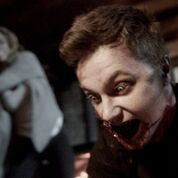
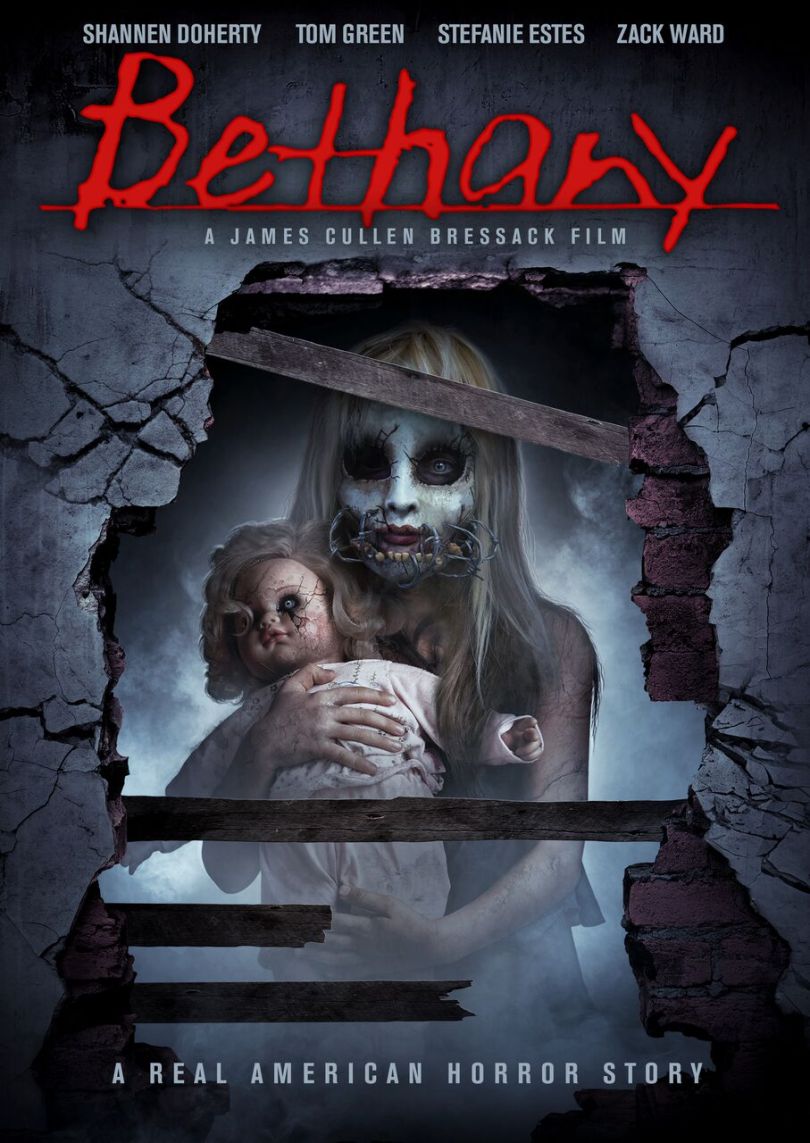
Bethany (2017), a full-length feature from the prolific twenty-four-year old writer-director James Cullen Bressack, is a surreal nightmare; an unnervingly successful contortionist’s act that ranges between past and present traumas. At a brisk ninety-minutes in length, Bressack luminously crosses these stages in time. Such accrues with a seamless mixture of classic gothic horror and modern shock. What is just as striking is how stalwartly Bressack’s latest endeavor aligns itself to the supernatural subtleties of author Shirley Jackson’s The Haunting of Hill House (1959). Such transpires in its earlier stretches. There are even bits which splendidly capture what can be deemed a modern sense of Jackson’s storytelling refinement. Once the presentation nears the second act, the photoplay becomes a nail-biting chain of ghastly, genre-related set-pieces. Each one is more creative and aggressive than the one prior.

Such commences with a distressing, aptly composed sequence at twenty-two minutes in. This segment oversees our troubled heroine, Claire (in a wrenching and ever-believable embodiment by Stefanie Estes) grimacing. This is as she unveils an unexpected crunch in her cereal. As she looks down, she sees roaches climbing out of the bowl. These events only spiral more wildly out of control. Such erupts as Claire’s grip on reality becomes more questionable. Until the comparatively tepid final fifteen minutes, Bressack brings forth a vivid extravaganza of these ethereal proceedings. The majority are made increasingly more delightful. This is in the method in which they constantly called to mind the fictions of Clive Barker. There are also many incidents which made me reflect upon the imaginative celluloid of Wes Craven. Primarily, Nightmare on Elm Street (1984) and New Nightmare (1994). Tobe Hooper’s masterpiece, Poltergeist (1982), was also a frequent echo found within the effort. Moreover, there is a memorable and jarring episode near the half hour mark. It involves Claire pulling on her cheeks. Such made me think a section in Brian Gibson’s Poltergeist II: The Other Side (1986). This is where the braces of Robbie Freeling (Oliver Robins) took on a life of their own. This only augmented the sheer joy the cinephile in me uncovered in the project.

bethany-pic-1

Bressack is clearly inspired. Still, every shot and every scare emerges in a manner that makes it increasingly easier to gaze through Claire’s eyes. When the deftly executed plot begins to unfold, Claire finds herself moving back to her youthful abode. This is with her husband, Aaron (co-scripter Zack Ward in a layered and commanding depiction), in tow. Almost immediately, Claire hears the title personality, an entity that was once thought to be “an invisible friend”, calling her. Making matters worse are the visions of her mother, Susan (in a masterful depiction from Shannen Doherty), which gradually plague the woman. Haunted by flashbacks, which also operate as a gripping form of delivering exposition, the circumstances around Claire become ever more violent and bizarre. With Aaron and Claire’s psychologist, Dr. Brown (in a riveting enactment from comedian Tom Green), desperately seeking to disclose what is ailing Claire, she simultaneously questions her sanity and reality. This is as once buried affairs make their way back into her existence.

Despite this firm, but familiar, foundation, the characters and their motivations are stock. On a similar note, most of the dialogue which dominate Bressack and Ward’s otherwise astounding screenplay are archetypical. Yet, the narrative moves at such a breakneck pace that such demerits seem petty in comparison. Best of all, Bressack and Ward never once lose their fixation on the richly developed personas. The same can be said for the psychologically torturous atmosphere of terror the offering evokes. Such is induced in its opening: A quietly chilling two-minute long arrangement. This portion involves Young Claire (in a turn by Anna Harr that is dazzling), a stuffed bear and an unseen presence by the name of Bethany(which Harr portrays just as unflinchingly as the previously addressed portrayal). After this attention-garnering jolt, Bressack’s endeavor only gains a riveting, imagery-laden momentum. This is as it pushes forward. In so doing, Bressack and Ward offer an all-inclusive catalogue of tropes and uniquely apprehensive notions. Such is increasingly entertaining. This is without ever feeling excessive. A variety of the twists, such as one unveiled circa the halfway point, fall into the category of the tried and true. Still, it does little to damage the evocative, technically impressive nature of this Uncork’d Entertainment distribution. Bressack’s bravura guidance of the tale, as well as the concluding credits, carry this feeling to the last frame of the picture.
bethany-pic-3

Continuing to help matters is the claustrophobic and skin-crawlingly resonant music, a medley of pianos and violins, from Alex Csillag. Likewise, John DeFazio orchestrates cinematography that is brooding gorgeous, suitable and consistently terrific. The editing from Bobby K. Richardson is sharp and seamless. Tiffany K. Wong’s production design, Ryan Henneman’s art direction and Alycia Belle’s costume creation is similarly exceptional. Furthermore, the make-up, sound and camera and electrical squad are captivating. Another marvel is the certainly eye-popping and credible work of the visual and special effects crew. Correspondingly, Leon Russom as Doctor Merman, Kevin Porter as Nurse Foster and Keith Jardine as Harrison reiterate the overall strength of the chronicle. This is with their high-quality performances. Felissa Rose as Janice the Realtor, Kristy Hill as Maternity Nurse and John Murray as Mr. Hodges are also phenomenal. Tiana Whitley as Young Susan, Ellen Gerstell as Marcy and Timmy Pistol as Carl only expand the transcendent edge of the cast.

The result of these herculean components is a configuration that redefines the term “white-knuckle”. Bressack’s item is both sophisticated and grueling. This ultimately exhibits the deft balance of the antiquated and the contemporary approaches to trepidation conjured in this undertaking. But, what is most remarkable is that Bressack, who also plays a hospital visitor, makes us care for Claire. This is also true of those close to her. Such is of the utmost necessity. This is for bystanders to be as absorbed and enthralled as possible as Claire undergoes hell itself. Consequently, the flick rises as resoundingly as a drama as it does a venture into the brooding heart of apprehension. Because of this, Bressack has crafted an exuberant display of talent; a surefire winner. Fellow aficionados of fright will want to check this highly-recommended tour de force out for themselves. You can do so when Bethany, a Brilliant Screen Studios and Grit Film Works fabrication, arrives in theaters April 7th, 2017.

beth-pic-5

“Peelers” – (Movie Review)

peelers-pic-1

By Andrew Buckner
Rating: ****1/2 out of *****.

Two of the most celebrated ingredients in cinematic horror are flesh and blood. Peelers (2016), a wildly entertaining ninety-five-minute feature from director Seve Schelenz and writer Lisa DeVita (who also did the casting), submits this in gleeful excess. Such is most notable in the all-embracing structure. Schelenz and DeVita set the affair up in a semi-traditional manner. This transpires within the initial forty-minutes. These flashes operate as a collage of sumptuously staged and captivatingly shot strip show sequences. This is mixed in with an equal dose of slyly delivered character and story development.

Utilizing nearly the initial half of the film to revel in the formerly stated attribute could’ve easily become monotonous. It could’ve also slowed down the fluent, meticulous pace of the effort immeasurably. But, there is a range of certainly unique themes that accompanies these segments. Never once are any of these notions repeated. Such a decision helps save the undertaking from such a fate. These sections fuse with the aforesaid exposition seamlessly.

The consequence of such an action paints a more thorough portrait of the occupational lives of our leads. For many related entries in the field, this would be enough to sell the flick. Yet, Schelenz’s project has a consistently successful wit. There is also an abundance of creative ideas coursing throughout the exertion. Not to mention, the progressive build-up of terror events unveiled in this section are just as effectively and organically administered as those stated above. For example, there is a memorable third act happenstance which incorporates these components. It involves our central figure, Blue Jean Douglas (in a charismatic and ever-watchable performance from Wren Walker), taking out an infected antagonist with a baseball. The brilliance of this bit, besides being a nod to her former profession, is that it is modeled after the conventional slow-motion sports-associated pitch commonly elucidated in movies. Much of the last fifty-five-minutes function just as well in this fashion. This is as the proceedings are crafted into an all-out parade of gore, grandiose fright and brilliantly honed humor. This is even if the configuration proves somewhat more engaging early on. Such is because of the method in with relationships bud and circumstances unveil in predictable fashion in the latter portion. Yet, the work never fails to be anything less than raunchy, low-budget fun. Best of all, it rarely resorts to artificial jump scares to punctuate its various episodes of intensity.

The narrative commences with an ominous and certainly attention-garnering scene. It transpires in a hospital. Over the course of its two-and-a-half minutes, the macabre allure of this piece establishes a jolting, though quietly eerie and foreboding, tone. Such becomes an early highlight of the venture. This is as it suggests the variety of great things to come. Simultaneously, it immediately begins to form questions in our mind as to what exactly we are seeing and why. It is a masterful foundation. Schelenz follows this up with a visually stunning arrangement that mechanizes just as triumphantly. There is a smooth marriage of music and sensual imagery augmented in this composition. Such particulars make the configuration play like a bravura inaugural extract of cast and crew recognition from an X-rated installment in the James Bond franchise. Moreover, LaLaa Love’s body language expressive presentation as the dancer viewed in this unit compliments the sheer artistry at hand. Such creates the ingenious rhythm of alternating fear and sensuality upon which the design stands.

As the tale unfolds, we find manager Blue Jean quietly pining. It is her last day as owner of The Happy Hour. Such is the erotically charged club where the narrative solely takes place. A nefarious businessman known as Chromagnum (in an exhibition from Al Dales that spectacularly personifies the efficiently sinister rich man archetype), has bought her out. He intends on using the building to his own whims officially at the stroke of midnight. When a group of miners arrive at the area, it is soon noted that these individuals seem to be covered in a strange ooze. Striking up conversation with one of the laborers, it is discovered that this group believes to have struck oil. They also state that they are planning to go back tomorrow. This is to see if they can uncover more of the presumed liquid. Such explains their festival-like spirit. It is also cause for their reasoning for stopping at Blue Jean’s venue. Yet, this scheme is abruptly halted. This is as the substance morphs these toilers, and everyone else in the building, into infected, zombie-like monsters who hurl black and green fluids. Such erupts moments prior to transformation.

peelers-pic-3

Such is a simple, but surely intriguing, impetus for a chronicle such as the one Schelenz conveys. It is a fiction that garners supplementary points by drawing a definitive parallel to John Gulager’s stupendous Feast (2005). This is in its general setting and zany, go-for-the-jugular demeanor. Furthermore, our protagonists are all likable and diverse in personality. Best of all, they are undeniably outstandingly etched. The antagonists are also exceptional. This is especially true when considering them as a masterful illustration of the collaborative contribution of the thirty-eight people who make up the effects team. Though the look of the undead is a bit conventional, a mixture of the dark eyes uncovered so habitually in modern cinema and the writhing ick of a similar opus from the 1980’s, they are still an enjoyable departure. This is from the stiff and unimaginative veneer of so many mutants perceived in today’s full-length provisions. Correspondingly, the method devised to slaughter these entities is both convenient and clever. But, what shines the most is the endlessly confident and stylish direction from Schelenz. DeVita’s screenplay continues to assist and augment the quality of the attempt. This is primarily with credible, yet often hilarious dialogue. There is also a smart balance of the serious and the comic, the bold and the interesting inherent in the penned material. Such makes the predictably wicked intentions Chromagnum has with Blu Jean’s edifice, which are exposed in the final twenty-minutes, quickly forgivable.

The doggedly skillful on-screen portrayals only boost these sensibilities. Kirsty Peters as Licorice/ Carla, Nikki Wallin as Baby/ Elaine and Victoria Gomez as Tina are excellent in their principal roles. Caz Odin Darko as Remy, Madison J. Loos as Logan, Cameron Dent as Tony and Momona Komagota are also fantastic. Rafael Mateo as Pablo, David Torres as Mario, Edwin Perez as Jesus and Andrea Rosolia as Panuche are just as phenomenal in their respective enactments. The same can be said for Manny Jacinto as Travis, Emma Docker as Aja, Rob Scattergood as Officer Karl Robinson and Katherine Blaylock as Officer Simone Lacey. Lauren Martin as Nurse and Megan Duquette as Nasty Nanda are also impressive in their brief turns. The secondary cast of bar patrons, cooks (Jason Mullen, Chadderton W. Thornton and Mike Hurley in slight, but transcendent, parts), a deejay (voiced by Tim Chisholm) and a waitress (in a magnificent demonstration from Tatyanna Prior) enrich this already layered endeavor. Additionally, Schelenz is scene-stealing in his representation of Officer Carter.

peelers-pic-4

Schelenz also provides sharp and remarkable editing. The cinematography from Lindsay George is gorgeous and ever-immersive. Nikki Blais’ costume as well as Todd Giroux and Schelenz’s production design is authentic and inventive. The seven-person make-up squad offers terrific input. Vincent Mai’s music, though evidently modeled after the conventional mechanisms of the genre score, is moody and unnerving. The art, electrical and camera, animation and sound department all afford an influence that is startlingly good.

Recorded in Vancouver, British Columbia, Canada, this Uncork’d Entertainment distribution and Pound (LBS) Pictures co-fabrication, is interminably delightful, amusing and relentless. It is everything audiences seek when searching for escape via celluloid. There are instances of intentional camp. But, it is not so much that it weighs down the wallop Schelenz packs when he yearns to subject bystanders to genuine shocks. This poise makes the sum increasingly well-rounded and easy to admire. The open to interpretation shot which arises before the concluding acknowledgments only adds to this category. Such is only a warm-up round for the astonishing mid-credits passage that is glimpsed later. When these become mutual with the last second jolt which finishes the photoplay, we smirk all the wider. This is as Schelenz appears to culminate the climax of his brainchild with another wholly new one. Such a radically over the top decision suits the overall attitude of the depiction beautifully. The title, an analogy that applies to the heroines as well as the overtaken, is just as perfect. When integrated, the outcome is an assuredly crowd-pleasing tour de force; a blood-soaked and ceaselessly engrossing reminder of why I originally fell in love with the genus of tongue-in-cheek revulsion. For those with similar affinities, this will prove to be one of the best movies of the year. I highly recommend seeking this out. You can do so when Peelers arrives on Video on Demand March 28th, 2017.
peelers-pic-2

“Fireflies” – (Short Film Review)

By Andrew Buckner
Rating: ***** out of *****.

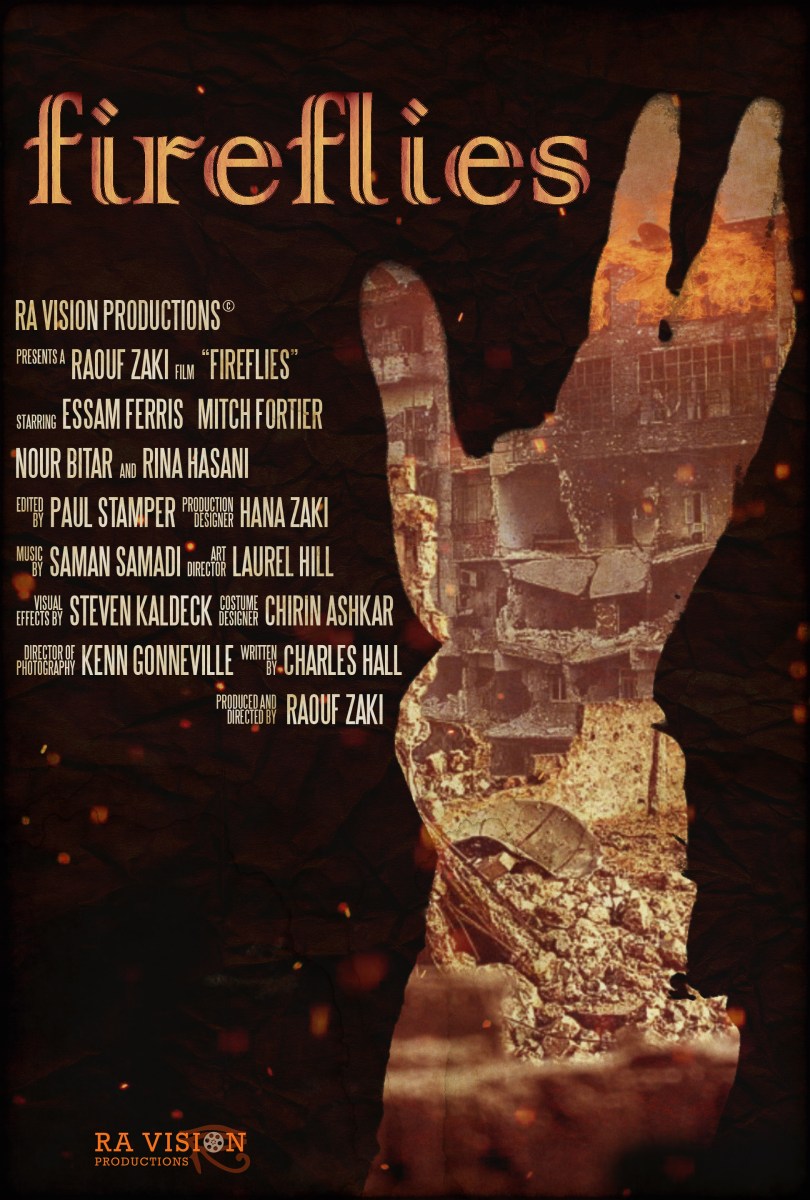
Often in cinema, as in life, silence is the most honest and sincere form of expression. “Fireflies” (2017), a short film of seventeen-minutes and twenty-one seconds from director Raouf Zaki and writer Charles Hall, is well-aware of the harrowing nature of such effects. It utilizes this on-screen with only the barest hint of dialogue. In turn, Zaki’s exertion magnificently demonstrates such visceral prowess. This is through many sparse, but swiftly effective, motions. For instance, a question raising glance from an employee to a customer. This arises a mere instant before the worker draws an unexplained X mark on a nearby calendar. As this bit is repeated, the meaning becomes vastly apparent. Yet, such an approach enhances audience intrigue grandly. Best of all, it also continues to project the untampered sensibility of watching life unfold. Such is pivotal. This is when maximizing the impact of a tale such as this one.

Much of the endeavor is composed of such quietly compelling and reenacted segments. Proof of this can be unveiled in a brief bit where our lead, Marwan (in an aptly honed and nuanced portrayal by Essam Ferris), wordlessly prays in a hotel room. We are also provided several cases where he appears both distant and uncomfortable. This is while being surrounded by the hushed discussion and laughter. Such erupts among others in the Boston café he frequents throughout the presentation. Zaki, via his brilliant and meticulously nuanced direction, wisely intercedes these serene circumstances. This is with a sudden terrified scream, a cry of pain or a sharp, attention-garnering explosion. These haunting flashes stem from the tragic flashbacks Marwan intermittently endures, unbeknownst to others, throughout the arrangement. Because of this, the piece becomes a rousing statement on an even larger topic. This is how the horrors of the past can shatter the presumed peace that surrounds our current state. It is also a masterclass on an entirely different plane. This is in its ability to delve intimately and authentically inside the mind-state of our protagonist. Simultaneously, the configuration operates on as a timely assessment of another psychological condition. This is that which, sadly, courses through a small fraction of the American mentality. Such is unveiled in its plotline. This concerns the suspicions cast from a headwaiter (in a terrific depiction from Mitch Fortier) towards our reserved, Middle Eastern central figure. Such transpires as he finds himself repeatedly returning to the aforesaid coffee bar.

It is a bold theme. But, it is treated organically and respectfully. Moreover, the brief exercise spellbindingly accomplishes an incredible balancing act. This is by dealing with the topic of judgment from others. Such transpires without ever becoming disapproving or overly critical itself. Such only augments the sobering, intelligent and mature traits inherent in the proceedings. This is as a courtesy of Hall’s beautiful, hauntingly penned and delicately structured screenplay. It is also just as much the consequence of Zaki’s stupendous behind the lens involvement. The result is a smooth, naturally paced endeavor. It is one that never abandons its human, character-oriented center. All the while it effortlessly culminates an emotional resonance. This is without ever being overly melodramatic or manipulative to do so. A great example of this would be the heart-wrenching, bittersweet and exuberantly made climax. The imaginative and eye-popping concluding acknowledgments section which follows only augments the wonder at hand.

These components are made even more elegiac and profound. This is when combined with combined with the cinematography from Kenn Gonneville. The editing from Paul Stamper, Steven Kaldeck and Zaki is equally proficient. The visual effects from Stamper and Kaldeck are seamless. They are also as persuasive as the meticulous manner of storytelling issued herein. Correspondingly, the sound work from Kevin Daggett and Jeff Majeau is also rousing and impressive. Kelton Vuilleiumier’s set decoration and Chirin Ashkar’s costume design is fantastic. The same can be said for Lori Grenier’s hair and make-up contribution. Outstanding input is provided from the camera and electrical crew. The art direction from Laurel Cunningham-Hill and production design from Hana Zaki are just as sensational.

This RA Vision Productions release, recorded in various areas of Massachusetts, also boasts magnificent acting all around. Nour Bittar as Syrian Mother and Rina Hassani as Syrian Daughter orchestrate top-notch representations. Their scant turns are nonetheless memorable. Kevin Daigneault as Unemployed Man, Harry McGuire as Bartender and John Melczer as Refugee Man generate a similarly terrific influence. The nine individuals credited as Restaurant Patron, Logan Raposo as Businesswoman and Brian Douglas Young as Guitarist #1 and William Bento as Guitarist #2 continue this striking trait. Additionally, Brooke Farrington as Refugee Young Girl, Christine Nordstrom as Refugee Woman, Christine Hunt as Mother and Judy Nadel as Daughter are also exceptional. Maurice Viteri as Buff Man, Yasmine Sabrah as Lead Singer Restaurant and Vanessa and Natalie Garnhum as Selfie Girl #1 and #2 respectively are also remarkable.

The outcome of these shining facets is undoubtedly one of the greatest and most impassioned presentations of 2017. This is a triumph of artistry and of inward peering life. Zaki takes imagery from the everyday, such as the constant hum and crackle we hear from a glowing red vacancy sign or a woman incessantly uttering “Check” into a microphone, and makes them perpetually mesmerizing. There is a semi-detached, thinly hallucinatory quality to these episodes. Such establishes a magnetic illustration to bystanders. It is a skillfull rendering of the way Marwan himself might be mentally perceiving such manifestations. This is as he evaluates his own existence as well as the world around him. Ultimately, this is one of the various reasons why “Fireflies” works so uncommonly well. It is because it yearns for us to look both inward and outwardly. Not only does it do this with restraint and dignity, but it does so with an unshakable, melancholy power. Such makes an already profound chronicle more insightful. Relatedly, the symbolism revealed in the appearance of the title insects heightens this factor immensely.

Zaki has a lot to say about the human condition. He transfers these ideas in a fashion that is clear and direct. This is also done without coming off as artificial or detracting from the unveiling fiction. Such makes this even more of a gripping triumph; a rousing tour de force. For both the cinephile interested in seeing an exhibition of sheer craft as well as those who want to perceive existence through someone else’s eyes: This is mandatory viewing.

fireflies-pic-1

“Defarious” – (Short Film Review)

By Andrew Buckner
Rating: ***** out of *****.

“Defarious” (2016), the eleven-minute and sixteen-second debut short film from writer-director Chase Michael Pallante, is gloriously moody. It plays like the collaborative brain child of horror masters Dario Argento, John Carpenter and James Wan. Moreover, the maniacal demon whose name graces the moniker of the tale, in an undeniably deft representation from Jason Torres, is phenomenally honed. Such accrues to the degree that such a body language based exhibition as that which Torres incorporates here instantaneously calls to mind a time-tested giant of the genre. This is Max Schreck’s iconic portrayal of the menacing title vampire in German auteur F.W. Murnau’s silent masterpiece, Nosferatu (1922). Much like Schreck’s character, who is also referred to as “Count Orlock”, Pallante’s villain is a memorably designed vision of terror. Correspondingly, he seems to appear from the shadows as easily as he becomes one. Yet, they are both distinctly their own article. The apprehension Torres’ entity resonates is immediately noteworthy. This is especially evident in the bone-chilling moment when we initially spy him in full. Such transpires at the midway mark. With a sinewy frame and wide, emotionless, grey alien-like eyes, which appear to be glaring from the fiery depths of hell itself, the alignment to Pallante’s antagonist with Murnau’s unholy monster is complete. Best of all, they match one another in their ability to effortlessly unnerve.

Pallante, who also produced, chronicles the young Amy (in a consistently harrowing enactment from Janet Miranda). Plagued by nightmares, and disturbing sights of her deceased mother, the line between reality and the dream world has been blurred. Such is made more so when a terrifying figure breaks into her home. His intentions are clearly conveyed from the onset. He wants to take her life. The creature will stop at nothing to do so. With no one to help her, she must escape the fiendish clutches of the merciless madman who wants her dead. But, to do so, she must face the both the sight and understand the symbolic meaning of her greatest qualms and uncertainties. This she must do by facing them headlong.

defarious-pic-1

It is a plot that would be considered thin and ultimately routine, a general recycling of the events of Shant Hamassian’s intriguingly retro “Night of the Slasher” (2015), in lesser hands. But, with the occasionally Lynchian, imagery-laden manner Pallante utilizes to guide the project, the presentation shatters such fundamental limitations. In turn, Pallante makes of such a rudimentary palette a compulsively fascinating account. It is one which is nonetheless robust, refreshing and endlessly engaging. This is largely because of Pallante’s aforesaid aesthetically driven decisions. Additionally, Pallante keeps the pace confident and enduring throughout the arrangement. Likewise, the intensity, which is deftly mounted and engineered, is ever-culminating. We notice this with a genuinely unnerving, and appropriate, quote from Matthew 10:28. Such is distributed before the yarn even begins to unfold. This nail-biting characteristic elevates to a surely satisfying, if predictable in hindsight, finale. More than anything, this climactic stretch greatly underlines the merciless nature of Pallante’s endeavor. Such creates a masterclass in generating continued suspense. It is one which is augmented as grimly illustrious, macabre and foreboding. This is via Jorge Canaveral and Christian Reyes’ eye-popping and wholly immersive cinematography. Further helping matters is that the arrangement is almost entirely cast in a hazy blue veneer. Such is another bold, ingenious choice. It makes Pallante’s configuration ever more menacing and surreal.

Wisely keeping dialogue, motivations and exposition to a minimum for maximum impact, Pallante, who also wrote the smart and enigmatic screenplay with developer Zay Rodriguez, paints a mercilessly taunt nightmare on celluloid. The result is an unwaveringly bleak and masterful tone piece. It is one that pays homage to 1980’s and 90’s slashers traditions. This it does by staying within the rules, motions and general arc held within the traditions of such a beloved sub-genre. Never once in its runtime does it break out of them. Yet, the project operates just as successfully as a meditation on sleep paralysis. Such is unveiled in a beautifully constructed post-credits sequence. This brief segment slyly stays within the aforesaid murderer-oriented story boundaries. In so doing, it is conveyed from the perspective of our lead. She, we than learn, suffers from such a condition. Relatedly, Pallante’s affair is also brilliant in its quiet critique of the medical world. The result is a truly multi-layered narrative. It is one that mechanizes as well on a surface level as it does on the myriad layers beneath.

defarious-pic-2

Because of these herculean details, Pallante triumphantly delivers a raw, primal, but cerebral, experience in unrelenting fear. Such is vastly punctuated by a purely cinematic use of sound. This arrives courtesy of Fernando Frandy Castillo, Jose Julian Santiago and Pallante. It is one of the best issuances of its type I have encountered in such a venture. The atmosphere laced score from Jonathan Martinez brilliantly reinforces such a factor. Correspondingly, Lou Cannizzo and Martin Hayward’s visual and Jessica Hayward and Reyes’ special effects are similarly captivating. The five-person camera and electrical as well as the same said make-up department offer terrific contributions in their respective arenas. Maggie Stapleton’s wardrobes are exceptional. Pallante’s editing is sharp and skillfully administered. This Long Island, New York recorded opus, a Rhythm and Flow Entertainment Inc. co-fabrication, also boasts spellbinding and unmistakably eerie voice work from Shanae Harris. Alim Ali and Pallante’s stunts are magnificent. They grandly amplify the quality at hand.

“Defarious” was made for only $25,000. Yet, it looks and feels like a multi-million dollar Hollywood exercise. In its brief span, Pallante tells a comprehensive fiction in a post-modernist fashion. The outcome is envy-inducing to say the least. Yet, this tour de force, shot from August 29th through September 4th of 2015, is exciting in another arena. It is jumpy without ever resorting to cheap gimmicks to accomplish such a task. Astoundingly, it also has the unpredictable internal logic of a waking dream; an unshakable night terror. This is one of the strongest attributes of the exertion. Such a distinguishing influence fluently puts us into the often-confused psychological state of our heroine. This is provided with fervent gusto. Such makes it easy to see why this incredible labor won the coveted Best Film award at The Northeast Film Festival Horror Fest. Pallante has delivered one of 2016’s greatest entries in celluloid apprehension. I highly recommend seeking this one out.

The official site for the film can be found here.

The Facebook page for “Defarious” is located here.

R&F Entertainment’s Twitter page is here.

defarious-pic-3

“Rock & Roll: The Movie” – (Movie Review)

rock-and-roll-pic-1

By Andrew Buckner
Rating: ****1/2 out of *****.

Indiana born musician turned writer-director Darren Dowler’s full-length feature debut, Rock & Roll: The Movie (2016), is a wildly successful rapid-fire comedy. It is one which just as engagingly acts as a loving homage to the popular culture of the 1980’s and 90’s. This is while embracing the immersive spirit of the melodic genre stated outright in its title. Evidence of this rests in Dowler’s witty incorporation of a deftly conveyed stoner duo by the name of Bill (Vince Corazza) and Ted (Chip Bent) into the proceedings. Such becomes a pulpit for slyly abounding references to the two film, Keanu Reeves and Alex Winter starring series. This began with Bill and Ted’s Excellent Adventure (1989) and ended with Bill and Ted’s Bogus Journey (1991). Such a factor is especially evident in the uproarious sequence at the twenty- minute marker. Here these certainly likable and well-played pals are introduced. Yet, the often unabashedly raunchy jokes, all playfully administered, are much in the mad cap, slapstick vain of another decade appropriate gem. This is Jim Abrahams’ and David and Jerry Zucker’s satirical parody masterpiece, Airplane! (1980). The Zuckers’ and Peter Segal’s The Naked Gun (1988), an adaptation of their detective style television show Police Squad! (1982), also springs to mind. Such is established immediately in a brilliantly conceived commencing bit. Such kids the inevitable “leaving my unconditionally ardent mother behind to chase my dreams” segment to endlessly guffaw-inducing effect. This is an inescapable tradition in cinematic stories such as these. A reoccurring pun concerning martial artist Jackie Chan, which is initiated into the fiction in the second half and later addressed in full while the flashily displayed concluding credits roll, is another highlight.

Keeping its tongue firmly planted in cheek for the entirety of its ninety-one-minute runtime, this delightfully entertaining romp has nary a gag or smartly penned piece of dialogue that doesn’t land with either a chuckle or an outright belly laugh. This is a courtesy of Dowler’s tremendously clever, confidently paced screenplay. The composition fully embraces its broad structure and characterizations. This also testifies to the great comic timing of the on-screen performers. Yet, this intimate epic also flourishes because Dowler fills his tale with charismatic, yet vastly sympathetic, central figures. All of whom are distinctly their own personality. Moreover, they are complete with their own eccentricities and amusing quirks. Though many of the anecdotes might haggle the easily offended, none of the people in Dowler’s effort are ever mean-spirited or overly villainous. Such only makes the undertaking more charming and decidedly old-fashioned. The effectiveness of this element is at its most memorable in Bill Oberst Jr.’s scene stealing performance of Moe. He is a sometimes bar tender who constantly pops up at random intervals throughout the affair. This is to dispense strange and off-key nuggets of nonsensical wisdoms and alternate words of motivation to both our leads as well as the audience.

rock-and-roll-pic-2

But, the essence of the motion picture, Dowler’s twenty-five songs which are heard throughout, often bring about some of the heartiest laughs. For instance, there is a catchy tune presented in the last fifteen minutes, authored and performed by Dowler (as are all the tracks), which is called “I am Better Looking”. It is just as rib-tickling as the live concert/ music video manner it is presented. But, there are also some genuinely stirring and emotive moments. They pleasantly derive from the more serious numbers. “You Are the First Girl”, which is recited after a bet which transpires before the hour mark, is a beautiful, passionate ballad. It is enhanced by the quietly same said segment in which it takes place. “When We Were Young”, which our hero, Steve Taylor (in a wickedly good portrayal by Dowler) stages in the climactic competition, is just as poignant. Such illuminates Dowler’s bold storytelling and organizational capabilities. These episodes, which would otherwise conflict with the not entirely sentimental mood of the labor, are among the centerpieces of the film. Best of all, they blend seamlessly with everything else Dowler dishes out here. Such ultimately creates a more rounded, artistic and unpredictable arrangement.

Dowler chronicles an oft projected narrative. This is that of an unmistakably innocent man, David Roso (in a pitch perfect depiction by Clark Koelsch), who goes to Los Angeles in hopes of seeing his ambitions take flight. Almost immediately upon his arrival in California, David meets up with personal idol and agent to a catalogue of famous individuals, William Smythe (in an outstanding representation by Daniel Laney which frequently utilizes deadpan humor to punctuate its laughs). Smythe is more interested in obtaining Roso’s ’57 T-Bird than providing career advice to him. In so doing, Smythe makes a wager with Roso. The deal is that if Roso can get an unsigned talent a recording deal in four months or less, Smythe will officially make Roso an agent. If this doesn’t work out, Roso must hand over his prized vehicle to Smythe. Pretending that he is genuinely concerned with Roso, Smythe secretly sets him up for what he expects to be failure. This is by declaring to Smythe that the person he helps get a recording contract is Taylor. An individual who happens to be a porn star servicing drunk in his 40’s who never once glimpsed fame. Such is just the first of the numerous spins Dowler puts on the deliberately conventional trappings of this otherwise formulaic plot.

rock-and-roll-pic-3

From a technical standpoint, Dowler issues editing which is every bit as sharp and impressive as his myriad other contributions to this wonderful project. This Entertainment Research Institute and Rocking and Rolling production also benefits from Dimitris Bogiantzis’ suitably cheery, vibrant cinematography. The make-up, camera and electrical as well as the four-person sound department are also remarkable. Likewise, Dowler’s stunts and Alexandra’s Pomerance’s wardrobes are exceptional. Further assisting matters is Cindy Merrill as Karen, Mara Marina as Gloria and Shawn Parikh as Don. All of whom offer delightful enactments.

This EskaGo and Uncork’d Entertainment distribution release is a true tour de force. Compelling and competent at all levels, Dowler’s photoplay has fun with its familiar ingredients. This is without every falling prey to them. Dowler, who is also the lead vocalist for Paul Revere and the Raiders, sends-up the industry that he has been a stealthy force in for many years. Yet, this is done in a spirited and admirable fashion. Such a design will surely appeal as much to insiders as it will general audiences. This is the increasingly rare comedy with real bite. Yet, it operates just as well as an exhibition of talent from all involved. Just don’t go into it expecting any unique insights into the underbelly of the music world. The multi-faceted Dowler, who is also an acclaimed novelist, has given us an amiable opus. It is one which lampoons the limitations of similar entries. This is with a knowing wink at itself and its patron. Because of this, the light-hearted nature and nostalgia at hand are increasingly infectious. Rock & Roll: The Movie triumphs. As a matter of fact, it is one of the best films of its ilk I’ve encountered in the past decade. I highly recommend you seek It out on video on demand today.

roll-pic-5

“Bornless Ones” – (Movie Review)

bornless-ones-pic-4

By Andrew Buckner
Rating: ***1/2 out of *****.

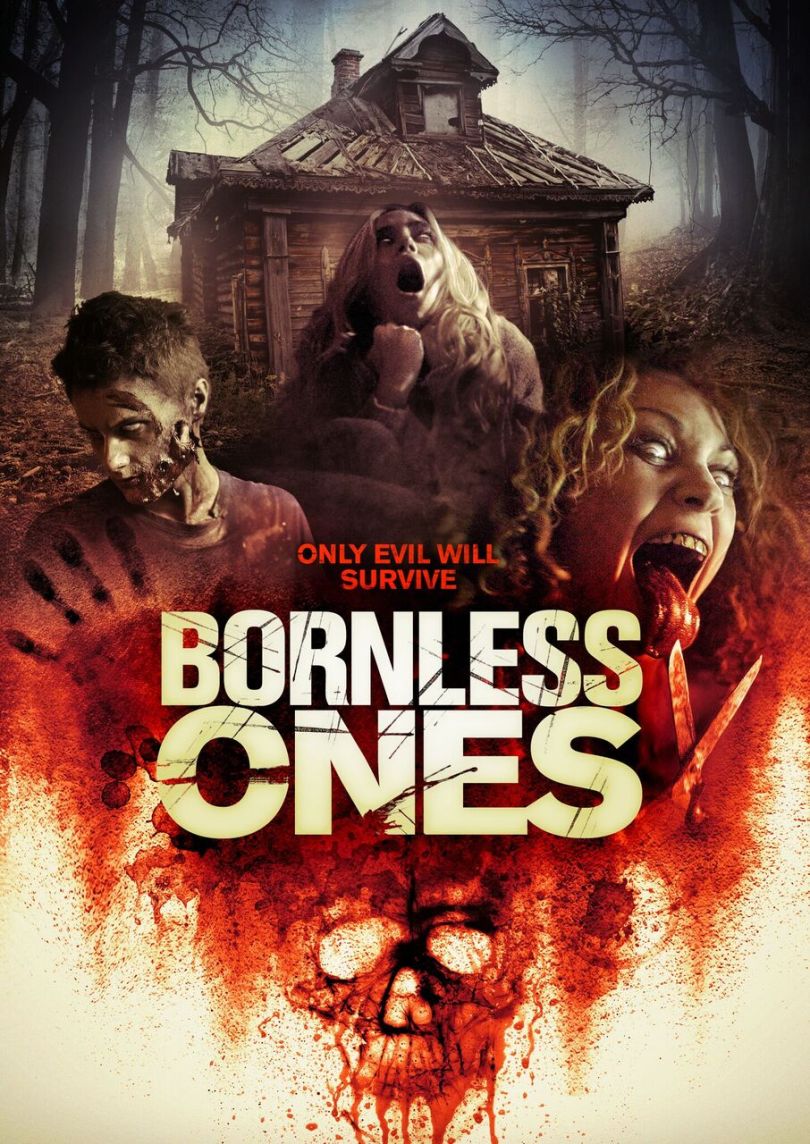
Bornless Ones (2016), the eighty-minute full-length feature debut from writer-director Alexander Babaev, summons the spirit of Sam Raimi’s seminal horror classic, The Evil Dead (1981), spectacularly well. Respecting the foundation laid down by Raimi, Babaev has crafted a rollercoaster ride of gore. It is one which is propelled by increasingly ghastly coincidences. Furthering this parallel is that these fearful events revolve around a batch of ruthless demons. All of whom are summoned to a secluded cabin the woods. Additionally, Babaev’s structure and general build-up of the presentation, alongside the previously stated mechanisms of the tried and true plot, are also reminiscent of Raimi’s tale. This is with the first half of the endeavor being more character-oriented. To its further favor, it is also noticeably well-mounted. In this early section, Babaev, whose direction is taunt and quietly stylish throughout, successfully executes a continuous sense of ominous dread. Once the runtime passes the halfway mark, the film tilts into full gear. From herein, it hits a momentous creative stride of claustrophobic, apprehension-inducing sequences that never wavers.

Likewise, Babaev fills each frame with inventive images and scenarios to brilliant consequence. They, in turn, make the unfolding chaos ever-present ever more tense and palpable. A memorably macabre moment at forty-two minutes in, which involves the torturous sight of a deceased child in a bath tub, is definitive proof of such a statement. It is also a testament to the largely convincing nature of Artem Miroshin’s accomplished visual effects. The idea Babaev conceives of “demons who heal”, as it is described by an individual in the effort itself, is especially novel. It further showcases the inventive spin Babaev puts into the standard mechanisms of such a rigorously held terror formula. In so doing, Babaev incorporates an even balance of promise and pay-off. Such works as well in Babaev’s narrative as it did when Raimi incorporated such a manner of account telling stability thirty-six years prior. Yet, the sum of Babaev’s affair isn’t entirely reliant on these imitative attributes to establish its high-quality. As a matter of fact, Babaev’s deft screenplay is decidedly fashioned more from the modern cinematic approach to the genre. This is in regards to the fact that it delves deeper into the brooding and often pained backstories of its leads. Such is in comparison to the previously stated Raimi authored groundbreaker. Yet, the configuration as a whole is, ultimately, hindered by occasionally tiresome dialogue. This is most visible when such celluloid derived speech lapses too often into the repeated question of “What’s wrong with you?”. This is projected as a go-to reaction to the revulsion-laced happenstances our central figures undergo in the later stretches.

bornless-ones-pic-3

Babaev’s routinely erected on-screen personas, none of whom may prove as iconic as Raimi’s hero from The Evil Dead, Ash (Bruce Campbell), are united by a variety of past tragedies. This is both openly articulated among some and with others initially kept secret. Such issues a perfect pulpit to develop ever-enigmatic personalities. All of whom constantly keep audiences intrigued. Simultaneously, this gives Babaev an opportunity to erect several genuinely surprising dramatic twists. These are positioned throughout the undertaking. Such authentically gasp-worthy instances beautifully compliment the unnerving tone of the construction. Moreover, they bring a human allegory to the frightful fiends that dominate the fiction. These elements assist the exertion in showcasing that it is much its own entity. Such transpires to great consequence. This is while keeping its obvious inspirations much in check. It makes for a well-rounded, delightfully entertaining exercise in dread. Such is one which is capped off by an ingenious final scene. In this brief bit, Babaev issues a clever and sinisterly smirk-inducing change in roles and perspective. Such represents a deliberate turn from the expected. Though Babaev can never completely liberate himself from such trappings, the sum of the exhibition remains potently engaging because of such unique components.

After a tense, gorgeously realized and attention-garnering opening section, Babaev focuses in on Emily (in a credible and charismatic performance from Margaret Judson). She has been left to care for her cerebral palsy afflicted brother, Zach (in a depiction by Michael Johnston that is towering and powerful; the emotive driving force of the labor). We follow her and group of her friends. This is as they help Zach, Emily and her boyfriend, Jesse (in a stalwart enactment from Devin Goodsell) settle down in their new abode. Yet, almost immediately the group uncovers strange symbols and handwritten notes. Making matters worse is the discovery of a satanic mural. All of which are strewn throughout the edifice. These are signposts related to the catastrophic circumstances, unknown to Emily and her confidants, which were inflicted upon those who owned the house previously. All the while, Zach seems to be undergoing sudden, miraculous improvements in regards to his condition. Yet, once an effort is made to remove these bizarre markings seven so-called “guardians”, ominous defensive entities, begin to gather outside. Such is another emblem. It is one personifying the chaos that is about to be unleashed.

bornless-ones-pic-2

Relatedly, this Uncork’d Entertainment distribution and Black Drone Media production, mostly shot in California’s Pine Mountain Club, is a triumph in the performance arena. It is graced with a hilariously energetic portrayal from David Banks. He plays the quirky, eccentric real estate agent, Richard Alonzo Jr. III. Mark Furze as Woodrow, Bobby T. as Michele and Victoria Clare as Christina are all wonderful in their portrayals. Gwen Holloway is particularly striking in her brief turn as Emily’s mother. Nick Saso as Dennis, Rob Tepper as Dr. Weisenberg and Svetlana Titova as Dolores are terrific. Pony Wave as Sarah and Greg Travis as Billy all bring distinctly remarkable life to the personas they embody.

From a technical standpoint, it is just as accomplished. The music by Paul Hartwig is compellingly constructed and masterfully moody. Correspondingly, the cinematography from Egor Povolotskiy is phenomenally proficient. Babaev’s editing is seamless. The camera and electrical department, make-up crew and sound team all deliver impeccibly in their specific categories. Augmenting this appeal is Catelin Dziuba’s fresh and exciting costume design. Similarly, Carlos Cortez’s art direction is eye-popping.

Such results in a flawed, but certainly admirable and worthwhile attempt. Many of the story beats ring with a sense of deja vu. For example, the anticipated episode early on where the team arrives at a rundown gas station. Such is a time-tested trademark often spied in motion pictures such as these. But, Babaev proves unafraid to boldly touch upon sobering subjects etched from real life fears and atrocities. Such illuminates and gives purpose to our protagonists. It makes us care for them even more because of this decision. We understand their motivations. Because of this, we feel the intensity of their plight. This is as they combat the otherworldly wickedness at hand. Such makes the suspense Babaev generates so ceaselessly here more profound and nail-biting. The pedigree of invention Babaev registers further elevates the material. Moreover, there are other slyly positioned winks to other entries in The Evil Dead series outside of the original. There is one especially smirk-inducing moment involving the tongue of the possessed and a pair of open scissors seen in the last act of Babaev’s latest. Such calls to mind Fede Alvarez’s 2013 remake of Raimi’s masterpiece. The voices of the overtaken in the oddly titled Bornless Ones, though not wholly believable and shakily dispensed, also seem to mirror such a trait in the three film (or four if you count Alvarez’s previously addressed reboot) series. Such adds an extra undercurrent of fun, especially for fellow cinephiles, to the proceedings. Because of such measures Babaev proves all that can be done with a familiar plot and set-up. The culmination of these minutiae is certainly worth seeing for yourself. You can do so when the movie arrives in select theatres and is simultaneously released on video on demand on February 10th, 2017.

The Facebook page for the photoplay can be found here.

The Twitter page for the flick can be found here.

bornless-ones-pic-1

“Leftovers” – (Short Film Review)

leftovers-pic-3

By Andrew Buckner
Rating: ***** out of *****.

“Leftovers” (2017), an utterly absorbing twelve-minute and forty second short film from director and co-writer Tofiq Rzayev, is sobering, heart-wrenching and undeniably powerful. It brings into account a meditation on the hellfire and purgatory one must endure for atrocious actions. Namely the rape and murder of an eight-year old girl. But, it is as adamant at addressing how such measures of wickedness immediately affects those who are closely tied to the situation. This is in both a familial and occupational sense. Much in the manner Rzayev issued with his previous entries from 2016, “Nihan: The Last Page”, “In a Time for Sleep” and his dazzling debut invention with Fidan Jafarova, “Araf”, the affair focuses on grief. Yet, this is without such primary agony ever becoming the sole selling point of the composition.

We note this most evidently in the method in which Rzayev, utilizing a bold and intelligently arranged screenplay he crafted with prior literary collaborators Alsen Buse Aydin and Mehmet Faith Guven, develops the personalities of the fiction magnificently. Such transpires via their reactions and mannerisms over the horror they encounter. This now trademark Rzayev storytelling device is spellbinding. It immerses viewers in the emotion overflowing from those on-screen to captivating effect. This is while simultaneously respecting the perpetually solemn tone Rzayev has so beautifully and carefully constructed. In turn, the harrowing impression of watching real life unfold never wavers. As a matter of fact, these wise narrative choices only amplify these attributes. The result is a mesmerizing masterpiece; a harrowing cinematic glimpse into the oft gloomy mechanisms of the human spirit.

Set in the Turkish Mountains, this Angry Student Films Production concerns two civil police (in fantastic portrayals by Ismail Mermer and Erhan Sancar that further etch the rugged authenticity at hand). They are in the process of taking a highly troubled and distressed person, credited here as The Individual (in a genuinely moving and emotionally riveting performance by Gokberk Kozan), to identify a body at a crime scene. Upon stopping to allow their passenger to collect himself, a series of foreboding turns enter the narrative. From herein, sentiments, motivations and judgments take hold. This is as the drama hits a brooding zenith. Such sets the stage for a second half that unflinchingly focuses on the reactions to the abovementioned tragedy. This is with anger and heartache almost always at the forefront. The ardor-laden intensity in this section is made progressively palpable. Such transpires alongside Rzayev’s decision to keep the entirety of these measures in the confines of an isolated location.

Originally titled “Geride Kalanlar”, Rzayev weaves an increasingly gripping, brilliantly paced and executed chronicle. It begins strikingly. This is with an incredibly done shot from the backseat of a moving vehicle. Such suggests that we, the audience, are a silent passenger to the alternately poignant and unnerving circumstances which are about to occur. An immediate interest such as this only grows as the scant runtime unfolds. It is pushed to an undeniably haunting, open-ended concluding sequence. This is a perfect departure for a composition such as Rzayev’s latest creation. Such is so because it forces bystanders to become ever-involved in what is being depicted. This is a courageous, evocative choice. It is one that also pays off handsomely. In turn, the overall success of the endeavor is even more vivid and astonishing.

From a technical angle, the opus is just as mesmerizing. Rzayev, who also produced, issues masterfully constructed editing. His brooding cinematography is exceptional. It holds a mirror to the life imitating qualities of both the tone and the account itself spectacularly well. This can also be spoken of the clean, quiet, phenomenally arranged and fitfully reverential concluding credits segment. Likewise, Zahit Battal Sari demonstrates a compelling presence as the voice of The Commissioner. Additionally, the script audibly rings with ruggedly poetic dialogue that is filled with sly introspection and keen observations. All of which are cut from the everyday. These remarkable details are all perpetual evidence of the sheer craftsmanship which pulsates hypnotically throughout the exertion.

More than anything, Rzayev’s guidance of the project is utterly triumphant. “Leftovers” continues to carry on an undeniable parallel to Swedish moviemaking auteur Ingmar Bergman. Such an awe-inspiring comparison helped make his sixteen prior efforts so memorable. Yet, his style remains distinctly his own. At a mere twenty-two years of age, Rzayev has already cemented himself as a modern maestro of the moving picture form. His material is consistently central figure-oriented, meditative and unafraid to peer into the most unpleasant of social issues. Rzayev’s material, a reflection of his own personal reservations, engraves a certain wide-spread intimacy because of this factor. It is a detail that visibly resonates through one of his undertakings. He speaks to the humanity in us all. This is while simultaneously articulating to the mind. Rzayev’s most current tour de force is no exception. This is unquestionably one of the best efforts of its type of the year.

leftovers-pic-2

The Best and Worst Films of 2016

By Andrew Buckner

From war themed presentations, to awe-inspiring documentaries, horror pictures and magical family enactments, it has been a good year for movies. But, as we know, not every motion picture can be a gem. That is why A Word of Dreams is here to present my list of the thirty best feature films of 2016. I have also included the ten least enjoyed cinematic works from the past three hundred and sixty-five days. Please note that each feature is accompanied by the name of the director of the piece. Enjoy!

THE THIRTY BEST FILMS OF 2015

1. HACKSAW RIDGE (MEL GIBSON)
2. SILENCE (MARTIN SCORSESE)
3. ARRIVAL (DENNIS VILLENEUVE)
4. A MIDSUMMER NIGHT’S DREAM (RICHARD GRIFFIN)
5. THE NEON DEMON (NICOLAS WINDING REFN)
6. THE EYES OF MY MOTHER (NICOLAS PESCE)
7. NUTS! (PENNY LANE)
8. THE B.F.G. (STEVEN SPIELBERG)
9. DELUSION (CHRISTOPHER DI NUNZIO)
10. TRINITY (SKIP SHEA)
11. LILITH’S AWAKENING (MONICA DEMES)
12. TOUCH GLOVES (FELIPE JORGE)
13. HELL OR HIGH WATER (DAVID MACKENZIE)
14. SNOWDEN (OLIVER STONE)
15. LO AND BEHOLD, REVERIES OF THE CONNECTED WORLD (WERNER HERZOG)
16. INTO THE INFERNO (WERNER HERZOG)
17. MIDNIGHT SPECIAL (JEFF NICHOLS)
18. BEFORE THE FLOOD (FISHER STEVENS)
19. THE WITCH (ROBERT EGGERS)
20. THE CONJURING 2 (JAMES WAN)
21. UNEARTHED & UNTOLD: THE PATH TO PET SEMATARY (JOHN CAMPOPIANO, JUSTIN WHITE)
22. KRISHA (TREY EDWARD SCHULTS)
23. A MAN CALLED OVE (HANNES HOLM)
24. KNIGHT OF CUPS (TERRENCE MALICK)
25. DON’T BREATHE (FEDE ALVAREZ)
26. SULLY (CLINT EASTWOOD)
27. SING STREET (JOHN CARNEY)
28.LA LA LAND (DAMIEN CHAZELLE)
29.THE AUTOPSY OF JANE DOE (ANDRE OVERDAL)
30.THE NEON DEAD (TOREY HAAS)

RUNNERS-UP:

THE HANDMAIDEN (CHAN-WOOK PARK)

UNDER THE SHADOW (BABAK ANVARI)

MY 10 LEAST FAVORITE MOVIES OF 2016

1. GODS OF EGYPT (ALEX PROYAS)
2. MOTHER’S DAY (GARRY MARSHALL)
3. PRIDE AND PREJUDICE AND ZOMBIES (BURR STEERS)
4. AMITYVILLE: VANISHING POINT (DYLAN GREENBERG)
5. MORGAN (LUKE SCOTT)
6. THE FOREST (JASON ZADA)
7. YOGA HOSERS (KEVIN SMITH)
8. THE SEA OF TREES (GUS VAN SANT)
9. THE BROTHERS GRIMSBY (LOUIS LETTERIER)
10. 13 HOURS: THE SECRET SOLDIERS OF BENGHAZI (MICHAEL BAY)

RUNNERS-UP:

LIGHTS OUT (DAVID F. SANDBERG)

MECHANIC: RESURRECTION (DENNIS GANSEL)

“3 Pantoum Poems By Andrew Buckner”

dreams pic

THE DAY THE NAMELESS NO ONE REALIZED

The day the nameless no one realized
His primary dream would never flower:
Heart wrenched with pain, tears sprang from eyes.
Depression blossomed, overtook where once resided power!

His primary dream would never flower!
Still, he feebly pushed though soil was bare!
Depression blossomed, overtook where once resided power!
The invisible gods made him feel the full force of their despair!

Still, he feebly pushed though soil was bare!
Heart wrenched with pain, tears sprang from eyes.
The invisible gods made him feel the full force of their despair!
The day the nameless no one realized…


patience pic

MY PATIENCE HAS RUN MILES

My patience has run miles!
Now it is threadbare, exhausted.
Kindness pushing through, forced smiles;
Teeth gritted with words unsaid.

Now it is threadbare, exhausted.
The journey continues! No blockades in sight.
Teeth gritted with words unsaid.
Permanent fog! Psyche dims with plight.

The journey continues! No blockades in sight.
Kindness pushing through, forced smiles;
Permanent fog! Psyche dims with plight.
My patience has run miles.


odometer pic

THE MILES RAPIDLY SHIFT, ACCELERATE

The miles rapidly shift, accelerate!
Yet, the odometer of the senses remains stationary!
Life hangs; just out of reach through the windshield. Fate?
Sculpted potential further insults me.

Yet, the odometer of the senses remains stationary!
But, I am ever-moving, aging, trying!
Sculpted potential further insults me.
She smirks, sneers and promises while lying!

But, I am ever-moving, aging, trying!
Life hangs; just out of reach through the windshield. Fate?
She smirks, sneers and promises while lying!
The miles rapidly shift, accelerate.


“Delusion” – (Movie Review)

By Andrew Buckner
Rating: ***** out of *****.

Director Christopher Di Nunzio’s neo-noir horror opus, Delusion (2016), is a masterful stylistic showcase. Released through Creepy Kid Productions, this is an old-fashioned psychological portrait with touches of the occult. Likewise, it is a lesson in the power and potency of subtly and restraint. Di Nunzio’s upcoming undertaking comes together so ingeniously because it draws us in with its mystery. This is expertly teased with the on-going question of what exactly is going on with the lead, Frank (in an enactment by David Graziano which is remarkable, credible and continually watchable). We find ourselves peering through the tiniest of details trying, must as our protagonist himself must be doing, to sort out what is physical and what is nightmare. This, enthrallingly, takes up most of the feature. Yet, it plays with the imagination incredibly well throughout. Di Nunzio leaves so much to the seat of our thoughts that one cannot help but stand in admiration of how skillfully fashioned the entire endeavor remains.

Delusion 1

These sentiments are eluded to, after an ominous and brief credit sequence, with a commencing shot of a woman’s eye. This calls to mind the climactic moments of the legendary shower murder sequence of Lila Crane (Janet Leigh) in Alfred Hitchcock’s quintessential tale of murder and madness, Psycho (1960). For the rest of the meticulously paced, mesmerizing and impeccably structured eighty-five minute length of the affair, Di Nunzio’s bravura behind the lens vividly recalls the aforementioned cinematic maestro. This is incorporated with a dash of early David Cronenberg (1975’s Shivers, 1977’s Rabid) and Brian De Palma (1973’s Sisters, 1978’s The Fury). The previously stated comparison is most striking in the tensely orchestrated concluding fifteen minutes. This inspiration is mixed in to make this unique blend of fear all the more savory.

Delusion 2

With some of Di Nunzio’s earlier works paralleling other silver screen savants, such as he did with Ingmar Bergman and Martin Scorsese in A Life Not to Follow (2015), such a resemblance only heightens how impressive Di Nunzio’s talent and multi-faceted handling of his various genre turns remains. Still, his style is distinctly his own. Di Nunzio is undoubtedly an independent moviemaker to be watched. He is a name that all fellow admirers of cinema will be well-acquainted with in the immediate future. This is, of course, if they are not already aware of this great name looming on the horizon.

All of this is also visible in the manner Di Nunzio composes a shot. This adds to the proficiency at hand. It also gives the arrangement even more of a visual allure. A design like this makes this ever-intriguing puzzle box of a flick all the more enchantingly cryptic. These physiognomies are also observable in Di Nunzio’s awe-inspiring framing. It all comes together to create a pulse-pounding example of showmanship. We also witness these components in the anything but straight-forward manner in which Di Nunzio’s equally intelligent and striking screenplay is constructed. Ultimately, Delusion is as much thriller as it is art.

Delusion pic 3

Di Nunzio chronicles Frank Parrillo. In the exertion’s first ten minutes he receives a letter from his wife, Isabella (in a marvelous performance by Carlyne Fournier). What is odd about this, and also instantly attention-garnering on the spectator’s side, is that she died three years prior. While recovering from this event with the support of his nephew, Tommy (in a depiction by Justin Thibault that is beautifully rendered and multi-layered), Frank tries to figure out what the written piece signifies. In the process he meets the enigmatic Mary (an incredible turn by Jami Tennille). Their mutual scars initially appear to be a point of healing between the two. All of this shapes a confrontation of Frank’s own personal doubts and fears. Yet, he is haunted by a male figure whose existence is questionable. Simultaneously, he is further plagued by a psychic, Lavinia (in a representation by Irina Peligrad that is certainly compelling). Her own premonitions tell Frank to stay away from the new love in his life. Amid these incidents, Frank must discern what is fact and what is fiction. This is before his time and chances to do so have vanquished.

Delusion pic 4

The story is riveting. It is also, much like some of the undertones presented herein, spellbindingly surreal unto itself. Such is indefinitely punctuated and made all the more captivating in the incredible, haunting manner in which it is told. Frederic Maurerhofer’s music is also eloquent and unsettling. This suits the atmosphere of the piece tremendously well. The same can be said for Nolan Yee’s eye-catching, gorgeously honed cinematography. Di Nunzio’s editing is skillful. This item assists greatly in giving the configuration its classic build. Arsen Bortnik’s special effects mirror the legitimacy Di Nunzio strives for spectacularly. They are a welcome distraction from the cartoonish computer generated imagery which, sadly, dominates so many motion pictures of our day. Additionally, Jessica-Lee Van Winkle’s make-up in this particular department is wonderful.

Delusion pic 5

Those responsible for the sound heard here offer us a demonstration of brilliance. Consisting of Carlo J. Barbieri III, Laura Grose and Christopher Lee, their collective contribution is crisp and ear-catching. Di Nunzio also supplies, along with the other pleasing apparatuses mentioned early, dialogue that cracks with believability. The situations that are bestowed upon us throughout align themselves to this facet with astonishing precision.

Moreover, the rest of cast fares just as well as those mentioned above. Kris Salvi is magnificent as Grayson. Renee Lawrie is exceptional as Rose. Jessy Rowe as Wendy, Christine Perla as Catarina and Ronnie Oberg as Ronnie all provide grand interpretations of their respective personas as well.

Set to be released on October 31st, Di Nunzio has crafted an exceptional example of the strength of the understated. It’s deeply impressed, poetic imagery is beautifully, terrifying issued. This is without a single exhibition of the various clichés and cold- shoulder to characterization which often takes over the category of fright. Di Nunzio keeps Frank’s plight and inner-wars at the forefront of the project. This adds heart to the proceedings. It also demonstrates a dramatic intensity that blends with the more outright suspenseful elements sweepingly. This makes the attempt resonate immensely. It is as if we are quietly walking alongside Frank throughout the entirety of the venture. This is as the wrenching chain of otherworldly events, which gradually encompass the plot, sweep over us. Consequently, we find ourselves absolutely amazed and intrigued throughout the course of this mesmerizing opus. Such is all the more reason that Di Nunzio’s latest, which was shot entirely in the state of Massachusetts, is a rich filmic experience. It is one which will prove worthy of many future viewings and potentially buried insights. This is as we return to the material in fascination of the craftsmanship at all technical levels as well in admiration of the quiet intensity and intricacy of the narrative. Di Nunzio has erected a tour de force. For fellow cinephiles: this is essential viewing. Delusion is a magnum opus of the highest order.

Delusion pic 6

The official Facebook page for Delusion can be found here.