Film and music critic for http://www.swurvradio.com/
http://www.swurvradio.com/wp-admin/profile.php
https://secure.gravatar.com/userimage/88874527/037b45cfa04eaee772e2ae9dccd5aba1.jpg
From war themed presentations, to awe-inspiring documentaries, horror pictures and magical family enactments, it has been a good year for movies. But, as we know, not every motion picture can be a gem. That is why A Word of Dreams is here to present my list of the thirty best feature films of 2016. I have also included the ten least enjoyed cinematic works from the past three hundred and sixty-five days. Please note that each feature is accompanied by the name of the director of the piece. Enjoy!
THE THIRTY BEST FILMS OF 2015
1. HACKSAW RIDGE (MEL GIBSON)
2. SILENCE (MARTIN SCORSESE)
3. ARRIVAL (DENNIS VILLENEUVE)
4. A MIDSUMMER NIGHT’S DREAM (RICHARD GRIFFIN)
5. THE NEON DEMON (NICOLAS WINDING REFN)
6. THE EYES OF MY MOTHER (NICOLAS PESCE)
7. NUTS! (PENNY LANE)
8. THE B.F.G. (STEVEN SPIELBERG)
9. DELUSION (CHRISTOPHER DI NUNZIO)
10. TRINITY (SKIP SHEA)
11. LILITH’S AWAKENING (MONICA DEMES)
12. TOUCH GLOVES (FELIPE JORGE)
13. HELL OR HIGH WATER (DAVID MACKENZIE)
14. SNOWDEN (OLIVER STONE)
15. LO AND BEHOLD, REVERIES OF THE CONNECTED WORLD (WERNER HERZOG)
16. INTO THE INFERNO (WERNER HERZOG)
17. MIDNIGHT SPECIAL (JEFF NICHOLS)
18. BEFORE THE FLOOD (FISHER STEVENS)
19. THE WITCH (ROBERT EGGERS)
20. THE CONJURING 2 (JAMES WAN)
21. UNEARTHED & UNTOLD: THE PATH TO PET SEMATARY (JOHN CAMPOPIANO, JUSTIN WHITE)
22. KRISHA (TREY EDWARD SCHULTS)
23. A MAN CALLED OVE (HANNES HOLM)
24. KNIGHT OF CUPS (TERRENCE MALICK)
25. DON’T BREATHE (FEDE ALVAREZ)
26. SULLY (CLINT EASTWOOD)
27. SING STREET (JOHN CARNEY)
28.LA LA LAND (DAMIEN CHAZELLE)
29.THE AUTOPSY OF JANE DOE (ANDRE OVERDAL)
30.THE NEON DEAD (TOREY HAAS)
RUNNERS-UP:
THE HANDMAIDEN (CHAN-WOOK PARK)
UNDER THE SHADOW (BABAK ANVARI)
MY 10 LEAST FAVORITE MOVIES OF 2016
1. GODS OF EGYPT (ALEX PROYAS)
2. MOTHER’S DAY (GARRY MARSHALL)
3. PRIDE AND PREJUDICE AND ZOMBIES (BURR STEERS)
4. AMITYVILLE: VANISHING POINT (DYLAN GREENBERG)
5. MORGAN (LUKE SCOTT)
6. THE FOREST (JASON ZADA)
7. YOGA HOSERS (KEVIN SMITH)
8. THE SEA OF TREES (GUS VAN SANT)
9. THE BROTHERS GRIMSBY (LOUIS LETTERIER)
10. 13 HOURS: THE SECRET SOLDIERS OF BENGHAZI (MICHAEL BAY)
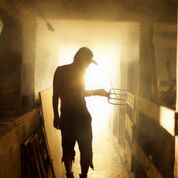
In Pitchfork (2017), the ninety-four-minute full-length feature debut from director and co-writer Glenn Douglas Packard, great strides are taken to align the title entity to the notorious razor gloved killer from Wes Craven’s seminal classic Nightmare on Elm Street (1984), Freddy Krueger. This is most evident in a beautifully realized moment near the half hour mark. Here Packard’s antagonist pauses, visibly relishing the adrenaline rush of hunting his next victim, at the top of a flight of basement steps. His shadowy frame is unmistakably reminiscent of that of Craven’s creation. The parallel is further complete as Packard’s fiend holds the murderous farm tool of his moniker to his right side. This is much as Krueger did when stalking uncountable teens in the aforementioned series. There is also a third act instant where Packard’s uniquely designed antagonist splays his instrument of death against a set of boards as he slowly walks by. Such a measure causes sparks to fly from the place of impact. This was another common Krueger taunting action. Such an instant happened several times throughout the eight (or nine if you count the inane 2010 remake) exertions in the Craven commenced franchise.
Episodes such as these only enhance the consistently high amusement value of Packard’s Clare and Houghton Lake, Michigan recorded construction. Likewise, Packard and accompanying co-producer Darryl F. Gariglio deliver a solidly wrought screenplay. It is structured, characterized and paced much in the manner of the pantheon of prior efforts in the slasher sub-genre. Furthermore, Gariglio captures every one of the various tropes established in these cinematic undertakings. Given that this is a source of pride for fellow fanatics of these types of tales, this trait comes off as knowing and respectful to the foundation laid down by these past horror entries. This also adds to the lively, playful fun inherent in the first hour. When the picture takes on an ever darker, almost sadistic tone in the concluding section, it seems to be sending-up an entirely different classification of terror opus. This is that of the so called “torture porn” productions. These were given mainstream popularity in the early 2000’s. Such occurred with the arrival of James Wan’s genre-redefining Saw (2004) and Eli Roth’s imitative Hostel (2005).
Still, this late segment succeeds just as well as what came beforehand. This is because it provides Packard plenty of opportunities to showcase his aptitude for providing extended sequences of prolonged intensity. For example, the events encapsulating the final twenty minutes are a masterclass in this arena. Packard wrings claustrophobia from a situation that is as tried and true as much of what came prior. This is as much a testament to the caliber and commitment of the performances as it is Packard’s own work. For example, Daniel Wilkinson is terrific as the murderous antagonist (also referred to as Ben Holister Jr.). His portrayal is, common to the modern fright film, based more on movement and demeanor than articulation. This is a long proven and effective means of conveying the antihero in these types of undertakings. It also makes the proceedings more enjoyable. This is as it calls to mind another iconic terror show entity: Jason Voorhees. Similarly, the rest of the cast is just as captivating. Brian Raetz as our lead, Hunter Killian, Lindsey Nicole as Clare, Ryan Moore as Matt and Celina Beach as Lenox deliver vibrant, watchable enactments. The same can be said for Nicole Dambro as Flo, Keith Wabb as Rocky, Sheila Leason as Janelle and Vibhu Raghave as Gordon. Rachel Carter as Judy Holister (or “Ma”) and Andrew Dawe Collins as Ben Holister Sr. (or “Pa”) present gritty, unflinching portrayals in their respective turns. Like the rest of the players, Carter and Collins are relishing their depictions. The evident fun these two are with their particularly ravenous illustrations only magnifies that illuminated on-screen.
Packard chronicles Hunter facing his parents for the first time after telling them a long held personal secret. Nervous about such an encounter after divulging such highly personal information, he organizes a group of close friends. Their mission is to arise from New York to the farm where he was raised. Seeing this as a chance to party, Hunter’s close accomplices turn his mother and father’s barn into a celebration of music and conversation. But, this happiness soon fades. What our thrill seeking, care free spirits didn’t count on is the fiend connected to the bygone days of our central youngsters. He has come to turn the laughter and joy into bloodshed.
The plot is kept deliberately straight-forward and simple. Yet, it is perfect for a vehicle such as what Packard has expertly crafted here. The dialogue retains this same attribute. The collection of scenes that erect the get-together in the outbuilding are undeniably well-done. They project the merriment our protagonists are elucidating ingeniously. A dance number which transpires herein is where this radiant joy is most significant. But, Pitchfork succeeds in a category pivotal to this specific brand of photoplay. This is in its plethora of imaginative kills. Best of all, they do not need a heavy reliance on gore to be considered striking. A double slaughter near the halfway point is especially creative. It also stunningly balances its alternately playful and brutal tone. The opening five-minute segment is especially attention-garnering. Not only does it start things off brilliantly, but it also is a tremendous showcase of Rey Gutierrez’s moody, gloriously fashioned cinematography. A riveting, intimate shot which seems as if the camera is quickly moving through the fields in this early section is definitive proof of such a statement. Additionally, Gutierrez and Kristin Gerhart issue editing that is sharp and stalwart. Christie Beau’s original music is phenomenal. It is atmospheric and haunting in equal measure. J. Cullen Humphreys’ set decoration and Veronica Porras’ wardrobe department contribution adds to the everyday authenticity apparent throughout the labor. Danielle Montini, Timothy Montoya, Cassie Packard, David Root, Emily Sigler and Carrie Stalk create a camera and electrical team whose wonderful, proficient input guides every frame. Tim Alward, Patrick Busby, Michael Capuano, Evan Menak and Harryson Thevenin evoke masterful sound. Moreover, Joshua Romeo’s various stunts are proficiently and credibly executed. The result is easy to admire endeavor. It is one that is as naturally likable as the personalities we follow in the affair.
Distributed through Uncork’d Entertainment, Pitchfork ascribes to be among the ranks of the Nightmare on Elm Street and Friday the 13th series. In so doing, it proves itself as more than worthy. Though it holds a bit too closely to the traditions of former offerings of its ilk to be a true groundbreaker, the enjoyment inherent throughout never wavers. This is a decidedly old-fashioned voyage into fear. It is one that is devoid of much of the gimmicks or unyielding seriousness present in far too many modern attempts at trepidation. This factor alone makes the application recommendation worthy. But, it is remarkable on both a technical level. Everyone involved does spectacularly with their individual tasks. Likewise, it ends with a smirk-inducing note. It is one which cryptically hints at all the details of the tale left to be told. This is while simultaneously forcing us to reanalyze everything we thought we knew previously. It is a perfect set-up for a sequel; an unspoken promise I hope Packard and crew make good upon. As it is, this is a fantastic inauguration to a franchise that promises to be described in the same manner. This stands as an incredible reminder of what made me initially admire celluloid shock. More than anything, it gloriously exhibits the timelessness of these items. In turn, it also validates how they retain their enduring appeal. Packard has unleashed an instant classic; an outstanding new boogeyman to haunt the dreams of a generation.
“Hand In Hand” (2016), a six minute and fifty second short from producer-director Haley McHatton and writer Kris Salvi, is definitive proof of the high-level of dramatic tension that can still be derived from a classic thriller set-up. This design is that of an unhinged man, Mike (in an unflinching and captivating portrayal from Justin Thibault). The account finds him kidnapping his former lover, Anthony (in a gripping and ever-watchable enactment from Salvi), in a jealous rage. After doing so, Mike takes Anthony out into the most abandoned regions of the nearby woods. With a gun pointed at Mike’s head, Anthony commands him to dig his own grave. Such morphs into a fascinating, argumentative speech between the duo. This inevitably unveils pent-up emotions. With these once concealed sentiments also comes a flurry of secrets and suspicions. All of which are rivetingly administered to the audience. This is in a manner that is as cryptic as it is nail-biting. In this discourse, Anthony sees signs of potential weakness in Mike. Anthony senses this feebleness as a chance to take the upper-hand. In so doing, Anthony may have a potential chance to get out of the situation. This is with his life intact.
Such twisty, expository banter forms the pushing force of the chronicle. Credibly and powerfully issued, this item proves to be one of the most suspenseful and enthralling components in its cinematic catalogue. It also showcases how well-delivered lines, which balance unforced character development and gradually tease motivations, can be ruthlessly engaging. This is far more so than the splashy, big budget special effects and overblown action sequences that may be incorporated in a lesser effort of this ilk as a substitute for craftsmanship. A splendidly piqued attribute such as this adds an accruing element of surprise to what could’ve easily been an all too straightforward narrative. Such arrives via Salvi’s gritty, meticulously manufactured and tautly paced script. It is also a courtesy of McHatton’s masterful, wisely uncluttered and focused handling of the material.
These potent articles have an augmented luster. This is when mixed with Mitch Severt’s spectacular cinematography. Severt exposes a bravura capacity to catch the multitude of shades, primarily the dark reds and gentle yellows illuminated from the fallen leaves glimpsed in the backdrop of the exertion. Such transpires in an undeniably immersive, eye-catching and gorgeous fashion. Other natural structures casually spied in the area fare just as wonderfully. For instance, the endless rows of sinewy trees, which also can be viewed as a perfect symbol of the general seclusion of the location, visibly looming behind Mike and Anthony at most moments. Yet, Severt’s work, as beautiful as it is, never defies the no-nonsense, white knuckle atmosphere which is unwaveringly orchestrated throughout the fabrication. Such is certainly a feat worthy of praise. The piece is further enhanced by the proficient and sharp editing from the team of Steve Polakiewicz, Carlo Barbieri and McHatton. Kyle Joyce’s audio is herculean. Jeremy Arruda’s brilliant, Ennio Morricone-esque piano driven score, which sweepingly echoes through the stylish and splendidly erected concluding acknowledgments, splendidly exhibits the technical prowess at hand.
Likewise, the plot, perfect for a single location and extended solo scene undertaking such as this, grips us from Anthony’s attention-garnering, opening quip to Mike. This is: “I guess you didn’t think it would go down like this, huh? Keep walking”. From herein, the interest and intensity amplifies continuously with each respective frame. Such gives way to a climax that is foreseeable. Yet, it is so well-engineered and resonant that it is easy to look past such comparatively miniscule details. All of this is propelled by authentic, well-etched leads. Our protagonist, Anthony, and antagonist, Mike, are amended great dimension and depth. Consequently, they avoid becoming mere genre archetypes at every turn. Based on the staggering strength of the depictions of these personas, we find ourselves readily seeing and understanding both the measures and reasoning behind the pair we follow on- screen. Such is as much a testament to Salvi’s impactful authorship as it is the same said performances themselves.
The result of this official selection of The Massachusetts Independent Film Festival, and Hatt On Productions presentation, is pure magic. It is a violent tale. Yet, it doesn’t rely solely on its inherent ferocity to weave or sell the fiction. Such is as refreshing as it is rare. Moreover, the exercise organically and competently builds the intrigue of its story. This can also be stated when considering the sly unfurling of events as well as brisk runtime of the endeavor. Such is elucidated without ever overreaching in its successful attempts to convey its message. This is also accurate when pondering its ability to fluently generate intensity. Additionally, the vehicle is slick. This is without ever being so glossy in appearance as to betray the believability it calmly evokes. It is just as smart in its execution. There is a plethora of intelligent creative choices and obvious skill for making fiction demonstrated here. Because of this, “Hand In Hand” serves as an absolute bulls-eye. McHatton, Salvi and crew have constructed an awe-inspiring triumph of simultaneous entertainment value and moving picture dexterity. It is one that fellow bystanders are guaranteed to admire and reflect upon long after their sit down with the arrangement is complete.
Writer-director Christopher Di Nunzio’s four minute and forty-three second short film, “Kinnari” (2016), is a powerful, gripping and abstractly eloquent meditation on the harsh, yet wondrous, journey of life into death. The latter of which is occasionally referred to throughout the affair itself as “the great nothingness”. Di Nunzio’s composition is just as adamantly concerned with how the boundaries of these two oft addressed subjects intermingle. It is as apt to ponder how these opening and closing portions of our being are frequently blurred. This is especially true when spied through a retrospective lens. Particularly, the viewpoint of a man who may be mentally peering at such sights amid his final moments. Such is illustrated as a dream-like trek to enlightenment. This overtakes the bulk of the narrative. It is sewn with a plethora of poetic wisdoms and long pined over inquiries. In turn, Di Nunzio provides an adventure of self-discovery. It is one which is steered by time cemented perspective and experience. A knowingly anti-corporate and media outlook, the basis of an enthralling monologue around the one minute mark, pushes such perceptions to tremendous effect. This emanates intriguingly from our ruggedly engaging narrator and lead, David (in a brilliant, unflinching and always watchable enactment from David Graziano). These traits he has acquired during his singular voyage through the planes of existence.
Such is perpetuated by a fateful meeting. This takes place in a stark and gorgeously realized instance near the mid-way point. It involves the rediscovery of the title entity (in a portrayal by Jamie Joshi which is quietly striking and consistently mesmerizing). She is the crucial persona in David’s illumination. Her name also shares that of a topically proper noun, largely used to describe a half-human and half-horse or half-bird hybrid, in Buddhist mythology. This is of an archetypical lover. Such is consistent with the story Di Nunzio paints. The same can be articulated for the paradigms that are encountered upon her arrival.
Our hero describes her as a “goddess”. In a manner befitting to such consecrated figures, David moves with Kinnari through a surreal landscape. These are a collection of beautifully structured, yet appropriately earthly, set-ups. They all hypnotically personify the stages of David’s physical span. As she pulls him deeper into this realm, the sum becomes progressively complex, abstract and cerebral. A staggeringly staged, near-climactic arrangement oversees David shadowing Kinnari up a winding, ostensibly endless flight of steps. Such personifies both the photographic and demonstrative core of the entire effort.
Additionally, there is a character to audience discourse which builds the foundation of the project. Such is triumphantly carried on throughout. This is a whispery, yet friendly, source of personal development. It victoriously aids in conveying a well-rounded glimpse into the inner-workings of our protagonist. Such heightens the intimacy, honesty and profundity at hand immensely.
Likewise, this fascinating plotline is given meticulous, pensive craftsmanship. Such is via Di Nunzio’s smartly paced screenplay (supervised by Christine Perla). His dialogue cracks with ingenuity, credibility and mature observations. It is also remarkably introspective. All the while, it comes across as deceptively casual. Such is much in the way of a stream of spoken conscious. Given the general format of the article, this approach is undeniably operative. This stands as an obvious signpost of Di Nunzio’s outstanding capacity for authorship. It is just as much a marker of recognition for the natural relatability inherent in Graziano’s outstanding delivery of his interchanges. Such qualities align themselves in the spectacular custom Di Nunzio displayed with the modern noir, A Life Not to Follow (2015). It was also at the at the forefront of his avant-garde horror invention Delusion (2016). In both cases, Di Nunzio scripted as well as served as administrator.
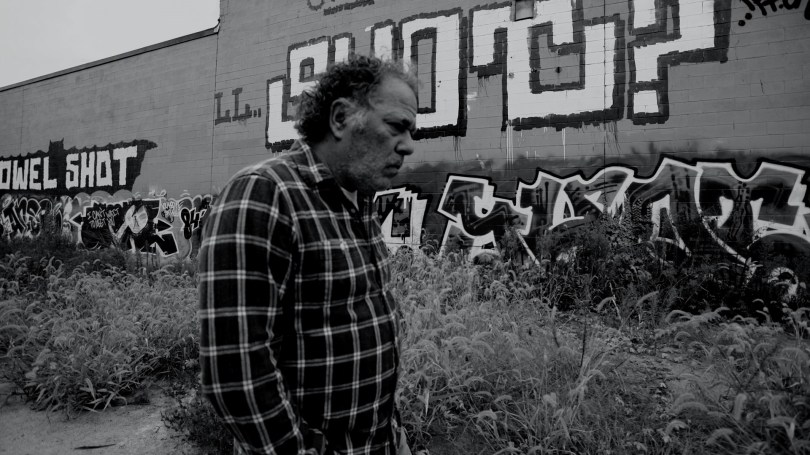
Much in line with these prior presentations, the story is smartly and smoothly paced. It is guided by Di Nunzio’s Lynchian sensibility for haunting, yet memorable and alluring, imagery. Correspondingly, the entirety of the exertion is slickly designed. This is so easily evident that even early, close-up shots of David’s coffee seem to be a mirror image of the bleak places in his soul. There are other relatively commonplace segments, such as a bit involving David walking on a presumably abandoned train track with a brick wall of graffiti looming closely behind him, that appear just as much like a grim visage. Such aspects appear as if they are taken directly from a waking nightmare. This is only amplified by Di Nunzio’s masterful framing. Such fashions an undeniably arresting style. It is one which makes the labor even more immersive and remarkable.
Such appeal is also punctuated by Di Nunzio’s seamless editing. His gently used, yet incredibly melodic and mood-setting, music also aids this factor outstandingly. Similarly, Nolan Yee’s cinematography, offered in the standard 16:9 HD aspect ratio, is somberly atmospheric. It is also elegant and thematically apt. Christopher Hallock’s astonishing assistant camera contribution is fabulous. Such augments the phenomenal nature of Di Nunzio’s expertly staged sequences. This is in terms of their stark believability and dazzlingly skillful construction. The culmination of these attributes make the sheer artistry which resonates through every frame of this Somerville, Massachusetts recorded drama increasingly palpable.
Di Nunzio issues a somber, intellectual tone that never once wavers throughout the duration. What establishes this atmosphere so immediately is the implementation of a monochrome title card. It is held on-screen for seven seconds. A single, thunderous chord is distantly heard in the background. The simplicity of this arrangement is the first of the many wise decisions and courageous moves Di Nunzio orchestrates. The final credits scene, proceeded by David’s harrowing realization that “Only me and beauty exist”, succeeds in the same arenas as those discussed above. These two sections evoke perfect bookends for the tale this item uncompromisingly and attractively tells. Moreover, Di Nunzio has an instinctive knack for what is to be glimpsed as well as left away from the eyes of onlookers. Such makes the proceedings progressively captivating. It is also proficient and enigmatic. The outcome of which makes the chain of events as unpredictable as they are perpetually enchanting.
Such creates an arc for that account which is impeccable. It is akin to a cinematic puzzle. Di Nunzio has gifted his spectators with a tour de force on all fronts. This Creepy Kid Productions release soars as an exhibition of temperament, moving picture bravura and intellectual yarn-spinning. It is also a standout performance piece for Di Nunzio’s recurrent collaborator, Graziano, as well as newcomer Joshi. Di Nunzio’s latest further astounds with the questions it poses as well as the answers it commands us to form. This is a rare work of celluloid prowess. It is one that will unveil new wonders and insights with each accruing sit through. Di Nunzio has formed an absolute bulls-eye; one of the best configurations of its type I have witnessed all year.
“Strawberry Lane” (2016), the outstanding and enigmatic twenty-three minute and fifteen second debut from writer-directors Jeremy Arruda and Aaron Babcock, is thematically and visually designed to unnerve. Arruda and Babcock have created a living nightmare on celluloid. This is via a collection of sinisterly striking images. All of which, even down to the otherwise simplistic visage of the child’s doll and ventriloquist’s dummy casually spied in the second half, are guaranteed to linger in the subconscious long after they are viewed. The upshot of these brilliantly delivered constituents is undoubtedly an extension of horror in its purest sense. We, the audience, are continually made to feel uncomfortable, apprehensive and alarmed. Yet, we are wholly engaged and intrigued throughout. This is by the notions and scenarios that are unfolding. Likewise, those that could potentially be right around the corner. In an era where most related yarns are more than content to go the safe route, with jump scares and routine motions galore, Arruda and Babcock give us a presentation of credible, sobering and unwavering darkness. It is one that is anything but predictable. The unsettling quote from American serial killer Albert Fish glimpsed in the opening moments set the clinical atmosphere and violent chain of events which are to follow quickly and proficiently.
Adding to the tonal ingenuity at hand, this wonderfully creepy concoction derives heavy inspiration from avant-garde maestro David Lynch, most notably Eraserhead (1977), as well as the chairman of many controversial comedies, John Waters. The eerily erected commencing and closing credits, made increasingly incredible and unflinchingly bizarre by the deliberately old-fashioned music from Arruda, make this point sharply evident. Such augments an endlessly intense, marvelously macabre impression. It is one which pulsates proudly through every frame of the proceedings. Such beautifully mirrors the exploitation features of the 1970’s. This is with Tobe Hooper’s quintessential masterpiece, The Texas Chain Saw Massacre (1974), frequently coming to the forefront. Yet, the anti-heroes that pose as our leads are appropriately repulsive, menacing and impossibly mesmerizing. Such is in the tradition of the best cinematic villains. The duo of murderers who form this uncommon “love story”, as it is declared in the sub-title of the depiction, Harry Meyland (in a performance by Kris Salvi that is terrific) and Billy (in an enactment by Justin Thibault that is just as accomplished as that of Salvi) summon a certain parallel to Hannibal Lecter and Buffalo Bill. Such iconic entities were found in Jonathan Demme’s Best Picture Academy Award- winning The Silence of the Lambs (1991). These aforesaid mirrors to the past also provide an undercurrent of nostalgia to the piece. Such makes the overall feel of the labor akin to watching a long-lost classic for the first time.
All of this is punctuated, memorably and appropriately, by an extended, ardently gut-wrenching and impressive finale. Such readily calls to mind the oft banned invention of fright, Nekromantik (1987), from German auteur Jorg Buttgereit. The combination of these influences results in an artistically satisfying and courageous endeavor. Such is especially true when considering that these sights are set within the haunting, gorgeously gritty cinematography conducted by Babcock. This is also an undeniably potent display of the behind the lens capabilities Arruda and Babcock encompass. Their tough, taut and meticulously paced script, co-authored by Dave Orten, compliments these attributes splendidly. Arruda and Babcock utilize a uniquely fashioned, boldly constructed narrative. It is one that wisely leaves as much to the captivated psyche to ponder as it paints explicitly blood red. The team craft sparsely delivered, but authentic, dialogue. Such casts a painstaking eye for believability in all details of the effort. The plot, which contains just a touch of pulp, is gripping. Such makes the undertaking seamless; a deft exhibition of raw, uncompromising aptitude.
Arruda and Babcock chronicle an unexpected conflict that erupts with the introverted transvestite Harry Meyland. He is a psychotic maniac. More specifically, one who abducts and slaughters the women of the local Magdalene Escort Service. This act is made more dangerous by the fact that it is where he is employed. All the while, the near demonic sounding voice of his mother (exceptionally issued by Arruda) guides him along. Yet, he encounters a grave challenge. This is as Billy, who delights in the same fatal indulgences, takes Harry’s work into his own hands. What starts as a competition between Harry and Billy soon evolves into a strange affinity; one that is as strangely absorbing and twisted as the fiction itself.
The composition also benefits from other various components that are just as attention-garnering. Crystal Correa is phenomenal as Trisha. Geneve Lanouette is just as astounding in her turn as The Captive Woman. Carlo Barbieri III, Arruda and Kristen McNulty play Masked Figure 1-3 respectively. Their presence is unforgettable. They are seen fleetingly in an assembly of surprising instances which are heavily reminiscent of Bryan Bertino’s criminally underrated The Strangers (2008). Such apparently random illustrations hypnotically reinforce the brute, jarring strength of the visuals herein. A death sequence that transpires in the beginning minutes, worthy of Hitchcock in conception and delivery, only reaffirm this trait. Such is greatly enhanced by the slickly constructed editing Arruda and Babcock invoke.
Shot over the course of two years, this Zeta Wave Productions release is guaranteed to be a new favorite of fellow genre addicts. More importantly, it signifies the arrival of a tremendous pair of filmmakers. Both of whom have an obvious admiration for and wide-reaching knowledge of the history of moving picture terror. Best of all, they are equally versed in how to evoke fear and confidently, expertly project it on-screen. “Strawberry Lane” confirms this at every turn. The outcome of this is an astonishing tour de force; a brief affair that is far more satisfying, evocative and in-depth than most full-length exertions. That only offers further proof of their photographic command. Because of this, I greatly anticipate what gruesome marvels Arruda and Babcock bring to life in upcoming collaborations.
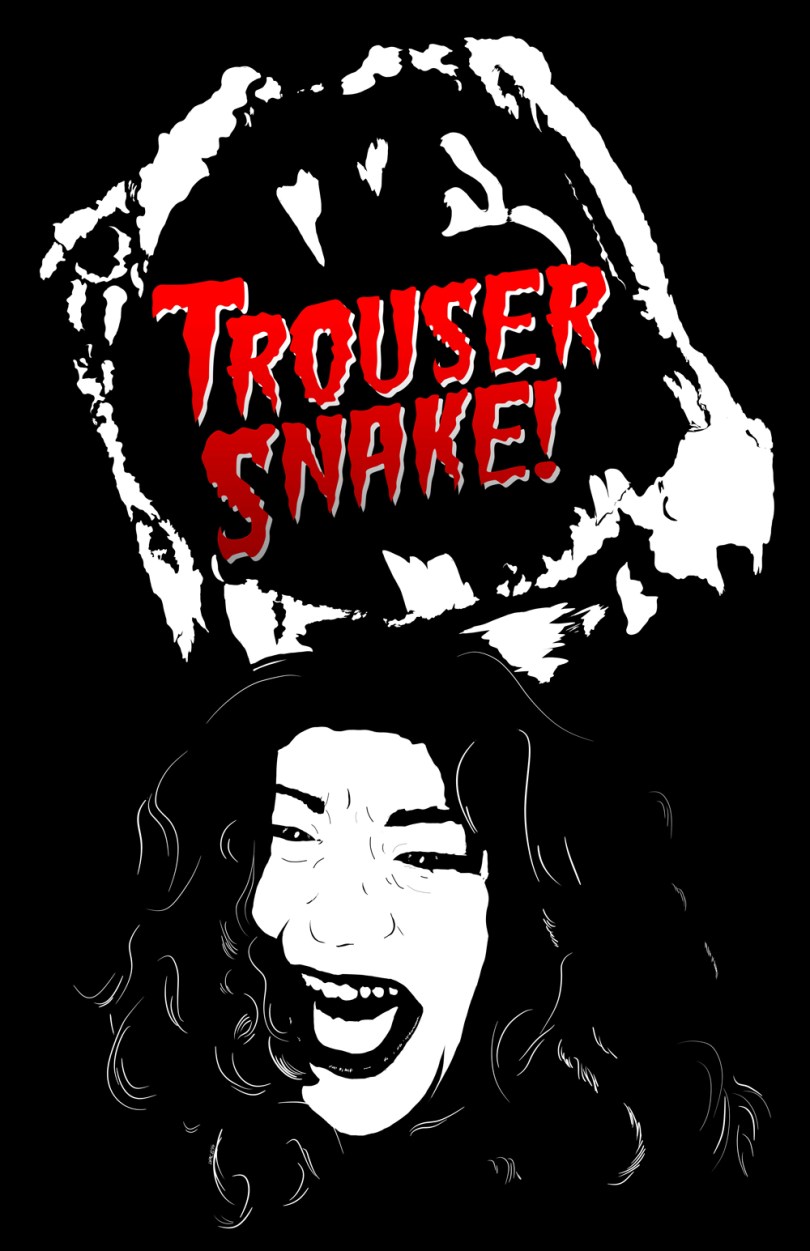
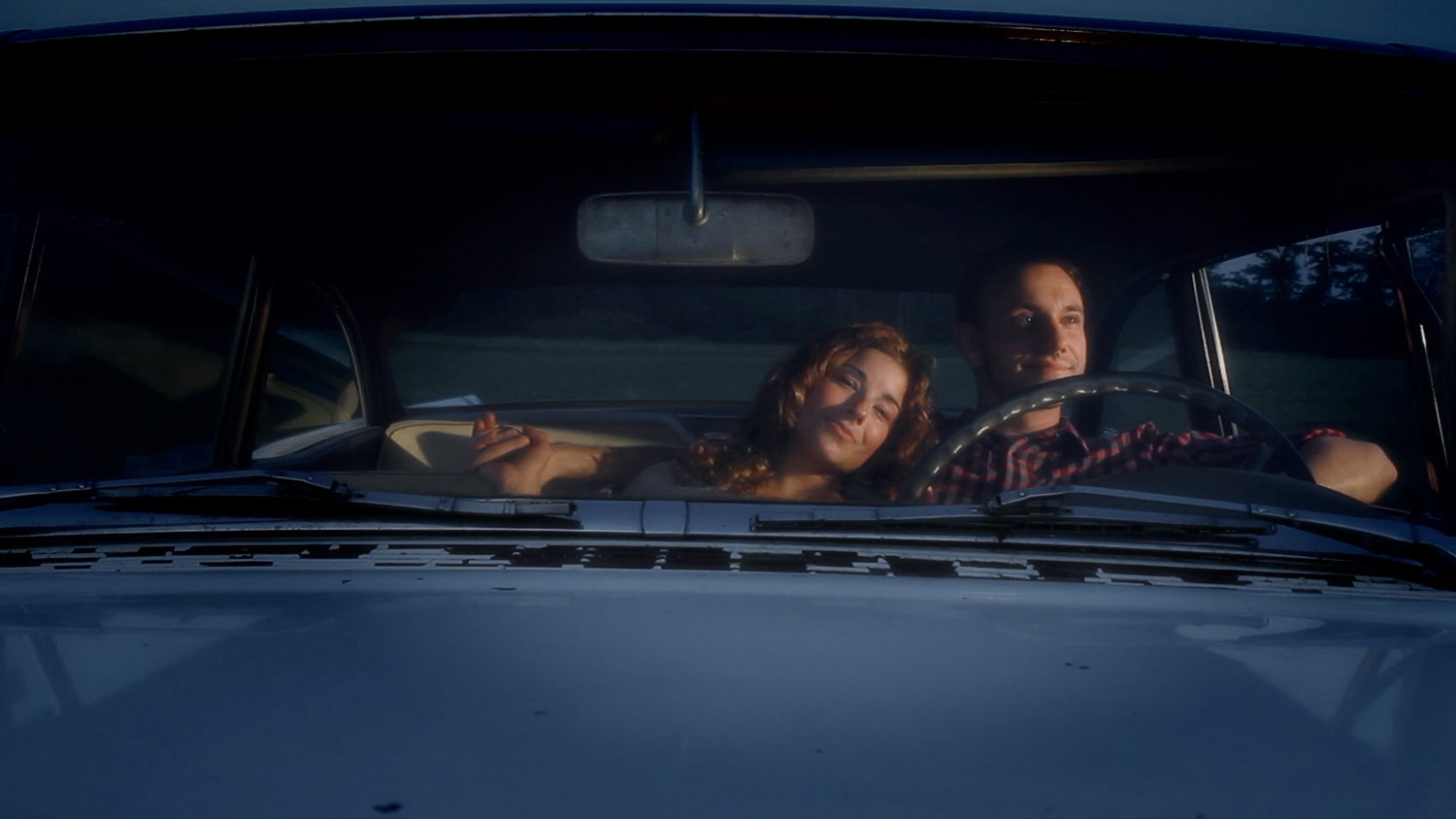
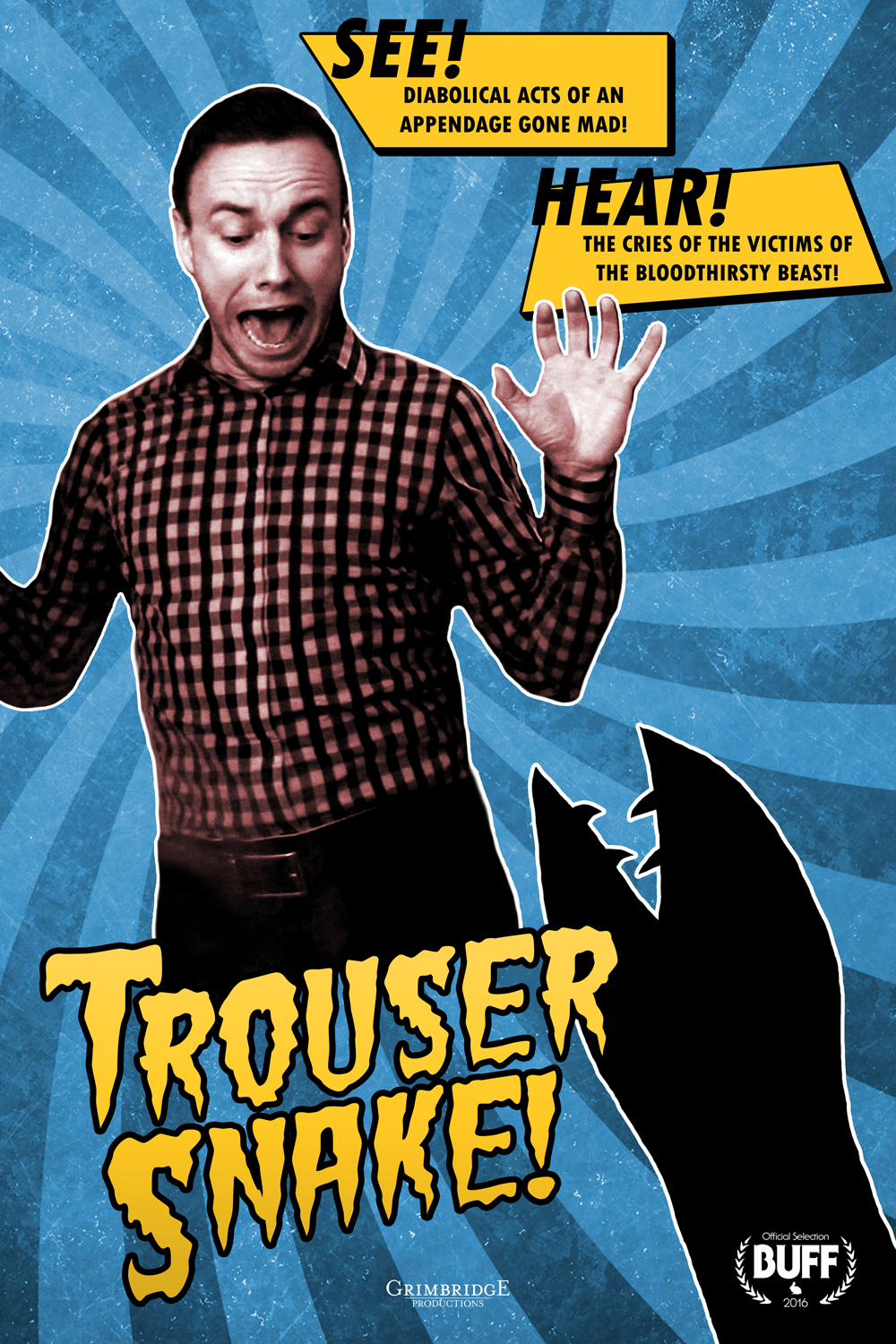
Trouser Snake (2016), the third short film from director and co-writer Alex DiVincenzo (2014’s “The Horrors of AutoCorrect” and 2016’s “Cybershock 1999”), plays as if the overblown “science” and informatory threats fashioned as lesson learning which made Refer Madness (1936) such a cult gem were repackaged as a deliberately uproarious 1950’s style creature feature. This is with the subject diverting from the purportedly “violent” dangers of marijuana. Such was the case illustrated to great comedic effect in the abovementioned Louis Gasnier directed and Arthur Hoerl penned presentation. DiVincenzo makes literal the idea of the “monster” that rises from the male anatomy. This is when said individual is confronted with an apparently unanticipated hormonal and sexual control. It is one which augments the naïve confusion of the teenage years. Such becomes the plight of our perplexed protagonist, Thomas (in a spot-on portrayal by Alexander Gauthier). All of this surfaces consequently to an extended bout of making out in a car with Thomas’ girlfriend, Lucy (in a phenomenal turn from Jamie Lyn Bagley). Such ensues at that notorious place in celluloid where such events always seem to stem from: Lover’s Lane.
DiVincenzo employs a variety of wildly triumphant jokes that pinpoint the outdated nature of Thomas’ gullibility. Most noteworthy of which is a brilliant sequence at nearly three minutes into DiVincenzo’s four minute and forty-nine second undertaking. This is from what can be perceived as a modern perspective. Such is derived during a family dinner. In this episode, Thomas tries to have an open discussion with his family concerning his current plunge into adulthood. It is at this point his much younger sibling, credited simply as “Sister” (in a terrific depiction by Morgan Walsh), says in a matter of fact manner: “Even I know about the birds and the bees, Thomas.”
This gag is undoubtedly amusing. Yet, it is a number involving the sudden slanting of a table that comes immediately after Sister’s words that is the centerpiece of the entire segment. Such also endures as one of the most successfully hilarious instances visible throughout the runtime. Another thematically linked highlight arrives both before and prior to a spectacularly issued, black and white post-credits sequence. This latter stated item concludes with the announcement, which I sincerely hope DiVincenzo makes good upon, that the “Trouser Snake will return in ‘Bride of Trouser Snake’ “. These already mentioned guffaws are exceedingly clever. They are also among the best uses of the amorous parallel DiVincenzo utilizes with the presence of the antagonistic fiend of this enterprise spied throughout this Grimbridge Productions release. Such instances are as cringe-worthy as they are, in various usages of the term, climactic.
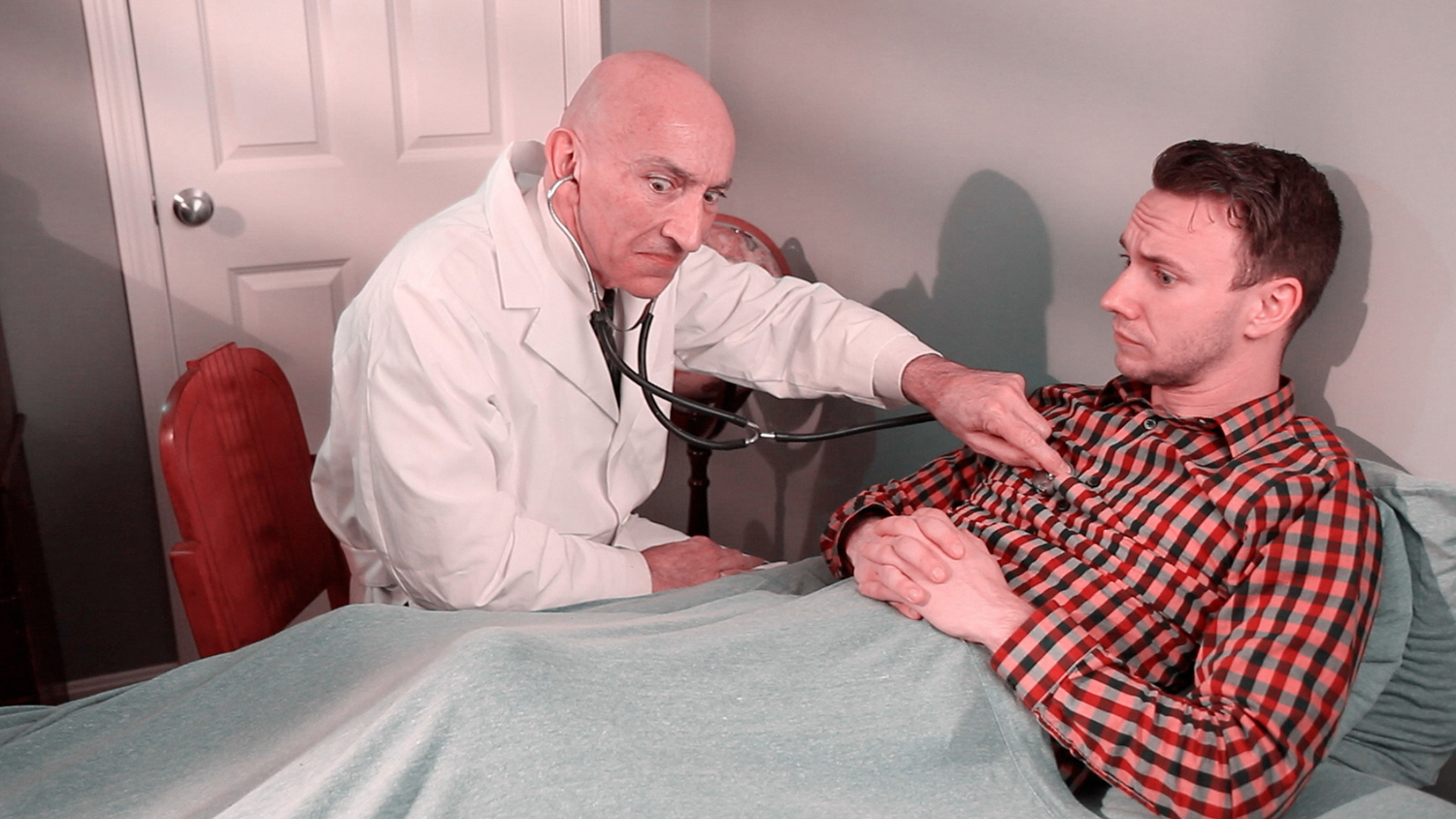
Made for a mere $100, DiVincenzo’s invention is boosted by another outstanding, gleefully tongue-in-cheek performance. This is from Michael Thurber. He enacts Thomas’ specialist, Dr. Mason. Thurber bends the character in the ways of many associated clinicians from both the decade and genre DiVincenzo models his tour de force after. Such is orchestrated both readily and engagingly. He delivers exposition, most of which the audience is already informed of, with a merry, knowing wink to his unseen spectators all along. Such makes the scenes he is in sing with a heightened layer of underlying wit. This matches the tone of the piece beautifully. William DeCoff as Thomas’ father, Hugo, and Monica Saviolakis as Thomas’ mother, Joy, also offer similarly astounding depictions. The result is a herculean effort that is made incredible by the stalwart essence of those on-screen.
The brief affair is also graced with an appropriately cheery, splendidly done veneer. The look of the endeavor is like that of a classic, monochrome motion picture. Particularly, one that was colorized before being broadcast on late night cable television. Such cinematography, courtesy of Jill Poisson and DiVincenzo, further enhances the B-movie correspondence DiVincenzo proudly strives for throughout the exertion. DiVincenzo’s editing, script (co-authored by James Cilano) and general guidance of the project is sharp and masterful. The story is conservative, but fulfilling, in its construction. Such transpires as DiVincenzo and Cilano tell the tale through several connected sequences. These are often exited and quickly returned to at seemingly random intervals. Such fleshes out the saga as satisfactorily as any full-length fiction. It also provides a non-linear, artistic streak to the proceedings. Such intensifies the well-rounded sum of the attempt. The same can be spoken of Cilano’s musical influence. Such is an endlessly enjoyable mixture of antiquated terror and melodrama. Furthermore, Adam Parchesky’s sound is tremendous. Jordan Pacheco’s puppeteering of the title entity, and other effects, are skillfully orchestrated. Like all the other technical elements we encounter in DiVincenzo’s latest, with gaffer John Mosetich and his leadership of the proficient camera and electric work chiefly among them, these articles jump out at us and demand our attention.
But, what is most charming of all is how easy it is to see droves of youth lining up to see “Trouser Snake”, and its promised sequel, as part of a weekend double feature at the drive-in. When reflecting upon the epoch the account is set in, the illusion cast by this ardent homage is smirk-inducing and complete. This is nostalgia of the best variety. It stays true to the trappings, the general arc and stereotypes of related outings. Still, it wins us over. This is, primarily, with the obvious affinity for the early Roger Corman/ Ed Wood Jr. brand of cinema DiVincenzo has attached to his narrative. With the support of an intriguingly designed beast, a wonderful and apt cast, a fluent pace and an entertainment level that never wavers: DiVincenzo has crafted a genuine knockout.
“Araf” (2016), an eight-minute and forty-five second collaborative short from writer-directors Fidan Jafarova and Tofiq Rzayev, is a masterful meditation on pain and suffering. It is also a heart-wrenching example of moving picture art beautifully evaluated through the lens of human tribulation. Such is phenomenally expressed through the underlying theme of the incredible tolls of war on mankind. This is signified by several distinctly woven personalities. The Angry Student Films, Synaps Production and Fidan Jafarova release, made for 1,000 AZM in the Eurasian country of Azerbaijan, also brilliantly elucidates echoes of Swedish cinematic auteur Ingmar Bergman’s tour de force, Cries and Whispers (1972). This is especially evident in its mature, sobering handling of grave subject matter. These are all articulated unflinchingly, yet respectfully. Such transpires with the topics of disease and dying at the forefront. Furthering this correlation, is the concentration in both endeavors on the measures and sentimental outcomes such unavoidable trials brings about on the family members which dominate each singular tale. Given that the term “araf” is often utilized to reference the Muslim borderlands between heaven and hell, instituted for neither the wholly good or wicked, there is also a religious constituent to the proceedings. This connects Bergman’s material with Jafarova and Rzayev’s latest in this respect as well. Likewise, the character-oriented emphasis is credibly etched in these accounts. This technical component is so well formulated that this quality alone carries each corresponding composition to greatness.
Additionally, the performances in each item are exceptional all around. This is with the incorporation of a superb balance between the photographic, the everyday and the theatrical. Also, the cinematography in each respective entity, with that in “Araf” stemming from Rzayev and that from Bergman’s construction from Sven Nykvist (who won an Academy Award for his work on the aforesaid invention), is gorgeously grim and appropriately bleak. There is a brooding, meditative color palette shared between these undertakings. Such is undeniably striking and ambient throughout. Yet, in Jafarova and Rzayev’s brief effort, the general veneer arises as more shadowy, stylish and thriller oriented. The constant rumble of thunder and the highly demonstrative sights of the rain hammering outside, which creates a breathtaking image which opens and closes the piece, spectacularly heightens this attribute. Thus, when the fabrication slides into an unanswered question of actuality, ghosts or delusions, all through the eyes of daughter Feride (in a captivating enactment by Konul Iskender), the progression is simultaneously natural and complimentary. This transpires to alluring consequence in the second half. There is also a countless deal of symbolic imagery laced into practically every frame of these presentations. At the heart of this is a focus on feminine strength, vulnerability and courage amid nearly impossible circumstances. Enduring this representative correlation, there is a concentration on inner-wars. This is noticeable, in one manner or another, through every disposition dominating these already addressed exertions. These are both unspoken or verbalized. In “Araf”, this figure is physically embodied. This is via an unnamed combat with an unspecified menace. It is frequently discussed but never seen. Yet, we ceaselessly impress upon ourselves the unnerving ideology that this brutality is inching ever closer to the treacherous mountains our protagonists call home. In so doing, the incorporation of this abhorrent item akin wonderfully increases the previously mentioned allegory. It also makes it all the easier to delve into the uncertain psyches of those we follow within the chronicle.
The story, credited to Rzayev, concerns a son, Ali (in a phenomenal turn from Adil Damirov), who becomes caught up in the previously addressed violence. Early on, the plot oversees the young man’s Mother (in a gripping, quietly commanding portrayal from Basti Jafarova) tending to her sickly husband. He is credited here simply as Father (an emotionally gripping turn from Sabir Mammadov, which triumphantly communicates his anguish largely through tormented grunts and groans). Enhancing the strain upon Mother and her kin is that her blood relations are all nearing starvation. It is also an ever-present fear for Ali. With this in mind, Mother braves departing her nearby loved ones. This is after defiantly declaring to Feride: “My other child…is out there fighting against the enemy and has nothing to eat. I cannot accept them both suffering hunger. You just don’t be afraid.” Such brings Mother on a quest to uncover a source of nourishment for those she is leaving behind. Feride than takes up Mother’s position. Almost immediately, the anxiety stemming from the unseen confrontations outside is personified in increasingly unique ways. This occurs as the situation around her instantly begins to deteriorate.
Such is a genuinely intriguing premise. It is one which requires much insight into both the psychology and attitude of those living under the persistent threat of real life terror. This is to be as successful as it obviously strives to be. Jafarova and Rzayev offer exactly that with their intelligent and richly constructed screenplay. They concoct personas, situations and dialogue that are as fully-realized, elegiac and memorable as any Bergman production. Regardless, their use of deceptively straight-forward discourse is meticulously sharp and profound. For instance, the commencing narration pronounces that “In these mountains…it always rains a lot. It’s unfortunate that we cannot hear it anymore”. Such a sweeping declaration draws us in instantly. But, when contemplated in retrospect, this line exemplifies tremendously just how far-reaching the apprehension is that our leads are under. Continually, the arc is largely unpredictable. This is without ever becoming implausible. Jafarova and Rzayev also unveil a perfectly even, cerebral pace for the brief opus. It is one that compliments the atmosphere splendidly. This is without weighing down the overall progression of events. Such is an astonishing feat itself.
All of this is made progressively encapsulating and hypnotic by Gergo Elekes’ remarkably emotive, piano driven score. Simuzar Aliyeva provides fantastic costume design. Shahmal Novruzlu and Kamil Ismaylov evoke a sound department contribution that is illimitably crisp and undoubtedly attention-garnering. The same can be said for the seamless visual effects from David Kislik. Jafarova’s editing is just as stellar. Similarly, Mitch Davies’ use of premiere stock footage is thoughtfully delivered.
At only twenty-two years of age, Rzayev has reflected his big screen heroes Andrei Tarkovsky (1975’s The Mirror, 1986’s Sacrifice) and Stanley Kubrick (1971’s A Clockwork Orange, 1987’s Full Metal Jacket) with deft precision. Such is seen in the plethora of unique camera angles, the experimental nature of his celluloid catalogue and in the sheer prowess in guiding the project at hand. “Araf” is no exception. Prior depictions, such as “In a Time For Sleep” (2016) and “Nihan: The Last Page” (2016), only re-enforce this factor. With sixteen scripting and directorial recognitions already to his name in only a five- year span, he is incessantly re-affirming that he is a talent far beyond his years. The same can be spoken of twenty-one-year old, Jafarova. This is her third such labor. The $500 budgeted documentary “Nagillar Alemine Seyahet” (2016) and the autobiographical “Fidan Jafarova Film Portrait” (2016) arrived previously. Given the evident might between these moviemaking forces, and the all-around excellence of this first alliance, I sincerely hope that the ingenious “Araf” marks the commencement of many future pairings among the duo. What they have created here is enlightening, profound and engaging. It is indisputably one of the best entries in its genre of the year.
Thirty-something Marta (in a commanding, beautifully formed depiction from Katie Alexander-Thom), the heroine of “The Girls Were Doing Nothing” (2017), has a sharp retort concerning the debut title of writer-director Dekel David Berenson’s short film (the twenty-one minute work in progress “press preview” cut of which I base this review upon). It comes while Marta regales her similarly aged husband, Jake (in a quietly stalwart turn from Malcolm Jeffries), with a yarn from her youth. In this tale, the boys in her school would go out to play football. She goes out of her way to affirm that they would engage in such an activity in even the harshest snows of winter. While watching them busily go about their sports, Marta’s teacher would pose a question to the young ladies of the learning institution. This was why they “weren’t doing nothing.” Here the thesis statement of this slyly enigmatic, deeply meditative and highly symbolic production arrives. This is when Marta, with agitation visibly growing in both her voice and eyes, declares: “We weren’t doing nothing. We were watching”.
Such directly explains the hypnotic, subtle and clandestine tone of this erotically charged tour de force. Previously titled “The Vacation”, this presentation calls to mind Stanley Kubrick’s underrated masterpiece Eyes Wide Shut (1999) and Lars von Trier’s same held Nymphomaniac Vol. 1 and 2 (2013). This parallel is visible in the sheer craftsmanship on display. It can also be spotted in its mature handling of carnal subject matter. In retrospect, Berenson is providing the audience the opportunity to tread in the footsteps personified by the young ladies in Marta’s chronicle. Yet, this accrues in an undoubtedly adult world. We view the measures of Marta’s daily life, whether she is going through photographs or trying to quietly provoke her husband’s sensual passions, without the component of clarifying precisely what is transpiring at every narrative twist. Given that this element is far too prevalent in cinema nowadays, the decision to excise what most would deem pivotal makes the proceedings even more riveting. It also comes across as refreshing and natural. Keeping true to this structure, the credible and gorgeously penned dialogue (which was partially inspired by psychologist Carol Gilligan) is kept to a minimum. Such makes the results increasingly voyeuristic and addictively appealing. The concluding sequence, which wordlessly proposes what is too come, is especially brilliant and captivating.
Despite this brave stylistic approach, another telltale sign of Berenson’s incredible risk-taking capabilities, the engaging plot thread is never lost. Even when we find ourselves unsure of why some sights are unfolding, Berenson forces our imagination to fill in the blanks. Moreover, our interest, our glimpse into Marta’s world of luxurious restaurants, private gyms and high-paying professional positions adds to the fascinating rhythm of the demonstration. All of this is punctuated further by the Marta’s inner-struggles to overcome the commonplace motions of her marriage. It makes the piece as much an exhibition of routine as it is a meditation on how to break out of such a monotonous extension of events. Marta and Jake find it in their charismatic neighbor, Andrea (a well-rounded, extraordinary enactment from Jolie Sanford). This occurs when she asks the couple to do a favor for her while she is on vacation. Such an invite becomes an unexpected chance to add both variety, spontaneity and intimacy to their lives. Yet, they soon learn the paradox of this meticulously paced fiction. This comes in the form of a quote from psychotherapist Esther Perel, which is exposed in the opening moments of the invention. This is that “Love longs for closeness, desire thrives in distance. And therein lies the rub”.
Adding to the sheer excellence at hand is the highly representative imagery. For instance, there is a shot near the commencement which also closes the effort. This is of a sugar cube absorbing. It is ultimately spied as a perfect mark of Marta’s bland, imprisoned outlook on life slowly wilting away. Additionally, it declares her willingness to find the exhilaration in being by seizing new prospects when they arise. There are several sequences involving Marta’s blood which are powerfully indicative of feminism. Aside from this, the undertaking is further graced by sensational editing from both Fabrizio Gammardella and Berenson. Phillip Quinton’s sound issuance is spectacular. The camera crew, consisting of Pete Blakemore, Melanie Jansen and Tom Blount, provides a spellbinding contribution. Elizabeth Hedley’s make-up design is stellar. Lem Lawrence’s visual effects significantly enhance the authenticity radiating from every frame. Kamil Lemie’s scant appearance in a role dubbed “1920’s Guy” and Samantha Whaley’s bit as a retail assistant are both deft and intriguing. The costumes by Britt Seel are superb. Such an ingredient fits the contemporary impression of the sum grandly. Music consultant Heather Hadar Gallar incorporates an operatic soundtrack. This only strengthens the overall imprint. It also impeccably reinforces the attitude of the exertion beautifully. Likewise, Berenson’s screenplay and guidance of the project is proficient and carefully constructed. The cinematography by Ruaraid Achilleos-Sarll is sumptuous and sweeping. These greatly piqued qualities aid mightily in making Berenson’s latest an absolute knockout. This is guaranteed to be a surefire hit with spectators once it begins its run at cinema festivals.
“The Girls Were Doing Nothing” is the first of three similarly brief, unified compositions. All of them deal with intense notions of fondness, lovemaking and personal bonds in one manner or another. These are collectively known as The Eros Trilogy. The next two labors, continuations of the account set forth with this initial undertaking, are “Borderlines” (2017) and “The Surface of All Things.” No due date has been given for the final segment.
This is more than a reason for excitement. The characters in this initiating episode are genuinely etched. Berenson is unafraid to paint real people on his celluloid canvas. Everyone we encounter, Marta and Jake especially, have flaws and likable traits woven in equal ration. Yet, the air of mystery in this 168 Wardour Filmworks, Bekke Films and Radiator IP Sales release is palpable throughout. It suggests many different directions that Berenson can pilot the opus in upcoming episodes. This is so much so that one cannot help but anticipate seeing where he takes the fabrication. What elevates this anticipation is that Berenson’s latest affair is among the most memorable and outstanding concoctions of its type I’ve witnessed all year. Berenson has an undeniable knack for storytelling. Such is boosted by his gifted team and their respective donations. These essentials fill the screen with ongoing resonance and awe. Rich in mentality, emotion and subtext, Berenson has evoked a winner on all fronts.
The title character of director Daniel Lofaso’s smart and darkly comedic five-minute and eight second short film, “Gary From Accounting” (2016), is an unassuming and mostly unwilling hero. He is not the same first named individual who our lead, Nathan (in another of Timothy J. Cox’s various show-stopping, wholly gripping performances), has thought to have developed such a strong rapport with via their respective occupations. Hence, his confusion and wrongful invitation to the incident that is about to unfold. Still, he is, nevertheless, forced to partake in an intervention which confronts Nathan’s alcoholism. This event has been put together by Nathan’s wife, Hannah (in a brilliantly realized and believable depiction from Thea McCartan). Upon entering his home, Nathan is met with heart-rendering declarations that would move even the stoniest of centers. For instance, Nathan’s sister, Belle (in a riveting enactment by Jake Lipman), cries out: “I can’t sleep at night because I worry about you driving drunk!” Hannah declares immediately afterward: “I have no one to talk to because you are out drinking every night!” Uncomfortable and desperately trying to find a way out of the situation, Gary (in an uproarious, bulls-eye representation from Mark Grenier), meekly chimes in with: “Your expense reports are sometimes a little late.” The rest of the tale teeters on this sharply established, seriocomic edge. This is as Nathan’s kin confront him with genuinely troubling episodes based on his intoxicating habits. All the while, Gary, whose presence Nathan seems solely enthusiastic and truly supported by, struggles to come up with something a fraction as unnerving as the myriad tribulations Nathan’s relatives are hurling at him.
Such is a distinctly clever premise. It is made more so by first time screenwriter Phoebe Torres’ and Lofaso’s decision to plant Gary, a highly likable persona who would fit all too contentedly in a working-class sitcom, in a circumstance of somber beings and high drama. The well-penned dialogue from Nathan’s loved ones is wrenching; full of pain and grief. Their embodiments of these entities are equally gripping. The centerpiece of this is a terse instance at around the three-minute mark. At this moment, Nathan’s children, cited as Little Boy and Little Girl (Christopher John and Rhea Kottakis respectively, in roles which showcase talent beyond their young years), confess to their father the difficulties he has inflicted on their lives. Despite the undeniable poignancy of these illustrations, Lofaso and Torres make an almost acrobatic exercise out of the composition. The effort finds just the right tone and balance for its affected and guffaw-inducing components. Such is instituted immediately. From this perfectly symmetrical juggling act it never wavers. It makes this briskly paced, well-penned and stalwartly guided affair even more masterful in both presentation and construction. Consequently, the laughs become increasingly triumphant. They hit us all more potently because of this divide. This is because we find ourselves snickering at subjects that otherwise would be met with the gravest approach.
Assisting matters is Jesse Bronstein’s handsome cinematography. It is accessed on an atmospherically appropriate palette; a beautifully blended collage of dusky colors and cheery hues. Such creates a wondrous visual interpretation of the opposing moods of the piece. Additionally, Gusta Johnson provides sensational editing. Cecilia Lewis’ makeup is every bit as exceptional as these aforementioned traits. Joseph Iacobazzo’s sound is top-notch. The proficient turns from the camera and electrical department, which consists of Mihai Bodea-Tatulea and Adehm Geller, heightens immeasurably the intimacy evident in this gathering. They help construct a closeness so palpable that one can easily relate to all who try to pull Nathan from his addiction in one manner or another. This makes the relation between viewer and narrative personality continually taut. It is so much so that its spectators can naturally find themselves sitting alongside these fictional protagonists; a silent bystander.
This Brooklyn, New York shot winner and Chirality Films release is also a masterclass in the power of brevity. In its brief runtime, Lofaso and Torres also successfully tackle the notion so prevalent in our society of feeling more of a bond, an excitement towards the proceedings of a popular television program than their our own personal measures. Such is utilized as an entry into the underlying commentary concerning the disconnect many of us impress upon ourselves. This is from the happenstance of our own existence. Perhaps this is an insight into Nathan afflictions. Either way, Lofaso and Torres have given us a chance to find the humor in ourselves. Yet, there are countless opportunities to reflect. All of this is implemented in a manner that is always respectful to the stern core of its commanding central themes. This is without ever falling into the trap of being pretentious, preachy or overwrought. What we are, ultimately, given is a largely dynamic, warm and inviting affair. This is a herculean display of cinematic storytelling and aptitude at its finest.
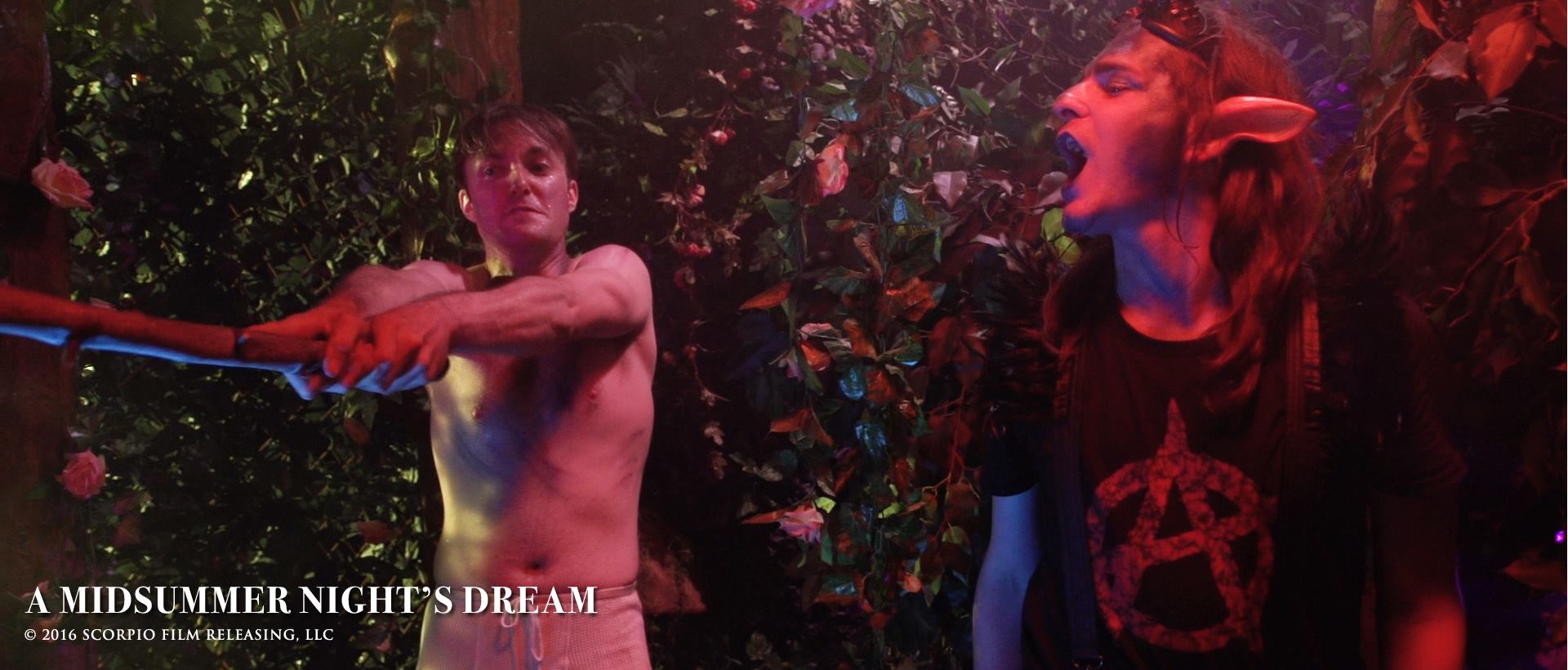
Writer-director Richard Griffin’s adaptation of William Shakespeare’s circa 1590-1597 penned romantic comedy, A Midsummer Night’s Dream (2016), pulsates with magic, splendor and eloquence. It is a passion project the Providence, Rhode Island born craftsmen has been attempting to bring to fruition since 2000. This is highly visible in the final product, which burns with the ardor of a long spent wish finally realized. The Scorpio Film Releasing distribution is both a beauty of sight and of sound; a searing triumph of frisky, smoothly paced entertainment. This is as much a courtesy of Jill Poisson’s rich, hypnotic cinematography and Griffin’s lively, astonishing handling of the production as it is the unmistakable, Early Modern English language of The Bard himself. Such an element Griffin takes directly from the original work. Even though Griffin has moved the central action from Ancient Greece, in an unspecified year, to Athens, Massachusetts in 1754: the rhythm, and amusing nuance (which is often innuendo based), of Shakespeare’s opus remains intact. All of this combines to create an affectionate, faithful homage to the source material. Yet, it distinctly resonates with the core of a Griffin construction. It is both radiant, sidesplitting, cutting edge, a bit old fashioned and affecting. Regardless, there is an innocence to the labor that showcases the sheer variety Griffin, who has toiled largely in the cinematic horror genre, is more than capable of conducting. Griffin, whose first celluloid tour de force was a modernized version of Shakespeare’s roughly 1588-1593 scribed tragedy Titus Andronicus (2000), is obviously well-versed in the narrative. This knowledge accentuates the sum of the vehicle. It makes its humor even more affective. This evident wisdom makes its message all the clearer. Moreover, its dramatic intervals are increasingly stalwart and wrenching. In turn, we are amended what is a highlight in Griffin’s multi-faceted career. This is undoubtedly one of the best pictures of the year.
Heightened by a few sly modern touches, such as a quick midway gag involving our obviously enthralled characters passing along a bowl of popcorn to one another, the sum of the effort is a wholly fresh and unique experience. It is as much a testament to Shakespeare’s sustained relevance as it is a display of Griffin’s endearing charms. Moreover, the theatrical roots of the exertion are more than perceptible. It is seen in the larger than life, yet still delightfully intimate, representations from everyone involved. This is as notable in Anna Rizzo’s riveting portrayal of the Queen of the Fairies, Titania, as it is with Johnny Sederquist’s punk rock take on the English mythology based elf, Puck (who is also known by the moniker of Robin Goodfellow). The more straight-forward presentations, such as Steven O’ Broin’s terrific and mature depiction of Theseus, balance out pleasantly the plethora of more light-hearted entities which dominate the affair.
There is a wide range of categorical beats and themes, with the reversal of gender roles, transformation, the supernatural and the pursuit and nature of amour being at the forefront, that must be successfully orchestrated. Yet, the entire cast pulls it all off as if it as natural as breathing. Jamie Dufault as Demetrius, Laura Pepper as Robin Starveling, Aaron Andrade as the comical Snout and Elizabeth Loranth as Helena are especially good. The same can be said for Alexander Platt as Oberon, Josh Fontaine as the man turned donkey, Nick Bottom, Lee Rush as Hippolyta, Lydea Irwin as Mustardseed, Bruce Church as Egeus, Christin Goff as Rita Quince and Ashley Harmon as Hermia. She is the conflicted admirer of both Lysander (in an entrancing turn from Charlie Ferguson) and Demetrius. These stretches mechanize terrifically due, in part, to the fact that the chemistry between Harmon and Ferguson is palpable. This makes the numerous sequences revolving around their relationship even more hypnotic, wrenching and stunning.
What is just as incredible is that the 105-minute feature, despite its $25,000 price tag, remarkably comes off as if its budget is as gargantuan as its upbeat, often seductive, spirit. This manifests immediately in an impressively showcased, 65 second opening credits arrangement. With its cheery palette and blue lettering, it quickly captures the mystical disposition at the center of the narrative. Everything in this section seems bathed in moonlight. This integral ingredient is a mood-setting fixture in the initial literature itself. The plentiful shots of this aforesaid nighttime glimmer hovering above the forest in the presentation are equally intoxicating throughout. This commencing scene also comes across as strikingly retro. Such a visage could easily fit within the confines of a 1980’s style photographic opus. Given Griffin’s penchant for mirroring the look and feel of silver screen marvels from past decades, this similarity could be intentional.
Advancing the overall appeal is the extraordinary effects from Torey Haas and John Dusek. They backup these prior addressed, bygone qualities spectacularly. Simultaneously, Griffin’s editing is top notch. Chad Kaplan’s Cupid animation is sensational. Margaret Wolf provides stellar, era appropriate costume design. Furthermore, the makeup from Jaquelyn Fabian, Scott C. Miller and Sissy O’ Hara is phenomenal. The Shakespeare writ “Lullaby”, wonderfully composed by Mark Cutler and captivatingly performed by Rizzo, Irwin and Harmon, is elegantly designed and delivered. Likewise, both the gentle and emotive Cutler authored, put together and sung “In My Dreams” as well as Daniel Hildreth’s ambient music augments perpetual lavishness to the project.
Griffin, whose script for this crowd-funded undertaking is both robust and brilliant, handles the various interconnected plotlines of this complex affair splendidly. The first of these are Hermia’s refusal to marry Demetrius. Such transpires due to her strong affinity for Lysander. Additionally, there is the creation of the play Nick Bottom, Snug (in a bravura role from Christian Masters), Tom Snout, Robin Starverling and Francis Flute (in a terrific enactment by Ryan Hanley) plan to act in for the Duke and Queen’s wedding. Many of the early guffaws triumphantly derive from this account. King of the Fairies, Oberon, and his summoning of Puck to concoct a love potion, which gradually goes out of control, is spectacularly issued. Some of the most visually and sentimentally dazzling bits in the fabrication stem from these segments. Hermia and Lysander’s escape into the same area where Titania resides becomes a focal point. This is for the assembly of all these previously stated anecdotes into one setting. It is all punctuated by a final monologue by Puck that is assuredly smirk-inducing. Such also offers a grand climactic point. This instant reiterates the enchanted atmosphere of the undertaking masterfully.
In a filmography that ranges from fun, 1950’s modeled alien invasion illustrations (2010’s nostalgia fueled Atomic Brain Invasion), John Waters Reminiscent comedies (2014’s ingenious Accidental Incest) and 1970’s grindhouse brand B-movies (2011’s The Disco Exorcist), Griffin’s vision of A Midsummer Night’s Dream fits comfortably in the inarguably varied body of his career. His stamp is on every achingly alluring frame of his latest endeavor. There is also a delicate gentleness to the proceedings, an attention to detail and an admiration and pride for the centuries old text which pulsates proudly through the duration. Such helps bring the composition to life in a way unseen in preceding interpretations of the fiction. This is as much a thanks to his cast of frequent collaborators, all of whom continue to prove their flexibility and variability with the diversity of roles Griffin has handed them throughout the years, as it is solid proof of Griffin’s own multi-faceted talents. With his latest contribution, Griffin soars and astounds. All the while, he also makes us laugh, contemplate and reflect. Though the words and events may be that of Shakespeare, the voice we hear radiating through the entirety is distinctly that of Griffin. What Griffin provides here, besides another example of his absolute command of form, is a masterclass in how to take an oft told tale and make it solely your own.












 awordofdreams.com