“Soul Mates” (2023) – (Short Film Review)

By Andrew Buckner

Rating: ***** out of *****.

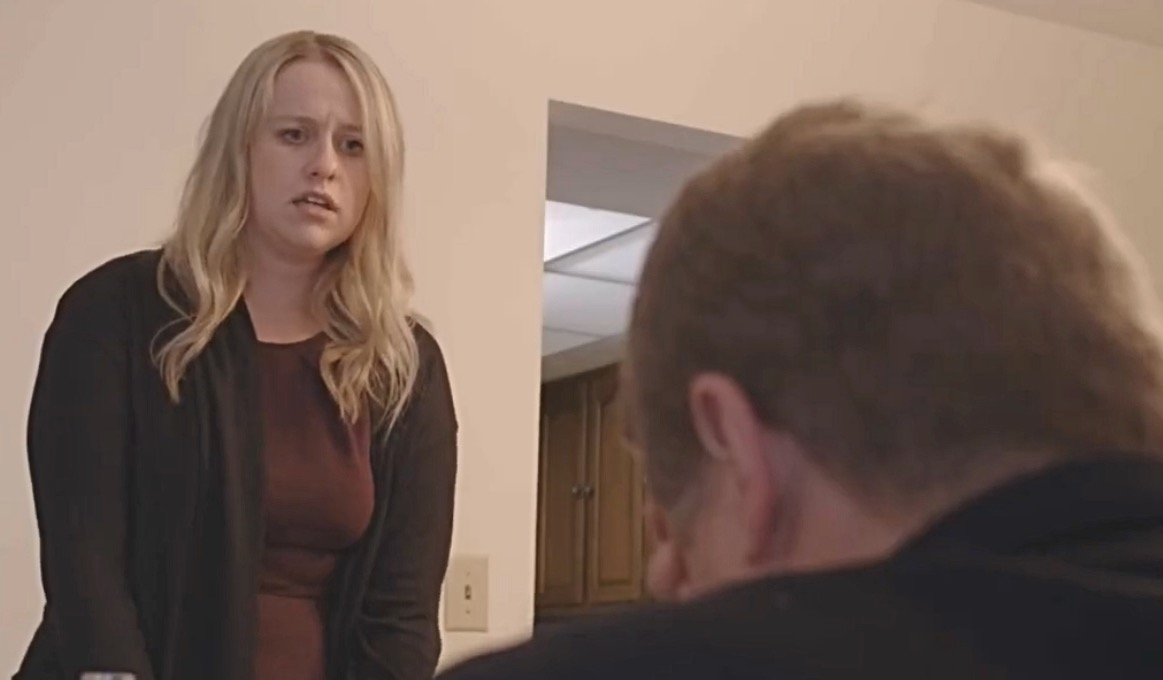
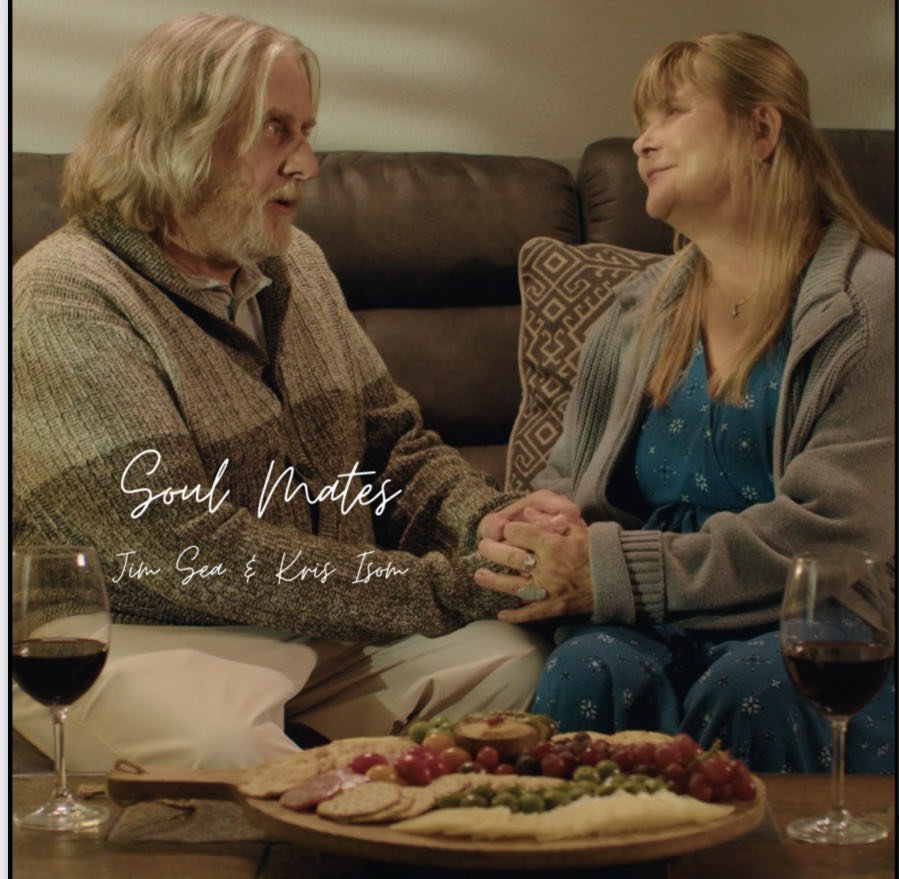
“Soul Mates” (2023), from director Michelle Tomlinson and screenwriter and co-star Jim Sea, is a gentle, honest, clear-eyed contemplation of the undying nature of love. The 12-minute short drama is an intimate character study that admirably takes a remarkably grounded approach to the ambitious concept at its core. Such a notion, which is briefly discussed early on but only fully showcased in an uplifting and touching manner that doesn’t defy the credible and sensitive nature of the piece in its extended concluding sequence, is as thought-provoking as it is heartwarming. Keeping in mind the perfect symmetry of strong, straightforward storytelling, sharply developed leads, and the underlying emotional intensity resonating from every frame of this exercise, such a climactic bit makes this compact four-course cinematic meal evermore brilliant.

The narrative revolves around Sean and Abby (Sea and Kristine Isom, respectively).  After Sean imparts the news of a fatal sickness he just received upon Abby that only gives him six months to live, the couple decide to catch up on all the places they wanted to visit and things they have wanted to do in this lifetime. Before making these long standing dreams a reality, Sean and Abby have a conversation. It is one which presents a chance for eternal happiness amid Sean’s recent heartbreaking diagnosis. When Nigel and Poppy (Josh Horton and Sydney Carvill) meet one another in the climactic stretches of the outing and an all-too-familiar discourse blooms among the duo, Sean and Abby’s conviction in trying times is reaffirmed. 

From this powerful springboard, the undertaking heightens its impact with a small, but well chosen, cast. All of whom memorably deliver in their individual roles. Chief among these presentations are the turns from Sea and Isom. They are as genuine, candid, and relatable as they are vulnerable. The energetic portrayals from Horton and Carvill, along with Ian A. Hudson as Jaime, are just as finely tuned. The often fleeting, knowing, and occasionally cryptic dialogue Sea offers these fictional entities, like the intelligent and superbly crafted script itself, is so impressively delivered that it further elevates the already high quality of these depictions.

Moreover, the overall guidance of the endeavor from Tomlinson is terrific. There are enough flashes of style for the composition to be both commendable and visually striking. Still, these elements don’t intrude upon the most pivotal aspect of the attempt: the tale itself. In particular, the deeply human personas who populate the confidently paced effort. 

Adding to the technical mastery found within Tomlinson’s latest configuration is the dazzling cinematography from Orlando Skidmore. Continually, the editing from Tom Ragan is just as noteworthy. The production design from Carma Harvey, set decoration from Jacqueline Harvey, makeup, sound, and visual effects are all top-notch. This can also be said of the soul-stirring music from Jason Wolf. Wolf’s sonic implementations splendidly punctuate the sentimental beats of the creation to phenomenal effect.  

Though the inclusion of Sean’s ailment to set forward the oft-utilized ticking clock motif is an overdone plot device, “Soul Mates” remains an invigorating, challenging, and endlessly engrossing configuration. Boosted by tried-and-true themes that are simultaneously timely and timeless, the venture plays beautifully upon the harp strings of the spirit. This is without ever manipulating it for its own gain. Quietly symbolic and philosophical, mature, and immersive, Tomlinson’s construction is one of the best films of its type this year.

“After” (2023) – (Short Film Review)

By Andrew Buckner

Rating: ***** out of *****.

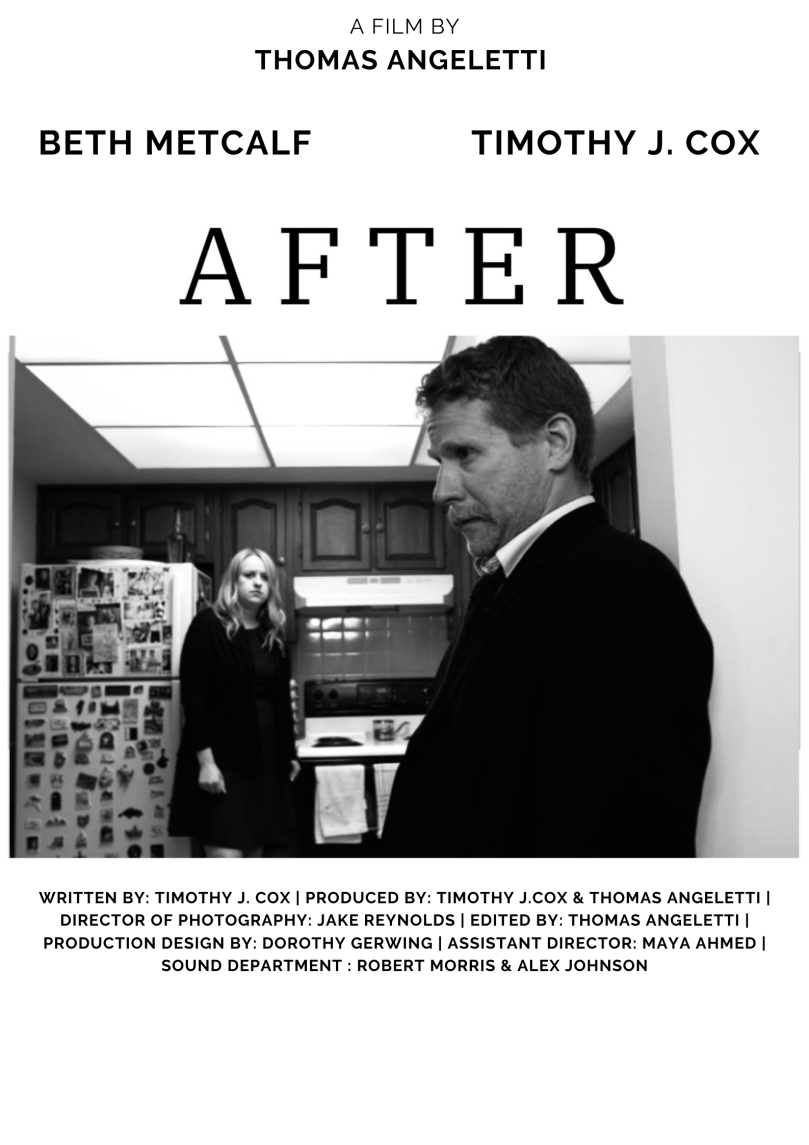
“After” (2023), from director Thomas Angeletti and writer/star Timothy J. Cox, is a one-setting, two-person, seventeen-minute meditation on anger, grief, and revenge. It is one where the oft-uttered expressions “riveting”, “poignant”, and “powerful” can be attached to practically every facet of the endeavor. This is most visible in the pain-filled primary performance from Cox, which immediately draws viewers in with its intelligence and emotional depth. Cox’s take on his character, the adept police detective Michael Darcy, is an all-around brilliant portrayal. Ranking among Cox’s finest achievements to date, it convincingly illustrates a father torn between warring thoughts which revolve around enacting his own vengeance or putting his hopes for retribution in an unreliable legal system. This is after his son, who was a police officer, is slaughtered while on assignment. 

In the venture, what functions just as dominantly as Cox’s depiction is the believable on-screen chemistry between Cox and Beth Metcalf. Metcalf plays Cox’s daughter, Annie Darcy, with quiet, focused effectiveness. Her nuanced, sensitive depiction of someone who, like her father, is trying to understand, in her own ways, the cruel hand fate has dealt her family compliments, in tenor and sentiment, Cox’s lead delineation. Moreover, it is, like Cox’s enactment, credible every step of the way.

The equally organic, cryptic, and brief dialogue Cox has crafted for the undertaking, which gradually fleshes out the events and details of the story in an almost noirish manner, is every bit as impressive and skillful as the aforementioned representations. Said speech adds to the general mystery, ardor, and suspense mounting from the previously mentioned decision Cox must make, which forms the focal point of the narrative. These verbal exchanges, like all genuinely strong conversational elements in cinema, is a looking glass into the essence of the central figures of the exercise. It is one which sheds far more light into their hearts and minds than what is being stated outright in the piece. The Herculean nature of this discourse alone is as much a compliment to Cox’s internally and externally tense, flawlessly paced, sharply realized, and always character-oriented script as it is the capabilities of the individuals reciting these words.

Deftly directed by Angeletti in a fashion that is as mature and compassionate as the material dictates, the effort is further bolstered by Jake Reynolds’ striking, tonally appropriate cinematography. The editing from Angeletti is seamless. Alex Johnson and Robert Morris offer crisp, remarkable sound work. The production design from Dorothy Gerwing is just as apt. Additionally, the beautiful, haunting, piano-driven track “Waiting”, marvelously penned and performed by Kadir Demir, is heard over the sleek, smartly simple credits sequences. The tune helps fashion perfectly atmospheric bookends for the project.

“After” is an undeniably affecting and deeply human drama. It is one which uses both of its guiding personalities to potently exemplify two differing approaches to a traumatic situation. Moreover, they masterfully personify the moral quandary that arises from such an event. Utilizing compelling and relatable themes, Angeletti’s understated presentation is as commanding in its plot as it is in its execution. Stirring, memorable, and technically triumphant, it is undoubtedly one of the best short films of the year.  


“One Last Coin” – (Short Film Review)

By Andrew Buckner

Rating: ***** out of *****.

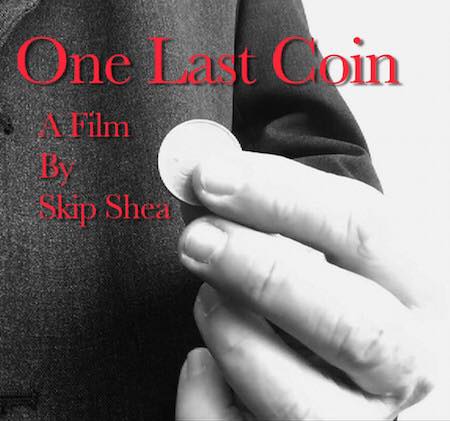
“One Last Coin” (2016), from writer-director Skip Shea, is achingly beautiful. The seven-minute and fourteen-second short film, a case of neorealism that would fit perfectly alongside the associated developments of such masters of Italian cinema as Federico Fellini and Roberto Rossellini, is especially gorgeous in its profundity. More precisely, that which it derives from everyday simplicity. For example, the endeavor is content to merely showcase the breathtaking natural elegance and allure of the streets of Rome (where Shea recorded the article entirely on his iPhone 6). Such occurs as we follow an individual who decides what to do with his title object. This is right before Christmastime.

As the wordless tale unfolds, the piece speaks emotive volumes. This is largely a courtesy of Shea’s indelible imagery. Such a facet becomes collectively brilliant when glimpsed through the marvelous black and white cinematography he incorporates into the labor. These triumphant qualities are made increasingly potent by Shea’s decision to score the exertion with a single lovely and evocative piece of music. It plays to grand consequence throughout the undertaking. The gentle sound of water heard in the final moments enhance the Zen-like sense of calm and first-person perspective which ultimately courses throughout the production. These touches also spectacularly augment the previously addressed notion of authenticity and finding poetry in the commonplace.

What also strengthens the piece, and further helps it to become such an unforgettable opus, is that Shea offers no background information about his unnamed lead character. Is he homeless? Is he merely a curious visitor in Italy’s capital city? Maybe he could be a bit of both. Either way, the audience is forced to relate. In so doing, we see the lovely vistas Shea stunningly brings to the screen through the visage of our own thoughts and experience. This also makes the haunting sights spied along the way, such as a few instances around the mid-section where we spy crowds of people walking past those who appear lifeless on the ground, evermore effective. These quick bits, as well as the unique storytelling elements Shea integrates into the affair, make for an illustration of moving art that is as credible as it is unforgettable.

Another item that is equally astonishing, aside from the high-quality of the chronicle itself, is that Shea is a one-man moviemaking crew on this venture. In turn, the narrative has the sharp focus and radiate intimacy of a passion project. Shea’s editing is stalwart. Additionally, his sound work is crisp and incredible. It compliments the components of realism and quiet splendor that are in perfect symmetry through every frame of the effort.

“One Last Coin” is a masterpiece. It is impossible to not be moved.

“Undatement Center” – (Short Film Review)

By Andrew Buckner
Rating: ****1/2 out of *****.

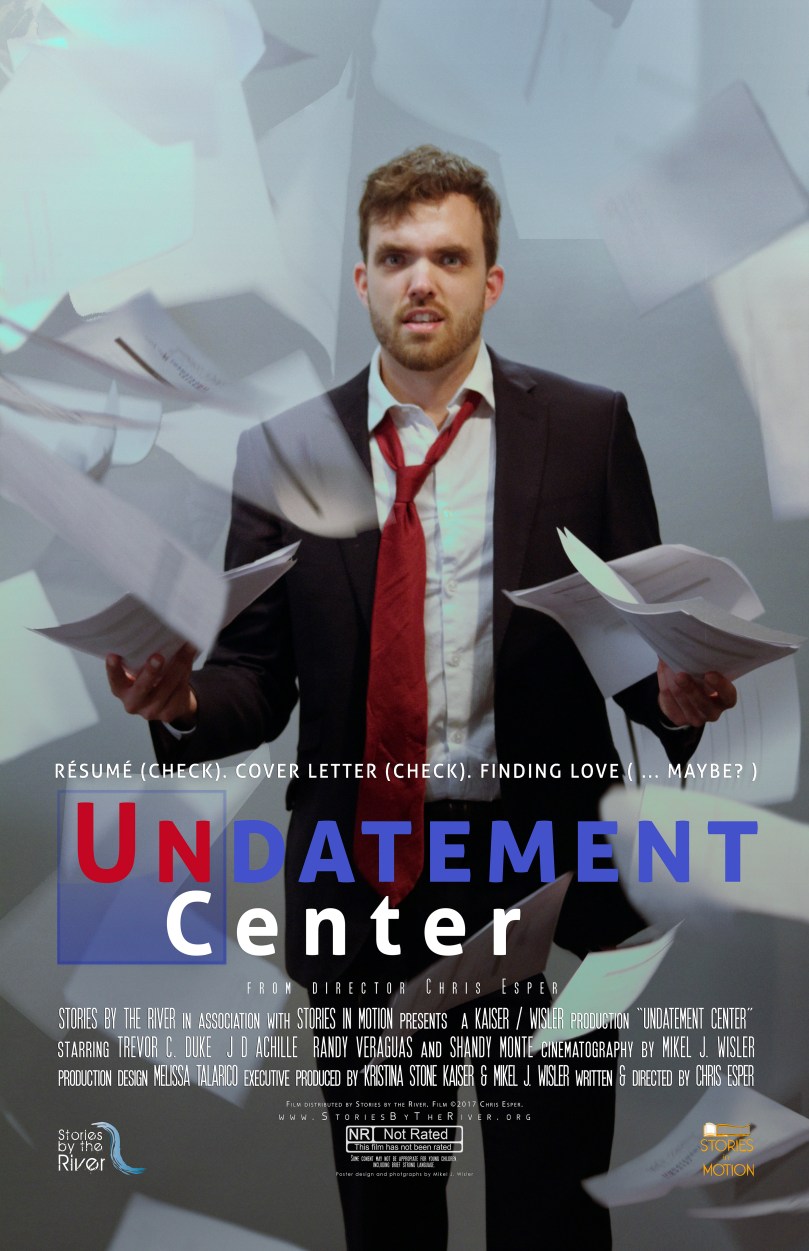
“Undatement Center” (2017), a nine-minute short film from writer-director Chris Esper, is effortlessly charming, consistently humorous and always likable. It carries on the same seamless marriage of upbeat and hopelessly romantic tones that made his prior inventions Please Punish Me (2015) and The Deja Vuers (2016) such an incredible success. This Stories by the River and Stories in Motion co-production is also a fantastic showcase of Esper’s ability, which has been ever-present throughout his career, to project fully fleshed-out, relatable characters. Such transpires in a heartwarming and enchanting, yet undeniably human, manner. This detail is made increasingly admirable with the incorporation of a pace that is as breakneck as view of the world of dating that is the focal point of Esper’s endeavor. Yet, none of the sequences, even the laughter-fueled montage that takes over the mid-section, feels rushed or superficial. There is a breezy demeanor to the proceedings that even makes the most familiar beats of the plot triumphantly sing. This is apparent in the relationship that forms between our twenty-six-year old lead, Jack (in a phenomenal turn from Trevor Duke), who turns to the title corporation in hopes of finding love after a twelve-year hiatus, and Lindsey (in a depiction by J.D. Achille that is consistently marvelous, engaging and authentic). The opening and concluding notes are also evidence of Esper’s mastery in this aforesaid department. Yet, these segments ring with a sweetness, an earnest simplicity and lack of pretension that is genuine and captivating. Despite its often-modern attitude (reflected most readily in the intriguing plot itself), the project feels wonderfully old-fashioned. Such only increases its amiability. Randy Veraguas’ depiction of the quirky desk clerk, Shelley, as well as Shandy Monte’s enactment of the similarly positioned Jennifer enhance the agreeable nature of the picture. Christie Devine is also stalwart in her quick role as Annie. Acei Martin, in a brief part dubbed “Urine Sample Woman”, is also stellar. When combined with the masterful moviemaking and deftly constructed literary contributions Esper incites herein, with his ear for often clever dialogue being another high-quality trait, it’s becomes immediately evident that the Secaucus, New Jersey born maestro has delivered another all-around winner.

This Quincy, Massachusetts recorded endeavor is also graced with illustrious cinematography from Mikel J. Wisler. Such a veneer reiterates the sunny atmosphere of the piece fantastically. Wisler’s seamless and sharp editing fares just as well. Also, assisting matters is Steven-Lanning Cafaro’s cheery and deeply cinematic music. Dominic Kaiser’s sound issuance is spectacular. J.L. Major and Rich Simpson’s assistant camera work is equally proficient.

Esper intends to comment on how intimate associations have become more akin to a business transaction, a one-sided meeting that is based on quick facts and reams of paper, than a personal experience. The conclusion, which hints at the latter method as the more beneficial, is evidence of this bitingly brilliant, but undeniably true, observation. In less capable hands, this is a storyline akin to this could’ve become a bitter, somber experience. But, Esper keeps the jokes cracking and the smiles brimming on our faces throughout. This is without ever diminishing the impact of his thesis statement. Such is, like the totality of “Undatement Center” itself, a tremendous accomplishment. Esper’s latest, an extension of many of the themes present in his earlier photoplays, is an all-out confirmation of his continually broadening talent. It is also a testament to his exceptional skill as a photographic craftsman. The result is side-splitting and deeply transcendent; an endlessly entertaining, quietly emotive must-see!

Premiered on April 1st, 2017.

(Unrated). Contains brief language and some sexual humor.

Stories in Motion’s page for the film can be found here.

“Wicked Conclusions” – (Short Film Review)

https://www.youtube.com/watch?v=LFAGbfzuTZ4

By Andrew Buckner
**** out of *****.

“Wicked Conclusions” (2016), a twelve-minute and forty-four second short picture from resident Pennsylvanian and co-writer-director Phillip G. Carroll, Jr., is a tense, taunt and thoroughly satisfying horror entry. It tells the tale of Amber (in an always captivating and credible turn from Chloe Hendrickson) and Henry (in a masterful portrayal from Boy-Yo Korodan that treads effortlessly on the line of child-like naivete and unsettling menace). They are imprisoned in the basement of their captor, Ben (in a well-rounded depiction from Erik Searle that conveys the conflicts of his imagined persona in a way that colors him brilliantly as both possible protagonist and antagonist for the bulk of the piece). Such instantaneously garners our attention by opening with a disarmingly light set-up. This includes an unseen individual putting up a sign for a lost dog. During this time, a surprisingly upbeat number pours from the soundtrack. The next scene carries on this impression. Such transpires in a bit which involves Ben making pancakes while casually conversing with an unseen entity. This arrangement is interesting because of the immersive and magnificent angle in which it is shot. It is one which only shows the side of Ben’s face and focuses in mainly on his mouth. Because of this, Carroll immediately defies our expectations. Yet, when Amber and Henry are introduced in the next scene, the invention becomes increasingly engrossing for far more grim reasons. This is as Carroll smartly tackles the afore-mentioned question of Ben’s true intentions. He also engages spectators in a nail-biting tug of war. This is until the rousing, if ultimately predictable, climax. All the while, we attempt to figure out who to root for. This is by mentally reiterating the tagline of the labor: “Who’s the real monster here?”

This is as much a courtesy of Carroll and Roman James Hoffman’s breakneck paced, smartly-written screenplay as it is Carroll’s claustrophobic, stylish and accomplished direction. Carroll seems intent on taking a familiar arrangement, such as the one inherently held in his narrative, and making it rise. This is from its endlessly empathetic shifts in perspective alone. Such twists in viewpoint are administered triumphantly. Carroll and Hoffman’s dialogue also helps matters. This is by being both believably straight-forward and powerfully delivered by those on-screen. Consequentially, the illusion of watching the ghastly scenario that is unfolding before the eyes of the audience is never broken. These items, along with the clues that are casually issued early on as to what is truly transpiring, make the endeavor more clever and easy to admire. But, what works best of all is the masterful handling and staging of the fearful elements themselves. They are beautifully, seamlessly implemented into the account. This is in a manner that never feels artificial. Likewise, it is never as if these pulse-pounding constituents exist to momentarily upstage the character-oriented focus of the exertion. This act itself is something of a rarity in cinema nowadays.

Budgeted at a mere $800, this PGC Studios, Fear Crypt Productions and Frank Horror fabrication also benefits from Sasikumar B’s sharp and assuredly effective music. The cinematography from Ryan Geffert is dark, brooding and impressive. Carroll’s editing is equally striking. Samantha Morris’ sound work is crisp and remarkable. The three-person camera and electrical department further enhance the all-around quality of the enactment.

These components all come together to compliment the unbroken atmosphere of dread Carroll engineers throughout the photoplay. With his tenth stint as behind the lens administrator, Carroll has crafted a balanced, memorable and monumentally mounted fusion of talent. It is one which, in the tradition of the best brief fictions, does not have one extraneous ingredient. Everything directly correlates with the unraveling of the yarn at hand. Most importantly, it does this while being massively entertaining. Carroll has evoked a wonderfully harrowing, haunting, vivid and visceral voyage into darkness. It is one which is also noteworthy for its restraint. This is exemplified via its ability to terrify without ever dissolving into excessive violence. For this, as well as its brash displays of bravado and storytelling prowess, the Halloween day released “Wicked Conclusions” is an unshakably solid addition to Carroll’s filmography. It refreshingly enthralls from start to finish. Simultaneously, it operates as a victorious orchestration of progressively bleak tone. In so doing, it comes with my highest recommendation to genre fanatics. Carroll is a silver screen chairman to be watched.

“Fireflies” – (Short Film Review)

By Andrew Buckner
Rating: ***** out of *****.

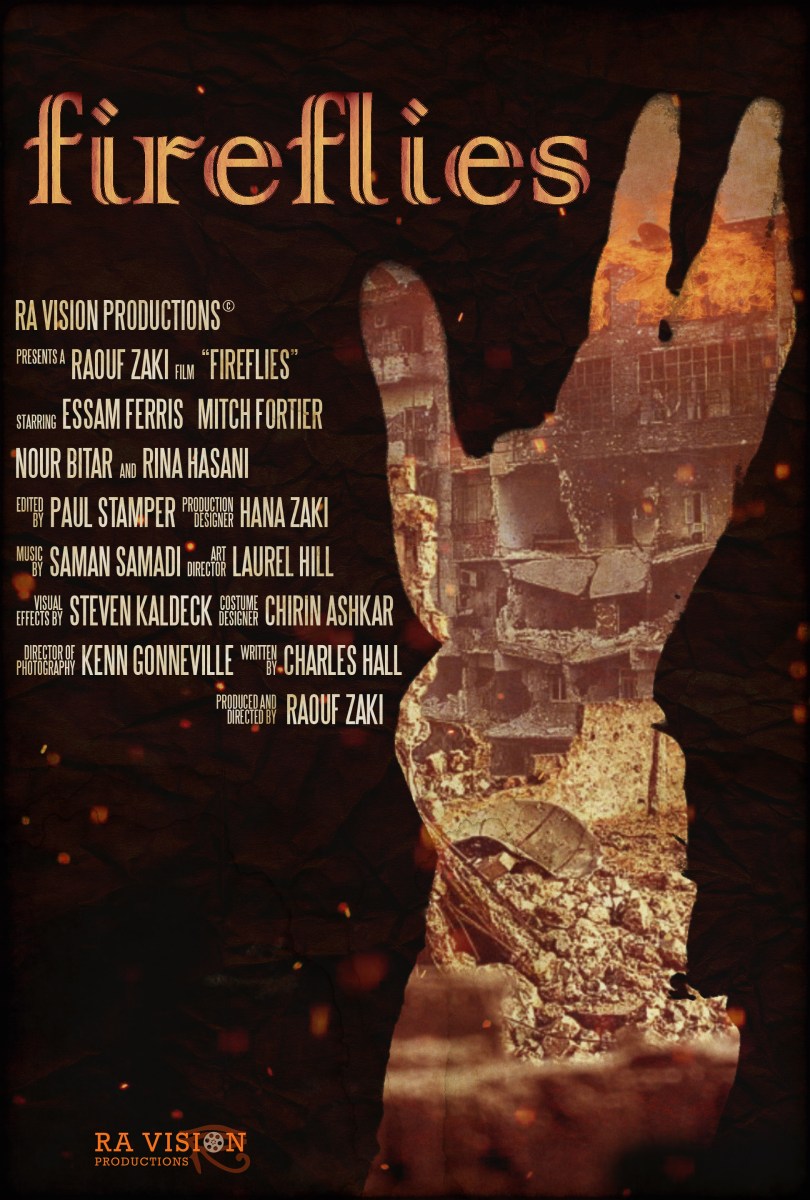
Often in cinema, as in life, silence is the most honest and sincere form of expression. “Fireflies” (2017), a short film of seventeen-minutes and twenty-one seconds from director Raouf Zaki and writer Charles Hall, is well-aware of the harrowing nature of such effects. It utilizes this on-screen with only the barest hint of dialogue. In turn, Zaki’s exertion magnificently demonstrates such visceral prowess. This is through many sparse, but swiftly effective, motions. For instance, a question raising glance from an employee to a customer. This arises a mere instant before the worker draws an unexplained X mark on a nearby calendar. As this bit is repeated, the meaning becomes vastly apparent. Yet, such an approach enhances audience intrigue grandly. Best of all, it also continues to project the untampered sensibility of watching life unfold. Such is pivotal. This is when maximizing the impact of a tale such as this one.

Much of the endeavor is composed of such quietly compelling and reenacted segments. Proof of this can be unveiled in a brief bit where our lead, Marwan (in an aptly honed and nuanced portrayal by Essam Ferris), wordlessly prays in a hotel room. We are also provided several cases where he appears both distant and uncomfortable. This is while being surrounded by the hushed discussion and laughter. Such erupts among others in the Boston café he frequents throughout the presentation. Zaki, via his brilliant and meticulously nuanced direction, wisely intercedes these serene circumstances. This is with a sudden terrified scream, a cry of pain or a sharp, attention-garnering explosion. These haunting flashes stem from the tragic flashbacks Marwan intermittently endures, unbeknownst to others, throughout the arrangement. Because of this, the piece becomes a rousing statement on an even larger topic. This is how the horrors of the past can shatter the presumed peace that surrounds our current state. It is also a masterclass on an entirely different plane. This is in its ability to delve intimately and authentically inside the mind-state of our protagonist. Simultaneously, the configuration operates on as a timely assessment of another psychological condition. This is that which, sadly, courses through a small fraction of the American mentality. Such is unveiled in its plotline. This concerns the suspicions cast from a headwaiter (in a terrific depiction from Mitch Fortier) towards our reserved, Middle Eastern central figure. Such transpires as he finds himself repeatedly returning to the aforesaid coffee bar.

It is a bold theme. But, it is treated organically and respectfully. Moreover, the brief exercise spellbindingly accomplishes an incredible balancing act. This is by dealing with the topic of judgment from others. Such transpires without ever becoming disapproving or overly critical itself. Such only augments the sobering, intelligent and mature traits inherent in the proceedings. This is as a courtesy of Hall’s beautiful, hauntingly penned and delicately structured screenplay. It is also just as much the consequence of Zaki’s stupendous behind the lens involvement. The result is a smooth, naturally paced endeavor. It is one that never abandons its human, character-oriented center. All the while it effortlessly culminates an emotional resonance. This is without ever being overly melodramatic or manipulative to do so. A great example of this would be the heart-wrenching, bittersweet and exuberantly made climax. The imaginative and eye-popping concluding acknowledgments section which follows only augments the wonder at hand.

These components are made even more elegiac and profound. This is when combined with combined with the cinematography from Kenn Gonneville. The editing from Paul Stamper, Steven Kaldeck and Zaki is equally proficient. The visual effects from Stamper and Kaldeck are seamless. They are also as persuasive as the meticulous manner of storytelling issued herein. Correspondingly, the sound work from Kevin Daggett and Jeff Majeau is also rousing and impressive. Kelton Vuilleiumier’s set decoration and Chirin Ashkar’s costume design is fantastic. The same can be said for Lori Grenier’s hair and make-up contribution. Outstanding input is provided from the camera and electrical crew. The art direction from Laurel Cunningham-Hill and production design from Hana Zaki are just as sensational.

This RA Vision Productions release, recorded in various areas of Massachusetts, also boasts magnificent acting all around. Nour Bittar as Syrian Mother and Rina Hassani as Syrian Daughter orchestrate top-notch representations. Their scant turns are nonetheless memorable. Kevin Daigneault as Unemployed Man, Harry McGuire as Bartender and John Melczer as Refugee Man generate a similarly terrific influence. The nine individuals credited as Restaurant Patron, Logan Raposo as Businesswoman and Brian Douglas Young as Guitarist #1 and William Bento as Guitarist #2 continue this striking trait. Additionally, Brooke Farrington as Refugee Young Girl, Christine Nordstrom as Refugee Woman, Christine Hunt as Mother and Judy Nadel as Daughter are also exceptional. Maurice Viteri as Buff Man, Yasmine Sabrah as Lead Singer Restaurant and Vanessa and Natalie Garnhum as Selfie Girl #1 and #2 respectively are also remarkable.

The outcome of these shining facets is undoubtedly one of the greatest and most impassioned presentations of 2017. This is a triumph of artistry and of inward peering life. Zaki takes imagery from the everyday, such as the constant hum and crackle we hear from a glowing red vacancy sign or a woman incessantly uttering “Check” into a microphone, and makes them perpetually mesmerizing. There is a semi-detached, thinly hallucinatory quality to these episodes. Such establishes a magnetic illustration to bystanders. It is a skillfull rendering of the way Marwan himself might be mentally perceiving such manifestations. This is as he evaluates his own existence as well as the world around him. Ultimately, this is one of the various reasons why “Fireflies” works so uncommonly well. It is because it yearns for us to look both inward and outwardly. Not only does it do this with restraint and dignity, but it does so with an unshakable, melancholy power. Such makes an already profound chronicle more insightful. Relatedly, the symbolism revealed in the appearance of the title insects heightens this factor immensely.

Zaki has a lot to say about the human condition. He transfers these ideas in a fashion that is clear and direct. This is also done without coming off as artificial or detracting from the unveiling fiction. Such makes this even more of a gripping triumph; a rousing tour de force. For both the cinephile interested in seeing an exhibition of sheer craft as well as those who want to perceive existence through someone else’s eyes: This is mandatory viewing.

fireflies-pic-1

“Defarious” – (Short Film Review)

By Andrew Buckner
Rating: ***** out of *****.

“Defarious” (2016), the eleven-minute and sixteen-second debut short film from writer-director Chase Michael Pallante, is gloriously moody. It plays like the collaborative brain child of horror masters Dario Argento, John Carpenter and James Wan. Moreover, the maniacal demon whose name graces the moniker of the tale, in an undeniably deft representation from Jason Torres, is phenomenally honed. Such accrues to the degree that such a body language based exhibition as that which Torres incorporates here instantaneously calls to mind a time-tested giant of the genre. This is Max Schreck’s iconic portrayal of the menacing title vampire in German auteur F.W. Murnau’s silent masterpiece, Nosferatu (1922). Much like Schreck’s character, who is also referred to as “Count Orlock”, Pallante’s villain is a memorably designed vision of terror. Correspondingly, he seems to appear from the shadows as easily as he becomes one. Yet, they are both distinctly their own article. The apprehension Torres’ entity resonates is immediately noteworthy. This is especially evident in the bone-chilling moment when we initially spy him in full. Such transpires at the midway mark. With a sinewy frame and wide, emotionless, grey alien-like eyes, which appear to be glaring from the fiery depths of hell itself, the alignment to Pallante’s antagonist with Murnau’s unholy monster is complete. Best of all, they match one another in their ability to effortlessly unnerve.

Pallante, who also produced, chronicles the young Amy (in a consistently harrowing enactment from Janet Miranda). Plagued by nightmares, and disturbing sights of her deceased mother, the line between reality and the dream world has been blurred. Such is made more so when a terrifying figure breaks into her home. His intentions are clearly conveyed from the onset. He wants to take her life. The creature will stop at nothing to do so. With no one to help her, she must escape the fiendish clutches of the merciless madman who wants her dead. But, to do so, she must face the both the sight and understand the symbolic meaning of her greatest qualms and uncertainties. This she must do by facing them headlong.

defarious-pic-1

It is a plot that would be considered thin and ultimately routine, a general recycling of the events of Shant Hamassian’s intriguingly retro “Night of the Slasher” (2015), in lesser hands. But, with the occasionally Lynchian, imagery-laden manner Pallante utilizes to guide the project, the presentation shatters such fundamental limitations. In turn, Pallante makes of such a rudimentary palette a compulsively fascinating account. It is one which is nonetheless robust, refreshing and endlessly engaging. This is largely because of Pallante’s aforesaid aesthetically driven decisions. Additionally, Pallante keeps the pace confident and enduring throughout the arrangement. Likewise, the intensity, which is deftly mounted and engineered, is ever-culminating. We notice this with a genuinely unnerving, and appropriate, quote from Matthew 10:28. Such is distributed before the yarn even begins to unfold. This nail-biting characteristic elevates to a surely satisfying, if predictable in hindsight, finale. More than anything, this climactic stretch greatly underlines the merciless nature of Pallante’s endeavor. Such creates a masterclass in generating continued suspense. It is one which is augmented as grimly illustrious, macabre and foreboding. This is via Jorge Canaveral and Christian Reyes’ eye-popping and wholly immersive cinematography. Further helping matters is that the arrangement is almost entirely cast in a hazy blue veneer. Such is another bold, ingenious choice. It makes Pallante’s configuration ever more menacing and surreal.

Wisely keeping dialogue, motivations and exposition to a minimum for maximum impact, Pallante, who also wrote the smart and enigmatic screenplay with developer Zay Rodriguez, paints a mercilessly taunt nightmare on celluloid. The result is an unwaveringly bleak and masterful tone piece. It is one that pays homage to 1980’s and 90’s slashers traditions. This it does by staying within the rules, motions and general arc held within the traditions of such a beloved sub-genre. Never once in its runtime does it break out of them. Yet, the project operates just as successfully as a meditation on sleep paralysis. Such is unveiled in a beautifully constructed post-credits sequence. This brief segment slyly stays within the aforesaid murderer-oriented story boundaries. In so doing, it is conveyed from the perspective of our lead. She, we than learn, suffers from such a condition. Relatedly, Pallante’s affair is also brilliant in its quiet critique of the medical world. The result is a truly multi-layered narrative. It is one that mechanizes as well on a surface level as it does on the myriad layers beneath.

defarious-pic-2

Because of these herculean details, Pallante triumphantly delivers a raw, primal, but cerebral, experience in unrelenting fear. Such is vastly punctuated by a purely cinematic use of sound. This arrives courtesy of Fernando Frandy Castillo, Jose Julian Santiago and Pallante. It is one of the best issuances of its type I have encountered in such a venture. The atmosphere laced score from Jonathan Martinez brilliantly reinforces such a factor. Correspondingly, Lou Cannizzo and Martin Hayward’s visual and Jessica Hayward and Reyes’ special effects are similarly captivating. The five-person camera and electrical as well as the same said make-up department offer terrific contributions in their respective arenas. Maggie Stapleton’s wardrobes are exceptional. Pallante’s editing is sharp and skillfully administered. This Long Island, New York recorded opus, a Rhythm and Flow Entertainment Inc. co-fabrication, also boasts spellbinding and unmistakably eerie voice work from Shanae Harris. Alim Ali and Pallante’s stunts are magnificent. They grandly amplify the quality at hand.

“Defarious” was made for only $25,000. Yet, it looks and feels like a multi-million dollar Hollywood exercise. In its brief span, Pallante tells a comprehensive fiction in a post-modernist fashion. The outcome is envy-inducing to say the least. Yet, this tour de force, shot from August 29th through September 4th of 2015, is exciting in another arena. It is jumpy without ever resorting to cheap gimmicks to accomplish such a task. Astoundingly, it also has the unpredictable internal logic of a waking dream; an unshakable night terror. This is one of the strongest attributes of the exertion. Such a distinguishing influence fluently puts us into the often-confused psychological state of our heroine. This is provided with fervent gusto. Such makes it easy to see why this incredible labor won the coveted Best Film award at The Northeast Film Festival Horror Fest. Pallante has delivered one of 2016’s greatest entries in celluloid apprehension. I highly recommend seeking this one out.

The official site for the film can be found here.

The Facebook page for “Defarious” is located here.

R&F Entertainment’s Twitter page is here.

defarious-pic-3

“The Deja Vuers”- (Short Film Review)

By Andrew Buckner
Rating: ****1/2 out of *****.

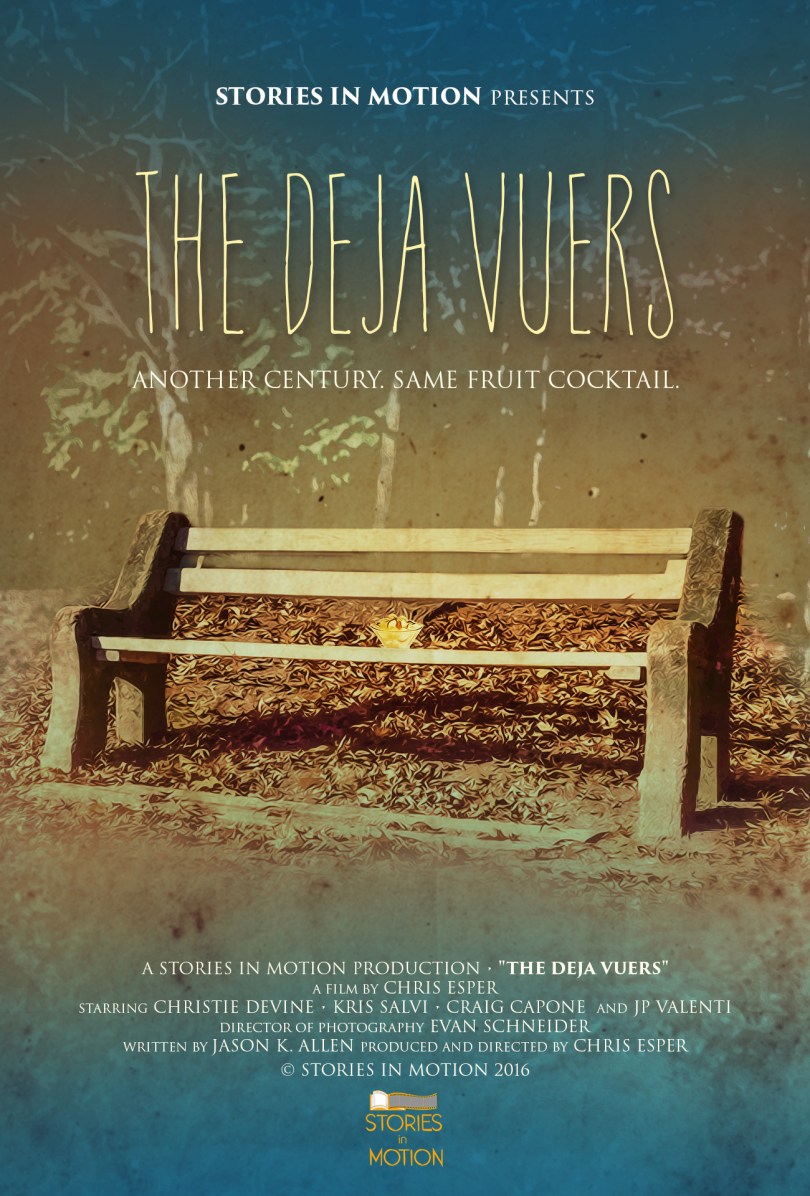
“The Deja Vuers” (2016), an eight-minute short picture from director Chris Esper and screenwriter Jason K. Allen, is a charming, frequently funny and endlessly engaging experience. It is ingenious in the way it takes a commonplace set-up, a man approaching a woman on a park bench, to comically absurd levels. This is without it ever becoming too over the top. Simultaneously, Esper and Allen inject trademark components of fantasy and science-fiction, time travel and dreams, into an undertaking that is consistently fresh and exciting. This is while maintaining its commonplace relatability. Likewise, it never once utilizes humor that isn’t naturally born from the unfolding circumstances of the plot itself. With these un-related items, a balance of the mundane and the fantastic is seamlessly created. It is one that is built on dialogue. The articulations heard throughout are rich in everyday observations, exchanges and quiet insights. Furthermore, Allen’s penned characterizations are accessible. This is without coming across as archetypical or lacking in dimension. Such is certainly a tremendous feat unto itself.

The attribute apparent in the writing of the protagonists is amplified by the herculean strength of the lead performers we follow on-screen. Christie Devine is outstanding in her enactment as Morgan. Kris Salvi is phenomenal in his portrayal of Chuck. Yet, even the comparatively smaller roles, such as Craig Capone as Elias and J.P. Valenti as “Repairman”, offer well-rounded and memorable depictions. Adam Miller as “Teenager” fares just as well.

The potency of these qualities is vastly a courtesy of Esper’s masterful administrative hand. It is just as evident in Allen’s sharply designed and intelligent authorship of the material. The duo immediately establishes, via their respective contributions, a quietly whimsical tone for the piece. It is propelled in the opening moments by the smoothly upbeat music of Steven Lanning- Cafaro. This can also be said for Evan Schneider’s sumptuous, vibrant and suitably cheery cinematography. Schneider’s influence also benefits from taking full advantage of the natural beauty of its budding fall backdrop. The result is a smartly penned and honed, effortlessly enjoyable production. It is one that visibly triumphs from both a technical and narrative stand-point.

Esper, who also produced, and Allen chronicle Chuck coming across Morgan in a chance assembly. He has never met her before. Yet, a reverie Chuck had from the night before, where Morgan is sitting in the precise location she is at that initial instant and with an identical expression of the confused look that overtakes her countenance, makes him come up to Morgan and address her in conversation. While the explanation of such an act itself could easily be perceived as a pick-up line, it is immediately conveyed that Chuck and Morgan both find each other “repulsive”. But, Chuck states, in one of the many efficaciously guffaw-inducing bits herein, that the mutual unattraction between the two doesn’t mean they shouldn’t be intimate. This is just on the off case that a bizarre fate is bringing them together. Soon after this smirk-inducing gag is administered, a chain of circumstances, often built around loose connections and clever ironies, amusingly unfurls. This begins with something as small as a container of fruit cocktail. Soon it evolves into an assortment of individuals from bygone eras and lives. Included in the mix is a personality who could well be conjured from a vision induced through slumber itself. It isn’t far into these episodes before Morgan and Chuck realize that there may be more to this sense of de ja vu than a vague sense of familiarity. It is than a portal unveils. Such an incidence threatens to pull Chuck and Morgan apart from their moment together. In so doing, it promises to bring them to a place and time more matched to their personal desires.

This Stories in Motion production, budgeted for $2,000 and shot in Attleboro, Massachusetts, further benefits from this truly original plot. The single position found in the piece is also impeccable for a celluloid invention such as this. Moreover, it activates intriguingly and ends much in an equivalent fashion. This is on a wildly satisfactory note of paradoxical enigma. This stretch is also striking in that it seems to express the general outlooks of the personalities viewed in this pre-closing acknowledgments succession. This is through decision over exposition. Best of all, it incorporates this without being obvious about its intentions. The construction is just as confident in its pacing as it is in its sly execution of such happenstances. Such an affair issues a commencing and concluding credits segment that is as quaint, stimulating to the eye and proficient as the sequences these portions bookend. Correspondingly, Esper’s editing as well as the optical effects from Robert L. Lopez are outstanding. Andrew P. Marsden provides deftly issued sound. Danielle Schneider’s make-up is expertly fashioned. These ingredients are eye-catching on their own. When combined, these details illuminate and augment splendidly the effortlessly admirable appeal of all we encounter herein.

Esper’s latest accomplishes an incredible amount in its brief run time. It efficaciously juggles a multitude of genres and ideas. All of which are difficult enough to pull off individually. Yet, with all these various foundations at play: there is an undeniable air of gentle romanticism to the proceedings. This is fitting and welcome. The composition is much like Esper’s “Please Punish Me” (2015) in this respect. This is also accurate when pondering its ability to explore human interactions and regressed passions. Such occurs in a package that operates equally well as both an unexpectedly cerebral character study and as a witty comedy. In turn, “The Deja Vuers” is a wonderful display of talent and wise storytelling moves all around. It continually exhibits Esper’s as a craftsman of the photoplay at every turn. The work also serves as perpetual evidence of the equally deft capabilities of his cast and crew. More than anything, the exertion reminds us of the illimitability and experimental nature inherent in arrangements such as these. Because of this, Esper and company have erected a must-see; another fantastic addition to his increasingly spellbinding filmography.

“Kinnari”- (Short Film Review)


By Andrew Buckner
Rating: ***** out of *****.

Writer-director Christopher Di Nunzio’s four minute and forty-three second short film, “Kinnari” (2016), is a powerful, gripping and abstractly eloquent meditation on the harsh, yet wondrous, journey of life into death. The latter of which is occasionally referred to throughout the affair itself as “the great nothingness”. Di Nunzio’s composition is just as adamantly concerned with how the boundaries of these two oft addressed subjects intermingle. It is as apt to ponder how these opening and closing portions of our being are frequently blurred. This is especially true when spied through a retrospective lens. Particularly, the viewpoint of a man who may be mentally peering at such sights amid his final moments. Such is illustrated as a dream-like trek to enlightenment. This overtakes the bulk of the narrative. It is sewn with a plethora of poetic wisdoms and long pined over inquiries. In turn, Di Nunzio provides an adventure of self-discovery. It is one which is steered by time cemented perspective and experience. A knowingly anti-corporate and media outlook, the basis of an enthralling monologue around the one minute mark, pushes such perceptions to tremendous effect. This emanates intriguingly from our ruggedly engaging narrator and lead, David (in a brilliant, unflinching and always watchable enactment from David Graziano). These traits he has acquired during his singular voyage through the planes of existence.

Such is perpetuated by a fateful meeting. This takes place in a stark and gorgeously realized instance near the mid-way point. It involves the rediscovery of the title entity (in a portrayal by Jamie Joshi which is quietly striking and consistently mesmerizing). She is the crucial persona in David’s illumination. Her name also shares that of a topically proper noun, largely used to describe a half-human and half-horse or half-bird hybrid, in Buddhist mythology. This is of an archetypical lover. Such is consistent with the story Di Nunzio paints. The same can be articulated for the paradigms that are encountered upon her arrival.

kinnari-pic-4

Our hero describes her as a “goddess”. In a manner befitting to such consecrated figures, David moves with Kinnari through a surreal landscape. These are a collection of beautifully structured, yet appropriately earthly, set-ups. They all hypnotically personify the stages of David’s physical span. As she pulls him deeper into this realm, the sum becomes progressively complex, abstract and cerebral. A staggeringly staged, near-climactic arrangement oversees David shadowing Kinnari up a winding, ostensibly endless flight of steps. Such personifies both the photographic and demonstrative core of the entire effort.

Additionally, there is a character to audience discourse which builds the foundation of the project. Such is triumphantly carried on throughout. This is a whispery, yet friendly, source of personal development. It victoriously aids in conveying a well-rounded glimpse into the inner-workings of our protagonist. Such heightens the intimacy, honesty and profundity at hand immensely.

kinnari-pic-5

Likewise, this fascinating plotline is given meticulous, pensive craftsmanship. Such is via Di Nunzio’s smartly paced screenplay (supervised by Christine Perla). His dialogue cracks with ingenuity, credibility and mature observations. It is also remarkably introspective. All the while, it comes across as deceptively casual. Such is much in the way of a stream of spoken conscious. Given the general format of the article, this approach is undeniably operative. This stands as an obvious signpost of Di Nunzio’s outstanding capacity for authorship. It is just as much a marker of recognition for the natural relatability inherent in Graziano’s outstanding delivery of his interchanges. Such qualities align themselves in the spectacular custom Di Nunzio displayed with the modern noir, A Life Not to Follow (2015). It was also at the at the forefront of his avant-garde horror invention Delusion (2016). In both cases, Di Nunzio scripted as well as served as administrator.

Much in line with these prior presentations, the story is smartly and smoothly paced. It is guided by Di Nunzio’s Lynchian sensibility for haunting, yet memorable and alluring, imagery. Correspondingly, the entirety of the exertion is slickly designed. This is so easily evident that even early, close-up shots of David’s coffee seem to be a mirror image of the bleak places in his soul. There are other relatively commonplace segments, such as a bit involving David walking on a presumably abandoned train track with a brick wall of graffiti looming closely behind him, that appear just as much like a grim visage. Such aspects appear as if they are taken directly from a waking nightmare. This is only amplified by Di Nunzio’s masterful framing. Such fashions an undeniably arresting style. It is one which makes the labor even more immersive and remarkable.

Such appeal is also punctuated by Di Nunzio’s seamless editing. His gently used, yet incredibly melodic and mood-setting, music also aids this factor outstandingly. Similarly, Nolan Yee’s cinematography, offered in the standard 16:9 HD aspect ratio, is somberly atmospheric. It is also elegant and thematically apt. Christopher Hallock’s astonishing assistant camera contribution is fabulous. Such augments the phenomenal nature of Di Nunzio’s expertly staged sequences. This is in terms of their stark believability and dazzlingly skillful construction. The culmination of these attributes make the sheer artistry which resonates through every frame of this Somerville, Massachusetts recorded drama increasingly palpable.

kinnari-pic-2

Di Nunzio issues a somber, intellectual tone that never once wavers throughout the duration. What establishes this atmosphere so immediately is the implementation of a monochrome title card. It is held on-screen for seven seconds. A single, thunderous chord is distantly heard in the background. The simplicity of this arrangement is the first of the many wise decisions and courageous moves Di Nunzio orchestrates. The final credits scene, proceeded by David’s harrowing realization that “Only me and beauty exist”, succeeds in the same arenas as those discussed above. These two sections evoke perfect bookends for the tale this item uncompromisingly and attractively tells. Moreover, Di Nunzio has an instinctive knack for what is to be glimpsed as well as left away from the eyes of onlookers. Such makes the proceedings progressively captivating. It is also proficient and enigmatic. The outcome of which makes the chain of events as unpredictable as they are perpetually enchanting.

Such creates an arc for that account which is impeccable. It is akin to a cinematic puzzle. Di Nunzio has gifted his spectators with a tour de force on all fronts. This Creepy Kid Productions release soars as an exhibition of temperament, moving picture bravura and intellectual yarn-spinning. It is also a standout performance piece for Di Nunzio’s recurrent collaborator, Graziano, as well as newcomer Joshi. Di Nunzio’s latest further astounds with the questions it poses as well as the answers it commands us to form. This is a rare work of celluloid prowess. It is one that will unveil new wonders and insights with each accruing sit through. Di Nunzio has formed an absolute bulls-eye; one of the best configurations of its type I have witnessed all year.

kinnari-pic-1

“Trouser Snake” – (Short Film Review)

ts-pic-2

By Andrew Buckner
****1/2 out of *****.

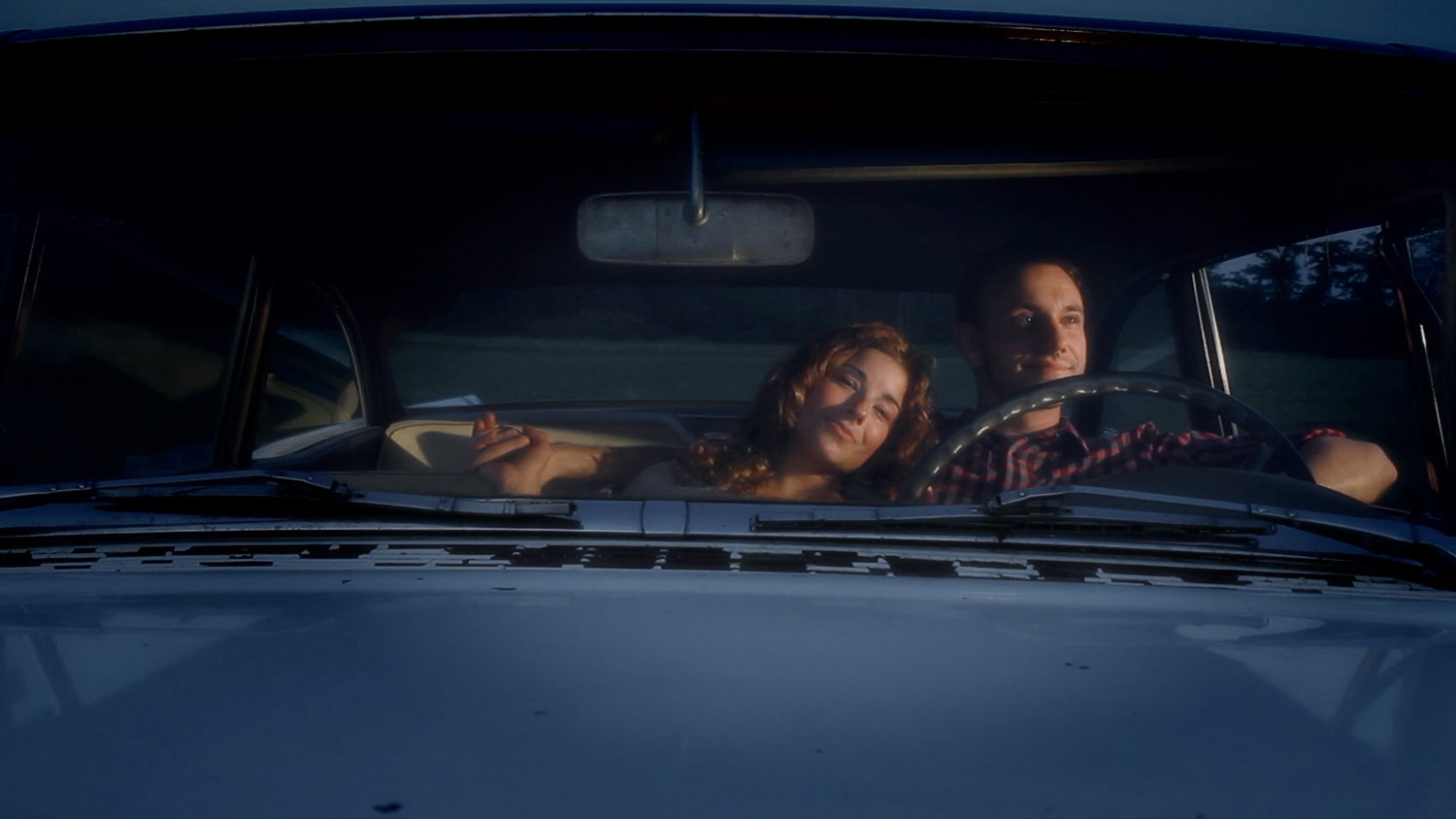
Trouser Snake (2016), the third short film from director and co-writer Alex DiVincenzo (2014’s “The Horrors of AutoCorrect” and 2016’s “Cybershock 1999”), plays as if the overblown “science” and informatory threats fashioned as lesson learning which made Refer Madness (1936) such a cult gem were repackaged as a deliberately uproarious 1950’s style creature feature. This is with the subject diverting from the purportedly “violent” dangers of marijuana. Such was the case illustrated to great comedic effect in the abovementioned Louis Gasnier directed and Arthur Hoerl penned presentation. DiVincenzo makes literal the idea of the “monster” that rises from the male anatomy. This is when said individual is confronted with an apparently unanticipated hormonal and sexual control. It is one which augments the naïve confusion of the teenage years. Such becomes the plight of our perplexed protagonist, Thomas (in a spot-on portrayal by Alexander Gauthier). All of this surfaces consequently to an extended bout of making out in a car with Thomas’ girlfriend, Lucy (in a phenomenal turn from Jamie Lyn Bagley). Such ensues at that notorious place in celluloid where such events always seem to stem from: Lover’s Lane.

DiVincenzo employs a variety of wildly triumphant jokes that pinpoint the outdated nature of Thomas’ gullibility. Most noteworthy of which is a brilliant sequence at nearly three minutes into DiVincenzo’s four minute and forty-nine second undertaking. This is from what can be perceived as a modern perspective. Such is derived during a family dinner. In this episode, Thomas tries to have an open discussion with his family concerning his current plunge into adulthood. It is at this point his much younger sibling, credited simply as “Sister” (in a terrific depiction by Morgan Walsh), says in a matter of fact manner: “Even I know about the birds and the bees, Thomas.”

ts-pic-3

This gag is undoubtedly amusing. Yet, it is a number involving the sudden slanting of a table that comes immediately after Sister’s words that is the centerpiece of the entire segment. Such also endures as one of the most successfully hilarious instances visible throughout the runtime. Another thematically linked highlight arrives both before and prior to a spectacularly issued, black and white post-credits sequence. This latter stated item concludes with the announcement, which I sincerely hope DiVincenzo makes good upon, that the “Trouser Snake will return in ‘Bride of Trouser Snake’ “. These already mentioned guffaws are exceedingly clever. They are also among the best uses of the amorous parallel DiVincenzo utilizes with the presence of the antagonistic fiend of this enterprise spied throughout this Grimbridge Productions release. Such instances are as cringe-worthy as they are, in various usages of the term, climactic.

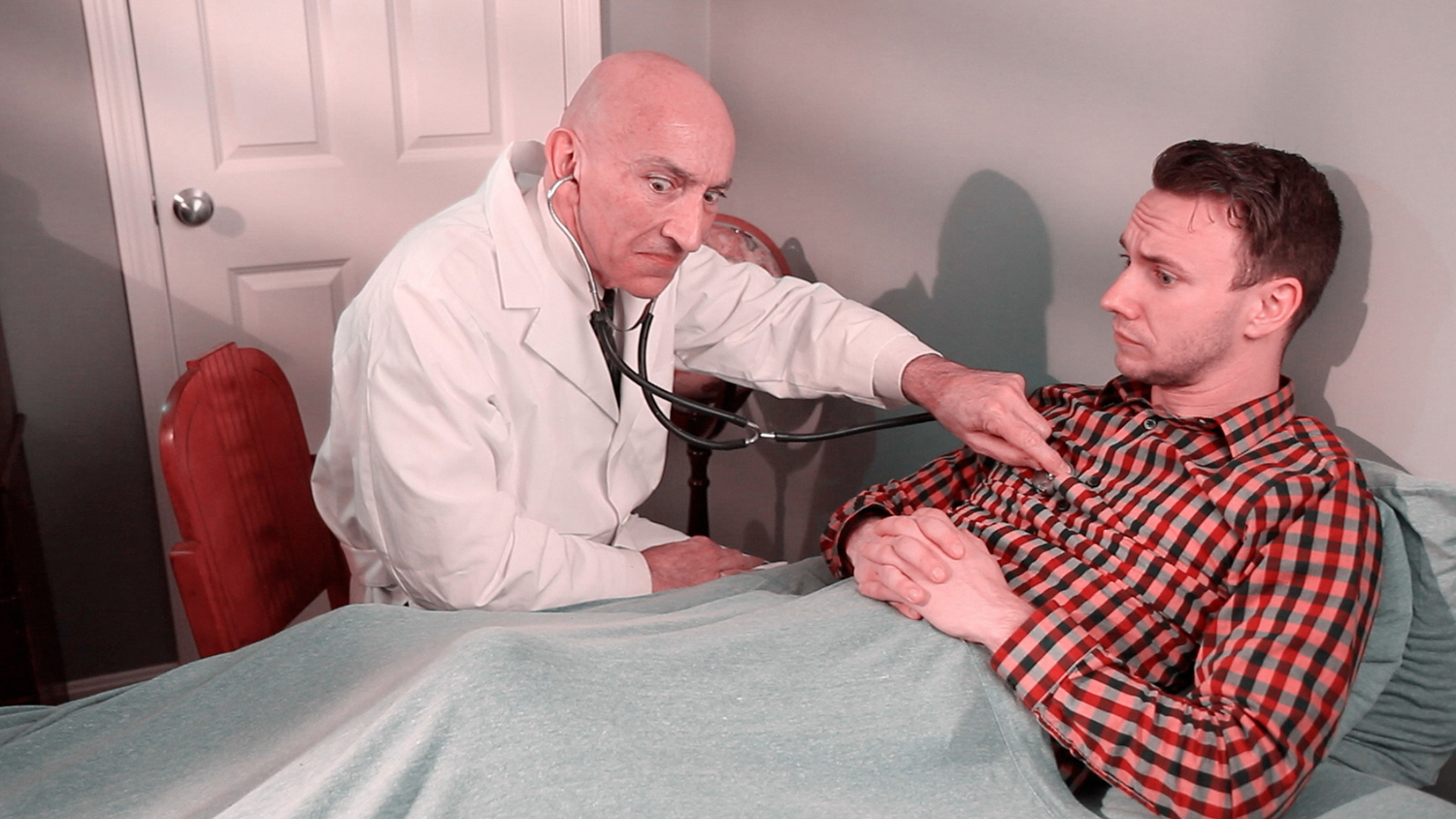
Made for a mere $100, DiVincenzo’s invention is boosted by another outstanding, gleefully tongue-in-cheek performance. This is from Michael Thurber. He enacts Thomas’ specialist, Dr. Mason. Thurber bends the character in the ways of many associated clinicians from both the decade and genre DiVincenzo models his tour de force after. Such is orchestrated both readily and engagingly. He delivers exposition, most of which the audience is already informed of, with a merry, knowing wink to his unseen spectators all along. Such makes the scenes he is in sing with a heightened layer of underlying wit. This matches the tone of the piece beautifully. William DeCoff as Thomas’ father, Hugo, and Monica Saviolakis as Thomas’ mother, Joy, also offer similarly astounding depictions. The result is a herculean effort that is made incredible by the stalwart essence of those on-screen.

ts-pic-4

The brief affair is also graced with an appropriately cheery, splendidly done veneer. The look of the endeavor is like that of a classic, monochrome motion picture. Particularly, one that was colorized before being broadcast on late night cable television. Such cinematography, courtesy of Jill Poisson and DiVincenzo, further enhances the B-movie correspondence DiVincenzo proudly strives for throughout the exertion. DiVincenzo’s editing, script (co-authored by James Cilano) and general guidance of the project is sharp and masterful. The story is conservative, but fulfilling, in its construction. Such transpires as DiVincenzo and Cilano tell the tale through several connected sequences. These are often exited and quickly returned to at seemingly random intervals. Such fleshes out the saga as satisfactorily as any full-length fiction. It also provides a non-linear, artistic streak to the proceedings. Such intensifies the well-rounded sum of the attempt. The same can be spoken of Cilano’s musical influence. Such is an endlessly enjoyable mixture of antiquated terror and melodrama. Furthermore, Adam Parchesky’s sound is tremendous. Jordan Pacheco’s puppeteering of the title entity, and other effects, are skillfully orchestrated. Like all the other technical elements we encounter in DiVincenzo’s latest, with gaffer John Mosetich and his leadership of the proficient camera and electric work chiefly among them, these articles jump out at us and demand our attention.

But, what is most charming of all is how easy it is to see droves of youth lining up to see “Trouser Snake”, and its promised sequel, as part of a weekend double feature at the drive-in. When reflecting upon the epoch the account is set in, the illusion cast by this ardent homage is smirk-inducing and complete. This is nostalgia of the best variety. It stays true to the trappings, the general arc and stereotypes of related outings. Still, it wins us over. This is, primarily, with the obvious affinity for the early Roger Corman/ Ed Wood Jr. brand of cinema DiVincenzo has attached to his narrative. With the support of an intriguingly designed beast, a wonderful and apt cast, a fluent pace and an entertainment level that never wavers: DiVincenzo has crafted a genuine knockout.

ts-cover-pic-1