“Trinity” – (Movie Review)

trinity 8

By Andrew Buckner
Rating: ***** out of *****.

Trinity (2016), the outstanding eighty-three minute feature debut from writer and director, Skip Shea, is what is most properly described as a “Lynchian nightmare”. It is an endlessly eerie and effortlessly unsettling endeavor; a journey through the psyche that perfectly blurs what is real and what is imagined. Such is conveyed with quiet, underplayed power. This is through the medium of Shea’s imaginative, genuinely eye-popping and undeniably haunting images. Such punctuates its grimly poetic, highly symbolic underpinnings masterfully. In turn, this attribute only greatly enhances its grand effect.

trinity 1

What is just as remarkable is the distinct rhythm to these phantasmagorias throughout. What makes this detail all the more spectacular is that they are frequently wrapped around intelligent, scholarly conversations. These concern art, religion, Italian proverbs, scripture and the quoting of renowned minds from the past. This gives the piece, released through Racconti Romani Produzioni and Wicked Bird Media, an increasingly intellectual atmosphere. It blends masterfully with the surreal marvels and insights Shea often summons. This detail is utilized incredibly well with the various themes woven into the narrative. It also helps us see our surroundings as Michael is: as a curious but somewhat naïve youth. Shea also focuses with tremendous and intense results on the lingering psychology and aftermath of such events on the victim. This gives us a window into our traumatized lead, Michael (in a courageous, always-watchable and magnificently realized performance by Sean Carmichael). It also acts as a delicate balance between the human and the horrific aspects of this wonderfully challenging work of cinema.

trinity 2

Shea tells a true tale. It focuses in on Michael meeting up with Father Tom (in an enactment by David Graziano that is occasionally vulnerably, often domineering, bold and appropriately creepy) at a coffee shop in New England. Father Tom sexually mistreated Michael, who is now an artist, as a boy. With this awkward, and unexpected, confrontation, the sentiments Michael repressed and tried to keep at bay unveil. Almost immediately, these feelings come again to the forefront. As he later journeys through three churches, an engrossing representation of Michael’s cerebral venture as a whole, Michael comprehends still and remembers the hold Father Tom had on him. It is projected regularly on-screen with chill-inducing power. With this impression, Shea builds the bulk of a picture as a terrifying meditation on the lasting hurt and ever-building torment Father Tom has caused. As we, the audience, move deeper into Michael’s brain the harder it becomes to judge what is accruing now and what has happened before. Than we begin to ponder an equally horrific thought: what if it is, in some fashion or another, beginning to transpire all over again?
trinity 3

It is this emotive impetus which Shea uses brilliantly throughout the film. Not only does this get us to know the character, and those which surround him, exceptionally well but, it creates a terrific imprint of Michael’s singular perspective. Similarly, this component keeps our fascination mounting through the entirety. This sensation of stepping inside the life and deliberations of our protagonist is echoed with a Kubrickian aesthetic habitually through the affair. This is immediately noticeable in the opening moments. Here, we see several well-executed sequences of Michael going about his daily routine. This is as the classic guise of Michael’s voice as narrator offers Michael’s exclusive commentary on casual subjects. One of these is what winter is like where he resides. In the commencing minutes where this occurs, we are drawn in by Michael’s everyday likability. We are just as mesmerized by the natural tranquility and beauty, complete with gorgeous shots of the luminous veneer of piled snow on the ground, which is made all the more hypnotic by Nolan Yee’s gorgeous cinematography. But, when the concluding instances align themselves to these serene commencing bits, it is held in a far darker, more brooding respect. It is in these near-final seconds that we realize just how phenomenally Shea has let us explore the battered recesses of Michael’s inner-workings. Such also lends another bit of the repetition of reflective snapshots so prevalent herein. All of this is evidence of Shea’s stylistic bravado. Furthermore, it is proof of his absolute command of form present in every challenging frame found within this spellbinding tour de force.

trinity 4

Shea keeps the pace even and appropriate through the duration. His screenplay is just as impressive and meditative as his ground-breaking and taunt direction. He gives us believable dialogue, motivations and a realistic platform for his gradually rug-pulling, horror show feat. Despite the aforementioned recurrence of some visions, all we encounter always comes off as fresh and new. In fact, this return makes the sum of Shea’s vehicle all the more like an ever-turning melody in a ghastly, but beautifully engineered, song; a ballad of one man’s tragic childhood circumstances being brought back to light. Such an illusion is made all the more potent by the remarkably funereal music courtesy of Steven Lanning-Cafaro. This particular item courses further effective dread through the soundtrack.

trinity 5

Lynn Lowry is great as Michael’s Mother. Jennifer Gjulameti fares just as Michael’s Spirit Guide. Diana Porter as Sam, Maria Natapov as Maria, Anthony Ambrosino as Nick and Susan T. Travers as Susan are all transcendent in their respective roles. The same can be said for the rest of the cast. Likewise, Shea’s editing is splendidly issued. Phil ‘Skippy’ Adams, Diane Pimentel and Jessica O’ Brien lend a seamless make-up contribution. The sound department produces crisp, solid work. Adams’ special effects are just as seamless and mightily impressive.

trinity 6

Shea’s feature is personal, painful and punishing. It is also intimate and sincere. This is the type of undertaking that mechanizes spectacularly on all levels. In the process, it successfully brings to the surface a multitude of sentiments. From learning Michael so deeply as this raw, unflinching experience moves along, we undergo the same gambit of emotions as Michael himself. This is proof of the movie’s triumph centrally as a drama. Visually, technically and expressively, this demands spectators’ time, reflection and attention. Trinity is fulfilling on all levels. Though it undoubtedly challengers its viewers, it is in the best way imaginable. Such makes the results of this incredible opus of real-life terror all the more potent, immediate and necessary. This is moving art as an example of individual examination and catharsis at its most memorable. Shea has crafted an absolute masterpiece.

trinity 7

“Blood! Sugar! Sid! Ace!” – (Movie Review)


By Andrew Buckner
Rating: ***** out of *****.

Blood! Sugar! Sid! Ace! (2012), the exuberantly experimental seventy-three minute debut feature from director Mike Messier, is a riveting example of cinema as an extension of the stage. It is also an exceptional exhibition of the power of minimalism on-screen. This tightly wrought, meticulously paced and carefully fashioned opus arranges only the four title personalities in a mesmerizingly abyss-like room. Such is an element that is an impeccable symbol for this tale. It is one which describes the creative process, in its own nature, splendidly. This is handled in a manner that tells us that the events we are witnessing are taking place within the mind of author Sid (a powerful and captivating performance by Lawrence O’ Leary) himself. The claustrophobic chamber where this entire labor love unfolds is darkened to the point that we can only see what is immediately in front of us. This refreshing sparseness is punctuated by keeping the limit of props to a few chairs and a typewriter. Such is with the exception of one eye-popping scene. This particular segment is an enactment of what occurs inside the play itself which Sid is laboring away at throughout the production. It has been given the heading of “Blasphemer”. This portion showcases a colorful opposition to the hauntingly alluring black and white cinematography, courtesy of Tim Labonte, visible throughout this spectacular opus. Furthermore, Labonte’s editing is equally crisp, seamless and impressive throughout. These mechanisms makes the spell Messier’s successful attempt puts on its observers all the more wholly immersive and remarkable.

Messier documents the self-detesting Sid. He is at a place in his career where he is established, yet not well known enough to hire folks to etch his masterpieces for him. This he states in one frank and potent mid-production moment. He communicates with three fictional characters. The aforementioned entities he has brought to existence through the process of penning his most recent composition. These individuals are: Blood! (a well-honed performance by Jamie Tennille), Sugar! (in a rounded and magnificent turn from Stacey Forbes Iwanicki) and a variation of Sid!’s younger self, Ace! (a terrific representation from Adam Buxbaum). The bulk of the endeavor gets its introspective nature from focusing in on the many arguments, agreements and contemplative discussions all of those involved have with one another. Fantasy and reality get wonderfully blurred here. This as some of the bits seem to elude to bits that could either be from the story Sid is bringing to fruition. They also victoriously operate as well as a glimpse into Sid’s own existence and delusions. Messier configures these components in a manner that also leaves the onlookers to wonder if maybe what occurs herein could be a result of all these ingredients mixed together as one solitary agent. Enigmas such as these make the sum of this enterprise all the more striking.

Adding to the literary qualities already visibly sewn into the fabric of the narrative is four titled sections that occur at differing intervals throughout the presentation. There is one reserved for each person Messier presents us. They appear like chapters in Sid’s grand chronicle of auteurship. Blood!’s bit starts the proceedings with “The Salt in My Wounds.” Sugar! has a turn entitled: “The Girl I Never Met”. Sid!’s is dubbed: “My Broken Mirror”. Ace!’s is saved for the climactic instances of the endeavor. It has the moniker of “My Second Chance”. The aforementioned personage also has a lengthy, but undeniably rousing, monologue near the finale. This is a transcendent illustration of all the attributes which make those who dominate Messier’s undertaking stand out as unique, conflicted personalities. It also signifies Messier’s own intentions.

These come across on-screen in a self-referential nature. We see this most expressly when Sid addresses the watchers, much in the manner of Shakespeare, and says, “This is my attempt at a low-budget, character-driven, psychological drama.” This is noted in quips such as, “I am not a prophet. I’m a filmmaker!” Such adds far more depth to an already profound and envy-inducing display. We also sense how the opinions, primarily that of Sid, appear to be connected to Messier’s own sentiments. This attachment is foreseeable in the fact that Messier himself, whose behind the lens approach here is stunning and natural throughout, said the piece started as an “inspired compilation of my past poems, un-produced plays and unfinished screenplays.”

Yet, the effort, released through A man and His Camera and Stand Still Pictures, never feels constrained by the sparse materials Messier utilizes. In fact, it makes the sum of this tour de force all the more daring, liberating and hypnotic. This is as much a product of the honest, yet respectable to the theatrical roots of the piece as it is Messier’s brilliantly constructed and endlessly layered script. Assisting matters is the rhythmic, eloquent, often cryptic and introspective dialogue Messier delivers to his cast. This trait rings with an undeniable poetry. It heightens this same stirring sensibility which reverberates from all of the picture’s various technical and thematic angles. Moreover, it never gives into repeating itself in conversation or situation, as an affair which uses so little to state so much may be apt to do. Instead, every sequence is staggeringly, breathtakingly new. This is true in both the subject matter. It is just as noticeable in the personal revelations, which seem to arrive quickly and unexpectedly, it hands out to its awe-struck spectators.

What also joins stalwartly to the exertion’s credit is that Messier is unafraid to paint all of the intriguing entities he builds here as flawed. Moreover, it opens with a piece that draws us immediately into the private world of Sid and his creations. Such is executed through a pitch perfect collection of expository monologues from all involved. It ends on an equally meditative note. The commencing and concluding credits arrangements, which involve Sid’s typewriter, are imaginatively woven and appropriately low-key. They also fit the atmosphere of this reflective spectacle, with slight splashes of effective humor to pepper the proceedings, tremendously well.

Lawrence O’ Leary and Nathanael Tronerud’s music is spectacular and similarly form fitting. Stephanie Carey, Bonnie Griffin, Candice Laviree and Payal Patel provide superb make-up. Graphic designer AJ Paglia contributes solidly to the art department. William Boroteck and Labonte, who is also credited as a camera operator, orchestrate wonderful demonstrations of sound. The production design from Horacio Lertora and Melissa Mastrangelo is wonderful. It all equates a grand example of craftsmanship that makes the product all the more admirable. These essentials mix together with glorious results.

Blood! Sugar! Sid! Ace! is meant to challenge and confront its audience. It also has passages of astounding vulnerability. Messier has given us an artistic triumph. Yet, we are consistently blown-away by the dimension, scope despite its limitations and variety at hand. This will also prove undeniably relatable to those of us who find ourselves taking up the same torch Sid does here endlessly. Such occurs as we sit down at our own personal instruments of writing. From here, we push ourselves through the often beautiful and equally painful struggle to produce quality material. Besides being a work for those who make stanzas and prose their life’s calling, this is a silver screen journey for fans of art house wonders, authors and fellow motion-picture creators. It is also intended for those of us who appreciate the performance form brought to a fresh medium. Yet, one would be hard pressed not to find something about any of these personalities Messier has erected that do not ring true to a wide-ranging group with interests of unimaginable range. Of all the things Blood! Sugar! Sid! Ace! brilliantly accomplishes, this may be one of its most massive victories. There’s imagination, experience, as well as genuine heart here. In a narrative landscape where antagonists leave the forefront and genuine ground-breaking too often gets tossed aside for cartoonish effects. In these cases we receive the equivalent of two hours of multi-million dollar explosions. The frequency with which this transpires makes an exertion like this is all the more welcome. Messier has evoked a tour de force; a reminder of why we find ourselves returning to the movies. There is a catharsis connecting Messier to the viewer which, sadly, is often given the cold shoulder nowadays. Such makes this all the more immediate, necessary and mandatory for the serious-minded photoplay patron.

You can be informed about the character of Blood! here.

You can learn about the character of Sugar! here.

You can find out about Sid! here.

Information regarding Ace! is here.

Blood! Sugar! Sid! Ace! will be screening at The Arctic Playhouse in Rhode Island on July 16th, 2016 at 8 p.m. You can buy tickets for the screening here.

“Cell” – (Movie Review)

By Andrew Buckner

Rating: **1/2 out of *****.

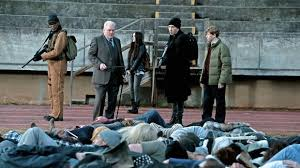
Technology is turning us into autonomous drones. This is becoming all the more true with the passage of time. Modern dependency on social media as the primary source of wide-spread communication is all the evidence we need to back this accusation. It is also the central statement behind Stephen King’s ambitious, but overlong, Scribner published novel from 2006, Cell. In this undergoing, the term “zombie” was replaced with “phoners”. Yet, the overall comparisons to the undead are undeniable. Such is also the cornerstone of the ninety-eight minute film version. This uneven, sporadically engaging but technically inept entity will receive its official theatrical run beginning July 8th, 2016.

This notion is a perfect pulpit for King’s intended commentary. It is also wonderfully form fitting for his trademark, dark sense of humor. Such is also in line with his ability to turn real-life circumstances into otherworldly terror. These were all utilized well in the literary rendition of the saga. But, the cinematic experience, though nowhere near as overblown as many similar efforts of late, is a more tepid, straightforward affair. In turn, it is just as much a sufferer of the ‘hive mind’ its transformed counterparts suffer from. Even these aforementioned antagonists look no different than what we expect a non-living creature to traditionally look like. They are also of the grating ‘fast runner’ genus. Such is especially disappointing. This is made all the more melancholy given the way King went out his way to introduce a rather new, and intriguing, modus of morphing from man into thoughtless monster into the plot of both book and film. Furthermore, the mechanical screech these fiendish beasts elicit is far more annoying than creepy. It would laughable if it weren’t so irritating.

cell pic 5

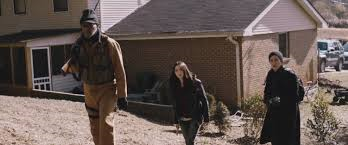
The fiction, King’s first elongated stab at such an apocalyptic exertion as this, primarily concerns Clay Riddell (in a depiction by John Cusack which starts shaky but gets progressively better as it goes along). He is an artist from Maine. Riddell is on his way to Boston as part of a comic book deal. Almost immediately he meets up with a middle-aged gentleman amid the chaos, Tom McCourt (Samuel L. Jackson in a likable, but serviceable, portrayal. Still, it is but another variation of his usual role). They are attempting to survive the threat of “The Pulse”. This is a signal sent over a global cell phone network. It is one which causes individuals using their calling devices to turn into mindless, savage brutes. All the while, Riddell is trying to return to his son, Johnny (a well-done presentation by Ethan Andrew Casto), in New England.

Along the way they, predictably, encounter a varied group. All of these are trying to avoid transformation. Among those is Alice Maxwell (Isabelle Fuhrman), whose role is much smaller here than it was in the foregoing King authored epic of the same name, Charles Ardai (Stacy Keach), Chloe (Alex ter Avest), and the surviving prep school pupil, Jordan (Owen Teague). We also eventually meet Raggedy, or “The Raggedy Man” as he was dubbed in the hardcover, (Joshua Mikel). All of these personalities are intriguing in their own way. They give the piece a finer edge of watchability. Their performances all respectively back up this attribute splendidly.

The motion picture form of Cell, which will disappoint gore hounds with its nearly non-existent and perceivably faux use of the red stuff, wants to hammer us over the head with its now fairly exhausted thesis declaration. In so doing, it greatly constrains the entertainment value. Such merely ebbs and flows throughout the effort. This is also drown out by the all too conventional sub-plot of Riddell’s search for his immediate kin. There is also a general air of soullessness, as well as a blatant disregard to the traits which make audiences care. These are cast out through much of this endeavor. Such King co-penned with Adam Alleca in the most lackadaisical fashion imaginable. Regardless, the quiet, subtle atmosphere maintained through most of King’s 384 page tome is refreshingly reverberated, at least for a vast portion of the duration, in the Tod Williams (2004’s The Door in the Floor, 20010’s Paranormal Activity 2) directed undertaking.

cell pic 4

What also hurts the more recent transition of Cell is Williams’ lack of vision and flare. His behind the lens contribution is mediocre. Williams constructs the scenes, especially those meant to provoke fear, in a mechanical manner. The approach is essentially what you would easily call: “point and shoot”. This is done with little to no build-up or suspense. The style Williams uses here is practically indecipherable from your garden variety undead narrative. Likewise, the overall feel is far too much in line with the plethora of similarly idealized horror opuses that have also been arriving in theaters and Video on Demand in droves. Such is especially observable in the ten years between the release of the text and the photoplay variants of this chronicle.

This overwhelming familiarity is only heightened by cringe-worthy computer generated effects. Both the optical and special aspects in this category, from a collective group of over two dozen people, are equally unappealing. Such is especially evident in the various instances herein showcasing fire. What also mirrors this sensation, and parallel, is the limp characterization. This is most noticeable in the almost too fast paced initial act.

Here we are given only the briefest bits of exposition. This arrives mostly via McCourt. These moments are so rushed, and artificial, that we endure another case of those in a thriller spouting unnecessary backstory. This is while running from one routinely erected threat to the next. Luckily, this construction largely settles down in its last 2/3rds. This gives a chance for the fiction to breathe. In turn, the quality of the picture increases exponentially. The same can be said for the human categorizations as well as the enactments which embody them. During this near hour long stretch, we actually find ourselves caring for these individuals on-screen. Yet, even this component is held back by a commencement that places action above all its other aspects. This competent duration mixes with the breakneck speed of the first half hour. Such creates a general movement of events and an arc that is choppy and bizarrely structured.

cell movie

King and Alleca’s strangely bland and unusually coy screenplay oddly leaves out many of the crucial details which made those in the earliest evokation of Cell so relatable. This is also what made it pivotal to its place and period. It almost seems as if it is deliberately taking out important bits to add a sense of confusion to the proceedings. Perhaps, the screenwriters, who give us dialogue that ranges from semi-potent speeches to merely plot serving quips, were trying to instill a sensibility of what those who dominate the screen are themselves feeling. This is as they jump from one hazard to the next without much of an opportunity to contemplate their deeds. But, the conclusive result is the sensation of King and Alleca only giving us the bare essentials of the account. This is one of those rare modern silver screen occasions when the production could’ve benefited greatly from at least another twenty minutes of explanation added to the product. Such could’ve cleared things up remarkably. The engineers of the script also give us a completely different climax. It is well documented that this is because of the negative reactions to the shoulder shrug that was the last page of the tome. Though this one is satisfying enough, and far less open-ended, it still seems modeled after too much that came before it.

Further hindering this misfire is Michael Simmonds cinematography. Simmonds goes for an almost too dark veneer. Such could easily suit an endeavor such as this. Yet, what we are given is simply too drab and unpleasant to look at. This only makes the variety of flaws at hand all the more difficult to peer around. Marcelo Zarvos’ music is fair, but unmemorable. Jacob Craycroft’s editing is sloppy. This is during the unimpressive and unimaginative sequences meant to provoke excitement. Such is especially noteworthy in the opening scene in an airport in Boston. This has the incredible benefit of a cameo by schlockmeister Lloyd Kaufman. In the bestseller, this was set inside Boston Commons. This drastically alters the most exhilarating, and lengthiest, segment of King’s prose rendition of the tale. Yet, it becomes more proficient, as well as the case with the source material, when the fiction begins to slow down and become more focused. The art and sound department contribute skillfully in their singular regions. Alex McCarroll’s art direction, Kristen McGary’s set decoration and Lorraine Coppin’s costume design are impressive. But, these admirable items cannot hide the fact that we have seen this far too often, and in many superior incantations, prior.

cell 7

Cell, in its original format, was partially dedicated to master of the flesh-eating ghoul, George A. Romero (1968’s Night of the Living Dead, 1978’s Dawn of the Dead and 1985’s Day of the Dead). King even had an uncredited bit as the voice of a Neswreader in Romero’s fifth opus of the similarly equated ilk, Diary of the Dead (2007). Their masterful 1982 anthology, Creepshow, which Romero directed and King penned, and 1993 pairing The Dark Side, where Romero successfully adapted King’s 1989 yarn with a matching moniker, resulted in two instant genre classics. There is an obvious mutual respect between these two terror maestros. It is this motivation which Cell, in both its volume and movie interpretations, appears used as an indirect catalyst.

This is especially accurate when considering the modern day consciousness, eerily reminiscent of Romero, which is injected into the fabric of Cell. In the 2006 take, the power of the imagination combined with this parallel to make the labor a nearly cinematic homage to the seventy-six year old director. In the flick, this article comes across as too much of a forced wink at its core spectators. It seems to imitate and never truly evoke the foundation laid down by Romero. Ultimately, it is the grand promise that came with the premise, the fact that it could’ve been something that could’ve been used in the same exclamatory breath as one of the previously stated cracks by Romero which is most disheartening of all. This makes Cell all the more underwhelming.

But, this is not to say that many of the bricks in said groundwork are not worthy of praise. Yet, Cell, as a whole, could’ve been a monument of an achievement, as well as a subtle letter of respect to Romero. Instead, it is just another building. One that has little more for the eye than all the other edifices on the block. Fellow King admirers and genre addicts may like it well enough to find it an intriguing diversion. But, I cannot imagine that this pairing of King, Cusack and Jackson, who gave us one of the best adaptions of King’s short stories with 2007’s superb 1408, will merit the appreciation of a second look. This is by the standards of anyone who dares travel down its all too acquainted path.

cell 8


“Lilith’s Awakening” – (Movie Review)

By Andrew Buckner
Rating: ***** out of *****.

From the commencing moments of Lilith’s Awakening (2016), the astonishing first fictional full-length film from Brazilian writer and director Monica Demes, an atmosphere of mesmerizing, quiet intensity is immediately evoked. This is heard in the simple, almost mechanical, grinding of a swing. It is one piloted by our enigmatic heroine, Lucy (in a brilliant portrayal by Sophia Woodword). Yet, the din produced is anything but mundane. It comes to our ears like a rhythmic, sinister song. One which is meant to conjure an unholy fiend from his slumber. All of this is initially prefaced by an unnerving yet, grimly poetic shot of the moon veiled in a foggy night sky.

This image, along with this distortion of our common perception, is the perfect set-up. Such is for this startling and singularly unique avant-garde, nightmarish, 80 minute stroke of genius. This largely subtle, psychological horror outing, derived from the gothic style, is a visual and creative marvel. It is one where trepidation is lurking in the multiple layers beneath what we view as well as looming ornately on the surface. Such creates, particularly with the dashes of the old-fashioned mixed in with the contemporary, that increasingly rare terror feature. The one which satisfies on all avenues and demands.

Heavily inspired by Bram Stoker’s immortal novel, Dracula (1897), even down to the names and its use associated with the places found herein, this masterful work tells the tale of the sexually repressed Lucy. Her life appears to be a bland, repetitive cycle. It is one she desperately wishes to escape from. She labors thanklessly for her father, Abe (in a portrayal by Steve Kennevan that is both exceptional and credible). This is at a service station in a small town in Iowa, the state where this gem was recorded, which he owns. Just as worse: her marriage to Jonathan (a terrific depiction by Sam Garles) has long lost its affection. In turn, it has become every bit as routine as the time spent at her place of employment. The solace she finds is when she mentally constructs the spectacle of an ominous female figure. Her name is Lilith (a riveting, unsettling portrayal by Barbara Eugenia). She is a menacing presence found in the woods surrounding her home. After Lucy is taken advantage of by a mechanic she toils alongside, Arthur (an enactment which is endlessly gripping), a sense of wickedness overcomes her. Slowly, she begins to sense Lilith’s presence surrounding and closing in on her. But, is it true or all in her mind?

Demes’ literary and behind the lens capabilities are taunt, terrifying and claustrophobic. She also takes risks aplenty. There are scenes that are dialogue driven. We are amended just as many segments where Demes allows the imaginatively rendered phantasmagorias to speak their volumes without a single word. Such helps make this a magnificent, captivating modus. One which incorporates both the real life and the deep slumber-like qualities visible throughout into the piece. This also assists in our ability to see the world through Lucy’s eyes. Such happens as her grasp on these essentials seem further blended. But, the smartest aspect of this tactic is that it keeps the balance between story movement and invention faultlessly even. It makes for a photoplay that, like the penned product it sprang from, is riveting in structure and execution.

She also ties together these elements with a finale that is fittingly unsettling and illusive. There is a noticable penchant for extended sights, all ravishing displays courtesy of Demes, exhibiting Lucy reflected in mirrors. Such heightens the boldness and ingenuity at hand. This attribute mechanizes spectacularly as one of the numerous low-key nods to vampire mythology strategically placed through the composition. Adding to the creative luster is the instances where the colorful, bright red splashes of blood, so vibrant it is like watching paint being thrown on a canvas, offers a departure from Alfonzo James and Gregor Kresal’s gorgeous black and white cinematography. Such only accumulates the dizzying fascination the endeavor elucidates.

The undertaking is also magnificently structured and paced. Demes gives us characters that are purposefully crafted as a mystery. Yet, we still, incredibly, impress upon ourselves that we know them. It suits the sensation brought forth by this electrifying, perplexing puzzle box of a silver screen affair terrifically.

The endeavor also benefits from chilling music by David Feldman. Andrea Acker’s costume design and Mary V. Sweeney’s art direction is phenomenal. Eden West is fantastic in her turn as Police Officer Morris. Demes’ and Lloyd Wilcox’s editing only further complements the proficient, macabre allure of all we encounter. David Feldman and Francois Wolf’s sound department contribution is top-notch. The use of such is one of the defining components of this surreal tour de force’s lingering technical nature.

It is easy to see how Deme’s impeccable, abstract talents received the attention of the Missoula, Montana maestro, David Lynch. As a matter of fact, the Ganesha Filmes and Outsiders Arts production often calls to mind Lynch’s debut cinematic opus, Eraserhead (1977). This is evident in the individuality and attention-garnering genius that is finely hammered into every frame. It is also seen in the general approach. Most readily, how it mixes the commonplace with the horrifying and hallucinogenic. There are also touches of Ingmar Bergman, Mario Bava and early George Romero woven into the proceedings. Yet, this creation is distinctly its own entity

Demes is astonishing. She has displayed more talent in one picture than countless do in their entire catalogue. What is just as startling is that she explores much of the same themes explored in Stoker’s aforementioned novel, especially its alternately inhibited and liberated views on sensuality, in a method that is always innovative and exciting. Likewise, there is never a moment that feels familiar or worn. Instead, we are given a wholly ground-breaking journey. It is one which is just the breath of fresh air cinephiles desperately need. Demes has crafted a stunning success. It is a striking, hypnotic effort. One which will assuredly grant her a legion of fans who appreciate movies as a singularly expressive experience. This is one of the best pictures I’ve seen all year. I highly recommend you seek it out.

The official site for Lilith’s Awakening is here.

The Facebook page for the film can be found here.

You can get tickets for the premiere of Lilith’s Awakening at the Dances With Films festival in Los Angeles on June 11th, 2016 here.

“Hail, Caeser!” – (Movie Review)

hail caeser pic 1

By Andrew Buckner

Rating: ***1/2 out of *****.

1984’s terrific Blood Simple established Joel and Ethan Coen as a magnetic cinematic force. Since than there has been certain high-brow expectations for the writing and directing team. Over the course of nineteen feature and thirty-two years, the pair has come with an unspoken promise of witty, rhythmic banter and top-notch storytelling with each upcoming release. Their comedies, such as 1998’s The Big Lebowski and 2000’s brilliant O’ Brother, Where Art Thou? also brought forth the promise of more minimized, intelligent gags. Such was a welcome breath of air for those of us who are wearied by Hollywood’s penchant for grossly overblown, mindless physical satire.

There more seriously toned pieces, such as 2007’s Best Picture winning adaptation of Cormac McCarthy’s No Country for Old Men and 2013’s quietly masterful Inside Llewyn Davis, are among some of the most memorable photoplays of the past decade. As with any such creative force there are a few minor, often disappointing endeavors. For instance, the comic Tom Hanks starring vehicle from 2004, The Ladykillers. But, these wrong-headed moves are a rarity for them. Such is a phrase I had to keep repeating to myself. This was while sitting through the well-meaning, but fairly underwhelming, Hail, Caeser!

The story concerns an individual named Eddie Mannox (in a role by Josh Brolin that showcases his rugged charm as well as a layered and well-executed enactment). He toils at Capitol Pictures. This is a fictional filmmaking company which calls to mind the MGM of the 1930’s- 50’s. As the flick opens we watch with vague intrigue as he begins another chaotic day. His job is, among other things, to clean up the public image of Capitol Pictures’ stars. Such allows many of the brighter moments involving twin reporters, Thora and Thessaly Thacker (both charmingly played by Tilda Swinton). To make matters more stressful: Mannox is currently overseeing the production of the company’s biggest current release.

hail caeser pic 2

This lavish, mega budget biblical epic, obviously inspired by the decade appropriate labors of Cecil B. DeMille, shares the same title of the movie itself. Most majestic of all is that the silver screen opus showcases the talents of one of their brightest stars: Baird Whitlock (in a depiction by George Clooney which is as likable and compulsively watchable as you’d expect from him). The endeavor seems geared for success. This is until a group of political minded writers, which exist to provide orientation points to the Communist scare and Hollywood blacklist that took place in the United States in the circa 1950’s period this endeavor is set, kidnap Whitlock. This is where Mannox is called in. He must keep the information of Whitlock’s abduction from leaking into the papers.

All of this should’ve indicated a knockout. The premise had the promise of another impeccably honed, multi-perspective account. This parallels what we’ve come to associate with the Coens. The actors and actresses within certainly have proven themselves capable. Their portrayals herein only re-inforce this belief. For example, Ralph Fiennes is commanding as always as Laurence Laurentz. Scarlett Johansson is great as DeeAnna Moran. Frances McDormand as C.C. Calhoun, Channing Tatum as Burt Gurney, Alden Ehrenreich as Hobie Doyle and Jonah Hill in his brief turn as Joseph Silverman all add additional layers of dimension. They increase the differing personalities which dominate this varied cast.

But, the opus itself does what I once thought was unthinkable for a Coen Brothers picture: it intermittently lumbers. This is especially true in the first forty minutes. Miraculously, it finds its footing and captures, for the most part, the unique Coen essence that we wished for all along. In this time frame, even the dialogue lacks the literate jocularity of their earlier, similarly light affairs. It follows a form much in their tradition. Nevertheless, it is too simple and straight-forward. It’s not to say it is without its entertaining ticks. Regardless, most of the first half is evidently lacking.

hail caeser pic 3

There are a few mildly successful jokes sprinkled throughout this rough patch. However, the large sum of the guffaws distributed here are artificial and painfully desperate. Most of it is forced slapstick. This can be seen as an homage itself to the type of humor associated with 1950’s Hollywood. Still, it doesn’t gel. It doesn’t seem in line with the far more successful guffaws. These are those that playfully poke at the style of antiquated cinema in the last hour. They range from lavish musicals to conventional western musicals. Even splashy singing mermaid ventures get thrown into the mix. This is where Johansson’s character comes into play.

Regardless, Joel and Ethan Coen save their smartest morsels for the sequences where we watch these wide-ranging genre entries themselves alongside the audience on-screen. The songs which often accompany them are just as entertaining. This is especially true of the number attached to the rousing five and a half minute tap dance segment in The Song and Dance Man. It is just as true of the folksy ballad heard in Lazy Ol’ Moon. The narration which documents Mannox’s actions throughout are constantly smirk-inducing. There are even crafty references to real-life productions that are much at home with these fictional account shrewdly blended into the proceedings. The Gene Kelly starring and Vincent Minelli directed vehicle, An American in Paris (1951), are among them. All of these components summon the spirit of 50’s cinema tremendously well.

The pace is relatedly much in line with what you’d expect from prior Coen undertakings. Their writing is smart. Though it is ultimately a shadow of their prior penned endeavors. The direction, much like the editing, the two offer is elegant. It is on par with previous efforts. Yet, it never becomes uniquely striking. This hinders the chronicle greatly.

hail caeser 4

Roger Deakins’ cinematography is undoubtedly a bright spot. It is luminous, cheery and eye-capturing. Besides, it fits the spirit of the flick beautifully. Carter Burwell’s music is also splendid and appropriate. It helps frame some of the more triumphant humorous flashes. Mary Zophres’ costume design, Nancy Haigh’s set decoration and Cara Brower and Dawn Swiderski’s art direction are all wonderfully fashioned. The make-up, special effects and sound department carry on the spectacular quality of these technical attributes. These angles all add to the visual appeal outstandingly.

Hail, Caeser! clocks in at one hundred and six minutes. For nearly 2/3 of that length it succeeds. It has several meditative and brilliantly artistic moments to heighten its character-oriented focus. These are all Coen trademarks. They satisfy well enough. But, the section beforehand sets the article immediately off on the wrong foot. It feels like it could use better timing. Likewise, it could’ve benefitted from a round of tightening and another re-write or two. Than it might have been worthy of what comes after it. Maybe than we could’ve had a cohesively solid addition to the Coen catalogue.

Perhaps my own expectations were so high that I need to see it a second time to see it for what it is. Either way, the Coen’s latest often felt uneven. Also, it left me not entirely fulfilled. Sadly, this one of the duo’s lesser exertions. Which, amusingly enough, is just as impressive as many others’ greatest works. Simply put: it’s worth a watch. This is as long as you don’t expect another Coen classic.

hail caeser 5

“Touch Gloves” – (Movie Review)

touch gloves pic 1

By Andrew Buckner
Rating: ***** out of *****.

Director Felipe Jorge and Haymaker Films’ boxing documentary, Touch Gloves, held me in its captivating grasp for every second of its brief, but effective, seventy-four minute runtime. Recorded from May 2015 until May 2016, the work is intimate yet, wide-ranging and ambitious. All of this is much in line with the tradition of the best documentary features. Yet, amid the loss and triumph, personal stories, closed door interviews, training and matches that we encounter throughout: the passion which resonates from all those involved on-screen is visible. It is also undoubtedly infectious. Moreover, it is ultimately inspiring. This masterful, insightful composition absorbs us with the real-life pursuit of dreams radiating through it all. In the end, it lifts our spirits. This is in a way only the most tremendous movies can do. Furthermore, it satisfies our soul. The images evoked herein pushes us to be the individual we personally would like to be. Such makes this mandatory viewing. This is for, not only athletes, but dreamers of all ages.

This no budget production concerns a gym which stays open via fundraisers and donations. It is in Jorge’s Massachusetts hometown. The place goes by the name of Haverhill Downtown Boxing. The piece follows the man who runs the building, Ray Hebert. The endeavor also introduces us to a group of charismatic sports related hopefuls. They are a mix of both male and female participants. These wide-eyed, optimistic locals Herbert helps guide to greatness in the ring. One of those folks is as young as eleven years old. His name is Andrew. The enactment also focuses on the personal plights of other, comparatively older talents. These are Eddie Rozon, Brendon Simoes and Duncan McNeil. They all aspire to fight in the statewide Golden Gloves tournament.

The segments dedicated to this competitive event offer some of the most breathtaking instances herein. They illustrate numerous semi-climactic moments of rousing emotional intensity. Such occurs as we watch those we feel as if we were taught alongside. This is courtesy of Jorge’s unflinching cinematic vision. The undertaking becomes all the more illuminating thanks to his competent directorial hand. Chris Esper, who shot supplemental footage for a fight that took place on September 18th of 2015, also offers a terrific contribution in this department. Their respective styles complement one another seamlessly. Together they heighten the impact of the exertion spectacularly.

Jorge, who acts as a one man crew here, utilizes editing which is beautifully executed. He incorporates a pace for the material that is natural and quick. Still, it is never rushed. Best of all: it keeps our interest sharply piqued through the duration. Additionally, there is not a single scene which can be seen as excessive or unnecessary. Every frame directly enhances the narrative as well. This can also be said of the various perspectives sewn into its fabric.

touch gloves pic 3

He also provides cinematography that is darkly gorgeous. It is rugged and absolutely perfect for the material. This quality stunningly calls to mind the gleam of similar classics such as Rocky(1976). In many ways it is much on par with the aforementioned effort. This is in that it is also destined to be a classic. One which audiences will turn to for motivation many years into the future.

The music, delivered by http://www.freemusic.org, is every bit as empowering as the sights which accompany them. An end credits section which uses a personal favorite track of mine, “Momma Said Knock You Out” from LL Cool J’s same titled 1990 album, is especially smirk-inducing. It is an excellent bookend to the instantly fascinating commencing sequence. This phenomenal bit pans mesmerizingly through a collection of articles. These delve into the history of Haverhill Downtown Boxing.

Touch Gloves is one of the most exhilarating, ardent and credible, entries of its type I have seen. It is a sincere portrait of the human spirit. Additionally, it concerns one of the many heroes who habitually guides those the story revolves around to unveil their most fulfilling path. The enterprise as a whole is traditionally formalized. Yet, the endurance of the approach is more than fitting. It goes hand-in-hand with the frequent issues and themes derived from the subject matter. This is done terrifically well. Such is one of the many longstanding attributes mechanizing within this rousing attempt. These components make it all too easy to see the picture playing as a staple on channels like ESPN or one of its television alternatives. This is also undeniable proof that Jorge has crafted an exceptional labor of love. It is one that spectators will be more than happy to pass down from generation to generation.

touch gloves event poster pic 4

“Regression” – (Movie Review)


regression pic 1

By Andrew Buckner
Rating: ***1/2 out of *****.

Ethan Hawke and Emma Watson are stunning in the meticulously paced psychological thriller from 2015, Regression. Concerning a detective, Bruce Kenner (Hawke), whose investigation into the rape of a young lady, Angela Gray (Watson), begins to unravel proof of a cult of satanists, the R- rated feature is moody, subtle and effectively downplayed. Writer and director Alejandro Amenabar offers a cerebral, character-oriented screenplay. It is one that is consistently engaging. Likewise, it is adorned in credible characterization and dialogue. This is until the flat, underwhelming finale. From the last act forward, much of the anticipation of greatness beautifully built-up beforehand is quickly deflated.

Amenabar, whose last horror venture was 2001’s The Others, offers taut, incredible direction. It is full of mesmerizing and striking imagery. Moreover, Amenabar builds suspense slowly and with an organic realism. This gives the one hundred and six minute effort a sophisticated, old-fashioned sensibility.

Such an attribute is so strong that even the familiarity of the sparsely utilized terror clichés assembled throughout feel spine-tingly intense and new. The dream-like sequences and its faux variants, another commonplace trope in fear cinema, are handled disturbingly well. These elements, as well as much of the tone of Amenabar’s latest, call to mind Roman Polanski’s 1968 masterpiece, Rosemary’s Baby. Such is most obvious in their proficient design.

The piece, released through The Weinstein Company, is further complimented by gorgeously gothic atmosphere by Daniel Aranyo. Carolina Martinez Urbina’s editing, Elinor Rose Galbraith’s art direction and Roque Banos’ music are all equally impressive. The special and visual effects are wisely minimalistic, as is the endeavor as a whole. To its credit, these elements are also terrifically done. Moreover, the sound and make-up department, as well as Sonia Grande’s costume design and Friday Myer’s set decoration, are spectacular.

With The Spierig Brothers’ Daybreak from 2009, Scott Derickson’s Sinister from 2012 and James DeMonaco’s The Purge from 2013, Hawke is fashioning himself as a trustworthy name for horror. The same can be said for Amenabar and high-quality dread laced genre offerings. Though the concluding ‘twist’ is as obvious here as it was in The Others, and the he turns to the well of the tried and true a bit too often, his talent outshines these minor shortcomings. The result is a top-notch exertion that is certainly worth a watch. This is true for both the seasoned terror vet as well as those of us who enjoy well-made, haunting cinema of any genre. Especially one, such as this, which is refreshingly mature in both attitude and construction.

regression pic 2

“Zoombies” – (Movie Review)

zoombies pic 1

By Andrew Buckner

Rating: ½ star out of *****.

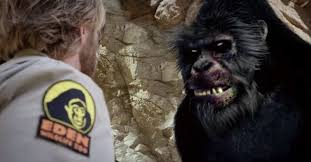
Zoombies, from director Glenn R. Miller and screenwriter Scotty Mullen, desperately wants to link itself to the ground-breaking Jurassic Park series. The most obvious of this is the tagline, seen on the fairly intriguing cover art, which screams: “It’s Jurassic World, of the Dead”. At one point, a character even shrieks: “It’s a zoo, not Jurassic Park.” In a later bit, two giraffes rip a man apart in the same manner a pair of Tyrannosaurus Rexes do to a human entre in 1997’s The Lost World: Jurassic Park. Even the logos the employees adorn on their shoulder are eerily similar to the JP design. Yet, Miller and Mullen seem to forget what made the original film in that series so legendary.

Miller and Mullen tell the story of a safari park dubbed Eden. As a gathering of patrons assemble at the area, so does a virus. It is one which turns the animals of the once tranquil area into the undead. From herein, as with all other entries of the ilk, there is little more narrative. What account remains, predictably, concerns the individuals involved in this catastrophe trying to band together and survive the violent onslaught.

Stephen Spielberg brilliantly spent the first half of Jurassic Park (1993) believably developing his intelligent, heroic and uniquely quirky entities. This is much as Michael Chrichton did with his same named novel from 1990. All the while, Spielberg spent the time gradually building suspense. There were instances aplenty of sheer awe amid the theoretical discourse the beloved individuals on screen engaged in. It was these gentle, meditative sections that made Jurassic Park so much more than ‘just another monster movie’. Moreover, when the second half kicked in, Spielberg delivered one spectacular, now classic sequence of nail-biting action after another. All of these previously addressed elements are noticeably missing from The Asylum’s latest disaster.

zoombies pic 2

Instead of the charismatic, paleontological Indiana Jones that was Dr. Alan Grant (Sam Neill), the quiet strength of Dr. Ellie Sattler (Laura Dern) in Jurassic Park or even Owen, Chris Pratt’s unique interpretation of much of Grant’s personality traits in Jurassic World, we are given a half-hearted, annoying cluster of one-dimensional archetypes. None of whom have anything that is stimulating in the least to add to its endless reams of chatter. There is nothing new or defining about any of these on-screen personalities. They all follow The Asylum’s routine, garden variety representations and general arc. This is done blindly and without wavering from them. Miller and Mullen aren’t out to make us care for the humans or the wildlife that is chasing them. This is, yet, another undeniable differentiation between Jurassic Park and this sad imitation.

The pace is choppy. It isn’t anywhere near as meticulously crafted as Spielberg’s masterwork either. In Miller’s exertion, we are no more than five minutes into the feature before the beasts begin their attack. It is no more than fifteen-minutes later when ‘all hell is breaking loose’. This breakneck progression wouldn’t be so difficult to look past if Miller and Mullen used the sixty-two minutes that was left of its eighty-seven minute runtime to generate intensity and interest. At the least they could provide us a reason to care or even try to ‘wow’ us with an original idea. As it is, the most creative turn of events occurs in the aviary near the finale, when Miller and Mullen turn to Ridley Scott’s Alien (1979) for their inspiration. Instead, the whole composition, as well as the team behind it, is in a rush to go nowhere. Such is evident from the poorly executed two-minute opening segment. This attempts to be a clever wink of an advertisement for Eden.

Yet, the most evident alteration between Zoombies and the Jurassic Park series is in the quality of the illusion created by the graphics. Where Jurassic Park remains arguably the single most jaw-dropping display of such a technical aspect put on screen, Zoombies gives us cringe-worthy, cheaply rendered computer generated imagery. It is the type that is blatantly cartoonish and laughable. What’s worse: the re-animated giraffes, monkeys, apes, birds, koalas and various other re-animated figments of nature involved in this absurd, derivative yarn are rarely seen. Given the shoddy quality of Denise M. Chavez’s special and Glenn Campbell led visual effects. Perhaps, this is for the best.

But, the most inescapable crime for a cinematic venture that is trying to be merely a guilty pleasure, a B- style romp is that it cannot even be seen as mindless, mild entertainment. Since the rampant beasts are so rarely viewed, and the people who dominate the screen and their shallow dialogues are ingratiating, we do nothing but wait for most of the picture. We wait for something to happen. We wait for it to end. We wait for some redeeming value. Even the rare emotive plot points, especially one involving a young girl named Thea (La La Nestor) and a gorilla she adores named Kifo (Ivan Djurovic), are hollow and obvious.

The performers are from adequate to grossly underwhelming. From Ione Butler as Lizzy, Andrew Asper as Gage, to Kim Nielsen as Dr. Ellen Rogers this attribute is just as uninspired as the rest of the affair. To its credit, Christopher Cano’s music is thrilling. It summons the feel of an old-fashioned adventure well. Bryan Kross’ cinematography is solid, despite its low budget trappings. James Kondelik’s editing is outstanding. Erica D. Schwartz’s costume design and Daria Castellanos’ art direction is admirable. The same can be said for the sound and make-up department. Yet, it cannot overcome the sense of exhaustion that hangs over the proceedings.

Miller’s production is a failure down to its concluding shot. Such appears copied from innumerable ‘last jump’ scares before it. Even this is treated as an afterthought. It’s an impression left in the way it shrugs its shoulders at all the mechanisms which make a moving picture a standout, a triumph or, even, slightly stimulating. This is especially sad given the unique potential the tale could’ve contained. Instead, we are given a forgettable trek through a photographic wasteland. It is one so pointless that even its brightest moment is constructed from a vastly superior undertaking. Even Jurassic Park III (2001) was better than this.

zoombies pic 3

“Darling”- (Movie Review)

darling movie pic 1

By Andrew Buckner

Rating: **** out of *****.

Darling, the fourth motion picture from writer and director Mickey Keating, draws heavy inspiration from Roman Polanski’s 1965 masterpiece Repulsion. It also aligns itself with David Lynch’s truly unnerving Erasherhead from 1977, Jack Clayton’s The Innocents from 1961 and a number of pictures by Alfred Hitchcock. The most noticeable of these is Hitchcock’s timeless adaptation of Robert Bloch’s novel from 1960, Psycho. This is especially true in the last half hour of the project, when a certain household item involved in the previously stated magnum opus’ most popular sequence is involved and returned to constantly. The symmetry is also amplified given the context in which it is cleverly used. Keating’s labor of fear conjuring also calls to mind Edmund E. Mirhige’s audacious and disturbing 1990 effort, Begotten. Such is evident in its meticulous, slowly grinding pace. Such is also noteworthy in its ability to unnerve through its coldly projected sights. This is as well as its emphasis on merciless atmosphere over gore. A warning within the first minute of the attempt about the “strobe lights and hallucinatory images”, which are excessively and exhaustingly utilized in the concluding act, is reminiscent of an attention-garnering trick from the maestro of the low-budget gimmick, William Castle. This all adds to the claustrophobic fun on display, for cinephiles particularly, immeasurably.

The work overall is proof that beautifully executed style, though often interrupted by its obvious imitation, is enough to carry a tale. This is even given one such as this which is as sparse on plot as it is effects, locations and characters. The crisp, striking and gorgeous black and white cinematography by Mac Fisken highlights this parallel all the more. This is obviously an exercise in approach, restraint and minimalism, made apparent in its wisely taut seventy-six minute runtime, as much as it is a love letter to the aforementioned architects of the silver screen. In that sense, Keating’s undertaking mechanizes spectacularly well. Yet, this does little to detract from the reality that this is simply a handsomely established retread of the same essential fiction, and much the comparable chain of events, that we have seen in far too many horror enterprises beforehand. The mileage each viewer will get from this particular offering is determinate on how deeply their admiration for the classic model, and the singular panache associated with it, is above all other items of moviemaking. This is as exact of a patron’s ability to appreciate such attributes with the sacrifice of any genuine bits or originality. Personally, this resulted in a largely solid endeavor. Darling is a good silver screen venture overall. This is even if it just misses the great benchmark it is striving admirably for. The piece left me exhilarated through most of my sit-down with it. Yet, ultimately, it left me feeling hollow and, somehow, not fully satisfied.

Keating’s production concerns the young, lonely title woman (Ashley Lauren Carter in a mesmerizing performance that mirrors Catherine Deneuve in Repulsion eerily well). She is given the task of being left to watch over a home. Much in the tradition of the set-up of uncountable dread inducing exertions from the past, this is without being fully aware of what has occurred within its walls. Slowly, she begins to question herself and her surroundings as unnatural events, that may be a product of her own psyche, begin to taunt her. This is another example of a photoplay asking its spectators the question: Is it the house or the girl herself who is haunted?

darling picture 2

The configuration toys with the answer to these question brilliantly. It does so by giving us long shots of isolated corridors, also in the archetypical custom. This is punctuated with ominous doors, some of which open by themselves as if welcoming her in, that could contain any manner of unspeakable things. There are also further age tested, enduring elements such as the winding staircase, hearing voices unexpectedly and the occasional ringing of a phone, which also maintain a fittingly retro veneer in this composition, to shock Darling and her audience. Yet, none of this is done artificially. This never elucidates a cheap jump, as it would in a lesser picture.

The first fifteen minutes, when the effort plays up these enduring ghost chronicle facets to boundless consequence, are when the flick is at its best. It is also when it is at its most promising. There is also much interest garnered afterward when Darling becomes obsessed with an individual named The Man (an enactment by Bryan Morvant that is as sophisticated and well-done as the article itself). This takes up much of the second act. Though these particular physiognomies are rehashed from about as large a number of sources as the bits of spectral narrative announced previously, it signals a shift in the creative temperament; a curtain being pulled on the destination where we, the onlookers, are being led.

Such a manipulative turn changes the direction of the Glass Eye Pix release several times throughout the picture’s six ‘chapters’. It is riveting; an honest display of storytelling craftsmanship. It is one that makes the familiar sections, so prevalent herein, easier to overlook. Alas, it assures us of much more than the affair actually delivers. The conclusive destination of the piece, though as tremendously put together as the rest of the endeavor, is just as acquainted as many of its ingredients. Such exposes these alterations in the movement of the arc of the yarn as window dressing. That these high-quality details were meant merely as another diversion from how often this account has been told before is disheartening to say the least.

But, what a terrific job it does of distracting us from the obvious. This is courtesy of the proficient technical angles all around. Sean Young’s brief portrayal of Madame is excellent. Al-Nisa Petty is remarkable as Miss Hill. Larry Fessenden, as Officer Maneretti, and John Speradakos, as Officer Maneretti, also do well with their respective depictions. The lighting is terrific. This quality assists in evoking the illusion of being immersed in a new variation of unsettling exertions from the past abundantly. Giona Ostinelli’s music, often reminiscent of a score by Hitchcock’s Psycho composer Bernard Herman, fits the old-school impression of the proceedings impeccably. Valerie Krulfiefer’s editing is just as impressive. Pete Gerner, Flynn Marie Pyykkonen and Brian Spear’s make-up is pleasing. Contributions from the sound department, by Sean Duffy and M. Parker Kozak, give off the sensation that we are watching a classic from the 40’s- early 60’s. This is issued with jaw-dropping accuracy. Spears’ special and Sydney Clara Bafman’s optical effects are ominous and credible. The upshot is certainly the amazing, obsolescent replica Keating was going for.

What is most welcome is the subtlety. In an age where terror seems defined by how much they show, Keating has proven with Darling, as well as his prior effort, Pod (2015), that scares are best delivered when much of what is causing them is left in the shadows. The imagination is the most frightening place of all. Keating knows this. He uses it to tremendous influence. The fact that it is mostly a one-woman show, with a large weight of the quality of the endeavor based on Carter’s ability to transform into our central personality, shows signs of courage and confidence. These two words can be applied to much of Darling. This is so much so that when Keating has shown us all he has for us to see and the drapes are pulled on the well-kept mystery at large, that we believe we should be blown away, frenziedly applauding the film. But, in the end, Keating is a bit too reliant on the proven, and a plot could most politely be described as ‘bare bones’, for it to be the tour de force he obviously yearns for it to become. Instead, we admire the parts more than the sum. Yet, the whole is far superior to the bulk of the dime a dozen genre entries which flood theatres and streaming services nowadays. It is sure to please fans of avant-garde trepidation. Its audience are those who rightly applauded The Witch from earlier this year. If you were among those who were left scratching their heads over the praise for the aforementioned feature, this is not for you. For all others, this comes highly recommended.

mickey keating darling 4

“Where To Invade Next” – (Movie Review)

where to invade next 1

By Andrew Buckner
Rating: ***** out of *****.

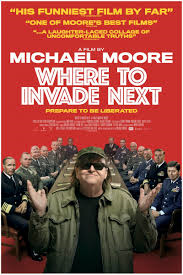
After a six year silence, the director whose last film was 2009’s Capitalism: A Love Story, Michael Moore,  has proven he is as subversive, hilarious and entertaining as ever. This is with his latest feature, Where to Invade Next. The one hundred and twenty minute silver screen affair, released on December 23rd of 2015 through Dog Eat Dog and IMG Films, can be seen as a grand expansion on the themes present in his previous works. Our broken health care system, education and woman’s rights get explored magnificently and illuminatingly. Additionally, he focuses a great amount of the runtime on international lifestyles. Despite this, Moore almost ceaselessly maintains an unexpectedly upbeat, often poignant atmosphere.

Such is established with special emphasis on how other countries regard their fellow neighbors. This is both in and out of the work place. A special prominence is put on this fact as designated by their employers. There is also a stirring, and undoubtedly eye-unveiling, focus on the prison complex. Primarily, its treatment of the inmates. An extended segment where Moore visits both a minimum and maximum security reformatory in Norway is especially fascinating. Yet, he focuses just as much on the mutual love and respect the many countries he visits showcase to one another. This is illuminated as well as the alterations America needs. They make a riveting assessment. Such is all the more undeniable when layered together in the manner Moore does here.

One of the most recurring themes throughout is the age old principal of being a good neighbor. What is just as prevalent is the message, delivered by one German cop states when discussing his attitude towards his fellow citizens, “Human dignity above all.” That is certainly something America could benefit greatly, and immediately, from. This is if such a suggestion was applied more often to its residents’ demeanor. Such is just as true of their routine activities.

The movie focuses in on Moore lightheartedly ‘occupying’ other nations through interrogation. He encounters students, higher-ups, workers and an assortment of other differing personalities throughout this cinematic trip around the world. In so doing, he attempts to find out what ideas assist other principalities in getting superior results in the areas America lags behind in. Every time he finds a potential solution to our republic’s problems, he plants an American flag at the scene. Hence forth, he promises to steal the notion and bring it back to his homeland.

It’s a brilliant concept. One that mechanizes as a parody of America’s ability to take the philosophies of others and pass them off as their own. It is also an absorbing international glimpse into how others subsist. These humorous and enlightening elements, delicately woven throughout, are a perfect pulpit. It is one custom-fitted for the equal doses comedic and sobering sensibilities equated with Moore’s often imitated, trademark style.

Also true to form, the piece is briskly and expertly paced. For the most part, each issue is given well-divided intervals. Such a component is smartly utilized as to not weigh down the progression of the narrative. Because of this approach, there is no excess here. In terms of the previously stated aspect, this is especially true.

This opus begins with a perfect, immediately tone-setting introductory segment. In a sequence which plays as if it was taken directly from Moore’s own dreams, American officials summon Moore to find an answer to their states’ problems. Such is followed-up, just as smartly, with a commencing credits sequence. Moore than flashes many of these issues via news report. We are no more than five minutes into the motion picture when Moore begins his global ‘invasion’ of Italy. Yet, the breakneck movement of these early sections certainly do not undermine Moore’s stance being cemented and made distinctly evident. It also doesn’t undermine the stalwart nature of what he is showing us. These early glimpses are harrowing, and often horrific. Moore’s position towards American tribulations is clearly and evocatively sent.

This is another illuminating instance, another genius decision on Moore’s behalf. Such is because the scenes of police brutality and bloodshed which flash on-screen before Moore’s worldwide travel begins instantly give us culture shock. What follows after the grim, cringe-inducing actions of the acknowledgements is almost continuously peaceful and serene. After what graces our senses beforehand, this is a welcome atmosphere that is largely elucidated throughout. That, in itself, is one of the many successful ingredoents herein. Another is the continued range of emotion buried just beneath the surface of this boldly ambitious  Moore has undoubtedly crafted another incredible addition to his celluloid catalogue.

Also, keeping to the tradition of Moore’s previous ventures: the quiet, smaller moments are just as memorable and operative as the larger, more punctuative ones. For example, there is a sequence where a young French girl is given a sip of Coca-Cola at a school lunch table. Almost immediately she begins to fidget and shake. This is just as potent as the finale. Here, Moore reminisces with a friend from his home state of Michigan about taking down a wall in Berlin. A discussion with Krista Kiuru, the Finnish Minister of Education, and Tim Walker, a teacher who is also a representative of Finland, is just as mesmerizing. Yet, there are occasional bits, such as an instant where Moore tours a factory in Germany to see the workers relaxing in a room and merrily talking, which appears too convenient. It as if this section was established simply to help illustrate Moore’s point concerning the vastly superior treatment of laborers in realms outside of America. Mercifully, such intrusions are few.

What is just as phenomenal is that there are no repeated ideas here reintroduced to simply fill the runtime. Instead, Moore keeps the story fresh. This is with new information, thoughts and suggestions billowing from every new scene and location. Despite this, the composition never seems rushed. Furthermore, the whole never appears to be disrespecting the many personal tales and theories at hand. This is respectfully issued by giving the many personalities we encounter their due chance to make their statement and tell their tale.

There is a leisure to the narrative that is meditative but, never overwrought. This is perfect for the tourist-like aspect of the proceedings. Such is as much the courtesy of Pablo Proenze, Todd Woody Richman and Tyler H. Walk’s phenomenal editing. This is also visible in Moore’s jovial, ever-likable presence. Such is also true of his style as both interviewer and documentarian.

Technically, the rest of the project is just as striking. Rick Rowley and Jayme Roy’s cinematography is lush and gorgeous to the eye. Walter Thomson’s still photography is superb. The sound department, a collective contribution from thirteen individuals, is crisp and skillful. Likewise, Dan Evans Farkas and Heather Kreamer’s musical endowment is outstanding. But, the pinnacle of all these details is Moore’s exceptional direction. It is as commanding, welcome and attention-garnering as always.

Since it is practically impossible to review an undertaking by Michael Moore without the interference of politics, I admit that in the distance between Moore’s last feature the subject has lost its personal appeal. Perhaps the notion of difference making commonly associated with this often controversial theme is not a result I, a working class American, find plausible anymore. It could be an outcome of being weathered by age and cynicism. More than likely is that it is the product of bearing witness to one self-serving failure after another in the governmental sphere for the entirety of my adulthood. This sentiment endures in me regardless of the party associated to the individual in office. So it was out of admiration for Moore’s prior accomplishments, and not the belief that it would be able to hear concepts which America would ever dare mix into their commonplace existence, that I approached his latest offering.

The alternating doses of rage and sadness for the state of our country were still undeniably present while viewing his latest affair. It was felt as much with Where To Invade Next as it was after I initially saw 2002’s Bowling For Columbine in a college English class. These sensations also lingered and brimmed within me as much as it did after coming out of a screening of 2004’s Fahrenehit 9/11 and 2007’s Sicko during their respective theatrical runs. Yet, I didn’t initially feel the sense of empowerment that usually erupted within me during a Moore production.

That was until a pivotal, underplayed bit of information was dropped in the dialogue of the second half. Soon after this was unveiled it became a late thesis statement of the effort. Upon a follow-up sit through the movie proved to be every bit in line with the liberated impression equated to his prior on-screen journeys. In the end, this helped me realize how necessary engagements like these are. It convinced me again that it isn’t too late to re-fashion the complications America faces. This is mandatory so that we can live in a region where the reverie of tranquility and admiration for one another is as prominent here as it is in this meticulous and timely labor’s depiction of other areas.

Where To Invade Next gives us hope. Not only is that a start to a better society, it is the first necessary step to seeing this vision Moore has shown us take root. This reason alone makes Moore’s latest masterpiece a compulsively watchable, mandatory experience.

The exertion can also be defined by a casually addressed sequence where Moore declares, “My mission is to pick the flowers, not the weeds.” Ultimately, the purpose here is to communicate to all of of us, Americans especially, that we all can use a little bit more of that in our lives. Moore illustrates and drives home this proposition beautifully. The proof radiates through every shining frame of this galvanizing tour de force.

where to invade next 2