“Here Lies Joe”- (Short Film Review)

here lies poster

By Andrew Buckner

Rating: ***** out of *****

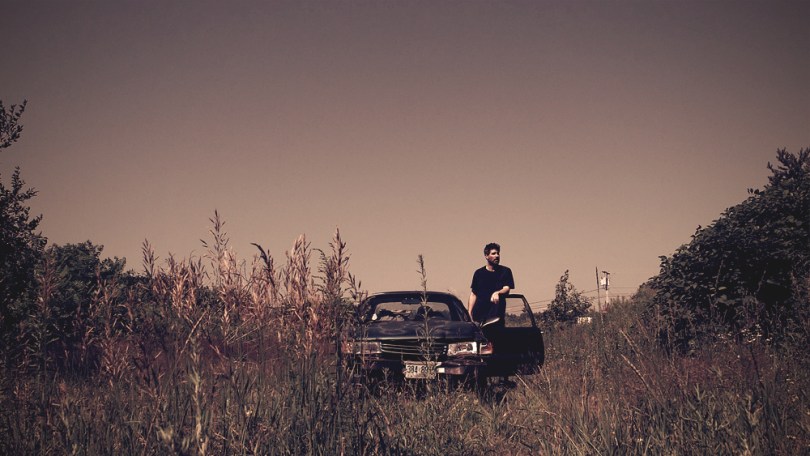
From the opening moments of director Mark Battle and Sweven Films’ hauntingly beautiful twenty-three minute short, “Here Lies Joe”, a riveting tonal balance of melancholy, peppered with effective humor and an ebbing sense of optimism, is brilliantly established. We watch our lead, whose name is referenced in the title of the piece (rivetingly played by Dean Temple in a performance that is always watchable, absolutely perfect for the material and showcases his incredible abilities by speaking volumes through frequently sorrowful facial gestures) taping up the windows of his beat-up car, full of books and family photographs, in an attempt at ending his life. This sequence lasts but a minute. Regardless, it immediately pulls us into Joe’s world. This early bit is so triumphant at doing so that we instantly care for and desperately want to learn more about this lonely soul.

This segment is just the first of many such smart moves on Battle’s behalf. Such decisions result in a towering achievement. It is one which reaches its sentimental zeniths through the lens of credibility and realism. Such is presented through its continued emphasis on sheer subtlety. This occurs in both characterization and in the way the entire endeavor is crafted. These factors, thanks to the gorgeous and perfectly suited for the overall atmosphere attributes of Battle’s superb cinematography, ravishingly compliment the atmosphere and the narrative impeccably well.

The story, dazzlingly constructed by both Pamela Conway and Battle, concerns Joe meeting an unpredictable young woman known as ‘Z’ (in a portrayal by Andi Morrow that is every bit as intriguing, well-honed and fantastic as Temple’s) at a Suicide Anonymous meeting. This is one headed by Bill (Timothy J. Cox in another of the many magnificent enactments herein). He is a self-proclaimed “suicide addict”. In this same sequence we also meet several other immediately gripping personalities. For instance, Joe is confronted by Carol (a presentation by Mary Hronicek that is both exceptional and charismatic) who believes her fish is clinically depressed. Even with the brief screen time Hronicek is given she makes Carol just as absorbing as the forerunners of the account. It proves the high-caliber of both the writing and the acting talent at hand.

hlj_z

Though Joe is quiet and introverted, and Z is more than happy to make her presence known to the entire group upon introduction, they inexplicably find a common bond with one another. The rest of the saga focuses sharply on this relationship. The friendship between Joe and Z demonstrates their unspoken dependence upon one another. Because of this the interest initially garnered when we first see each of these characters becomes unwavering. It also increases in its stalwart nature. Such is especially true with each new breathtaking scene.

Battle and Conway’s bold screenplay takes full advantage of the differences in personality between Joe and Z. This is largely evident up until the seventeen minute mark in the composition. It is utilized as a chance to provide phenomenal discussions between the two. These often relate these differences in either a direct or ancillary fashion. This works as entertaining character development. Yet, these instances are so well-written and immersive that we find ourselves even more captivated by these opposite personalities. What is just as mesmerizing is their semi-unlikely attachment and the strange fate which has pulled them together. This prior focus only makes the last six minutes, complete with elegiac and instantly memorable lines such as Z’s: “I am an ugly thing in a beautiful world”, all the more of an emotional knockout. It all comes together to create a certainly well-rounded and touching dramatic portrait as the endeavor becomes more sentimental and heart-wrenching in this conclusive stretch.

This attribute is punctuated by a final bit of dialogue, a reference between a shared interest among Joe and Z, which, in its context, calls back to mind all of the mournful, hilarious and poignant instances which came beforehand. It makes the endeavor all the more masterful as it finds the perfect climax for such a touching, intimate and relatable effort. This is done simply in its last touch of underplayed, but smirk-inducing, dialogue. Yet, the imprint it leaves lingers, much like the sum of the material itself, long afterwards.

From a technical standpoint this often unexpectedly exuberant affair is just as impressive. Battle’s editing is seamless. It is also spectacularly orchestrated. Robert Beal III and Sean Meehan’s sound is crisp, alive and continuously striking. Hair stylist and makeup artist Nicole Celso evokes a great contribution to the overall quality of the piece in her respective arenas. This makes this short picture all the more of deft and alive.

“Here Lies Joe” is an example of how much can be done, stated, examined, as well as the lasting impact conducted, in a brief span. Battle has an incredible aptitude in his respective fields. The same is true for the rest of his moviemaking crew. The proof of such a statement is illuminated in every second of this wonderful and often unexpectedly life- affirming tour de force. This is an intelligent, meditative affair. It is one with just the right balance of heart and laughter. Furthermore, every on-screen personage herein is highly likable. Every individual we encounter throughout seems deserving of being the principal of their own cinematic endeavor. This is an exhibition of moving art that audiences can grow with as the years pass and age and accruing wisdom inevitably takes further hold. This is a visual treasure trove. One destined to bring about new pearls of insight and continue to enthrall and move moviegoers with each viewing. Because of this, Battle’s latest demands to be seen.

You can check out the website for the short here.

You can check out Sweven Films’ Facebook page here.

You can check out Timothy J. Cox’s web site here.

You can check out the IMDB page for “Here Lies Joe” here.

hi joe bottom


The Hateful Eight- (Movie Review)


By Andrew Buckner

Rating: ***** out of *****.

Quentin Tarantino remains one of the most brilliant storytellers of our time. This is especially true with his eighth film, The Hateful Eight. His unbridled passion for his craft, the saga he is weaving and the respect for the patience, maturity and intelligence of his audience is ever-present here. It also gives him a pulpit to take uncountable risks. For example, Tarantino fills our ears with his endlessly engaging, beautifully written and snappy, often oddly poetic, dialogue. In this duration there is not a single shot fired, rarely an instant of action in its most accepted respect, until one hundred and one minutes in. Despite this, the threat of violence is always present. This adds various layers of gradually building intrigue and suspense to the banter. The set-up becomes akin to a bomb that we know will explode at any moment. The question is simply when this will occur. Such provides further proof that his Best Original Screenplay win for Django Unchained in 2012 was certainly merited. This makes the proceedings unfold in the manner of a great novel: confident, bold and meticulously mounted. It is also further testament to how well-orchestrated Tarantino’s writing, direction and narrative remain throughout.

Such a large portion of the runtime, dictated on-screen as the first three ‘chapters’, gets us to intimately know the motivations, the backstory and singular personages of each individual. Few directors could pull off the feat of entertaining us as much with mere speech, especially when most features are content to give audiences exactly what they expect as soon as they sit down in the theater, in such grand fashion. It all leads to a twist-filled, irony laced and inevitably brutal succession of segments which pose well over the last hour of the endeavor. This climactic bit is just as amusing as what came before it for wholly new reasons.

There is not a moment in its one hundred and sixty-seven minutes (with the exclusive 70 millimeter roadside shows running one hundred and eighty-seven minutes and including a musical overture and intermission to add to its wonderfully vintage impression) where we are not purely entertained. Whether this arises from Robert Richardson’s gorgeous cinematography (which takes full advantage of the natural beauty of the many moments illustrating snowfall to alluring effect), Fred Raskin’s proficient editing or Ennio Morricone’s appropriately tense and haunting score this attribute is undeniable. But, the trait that lingers with the audience the longest is the vividly developed, darkly charismatic, compulsively watchable characters themselves. These title individuals are all despicable in their own right. There is no false advertising here. Despite this, the performances are all so incredible (Samuel L. Jackson as Major Marquis Warren, Kurt Russell as the bounty hunter, John Ruth, and Jennifer Jason Leigh as the prisoner, Daisy Domergue, are especially astonishing) that we find ourselves enraptured, even caring, for at least a handful of these brash beings in some way. These personalities, as well as the piece itself, is sheer Tarantino. These elements provide further proof that he is a maestro performing at the height of his talent.

Another successful endeavor in risk- taking unveiled here is setting approximately 4/5 of this three hour epic inside the cramped confines of Minnie’s Habadashery. At first glance the setting seems quaint and sparse. It would give even the most imaginative of directors little to do after the hour and a half marker. This is when most productions, particularly the plethora of low budget horror exertions which take place in a single setting, would gracefully bow out. Yet, with Tarantino at the wheel the movie is far from long enough. Here he spins and erects one fresh idea after another. This is done to keep our interest continually blooming to new peaks. Most astonishingly, he finds ways to build up tension from everyday elements. Often this manifests itself in the form of a chair or a cup.

As this small setting becomes the stage for this post- Civil-War narrative, we find the eight assembling in this claustrophobic expanse after a fantastically done and riveting half hour long sequence exhibiting travel via stagecoach. This early bit immediately captures our attention. Moreover, it also sets the tone for the dialogue heavy emphasis of much of the picture.

Afterwards we find Ruth, alongside Warren, continuing his mission to bring Domergue to Red Rock’s hangman, who happens to be on the premises in the form of Oswaldo Mobray (Tim Roth), is thrown off course by the wintry weather and the stay. The slimy self-proclaimed sheriff of Red Rock, Chris Mannix (Walton Goggins), who we also meet during this aforementioned opening segment, finds himself in the same situation. Here we meet Bob (Damien Bichir), who claims to be watching the place for Minnie. We are also introduced to the confederate general Sanford Smithers (Bruce Dern) and the “cowboy” Joe Gage (Michael Madsen). Soon secrets are revealed, prejudices rise and these individuals turn on one another.

Tarantino adds elements of mystery, action, bloodshed, dismemberment and drama to this far from traditional take on the western. It makes this genre stew all the more varied, unpredictable and savory as we watch it unravel. The secondary cast, mostly seen in flashback, of Sweet Dave (Gene Jones), the unusually upbeat Six-Horse Judy (Zoe Bell), and Jody (Channing Tatum) all add to this blend. This is done with tremendously rich performances. Furthermore, it is enhanced with characters that are all much their own entity.

The Hateful Eight is pure genius. It is a movie for movie lovers made by a man whose admiration for this particular venue pulsates through its every tremendously realized frame. Many may be put off by the effort’s almost blasé attitude toward contemporary ideologies of pace, characterization and its sheer length. But, this is what makes Tarantino and his compositions, especially this one, so special. When you purchase a ticket to a Tarantino feature it is the unknown, not the mechanisms of a mainstream product, which make his work a continual marvel; a vigorous breath of innovative fresh air to sit through. It is also the necessary reminder we all need of why so many have such an endlessly admiration and fascination with this particular creative form. Moreover, it recalls a motion picture’s ability to transport its audience to another time and place and to be enraptured in a great, well-told account. This is another sign of Tarantino as a true artist. The fact that reviews of this misunderstood masterpiece have been so largely divided only confirm this. Give Tarantino the Best Director, Best Screenplay and Best Picture awards immediately. He sure has earned it. This is cinema at its finest.

Blood Moon- (Short Film Preview/ Review)

By Andrew Buckner

**** out of *****.

Director and screenwriter Nic Carcieri’s six minute short, Blood Moon, is a triumph of craft, storytelling and cinematic art. It is an intelligent, suspenseful, tightly paced horror endeavor credited with a sharp focus on captivating viewers through ever illusive mystery. This angle makes it immediately accessible for the audience to get into the mentality of its charismatic lead, Alex (Alexandra Cipolla in a wonderfully layered performance). Such is especially true as she finds that tragedy has befallen her husband, Zach (Topher Hansson in a strong and quietly compelling portrayal). Here the collective moments of this brief, yet sharp and undoubtedly proficient, piece come together. We feel every ounce of the increasing heart-break, sorrow and the pain Alex is going through. Moreover, this attribute heightens the intrigue.

Such is beautifully introduced in the opening seconds. During this time, Alex and Zach drive down a lonely and deserted road on their wedding night. They are blissful and visibly full of love for one another. It is the perfect set-up for the always gripping, and sentimentally varied, experience which follows. This also makes the proceedings, especially in retrospect, all the more grimly poetic, haunting and surreal.

This is just one of many wise moves on behalf of the moviemaking crew. There is also a flashback scene introduced around the two minute mark. It gorgeously illustrates Zach’s proposal to Alex. From this point the film flashes forward to exquisitely conceived glimpses into the couple’s wedding. Though this instance lasts approximately twenty seconds it succeeds as in-depth character development. This brief span is operative at getting us to know Zach and Alex. It is so efficient at this task that when she wakes up afterward, her white wedding dress covered in blood, to the unfortunate circumstances mentioned beforehand that the transition in tone becomes all the more riveting.

Carcieri lands the first of several unexpected blows here. This adds curiosity. It also brings to a zenith the evocative nature that the almost too idyllic segments that came before it seemed to hint at quietly. Furthermore, it becomes the centerpiece of the tale; an item which Carcieri utilizes to rapidly increase our concern for Alex and her situation. It is also sharply maneuvered to keep the intensity ever-mounting. This is a brilliant move. It proves a perfect example of how well-orchestrated the narrative, especially Carcieri’s spellbindingly written script, remains. Such impact comes again in a rousing finale that ends on an equally potent note. Characters we come to know as The Stranger (Michael Thurber in an ominous and commanding turn) and Kaine (Jose Gonsalves in an excellent portrayal) are especially terrific in this late section.

What also makes this composition so stalwart is that all technical facets are outstanding. The cinematography by James R. DeMello is crisp and vibrant. It perfectly captures the sunny disposition the recently wed individuals must be feeling in its early sections. When the account turns to terror in its last four minutes the veneer is endlessly atmospheric. It resonates ample beauty in both its joyous and frightening turns. The same can be said for the endeavor itself. This is further complimented by elegantly fashioned editing by DeMello. The make-up and visual effects by Christina Cook and Greg Easton are stellar. This production is further assisted by hypnotic title and end credit sequences by Marguerite Cass. Here a procession of endlessly imaginative images are summoned. This captures the enchanting, eerie and gothic impression of the exertion masterfully.

Blood Moon is genuinely effective. It gets its authoritative command as much from what it informs its spectators of as much as what it ultimately leaves unsaid. This is an example of the genre of fear working at its peak through nuance and proficient skill. There are many nods to the approach of similarly themed classics. Regardless, the effort is distinctly its own entity. It is a smart, character-driven, beautifully done and unsettling. In the tradition of the best horror works, the composition will have you mentally re-evaluating its chain of events. Most importantly, it will have you looking over your shoulder long after its shudder-inducing conclusion.

The Top 20 Best Films of 2015

At the commencement of every new year I am planning to post a list of my 20 favorite movies from the previous twelve months. Also, this will include at least one film I found to be deserving of more credit, even if it is far from a masterpiece, than it originally received. Completing this annual write-up will be the five worst features from the aforementioned time period. Included below is my entry for 2015.

Please note: I still haven’t seen The Hateful Eight. Regardless, I am making every effort to do so. This is not only because of the positive word of mouth but, primarily, because Quentin Tarantino is one of the greatest, and purely cinematic, directors working today.

I also have heard great things about Trumbo, The Revenant, Spotlight and Michael Moore’s new documentary Where to Invade Next . Once I see these features this article may be altered accordingly.

Top 20 Best Films of 2015:

20. Sicario
19. Tangerine
18. Southpaw
17. Kingsman: The Secret Service
16. Bridge of Spies
15. A Most Violent Year
14. Beasts of No Nation
13. Dope
12. The Martian
11. The Good Dinosaur
10. Goodnight Mommy
9. It Follows
8. Gasper Noe’s Love
7. Crimson Peak
6. Star Wars: The Force Awakens
5. Ex Machina
4. Mad Max: Fury Road
3. Chi-Raq
2. Straight Outta Compton
1. Jurassic World

Runner-up:

Inside Out, Nightmare Code

Most Underrated:

Jupiter Ascending

5 Worst Films of the Year:

5. Unfriended
4. Return to Sender
3. The Perfect Guy
2. No Escape
1. Fifty Shades of Grey

Runner-Up:

Taken 3.

“Chi-Raq”- (Movie Review)


By Andrew Buckner
Rating: ***** out of *****.

Spike Lee has created one the most ferociously original movies of the year with Chi-Raq. Lee utilizes the Greek comedic play Lysistrata by Aristophanes, first performed in 411 B.C., as inspiration for a full-bodied, robust, lively and ground-breaking cinematic opus. In its blisteringly unique and endlessly watchable one hundred and twenty-seven minutes, Lee’s latest informs, teaches (a haunting early bit fills our sights with terrifying statistics concerning gun violence), preaches and fills us with alternating bouts of love, heartache, drama, tragedy and sorrow.

True to many of Lee’s prior efforts, the composition is largely a musical. This is complimented by much of the dialogue being formulated in couplets (as was true with Aristophanes’ play which this is based upon). Such gives the already highly emotive proceedings a heightened sense of poetry. Yet, this exertion is also filled with genuinely effective humor, tragedy, smart writing from Kevin Willmott and an unbridled confidence in risk-taking from director and co-scripter Lee. This is the type of film you watch in sheer admiration, with mouth unhinged throughout, at the sheer genius, range, allegory and victoriously executed and novel ideas which fills every frame of the runtime.

The movie concerns itself with topics that are both timeless and pulled from front page news. Heightening the immediacy of what Lee is stating this often occurs simultaneously within the same second, passage or context. Lee addresses, in his trademark and always admirable no-holds barred manner, America’s increasing gun obsession, sex, death, politics and war. This approach makes the material all the more commanding and authoritative. Still, it takes time to intimately know every one of its characters. It never betrays the operatic stage-play roots of the source material. This transpires as various members peer into the camera, as if addressing their captive audience, and speak of their life, experience or personal beliefs. Sometimes they simply announce their own notions on what is transpiring in the plot at that particular second. This adds to the bravura style, singularity and genuine respect towards the perspective of Lee’s varied cast.

This is most evident in a large plot-point taken from Lysistrata. Here women withhold intimacy from the men in their lives in an endeavor to negotiate peace. The work radiantly uses this as a chance to discuss the differing viewpoints of males and females. Not only does this give us a chance to dig deeper into the minds, hearts and souls of those we follow on this harrowing journey, but it also uses the story as a pulpit for a plethora of themes many motion pictures are too timid to touch on. This is especially in the brazen fashion Lee does here. Elements such as these are employed in such a way that they also build upon and enhance other aspects of the narrative. It all comes together to make the endeavor as a whole all the more substantial and strong. Furthermore, this all helps make the effort consistently relatable, fresh and striking. It is guaranteed to bring about lively discussion afterward.

This is the definition of a well-rounded movie-going experience.
Lee tells the tale of Lysistrata (Teyonah Parris in a herculean and always gripping portrayal). She arranges a demonstration against the brutality in the streets of south-side Chicago after a young, innocent child is killed by a bullet. This eventually turns the men against the women. This, in turn, creates further divides among residents and political officials in the area. These components gradually become global. As Lysistrata fights for peace against the war zone she resides in, such is where the title comes into play, the world debates, follows or denies Lysistrata’s actions. It gives the proceedings even more of a news broadcast flare. This is illuminated by repeated instances. Here we watch reports of our characters’ actions and ideologies causing the world to ‘wake up’, as Lee informs us to do before the end credits here just as he did in his 1989 magnum opus Do the Right Thing, and let their own voices be collectively heard.

As can be easily recognized the chronicle is compelling, highly dramatically charged material. If this was done even in a straight-forward manner it would be immediate and masterful in its own right. Yet, among this Lee furthers the breadth and ambitious scope of the feature and adds lavish musical numbers aplenty. These owe as much to the adapted story’s stage roots as big-budget Hollywood productions of such an ilk from the 1940’s and 50’s. Every last one of these successions, whether portrayed for tears or for laughs (as is the case with one highly amusing satirical piece involving a Civil-War canon called “Whistling Dick”), are riveting and triumphantly done in their own right. One late scene where rapper Chi-Raq (Nick Cannon in a beautifully done and convincing performance) and Lysistrata take their battle of the sexes onto a brass bed is especially memorable. It is also appropriately reserved for near the finale. This is because it seems to cumulate all the symbolism, uses addressed beforehand into one breathless experience. There is a gritty, poetic, watchable energy beneath this late sequence all that in many ways a mirror to an early part, a tuneful number in its own right, where Chi-Raq raps at a club. During this time, text message-like blurbs announcing his lyrics and comments from his spectators surround him. This is an imaginative image, one of many that are guaranteed to stay engraved in your psyche long after the feature has concluded, that is as aesthetically pleasing and artistic as it is entertaining. Both incidents are fascinating for both ear and eye. The same can be said for the film itself.

All the technical components are just as successful in transmitting Lee’s distinct vision to the screen. Matthew Libatique’s cinematography is crisp, striking and gorgeous. Ryan Denmark and Hye Mee Na’s editing and Cynthia Anne Slagter and Kl Kenzie’s set decoration are just as remarkable. The special and visual effects and Ruth E. Carter’s costume design are also terrific. This is punctuated by a score from Terrence Blanchard that captures all of the strength in the emotions of the account. These high-quality factors contribute to the extra value of the piece tremendously.

Samuel L. Jackson, as Dolmedes, and John Cusack, as Father Mike Corridan, deliver fiery, charismatic performances. When we first meet Cusack’s character giving a speech to a congregation the sheer passion he radiates in his anti-gun violence message and in Cusack’s enactment evokes one of the best, fully-feeling moments in a movie wall to wall with one great section after another. Angela Bassett, as Miss Helen, Jennifer Hudson, as Irene, and Dave Chapelle, as Morris, are all phenomenal in roles which demonstrate stupendous range. Wesley Snipes, as Cyclops, and David Patrick Kelley, as General King Kong, all make their respective personages singular and full of life with equally memorable cast contributions.

Lee has crafted one of his best undertakings to date here. He continues to present subject matter that has been a constant in this visionary artist’s compositions since She’s Gotta Have It in 1986. Regardless, he continues to find fresh, new ways to communicate his message. These are clear and articulate yet, much unlike any way we have quite seen or heard them given to us before. He also goes in invigorating new avenues. It makes the joyous sum of this endeavor all the more liberating to be swept up in. This is cinema as a tool of education and engagement. Lee is a professor and Chi-Raq is a masterclass.

“I Hear the Future”- (Music Video Review)

By Andrew Buckner

Rating: ***** out of *****.

Aaron K. Wilson’s experience as a motivational speaker reverberates through every rousing moment of his lyrically terrific and appropriately energetic single, “I Hear the Future”. With beautiful, stirring and well-orchestrated production from Hollywood Legend Beats the message to find and embrace your dreams resonates triumphantly throughout. Released through RMV Records this is a phenomenally done composition. Moreover, it is one everyone will relate to. The power behind Wilson’s wordplay and the incredible message of motivation he provides is given brilliant visualization by director Chris Esper, who also edited this masterful work. This can be found in the six-minute video, set to be released on January 30th of 2016, for the aforementioned number.

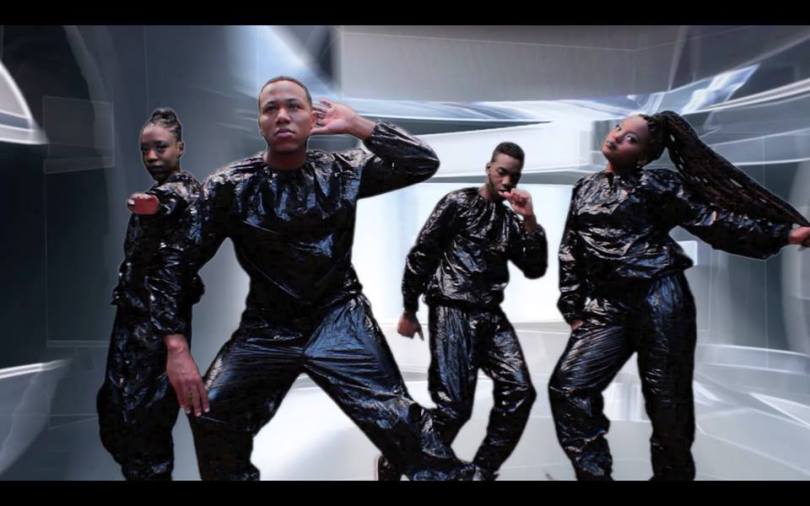
The concept by Mike Sanders and Raeshelle Cook found in this cinematic realization of Wilson’s phenomenal musical piece is flawless. It features a bored office hand (played by Wilson himself). Fighting nodding off at his desk, a point of relatability that many fellow labor-a-day audiences will latch onto immediately, the camera seems to enter his mind. In a demonstration of the effects of the record, and its inspirational meaning when played and pondered, it does this by going through his ear. After going through a vortex, one of the many entrancing and hypnotic sights on display here, the song kicks in. From here Esper delivers an optical extravaganza that is bright, striking, joyful and cheery. It is made all the more engaging by some fantastically choreographed dance moves.

There are recurring images which make the representations held within the arrangement come to life. In one segment, we see Wilson in a straight-jacket. He is seen fighting off shadowy figures which surround him. This could personify thoughts of worthlessness or inadequacy. It can even be seen to be an emblematic communication of being confined to treading the pre-set path the world pushes upon us all (much as the office employee must be feeling in the commencement). Maybe it could be all three. The cleverness in adding such a prospect here is that the spectator can easily put their own personal emphasis on what these symbols convey. It helps reach a wider audience. Not to mention, it makes the whole experience that much more singular, personal and profound.

The impact is punctuated in the end credit scene. Here Wilson, Esper and a varied cast of several others express what they wish to achieve in their lives. It is the perfect summarization of all that comes beforehand. This also mechanizes stalwartly with the notion the short film utilizes. It seems to reassure the exhausted individual showcases early on as realizing his own ambitions and pursuing them. In turn, Esper and crew call upon his viewers to ask themselves what they would similarly like to accomplish.

Esper and Wilson have shown their own respective gargantuan talents with this endeavor. They make a tremendous team. The video and the addictive anthem inspired by it compliments one another spectacularly.The proof is in the high-quality product resulting from this collaboration. Every technical facet is staggering. This resonates all the more vigorously with the ardent, caring treatment Esper has given Wilson’s already fantastic exertion. Both “I Hear the Future” and its filmic imagining are guaranteed to mean a lot to a great many individuals. Each item is a masterpiece in its own right. Coming together as one the sheer spectacle and elevating nature of the two entities makes for a necessary, tremendously invigorating exhibition that speaks directly to the soul.

You can check out Aaron K. Wilson’s site and learn more about him here.

12459546_10153109341112504_673531525_n

“Everest” – (Movie Review)


Rating: **1/2 out of *****
By Andrew Buckner

Everest, from director Baltasar Kormakur (2012’s fair Contraband, 2013’s disappointing 2 Guns), is a film that is every bit as generic as its title suggests. It is structured far too visibly after standard issue big-budget natural disaster works. Franc Roddam’s K2, from 1991, and Frank Marshall’s Alive, from 1993, come instantly to mind. It’s evidence that we have all seen this done far better many times beforehand.

To its credit, there are potentially interesting characters in this fact based story. The problem is that William Nicholson and Simon Beaufoy’s unappealing screenplay turns them all into plot-serving conventions. They become walking genre tropes who deliver heavy doses of personal backstory when the script deems it necessary to combat its numerous lulls. One extended scene, at about thirty-five minutes in, makes this especially obvious. Predictably, the screenplay summons the cast to expose their heroism and individual weaknesses at other standard intervals. This comes off as just as calculated. It also drains the movie of any potential emotional impact it wishes to attain.

This all could’ve been compelling material. Such would’ve been the case if the endeavor wasn’t so adamant about making everything so familiar. To be fair, most of the leads are generally easy to root for. Oddly, any trace of relatability to these individuals seems to be completely removed. It spends so much of the duration forcing us to care for those who populate the screen that it never really tries to make them unique and worthy of our concern. Because of this Everest never quite gets out of the shadow of this glaring failure. This immeasurably hinders the proceedings. It also makes its shortcomings all the more visible.

The always watchable Jake Gyllenhaal provides one of the few bright spots as Scott Fischer. Though he is likeable, and captures the attention in every bit he is in, he is used sparingly. Emily Watson, as Helen Wilton, and Josh Brolin, as Beck Weathers, turn in serviceable portrayals. They go through the motions with equally bland results. They are greatly held back by the writers treating these personalities like cinematic stock. This is depressing given the high-caliber talent these A-list individuals convey. Prior roles prove this. Still, they can only do so much with such scant material. The same can be said for Sam Worthington, as Guy Cotter, and Keira Knightly as Jan Hall.

Salvatore Totino’s cinematography is undoubtedly beautiful. Still, it is no better than what can be found in similar undertakings. This is especially disappointing given that the movie seems to be often abandon characterizations to floor audiences on this aspect alone. Such is true in the uneven and unfocused second hour. Like far too many attributes in this failed attempt at making the audience hold their breath in anticipation of what will occur next: this cinematic affair plays things far too safely.

The one hundred and twenty one minute depiction attempts to portray a disaster on Mount Everest. This occurs in March, 1996. Such an event finds two expedition groups fighting for their survival. Such transpires when a snow storm threatens the title mountain. Leaders of these groups are Rob Hall, Jason Clarke in a fair enough performance, and Fischer (Gyllenhaal). As the situation becomes increasingly worse one potentially nail-biting coincidence leads to another. All the while the individuals trapped in these horrific conditions band together in hopes that they will make it through this terrifying circumstance.

Much of the second half is where the exertion makes its most obvious attempts at generating suspense. This is where the composition succeeds. It also has strong stretches of promising build-up preluding these instances. As the risks become all the more daunting, Kormakur gives us tremendously designed and credible segments of peril. They are endearing and almost always intriguing because of their understated nature. Moreover, they never abandon the dramatic origins of the tale. If only more of these words could be applied to more of the feature’s technical aspects we might’ve truly had something special here.

The pace is choppy. Oddly enough, the piece seems hell-bent on constantly disemboweling viewer interest as soon as it begins to become genuinely compelling. Such is done almost singularly on its bizarre structure. This is after a first hour that is desperate, lumbering and made all the more faux and painful by its constantly forced and inane dialogue. Such incorporates the many failed attempts to establish the protagonists.

Kormakur dearly wants to make us care about those who populate the screen. This is certainly admirable. He wants us to impress upon ourselves the worry, fear, heartache and sorrow that accrues once these individuals’ lives are later endangered. Such could’ve put us in the leads’ shoes easily. It could’ve also added a potency that simply is not there. The underwhelming execution, even with its well-done buildup in check, is what sinks this honest exertion.

When the focus turns to full-on intensity, as is the case in the last forty-five minutes, it accumulates attention. Sadly, this is intercepted by hackneyed attempts to keep the personal stories going. These elements are so poorly handled throughout that they always distract us when the story seems to be building momentum. If this pivotal aspect functioned better this would’ve been far more engaging and satisfactory. What’s worse is that this all leads to a finale that is glaringly obvious from its commencement. This provokes a groan where should be exhilaration. Such can also be applied when summarizing the impression of sitting through the effort itself.

The score by composer Dario Marianelli is also highly generalized. This attribute is used subtly, smartly. It gives the sequences it is administered in a quietly hypnotic power. Moreover, it isn’t overused, as is the case of many similar pictures, to heighten emotional intensity by becoming overblown. Such works to its benefit.

Mick Audsley’s editing is proficient. The sound, as well as the visual and special effects, follow suit. There are many positive traits employed throughout. But, ultimately, there just simply aren’t enough of these stalwart details to overcome its obvious shortcomings.

It all creates a motion picture which is largely stale and often seems like it is on auto-pilot. Everest is confident that it will make your jaw-drop with the veneer of the claustrophobia inducing mountains. The same conviction is unveiled in the spectacularly sweeping glean and menace of the hazardous weather hammering down upon those trapped on the elevation. Furthermore, it is just as assured that it will make your heart frenziedly beat in your chest from its various cliffhanger scenarios. Because of this it blatantly appears to all but ignore the meat, the substance which makes an otherwise mediocre exercise genuinely worthwhile.

“Ashley Bell” by Dean Koontz- (Book Review)

By Andrew Buckner

Rating: ***1/2 out of *****.

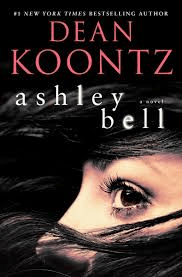
Ashley Bell, the latest novel by Dean Koontz, is appropriately enigmatic, endlessly imaginative and often brilliant. It displays Koontz’s mastery of form by constructing much of its massive 560 page length as a mostly fascinating, if certainly overlong, puzzle. Though the ultimate resolve is obvious in hindsight, and presented far too early in the narrative, the manner in which the tale is told overcomes these otherwise unavoidable flaws. Besides the engrossing, subtle manner in which much of the story is formatted Koontz’s illustrious, endlessly quotable writing makes even the more lumbering, repetitious moments within the effort strangely enchanting. Koontz’s December 8th of 2015 released read is, more often than not, a joy to be swept up in.

The exertion details a young twenty-two year old author named Bibi Blair. After suffering a sudden pain while writing at her computer desk, which leads to the belief she has had a stroke, she is rushed to the hospital. Soon after this happens she receives a diagnosis which threatens to cut her literary dreams, and her life, short. Yet, after telling a nurse “We’ll see” when she is told that she only has a year to live something miraculous occurs. She is almost immediately cured of her ailment. That is when Koontz begins to shuffle between Blair’s memories. He distorts reality in an always gripping fashion. Soon after Blair, who is attempting to find the solution to her quick cure, becomes convinced that saving the title character is her ultimate mission. Such is a jump-off point for a grand succession of increasingly bizarre and unique coincidences.

Blair herself allows Koontz to give one of his most insightful glimpses into his own mentality and personal viewpoints as a writer. These elements are consistently fascinating. Moreover, he mixes them well into the account itself. Our lead is all the more vivid and authentic because Koontz uses her in this manner. The rest of the cast is rich, finely etched and distinctly their own entity. It makes the material all the more lifelike. This also makes the indistinct components the plot balances itself upon all the more credible and imaginative.

Such also becomes problematic in the grand scheme of the composition. This is so because Blair is obviously the true focus here, which makes sense once certain revelations take flight, but it makes everyone else appear all the more secondary. Evidence of this is most perceivable in Blair’s surfer parents, Nancy and Murphy, and a male friend named Pogo. They are included in many sequences. Still, the audience never feels as if Koontz cares as much as them as for Bibi. These individuals come off as somewhat of an afterthought.

Sadly, the pace often feels leaden and aimless. Again, this could be attributed to the previously mentioned dealings. Yet, these aren’t unveiled until well into the last third of the book. During this time these apparently random assemblage of events are admirable. This is for how they ring unique instances out of what can often be perceived as commonplace. Often it even mechanizes itself in a vice versa fashion. This is when credibility takes a back seat to Koontz’s unbridled imagination. Still, so much of the piece resolves around this sensation that it makes the results overall, even with its numerous twists and cleverly put together structure, seem underwhelming. The overall craft on display here just isn’t enough to overcome how much of Ashley Bell dwells on these apparently isolated proceedings.

There are various moments of suspense. Here the story impresses upon the mind the idea that it will take off in true Koontz fashion. Yet, it never really does. This holds true until the dazzling final thirty or so pages. Koontz gives us some genuinely moving dramatic instances. They ultimately feel just as sporadic. Koontz offers segments of great poetry, where the heart that goes into these sequences pulsates through every word on the page. These always astonish. These are a bit more frequent than the times mentioned above. Still, they come up lacking. Despite this, the climax fulfills on all of these levels at once. It does this so successfully that even after the occasionally lumbering impression the tale besieges us with, especially in the mid-section, we can almost forgive Koontz for his overindulgence.

Regardless, it is this excess where Ashley Bell gets its singularity. If this were a more tightly knit, commonplace exercise it might be more immediate and wholly enjoyable. Still, it would not be as collectively memorable. Koontz wants us to close the tome with a sense that we had just been on an epic journey. One that we have searched for the title protagonist with Blair as long as she has and know her as intimately as she does herself. This Koontz succeeds at immeasurably. The piece is far more fulfilling to look back upon and to peer over every corner again knowing full well where the author was taking us. It is than we can fully appreciate the painstaking artistry, precision and confidence behind it all.

Much of this comes from the fact that Koontz often deliberately leaves us confused. This can also be seen as part of a higher point that is cleared up in the finale. Still, this remains a distorting experience. Yet, Koontz’s insistence on repeated images, such as a dense fog that always seems to be blanketing the surroundings and gradually encompassing our heroine and the emphasis on a dog named Jasper, adds a layer of fascination. This makes these muddled ingredients thrilling to mentally piece together. It is just what is needed to keep the volume from becoming as frustratingly out of touch as a fiction penned in this fashion could easily become. This is just another component of the triumphant risk-taking Koontz incorporates throughout.

What else helps matters is that even some of the red-herrings Koontz throws in are noted. One scene in particular captures this in its dialogue tremendously well. It is a wink at the audience that adds impeccably to the overall fun. Not all of the discourse is quite as intriguing as this segment. Still, it all assists in the delicate juxtaposition of drama, lyricism, intensity, credibility and dreaming mentioned above.

At first glance, the many claims that this is one of Koontz’s best labors appear unfounded. It is defiantly literary. Moreover, it refuses to classify itself as simple entertainment. This is certainly welcome. Such is especially correct in a time when it is far too appealing for best-selling authors to pump out such surface level amusements. The endeavor is also contemplative and daring. Such is also appreciated. Despite this, the problem is at a fundamental level. Much of the general narrative, and story arc, is especially basic. Though Koontz uses this as a pulpit to let his creative instincts soar, and weaves the piece in a manner that makes it easy to forget this aspect, we never fully overcome the effects of this detracting aspect.

The excitement here is in forgetting the world immediately around us. In so doing, we are wonderfully wrapped up in another. It helps us relate to Blair all the more. She becomes pleasantly accessible. This gives Koontz’s insights into the writer’s mind all the more punch. These are wise moves. They come together to make this well-worth combing through, and a great addition to the author’s literary canon. Such remains true even if it doesn’t quite live up to both its potential and the gargantuan hype attached to it. Still, Ashley Bell is satisfactory, charismatic art. It will prove especially valuable to those of us who often find ourselves daydreaming of honing the kind of living Koontz has made for himself and Blair, simultaneously, appears on the cusp of attaining.

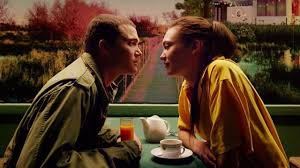
“Love”- (Movie Review)

By Andrew Buckner

Rating: **** out of *****.

Writer and director Gasper Noe’s Love is nowhere near as revolutionary as what he has provided viewers beforehand. These are 1998’s excellent thriller, I Stand Alone, 2002’s Irreversible and 2009’s Enter the Void. Yet, it remains a largely satisfying expression of film as liberation and as art.

True to the form of Noe’s previous work his latest has a fearless spirit. This is a topic expressed outright in a portion of credible second act dialogue. Because of this the unrated feature displays its NC-17 equivalent proudly throughout its 135 minutes.

What we also hear rippling through the mouths of its leads is the thesis statement of the movie. This is that Noe’s endeavor wishes to be a sentimental expression of ardor. It is one fashioned through the lens of sexuality. Such an achievement certainly arises with a build-up of subtle power after a lumbering first half hour. Regardless, it is never as maudlin as such a concept could’ve easily become. Also, it is never as bitter as it appears to be in the opening sequences.

These initial thirty minutes do have moments of intrigue. This element shines even when our lead, Murphy (Karl Glusman, in a performance which gets better as the script offers him better material) is at his most loathsome. During these early segments he spends the time apparently aimless. His intent is only on elucidating a general mean-spiritedness.

Here he mumbles tired observations. This is done in a weak attempt at narration. These concern the title emotion, and his life, to the audience. It becomes grating quick. Luckily, this is largely abandoned as the composition moves on.

Even in this desperate stretch our interest is captivated. This occurs in these blind-spot moments through the gorgeous shots Noe evokes. These are made all the more jaw-dropping by his utilization of his trademark non-linear style. Such elements illuminate more than it should with a narrative as simple the one Noe gives us. This is due to the audience mentally scrambling to put the story pieces together.

What also helps us overlook these initial problems is that the cinematography by Benoit Debie is just as lush and Noe’s style dictates. This transcendent beauty makes much of Noe’s framing appear all the more masterful. It is like watching a succession of brilliant paintings brought to life in rapid succession through the medium of a moving picture.

Most intriguingly, the film’s personality often mirrors Murphy himself. At first it seems cold and distant. But, as it slowly peels away its intricate layers it gradually lets us deeper into the lives of those dominating the screen. This is proven as the chronicle slowly opens up and takes its time revealing its ardent core.

Noe’s sensual drama hits an undeniable stride of excellence. This is especially true from the hour mark until the emotionally gripping and strangely beautiful climax. The note is heightened as the last sight is frozen to over the end credits sequence. It is just one of the many wonderful tricks the director effortlessly delivers.

Love, especially in its second half, reminded me of French New Wave director Jean-Luc Godard’s work from the 60’s and 70’s. Much in this spirit, Noe slyly incorporates personal viewpoints, often regarding politics and cinema, into the discourse which ring with an everyday validity. We can easily imagine passing by these people on the streets and hearing such a conversation. It is also a clever, entertaining way of providing exposition that doesn’t seem spoon fed and unnatural.

It is this high-style which salvages the otherwise standard issue story. The exertion oversees Murphy and his lover, Electra (Aomi Muyock, in an exceptional portrayal which culminates believability at every turn). Hoping to make their fantasies become reality they add a third component to their relationship, Omi (Klara Kristen, in another well-done and charismatic performance).

Kristen’s character is used as a varied symbol throughout. This only adds to our fascination. The final use of this representation is the most interesting of them all. It adds punctuation to an already highly metaphoric, stunning climax.

In hindsight, the tale is simply a jumping off point for the experience Noe yearns to evoke. If this wasn’t so uniquely structured, uplifting and moving the familiarity of the chronicle could’ve sunk the movie down to mediocrity. Instead Noe seems intent on taking these commonplace motions as a challenge. This is one meant to break through their mundane constraints. In turn, he wishes to create something entirely new. This he succeeds in doing many times over.

Some elements do come off in a clichéd manner. These are especially evident when Noe seems to be reaching melodramatically. Regardless, the ultimate result is well-rounded, satisfying cinematic feast. It is one that both the mind and eye consumes with eager delight.

The sensual sequences are certainly well-done. They illustrate their intended effect. One extended bit, which transpires around the thirty-five minute mark, runs seven minutes. Yet, it never appears excessive. The feature continuously balances the emotional and the carnal without neglecting one for the other.

There is also often an underlying eroticism to much of the conversational moments. In turn, the instances that focus on physical intimacy never seem as if they are too far removed from the character oriented focus. It also never loses its dominant gaze on their concerns. This is what really gives the piece its heart.

Dennis Bedlow and Noe’s editing is sharp. The visual effects credited to ten individuals has rough touches of obvious C.G.I. that otherwise come off as seamless. Music supervisor Pascal Mayer gives us work that appears often conventional during the amatory sections. In its more dramatic moments the score issued seems a perfect fit. These technical aspects help propel the endeavor to its fantastic consequence.

There are a few moments which seem almost laughable. One involves a slow-motion close-up on genitalia near the ninety minute mark. They take away, however briefly, from this otherwise immersive experience. Moreover, they seem designed specifically for its 3-D format. It seems low-brow and out of place.

I have no problem calling Love one of the ten best films I have seen in the year. Regardless, it is not a full-fledged masterpiece. Furthermore, it does not approach the high benchmark Noe has set for himself in his three prior efforts.

Still, there is an admiration for the craft radiating through the emblematic and surface appeal. It endlessly garners our attention. This component is victorious even when the exertion is at its worst. Moreover, it makes the shortcomings forgivable.

Like Noe’s prior films, Love lingers in the mind long after the endeavor is finished. This is a haunting love letter to the spirit of cinema. It will merit additional watches. In turn, we may glean many new wonders, intricacies and nuances that we missed the first time around.

“Goodnight Mommy”- (Movie Review)

By Andrew Buckner

Rating: ****1/2 out of *****.

The Austrian chiller Goodnight Mommy (originally titled Ich seh, Ich she) gets its unsettling power from being such a voyeuristic, distant and cold experience.

Furthermore, it garners its stalwart nature from being almost alarmingly quiet throughout the bulk of its runtime. Because of this there are long stretches where only brief bits of dialogue or natural sounds crackle through the soundtrack.

This assists in creating a maturely fashioned, psychological portrait. It grips us more for the way it teases us with where the story could be headed, especially in its first seventy minutes, than filling us with outright trepidation.

Such is most evident in the final act. This portion could’ve easily become overblown. Instead it respects the foundation it delicately constructs in prior sequences. The result is a theatrical homerun.

Most endeavors meant to produce dread would use this delightfully realized sense of isolation to give us low-brow jump scares. This would be especially likely as we stare into the shadows, as this work often does, convincing ourselves something will pop out.

Olga Neuwirth’s score is used sparingly and precisely at the right instant. The music she creates is striking, atmospheric and memorable.

But, Goodnight Mommy gets under our skin because it forces us to think. It makes us contemplate what is beneath this darkness. This is opposed to using this circumstance, as is often the case, as surface dressing for novelty shocks.

This is far more satisfying, in relation to the on-screen personalities and the general chronicle, and discomforting than any cheap effect the filmmakers can throw at us.

Such is done with unproblematic confidence throughout. The movie is worthy of recommendation based on this factor alone.

What makes this aforementioned statement even more verified is that the composition is brilliantly written and directed. This is done with impeccable restraint, construction and command of form by Severin Fiala and Veronika Franz throughout its one hundred minutes.

In turn, the proceedings are the definition of a slow burn thriller. It delights in the way it toys with audience expectations.

In one of the wisest moves this highly-literate nail-biter elucidates is that it successfully makes all three of the main personages appear villainous at various intervals.

It has a sharp sense of individual perspective. These transitions in viewpoint appear natural and seamless.

For instance, we see the heavily bandaged mother (Susanne Wuest in a compulsively watchable performance that captures her dreadful and vulnerable turns terrifically) through the eyes of her twin children, Lukas and Elias (both portrayed with creepy precision by real life brothers Lukas and Elias Schwarz), as a monster.

So when the boys begin to believe that there is someone else behind the bandages covering their mother’s face we believe them. In the end, this is one of the most disturbing acts this bit of gritty cinema commits.

Another great move is that this entry in fear is wisely vague with backstory. It hardly gives us any details from the main characters’ past.

This makes it easier to look past the red herrings, seen in hindsight, and its more transparent bits. Such is so because of the intelligent way it hides otherwise important elements such as this for sheer impact.

In so doing a wall is built up against our ability to find an antagonist. This evokes further restlessness and captivation as we are at war with ourselves for over 2/3 of the exertion. Even when the question is resolved we admire how well the truth was concealed.

Many will be off put by the gradual pace. Admittedly, I left the piece feeling that I appreciated how terrifically well-made it all was as opposed to being instantly captivated or enthralled. It was only when I found myself mulling it over that I realized the effectiveness at hand.

Those of us willing to tap into its distinct rhythm will be largely fascinated. But, immediate amusement is not the focus here.

Goodnight Mommy is a terror production, made all the more cinematic from being shot on 35 millimeter film, from the old-school. It wants to turn your blood to ice by making us wonder.

The intention here is to haunt us, not by excessive gore or endless violence (though this work does have its moments), but by forcing us to turn its chain of events over repeatedly in our head long after it has finished.

It accomplishes this spectacularly. This is true even if it has a sadly predictable, after a certain late third act plot-point comes into play, conclusion.

Besides perfectly honed performances by its convincingly painted leads the composition benefits from gloriously bleak cinematography by Martin Gschlacht. An early scene with Lukas and Elias in a cornfield showcases this, as well as the earthy realism the picture constantly elicits, beautifully.

Furthermore, Michael Palm’s editing is proficient and wonderfully done. The costume design by Tanja Hausner helps give our leads an everyday air.

Such contributing details makes what we are seeing all the more believable and realistic. Given that this is an attribute Fiala and Franz are obviously striving for these technical triumphs are all the more vital.

This is most evident in the plain-spoken dialogue. It doesn’t feel the need to force feed its audience answers through exposition as many modern offerings are apt to do. Because of this the effort strikes a continuously heightened sense of unease and credibility.

Goodnight Mommy is being heralded as one of the best features of its kind for the year. Though it doesn’t have the invention of David Robert Mictchell’s 80’s style take on the genre and only visible competition, It Follows, this claim is certainly valid.

It has various similarities to Jennifer Kent’s 2014’s masterpiece The Babadook. This is especially apparent in style, theme and general story arc. Still, this affair isn’t quite as remarkable overall.

Moreover, the presentation has a theme of spontaneously having a loved one replaced that is highly reminiscent of Invasion of the Body Snatchers.

Yet, what makes it work so well is that it stays true to the tradition of the most accomplished horror films. It does this by being a drama, a character study at heart.

These all assist in the quality of this endeavor. Still, it leaves a lingering impression after all the pieces fall into place that we have seen it all assembled far more successfully beforehand. Alfred Hitchcock’s controversial 1960 ground-breaker, Psycho, comes immediately to mind.

If you are a member of the group who likes rugged fright, the type that makes you feel as if you are a helpless witness to the proceedings, you will love this exertion. If you like motion pictures where everything is explained at every turn you may want to look elsewhere.

Fiala and Franz’s feature is harrowing but certainly not for everyone.