Patriot’s Day (2016), which chronicles the 2013 Boston Marathon bombing and the investigation it spawned, is an absolute knockout! Director and co-writer Peter Berg’s penchant for quiet moments of domestic character drama as well as claustrophobic, credible and tense action scenes shines through every frame of the film’s one-hundred-and-thirty-three-minute runtime. Stars Mark Wahlberg, Kevin Bacon and John Goodman are especially good in their respective turns. This is even if their on-screen personas could stand to be better developed. They also should’ve been given more dimension. There is also no insight whatsoever into the reasoning behind our reality based antagonists’ tragic dealings. Still, this does little to dilute the exceptional overall result.
Though it isn’t quite on par with Berg’s masterpiece Lone Survivor (2013), this uncompromising and appropriately gritty work comes awfully close. Berg’s latest is an emotionally layered and transcendent exhibition of craftsmanship. The concluding minutes are especially poignant. This appropriate send-off nicely balances out the nearly non-stop intrigue and deftly executed chase story suspense that came beforehand. Such further creates a well-rounded and admirable cinematic experience. This is a harrowing journey. It is one that, though rather routinely structured, is certainly worth taking.
(R). Contains adult language and violence.
Available now on video on demand.
UNDERWORLD: BLOOD WARS
Rating: **1/2 out of *****.
There is always a sense of urgency in the full-length feature debut of director Anna Foerster’s Underworld: Blood Wars (2016). This endures even in the dialogue heavy second act. The ninety-one-minute effort also sports stunning, handsome cinematography from Karl Walter Lindenlaub. Furthermore, there is a wonderfully gothic feel, present in the four other movies in this series, which is as modern as it is reminiscent of an archetypically circa 1960’s-1970’s Hammer Films horror entry. Additionally, Kate Beckinsale does an adequate job in her portrayal of our Vampire Death Dealer heroine, Selene. This is considering the one-dimensional material she is once again handed. Also, the action packed climactic twenty minutes prove a satisfying distraction. Likewise, Foerster’s behind the lens contribution is slick and stylish.
Yet, it is hard to ignore the fact that if you have seen any of the other Underworld pictures, you have already seen this latest installment. The laughable computer generated imagery and uninvolving plot also hinders this ongoing werewolves versus bloodsuckers tale immeasurably. There are also plenty of gaping holes in the broadly painted and moderately written screenplay from Cory Goodman. When combined with recycled shots and footage, the unyielding impression that this is but another unimaginative, assembly-line Hollywood product prevails. The result is a fair, but mostly forgettable, experience. Skip it.
Propelled by an intriguing and original plot as well as excellent execution, writer-director-star Sandy Robson’s Skyquake (2015) intimately crafts a haunting, meticulously paced portrait of mania from a plethora of genuinely unnerving horror elements. This is a primary courtesy of Robson’s afore-mentioned contributions. All of which are terrific. Relatedly, John Prowse is exceptional in his turn as Dr. Edwards. This can also be said of Bronwen Smith’s proficient enactment of Grace/Norma and Aidan Kokotilo-Moen’s phenomenal portrayal of young Jake. Byron Kopman’s cinematography, Keaton House’s foreboding music and Robson’s editing are also a highlight. Such results in the telling of tale of a man, Adam, and his obsession with a strange hum that is as eerie as it is engaging. This is augmented by the incorporation of a final act that satisfactorily balances characterization, narrative twists and accumulating tension. Regardless, the concluding sequence could’ve benefitted from less explanation and more mystery. Still, the high quality and sheer effectiveness of the production remains intact.
Runtime: 79 minutes.
(Unrated). Contains adult themes.
Available now on Amazon Prime.
Distributed through Brain Damage Films and Midnight Releasing on April 4th, 2017.
Co-writer and director Justin Barber’s full-length feature debut, Phoenix Forgotten (2017), does an admirable job of blending fact, the mass U.F.O. sighting that occurred in Arizona on March 13th, 1997 that became known as “The Phoenix Lights”, with fiction. This creative component is the search for three teens who vanish after encountering the afore-mentioned incident firsthand. Co-produced by Ridley Scott (1982’s Blade Runner), Barber’s exhibition also beautifully mirrors a classically styled documentary, at least until about the one hour mark, far better than most found footage films. This is with an ever-inventive use of interviews and news reports cleverly providing the exposition. There is also a constantly smirk-inducing sense of 1990’s nostalgia present. This is as Barber, who penned the formulaically structured script with T.S. Nowlin, frequently references The X-Files (1993-2002, 2016-). Moreover, the first half constantly called to mind an extended segment of the popular cold case based television show Unsolved Mysteries (1987-2010).
Additionally, the lead performances are all credibly and charismatically etched. This is especially in line with Luke Spencer Roberts’ portrayal of our relatable, and alien obsessed, hero, Josh. Such can also be said of the high-quality depiction of his secret crush, Ashley (Chelsea Lopez), and fellow journeyer Mark (Justin Matthews). The narrative also meritoriously includes a lot of circumstances, such as sudden nosebleeds, which are much in line with what those involved in real life encounters with otherworldly entities undergo. The sparsely used effects are also undeniably effective. Jay Keitel’s cinematography is superb. Congruently, Barber and Nowlin’s dialogue comes off as natural. This is a courtesy of the fine authorship of the piece. It is also a testament to the authentic fashion in which these lines are delivered.
But, this does little to mask the underwhelming sensation which sprang forth with the rolling of the end credits. This is most likely a result of the concluding sequence. Such a configuration blatantly rips off the climax of The Blair Witch Project (1999). The story, which is involving as a horror and science-fiction fusion but transparent as a mystery, is also incomplete. This is as the exertion gives us a definitive answer to what fate befell those who were lost. Yet, it fails to include a satisfactory resolve for the individual conducting the search, Sophie (Florence Hartigan). Not to mention, the affair never tops the harrowing, grainy VHS enactment of the true event, which arises during a birthday party, that it is based upon. Such is melancholy considering that this transpires within the first ten minutes of the picture.
Correspondingly, even at eighty-seven minutes in length the runtime seems overlong. This is as the first two acts, which develop characters and pace in a satisfactory, if sluggish, manner, give way to an ultimate reveal which is obvious from the start. What is just as evident is the lack of any real suspense, surprises or scares. The result is a middle of the road effort. It is one whose mileage will vary between an enjoyable, if unmemorable, experience and a hair-pulling test of patience. This is based solely on your overall fascination in the subject matter. Given that extra-terrestrial tales have always garnered my attention, I, luckily, fall into the latter category.
(PG-13). Contains language and some intense sequences.
Released exclusively in theaters on April 21st, 2017.
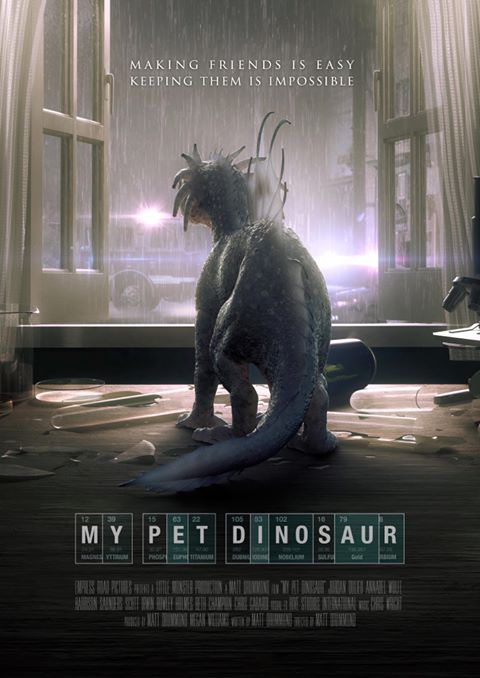
Charming, playful and awe-inspiring, My Pet Dinosaur (2017), the second full-length feature from writer-director Matt Drummond, brilliantly evokes the essence of the early efforts of Steven Spielberg. This ninety-seven-minute triumph, distributed through Empress Road Pictures, has the heart and innocence of E.T: The Extra-Terrestrial (1982). Such is manifest in its vastly compassionate and kind, child-mirroring perspective. Drummond’s latest masterpiece also shares a notable similarity to the afore-mentioned behemoth of popular culture. This is present in its general plot. The major difference of this being the exchange of an abandoned, otherworldly entity for a spontaneously growing, Styracosaur resembling fossil reptile named “Magnus”. There is also a continued comparison visible between these two photoplays. This resides in the varied small-town characterizations, structure and overall atmosphere of each presentation. Yet, Drummond’s exertion has the thrills, magic, adventure and respect for science that made Spielberg’s groundbreaking adaptation of Michael Crichton’s same titled 1990 novel, Jurassic Park (1993), an unparalleled movie-going experience. There are also elements of Close Encounters of the Third Kind (1977) sprinkled throughout the proceedings. This is evident in the exciting and beautifully crafted final forty-minutes. They call to mind the last act of the latter stated opus splendidly. It is also inherent in the ongoing belief of space invaders in the region.
One of the funniest moments in the offering also occurs in this section. It involves Magnus taking down a military drone. Such is ingeniously framed to look comparable to a giant U.F.O. There is also a similar gag involving an underwater menace, which is glimpsed earlier in the labor, which is just as victorious. Such signifies a mere example of the successful and clever use of humor which runs through the photoplay. Much of this is also overheard in the witty banter among our lead, Jake Emory (in an exceptional turn from Jordan Dulieu), and his likable and courageous band of friends. Among them are the ever-hungry Max Merriman (Sam Winspear-Schillings) and the young alien enthusiast Charles Altman (Tom Rooney). There is also the highly-intelligent Dylan Finkelstein (in a stellar performance by Jack Mars). His general demeanor is equitable to an adolescent version of Egon Spengler (1984’s Ghostbusters and 1989’s Ghostbusters II). This only enhanced my nostalgia-infused enjoyment of the fabrication. Their chemistry, especially in the many sequences where they are all present together, is infectious. It helps Drummond’s emotionally layered, yet joyous and endlessly entertaining, affair become ever more transcendent. In turn, it will assuredly resonate with audiences of all ages. The result of these high-caliber attributes is the greatest cinematic love letter of this genus since J.J. Abrams’ breathtaking, 1979 set Super 8 (2011).
Drummond centers his action in the fictional district of Brightwood. Prone to making trouble to break up the monotony of his surroundings, Jake finds himself dealing with the passing of his father. Such causes a rift in his relationship with his mother, Jennifer (in a credible and well-wrought depiction from Beth Champion). With Jake’s older brother, Mike (in a terrific representation from Harrison Saunders), this familial problem is even more aggressive and verbalized. Yet, when a science project goes awry, the potential for these aforesaid difficulties to turn worse is amplified. This is as Magnus, who is initially shown at twenty minutes into the production, is accidentally created in Jake’s bedroom. Swearing to secretly keep the small, puppy-like creature in his room and study him, his promise to keep Magnus’ presence unknown to others quickly falters. As Magnus accrues in size, pandemonium reigns down on Jake’s once peaceful neighborhood. This is as a combative governmental squad, headed by Cornel Roderick (in an intense and commanding exhibition from Rowland Holmes), quickly takes over the area. As Officer Alan Farraday (in a riveting portrayal from Scott Irwin) fights this team for authority, tales of monstrous animals seize the area. It is a truth Jake and his school partner, Abbey Tansy (in an engaging and proficient enactment from Annabel Wolfe), are forced to face for themselves. This is all in an act of keeping Magnus safe.
Such a story is the perfect recipe for an exhilarating, robust arrangement such as the one Drummond cooks up here. He excels at this from the cryptic and visually alluring opening, which would be at home in any of the previously addressed Spielberg pictures, until the sweet and uplifting conclusion. Drummond, via his marvelously honed scripting skills and guidance of the project, handles the material in a manner that is occasionally tense, but never frightening. There is a necessary maturity to the more dramatic segments. Still, a sense of adolescent wonder, joy and even anguish is ever-present. This is observable in the treatment of the various types of relationships in the narrative. This makes for a certainly well-rounded and satisfying account. Such also issues a tone that only punctuates the Spielbergian feel.
Also, assisting matters is Drummond and Hive Studios International’s impressive and lively effects. They make Magnus lovable, curious and adorable throughout the endeavor. This can be spied in a memorable configuration near the half hour mark. It involves Magnus comically roaming his new owner’s home when no one else is around. The outcome of this is simply adorable. It is utilized with abounding slapstick. Even when Magnus reaches adult size in the second half, and is notably more massive and powerful, this unthreatening sensation remains true. This is also a courtesy of Drummond and Bradley Betts’ seamless animation. Chris Wright’s music is, akin to the images they accompany on-screen, ceaselessly daring, sentimental and magical. There is a certainly appropriate John Williams-esque sensibility derived in the scoring. Additionally, the sound and camera and electrical department offer mesmerizing work. Tina Boody’s make-up contribution is fantastic. This general magnificence is also augmented in the sleek and immersive cinematography. It is also summoned in the previously unmentioned roles. For instance, David Roberts is terrific in his brief bit as Doctor. The same can be stated of Joanne Samuel as Doris Mercher. Tiriel Mora as Trevor Brown and Christopher Gibardi as Dr. Fred Tansy are also spectacular. Congruently, Stephen Davis is astonishing as Will Spencer. He is one half of a pair of intrepid local fishermen whose screen time is consistently comic gold.
My Pet Dinosaur is the perfect companion piece to Drummond’s astounding, Jules Verne reminiscent debut, Dinosaur Island (2014). Both presentations are wide in scope. Still, they are surprisingly intimate. They also showcase a strong focal point on their incredibly developed protagonists. There is also a palpable affinity for the subjects as well as the subject matter. These qualities make each respective undergoing increasingly illuminating. Correspondingly, they are genuinely good-natured and deftly constructed. These are the types of sincere and quietly moving children friendly ventures that infuse great lessons of life. This is while appealing to the often courageous spirit of youth. We rarely get these types of epic, blockbuster re-defining journeys anymore. Such provides more reasoning as to why Drummond is a talent to be watched. With My Pet Dinosaur, which was recorded partially in New South Wales, he has again provided audiences with an instant classic. This is the best family film of the year.
(PG). Contains some profanity.
In Australian Hoyts Cinemas theaters today. It will expand to New Zealand on May 27th.
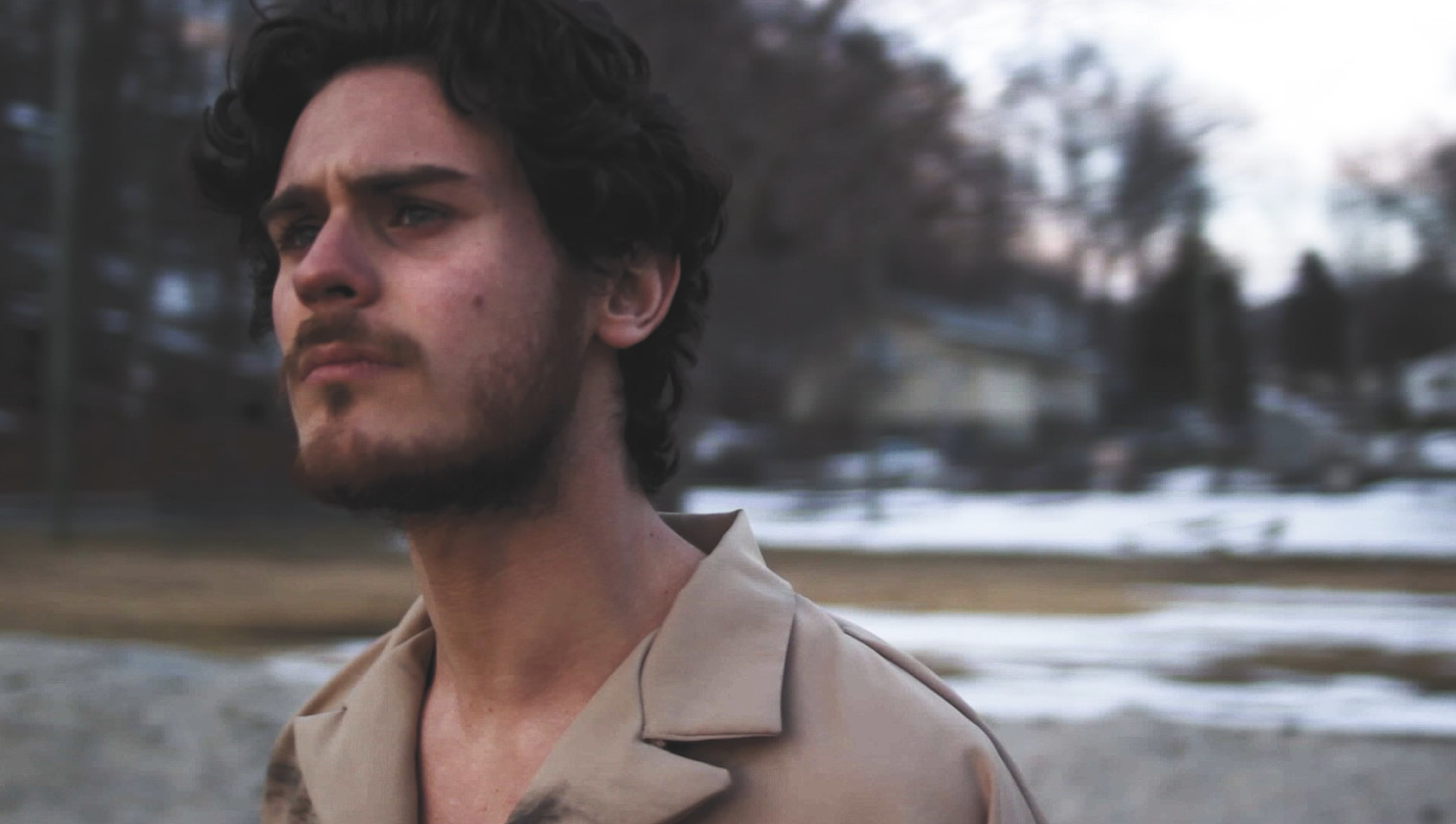
“Triangle” (2017), the debut short from sound mixer and composer turned writer-director Christopher Fox, is a triumph of the emotive power of minimalism on-screen. For five and a half out of the nine minutes which constitute the runtime of Fox’s effort, we sense both the confusion and inner-mechanisms of our hero, Dave (in a masterfully nuanced and purely convincing performance from Branden Macor). This is as he wakes up on a sidewalk and proceeds to survey his surroundings. There is not a stitch of dialogue during this section. Still, Macor’s facial expressions, clothing and often awe-struck gestures speak in-depth about the attempts of Fox’s protagonist to understand where he is in both time and place. Such is more than even an entire feature length picture of discourse into the subject would ever be able to do.
Fox also instills a quiet beauty to this section. It augments the transcendent impact of the work. Such is heard in the gentle, heart-stirring music from Nick Bohun. This sonic material highlights these afore-mentioned sequences. Such an alluring quality is also viewed in Fox’s immersive and illustrious cinematography. Such makes the many moments where Dave contemplatively looks out towards or treads alongside the nearby lake in this initial stretch increasingly astonishing and cerebral. Fox’s sharp editing and brilliant sound department contribution with Bohun makes these arrangements ever more affecting and encapsulating.
The destination Dave is seeking out makes this sentimental journey complete. It also continues the intimacy found in what came beforehand. Given that one of the wisest decisions Fox evokes, and one of the most breathtaking elements of the endeavor, is figuring out what is going on, I will not divulge this here. But, it is easy to state that the plot, which is given visual cues via brief flashbacks during Dave’s wanderings, is brilliant. It’s fusion of science-fiction and character-driven drama would make it wholly at home in a stand-out episode of Rod Serling’s groundbreaking American television series, The Twilight Zone (1959 to 1964). But, there is undoubtedly the core of a truly moving, independent fabrication glimpsed in every frame. The past, or possibly continuing, relationship between Dave and Diana (in a stalwart and charismatic enactment from Margo Goodman), which is unveiled late into the affair, moves the narrative spellbindingly into the formation of the title shape. The climax is just as clever and harrowing. What is most is noteworthy is its sincerity and subtlety. This is as the bit is propelled by two simple words.
The result is a complex, mind-bending and meditative display of Fox’s cinematic craftsmanship. All the previously addressed roles took over on this project are gorgeously administered. They demonstrate a new moviemaker who is certainly in top form. The rest of the cast and crew deliver just as well. Likewise, the resonance of all we encounter in the exertion lingers with fellow bystanders. It compels you to relate and become one with what Dave is undergoing. This fusion of enigmatic, anything but straightforward storytelling and sheer talent is just a fraction of what makes “Triangle” so exhilarating. For example, Fox’s latest demands multiple observances. This is to begin comprehending all its underlying themes and intricacies. Correspondingly, the dedication in the well-honed end credits also brings home the atmosphere of the depiction with profound strength. The result is undoubtedly one of the best presentations of its ilk I’ve witnessed all year. I highly recommend seeking this composition, which has been submitted to over fifty film festivals, when the opportunity arises.
Extraordinary: The Stan Romanek Story (2013) is a riveting companion piece to Romanek’s three prior books. They are the groundbreaking Messages: The World’s Most Documented Extraterrestrial Contact Story (2009), The Orion Regressions (2011) and Answers (2012). These popular tomes, all of which I highly recommend reading, detail Romanek’s personal encounters with unearthly life forms. Needless to say, the one-hundred and five-minute documentary which reiterates the content of these penned articles is nowhere near as in-depth as Romanek’s literary compositions on the subject.
Additionally, the style is difficult to get used to at first. There is also an overreliance on quotes from many differing sources to fill gaps in the runtime. Still, the film is nonetheless fascinating. This is especially accurate when considering the reams of video, audio and photographic evidence which is presented in Romanek’s defense. Moreover, the three main sections the piece is assembled into (“The Evidence”, “Stan and Lisa” and “Validation” respectively) create a perfectly well-rounded beginning, middle and open-ended conclusion to Romanek’s on-going communion with these highly-intelligent beings.
Correspondingly, Romanek makes for an intriguing focal point. Likewise, the mid-section arrangements which concern the relationship between Stan and his wife, Lisa, are gripping. They are as potent as the myriad interviews from experts glimpsed in the last act. This is despite the fact that the latter component often feels as if there is too much emphasis on swaying viewers towards Romanek’s credibility. A similarly manipulative sensation is found in the brief “Prologue” situated at the commencement of the account.
Yet, the formerly addressed climactic conversations emit a refreshingly cerebral and alternately cryptic tone. Such makes these suspicious impressions easy to overlook. These profound inquiries complement the labor immeasurably. This is as these discussions turn to questions of the past, present and future of mankind itself.
From a technical standpoint, Jon Sumple provides all-around skillful work. This encapsulates his roles as director, co-writer (with Jack Roth), co-producer (with Roth and Jamie Sernoff), cinematographer and editor. Correspondingly, Anton Patzer’s intense, hypnotic original music and Patrick Lomantini’s superb visual effects enhance the quality of the effort immensely. In turn, the lingering impact of this illuminating presentation is both haunting and harrowing. Such results in a flawed, but worthwhile, production. It is one which fellow fans of true alien abduction tales will want to seek out for themselves. You can do so now on DVD, Blu-ray, Netflix and Video on Demand.
Writer-director Werner Herzog’s long shelved Queen of the Desert (2015) is a stunning and beautiful portrait of writer, archeologist and cartographer Gertrude Bell’s journey through the middle east in the early 1900’s. These qualities are most readily reflected in Peter Zeitlinger’s striking cinematography. The same can be said for Klaus Badelt’s sweeping, exciting and spectacularly dramatic music. Likewise, Nicole Kidman’s lead performance, alongside James Franco’s turn as Henry Cadogan, are spectacular. They highlight the top-notch enacrments of this A-list cast. The notable exception to this rule would be Robert Pattinson’s robotic depiction of the legendary “Lawrence of Arabia” himself, T.E. Lawrence.
Yet, the film has an old-fashioned demeanor that is consistently endearing. This is glimpsed in Herzog’s hopelessly sentimental treatment of the various romantic sub-plots Kidman, often unwittingly, finds herself entangled within throughout the affair. This is even if the assorted characters she falls for often visibly lack genuine on-screen chemistry with our heroine. They are also generally unlikable. The major exception being the first act fling involving Franco. These early scenes showcasing the aforesaid duo are among the most visually alluring and captivating sequences herein. Still, there is a palpable stiffness to these arrangements. It is also apparent in the often sluggish, calculated pace. These traits give the presentation an impression of being admirable but, never fully encapsulating. This feeling is generated through every frame of its one hundred and twenty-eight-minute runtime. Such results in an effort that errs by always reminding audience members that they are bystanders. It does this by never becoming warm or inviting enough to kindly welcome and pull them completely into the world on-screen.
This coldness is especially interesting given the fact that Herzog’s production frequently revels in its wonderful esteem for poetry. It is a fondness shared by a large portion of those Kidman meets along the way. There is also an incredible ability in the feature, articulated outright in a second act line of dialogue from Kidman, to find the elegiac in both the memorable and mundane moments of Kidman’s travels. These instances are most prevalent in the second half of the exertion. This is more than welcome. I state this because the last hour often comes across as if it is crawling to its conclusion. Such is increasingly disappointing given the grand, highly cinematic promise of what came beforehand.
But, it is this gentle eloquence and maturity which saves the exertion. Such is echoed in Herzog’s masterful behind the lens contribution. It is also overseen in his proficient, if formulaically structured, scripting. The outcome is undeniably stalwart. Even if the labor isn’t as detailed as it could be, the picture is a triumphant marriage of effects, sound, breathtaking landscapes and Michele Clapton’s astonishing costume design. In turn, there is almost always something in the imagery or speech bystanders can appreciate. Best of all, we leave Herzog’s latest with a sense that we have trekked alongside Bell. Consequently, we have grown to understand her, and maybe ourselves, a bit better. That is why Queen of the Desert is, despite its previously stated flaws, an adventure well-worth taking. It’s not as meticulous and brilliant as Herzog’s 16th century set Aguirre, the Wrath of God (1972). There also isn’t any of the oddly enlightening observations or obsessive viewpoints into the creation of art that made Fitzcarraldo (1982) so invigorating. The attempt is deliberately restrained and surprisingly straight-forward. Regardless, it does what all worthwhile movies should do: give us an experience we can reflect on and ponder long after the end credits have scrawled past our gaze. For that alone, I have no problem giving Herzog’s current opus my recommendation.
(PG-13). Contains adult themes and some profanity.
The Blackcoat’s Daughter (2017) is this year’s answer to The Witch (2016). Quietly chill-inducing, deliberately paced and unsettling, writer-director Oz Perkins crafts every shot in a manner that is meant to hypnotize and evoke fear with maximum impact. This is elevated by the continuously brilliant use of Elvis Perkins’ masterful score. Some may find this tale of two girls battling evil in a boarding school an empty case of style over substance. I, for one, found it riveting. Recommended! 94 minutes. (Unrated).
THE BYE BYE MAN
**1/2 out of *****.
The Bye Bye Man (2017) is generic in narrative and conception and never tops its opening five minutes. It also implements nearly every supernatural slasher cliche imaginable into its practically bloodless, 96 minute runtime. The finale is especially underwhelming. But, this variation on features like Candyman (1992) and Urban Legend (1998) is still a fair amount of fun. Though the performances are merely adequate, the decidedly retro vibe that vaguely courses throughout, viewed most readily in James Kniest’s well-fashioned cinematography, is also beneficial. (PG-13).
HIDDEN FIGURES
****1/2 out of *****.
Hidden Figures (2016), a Best Picture nominee at The 88th Academy Awards, is wonderful; endlessly entertaining, quietly moving and terrifically paced. This is even if the feature refuses to waver from the standard structure of similar big-budget, A-list Hollywood biographies. Still, director Theodore Melfi, who co- scripted with Allison Schroeder, keeps this adaptation of Mary Lee Shetterfly’s same titled historical tome crackling. This is with a charmingly successful blend of the upbeat, the emotive and the humorous. Correspondingly, Taraji P. Henson is exceptional as our heroine, Katherine G. Johnson. The same can be said for Kevin Costner’s representation of Al Harrison. In turn, this true story of a group of barrier-breaking female Mathematicians in Nasa soars. Definitely recommended. (PG). 127 minutes.
Rogue One: A Star Wars Story
****1/2 out of *****.
Rogue One: A Star Wars Story (2016) is truly exhilarating escapist entertainment. Likewise, the myriad comparisons to director Irvin Kershner’s The Empire Strikes Back (1980) are certainly validated. This is evident in both the largely no nonsense tone and striking overall quality of the film. Additionally, Gareth Edwards’ direction and Michael Giacchino’s music match one another in pulse-pounding grandiosity. The result is epic in every sense of the word. This prequel to the original Star Wars (1977), which sports astonishing effects as well as a superb lead performance from Felicity Jones as Jyn Erso, could well be one of the best entries in this wildly popular series to date. (PG-13). 133 minutes and 55 seconds.
Hidden Figures, The Bye Bye Man and Rogue One: A Star Wars Story are available now on DVD, Blu-ray and digital.
The Blackcoat’s Daughter can be seen in select theaters and on digital.
Child Eater (2016) is a terrific, no-holds-barred creature feature that will reaffirm your youthful fear of the dark. Backed by Erlingur Thoroddsen’s masterfully paced writing and mood-laced direction, the plot of this Icelandic-American photoplay, an adaptation of Thoroddsen’s short film from 2012 of the same name, centers around Helen Connolly (in a brilliant depiction from Cait Bliss). She has been handed the job of babysitting Lucas Parker (in a wonderful enactment from Colin Critchley). But, soon this simple task turns into a nightmare. This is as Connolly finds out that Parker’s closet harbors an evil mythological entity. He is one who has an affinity for gouging out eyeballs as well as devouring the young.
Thoroddsen turns what sounds like a conventional genre storyline into a refreshingly unique, intense and beautifully made eighty-two minute presentation. The performances, especially Jason Martin as Robert Bowery and James Wilcox as Sheriff Connolly, are exceptional all around. John Wakayama-Carey’s cinematography is lush and ominous. Einar Sv. Tryggvason’s music is as haunting as the scenes they punctuate. Jonty Pressinger’s visual effects are marvelous. Best of all, Thoroddsen keeps the beast at the heart of this tale in the shadows for most of the runtime. This is with only the briefest glimpses of the fiend dominating the affair. It is a time-tested method for these types of motion pictures. With Thoroddsen’s full-length debut, it is again proven wildly effective. The same sentiment can be attached to this Wheelhouse Creative Production Company release as a whole. Thoroddsen starts off on an atmospherically nail-biting angle. From herein, he only accelerates the suspense. This is especially punctuated by the many imaginative kill scenes herein. Such transpires until the startlingly memorable climax.
(Unrated). Contains graphic violence.
Child Eater is currently screening in film festivals. It can also be seen on video on demand.
The Void
****1/2 out of *****.
Endlessly atmospheric, taut and uncompromisingly well-made, The Void (2016), from the writing and directing team of Jeremy Gillespie and Steven Kostanski, will assuredly go down as one of the year’s best horror films. Gillespie and Kostanski evoke a surreal, visceral experience. It is one that owes as much to the blood-soaked genre efforts of the 1980’s as it does the American author H.P. Lovecraft (1890-1937). The jaw-dropping special effects from Stefano Beninati, as well as the dozen individuals who constitute the visual department of this arena, carry on both of these attributes wonderfully. Samy Inayeh’s cinematography, Aaron Poole’s lead performance as Daniel Carter and the hypnotic soundtrack make this tale all the more impactful. The plot itself, which involves a group of hooded figures gathering around a hospital after the arrival of a patient signifies increasing violence in the building, is undeniably intriguing. It is made all the more so in the breakneck, yet confident and novel-like, manner in which Gillespie and Kostanski allow the unpredictable events of their chronicle to unfold. The influences from John Carpenter’s The Thing (1982) and the work of George Romero certainly add to the nostalgia-laden fun of the piece. This is even more amplified as the fantastically gothic final fifteen minutes definitely resonate a heavy Clive Barker feel. Though the characters themselves are a bit archetypal, the rest of this ninety-minute endeavor is so strong that you will have no problem looking past such comparatively minor faults.
(Unrated). Contains graphic violence and adult language.
Production Companies: Cave Painting Pictures and Jo Bro Productions Film Finance.
The Void is showing in select theaters and on video on demand.
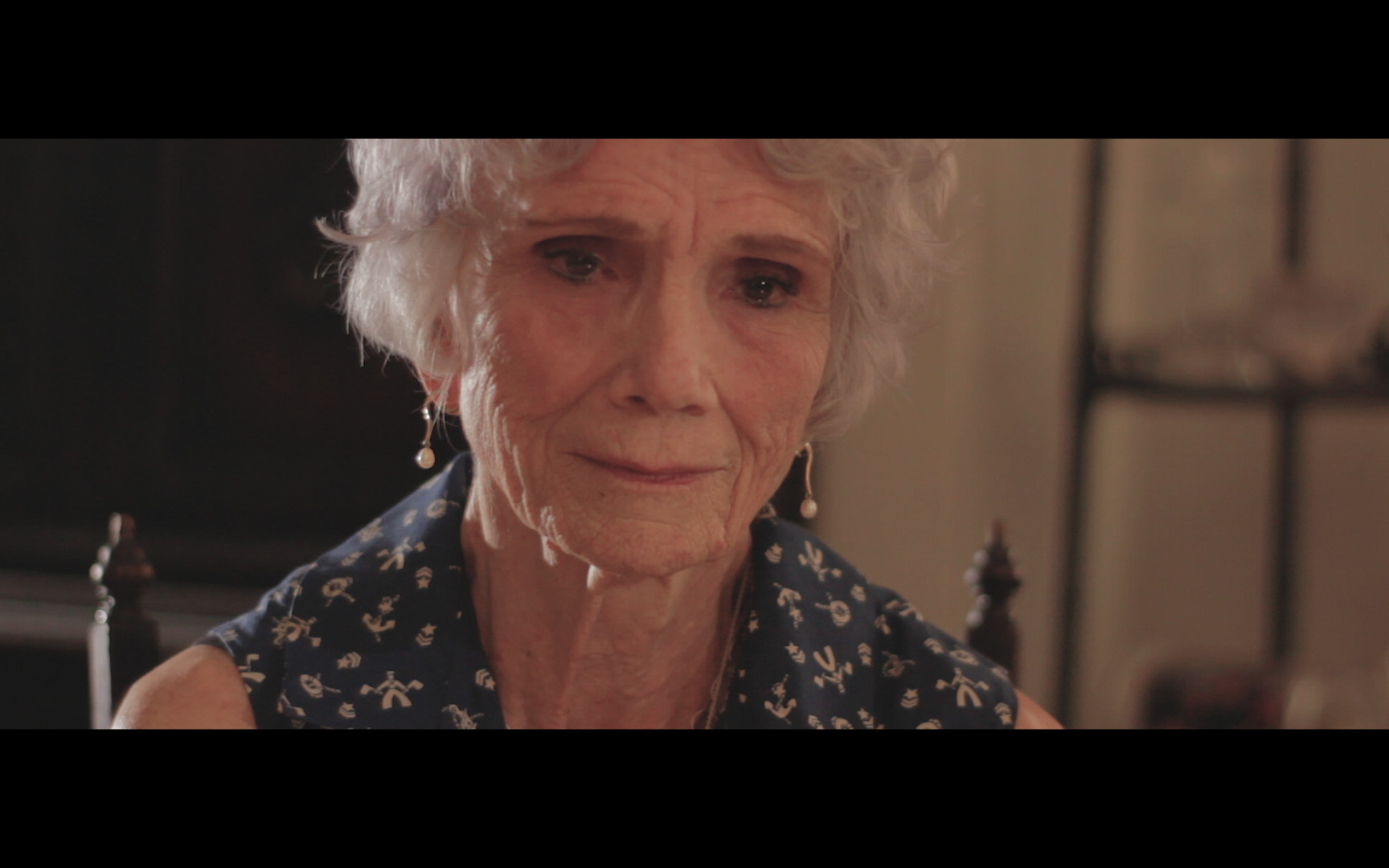
Irish writer-director Ken Wardrop’s seventy-seven-minute documentary, Mom and Me (2015), is a sweet, poignant and frequently amusing love letter to the unbreakable mother-son bond. Told in a deceptively simple manner, which benefits the general demeanor of the production splendidly, Wardrop centers his action around a local radio broadcast in Oklahoma. The host of said program is the charming and earnest Joe Cristiano. As the photoplay commences, we soon learn he is doing a Mother’s Day special. Cristiano takes this as a chance to invite listeners to call and discuss their relationships with those who are celebrated on this holiday. From herein, Wardrop fashions a varied, complex, gripping and undoubtedly impactful portrait of the subject matter. This is as we meet the callers and hear their tales. Wardrop also opens the door to see even more intimately into the lives of these individuals. He does this by allowing viewers a chance to personally witness scenes between these aforesaid familial counterparts unfold.
Though every narrative is strikingly different, they are all uniquely effective. In turn, Wardrop takes us through the emotional ringer with gentle, quiet sincerity. This is especially evident as this efficient, tightly paced and beautifully fashioned chronicle alternates between themes of regret, drug addiction, imprisonment and Alzheimer’s Disease. These more wrenching episodes match the generally upbeat air of the effort masterfully. The concluding sequences are especially harrowing. They balance all the prior beats of the endeavor spectacularly well. Consequently, they bring every individual yarn to a satisfying conclusion. John E.R. Hardy and Benjamin Talbott make this arrangement all the more immersive with their phenomenal musical contributions. This can also be said of the editing from Mark Bankhead.
The result is consistently ardent and brilliant; one of the best films of the year. This is a testament to true masculinity. It is one which will undoubtedly prove relatable to audiences of all ages and backgrounds. I whole-heartedly recommend you check out Wardrop’s latest, which is being distributed through Uncork’d Entertainment and Visit Films, when it is released theatrically and on video on demand May 5th, 2017.
Production Companies: Boom Pictures and Venom Films.





 awordofdreams.com