
“Sisyphus” – (Short Film Review)

sisiphus pic 2

By Andrew Buckner
Rating: ****1/2 out of *****.

“Sisyphus”(2016), the fourteen minute and thirty-three second debut short from director David Graziano, is an incredibly clever and strikingly original modernization of Albert Camus’ 119 page philosophical essay on the pointless quest for understanding, The Myth of Sisyphus (1942). In Camus’ famed text, the title Greek Mythology figure labored to roll a boulder up a mountain. It was a duty he was forced to endeavor for all of eternity. The futility of this back-breaking chore was articulated in the fact that once this was achieved he would watch the rock slide back down the elevation. The job was then repeated to no avail. Such was an expression of the human condition that endures as easily visible. It can still be applied to various aspects of our own personal lives. In turn, it is more than deserving of the updating Graziano and screenwriter Christopher DiNunzio, from a story by Bryan Casey, so marvelously craft here.

In Graziano’s effort, the symbolic pillar is that of a secret romantic relationship. It has blossomed from a friendship between Gretta (in a warm, gentle and credible performance by Jami Tennille) and Marlene (an enactment by Diana Porter that is just as nuanced and wondrous as her on-screen counterpart). The passage of days into years is gently, wisely expressed. This is through their various meetings at the same coffee house. At the heart of this dramatic undertaking is Gretta’s impending divorce. She sees this as a perfect opportunity to cement the once ardent bond she had with Marlene. Yet, Marlene is indecisive. It is an attribute of Porter’s role that she conjures brilliantly. This is as she goes through the majority of the piece coyly, as if unsure of what Gretta is desperately trying to communicate to her. It is from this point other interestingly conveyed concealments begin to get in the way of what Gretta and Marlene once had with one another.

The affair is punctuated by sparkling, immersive cinematography by Nolan Yee. He captures the mature, yet down to earth, tone Graziano injects spectacularly into each frame. This is with incredible visual flare. There is also a vastly appreciated underlying commentary on our diminishing face to face talks with one another. This is as the labor opens with everyone on their phones, directly avoiding all the people surrounding them. There is even an impression that Gretta and Marlene, with the exception of the baristas to their customers, are the only ones who are actually speaking to one another directly. All of this increases greatly the highly representative nature of this beautifully executed opus.

Likewise, Steven Lanning-Cafaro, who appropriately appears here as The Guitar Player, builds upon the sophisticated ambiance unveiled throughout. This is with his musical contribution. Cafaro provides soothing, melodic rifts. All of which are precisely what you may hear at a setting such as the one found herein. Such sweet sounds are continuously streamed in the background during the coffee house sequences. In turn, it often seems as if it is in sequence with and, simultaneously, helping edify the sentiment being uttered by our leads at every turn. Yet, astonishingly, it never once overshadows the dialogue driven emphasis of the account. In this sense, as well as many others, “Sisyphus” is a masterful demonstration.

Further facilitating matters is DiNunzio’s terrific, seamless editing. Graziano, who has wide-ranging involvement as a scripter and actor, has a behind the lens approach which is stalwart and engrossing. He will assuredly fare here as well as he did in his previously stated doings. Graziano’s bravura also compliments the material splendidly. There is also strong sound and camera work present. Such continues to build the excellence found herein.

DiNunzio’s screenplay is smartly paced. The aforementioned banter between our two leads is intelligent, authentic and well-written. The only occasion the feeling at hand seems to lapse is in a mid-way segment and in another nearly identical one during the concluding seconds. This is when we witness the shot of a package being opened. Instead of letting this transpire leisurely, and in real time, it is sped up. On each instance this plays out it momentarily throws us out of the saga. This is because it seems too rushed. It betrays the gingerly constructed illusion to watching life unfold that arose beforehand.

Yet, these are but a few erroneous flashes in an otherwise stellar, highly gripping composition. The fiction, which is scheduled for release in December of this year, is magnificent told. This is in a simple, straight-forward manner. Such mechanizes splendidly in the overall context. Best of all, the characters are always at the forefront. Gretta and Marlene are spectacularly developed. This is especially noteworthy given the exertion’s brief duration. Our protagonists, as well as the photoplay itself, should prove relatable to a wide-audience. Graziano has erected a truly impressive, emotive experience. I look forward to seeing what moving picture wonders he will conjure in the future.

sysiphus pic 1

“It’s Not You” – (Short Film Review)

It's Not You pic 2

By Andrew Buckner
Rating: ****1/2 out of *****.

“It’s Not You” (2013), the four-minute debut short from writer-director Sophie Peters-Wilson, is a sentimentally searing powerhouse; a visual poem told largely via flashbacks. It is one where joy is overtaken by a hidden heartache. What makes the material all the more potent is that it these memories, and the emotive journey attached to them, personify what is occurring in the mind of a young girl. She is referred to in the credits merely as Daughter (a performance by Abigail Spitler that tremendously conveys all the conflicting sensations someone in her position would undergo in such a situation). As the undertaking commences, she is being told that her parents are about to partake in a divorce. What follows showcases magnificently, achingly Daughter’s altering perspective. This is concerning what initially appeared to be happy times.

Peters-Wilson communicates this to the audience with small tidbits, all of which suggest transformative secrets, which were either regressed or deliberately hidden from Daughter’s eyes. For instance, one sequence showcases a close-up of Father (in another commanding, passionate and hypnotic enactment from Timothy J. Cox) pulling himself out of the locked hand of Mother (in a phenomenal, well-rounded depiction by Sarah Ruth Blake). This is to address another woman who has stopped to ask Father a question. Yet, the moment, heightened by the angry glimmer in Mother’s eyes as the instant occurs, speaks of jealousy. There are also various other hidden undertones. These are of her suspicions that Father is not being faithful. As the mid-section becomes a balance of arguments between both the maternal and paternal halves of this familial unit, Peters-Wilson clearly states the concealed tiff, revolving around the fear of breaking the matrimonial bond, between the two. It is during this succession, more than ever, we also note how remarkably Peters-Wilson has put us into the mind of Daughter. This transpires as we find ourselves asking many of the same questions that the character herself must be forced to ask during this deliberation. These are inquiries like: “Is this particular time what caused their falling out? Was this simply part of a bigger sequence? What could’ve been done to change this while it happened?”

It all helps to make this brief affair, which was shot in New York City, victorious. This is as both a psychological portrait and a maturely fashioned character study. Likewise, Peters-Wilson, who created this haunting composition with a reported budget of only $100, provides a screenplay that is credible at every turn. This specific section is also brilliantly structured and fluently, suitably paced. Moreover, the sparse bits of dialogue Peters-Wilson provides her leads are endlessly believable. Such is especially accurate with the circumstances the collective kin unveils. Though Daughter’s outlook fuels the majority of this stalwart opus, Peters-Wilson goes out of her way to be respectful to the plight and perception of all involved. Such a decision amends the effort with all the more dimension and detail. In turn, it makes it feel all the more complete. Peters-Wilson’s stirring, meditative authorship is given a stylish visual component through her directing. It is one which is equally elegant and impressive. Both elements find the perfect note for the material immediately and execute it beautifully throughout. All of these aforementioned attributes are more than visible in the final product.

Peters-Wilson also offers cinematography which is absolutely stunning. This is from the aspect of its overall veneer and tonal mastery. The more upbeat moments are merry, bright and cheery. When the story exposes the dark underbelly of Mother and Father’s relationship, what we see on-screen is drenched in a color palette that is appropriately bleak. Peters-Wilson’s contribution in this respective category is all the more striking and wondrous because of how well she speaks to her audience through this, and all the previously stated, mediums. Her editing is just as sharp and seamless.

With the further assistance of tremendous camera work from four individuals, this is just as pleasurable to admire from a technical angle as it is to witness. Peters-Wilson and her moviemaking crew have provided a narrative that has undoubted resonance and true cathartic value. This is for those who, sadly, may find themselves in a similar condition as those we encounter within the venture. It is just as much for the personalities who can look back, much as Daughter may do years after the events of this tale have happened, in continued meditation. “It’s Not You” is a heartfelt, courageous, challenging and necessary drama. Peters-Wilson has crafted an unflinching, cerebral masterpiece. It is one which all of its spectators can utilize to understand, in one arena or another, and grow from. That, in itself, makes it certainly worthy of recommendation, seeking out and experiencing for yourself.

It's Not You pic 3


“Mail Time”- (Short Film Review)

Mail time pic 1

By Andrew Buckner
Rating: ****1/2 out of *****.

Writer-director Sebastian Carrasco’s six minute and twenty-four second short, “Mail Time” (2016), is quietly compelling and magical. It is also grandly emotive in the manner of silent films from the early twentieth century. This sentiment is greatly enhanced, and made all the more operatic, by the remarkably stirring, uncredited score which drives every frame of the composition. Such an element is made so herculean that even mundane bits are immersed in a magnetic cinematic light. An example of this can be spied in a mid-way sequence that involves our lead, Ted (in an enactment by Timothy J. Cox that is commanding and likable as always and made all the more impressive by the performance being completely without dialogue), sitting at home. The moment conveys volumes by merely showing him smiling giddily as he watches a magician on television.

What continues to assists matters magnificently is that Carrasco has erected a screenplay which is artistic, beautifully honed, structured and contemplative. Yet, he gives Cox room to breathe and to create. Such a decision makes Ted something special. He is a hero who, like many of us, are unaware of such a stature. This is projected through the duration to great impact here solely through the lens of his everyday actions.

The narrative focuses in on Ted’s faux magician act suddenly becoming genuine. Initially, this behavior is an undertaking he has evoked to make the grinding routine of his occupation enjoyable. This is as much for his customers, the faces he sees repeatedly and to divert the nefarious man who constantly tries to rob him, as it is for Ted’s own sense of childlike wonder and awe. It is also utilized for the sake of keeping Ted’s employment as fresh and new as possible. This also mechanizes as a method to help make the transaction between mailman and customer memorable. Almost unthinkably, genuine mysticism begins to finds its way into his life. Soon the humdrum pattern of his days are anything become anything but ordinary. Ted now has now become real-life illusionist. His once banal delivery route has become a stage, a setting for truly joyous and numinous exploits.

The piece is a simple, innocent tale at its heart. It knows this on a conscious level. Therefore, it never gives into any possible inklings lesser exhibitions of this ilk may have. This would be to make the work more complex than it needs to be. That, in itself, heightens the wonderfully old-fashioned joviality and storytelling at hand. This assists in making Carrasco’s brief endeavor all the more charming.

Carrasco’s direction is equally illuminating. It is endlessly stylish and further calls to mind similar entries which are a hundred years or more behind us. Moreover, Carrasco has a sharp sensibility of pace. This effort moves along much in the manner Ted does through his day of labor here. It is briskly casual. We glide from incident to incident with sufficient time to get a strong impression of all necessary details of the situation. Also, we never assume the sensation of being pushed along doggedly to get from point A to B. Despite this, it miraculously never feels as if it lingers or any of the sequences go on longer than they should. This is a difficult and delicate balancing act in itself. It is one worthy of great acclaim. Such is one of the many astounding feats this marvel pulls off wonderfully.

Enhancing the overall prowess of this composition is Makeela Frederick. She is excellent in her small role as The Girl. Additionally, Bernardo Salazar’s cinematography is resplendent and certainly striking. Carrasco’s editing is just as impressive. Simultaneously, the sound and make-up contributions are just as terrific as the previously stated traits. These details conduct an account, stated to have a budget of only $1,000, which is pure, exuberant delight.

Carrasco opens on a loving note. He carries that ardor respectfully, engagingly until the closing credits. Such evokes an undeniably positive experience. It is one which will undoubtedly leave even its sourest of spectators in a far better mood after viewing it. That, in itself, is a rarity. This only makes “Mail Time” all the more worthy of recommendation. To its further recognition, the touches of comedy here are natural and endlessly successful. They appear as much of the story as everything else we come across. For instance, a commencing gag in the first sequence which dramatically showcases postage articles falling onto a table in slow motion, reminiscent of something one might see in a soap opera, are where this is most effective. Such an aspect only further represents the upbeat nature of the visions radiating on-screen.

It all comes together to create a tour de force. Carassco has concocted a mesmerizing opus; a well-deserved ballad to the often unsung powers of those who take up the reins of laborer dutifully. This is a stroke of brilliance. It is one that broad ranging audiences will assuredly have no problem relating to. Carassco has provided us a touching, illuminating and enchanting masterpiece. It is as much necessary viewing for the stressed out adult who is long exhausted of the repetitive nature of our quotidian doings as it is for the wide-eyed youth lurking within. Carassco has fashioned a gentle character study. It is one that hits us on a passionate level, speaks to us and makes us want to unveil the magic in our own lives.

mail time pic 2

“Maya” – (Short Film Review)

https://www.youtube.com/watch?v=h4BD-NIl5Fc

By Andrew Buckner

Rating: ***** out of *****.

Director Veemsen Lama paints with the entire spectrum of the human experience in his tender and tragic sixteen minute short, “Maya” (2015). At times painful and others loving, optimistic, genuine and poetic, this work is undoubtedly full-bodied and alive. Lama, courtesy of a beautifully written and endearing screenplay by Tayo Odesanya, offers a stunning behind the camera bravura throughout. It is one which makes its more gentle moments all the more tearfully stirring. Likewise, it assists grandly in making the far more intense, dramatic instances all the more riveting.

The pace is just as masterful. In the tradition of the best brief compositions of this ilk, we walk away from the exertion impressing upon ourselves that we have been amended a feature length story. Yet, one that never feels condensed in any manner to fit into its fleeting span. Much of this has to do with Odesanya’s filler-free script. Every sequence directly continues the gripping narrative expertly. The believably wrought dialogue follows suit. Yet, the piece never feels rushed. Everything comes to us with an apparently natural progression. Such is just one of the many incredible feats this ground-breaking artistic construction conveys.

Lama tells the tale of three young children. Their names are Bikram (Suraj Tamang), Kancha (Aakash Malla) and the title heroine, Maya (Ashmita Tamang). The incredibly likable trio are seen escaping a seller in the immediately attention-garnering opening minute. These commencing seconds are smartly edited by Biki Gurung. Such is issued in an assortment of quick cuts. The decision to do so only increases the power, confusion and intrigue of what we are viewing. After this daring undertaking, they find themselves in the center of Kathmandu (Bagmati, Nepal). From this point, they are forced to steal food and other items necessary to ensure their survival. All the while, they occasionally labor at construction sites. This is while dreaming of, and slowly building, a home that the three of them can live in. Such becomes a testament to their will to endure. We, the audience, notice this all the more as such aspirations meet impossible to conquer obstacles at practically every turn.

Suraj and Ashmita Tamang, as well as Malla, are exceptional in their undeniably courageous roles. The Javiya Films production sports a small secondary cast which is just as impressive. Ben Winwood’s music captures the alternately fearful and inspirational tone of the undertaking. This is erected with simple beauty and maturity. Arran Green’s cinematography frames the entirety in a visual splendor. It is one where the same sentiments certainly apply. Shyam Khadka’s set decoration and costume design, Hannah Barnett’s vocals and Michael Ling’s sound carry on these attributes further. Everyone involved does marvelously in their respective technical arenas. The result is accessible in every achingly gorgeous, emotionally rousing sight we encounter herein.

Lama punctuates the account with a finish that is as enthralling as everything that came before it. Such a climax evokes the perfect concluding note. It is a send-off that impeccably captures the heart-tugging gambit of all that arrived prior. Such only highlights the topic of love, hope and innocence amid the harsh, adult landscape these youthful individuals find themselves in. This makes the ultimate culmination all the more effective. It escalates and underlines the impact of the theme of the stalwart nature of valor and virtue, and its ability to carry those instilled with it through an unapologetic environment, vastly. It also adds layers of potential allegory beneath the visage of its rather straight-forward approach.

The strength at hand is greatly heightened when we realize Maya, Bikram and Kancha are an extension of many of us. Such are those who try to abide by an unspoken code of kindness and mutual affection for those around us despite abundantly negative circumstances. In this sense, as well as uncountable others, “Maya” is irrefutably relatable. It is also meditative, gentle, striking and quietly authoritative. Lama has created a cinematic endeavor, full of well-developed protagonists, which demands deliberation and respect. This is an opus which lingers in the psyche long after its fittingly underplayed closing credits have ran their course. Lama’s sincere, well-rounded portrait is an absolute masterpiece; searing, challenging and ingenious all the way.

maya short film poster

“Over Coffee” – (Short Film Review)

over coffe pic 1

By Andrew Buckner
Rating: ****1/2 out of *****.

The primary joke of “Over Coffee”, a fifteen minute short from 2010 that was written and directed by Sean Meehan, is the lengths someone will go for that all-important morning cup of joe. The ticking clock motif is hilariously utilized in this situation. Such occurs as we find out that this beverage isn’t for our office laboring lead, Andrew (in a likeable performance by Erik Potempa that showcases the everyday qualities of his on-screen persona to terrific effect). It is for the imposing real-estate entrepreneur, Hamilton Rice (in another masterful portrayal by the always watchable Timothy J. Cox). He is from Rice Realty Inc. We learn in the first few minutes, in one of the many triumphantly humorous initial bits, that he has an obsessive fascination with the Post-It notes and their colors’ representational values. When a meeting that was scheduled with him at Wednesday at noon turns to “he’s on his way” the office Andrew works at descends into chaos. Andrew sees this as an opportunity to help out the girl he has unvoiced affections for: Carla (a tremendous representation by Jocelyn DeBoer that mirrors Potempa’s enactment in charisma). This is by executing an exploit he fools himself into thinking will be easy. It is to get Rice his coffee, measured out to his demanding specifications, before he shows up.

This set-up is splendidly introduced five minutes in. The last 2/3 are a cheery, light, but dead-on, parody. Such is of the maddening rush of the work-world. It is also about how, especially for those of us who are feeling the aforementioned crunch of labor and time, the simplest of tasks become the most difficult and strenuous. This pressure is perfectly realized in the opening moments. Such is a reverie of sorts involving Andrew’s run to his place of employment. This can be seen as a delightful thesis statement to the entire exertion.

over coffe pic 2

It is this allure which helps propel Meehan’s attempt to such successful heights. An early sequence between Andrew and David (in another of the many enjoyably wrought performances herein), where the duo are engaging in a conversation about cell phones and relationships that is sprinkled with one funny sexual innuendo after another, could’ve been cut from any closed door office friendship. A mid-film arrangement involving the laborious undertaking of getting a coffee order right, especially when said coded in a dense Starbucks-esque language, also adds to the breezy, slice of life comedy at hand. The romantic element also further illuminates such an aspect. It makes for a finale that is wonderfully old-fashioned in its upbeat simplicity and joviality. This makes Meehan’s work perfect viewing to break up another cloudy day of toil. This is by pointing out the absurdity of many of the situations we, the laborers, find commonplace.

over coffe pic 3

This detail is also thanks to a sharp, genuinely hilarious and character-oriented screenplay by Meehan. He gives us direction that fits the atmosphere of the material beautifully. This endeavor parallels itself to the look, luster and pace of similarly themed genre cracks well. Yet, it always feels fresh, unique and new. The Two-Five Films and A Studio in Production release benefits from vibrant music by Eric Campo. Matt Schwarz’s cinematography is exceptional. The same can be said for Meehan and Schwarz’s editing. Contributions from the five members of the sound department are also terrific. To add to the skillfulness visible throughout, Mallory Portnoy is outstanding in her representation of Laura.

Meehan aims to amuse and brighten with this venture. This he triumphs at stupendously. His exhibition is even paced and consistently entertaining throughout. The composition has just the right amount of well-timed comic moments and affectionate instances. This is utilized without ever appearing to artificially strive for either. The piece, made for $5,000, is amiable at every turn. Meehan injects the same demeanor here that made later efforts like 2015’s “Total Performance” so winning. His goal is to appeal to a mass audience by using themes we can all find applicable. This is one of the many triumphs on-screen. “Over Coffee” is a tour de force achievement. It is one which seems to have a bit of a Woody Allen spirit to the proceedings. Such makes this phenomenal accomplishment all the more endearing. This is the increasingly rare cinematic product which will be undoubtedly relevant, in some form or another, to practically everyone who crosses its merry path.

over coffe pic 4

“In a Time for Sleep” – (Short Film Review)

By Andrew Buckner

Rating: ***** out of *****.

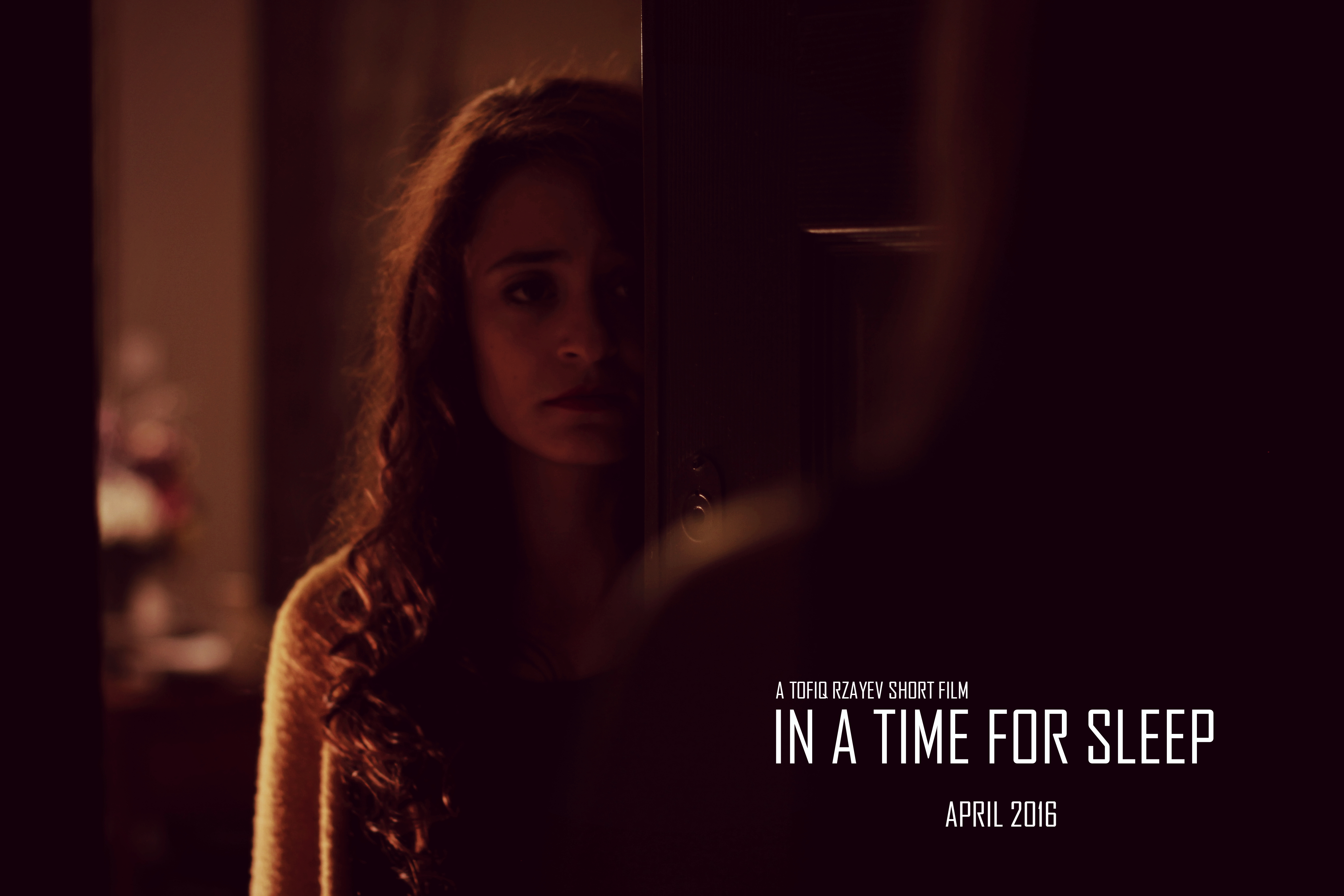
On its surface Trofiq Rzayev’s fourteen minute, 18+ rated short, “In a Time for Sleep”, is about a turbulent relationship. It is one which explodes into un-meditated violence. This is during what it meant to be a celebratory one-month anniversary dinner. Such shockingly transpires between our heroine, Leyla (an incredibly honed depiction by Goknur Danishik that is both vulnerable and aggressive in equal doses), and her ungrateful boyfriend, Arda (a terrific performance by Mehmet Faith Guven that greatly enhances the credibility on-screen). Yet, the Turkish language piece, released through Angry Student Productions, derives poetry and dramatic resonance from a set-up less competent filmmakers would use for traditional thriller conventions.

in a time for sleep pic 2

Screenwriters Guven and Rzayev also add quiet commentaries on the intervention of fate. This arises most readily from the bond Leyla finds in an unnamed woman (a strong representation by Elif Barut) she meets, and partners up with, along the way. For most brief features this would be enough. Despite this, Guven and Rzayev focus sharply on how the incident, whose action and deliberation of potential consequences take up the first half of the composition, shapes Leyla’s sense of liberation. In the wake of the bloodshed, she also unveils her true self. The emotive heft of this reveal becomes all the more poignant. Such occurs with the realization that this individual spirit was abandoned, discarded even, during her time with Arda. This is powerful material. It is made all the more potent by the meticulous care and craftsmanship at hand. Such reverberates through every frame and creative influence from the moviemakers herein.

Much like Rzayev’s terrific “Nihan: The Last Page”, which also concerned the difficult aftermath of a liaison, Guven and Rzayev find a tone that is striking and consistently mature to tell their transformative tale. It is also stunningly beautiful. This is issued immediately. It is only expanded upon as the affair unravels. Most incredibly, there is an authenticity about the situations and what comes from them. Furthermore, the characterizations and the overall veneer share this attribute splendidly. Likewise, the pace is brilliantly etched. It offers even time to contemplate every major turn in its narrative events. This is without feeling rushed. Moreover, it never betrays the believable, slice of life nature. Such is accomplished effortlessly throughout. The script is intelligent, multi-layered and awe-inspiringly fashioned. Rzayev’s directorial contribution is elegant, often understated, gentle and endlessly impressive. It, again, showcases Rzayev’s absolute mastery of the cinematic craft. All of these elements are also much in line with the previously stated endeavor.

in a time for sleep pic 1

The other technical facets are just as astounding. Rzayev’s cinematography is illustrious. It fits the eloquent atmosphere of the chronicle terrifically well. The same can be said for his input to the editing of the undertaking. The original score by Gergo Elekes and songs by Serif Ahmet Ege are transcendent and touching. David Kislik’s visual effects are phenomenal. These components only further increase the plausibility Rzayev is obviously striving for. An inventively done concluding credits bit only heighten the appeal.

Rzavey has created a full-bodied masterpiece. “In a Time for Sleep” is entirely fulfilling as a gripping account. It is just as ravishing as a study of those we encounter on-screen. From Leyla’s commencing line, “You’ve destroyed everything!”, to its uniquely uplifting climax: our attention is piqued throughout. Yet, its emphasis on thoughtfulness, spied most readily in even its most miniscule of instances, is the most encapsulating component of all. What is just as astonishing is how this is all consummated in such a transitory duration. Rzayev’s latest satisfies on all aspects. For those of us who adore a moving picture which challenges and compels, as well as invigorates and leaves a lasting impression, this is mandatory viewing.

in a time for sleep pic 3

“Sky’s the Limit” – (Short Film Review)

sky's the limit pic 2

By Andrew Buckner
Rating: ****1/2 out of *****.

When we first meet Jason (a charismatic, genuine and beautifully honed portrayal by Timothy J. Cox), the lead from first time writer and director April Schroer’s “Sky’s the Limit”, the balance between family man and recently widowed father is perfectly displayed. He is visibly distracted. It is easy to detect that there is a high level of stress, hints of anger even, beneath his always calm exterior. The individual is spied typing away on his laptop. He is searching online messages. All the while he is only partially listening to what his son, Frankie (a strong and vulnerable depiction, perfect for the material, by Joseph Di Stefano) is saying. The signals, cries of attention from Frankie, appear initially lost on Jason. That is until a playful, imaginative game fills the duo with joy. It is this note which makes the second half, where Jason meets Kaitlin (a sharply rounded and authentically honed representation by Monica Servellon) so quietly powerful.

As the story goes on, it is uncovered that Frankie’s babysitter, Rebecca, is unavailable. From herein, the youth tags along on his dad’s date. It is during these later scenes, both natural and skillfully executed, so pivotal. Here, the audience begins to further sense the unspoken tug of war Jason has within. This is with his decision on which priority is more important to him: the role of parent to Frankie or lover to newly met Kaitlin. His final choice is as underplayed as all that came before it. Such heightens the dramatic beauty ebbing and flowing beneath its transcendent, vibrant slice of life surface. The result is a dynamically developed, breezily paced tale. It is one complimented by genuine dialogue and same-said events. Moreover, it is graced with tremendous performances. The outcome of such is a herculean marvel. It is one that is both fully satisfying and illuminating. Ultimately, it is the consistent believability on-screen, a mirror to existence itself Schroer holds throughout the endeavor, which makes these elements all the more stalwart.

Such is the impetus which thrusts forth the everyday comedic bits. It makes them all the more engaging and likable. These are all beautifully assembled. Refreshingly, the use of humor is not so heavily applied that it ever appears forced or betrays the realism Schroer has successfully accomplished. There is also a poignant, sobering emotive resonance beneath it all. It is one which is lightly, proficiently issued.

Schroer’s fantastic direction and smartly written screenplay never demonstrates the need to underline the sentimentally intense instances. Instead, it is as if we are a silent partner. This is most noteworthy as Jason greets Kaitlin at the door to initiate their date. Such is especially accurate during the climactic movie theater sequence. This is where Jason mentally assesses which definition of love is most important to him. Additionally, this is all entertainingly and convincingly distributed. The fact that such is done in a tightly-knit runtime of seven minutes and thirty-one seconds is all the more awe-inspiring.

With an estimated budget of only $1,000, this is also a technical gem. It looks and feels like an expensive, polished big budget product. Tom Mika’s cinematography is splendid. It supplements the tangible veneer emanating from all other aspects of the effort spellbindingly. Mika and Schroer’s editing fares just as well. Georges Estrella and Filip Ilic’s sound is crisp and spectacularly fashioned. The uncredited music utilized is phenomenal. It fits the brief production’s tone gloriously. To add to the quality at hand, Ryan Moore is incredible in his quick turn as Sky King.

Filmed in Montclair, New Jersey the composition is a joy to behold. There’s a joviality, an innocence lurking beneath the frames. It is one that is as admirable as it is necessary. This is a terrific, heartfelt account. It serves as the reminder to those of us who may see some of ourselves in the rendering of Jason. Such is to disconnect from the workaday world which dominates us. Furthermore, to focus our energies where true importance lies. This message Schroer delivers in a manner that is as understated as all that is previously witnessed. Much like these other attributes, such an action makes it all the more potent, pivotal and prevailing. This is a fantastic, intelligent and masterfully constructed undertaking. It is one I highly recommend you experience yourself.

sky's the limit 3

“Inspired”- (Short Film Review)

inspired pic 1

By Andrew Buckner

Rating: ****1/2 out of *****.

“Inspired”, a twenty minute Senior thesis film from first time writer and director Maggie Kaszuba, is an absolute triumph. Likewise, the 2015 release is fittingly titled. Kaszuba and her moviemaking crew put us through the emotional ringer. We feel anger, frustration, spats of teenage confusion and undeniable sorrow. Yet, it all resonates, through its sensational gym room monologues and tersely private at home instances, to uplift. It does this, especially in its concluding sequence, spellbindingly so. There is not a second of its runtime we don’t sense the drive and initiative Kaszuba has injected into every frame. It is seen in both the towering quality of Kaszuba’s material and her delicate crafting of scenes. Such is also calculable in the brilliantly honed individuals that dominate this outstanding yarn.

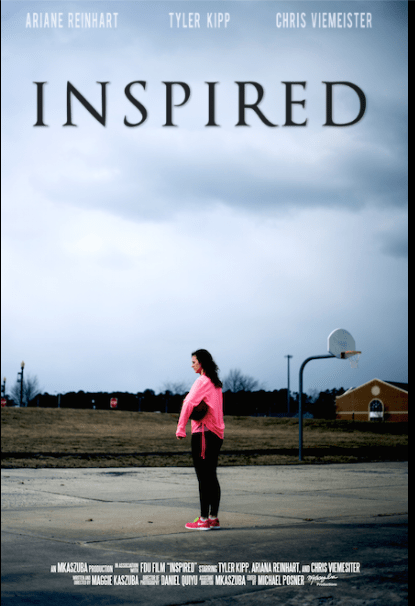
Kaszuba’s powerful tour de force concerns high school student Samantha Higgins (a tremendous and fantastically realized performance by Tyler Kipp). Plagued to lateness, she has developed a turbulent relationship with her basketball instructor, Coach Stafford (an unflinching depiction by Ariane M. Reinhart that is smart and courageous). The initial half of the narrative focuses to spectacular effect on the relationship between Higgins and Stafford. This is until a tragic ailment is introduced into their existence. It serves as a reminder to Higgins of the elusive balance of life and death. It also becomes a lesson in appreciating the time we have with those who stir us to better ourselves.

But, it is just as much about the path of dreams. Higgins’ seem plagued, as is the case of so many attempts to fulfill our personal ambitions, by unyielding detours of failure. In turn, the effort radiates hope beneath its mournful chain of events. It is proof of how well-rounded, tear-jerking and fulfilling this brief undertaking remains. Such is true as a relatable endeavor and a photographic experience.

Higgins, Stafford and Coach Bohn (an exceptional portrayal by Chris Viemeister) is credibly etched. Such is also the case with the chain of events Kaszuba builds around them. Because of this, the on-screen personages and the composition as a whole should prove accessible. It will likely prove personal to a widely varied group of cinematic patrons. A pre-end credits segment of this MKaszuba Productions and FDUF Films masterwork makes Kaszuba’s own intimate relation to the material glaringly apparent. Such makes the proceedings all the more impactful. This also evokes an autobiographical air. It brings about another of the many re-iterations of motivation spied in the enterprise itself.

Technically, the affair is as strong as it is in its account. The cinematography by Dan Quiyu is illustrious. It complements the accurate atmosphere of the exertion terrifically. Michael Posner’s editing fares just as well. Jalen Thompson and Foster Vernon’s sound contribution is top-notch. Matt McAndrew’s music trails the sentimental beats of the fiction wonderfully. Kaszuba’s directorial flare is impressive. Her screenplay is well-mounted and intelligent. It is filled with dialogue and situations that are as harrowing and believable as all other components we witness. This parallels beautifully all other aspects she visibly strives for throughout the venture.

Kaszuba’s labor of love begins on a note that immediately allows viewers to glimpse Higgins’ turmoil and plight. It is a riveting opener. Moreover, it is as natural, but attention-garnering, as all else that follows. The piece is just as credible in its organic pacing and sensibilities. Everything Kaszuba projects here comes from a place of authenticity and insight. This is issued meticulously and with genuine concern through the duration. Kaszuba has given us a dramatic slice of life. It is one that is character-oriented and exhilarating. This is mutually accurate as storytelling and as art. She is a tremendous talent. I look forward to seeing what future offerings she has in store.

“What Jack Built” – (Short Film Review)

what jack built 2

By Andrew Buckner

Rating: ****1/2 out of *****.

Director Matthew Mahler’s eleven minute short, “What Jack Built”, works tremendously well. It forces the imagination to look under its murky, brooding corners, retrace its steps and put the many enigmatic items of its narrative together themselves. The overall intensity and interest of the piece is garnered largely from the craftsmanship of the mystery at hand. This is just as true of Mahler’s skillful handling of the material. Such is a brilliant manner to tell a tale like this. Mahler provides a dialogue free composition. This is another smart move. It heightens the intrigue immensely.

We watch the cigar-smoking and brooding, Jack (Timothy J. Cox, in another mesmerizing and masterful enactment), as he puts together blueprints in a secluded basement. He is also seen laboring over a trapping device. This is for the wholly concealed fiend lurking in the woods as well as inspecting his security cameras. Audience patrons view the succession of these immersive, hypnotically constructed and intriguing sequences of the affair’s arc in wonder. They are forced to uncover the meaning behind Jack’s actions themselves. This just adds to the appeal and quality of the item immensely.

What is going on inside of his psyche? How did he come to think of this device? What is its purpose? How did he put it together? Since he is the only one we meet, is he the only one left alive? What is exactly is this creature in the woods, if that is in fact what it is, he appears to be combating? Are they truly at war with one another? Are they linked somehow? It’s fascinating to ponder and assess these questions, left unanswered by the actual account, and come to our own conclusions based on the wisely sparse bits of details Mahler provides. These lack of particulars are a deliberate inclusion on Mahler’s behalf. Such is a bold choice that pays off handsomely. The result of this already attention-garnering saga is amplified by the minimalistic approach. The consequence is elevated far more than it would be if it was told in a traditionally straight-forward manner. This is not only thanks to Mahler’s taut direction, but also the cleverly paced, electrifying and meditative screenplay. This was penned by Matthew and Ross Mahler.

The title alone suggests a bit of a parallel to the popular British nursery rhyme, “This is the House That Jack Built”. In retrospect, it can even be perceived as an apocalyptic aftermath of the absurdly comic events that transpired in that tale. Yet, with a far more mature tone. “The man all tattered and torn”, as the folktale states, certainly applies to the brooding Jack realized in Mahler’s fabrication. He appears haunted, as if by the measures transcribed in the poem. Cox portrays this excellently. Not to mention, there is an underlying aggression to his motions. It is one which backs up the previously stated line splendidly. It is grasped in the various facial expressions Cox so expertly instills into the protagonist. Maybe this all circumstantial. It could be that this theory has nothing to do with its similarly captioned brute. But, it is this uncertainty, the many ‘what-ifs’ the endeavor captivatingly radiates, that makes it so thought-provoking and endlessly stirring.

what jack built

Matthew Mahler also issues music which is as spellbinding and ominous as the article itself. He utilizes a creaking soundtrack, reminiscent of one conventionally heard in a feature by Dario Argento, to chilling effect. It also sonically re-instates the endless atmospheric of the exertion beautifully. It makes the moments in the depths of the secluded area where Jack is hiding, as well as the ventures into the outside, all the more fearful and suspenseful. Adding further technical success to the project is Mahler’s sharp editing. There is also an inspired flare to the chronicle. The instances the smartly never spied beast is sensed creeping through the surrounding landscapes is reminiscent of the recurring shot which opens Sam Raimi’s The Evil Dead (1982) is where this is most evident. Even the setting itself calls this comparison to mind. Yet, Mahler’s attempt is far more than a simple homage. It is entirely its own entity.

In scenes such as the one recently addressed, Mahler’s aforesaid sonic contribution is most proficient. Yet, his appropriately dark, gorgeously honed cinematography drives this magnificent attribute home all the more victoriously. He also instates a credible, well-done input to the costume and wardrobe department. John Heirlein’s art department influence strengthens the believability and stalwart nature of the proceedings just as well.

This 8mm Films production is a true marvel. In an era where so much of cinema goes out of its way to show and tell, in excruciating specificity, its spectators what is hidden behind every door and explain every secret within a moving picture, “What Jack Built” is all the more necessary and refreshing. Those who expect everything ushered there way as far as a fully-fleshed out yarn, character development and all of the other trademark tools of the storytelling trade may find themselves frustrated. Such would be in the manner in which Mahler ceaselessly defies these expectations. They are assuredly the ones who will be put off by the undefined sum of the effort. Yet, those of us who like a new experience, one which gives us more inquiries than responses, will feel liberated.

Mahler drops us immediately into the exploits as if in the middle of a fiction already in progress. From herein, we are with Jack, hanging on his every motion, riveted through the duration. Despite the intentional vagueness of much of what we encounter, this can also be understood as an admirable experiment. This test concerns how much can be stated without a single word. Yet, the investigative nature reaches far beyond this single boundary. There is genuine risk-taking incorporated at nearly every turn. It makes the outcome all the more harrowing. For those of us who enjoy innovation as well as an adventurous take on the thriller, Mahler’s undertaking is a mandatory dose of adrenaline. It is a fantastic, illuminating, nail-biting spectacle which demands to be witnessed.

what jack 5

“Slimebuck” – (Short Film Review)

slimebuck pic 1

By Andrew Buckner
Rating: ***** out of *****.

“Slimebuck”, masterfully directed by Tom DeNucci (2013’s Army of the Damned, 2015’s Almost Mercy) and ingeniously written by K.C. Cerilli, is a wonderfully playful and charming masterpiece. The twenty minute short film, from Morbidly Amusing Productions and The Woodhaven Production Company, is proudly inspired. There are echoes of Joe Dante’s Gremlins (1984) and Stephen Spielberg’s ET: The Extra-Terrestrial (1982) resounding with a wink at the audience throughout this 2015 release. Even the rotund appearance of the title creature itself seems as if it could be a distant cousin of the Venus flytrap, Audrey II, in the unusually excellent 1986 musical remake of Roger Corman’s Little Shop of Horrors. Yet, it owes just as much to later Hollywood blockbusters of a completely different categorical ilk. Most discernibly, Christopher Columbus’ comedic Home Alone (1990). This is most clearly visible in the attention-garnering and well-done final act.

slimebuck pic 2

To add to the variety at hand, there are also elements of the mad scientist account woven into the proceedings. This comes into play with the entertainingly eccentric, Mike. Joe Siriani gives a fantastic, endlessly watchable portrayal as this individual. The individual is obviously carved with a deep felt passion for the previously addressed sub-genre. Siriani’s show-stopping, charmingly unhinged presentation is a delight to watch. It also makes the aforesaid characteristics and esteem all the more engagingly present. We see it in Siriani’s grandiose mannerisms. Such is also expressed in the way DeNucci frames the segments Siriani is involved in. This is largely noteworthy in the first half of the article. An attractively staged and smirk-inducing segment at four minutes into the affair is where this most evident. It showcases Mike in his laboratory, with test tubes and other trademark equipment of the filmic obsessive genius encompassing him, as he frantically labors. Such is an expertly conducted homage. All of this is given further incredible punctuation by Brad Piche’s quirky, endlessly fitting music. This aspect parallels the atmosphere of the construction beautifully. In turn, it enriches the jovial nature of the work immeasurably. Yet, despite the many peers the story summons, it finds a way to not rely on them. “Slimebuck” is clearly and refreshingly its own entity.

slimebuck pic 3

The intriguing concept behind this endeavor concerns Mike’s increasing interest in a meteor. Fascinated by the unique component within it, he brings the piece home. Soon after, he is reminded of an awards ceremony that he has forgotten that he must attend. For this event he will join his wife, Connie (Tess Degen in an outstanding depiction). Mike rushes to prepare for the occasion. As he leaves his residence with Connie in tow, he never realizes he left the irreplaceable item behind. All the while, their son, Tad (Jonah Coppelelli in a grand representation), has a sleepover at his house with his friend, Edgar (Jack Brunault, whose inaugural representation is excellent). Later that night, after a long session of Xbox, Tad wakes up to find the harmless, and immediately lovable, title creature in his room. This instant suggests, in part, the power of the imagination as Tad is seen drawing the harmless extraterrestrial a minute into the effort. Soon a band of bumbling robbers, Vladimir and Ivan (Fred Sullivan and Nick Principe; both in splendidly honed turns) attempt to steal the cosmic pillar Mike left behind. From this point forward, Slimebuck teams up with the children to foil the duo’s nefarious plans.

slimebuck pic 4

DeNucci finds an innocent, merry and inoffensive approach to the composition. It is one which is undeniably suitable for the material. Neither is it too juvenile to put off adult patrons, nor to terrifying to scare away younger viewers. This is established mesmerizingly in the first shot. From herein, it radiates admirably through the duration.

slimebuck 5

Both Cerilli, whose characterizations and dialogue are terrifically penned, and DeNucci offer exceptional influence to the quality of the material. The pace the duo conjure is even and the humorous moments are well-timed. It makes the undertaking all the more immersive. Moreover, the end outcome is all the easier to adore.

Furthermore, Maura McCarthy’s costumes are spectacular. The editing by Robbie Savage Jr. and Andrew Migliori is stupendously issued. Michael Zuccola is delightful as the pizza boy, Rickey. Billy ‘V’ Vigeant fares just as well as the limo driver. Additionally, Joe Cantor and Bobby “Boom” Brierly’s sound contribution is outstanding. Marissa Giammarco does a magnificent job with the hair and make-up. Puppeteer Erminio Pinque and special effects contributor Ben Bornstein cleverly bring Slimebuck to life. The result is a marvelously engaging and technically proficient opus.

slimebuck 6

“Slimebuck”, though brief, is every bit as well-etched and satisfying as a full-length feature. This is especially evident in how incredibly well the narrative is fleshed out. DeNucci and Cerilli have found a skillful manner to develop the personalities we encounter. They also provide a well-rounded and in-depth product. It is one which tells its fiction as completely as a lengthier enterprise. When considering this is done in about 1/6 of the space, such is all the more astonishing. This is another of many details mechanizing together to make this an absolute must. Such is particularly true of those of us who like to indulge the child within us now and again.

A sad tale lies behind this ultimately optimistic and laughter fueled tour de force. Thirty-year-old Cerilli, an avid genre devotee, wrote the script before passing away to muscular dystrophy in 2014. His parents, Vin and Annette, made it their mission to make sure his vision got to the screen. Though there is an abounding joy to everything we encounter in the piece itself, such adds an air of mourning to this warm, endearing and poignant exhibition of moving art.