“Clean Up Duty” (2023) – Short Film Review

By Andrew Buckner

Rating: ****½ out of *****.

“Clean Up Duty” (2023), from director Christopher Di Nunzio, is a grounded yet quirky, disarmingly funny, and exceptionally well made take on the type of violent gangster sagas commonly associated with filmmakers like Martin Scorsese. The eleven-minute presentation further aligns itself with Scorsese in the sense that it masters the deftly sewn character focus and underlying intensity that coolly courses through Scorsese’s trademark style of picture. Yet, the last act of Di Nunzio’s undertaking takes on an unexpected, darkly comedic tone. It is one which wonderfully fuses with the ambiance of the otherwise generally sincere production. Moreover, it showcases a propensity to successfully surprise and take risks with the material which is always welcome. 

The jokes demonstrated during this final stretch can be seen as lowbrow. Still, the organic and all-around terrific performances from lead David Graziano (Henry) and supporting actor Fiore Leo (Lou) make them work. The effectiveness of these instances, as well as the exercise as a whole, also masterfully reverberates from the excellent screenplay from Skip Shea. Said script is alternately thoughtful and playful. This is especially evident in the dialogue, particularly the banter between Henry and Lou, that is lifted from this arena. Furthermore, the climactic gag, which is exhibited in the effort as a twist of sorts, is a potently punctuative note for the piece. While slyly winking at the title of the composition, the humor spied here may also prove to some viewers to be cathartic. This is given certain fears that culminated during the Covid-19 pandemic.

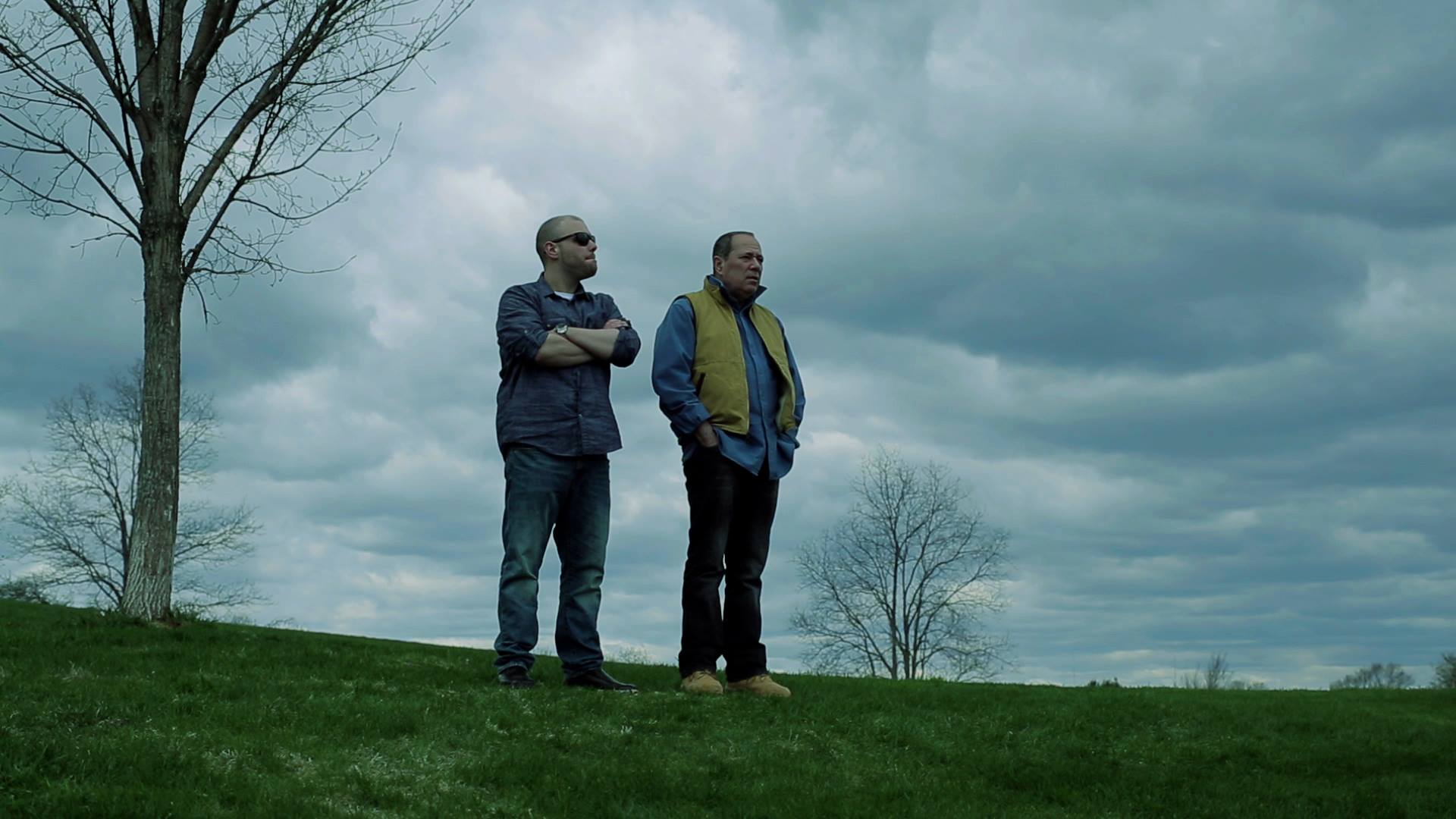
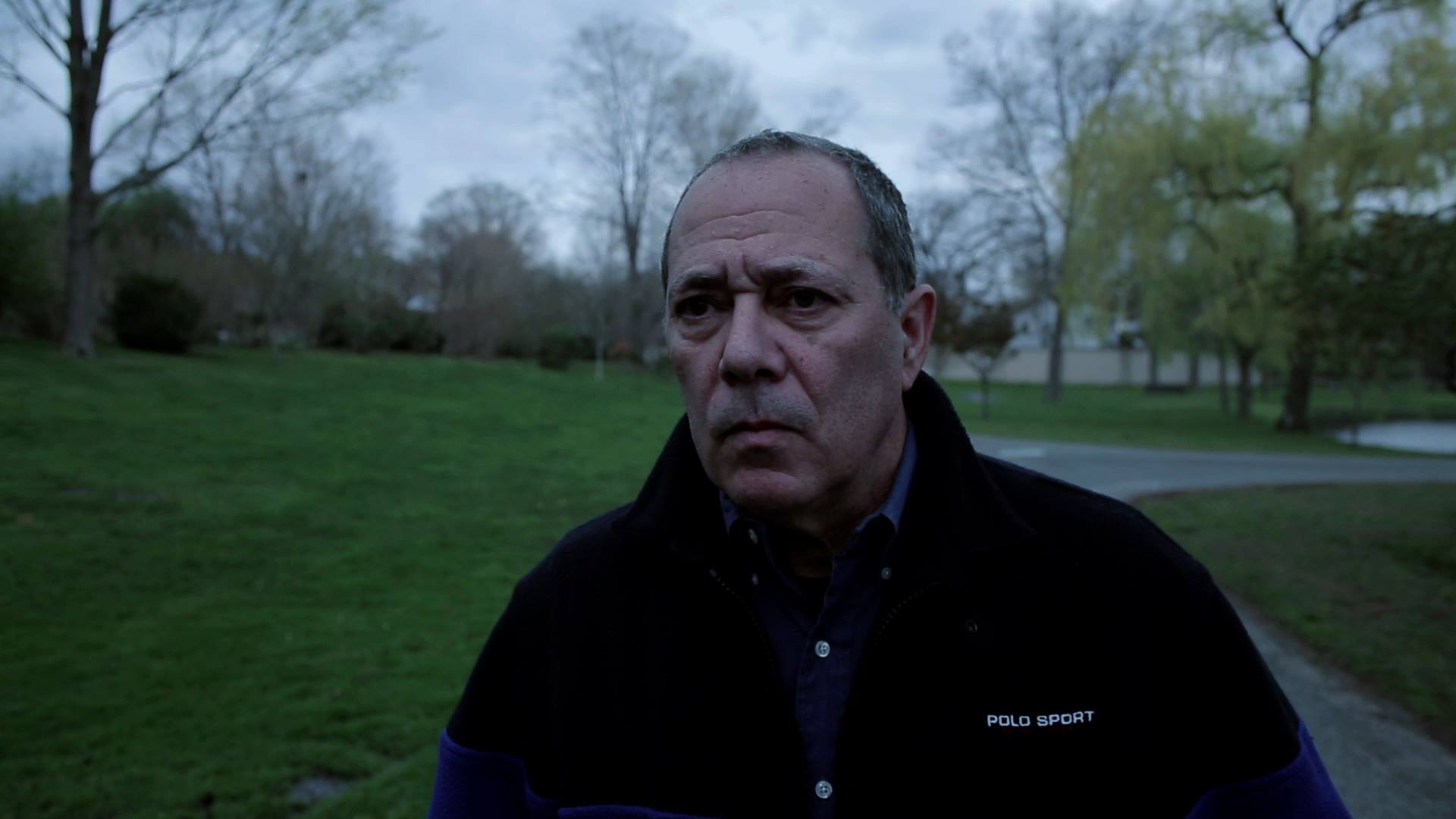
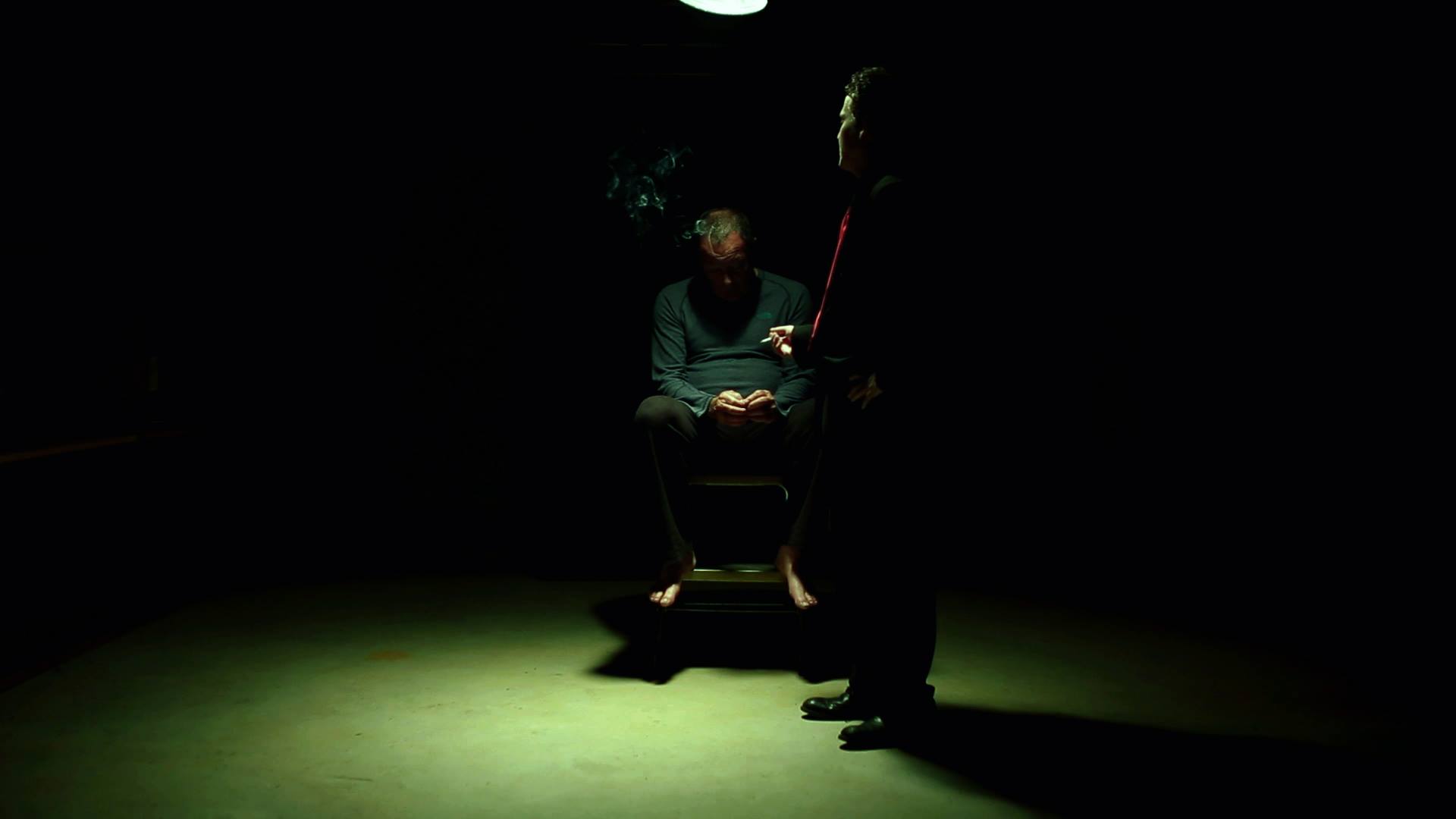
The narrative revolves around Henry, who is in the Witness Protection Program, having his daily routines upended. This is when Lou, a shadowy figure from Henry’s past, appears in Henry’s house with a gun aimed at Henry’s head. Utilizing the ruse of having to use the bathroom before he is killed, Henry tries to outsmart Lou. When these attempts turn unconventional, it becomes another sign of the incredibly adventurous abilities of both Henry and the creation itself.  

Such is an intriguing, if overly familiar, setup. The plot is at its finest in its dialogue-free opening four minutes and also in its previously stated conclusion. In the commencement, as we spy Henry going about his usual paces while nervously keeping an eye out on his surroundings, the affair is fueled by an addictive air of enigma and suspense. It’s compelling because it casually shows instead of blandly telling its audience what is transpiring. Such heightens the atmosphere of believability brought to the forefront by Di Nunzio’s superb editing, cinematography, and guidance of the project. The midsection, though engaging and pleasantly carrying on the nail-biting demeanor executed in the first act, is when the routine components of the story are most perceptible. Such elements momentarily hinder the fabrication.

Recorded in Exeter, Rhode Island, “Clean Up Duty” is boosted by a strong demonstration of sound from Laura Fietz and Patrick Timothy Yeo. It also implements tenor-appropriate music, which is wisely used in small doses, to pepper the proceedings. In turn, these items help make the construction an ambitious, layered, and memorable short subject. Di Nunzio’s latest offering is a marvelous venture and one of the best of its type that I have seen all year. It cleverly echoes the spirit of his brilliant features A Life Not to Follow (2015) and Delusion (2016). This is while proudly standing as a triumph on its own merits.

“Kinnari”- (Short Film Review)


By Andrew Buckner
Rating: ***** out of *****.

Writer-director Christopher Di Nunzio’s four minute and forty-three second short film, “Kinnari” (2016), is a powerful, gripping and abstractly eloquent meditation on the harsh, yet wondrous, journey of life into death. The latter of which is occasionally referred to throughout the affair itself as “the great nothingness”. Di Nunzio’s composition is just as adamantly concerned with how the boundaries of these two oft addressed subjects intermingle. It is as apt to ponder how these opening and closing portions of our being are frequently blurred. This is especially true when spied through a retrospective lens. Particularly, the viewpoint of a man who may be mentally peering at such sights amid his final moments. Such is illustrated as a dream-like trek to enlightenment. This overtakes the bulk of the narrative. It is sewn with a plethora of poetic wisdoms and long pined over inquiries. In turn, Di Nunzio provides an adventure of self-discovery. It is one which is steered by time cemented perspective and experience. A knowingly anti-corporate and media outlook, the basis of an enthralling monologue around the one minute mark, pushes such perceptions to tremendous effect. This emanates intriguingly from our ruggedly engaging narrator and lead, David (in a brilliant, unflinching and always watchable enactment from David Graziano). These traits he has acquired during his singular voyage through the planes of existence.

Such is perpetuated by a fateful meeting. This takes place in a stark and gorgeously realized instance near the mid-way point. It involves the rediscovery of the title entity (in a portrayal by Jamie Joshi which is quietly striking and consistently mesmerizing). She is the crucial persona in David’s illumination. Her name also shares that of a topically proper noun, largely used to describe a half-human and half-horse or half-bird hybrid, in Buddhist mythology. This is of an archetypical lover. Such is consistent with the story Di Nunzio paints. The same can be articulated for the paradigms that are encountered upon her arrival.

kinnari-pic-4

Our hero describes her as a “goddess”. In a manner befitting to such consecrated figures, David moves with Kinnari through a surreal landscape. These are a collection of beautifully structured, yet appropriately earthly, set-ups. They all hypnotically personify the stages of David’s physical span. As she pulls him deeper into this realm, the sum becomes progressively complex, abstract and cerebral. A staggeringly staged, near-climactic arrangement oversees David shadowing Kinnari up a winding, ostensibly endless flight of steps. Such personifies both the photographic and demonstrative core of the entire effort.

Additionally, there is a character to audience discourse which builds the foundation of the project. Such is triumphantly carried on throughout. This is a whispery, yet friendly, source of personal development. It victoriously aids in conveying a well-rounded glimpse into the inner-workings of our protagonist. Such heightens the intimacy, honesty and profundity at hand immensely.

kinnari-pic-5

Likewise, this fascinating plotline is given meticulous, pensive craftsmanship. Such is via Di Nunzio’s smartly paced screenplay (supervised by Christine Perla). His dialogue cracks with ingenuity, credibility and mature observations. It is also remarkably introspective. All the while, it comes across as deceptively casual. Such is much in the way of a stream of spoken conscious. Given the general format of the article, this approach is undeniably operative. This stands as an obvious signpost of Di Nunzio’s outstanding capacity for authorship. It is just as much a marker of recognition for the natural relatability inherent in Graziano’s outstanding delivery of his interchanges. Such qualities align themselves in the spectacular custom Di Nunzio displayed with the modern noir, A Life Not to Follow (2015). It was also at the at the forefront of his avant-garde horror invention Delusion (2016). In both cases, Di Nunzio scripted as well as served as administrator.

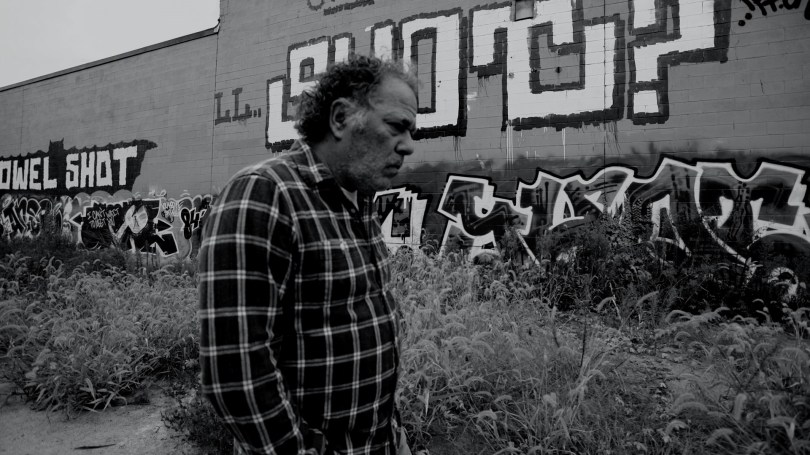
Much in line with these prior presentations, the story is smartly and smoothly paced. It is guided by Di Nunzio’s Lynchian sensibility for haunting, yet memorable and alluring, imagery. Correspondingly, the entirety of the exertion is slickly designed. This is so easily evident that even early, close-up shots of David’s coffee seem to be a mirror image of the bleak places in his soul. There are other relatively commonplace segments, such as a bit involving David walking on a presumably abandoned train track with a brick wall of graffiti looming closely behind him, that appear just as much like a grim visage. Such aspects appear as if they are taken directly from a waking nightmare. This is only amplified by Di Nunzio’s masterful framing. Such fashions an undeniably arresting style. It is one which makes the labor even more immersive and remarkable.

Such appeal is also punctuated by Di Nunzio’s seamless editing. His gently used, yet incredibly melodic and mood-setting, music also aids this factor outstandingly. Similarly, Nolan Yee’s cinematography, offered in the standard 16:9 HD aspect ratio, is somberly atmospheric. It is also elegant and thematically apt. Christopher Hallock’s astonishing assistant camera contribution is fabulous. Such augments the phenomenal nature of Di Nunzio’s expertly staged sequences. This is in terms of their stark believability and dazzlingly skillful construction. The culmination of these attributes make the sheer artistry which resonates through every frame of this Somerville, Massachusetts recorded drama increasingly palpable.

kinnari-pic-2

Di Nunzio issues a somber, intellectual tone that never once wavers throughout the duration. What establishes this atmosphere so immediately is the implementation of a monochrome title card. It is held on-screen for seven seconds. A single, thunderous chord is distantly heard in the background. The simplicity of this arrangement is the first of the many wise decisions and courageous moves Di Nunzio orchestrates. The final credits scene, proceeded by David’s harrowing realization that “Only me and beauty exist”, succeeds in the same arenas as those discussed above. These two sections evoke perfect bookends for the tale this item uncompromisingly and attractively tells. Moreover, Di Nunzio has an instinctive knack for what is to be glimpsed as well as left away from the eyes of onlookers. Such makes the proceedings progressively captivating. It is also proficient and enigmatic. The outcome of which makes the chain of events as unpredictable as they are perpetually enchanting.

Such creates an arc for that account which is impeccable. It is akin to a cinematic puzzle. Di Nunzio has gifted his spectators with a tour de force on all fronts. This Creepy Kid Productions release soars as an exhibition of temperament, moving picture bravura and intellectual yarn-spinning. It is also a standout performance piece for Di Nunzio’s recurrent collaborator, Graziano, as well as newcomer Joshi. Di Nunzio’s latest further astounds with the questions it poses as well as the answers it commands us to form. This is a rare work of celluloid prowess. It is one that will unveil new wonders and insights with each accruing sit through. Di Nunzio has formed an absolute bulls-eye; one of the best configurations of its type I have witnessed all year.

kinnari-pic-1

“Sisyphus” – (Short Film Review)

sisiphus pic 2

By Andrew Buckner
Rating: ****1/2 out of *****.

“Sisyphus”(2016), the fourteen minute and thirty-three second debut short from director David Graziano, is an incredibly clever and strikingly original modernization of Albert Camus’ 119 page philosophical essay on the pointless quest for understanding, The Myth of Sisyphus (1942). In Camus’ famed text, the title Greek Mythology figure labored to roll a boulder up a mountain. It was a duty he was forced to endeavor for all of eternity. The futility of this back-breaking chore was articulated in the fact that once this was achieved he would watch the rock slide back down the elevation. The job was then repeated to no avail. Such was an expression of the human condition that endures as easily visible. It can still be applied to various aspects of our own personal lives. In turn, it is more than deserving of the updating Graziano and screenwriter Christopher DiNunzio, from a story by Bryan Casey, so marvelously craft here.

In Graziano’s effort, the symbolic pillar is that of a secret romantic relationship. It has blossomed from a friendship between Gretta (in a warm, gentle and credible performance by Jami Tennille) and Marlene (an enactment by Diana Porter that is just as nuanced and wondrous as her on-screen counterpart). The passage of days into years is gently, wisely expressed. This is through their various meetings at the same coffee house. At the heart of this dramatic undertaking is Gretta’s impending divorce. She sees this as a perfect opportunity to cement the once ardent bond she had with Marlene. Yet, Marlene is indecisive. It is an attribute of Porter’s role that she conjures brilliantly. This is as she goes through the majority of the piece coyly, as if unsure of what Gretta is desperately trying to communicate to her. It is from this point other interestingly conveyed concealments begin to get in the way of what Gretta and Marlene once had with one another.

The affair is punctuated by sparkling, immersive cinematography by Nolan Yee. He captures the mature, yet down to earth, tone Graziano injects spectacularly into each frame. This is with incredible visual flare. There is also a vastly appreciated underlying commentary on our diminishing face to face talks with one another. This is as the labor opens with everyone on their phones, directly avoiding all the people surrounding them. There is even an impression that Gretta and Marlene, with the exception of the baristas to their customers, are the only ones who are actually speaking to one another directly. All of this increases greatly the highly representative nature of this beautifully executed opus.

Likewise, Steven Lanning-Cafaro, who appropriately appears here as The Guitar Player, builds upon the sophisticated ambiance unveiled throughout. This is with his musical contribution. Cafaro provides soothing, melodic rifts. All of which are precisely what you may hear at a setting such as the one found herein. Such sweet sounds are continuously streamed in the background during the coffee house sequences. In turn, it often seems as if it is in sequence with and, simultaneously, helping edify the sentiment being uttered by our leads at every turn. Yet, astonishingly, it never once overshadows the dialogue driven emphasis of the account. In this sense, as well as many others, “Sisyphus” is a masterful demonstration.

Further facilitating matters is DiNunzio’s terrific, seamless editing. Graziano, who has wide-ranging involvement as a scripter and actor, has a behind the lens approach which is stalwart and engrossing. He will assuredly fare here as well as he did in his previously stated doings. Graziano’s bravura also compliments the material splendidly. There is also strong sound and camera work present. Such continues to build the excellence found herein.

DiNunzio’s screenplay is smartly paced. The aforementioned banter between our two leads is intelligent, authentic and well-written. The only occasion the feeling at hand seems to lapse is in a mid-way segment and in another nearly identical one during the concluding seconds. This is when we witness the shot of a package being opened. Instead of letting this transpire leisurely, and in real time, it is sped up. On each instance this plays out it momentarily throws us out of the saga. This is because it seems too rushed. It betrays the gingerly constructed illusion to watching life unfold that arose beforehand.

Yet, these are but a few erroneous flashes in an otherwise stellar, highly gripping composition. The fiction, which is scheduled for release in December of this year, is magnificent told. This is in a simple, straight-forward manner. Such mechanizes splendidly in the overall context. Best of all, the characters are always at the forefront. Gretta and Marlene are spectacularly developed. This is especially noteworthy given the exertion’s brief duration. Our protagonists, as well as the photoplay itself, should prove relatable to a wide-audience. Graziano has erected a truly impressive, emotive experience. I look forward to seeing what moving picture wonders he will conjure in the future.

sysiphus pic 1

“Delusion” – (Movie Review)

By Andrew Buckner
Rating: ***** out of *****.

Director Christopher Di Nunzio’s neo-noir horror opus, Delusion (2016), is a masterful stylistic showcase. Released through Creepy Kid Productions, this is an old-fashioned psychological portrait with touches of the occult. Likewise, it is a lesson in the power and potency of subtly and restraint. Di Nunzio’s upcoming undertaking comes together so ingeniously because it draws us in with its mystery. This is expertly teased with the on-going question of what exactly is going on with the lead, Frank (in an enactment by David Graziano which is remarkable, credible and continually watchable). We find ourselves peering through the tiniest of details trying, must as our protagonist himself must be doing, to sort out what is physical and what is nightmare. This, enthrallingly, takes up most of the feature. Yet, it plays with the imagination incredibly well throughout. Di Nunzio leaves so much to the seat of our thoughts that one cannot help but stand in admiration of how skillfully fashioned the entire endeavor remains.

Delusion 1

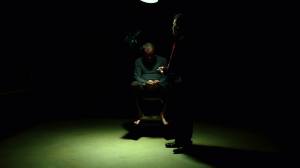
These sentiments are eluded to, after an ominous and brief credit sequence, with a commencing shot of a woman’s eye. This calls to mind the climactic moments of the legendary shower murder sequence of Lila Crane (Janet Leigh) in Alfred Hitchcock’s quintessential tale of murder and madness, Psycho (1960). For the rest of the meticulously paced, mesmerizing and impeccably structured eighty-five minute length of the affair, Di Nunzio’s bravura behind the lens vividly recalls the aforementioned cinematic maestro. This is incorporated with a dash of early David Cronenberg (1975’s Shivers, 1977’s Rabid) and Brian De Palma (1973’s Sisters, 1978’s The Fury). The previously stated comparison is most striking in the tensely orchestrated concluding fifteen minutes. This inspiration is mixed in to make this unique blend of fear all the more savory.

Delusion 2

With some of Di Nunzio’s earlier works paralleling other silver screen savants, such as he did with Ingmar Bergman and Martin Scorsese in A Life Not to Follow (2015), such a resemblance only heightens how impressive Di Nunzio’s talent and multi-faceted handling of his various genre turns remains. Still, his style is distinctly his own. Di Nunzio is undoubtedly an independent moviemaker to be watched. He is a name that all fellow admirers of cinema will be well-acquainted with in the immediate future. This is, of course, if they are not already aware of this great name looming on the horizon.

All of this is also visible in the manner Di Nunzio composes a shot. This adds to the proficiency at hand. It also gives the arrangement even more of a visual allure. A design like this makes this ever-intriguing puzzle box of a flick all the more enchantingly cryptic. These physiognomies are also observable in Di Nunzio’s awe-inspiring framing. It all comes together to create a pulse-pounding example of showmanship. We also witness these components in the anything but straight-forward manner in which Di Nunzio’s equally intelligent and striking screenplay is constructed. Ultimately, Delusion is as much thriller as it is art.
Delusion pic 3

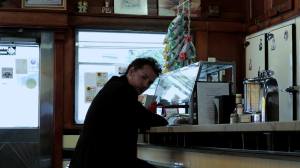
Di Nunzio chronicles Frank Parrillo. In the exertion’s first ten minutes he receives a letter from his wife, Isabella (in a marvelous performance by Carlyne Fournier). What is odd about this, and also instantly attention-garnering on the spectator’s side, is that she died three years prior. While recovering from this event with the support of his nephew, Tommy (in a depiction by Justin Thibault that is beautifully rendered and multi-layered), Frank tries to figure out what the written piece signifies. In the process he meets the enigmatic Mary (an incredible turn by Jami Tennille). Their mutual scars initially appear to be a point of healing between the two. All of this shapes a confrontation of Frank’s own personal doubts and fears. Yet, he is haunted by a male figure whose existence is questionable. Simultaneously, he is further plagued by a psychic, Lavinia (in a representation by Irina Peligrad that is certainly compelling). Her own premonitions tell Frank to stay away from the new love in his life. Amid these incidents, Frank must discern what is fact and what is fiction. This is before his time and chances to do so have vanquished.

Delusion pic 4

The story is riveting. It is also, much like some of the undertones presented herein, spellbindingly surreal unto itself. Such is indefinitely punctuated and made all the more captivating in the incredible, haunting manner in which it is told. Frederic Maurerhofer’s music is also eloquent and unsettling. This suits the atmosphere of the piece tremendously well. The same can be said for Nolan Yee’s eye-catching, gorgeously honed cinematography. Di Nunzio’s editing is skillful. This item assists greatly in giving the configuration its classic build. Arsen Bortnik’s special effects mirror the legitimacy Di Nunzio strives for spectacularly. They are a welcome distraction from the cartoonish computer generated imagery which, sadly, dominates so many motion pictures of our day. Additionally, Jessica-Lee Van Winkle’s make-up in this particular department is wonderful.

Delusion pic 5

Those responsible for the sound heard here offer us a demonstration of brilliance. Consisting of Carlo J. Barbieri III, Laura Grose and Christopher Lee, their collective contribution is crisp and ear-catching. Di Nunzio also supplies, along with the other pleasing apparatuses mentioned early, dialogue that cracks with believability. The situations that are bestowed upon us throughout align themselves to this facet with astonishing precision.

Moreover, the rest of cast fares just as well as those mentioned above. Kris Salvi is magnificent as Grayson. Renee Lawrie is exceptional as Rose. Jessy Rowe as Wendy, Christine Perla as Catarina and Ronnie Oberg as Ronnie all provide grand interpretations of their respective personas as well.

Set to be released on October 31st, Di Nunzio has crafted an exceptional example of the strength of the understated. It’s deeply impressed, poetic imagery is beautifully, terrifying issued. This is without a single exhibition of the various clichés and cold- shoulder to characterization which often takes over the category of fright. Di Nunzio keeps Frank’s plight and inner-wars at the forefront of the project. This adds heart to the proceedings. It also demonstrates a dramatic intensity that blends with the more outright suspenseful elements sweepingly. This makes the attempt resonate immensely. It is as if we are quietly walking alongside Frank throughout the entirety of the venture. This is as the wrenching chain of otherworldly events, which gradually encompass the plot, sweep over us. Consequently, we find ourselves absolutely amazed and intrigued throughout the course of this mesmerizing opus. Such is all the more reason that Di Nunzio’s latest, which was shot entirely in the state of Massachusetts, is a rich filmic experience. It is one which will prove worthy of many future viewings and potentially buried insights. This is as we return to the material in fascination of the craftsmanship at all technical levels as well in admiration of the quiet intensity and intricacy of the narrative. Di Nunzio has erected a tour de force. For fellow cinephiles: this is essential viewing. Delusion is a magnum opus of the highest order.
Delusion pic 6

The official Facebook page for Delusion can be found here.