“Regression” – (Movie Review)


regression pic 1

By Andrew Buckner
Rating: ***1/2 out of *****.

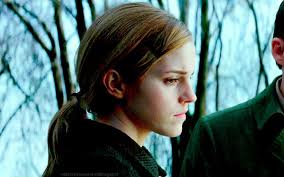
Ethan Hawke and Emma Watson are stunning in the meticulously paced psychological thriller from 2015, Regression. Concerning a detective, Bruce Kenner (Hawke), whose investigation into the rape of a young lady, Angela Gray (Watson), begins to unravel proof of a cult of satanists, the R- rated feature is moody, subtle and effectively downplayed. Writer and director Alejandro Amenabar offers a cerebral, character-oriented screenplay. It is one that is consistently engaging. Likewise, it is adorned in credible characterization and dialogue. This is until the flat, underwhelming finale. From the last act forward, much of the anticipation of greatness beautifully built-up beforehand is quickly deflated.

Amenabar, whose last horror venture was 2001’s The Others, offers taut, incredible direction. It is full of mesmerizing and striking imagery. Moreover, Amenabar builds suspense slowly and with an organic realism. This gives the one hundred and six minute effort a sophisticated, old-fashioned sensibility.

Such an attribute is so strong that even the familiarity of the sparsely utilized terror clichés assembled throughout feel spine-tingly intense and new. The dream-like sequences and its faux variants, another commonplace trope in fear cinema, are handled disturbingly well. These elements, as well as much of the tone of Amenabar’s latest, call to mind Roman Polanski’s 1968 masterpiece, Rosemary’s Baby. Such is most obvious in their proficient design.

The piece, released through The Weinstein Company, is further complimented by gorgeously gothic atmosphere by Daniel Aranyo. Carolina Martinez Urbina’s editing, Elinor Rose Galbraith’s art direction and Roque Banos’ music are all equally impressive. The special and visual effects are wisely minimalistic, as is the endeavor as a whole. To its credit, these elements are also terrifically done. Moreover, the sound and make-up department, as well as Sonia Grande’s costume design and Friday Myer’s set decoration, are spectacular.

With The Spierig Brothers’ Daybreak from 2009, Scott Derickson’s Sinister from 2012 and James DeMonaco’s The Purge from 2013, Hawke is fashioning himself as a trustworthy name for horror. The same can be said for Amenabar and high-quality dread laced genre offerings. Though the concluding ‘twist’ is as obvious here as it was in The Others, and the he turns to the well of the tried and true a bit too often, his talent outshines these minor shortcomings. The result is a top-notch exertion that is certainly worth a watch. This is true for both the seasoned terror vet as well as those of us who enjoy well-made, haunting cinema of any genre. Especially one, such as this, which is refreshingly mature in both attitude and construction.

regression pic 2

“Zoombies” – (Movie Review)

zoombies pic 1

By Andrew Buckner

Rating: ½ star out of *****.

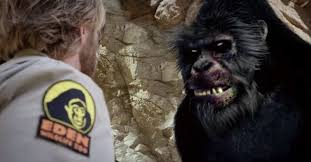
Zoombies, from director Glenn R. Miller and screenwriter Scotty Mullen, desperately wants to link itself to the ground-breaking Jurassic Park series. The most obvious of this is the tagline, seen on the fairly intriguing cover art, which screams: “It’s Jurassic World, of the Dead”. At one point, a character even shrieks: “It’s a zoo, not Jurassic Park.” In a later bit, two giraffes rip a man apart in the same manner a pair of Tyrannosaurus Rexes do to a human entre in 1997’s The Lost World: Jurassic Park. Even the logos the employees adorn on their shoulder are eerily similar to the JP design. Yet, Miller and Mullen seem to forget what made the original film in that series so legendary.

Miller and Mullen tell the story of a safari park dubbed Eden. As a gathering of patrons assemble at the area, so does a virus. It is one which turns the animals of the once tranquil area into the undead. From herein, as with all other entries of the ilk, there is little more narrative. What account remains, predictably, concerns the individuals involved in this catastrophe trying to band together and survive the violent onslaught.

Stephen Spielberg brilliantly spent the first half of Jurassic Park (1993) believably developing his intelligent, heroic and uniquely quirky entities. This is much as Michael Chrichton did with his same named novel from 1990. All the while, Spielberg spent the time gradually building suspense. There were instances aplenty of sheer awe amid the theoretical discourse the beloved individuals on screen engaged in. It was these gentle, meditative sections that made Jurassic Park so much more than ‘just another monster movie’. Moreover, when the second half kicked in, Spielberg delivered one spectacular, now classic sequence of nail-biting action after another. All of these previously addressed elements are noticeably missing from The Asylum’s latest disaster.

zoombies pic 2

Instead of the charismatic, paleontological Indiana Jones that was Dr. Alan Grant (Sam Neill), the quiet strength of Dr. Ellie Sattler (Laura Dern) in Jurassic Park or even Owen, Chris Pratt’s unique interpretation of much of Grant’s personality traits in Jurassic World, we are given a half-hearted, annoying cluster of one-dimensional archetypes. None of whom have anything that is stimulating in the least to add to its endless reams of chatter. There is nothing new or defining about any of these on-screen personalities. They all follow The Asylum’s routine, garden variety representations and general arc. This is done blindly and without wavering from them. Miller and Mullen aren’t out to make us care for the humans or the wildlife that is chasing them. This is, yet, another undeniable differentiation between Jurassic Park and this sad imitation.

The pace is choppy. It isn’t anywhere near as meticulously crafted as Spielberg’s masterwork either. In Miller’s exertion, we are no more than five minutes into the feature before the beasts begin their attack. It is no more than fifteen-minutes later when ‘all hell is breaking loose’. This breakneck progression wouldn’t be so difficult to look past if Miller and Mullen used the sixty-two minutes that was left of its eighty-seven minute runtime to generate intensity and interest. At the least they could provide us a reason to care or even try to ‘wow’ us with an original idea. As it is, the most creative turn of events occurs in the aviary near the finale, when Miller and Mullen turn to Ridley Scott’s Alien (1979) for their inspiration. Instead, the whole composition, as well as the team behind it, is in a rush to go nowhere. Such is evident from the poorly executed two-minute opening segment. This attempts to be a clever wink of an advertisement for Eden.

Yet, the most evident alteration between Zoombies and the Jurassic Park series is in the quality of the illusion created by the graphics. Where Jurassic Park remains arguably the single most jaw-dropping display of such a technical aspect put on screen, Zoombies gives us cringe-worthy, cheaply rendered computer generated imagery. It is the type that is blatantly cartoonish and laughable. What’s worse: the re-animated giraffes, monkeys, apes, birds, koalas and various other re-animated figments of nature involved in this absurd, derivative yarn are rarely seen. Given the shoddy quality of Denise M. Chavez’s special and Glenn Campbell led visual effects. Perhaps, this is for the best.

But, the most inescapable crime for a cinematic venture that is trying to be merely a guilty pleasure, a B- style romp is that it cannot even be seen as mindless, mild entertainment. Since the rampant beasts are so rarely viewed, and the people who dominate the screen and their shallow dialogues are ingratiating, we do nothing but wait for most of the picture. We wait for something to happen. We wait for it to end. We wait for some redeeming value. Even the rare emotive plot points, especially one involving a young girl named Thea (La La Nestor) and a gorilla she adores named Kifo (Ivan Djurovic), are hollow and obvious.

The performers are from adequate to grossly underwhelming. From Ione Butler as Lizzy, Andrew Asper as Gage, to Kim Nielsen as Dr. Ellen Rogers this attribute is just as uninspired as the rest of the affair. To its credit, Christopher Cano’s music is thrilling. It summons the feel of an old-fashioned adventure well. Bryan Kross’ cinematography is solid, despite its low budget trappings. James Kondelik’s editing is outstanding. Erica D. Schwartz’s costume design and Daria Castellanos’ art direction is admirable. The same can be said for the sound and make-up department. Yet, it cannot overcome the sense of exhaustion that hangs over the proceedings.

Miller’s production is a failure down to its concluding shot. Such appears copied from innumerable ‘last jump’ scares before it. Even this is treated as an afterthought. It’s an impression left in the way it shrugs its shoulders at all the mechanisms which make a moving picture a standout, a triumph or, even, slightly stimulating. This is especially sad given the unique potential the tale could’ve contained. Instead, we are given a forgettable trek through a photographic wasteland. It is one so pointless that even its brightest moment is constructed from a vastly superior undertaking. Even Jurassic Park III (2001) was better than this.

zoombies pic 3

“What Jack Built” – (Short Film Review)

what jack built 2

By Andrew Buckner

Rating: ****1/2 out of *****.

Director Matthew Mahler’s eleven minute short, “What Jack Built”, works tremendously well. It forces the imagination to look under its murky, brooding corners, retrace its steps and put the many enigmatic items of its narrative together themselves. The overall intensity and interest of the piece is garnered largely from the craftsmanship of the mystery at hand. This is just as true of Mahler’s skillful handling of the material. Such is a brilliant manner to tell a tale like this. Mahler provides a dialogue free composition. This is another smart move. It heightens the intrigue immensely.

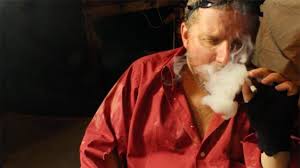
We watch the cigar-smoking and brooding, Jack (Timothy J. Cox, in another mesmerizing and masterful enactment), as he puts together blueprints in a secluded basement. He is also seen laboring over a trapping device. This is for the wholly concealed fiend lurking in the woods as well as inspecting his security cameras. Audience patrons view the succession of these immersive, hypnotically constructed and intriguing sequences of the affair’s arc in wonder. They are forced to uncover the meaning behind Jack’s actions themselves. This just adds to the appeal and quality of the item immensely.

What is going on inside of his psyche? How did he come to think of this device? What is its purpose? How did he put it together? Since he is the only one we meet, is he the only one left alive? What is exactly is this creature in the woods, if that is in fact what it is, he appears to be combating? Are they truly at war with one another? Are they linked somehow? It’s fascinating to ponder and assess these questions, left unanswered by the actual account, and come to our own conclusions based on the wisely sparse bits of details Mahler provides. These lack of particulars are a deliberate inclusion on Mahler’s behalf. Such is a bold choice that pays off handsomely. The result of this already attention-garnering saga is amplified by the minimalistic approach. The consequence is elevated far more than it would be if it was told in a traditionally straight-forward manner. This is not only thanks to Mahler’s taut direction, but also the cleverly paced, electrifying and meditative screenplay. This was penned by Matthew and Ross Mahler.

The title alone suggests a bit of a parallel to the popular British nursery rhyme, “This is the House That Jack Built”. In retrospect, it can even be perceived as an apocalyptic aftermath of the absurdly comic events that transpired in that tale. Yet, with a far more mature tone. “The man all tattered and torn”, as the folktale states, certainly applies to the brooding Jack realized in Mahler’s fabrication. He appears haunted, as if by the measures transcribed in the poem. Cox portrays this excellently. Not to mention, there is an underlying aggression to his motions. It is one which backs up the previously stated line splendidly. It is grasped in the various facial expressions Cox so expertly instills into the protagonist. Maybe this all circumstantial. It could be that this theory has nothing to do with its similarly captioned brute. But, it is this uncertainty, the many ‘what-ifs’ the endeavor captivatingly radiates, that makes it so thought-provoking and endlessly stirring.

what jack built

Matthew Mahler also issues music which is as spellbinding and ominous as the article itself. He utilizes a creaking soundtrack, reminiscent of one conventionally heard in a feature by Dario Argento, to chilling effect. It also sonically re-instates the endless atmospheric of the exertion beautifully. It makes the moments in the depths of the secluded area where Jack is hiding, as well as the ventures into the outside, all the more fearful and suspenseful. Adding further technical success to the project is Mahler’s sharp editing. There is also an inspired flare to the chronicle. The instances the smartly never spied beast is sensed creeping through the surrounding landscapes is reminiscent of the recurring shot which opens Sam Raimi’s The Evil Dead (1982) is where this is most evident. Even the setting itself calls this comparison to mind. Yet, Mahler’s attempt is far more than a simple homage. It is entirely its own entity.

In scenes such as the one recently addressed, Mahler’s aforesaid sonic contribution is most proficient. Yet, his appropriately dark, gorgeously honed cinematography drives this magnificent attribute home all the more victoriously. He also instates a credible, well-done input to the costume and wardrobe department. John Heirlein’s art department influence strengthens the believability and stalwart nature of the proceedings just as well.

This 8mm Films production is a true marvel. In an era where so much of cinema goes out of its way to show and tell, in excruciating specificity, its spectators what is hidden behind every door and explain every secret within a moving picture, “What Jack Built” is all the more necessary and refreshing. Those who expect everything ushered there way as far as a fully-fleshed out yarn, character development and all of the other trademark tools of the storytelling trade may find themselves frustrated. Such would be in the manner in which Mahler ceaselessly defies these expectations. They are assuredly the ones who will be put off by the undefined sum of the effort. Yet, those of us who like a new experience, one which gives us more inquiries than responses, will feel liberated.

Mahler drops us immediately into the exploits as if in the middle of a fiction already in progress. From herein, we are with Jack, hanging on his every motion, riveted through the duration. Despite the intentional vagueness of much of what we encounter, this can also be understood as an admirable experiment. This test concerns how much can be stated without a single word. Yet, the investigative nature reaches far beyond this single boundary. There is genuine risk-taking incorporated at nearly every turn. It makes the outcome all the more harrowing. For those of us who enjoy innovation as well as an adventurous take on the thriller, Mahler’s undertaking is a mandatory dose of adrenaline. It is a fantastic, illuminating, nail-biting spectacle which demands to be witnessed.

what jack 5

“Slimebuck” – (Short Film Review)

slimebuck pic 1

By Andrew Buckner
Rating: ***** out of *****.

“Slimebuck”, masterfully directed by Tom DeNucci (2013’s Army of the Damned, 2015’s Almost Mercy) and ingeniously written by K.C. Cerilli, is a wonderfully playful and charming masterpiece. The twenty minute short film, from Morbidly Amusing Productions and The Woodhaven Production Company, is proudly inspired. There are echoes of Joe Dante’s Gremlins (1984) and Stephen Spielberg’s ET: The Extra-Terrestrial (1982) resounding with a wink at the audience throughout this 2015 release. Even the rotund appearance of the title creature itself seems as if it could be a distant cousin of the Venus flytrap, Audrey II, in the unusually excellent 1986 musical remake of Roger Corman’s Little Shop of Horrors. Yet, it owes just as much to later Hollywood blockbusters of a completely different categorical ilk. Most discernibly, Christopher Columbus’ comedic Home Alone (1990). This is most clearly visible in the attention-garnering and well-done final act.

slimebuck pic 2

To add to the variety at hand, there are also elements of the mad scientist account woven into the proceedings. This comes into play with the entertainingly eccentric, Mike. Joe Siriani gives a fantastic, endlessly watchable portrayal as this individual. The individual is obviously carved with a deep felt passion for the previously addressed sub-genre. Siriani’s show-stopping, charmingly unhinged presentation is a delight to watch. It also makes the aforesaid characteristics and esteem all the more engagingly present. We see it in Siriani’s grandiose mannerisms. Such is also expressed in the way DeNucci frames the segments Siriani is involved in. This is largely noteworthy in the first half of the article. An attractively staged and smirk-inducing segment at four minutes into the affair is where this most evident. It showcases Mike in his laboratory, with test tubes and other trademark equipment of the filmic obsessive genius encompassing him, as he frantically labors. Such is an expertly conducted homage. All of this is given further incredible punctuation by Brad Piche’s quirky, endlessly fitting music. This aspect parallels the atmosphere of the construction beautifully. In turn, it enriches the jovial nature of the work immeasurably. Yet, despite the many peers the story summons, it finds a way to not rely on them. “Slimebuck” is clearly and refreshingly its own entity.

slimebuck pic 3

The intriguing concept behind this endeavor concerns Mike’s increasing interest in a meteor. Fascinated by the unique component within it, he brings the piece home. Soon after, he is reminded of an awards ceremony that he has forgotten that he must attend. For this event he will join his wife, Connie (Tess Degen in an outstanding depiction). Mike rushes to prepare for the occasion. As he leaves his residence with Connie in tow, he never realizes he left the irreplaceable item behind. All the while, their son, Tad (Jonah Coppelelli in a grand representation), has a sleepover at his house with his friend, Edgar (Jack Brunault, whose inaugural representation is excellent). Later that night, after a long session of Xbox, Tad wakes up to find the harmless, and immediately lovable, title creature in his room. This instant suggests, in part, the power of the imagination as Tad is seen drawing the harmless extraterrestrial a minute into the effort. Soon a band of bumbling robbers, Vladimir and Ivan (Fred Sullivan and Nick Principe; both in splendidly honed turns) attempt to steal the cosmic pillar Mike left behind. From this point forward, Slimebuck teams up with the children to foil the duo’s nefarious plans.

slimebuck pic 4

DeNucci finds an innocent, merry and inoffensive approach to the composition. It is one which is undeniably suitable for the material. Neither is it too juvenile to put off adult patrons, nor to terrifying to scare away younger viewers. This is established mesmerizingly in the first shot. From herein, it radiates admirably through the duration.

slimebuck 5

Both Cerilli, whose characterizations and dialogue are terrifically penned, and DeNucci offer exceptional influence to the quality of the material. The pace the duo conjure is even and the humorous moments are well-timed. It makes the undertaking all the more immersive. Moreover, the end outcome is all the easier to adore.

Furthermore, Maura McCarthy’s costumes are spectacular. The editing by Robbie Savage Jr. and Andrew Migliori is stupendously issued. Michael Zuccola is delightful as the pizza boy, Rickey. Billy ‘V’ Vigeant fares just as well as the limo driver. Additionally, Joe Cantor and Bobby “Boom” Brierly’s sound contribution is outstanding. Marissa Giammarco does a magnificent job with the hair and make-up. Puppeteer Erminio Pinque and special effects contributor Ben Bornstein cleverly bring Slimebuck to life. The result is a marvelously engaging and technically proficient opus.

slimebuck 6

“Slimebuck”, though brief, is every bit as well-etched and satisfying as a full-length feature. This is especially evident in how incredibly well the narrative is fleshed out. DeNucci and Cerilli have found a skillful manner to develop the personalities we encounter. They also provide a well-rounded and in-depth product. It is one which tells its fiction as completely as a lengthier enterprise. When considering this is done in about 1/6 of the space, such is all the more astonishing. This is another of many details mechanizing together to make this an absolute must. Such is particularly true of those of us who like to indulge the child within us now and again.

A sad tale lies behind this ultimately optimistic and laughter fueled tour de force. Thirty-year-old Cerilli, an avid genre devotee, wrote the script before passing away to muscular dystrophy in 2014. His parents, Vin and Annette, made it their mission to make sure his vision got to the screen. Though there is an abounding joy to everything we encounter in the piece itself, such adds an air of mourning to this warm, endearing and poignant exhibition of moving art.

“The Misogynist” – (Short Film Review)

By Andrew Buckner
Rating: ***** out of *****.

About eight and a half minutes into Chai Dingari’s beautifully constructed and absorbing thirteen minute short from 2011, “The Misogynist”, the lead of the tale, Harlan (Pascal Yen-Pfister in an incredible, multi-layered enactment), states, “I want to do something personal. Almost voyueristric. Like a glimpse into someone’s private life. I didn’t want to make it too pretty. I wanted to keep it raw.” This can be the most accurate description of the haunting, gritty veneer and overall impression left by this particular piece of Dingari’s work that there is.

It is as if the auteur of the piece is reaching out from behind the brilliant pages he penned and the exquisite frames of his composition and slyly speaking of his intentions through Harlan. This is just one of many various aspects in which the endeavor is an absolute triumph.

Dingari allows us into Harlan’s existence much like a documentarian. He doesn’t pass judgment on his flawed, but likable protagonist. The same can be said for Harlan’s wife, Allison (Rhea Sandstorm in a portrayal that is as authentic, unflinching and magnificent as Pfister’s). Much of the bulk of the runtime focuses in on this spousal correlation. Because of this the sum is consistently riveting throughout. We are grandly disheartened during the arguments the duo encounter. Furthermore, we are merry ourselves, uplifted when the two put aside their differences and recall their amorous affections for one another. This, in itself, is proof of how effortlessly we relate to Harlan and Allison. It is also an example of how proficient Dingari is at giving us natural character development. This is wholly without the expository force feed most filmmakers put us through. The consequence of this, as is true of the endeavor as a whole, is like watching life itself unfold before our eyes.

Dingari’s narrative finds Harlan with a photographic version of ‘writer’s block’. He is exhausted by the idea of snapping pictures of the same sights time and again. Once the notion arrives to him to tell the tale of his relationship with his wife through the medium of the lens, he finds excitement for his craft. He is reminded of why he once enjoyed engaging in such an activity. This, as all things, is short lived. A violent incident cuts this short in the last three minutes of the affair. Such a tragedy is unexpected and gripping. It brings to mind if such was part of Harlan’s plan all along. Dingari wisely leaves his audience hanging after this progression.

The end result is unsettling. It is a perfect punctuation point that shifts the positive light artistry is portrayed to help give someone a sense of purpose unexpectedly. The consequence is grimly poetic in what it says about personal drive. Just as eerie, and meditative, is what it doesn’t say.

Much of the narrative is about Harlan’s relationships. This is with both Allison and W.D. Frost (Timothy Cox in another show-stopping enactment); a man who is providing personal counsel for Harlan. The sequences with Frost exhibit powerfully that Harlan is a passionate fellow, interested in photography. He is trying to uncover a intrigue that he feels is solely his own. Such is one of the few planes that both Harlan and Frost seem to be on together. When Dingari cuts to a montage of a swarm of people taking pictures of everything before them, we admire the exquisiteness in which the moment is framed. Yet, we also see the deeper meaning. This is that Harlan aims to find his individuality but, everywhere he peers he is robbed of such a chance.

Such is an attribute sewn into all human beings. We want to be known. We want to be remembered for doing something unique. Yet, it is nearly impossible to find such avenues. This spoke to me especially well as someone who has struggled with my writing, and to etch a name for myself through such an avenue, all my life. I am certain it will speak to all those who view it just as potently.

Dingari executes his shots masterfully with deliberate rigor throughout. He keeps the pace consistently contemplative and even. Along with a hammering, uncredited piano score, “The Misogynist” is technically astonishing at every turn. These elements call to mind a film by Stanley Kubrick with splendid ease. The sound by Andrew Koller is excellent. These all greatly enhance the experience. It makes Harlan’s personal world come to life spectacularly as if via cinematic invite.

Such is verified proof that Dingari has accomplished the credible vision Harlan speaks about. There is believability and subtly garnered intrigue building from every frame. Much like life itself, it doesn’t overwhelm with emotion yet, the sentiment is visible beneath every subtle movement of the plot. Such only adds to the maturity and professionalism at hand. Dingari has crafted a masterwork; full of unwavering profundity and art. I greatly look forward to seeing what mirror of existence he holds up for his myriad spectators next.

“Ava’s Possessions” – (Movie Review)

ava's possessions

By Andrew Buckner
**** out of *****.

Ava’s Possessions, from writer and director Jordan Galland, has done what countless movies have tried desperately to enact but, largely failed to accomplish. This is to unveil a new perspective on the demonic possession tale. By concerning itself with the aftermath of such an unholy event, the eighty-six minute chronicle almost immediately bypasses the legions of rip-offs of The Exorcist that have arrived since William Friedkin’s masterpiece hit theater screens in 1973. These are the inferior knock-offs which go into the usual vulgarities and blasphemies associated with such entries as if on an emotionally vapid autopilot. What is just as refreshing is that Galland’s well-honed screenplay puts into play the idea that one may actually want to be-possessed.

Such is invigorating. This is given that most pictures of this ilk have their heroes or heroines recovering and never wanting to experience such a nightmarish undergoing again. It is this assortment of fresh, wonderfully underplayed notions, which help the composition come together so well. This is because Galland takes an otherwise tired concept and often runs quickly in the other direction with it. The results are more than welcome.

The Traction Media and Ravenous Films release makes us aware of this immediately. This is established instantly by turning the conventions of its well-executed, and largely seriously toned, opening on its head. Remarkably, this is issued with only a single line of dialogue. It is delivered by Ava (Louisa Krause in an exceptional performance) in a quip, which thankfully are reserved for just this attention-garnering section, as she sees her possessed face in a nearby mirror. This provides the first of several genuinely clever, and well placed, laughs. It also acts as a proficient way of setting the tone for the entire piece.

Galland knows how to properly use and place the guffaws here. They are lightly, quietly peppered throughout. Such is done in a method that doesn’t intrude upon its true, terrifying essence. Instead, it just adds more flavor to the characters as well as the circumstances which they derive from. That, in itself, makes this undoubtedly solid, but not quite masterful, addition recommendation worthy on this basis alone. This is especially true given the obvious, over-exaggerated manner most silver screen affairs pile one joke upon another.

Such is achieved by establishing its effortless intervals of comedy and horror in this prior addressed sequence. What is all the more interesting is that this runs less than two minutes. The commencing credits segment continues this delicate balance beautifully. With vibrantly lettered acknowledgments, and Sean Lennon’s consistently amusing and atmospheric music pounding on the soundtrack, Galland proves he is more than competent at instantly setting a mood and keeping it. This is even more intriguing giving the often clashing genres it utilizes to do so. The rest of the production follows suit. In so doing, it is an easy, seldom dull watch.

Galland tells the account of the title woman’s struggles to get her life together, which she hilariously quips early on that it should only take about a week, after being taken over by a vengeful entity. This satanic brute resides within her for a month’s time. In the early sections we see her joining a Spirit Possessions Anonymous. Following the familiar steps of other support groups, which is another sly and creative venue Galland utilizes herein, she tries to make amends with the people who she may have victimized emotionally or physically while being under spectral influence. We follow our lead as she tries to get her job back. Our intrigue is peaked as she tries to remember what caused the bloodstain she unveils in her apartment.

This all works as entertaining character development. Such is so because we actually care and feel for Ava. We want her attempts to reconcile her life to succeed. This is a far different experience when remembering that most exorcism themed ventures see the protagonist as just a pulpit for cheap scares. So when she inevitably begins to see ghastly sights, and senses the fiend which just left her may be summoning her again, we realize Galland has again been crowned victor. This where most cinematic terrors miscarry. Such is in giving us someone who is credible, as much as the semi-tongue in cheek moments herein allow, that we can actually root for.

He also keeps the pace brisk. Moreover, Galland builds his suspense naturally. This is without relying heavily on it to maintain our interest. Such is especially intriguing given that most of the feature concerns Ava’s plight and not just the ghoul which caused her problems. Furthermore, the movie doesn’t settle into the usual barrage of violent outbursts as most cinemagoers will be expecting. Instead, we are again taken down another wonderfully new avenue.

Galland never abandons the plot for the usual special effects extravaganza such items often become. Yet, when they are rarely used they are proficient and impressive. There is also a much appreciated absence of gore. Such gives the proceedings a polished, even and unique blend of the modern and classic approach.

Gary Breslin and Matthew Turks contributions, though primarily reserved for the predictable but satisfying and far from overblown climax, to this visual aspect is tremendous. It is magnificently light years above the noticeably bad computer generated imagery which dominates, and is sadly expected, within the sub-genre. Galland and Daniel Han’s editing is just as sharp. The cinematography by Adrian Peng Correia is phenomenal. It illuminates the undercurrents of teen angst Galland often issues. These are most visible in the on-screen personality’s actions and dialogue. This is highlighted with a look that calls to mind the best submissions in the aforementioned category. The gleam is bright and luminous. Yet, not so much so that it betrays the depiction’s turns to trepidation. Marci Mudd’s art direction, Maria Hooper’s costume design and Zachary Luke Kislevitz’s set decoration add to this spectacularly. The same can certainly be said for Kristen Alimena, Kaela Dobson, Brenda Bush Johannesen and Joelle Troisi’s make-up.

The cast is just as accomplished. William Sadler as Bernard, Dan Fogler as J.J. Samson and Alysia Reiner as Noelle are all top-notch. They add further dimension to Galland’s already well-scribed representations. Lou Taylor Pucci as Ben, Whitney Able as Jillian and Deborah Rush as Joanna are sensational. Joel de la Fuente is compulsively watchable as Escobar. John Ventimiglia is absorbing as Father Merrino. Annabelle Dexter- Jones as Hazel, Zachary Booth as Roger and Geneva Carr as Darlene fare just as well.

Galland proves that even though fellow fear fanatics may publically discuss their disgust with the overdone tropes of their beloved genre, that it is not so much the category. It is the viewpoint, and the routine associated with it, that they are discouraged over. Zombies, found footage flicks, ghost stories (especially those involving paranormal teams with cameras) and vampire exertions are currently among the equally exhausted. Yet, all these time-tested ingredients need is a simple face-lift. It is necessary for them to evoke an innovative turn to stay alluring to us. They need a novel jolt to get the dead heart of these sub-genres pumping again with life again.

Galland has done this to the arena of demonic possession with endless confidence and gusto. Perhaps in his next moviemaking endeavor he will take on one of these previously stated sub-genres. They sure need it. Ava’s Possessions is more than enough proof that Galland is up to the task.

ava's possessions 2

“Darling”- (Movie Review)

darling movie pic 1

By Andrew Buckner

Rating: **** out of *****.

Darling, the fourth motion picture from writer and director Mickey Keating, draws heavy inspiration from Roman Polanski’s 1965 masterpiece Repulsion. It also aligns itself with David Lynch’s truly unnerving Erasherhead from 1977, Jack Clayton’s The Innocents from 1961 and a number of pictures by Alfred Hitchcock. The most noticeable of these is Hitchcock’s timeless adaptation of Robert Bloch’s novel from 1960, Psycho. This is especially true in the last half hour of the project, when a certain household item involved in the previously stated magnum opus’ most popular sequence is involved and returned to constantly. The symmetry is also amplified given the context in which it is cleverly used. Keating’s labor of fear conjuring also calls to mind Edmund E. Mirhige’s audacious and disturbing 1990 effort, Begotten. Such is evident in its meticulous, slowly grinding pace. Such is also noteworthy in its ability to unnerve through its coldly projected sights. This is as well as its emphasis on merciless atmosphere over gore. A warning within the first minute of the attempt about the “strobe lights and hallucinatory images”, which are excessively and exhaustingly utilized in the concluding act, is reminiscent of an attention-garnering trick from the maestro of the low-budget gimmick, William Castle. This all adds to the claustrophobic fun on display, for cinephiles particularly, immeasurably.

The work overall is proof that beautifully executed style, though often interrupted by its obvious imitation, is enough to carry a tale. This is even given one such as this which is as sparse on plot as it is effects, locations and characters. The crisp, striking and gorgeous black and white cinematography by Mac Fisken highlights this parallel all the more. This is obviously an exercise in approach, restraint and minimalism, made apparent in its wisely taut seventy-six minute runtime, as much as it is a love letter to the aforementioned architects of the silver screen. In that sense, Keating’s undertaking mechanizes spectacularly well. Yet, this does little to detract from the reality that this is simply a handsomely established retread of the same essential fiction, and much the comparable chain of events, that we have seen in far too many horror enterprises beforehand. The mileage each viewer will get from this particular offering is determinate on how deeply their admiration for the classic model, and the singular panache associated with it, is above all other items of moviemaking. This is as exact of a patron’s ability to appreciate such attributes with the sacrifice of any genuine bits or originality. Personally, this resulted in a largely solid endeavor. Darling is a good silver screen venture overall. This is even if it just misses the great benchmark it is striving admirably for. The piece left me exhilarated through most of my sit-down with it. Yet, ultimately, it left me feeling hollow and, somehow, not fully satisfied.

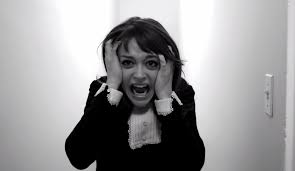
Keating’s production concerns the young, lonely title woman (Ashley Lauren Carter in a mesmerizing performance that mirrors Catherine Deneuve in Repulsion eerily well). She is given the task of being left to watch over a home. Much in the tradition of the set-up of uncountable dread inducing exertions from the past, this is without being fully aware of what has occurred within its walls. Slowly, she begins to question herself and her surroundings as unnatural events, that may be a product of her own psyche, begin to taunt her. This is another example of a photoplay asking its spectators the question: Is it the house or the girl herself who is haunted?

darling picture 2

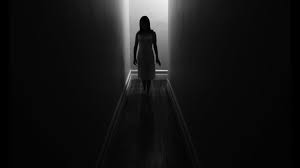
The configuration toys with the answer to these question brilliantly. It does so by giving us long shots of isolated corridors, also in the archetypical custom. This is punctuated with ominous doors, some of which open by themselves as if welcoming her in, that could contain any manner of unspeakable things. There are also further age tested, enduring elements such as the winding staircase, hearing voices unexpectedly and the occasional ringing of a phone, which also maintain a fittingly retro veneer in this composition, to shock Darling and her audience. Yet, none of this is done artificially. This never elucidates a cheap jump, as it would in a lesser picture.

The first fifteen minutes, when the effort plays up these enduring ghost chronicle facets to boundless consequence, are when the flick is at its best. It is also when it is at its most promising. There is also much interest garnered afterward when Darling becomes obsessed with an individual named The Man (an enactment by Bryan Morvant that is as sophisticated and well-done as the article itself). This takes up much of the second act. Though these particular physiognomies are rehashed from about as large a number of sources as the bits of spectral narrative announced previously, it signals a shift in the creative temperament; a curtain being pulled on the destination where we, the onlookers, are being led.

Such a manipulative turn changes the direction of the Glass Eye Pix release several times throughout the picture’s six ‘chapters’. It is riveting; an honest display of storytelling craftsmanship. It is one that makes the familiar sections, so prevalent herein, easier to overlook. Alas, it assures us of much more than the affair actually delivers. The conclusive destination of the piece, though as tremendously put together as the rest of the endeavor, is just as acquainted as many of its ingredients. Such exposes these alterations in the movement of the arc of the yarn as window dressing. That these high-quality details were meant merely as another diversion from how often this account has been told before is disheartening to say the least.

But, what a terrific job it does of distracting us from the obvious. This is courtesy of the proficient technical angles all around. Sean Young’s brief portrayal of Madame is excellent. Al-Nisa Petty is remarkable as Miss Hill. Larry Fessenden, as Officer Maneretti, and John Speradakos, as Officer Maneretti, also do well with their respective depictions. The lighting is terrific. This quality assists in evoking the illusion of being immersed in a new variation of unsettling exertions from the past abundantly. Giona Ostinelli’s music, often reminiscent of a score by Hitchcock’s Psycho composer Bernard Herman, fits the old-school impression of the proceedings impeccably. Valerie Krulfiefer’s editing is just as impressive. Pete Gerner, Flynn Marie Pyykkonen and Brian Spear’s make-up is pleasing. Contributions from the sound department, by Sean Duffy and M. Parker Kozak, give off the sensation that we are watching a classic from the 40’s- early 60’s. This is issued with jaw-dropping accuracy. Spears’ special and Sydney Clara Bafman’s optical effects are ominous and credible. The upshot is certainly the amazing, obsolescent replica Keating was going for.

What is most welcome is the subtlety. In an age where terror seems defined by how much they show, Keating has proven with Darling, as well as his prior effort, Pod (2015), that scares are best delivered when much of what is causing them is left in the shadows. The imagination is the most frightening place of all. Keating knows this. He uses it to tremendous influence. The fact that it is mostly a one-woman show, with a large weight of the quality of the endeavor based on Carter’s ability to transform into our central personality, shows signs of courage and confidence. These two words can be applied to much of Darling. This is so much so that when Keating has shown us all he has for us to see and the drapes are pulled on the well-kept mystery at large, that we believe we should be blown away, frenziedly applauding the film. But, in the end, Keating is a bit too reliant on the proven, and a plot could most politely be described as ‘bare bones’, for it to be the tour de force he obviously yearns for it to become. Instead, we admire the parts more than the sum. Yet, the whole is far superior to the bulk of the dime a dozen genre entries which flood theatres and streaming services nowadays. It is sure to please fans of avant-garde trepidation. Its audience are those who rightly applauded The Witch from earlier this year. If you were among those who were left scratching their heads over the praise for the aforementioned feature, this is not for you. For all others, this comes highly recommended.

mickey keating darling 4

“Where To Invade Next” – (Movie Review)

where to invade next 1

By Andrew Buckner
Rating: ***** out of *****.

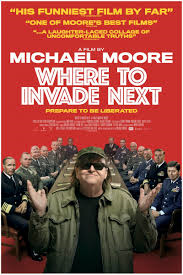
After a six year silence, the director whose last film was 2009’s Capitalism: A Love Story, Michael Moore,  has proven he is as subversive, hilarious and entertaining as ever. This is with his latest feature, Where to Invade Next. The one hundred and twenty minute silver screen affair, released on December 23rd of 2015 through Dog Eat Dog and IMG Films, can be seen as a grand expansion on the themes present in his previous works. Our broken health care system, education and woman’s rights get explored magnificently and illuminatingly. Additionally, he focuses a great amount of the runtime on international lifestyles. Despite this, Moore almost ceaselessly maintains an unexpectedly upbeat, often poignant atmosphere.

Such is established with special emphasis on how other countries regard their fellow neighbors. This is both in and out of the work place. A special prominence is put on this fact as designated by their employers. There is also a stirring, and undoubtedly eye-unveiling, focus on the prison complex. Primarily, its treatment of the inmates. An extended segment where Moore visits both a minimum and maximum security reformatory in Norway is especially fascinating. Yet, he focuses just as much on the mutual love and respect the many countries he visits showcase to one another. This is illuminated as well as the alterations America needs. They make a riveting assessment. Such is all the more undeniable when layered together in the manner Moore does here.

One of the most recurring themes throughout is the age old principal of being a good neighbor. What is just as prevalent is the message, delivered by one German cop states when discussing his attitude towards his fellow citizens, “Human dignity above all.” That is certainly something America could benefit greatly, and immediately, from. This is if such a suggestion was applied more often to its residents’ demeanor. Such is just as true of their routine activities.

The movie focuses in on Moore lightheartedly ‘occupying’ other nations through interrogation. He encounters students, higher-ups, workers and an assortment of other differing personalities throughout this cinematic trip around the world. In so doing, he attempts to find out what ideas assist other principalities in getting superior results in the areas America lags behind in. Every time he finds a potential solution to our republic’s problems, he plants an American flag at the scene. Hence forth, he promises to steal the notion and bring it back to his homeland.

It’s a brilliant concept. One that mechanizes as a parody of America’s ability to take the philosophies of others and pass them off as their own. It is also an absorbing international glimpse into how others subsist. These humorous and enlightening elements, delicately woven throughout, are a perfect pulpit. It is one custom-fitted for the equal doses comedic and sobering sensibilities equated with Moore’s often imitated, trademark style.

Also true to form, the piece is briskly and expertly paced. For the most part, each issue is given well-divided intervals. Such a component is smartly utilized as to not weigh down the progression of the narrative. Because of this approach, there is no excess here. In terms of the previously stated aspect, this is especially true.

This opus begins with a perfect, immediately tone-setting introductory segment. In a sequence which plays as if it was taken directly from Moore’s own dreams, American officials summon Moore to find an answer to their states’ problems. Such is followed-up, just as smartly, with a commencing credits sequence. Moore than flashes many of these issues via news report. We are no more than five minutes into the motion picture when Moore begins his global ‘invasion’ of Italy. Yet, the breakneck movement of these early sections certainly do not undermine Moore’s stance being cemented and made distinctly evident. It also doesn’t undermine the stalwart nature of what he is showing us. These early glimpses are harrowing, and often horrific. Moore’s position towards American tribulations is clearly and evocatively sent.

This is another illuminating instance, another genius decision on Moore’s behalf. Such is because the scenes of police brutality and bloodshed which flash on-screen before Moore’s worldwide travel begins instantly give us culture shock. What follows after the grim, cringe-inducing actions of the acknowledgements is almost continuously peaceful and serene. After what graces our senses beforehand, this is a welcome atmosphere that is largely elucidated throughout. That, in itself, is one of the many successful ingredoents herein. Another is the continued range of emotion buried just beneath the surface of this boldly ambitious  Moore has undoubtedly crafted another incredible addition to his celluloid catalogue.

Also, keeping to the tradition of Moore’s previous ventures: the quiet, smaller moments are just as memorable and operative as the larger, more punctuative ones. For example, there is a sequence where a young French girl is given a sip of Coca-Cola at a school lunch table. Almost immediately she begins to fidget and shake. This is just as potent as the finale. Here, Moore reminisces with a friend from his home state of Michigan about taking down a wall in Berlin. A discussion with Krista Kiuru, the Finnish Minister of Education, and Tim Walker, a teacher who is also a representative of Finland, is just as mesmerizing. Yet, there are occasional bits, such as an instant where Moore tours a factory in Germany to see the workers relaxing in a room and merrily talking, which appears too convenient. It as if this section was established simply to help illustrate Moore’s point concerning the vastly superior treatment of laborers in realms outside of America. Mercifully, such intrusions are few.

What is just as phenomenal is that there are no repeated ideas here reintroduced to simply fill the runtime. Instead, Moore keeps the story fresh. This is with new information, thoughts and suggestions billowing from every new scene and location. Despite this, the composition never seems rushed. Furthermore, the whole never appears to be disrespecting the many personal tales and theories at hand. This is respectfully issued by giving the many personalities we encounter their due chance to make their statement and tell their tale.

There is a leisure to the narrative that is meditative but, never overwrought. This is perfect for the tourist-like aspect of the proceedings. Such is as much the courtesy of Pablo Proenze, Todd Woody Richman and Tyler H. Walk’s phenomenal editing. This is also visible in Moore’s jovial, ever-likable presence. Such is also true of his style as both interviewer and documentarian.

Technically, the rest of the project is just as striking. Rick Rowley and Jayme Roy’s cinematography is lush and gorgeous to the eye. Walter Thomson’s still photography is superb. The sound department, a collective contribution from thirteen individuals, is crisp and skillful. Likewise, Dan Evans Farkas and Heather Kreamer’s musical endowment is outstanding. But, the pinnacle of all these details is Moore’s exceptional direction. It is as commanding, welcome and attention-garnering as always.

Since it is practically impossible to review an undertaking by Michael Moore without the interference of politics, I admit that in the distance between Moore’s last feature the subject has lost its personal appeal. Perhaps the notion of difference making commonly associated with this often controversial theme is not a result I, a working class American, find plausible anymore. It could be an outcome of being weathered by age and cynicism. More than likely is that it is the product of bearing witness to one self-serving failure after another in the governmental sphere for the entirety of my adulthood. This sentiment endures in me regardless of the party associated to the individual in office. So it was out of admiration for Moore’s prior accomplishments, and not the belief that it would be able to hear concepts which America would ever dare mix into their commonplace existence, that I approached his latest offering.

The alternating doses of rage and sadness for the state of our country were still undeniably present while viewing his latest affair. It was felt as much with Where To Invade Next as it was after I initially saw 2002’s Bowling For Columbine in a college English class. These sensations also lingered and brimmed within me as much as it did after coming out of a screening of 2004’s Fahrenehit 9/11 and 2007’s Sicko during their respective theatrical runs. Yet, I didn’t initially feel the sense of empowerment that usually erupted within me during a Moore production.

That was until a pivotal, underplayed bit of information was dropped in the dialogue of the second half. Soon after this was unveiled it became a late thesis statement of the effort. Upon a follow-up sit through the movie proved to be every bit in line with the liberated impression equated to his prior on-screen journeys. In the end, this helped me realize how necessary engagements like these are. It convinced me again that it isn’t too late to re-fashion the complications America faces. This is mandatory so that we can live in a region where the reverie of tranquility and admiration for one another is as prominent here as it is in this meticulous and timely labor’s depiction of other areas.

Where To Invade Next gives us hope. Not only is that a start to a better society, it is the first necessary step to seeing this vision Moore has shown us take root. This reason alone makes Moore’s latest masterpiece a compulsively watchable, mandatory experience.

The exertion can also be defined by a casually addressed sequence where Moore declares, “My mission is to pick the flowers, not the weeds.” Ultimately, the purpose here is to communicate to all of of us, Americans especially, that we all can use a little bit more of that in our lives. Moore illustrates and drives home this proposition beautifully. The proof radiates through every shining frame of this galvanizing tour de force.

where to invade next 2

“Hush”- (Movie Review)

hush picture 1

By Andrew Buckner
Rating: *** out of *****.

As an exercise in continued suspense, director Mike Flanagan’s Hush works incredibly well. The film echoes superior efforts, most noticeably the 1967 Audrey Hepburn starring tour de force Wait Until Dark, in its apparently unproblematic ability to shred our nerves. More often than not, this is derived from its capacity to evoke panic amid mundane surroundings. Remarkably, such transpires while keeping audience patrons’ devotion almost constantly peaked throughout with the implement of its deadly game of cat mouse. Flanagan’s latest, parallel to the adaptation of Frederick Knott’s play mentioned above, also incorporates the impairment of senses. Hepburn suffered blindness in the previously mentioned nail-biter. With Hush, the condition is deafness. This our heroine accrued as a teenager. The result, though ultimately retracing the motions of far too many analogous thrillers, is still surprisingly effective.

Such is thanks to Kate Siegel’s hypnotic and believable turn as the lonely writer, Maddie. Siegel injects her otherwise one-dimensional character with a wounded likability. This makes it all the easier to root for her. Such is especially visible when the murderous madman she sees watching her outside her secluded residence in the woods threatens to slaughter her by morning. Siegel projects a vulnerability from the on-set that still quietly cries out of her eventual refusal to be victimized. It is one that we can sense making her easy prey for the psychotic, and similarly archetypically penned, villain of the tale. This individual is known exclusively as The Man (John Gallagher, Jr.).

Yet, where Siegel, who had a small bit in Flanagan’s underappreciated Oculus from 2013, fashions her protagonist into a sum far greater than the part she co-wrote with Flanagan: Gallagher’s enactment doesn’t fare nearly as well. His portrayal is adequate. Still, he has difficulty rising above the generic trappings of the nefarious role he has been provided. Michael Trucco as John, Samantha Sloyan as Sarah and Emilia Graves as Max correspondingly do as well as they can. This is considering their run of the mill, plot-serving on-screen personalities. The climax also feels rehashed and, ultimately, underwhelming. It also attempts to make a commentary about the dangers of our era’s technological obsession. But, this too is distributed in no new way. In the end, it is this familiarity, as well as these shortcomings in the character development, which make Hush a solid, but forgettable, outing in fear.

There is nothing innovative or surprising about anyone we meet in this cinematic journey. Furthermore, many of the events herein are equally uninspired. A proposed ‘twist’ as to The Man’s real identity, which transpires late in the third act, smacks of much the same repackaged sensation. Additionally, one scene where Maddie writes, “My boyfriend is on the way”, in lipstick on glass as a message to the killer seems like it was molded after the brilliant opening of Wes Craven’s 1996 game changer, Scream. The only consequence is it comes off as an imitation of Craven’s far sturdier and better executed sequence. This becomes one of many other small details that temporarily throw us out of this otherwise well-honed vehicle. These flaws become more difficult to overlook. What hurts the attempt most of all is that it serves to constantly remind us of the imitation, as well as loftier entries in the slasher on the loose sub-genre, buried beneath the feature’s intriguing surface.

Regardless, many of the technical attributes help sustain the uncertainty and keep our consideration invested. James Kniest gives us dark, brooding cinematography. It is perfect for the piece. Flanagan’s editing compliments the aforementioned attributes splendidly. Ken Gorrell’s top-notch minimalistic special, as well as Bret Culp and Brian Jeremiah Smith’s visual, effects add authenticity to the project. Jaan Child’s set decoration helps this previously stated characteristic spectacularly. The art department does a great job. Brock and Bruce Larsen create a mask for the killer which is unsettling. This is even if Flanagan and Siegel make the fatal mistake of having The Man reveal his face, and therefore diminish much of the mystery, far too early. Joshua Adeniji, Kate Jesse and Michael B. Koff issue sound which makes the long periods of quiet interrupted by sharp, sudden noises, which Flanagan instills into the work often to build anxiety, all the more creepy and disturbing.

Flanagan’s behind the lens contribution which, when combined with Siegel’s high-caliber representation, makes the movie compulsively watchable. He heightens the tension dazzlingly with minimal dialogue. As a matter of fact, it totals less than fifteen minutes of the runtime. He also conjures haunting images aplenty. The craftsman of 2011’s gem, Absentia, uses the largely subtle instincts of terror building, though all tried and true, he utilized in his past features here with just as successful an outcome. Flanagan’s brilliant and striking use of The Newton Brothers’ unsettling music becomes a potent punctuation point for these already stalwart facets. It increases these already uncomfortable instances throughout to levels above the general formula that plays into all angles of the narrative. These elements could’ve easily become cliché, given they have been dispensed on uncountable circumstances in comparable endeavors, in less capable hands. Yet, the piece peaks our attention after its opening ten minutes of quickly fading serenity and brief, yet satisfactory enough, exposition. For the rest of the wisely compact length, Flanagan keeps the pace moving expertly with an almost unwavering intensity pulsating throughout.

This detail mechanizes well enough to keep our mind from returning too often to the reality that this is all strictly serviceable material. The trepidation victoriously produced is window dressing for an otherwise hollow, by the numbers undertaking. Yet, Hush, though far from Flanagan or even 2016’s best horror submission, is worth a glimpse simply for the enduring strength of this quality alone. It keeps Flanagan in the running as a chief of his respective field. This is despite the fact that compared to the baker’s dozen of cinematic treats in his directorial catalogue, Hush is more mediocre than masterwork.

hush movie picture 2

“Hardcore Henry”- (Movie Review)

hardcore henry 3

By Andrew Buckner
Rating: ***1/2 out of *****.

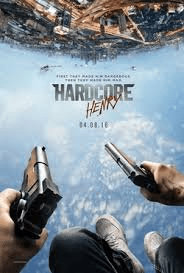
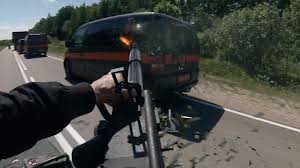
Hardcore Henry, a proudly R-rated action vehicle from thirty-year old director Ilya Naishuller projected almost entirely from the first person point of view, is an unusually successful cinematic experiment. With practically wall to wall violence from its slightly off commencing sequence to it’s certainly smirk inducing finale, the too often heard comparisons of film to a video are certainly impossible to ignore. As a matter of fact, it seems tailor-made for such tech savvy enthusiasts. Similarly, its general attitude is destruction of everything in sight without taking the time to ask why. It delivers only the most necessary bits of its narrative design to project the story from one jaw-dropping, breathtaking sequence of explosion and gun-fire to the next. Even the general plot, which concerns a robotic being with an unusually well-honed knack for fighting waking up with no recollection of prior events to find out he is a wanted man, seems lifted from the same comparative source.
The result is a spectacularly over the top, endlessly entertaining ninety-six minutes. It astonishes by showing us things we’ve seen far too many times before with a unique angle. This is that we are thrust directly into the sights and perceptions of our lead, Jimmy (Sharlto Copley, who proves he is certainly suited for his role; even if his actual performance is hard to assess). Furthermore, the composition moves at a relentlessly breakneck pace throughout. There is no denying the ground-breaking take on the brutal, yet conventional, exploits Jimmy dabbles in. The whole work, from one amazingly done early sequence atop a plane to the massive brawl incorporated in the completion, seems to be trying to top itself time and again. This is especially true in terms of sheer ravenous spectacle. A dynamic extended sequence inside a brothel and an equally terrific one involving a unique take on a car chase are among the most memorable such incidents herein. There are also several successfully humorous sections sprinkled throughout the bloodshed and ferocity. One such incident, where Jimmy fails to mount a horse near the hour mark, plays like a riotous western parody. It can also be seen, at best, as a hilarious outtake from such a genre offering. It is such unexpected moments amid the modern-day carnage which keeps the proceedings continuously fresh and unpredictable. These portions only heighten the joy at hand.

Yet, it isn’t until we leave this silver screen wonder that we realize we know little more about the individual whose shoes we’ve walked in as we did going into it. We are awed by its brazen, in your face attitude. This fascination continues with its sharp twists (one particular third act reveal is especially surprising) and the pure energy surging from every frame. Yet, it never asks us to peer any deeper. Such makes for a rousing, but, ultimately, hollow experience. Those who are looking for brisk, mindless excitement will more than get their money’s worth. All others may be underwhelmed by its lack of dimension. Those individuals may be just as disappointed with the by the numbers story arc.

Besides wisely avoiding showing the face of our protagonist by having Jimmy cleverly duck out of range of all the mirrors that surround him until one pivotal instant, which heightens the effectiveness of the gimmick Naihsuller engages us in, the screenplay continuously injects inventive ways to keep its rowdy spirit fresh and alive. The picture rarely repeats itself in terms of violence. Likewise, the incorporation of Akan (Danila Kozlovsky), an engaging albino villain with telekinetic powers, adds to both the wow factor. It also greatly enhances the creativity on display. This is noticeable when he is seen psychically picking up anything in his possession and hurling them at Jimmy. These range from tables to actual human beings. Either way, such sights suit the approach remarkably well.

hardcore henry 1

Sadly, none of that conception can be found in the other aspects of the conclusively rote Will Stewart and Naishuller penned screenplay. The duo offer strictly serviceable dialogue. They serve up to spectators’ ears the brand of perfunctory conversation that is just meant to move us from one scene to the next. That is when the feature settles down, as it rarely does, enough to allow such discourse. There isn’t even the expected degree of quips we would find in a classically honed vehicle. For instance, the brand that would’ve typically showcased Arnold Schwarzenegger or Bruce Willis. Additionally, all of the characters we meet herein are written as thinly as Jimmy.

Moreover, the ploy begins to grow tedious near the climax. There is also a staggeringly unexpected, and rather pointless, musical number in the third act. This weighs down the energy. Such an absurd bit plays as if the tale is suddenly lampooning itself. It throws us out of the account during the minute or two it lasts. What is worse is that the feeling that this segment is pure filler, in a flick where this word otherwise does not apply, is undeniable.

Yet, these detracting elements are saved by composer Darya Charusha’s kinetic, pulse-pounding soundtrack. The cinematography from Chris W. Johnson, Pasha Kapinos, Fedor Lyass and Vsevolod Kaptur, as well as the editing by Steve Mirkovich, are crisp, rugged and grimly beautiful. Such is true of both components. This is even when they mimic the erratic shaky camera movements commonly equated to a found footage effort. Anna Kudevich’s costume design is stylish and appropriate. Igor Byoko, Regan Livingstone and Tanit Phoenix offer terrific make-up. The sound, composed from a department of seventeen individuals, makes the various blows issued throughout all the more immersive and heart-pounding. The massive visual effects and stunt crew only enhance the credibility and the illusion that we are actually a part of what is unfolding.

Haley Bennett paints Jimmy’s wife, Estelle, with equal doses strength and vulnerability. Bennett gives a powerhouse performance in a role that is more layered than her introductory sequences, when Jimmy wakes up, would allow you to believe. Tim Roth is just as convincing as Henry’s Father. Andrei Dementiev as Slick Dimitri, Oleg Poddubnyy as Yuri and Stewart as Robbie are just as wonderful. They are continuously gripping in their respective portrayals.

I was initially put off by the concept of Hardcore Henry. It appeared that, with the found footage sub-genre long past its prime and audiences unafraid to announce their fatigue with such opuses, Naishuller and company were attempting to offer us a new moneymaking alternative to the aforementioned sub-genre. Moreover, the trailer made the actual execution of the idea appear juvenile. I couldn’t be more wrong. This is a well-done, ruthless, fierce and mostly mature endeavor. It should have no problem packing adrenaline junkies of all ages into cinema theaters with the enjoyment afterwards evident all around. Naishuller guides the piece with taut direction and more artistry than one might expect from such an undertaking. This is visible from the moment Jimmy opens his eyes after the initial prologue.

Though the affair can be equated to the likes of the Jason Statham starring Crank ventures, both entries in the Hitman series, James Bond, The Terminator and any given found footage exertion thrown into a blender: the result is, for now, purely original. My only hope is that when the movie’s success at recycling these familiar ingredients brings forth an era of first person vantage movies: that they are injected with the inspired spirit of virtuoso fun that is visible throughout so that this impression will not become tainted. Even though the tactic utilized has been done in cinema before, Naishuller has crafted a film that is still uniquely trailblazing. Though far from a masterpiece, this assuredly dazzles. Such comes as much from the novelty still ingested into its device as it does from its ability to wink at its audience while exhilarating us. The results are undeniable, and highly recommended.

hardcore henry 4