Protanopia (2024) – (Movie Review)

By Andrew Buckner

Rating: ***** out of *****.

Protanopia (2024), the debut feature from writer-director-co-star Matthew Mahler, is a 73-minute masterwork of surreal, experimental horror. Opening with a quote from Leviticus 14:37-38 concerning the cleansing of a leprous house, the symbolism of which gives the following narrative even more of a potent punch, the picture immediately creates a sense of urgent unease. This is with its agile exploitation of noise distortion, creepy commencing credits, and various other unsettling elements. All of these components are incorporated within the first five minutes of the production. 

The use of a bright, bold red in these previously stated sections, as well as throughout the totality of the undertaking, cleverly and powerfully reflect the meaning of the title word (an inability to discern the aforementioned crimson color). It also becomes a glorious beacon for the incredibly memorable and haunting imagery utilized to chilling effect in Mahler’s offering. Most impressively, the piece never loses its natural ability to evoke a dread-infused atmosphere, to surprise, or to astonish from an artistic angle with its many stylish flourishes. This is once Mahler settles down to tell his tale after these striking early segments. 

Mahler’s plot involves a man, Luke (in an excellent portrayal from Anthony Carey), falling prey to bizarre dreams of an unfamiliar house once his sister, Mallory (in a wonderfully gripping depiction from James Chase), goes missing. What Luke is unaware of is that the strangely behaved Alan Roscoe, Jr. (in an ever-captivating turn from Timothy J. Cox, which ranks as one of the foremost performances from the always reliable actor) has just inherited the home after the recent passing of his father, Alan Roscoe, Sr. (in an eerie and endlessly watchable representation from John Mahler). Luke and Roscoe, Jr. will soon find their paths crossing. This is as Luke’s nightmares seem to bleed out into the open-eyed reality of his waking days. 

Concluding with a skillfully underplayed, but nonetheless impactful, finale, the meticulously paced project is a smartly written and deftly directed addition to Mahler’s filmography. It’s filled with contemplative yet organic dialogue and situations. Still, some of the avant-garde ingredients, such as the strobing lights and slow-motion shots, become less engaging the more often they are applied. This is especially true in the second half of the outing. Yet, the endeavor never loses its hypnotic, vice-like spell on its audience. Moreover, the inclusion of such frequently employed constituents as the poetic, ominous voice-over from Mahler, which contain the initial bits of speech heard in the enterprise, are perpetually operative.

Much of the visual strength of the article comes from Mahler’s evocative cinematography. The color palette chosen for the photoplay alternates between foggy gray and a plethora of far more vibrant shades. All of which marvelously fit the sharply honed ambiance of the proceedings. It also gives the presentation the look of both a giallo by Dario Argento and a prototypical 1970’s grindhouse flick. Furthermore, Mahler’s implementation of appropriately moody music, proficient editing, and his stellar illustration of Jack continually enhance the quality of the fabrication. 

Correspondingly, the entire cast is first rate. Paula and Barbara Mahler are terrific as Janice and Gladys, respectively. Ross Mahler is outstanding as Jim. Andrea Norell fares just as well as Vanessa. John Heerlein’s rendering of Detective is spellbinding. 

Protonapia is daring and ambitious yet credible and grounded. It also demonstrates sufficiently developed yet enigmatic enough to be intriguing characters. Its themes of service, ritual, and routine are quickly established. From herein, they are woven to dramatic, bloodcurdling, relatable, and all around superb consequence. 

Boosted by a remarkable exhibition of sound from Nick Bavaro and Carey, the Ronkonkoma, New York-filmed, $2,000-budgeted exercise is an intense, imaginative, and finely crafted venture. It is one that should prove inspiring to aspiring filmmakers and cinephiles alike. Mahler’s latest proudly stands alongside Cameron and Colin Cairnes’ brilliant Late Night with the Devil (2024) as a top-tier genre effort. It is also one of the ten best movies of the year so far.

Beneath Us All – (Movie Review)

By Andrew Buckner

Rating: ****½ out of *****.

Beneath Us All (2023), from director/co-star Harley Wallen and screenwriter Bret Miller, is another tremendous showcase of Wallen’s transcendent knack for relatable, smartly character-oriented, and topically relevant horror pictures. It operates just as successfully as an effective exercise in classic genre situations and atmosphere. Wallen’s latest development is also noteworthy for its ambition. Such a trait is instantly perceptible from the tense, compelling, Scandinavia 912 AD set opening sequence, which is nearly five minutes in length. 

This bit immediately draws attention from its viewers with its rich, beautiful, earthy cinematography by Alex Gasparetto. It erects supplemental inquisitiveness with its gripping and ominous melodies, Viking songs, and in its era-appropriate dialogue. The violent scenario that unravels in this commencing passage sets the engrossing, if occasionally predictable, plot on its course in stalwart fashion. Wallen’s fabrication also ends in a similarly strong, surprising manner. It is one that is, like everything that came beforehand in the venture, commendable for its grounded, organic, quietly menacing, and consistently well-made nature. In this sense, the smoothly paced 91-minute undertaking stands alongside the likes of Andre Ovredal’s recent adaptation of the seventh chapter of Bram Stoker’s novel Dracula (1897), The Last Voyage of the Demeter (2023), as an example of the lingering power of both the prototypical, hair-raising vampire chronicle and of patient, confident, foreboding storytelling in modern cinema.


Advantageously carrying on Wallen’s recurring theme of dysfunctional families, Beneath Us All weaves a versatile tale of metamorphosis. It primarily concerns Julie (in a spellbinding turn from Angelina Danielle Cama), who is on the verge of her eighteenth birthday. She is in a constant state of fear and loathing towards her abusive foster father, Todd Gibbs (in a captivating depiction from Sean Whalen that is equal doses uncomfortable, absorbing, and authentic). While trudging through the woods one day, Julie unearths an ancient beast, Frey (in a sinister, mesmerizing rendering from Yan Birch). Despite Todd’s warnings to not bring outsiders in the house with her, Julie allows Frey to hide within the Gibbs’ property. As Frey begins to mentally manipulate Julie and his nightly feedings transform into rumors of assaults from local critters, an opportunity unfolds for Julie to gain control over Todd in a way the cruel man would never expect. 

This engaging narrative foundation is made ever-sturdier by an exceptional enactment from Maria Olsen as Julia’s foster mother, Janelle Gibbs. Correspondingly, Wallen is a commanding presence as Detective Donovan Booker. Julie’s younger foster siblings, Stephen (Malachi Myles), Erica (Emilia Wallen), and Sarah (Hanna Wallen), are all superbly portrayed. A subplot involving a social worker named Rebecca (Kaiti Wallen) is another illustration of the magnificent performances unveiled in the enterprise. The inclusion of this element also attaches auxiliary depth and dimension to the dramatic aspects of the outing. Additionally, the segments of raw terror, especially in the fog-laden second half of the endeavor, are top-notch. They call to mind the immersive gothic horror of Hammer Film Productions from both the 1960’s and the 1970’s. Namely, Terence Fisher’s brilliant Dracula: Prince of Darkness (1966) and Alan Gibson’s outstanding The Satanic Rites of Dracula (1973). 


Skillfully guided by Wallen, the project is deftly penned by Miller. The script, though routinely structured, utilizes enthralling, sharply developed lead personas, believable interchanges, and an admirable balance of sensitivity and shock. All of this is heightened immeasurably by the all-around stupendous music from Firoze and Kaizad Patel. Moreover, the editing from Johnny Flynn is seamless. The makeup, cleverly and sparsely used effects, and costume design all help craft a technically muscular backbone to this already Herculean construction.

Ultimately, Beneath Us All is as spectacular as Wallen’s previous features Ash and Bone (2022) and The Devil’s Left Hand (2023). It’s efficient in runtime and haunting despite its familiar touches. The thoughtful yet unnerving work is further proof of why Wallen is such a terrific filmmaker. Low on gore but high on enigmatic trepidation, Wallen’s excursion is a marvelously realized lesson in the tried-and-true theory that what remains understated, especially when spied through an unflinchingly human lens, is often the most dynamic in the realms of visual apprehension. With Beneath Us All, Wallen has once again unleashed one of the best movies of its type this year.

“After” (2023) – (Short Film Review)

By Andrew Buckner

Rating: ***** out of *****.

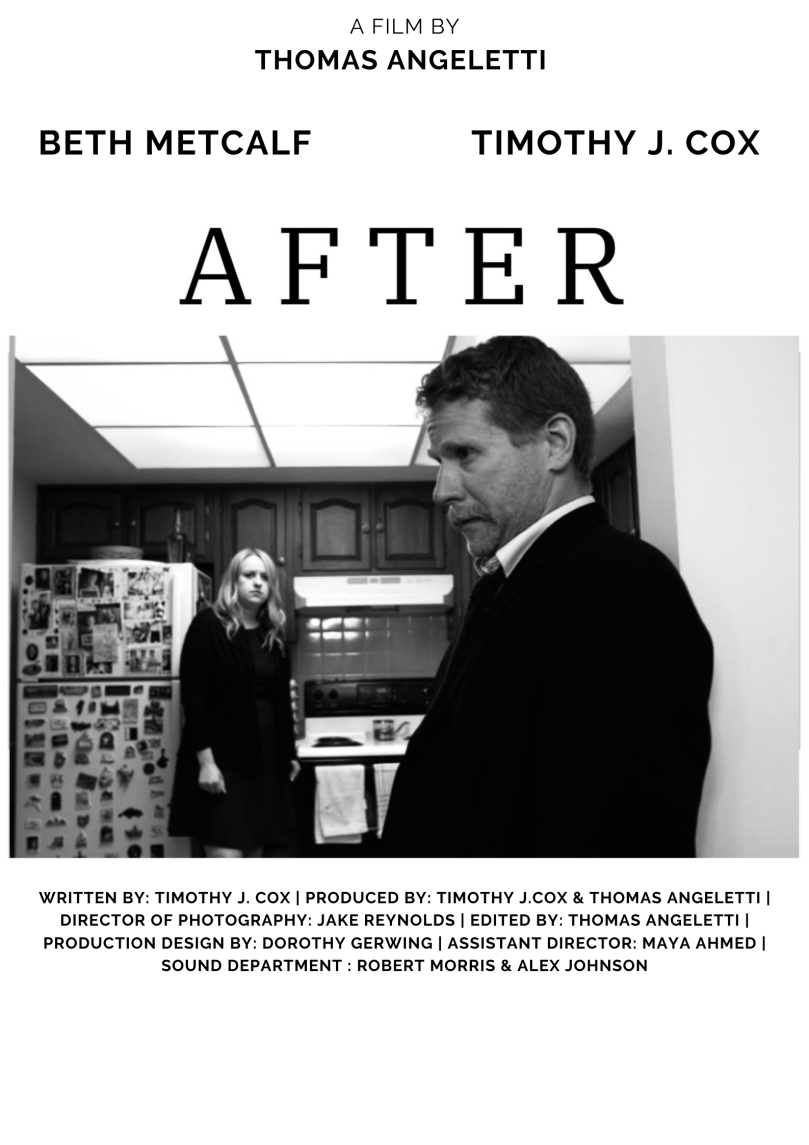
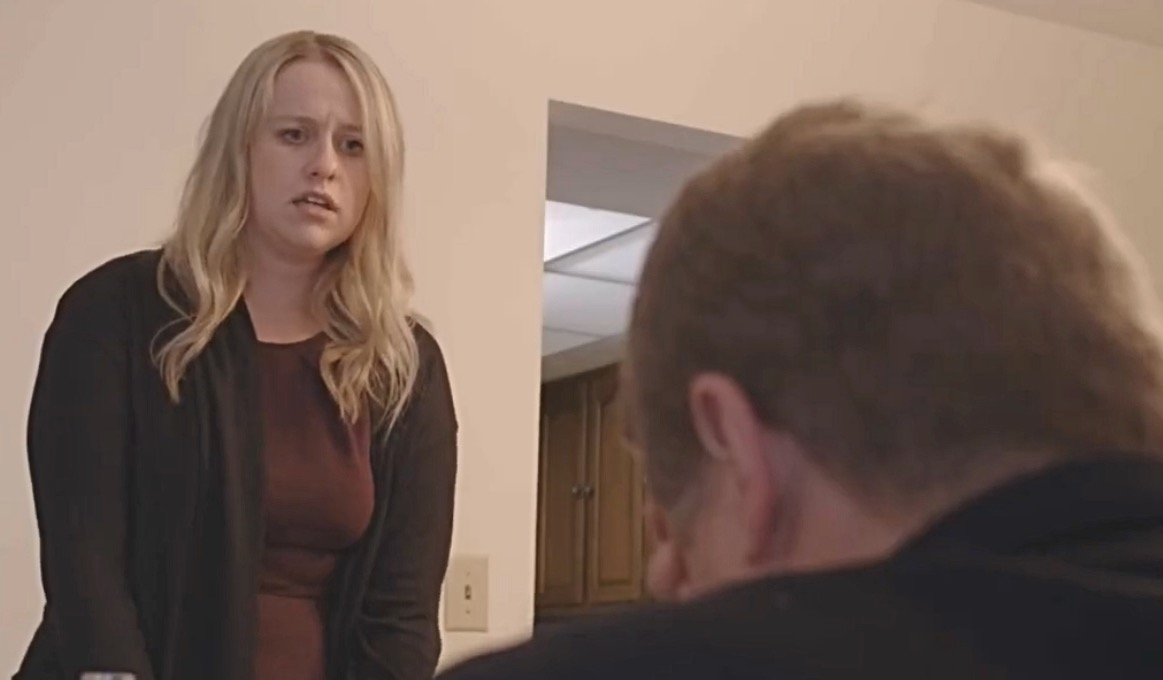
“After” (2023), from director Thomas Angeletti and writer/star Timothy J. Cox, is a one-setting, two-person, seventeen-minute meditation on anger, grief, and revenge. It is one where the oft-uttered expressions “riveting”, “poignant”, and “powerful” can be attached to practically every facet of the endeavor. This is most visible in the pain-filled primary performance from Cox, which immediately draws viewers in with its intelligence and emotional depth. Cox’s take on his character, the adept police detective Michael Darcy, is an all-around brilliant portrayal. Ranking among Cox’s finest achievements to date, it convincingly illustrates a father torn between warring thoughts which revolve around enacting his own vengeance or putting his hopes for retribution in an unreliable legal system. This is after his son, who was a police officer, is slaughtered while on assignment. 

In the venture, what functions just as dominantly as Cox’s depiction is the believable on-screen chemistry between Cox and Beth Metcalf. Metcalf plays Cox’s daughter, Annie Darcy, with quiet, focused effectiveness. Her nuanced, sensitive depiction of someone who, like her father, is trying to understand, in her own ways, the cruel hand fate has dealt her family compliments, in tenor and sentiment, Cox’s lead delineation. Moreover, it is, like Cox’s enactment, credible every step of the way.

The equally organic, cryptic, and brief dialogue Cox has crafted for the undertaking, which gradually fleshes out the events and details of the story in an almost noirish manner, is every bit as impressive and skillful as the aforementioned representations. Said speech adds to the general mystery, ardor, and suspense mounting from the previously mentioned decision Cox must make, which forms the focal point of the narrative. These verbal exchanges, like all genuinely strong conversational elements in cinema, is a looking glass into the essence of the central figures of the exercise. It is one which sheds far more light into their hearts and minds than what is being stated outright in the piece. The Herculean nature of this discourse alone is as much a compliment to Cox’s internally and externally tense, flawlessly paced, sharply realized, and always character-oriented script as it is the capabilities of the individuals reciting these words.

Deftly directed by Angeletti in a fashion that is as mature and compassionate as the material dictates, the effort is further bolstered by Jake Reynolds’ striking, tonally appropriate cinematography. The editing from Angeletti is seamless. Alex Johnson and Robert Morris offer crisp, remarkable sound work. The production design from Dorothy Gerwing is just as apt. Additionally, the beautiful, haunting, piano-driven track “Waiting”, marvelously penned and performed by Kadir Demir, is heard over the sleek, smartly simple credits sequences. The tune helps fashion perfectly atmospheric bookends for the project.

“After” is an undeniably affecting and deeply human drama. It is one which uses both of its guiding personalities to potently exemplify two differing approaches to a traumatic situation. Moreover, they masterfully personify the moral quandary that arises from such an event. Utilizing compelling and relatable themes, Angeletti’s understated presentation is as commanding in its plot as it is in its execution. Stirring, memorable, and technically triumphant, it is undoubtedly one of the best short films of the year.  


The 60 Best Feature Films of 2023 (So Far)

By Andrew Buckner

*Please note that the inclusion of the films on this list is based on the criteria of an official 2023 release date. This excludes premieres at film festivals.

60. All that Breathes

Director: Shaunak Sen

59. A Good Person

Director: Zach Braff

58. Shin Kamen Rider

Director: Heidaki Anno

57. The Wrath of Becky

Directors: Matt Angel, Suzanne Coote

56. Blood and Gold

Director: Peter Thorwarth

55. Guardians of the Galaxy Vol. 3

Director: James Gunn

54. Project Wolf Hunting

Director: Hongsun Kim

53. Polite Society

Director: Nida Manzoor

52. Phenomena

Director: Carlos Theron

51. Candy Land

Director: John Swab

50. Missing

Directors: Nicholas D. Johnson, Will Merrick

49. M3gan

Director: Gerard Johnstone

48. Knock at the Cabin

Director: M. Night Shyamalan

47. Scream VI

Directors: Matt Bettinelli-Olpin, Tyler Gillett

46. Stale Popcorn and Sticky Floors

Director: Dustin Ferguson

45. Cocaine Bear

Director: Elizabeth Banks

44. Unwelcome

Director: Jon Wright

43. Still: A Michael J. Fox Movie

Director: Davis Guggenheim

42. Hollywood Dreams & Nightmares: The Robert Englund Story

Directors: Christopher Griffiths, Gary Smart

41. The Angry Black Girl and Her Monster

Director: Bomani J. Story

40. John Wick: Chapter 4

Director: Chad Stahelski

39. The Blackening

Director: Tim Story

38. Unicorn Wars

Director: Alberto Vazquez

37. Of an Age

Director: Goran Stolevski

36. Paint

Director: Brit McAdams

35. Guy Ritchie’s The Covenant

Director: Guy Ritchie

34. Huesera: The Bone Woman

Director: Michelle Garza Cervera

33. BlackBerry

Director: Matt Johnson

32. Air

Director: Ben Affleck

31. Chevalier

Director: Stephen Williams

30. Sakra

Directors: Ka-Wai Kam, Donnie Yen

29. Inside

Director: Vaslis Katsoupis

28. Living

Director: Oliver Hermanus

27. A Man Called Otto

Director: Marc Forster

26. Pinball: The Man Who Saved the Game

Directors: Austin Bragg, Meredith Bragg

25. Infinity Pool

Director: Brandon Cronenberg

24. Shin Ultraman

Director: Shinji Higuchi 

23. Horror in the High Desert 2: Minerva

Director: Dutch Marich

22. Back to the Drive-In

Director: April Wright

21. How to Blow Up a Pipeline

Director: Daniel Goldhaber

20. Are You There God? It’s Me, Margaret.

Director: Kelly Fremon Craig

19. The Raker House

Director: John Covert

18. The Quiet Girl

Director: Colm Bairead

17. Suzume

Director: Makoto Shinkai

16. Evil Dead Rise 

Director: Lee Cronin

15. EO

Director: Jerzy Skolimowski

14. Malum

Director: Anthony DiBlasi

13. The Outwaters 

Director: Robbie Banfitch

12. A Thousand and One

Director: A.V. Rockwell

11. Sisu

Director: Jalmari Helander

10. Living with Chucky

Director: Kyra Elise Gardner

9. Gods of Mexico

Director: Helmut Dosantos

8. Filmmakers for the Prosecution

Director: Jean-Christophe Klotz

7. Enys Men

Director: Mark Jenkin

6. A House Made of Splinters

Director: Simon Lereng Wilmont

5. Beau is Afraid

Director: Ari Aster

4. All the Beauty and the Bloodshed

Director: Laura Poitras

3. Skinamarink

Director: Kyle Edward Ball

2. Holy Spider

Director: Ali Abbasi

1. Toga

Director: Shaun Rose

Runners-up:

Brooklyn 45

Director: Ted Geoghegan

Influencer

Director: Kurtis David Harder

Subspecies V: Blood Rise

Director: Ted Nicolaou

The Super Mario Bros. Movie

Directors: Aaron Horvath, Michael Jelenic, Pierre Leduc

Tetris

Director: Jon S. Baird

The 10 Best Short Films of 2023 (So Far)

By Andrew Buckner

*Please note that the inclusion of the short films on this list is based on the criteria of an official release date of 2023 in the United States. This excludes premiere showings in film festivals.

10. “Mantid”

Director: Krista Michaels

9. “Rise”

Director: Nisha Ganatra

8. “Ivalu”

Directors: Anders Walter, Pipaluk K. Jorgensen

7. “Weathering” 

Director: Megalyn Echikunwoke

6. “Disregard”

Director: Mike Messier

5. “Captcha”

Director: Andy Compton 

4. “Sisyphus Unbound”

Director: Ryan Fleming

3. “The Devil on Derby Street”

Director: Luke St. Germaine

2. “Mrs. Halloway”

Director: Connor Morley

1. “The Ground Beyond”

Director: Jeremy Arruda

Runner-up:

“Rewriting Mallory”

Director: Emerson Adams

DEATH COUNT (2022) – Movie Review

By Andrew Buckner

Rating: **** out of *****.

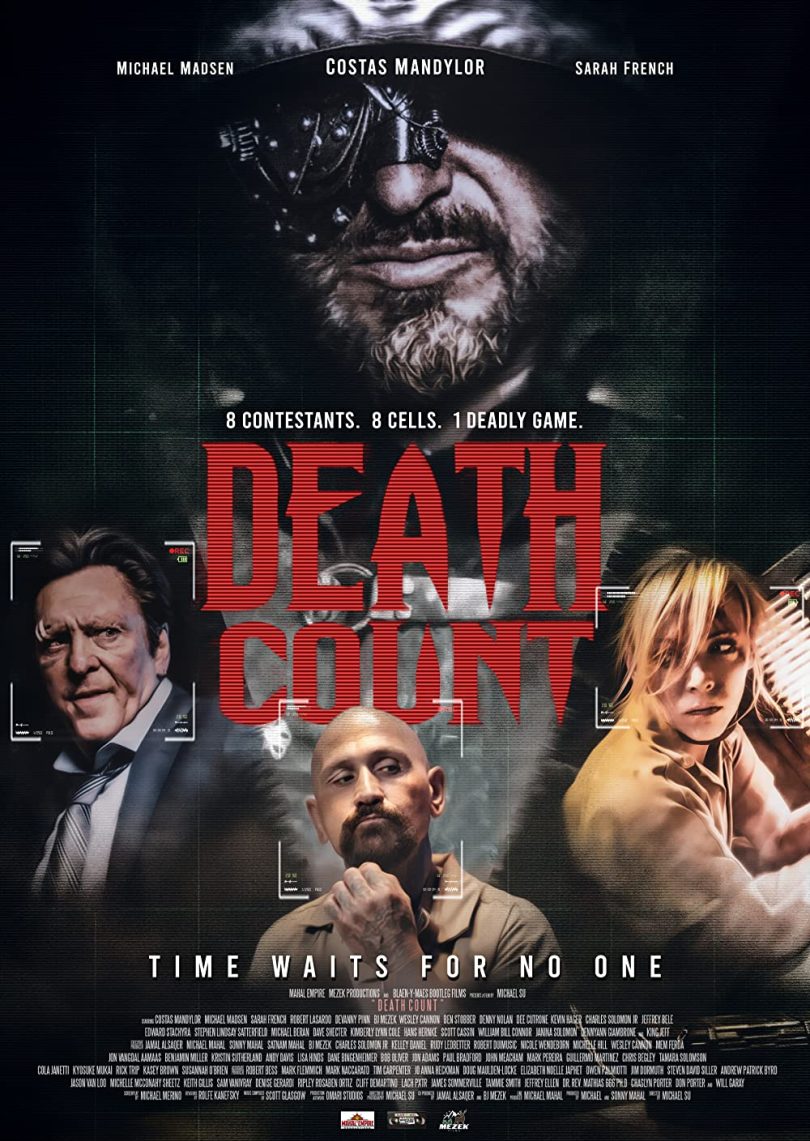
Death Count (2022), from director Michael Su and screenwriter Michael Merino (with revisions by Rolfe Kanefsky), is a lean, efficient, captivating, and grisly take on Saw (2004) style horror pictures. After a visually bravura and claustrophobic commencing acknowledgements segment, Su’s offering even begins in a related manner to James Wan’s previously stated masterpiece. Continually, there is an explicit mention of Saw, as well as the narratively similar Hostel (2005) from director Eli Roth, in one sly late first act sequence. It involves a montage of news reports. Aside from being an opportunity to address the oft-utilized theme of the operation, the sadistic underbelly of The Internet, this short episode is also a refreshing nod to the photoplays from which it evokes motivation. The presence of Costas Mandylor, who deftly enacted Detective Lieutenant Mark Hoffman in Saw III (2006) through Saw: The Final Chapter (2010) and just as capably depicts the wonderfully ominous Warden in Su’s latest effort, greatly enhances this correlation.

Michael Madsen, who magnificently portrays Detective Casey, delightfully offers his gruff, commanding charm to the material. His bits of dark humor also pepper the proceedings. Yet, none of these items are employed so frequently that they take away from the superbly fashioned and anxiety-fueled tone of the enterprise. The beautifully orchestrated mood of the article skillfully permeates the appropriately brisk 81-minute attempt from the initial frame to the last.

The story concerns a group of eight strangers who find themselves in a foreign environment. They are isolated in holding cells and cannot recall how they got to be in such a situation. Their conditions become even more dire when the frightful Warden announces that they are being forced to play a deadly game. It is one which involves getting the most “likes” on social media. This is achieved by partaking in violent escapades, all of which have a ten-second time limit per unwilling contestant, that revolve around self-harm.

It’s exactly the type of plot one would expect from a tale of this ilk. The characters are also familiar archetypes. The exposition and general development they are handed is satisfactorily dispersed yet garden variety. Even the inevitable climactic reveal of why these individuals were gathered and how they are connected follows suit. The dialogue the central figures are handed is sharper and more successful. Nonetheless, it still falls under the banner of what spectators foresee from such an outing.

Notwithstanding, the film is relentless in terms of its taut pacing and same said tension. The project expertly erects its setup in the initial ten minutes of the venture. From herein, it imaginatively crafts increasingly macabre ordeals for our leads to endure. The account is just as creative in its plentiful and exceptionally well done gory bits. A courtesy of the confident guidance of the vehicle from Su, the solid script, and the all-around high-caliber performances in the construction, the suspense rarely wavers. It is smoothly concocted from the engaging and enigmatic opening to the grimly gratifying conclusion. The latter cleverly hints at a potential sequel.

What is just as impressive is the fascinating way in which the affair combines numerical, literary, and sonic clues which may aid in the contributors’ survival in the second half of the fiction. The quickness and unpredictability with which most of the cast gets slaughtered in the mesmerizing first act is just as noteworthy. Such measures create a welcome balance to the more routine beats of the composition. It also makes the endeavor far more palpable in the nerve-shredding anticipation it brilliantly builds.

From a technical perspective, the work is equally stalwart. The cinematography from Su and music from Scott Glasgow is atmospheric and immersive. I especially enjoyed the incorporation of the fitting track from Psycho Synner, the Jeremy Spencer and Shawn McGee penned “The Torture Never Stops” (2021), during the enthralling end credits. Moreover, the editing from Jeremy Wanek, costume design by Joe Lujan, sound, makeup, stunts, and effects are all outstanding.

Also identified as Numbers, Death Count is a scrappy, in-your-face midnight movie. It isn’t as groundbreaking as the features from which it derives inspiration. Regardless, it will assuredly please those of us who are always frantically searching for a stellar dose of grueling cinematic terror. A Mahal Empire, Mezek Films, and Blaen-Y-Maes Bootleg Films production, Su’s exercise is twisted fun. It’s also one of the best genre undertakings of the year.

Death Count will be released in North America on July 19th, 2022.

The 21 Best Books of 2022 (So Far)

By Andrew Buckner

*All the books included herein are incorporated into this list based on an original 2022 publication date.

21. City on Fire

By Don Winslow

20. Comedy Comedy Comedy Drama: A Memoir

By Bob Odenkirk

19. Child Zero: A Novel

By Chris Holm

18. Celest

By Sandy Robson

17. Quicksilver

By Dean Koontz

16. Diablo Mesa

By Douglas Preston, Lincoln Child

15. Finn

By Stephen King

14. Road of Bones

By Christopher Golden

13. Monstervsion: The Films of John and Mark Polonia

By Douglas Alan Waltz

12. The Girl Who Outgrew the World

By Zoje Stage

11. Fight or Play Basketball: every shot counts

By Mike Messier

10. Gwendy’s Final Task

By Stephen King, Richard Chizmar

9. Sundial

By Catriona Ward

8. Devil House

By John Darnielle

7. Bless the Daughter Raised by a Voice in Her Head: Poems

By Warsan Shire

6. Liarmouth: A Feel-Bad Romance

By John Waters

5. Sparring Partners

By John Grisham

4. All the Flowers Kneeling

By Paul Tran

3. The Kaiju Preservation Society

By John Scalzi

2. Feel Your Way Through: A Book of Poetry

By Kelsea Ballerini

1 The Rise and Reign of the Mammals: A New History, From the Shadow of the Dinosaurs to Us

By Steve Brusatte

The 15 Best Short Films of 2022 (So Far)

By Andrew Buckner

*The inclusion of the short films in this list is based on an official release date of 2022.

15. “Bros for Life”

Director: Leo Powell

14. “New Years”

Director: Kris Salvi

13. “Heart Shot”

Director: Marielle Woods

12. “Life’s Good”

Director: Jackson Tisi

11. “Erax”

Director: Hebru Brantley

10. “When the Daemon Takes Hold”

Director: Jackson Batchelor

9. “The Time Travelers”

Director: Killarney Traynor

8. “Not Waving but Drowning”

Director: Thara Popoola

7. “Briefcase Paranoia 2”

Director: Nicholas Hatch

6. “Wanna Play a Game”

Director: Brad Case

5. “Nightcap”

Director: Sam Mason-Bell

4. “A Christmas Card from a Hit Woman in Leominster”

Director: Kris Salvi

3. “Forgive Us Our Trespasses”

Director: Ashley Eakin

2. “Scribbles After Midnight”

Director: Jeremy Arruda

1.“The Blood of the Dinosaurs”

Director: Joe Badon

Runners-Up:

“Two Wrongs”

Director: Damien Nembhard

“Yo!”

Directors: Hamed & Mal

Disorienting Dick (2022) – Movie Review

By Andrew Buckner

Rating: ***** out of *****.

Disorienting Dick (2022), from director Richard Griffin, functions brilliantly as a witty sex comedy, a political satire, and as a quietly charming and intimate cinematic journey. More specifically, one which concerns the time-tested theme of embracing your true self. It achieves a consummate symmetry of these previously stated elements. This is while being incredibly entertaining throughout its brisk 87-minute runtime. Just as importantly, it never wavers in its ability to make us laugh at the absurd rules and regulations society puts upon its citizens. This is also true of some policies certain parties flat-out ignore. A spectacular gag near the ten-minute mark which involves Covid-19 vaccinations, Republicans, and mask wearing hilariously displays the latter. With all that has been going-on in the world the past few years alone this is something that most will agree is welcome, cathartic, and desperately needed.

What is just as admirable is the pitch-perfect pacing of the project. There is not a single scene in the entire picture which doesn’t directly affect the plot and/or the motivations of the individuals unveiled in the undertaking. With the recent trend of bloated runtimes in Hollywood photoplays that are overstuffed with unnecessary sequences and thin characterizations, Griffin’s always trustworthy aptitude to keep the narrative going without any filler whatsoever while satisfactorily fleshing-out his leads is as refreshing as ever. This is as much a courtesy of the sharp editing and direction from Griffin as it is the smart, sensitive, and superbly structured script from Griffin, Robyn Guilford, and Daniel Martens (who also briefly and confidently plays Dream Pizza Boy/Plumber). Boosted by a remarkable flare for developing the on-screen personas in a way that is graceful and wholly natural, there are just the right amount of honest and tongue-in-cheek instances woven into the consistently clever dialogue. The capacity of this speech to pepper the proceedings with puns and sly meta moments only enhance this already stalwart quality.

Opening with an appealing section that is reminiscent of a 1950’s style educational reel that immediately introduces the delightfully campy and ultimately upbeat tone of the exercise, the plot revolves around Richard “Dick” Whiteman (Graham Stokes). When the identity he is trying to conceal from his Republican Rhode Island mayoral candidate mother, Maureen (Leslie Racine Vazquez), and girlfriend, Pat (Sarah Reed), comes into question he is abducted by the wicked Hyde Hippocampus Clinic. Through their use of extreme forms of mental therapy, they intend to transform “Dick” into a model of conservative ideals. The situation appears bleak for “Dick”. That is, until another group begins to repeatedly kidnap him. This collective is focused on bringing out the side of him which is often spied in the vivid fantasies that fuel his reveries throughout the production.  

Such is a simultaneously timely and timeless storyline that will prove relatable to many spectators. From the above summary alone, it is easy to ascertain how the two establishments that are fighting to take “Dick” down their path of orientation are his own personal struggles with finding himself. This subtle yet accessible symbolism, which is fluently threaded into the fiction, makes Griffin’s venture evermore fantastic. Moreover, the well-shot and elegant erotic segments, though occupied by nudity, are more suggestive than outright explicit. In turn, audiences are offered verified proof of the tasteful and vulnerable approach Griffin injects into what could’ve quickly become raunchy material.

Though many of the central figures, particularly those in antagonistic roles, are given intentionally stock traits in an endeavor to make the humor more palpable, everyone is marvelous. They are all finely cast in what are often purposefully over the top enactments. The sheer likability of the performers and those they depict, especially the protagonists, make this attribute even more perceptible. Stokes and Reed are commanding on this front. Terry Shea is wonderful as Dr. Hyde/Jekyll Hippocampus. Such is a dual representation which showcases opposing personalities.

Boosted by a pleasantly retro commencing and closing credits bit that is eye-popping in its use of black and blue colors, the effort is constantly beautiful and immersive. This is a courtesy of the clean, colorful, inventive, and incessantly striking cinematography from Griffin. It compliments every proficient frame of the affair. The sound design from Griffin is equally crisp and all-around excellent. In related terms, the music from Kissing Contest and Kraig Jordan is catchy and tonally appropriate for the article. The work is further strengthened by the great set construction from Ted Marr. The visual effects from Torey Haas are a standout. There are also some instantly iconic sock puppets created by Margaret Wolf that, like her costume creation in the attempt, elevates the merriment at hand.  

Benefitting from guffaws that elucidate from even the smallest of details, such as names and places and even the entendre-laden title of the outing itself, Disorienting Dick is the funniest movie I have seen all year. Ambitious and layered without being overdone, it is also one of the best features of 2022. It is loving, kind, and joyous. This is despite subject matter that could’ve pointed the arrangement in other directions. The composition is also a testament to the power of film as a source of discovery, expression, and freedom. Filled with Griffin’s distinct perspective and voice, it is endlessly rewatchable and enjoyable. It is a masterpiece of independent art and another unabashedly fun yet bold and thoughtful gem in Griffin’s impressive catalogue.

Writer-Director Lenny Schwartz and Actress Sheri Lee Discuss “The Haunted and the Hunted” (2022): An Interview

By Andrew Buckner

ANDREW BUCKNER: I have the distinct pleasure today of speaking with writer-director Lenny Schwartz and actress Sheri Lee. Welcome! Can you tell us a little about yourselves?

LENNY SCHWARTZ: I was born on the streets of Cranston, RI. For me, writing came at a time when I was considering joining a gang. I was a reckless, angry youth. One day after a family drive by, I started writing plays. That led into screenplays, and here we are! In all seriousness, I am just a lucky guy who has written a lot of plays. I am fortunate enough to be able to still do them. I am lucky to have written numerous screenplays and lucky to have them produced. Now I want to take all of that, and direct my first major feature film, which is something that I have never tried before.

SHERI LEE: I’m a NH based actress (and a mom of 4!) that loves all genres, but I excel in horror. I grew up on some of the greatest horror films. I’ve been dubbed New England’s scream Queen by a few directors now, haha! I’m ecstatic to be a part of Lenny’s film and always wake up feeling honored that he reached out to me that day.

LENNY: My god, it was four years ago I reached out to Sheri. I knew she was a “Scream Queen” and I wanted to deconstruct that.

Lenny, you are currently working on a script for a film you are set to direct, The Haunted and the Hunted (2022). What inspired this work?

LENNY: I always wanted to direct a feature that was unlike anything I had seen. I gave myself some parameters and huge obstacles to put myself into a really hard corner. I kept boiling the film down to essentials, and even took some of those away.

I also wanted to direct a film that was really unexpected for people who know me. I wrote plays which have a lot of dialogue. I didn’t want that. I wanted to take this to a place that is a purely cinematic experience. Something truly horrifying and beautiful.

So, what inspired me? The ambitious idea I had and the thought that this is going to be great.

Sheri, you have a role in The Haunted and the Hunted. What can you tell us about the role?

SHERI: The role in this film is seriously like no other I have taken on before. It is going to be the most challenging, the most emotional, and the most rewarding role to date. I can’t say much about her without giving some of the story away, but I can say that this character will have your attention throughout every second…. I hope I can pull that off.

Sheri, what are you doing to prepare yourself for the role?

Preparation for the role comes with really putting myself in her world. She has a lot of layers and so does the world that you’ll see in the film. Reading the script as much as I can really helps for me to dive right into the whirlwind of her beautiful chaos.

Lenny, you have a Kickstarter campaign for your upcoming film. Can you tell us about it? Also, can you please provide a link for the campaign for those of us who would like to be a part of the project?

LENNY: Yeah, we have a Kickstarter! It is at the link below. I ask that people donate or share it. If we don’t hit our goal, we will keep trying until we do. So, if you are friends with me on social media, pledge share or block me. You’re in it with us.

cjJfXXPChFhZErWpjTwZ2SEnt30r6mmk6UndD13ps3pOQTH5XQ2AtLI

Lenny and Sheri, how does The Haunted and the Hunted differ from other productions with which you’ve been involved?

LENNY: I have worked consistently with some of the best people in the business. I am very lucky and fortunate and always have been. I wouldn’t even attempt this without the lessons they imparted upon me and the friendships forged. This will be a very small production with the highest quality possible. I have no other plans to direct anything after this. This is the one.

While it does have horror elements of it, it isn’t just straight up horror. If anything, it’s a deconstruction of genres in a sense and it’s about the dissolution of the American family.

SHERI: This production differs from others mainly for the reason that I’ve been involved as a producer from the start. I love seeing the other side of productions and being a part of the growth.

The atmosphere that this film upholds is amazing and everyone will be in awe. I absolutely cannot wait to bring this to life and to entertain everyone with this extremely unique story.

Lenny, what are your plans for making the film?

LENNY: The plans for making the film will be to raise the most money possible to make the best possible film. I have also been assembling the best possible team for each aspect of this film. Only then, we will make it. But this year for sure.

Lenny, you have an interesting and unique approach to the dialogue and characters in the movie which should really help the work standout from related titles. Can you tell us about these aspects?

LENNY: I don’t want to give away too much except to say that I hear those things a lot. They are my crutches. For writers and directors and even performers, good or bad, we all have our crutches. I was interested in taking those crutches away. That’s all I can say.

Lenny, you’ve directed the brilliant and endlessly relatable political drama Vote M*********** (2020) and co-directed such terrific pictures as Comic Book Junkies (2020), which I have a speaking role in, and Far from Perfect: Life Inside a Global Pandemic (2020). How will the directorial style of The Haunted and the Hunted differ from these other ventures you’ve directed? What unique challenges will the director’s chair bring forth this time around?

LENNY: Thank you for the kind words about the other projects. I think the biggest thing for me on this one is that I will be able to be on an actual, physical set for these as all of those were filmed remotely on cell phones by the performers due to pandemic. It’s going to be nice to work physically with people! But it will be a safe set, both for creating and for the pandemic we are in.

The unique challenge is that I have a clear vision for what I want to see and then realizing it the closest I can to that vision.

Lenny, what has the process of writing the script for the movie been like so far? Do you have a routine for writing you utilize when working on the screenplay?

LENNY: It’s been weird. I finished the first draft in 2015…and now coming back to it again and again over many years has been great. I never get sick of the script and it is always on my mind.

I also reached out to my female friends a ton writing this script as there are feminist themes inherent in this script. I leaned a lot onto Sheri for that as well.

This also has the most action and tension I have ever put in a script. It’s like an anxiety attack that never lets up.

That sounds terrific. I can’t wait to see it.

Lenny and Sheri, is there anything else you would like to discuss that I haven’t asked about yet?

SHERI: I want to thank everyone that has donated so far and encourage others to do so if they can.

Don’t miss out on being part of bringing a truly unique werewolf film like this to life.

LENNY: Thank you to everyone who supported us thus far. The best is yet to come.

Thank you for your time.  I appreciate it. I also wish you all the best of luck on your project.

*The poster art featured above is the work of Mark Michaelson.