New York born Writer-director Jared Cohn delivers a beautifully made, splendidly acted and engrossing take on an oft utilized concept in Devil’s Domain (2016). Cohn’s invention concerns a cyber-bullied teenager, Lisa (in a compelling performance from Madi Vodane that immediately and continuously draws sympathy from audience patrons). Frustrated by the torment that she undergoes daily, and a video of our central figure that only makes our central figure more of a target for harassment, Lisa meets an appealing stranger online. She initially states that her name is Destiny (in a hypnotic and superb enactment from Linda Bella). Almost immediately Destiny reveals herself to be The Devil. Drawn into the powerful and seductive promise of having her desires fulfilled, Lisa makes a deal with Destiny. The promise soon turns to tragedy. This is as Lisa’s peers find themselves the unwilling victim of this unholy pact.
Despite the familiarity inherent in the general plot, Cohn’s feature never feels predictable or overdone. Such is a courtesy of Cohn’s competent pace. It is also the consequence of his terrific balance of characterization and story. The horror sequences, especially a third act arrangement involving Lisa watching someone who recently confessed her feelings to our protagonist being hit by a car, are all effectively staged and tremendously executed. Cohn also implements a finale that shares the generally tried and true sensation of the tale itself. Yet, still it arises as a potent punctuation point to this memorable thrill ride. It also serves as a necessary extension of where the narrative appears to be naturally headed.
Such an ability to turn tropes into triumphs is the result of Cohn’s masterful, ever-taunt guidance of the project. His script, which is immersed in realistic dialogue and motivations, provides a consistently solid backbone to this celluloid exhibition. The photoplay is also made increasingly stalwart by Josh Maas’ atmospheric and striking cinematography. Additionally, Rob Pallatina’s editing is seamless and sharp. Correspondingly, the special effects are so credible that they greatly enhance the believability of what we are watching on-screen. Furthermore, unlike many similar genre efforts of the day, there isn’t an overreliance on these filmmaking illusions to mount intensity or culminate dread. This is another indicator of the sheer craftsmanship at hand.
Also, assisting matters are the top-notch depictions. Michael Madsen is especially good as Lisa’s compassionate and understanding stepfather, Bill. The music from Iggy & The Stooges, DMX and Onyx, reiterates both the tone and the overall beats of the affair uniquely and spectacularly. Likewise, the piece casually ebbs and flows eye-catching style. This is evident instantly in an opening credits sequence that is filled with comic book-like renderings of the leads. This is paired with Satanic symbols and images. The section is capped off by excellent animation work from Devin J. Dilmore. In turn, this bit calls to mind the bravura cinematic flash of a Gallo feature from legendary Italian moviemaker Dario Argento. This visceral flare, and alignment to the aforesaid maestro, is recaptured in the variety of imaginative and grisly kill scenes found throughout the labor. The outcome of these elements is a gripping and ever-immersive example of all-around talent; a brilliant tour de force. See Devil’s Domain when it is released in limited theaters and on video on demand on May 30th, 2017.
Runtime: 92 minutes and 48 seconds.
Distribution Company: The Orchard.
Production Company: Cleopatra Films, Cleopatra Records.
Life (2017) is, for better and for worse, exactly what I expected it to be. The photoplay, predictably, takes its every move from the Alien (1979) playbook. Correspondingly, the plot, which involves a space crew being systematically slaughtered by an ever-evolving extraterrestrial creature, is where this is most evident. Yet, it forgets many of the things that made Ridley Scott’s movie so legendary. This is its constant balance of the awe-inspiring and the ominous. But, what is most noticeably lacking is Scott’s well-developed, relatable characterizations. Moreover, Life is in too much of a rush to unveil its monstrous threat. The consequence of this is, besides ignoring the gradual and meticulous build-up of Scott’s classic, merely a forced attempt. This is at getting the audience to know its broadly etched leads in a wholly secondary and unoriginal fashion. Albeit, in the scant twenty-minutes of screen time allotted before the martian organism, Calvin, takes over. Such makes the endeavor ultimately feel heedless and generic. In turn, this science-fiction/ horror entry never gives its proven capable cast, helmed by Jake Gyllenhaal as David Jordan and Rebecca Ferguson as Miranda North (both of whom deliver satisfactory, serviceable performances), a chance to really make their characters a stand-out. Additionally, Ryan Reynolds again enacts another cloying, and unnecessarily comic, variation of his usual on-screen persona. This is in his one-note representation of Rory Adams. What also hurts matters is that the sets, though detailed, and low-tech effects are mediocre at best.
Yet, there is a dogged B-movie charm to the whole endeavor. This is heightened by the competent writing from Rhett Reese and Paul Wernick and Daniel Espinosa’s same-said direction. Such qualities make these flaws easy to forgive. Seamus McGarvey’s eye-popping cinematography, Jon Ekstrand’s score and Jenny Beavan’s costumes are also impressive. The same can be said of the sharply rendered sound department work as well as Mary Jo Markey and Frances Parker’s seamless editing.
Espinosa’s endeavor is never terrifying. It also fails to sufficiently erect and maintain a genuine atmosphere of suspense. This is despite its numerous attempts. Furthermore, the majority of the scares are of a garden-variety ilk. Yet, this Skydance Media, Sony Pictures Entertainment (SPE) and Columbia Pictures release is certainly an enjoyable, if ultimately minor, distraction.
The project undoubtedly benefits from concluding on one of the most intriguing and smirk-inducing bits in the whole production. Such is a nice send-off to a third act that is, like the movie itself, alternately amusing and absurd. A prime example of this is found in a near-climactic segment which involves Gyllenhaal tearfully reading Margaret Wise’s timeless children’s book Goodnight Moon (1947). It is clearly designed to evoke an emotive resonance with its audience. Instead it conjures laughter. As this sequence goes on, it also proves to be extraneous. Still, the overall result of this severely flawed affair is familiar, but fair, entertainment. Espinosa has constructed the type of clunky, imitative picture that is best described as “a guilty pleasure”. It is one perfectly suited for viewing on a rainy day.
103 minutes. Rated (R) for violence and language. Opened on March 24th, 2017.
“Wicked Conclusions” (2016), a twelve-minute and forty-four second short picture from resident Pennsylvanian and co-writer-director Phillip G. Carroll, Jr., is a tense, taunt and thoroughly satisfying horror entry. It tells the tale of Amber (in an always captivating and credible turn from Chloe Hendrickson) and Henry (in a masterful portrayal from Boy-Yo Korodan that treads effortlessly on the line of child-like naivete and unsettling menace). They are imprisoned in the basement of their captor, Ben (in a well-rounded depiction from Erik Searle that conveys the conflicts of his imagined persona in a way that colors him brilliantly as both possible protagonist and antagonist for the bulk of the piece). Such instantaneously garners our attention by opening with a disarmingly light set-up. This includes an unseen individual putting up a sign for a lost dog. During this time, a surprisingly upbeat number pours from the soundtrack. The next scene carries on this impression. Such transpires in a bit which involves Ben making pancakes while casually conversing with an unseen entity. This arrangement is interesting because of the immersive and magnificent angle in which it is shot. It is one which only shows the side of Ben’s face and focuses in mainly on his mouth. Because of this, Carroll immediately defies our expectations. Yet, when Amber and Henry are introduced in the next scene, the invention becomes increasingly engrossing for far more grim reasons. This is as Carroll smartly tackles the afore-mentioned question of Ben’s true intentions. He also engages spectators in a nail-biting tug of war. This is until the rousing, if ultimately predictable, climax. All the while, we attempt to figure out who to root for. This is by mentally reiterating the tagline of the labor: “Who’s the real monster here?”
This is as much a courtesy of Carroll and Roman James Hoffman’s breakneck paced, smartly-written screenplay as it is Carroll’s claustrophobic, stylish and accomplished direction. Carroll seems intent on taking a familiar arrangement, such as the one inherently held in his narrative, and making it rise. This is from its endlessly empathetic shifts in perspective alone. Such twists in viewpoint are administered triumphantly. Carroll and Hoffman’s dialogue also helps matters. This is by being both believably straight-forward and powerfully delivered by those on-screen. Consequentially, the illusion of watching the ghastly scenario that is unfolding before the eyes of the audience is never broken. These items, along with the clues that are casually issued early on as to what is truly transpiring, make the endeavor more clever and easy to admire. But, what works best of all is the masterful handling and staging of the fearful elements themselves. They are beautifully, seamlessly implemented into the account. This is in a manner that never feels artificial. Likewise, it is never as if these pulse-pounding constituents exist to momentarily upstage the character-oriented focus of the exertion. This act itself is something of a rarity in cinema nowadays.
Budgeted at a mere $800, this PGC Studios, Fear Crypt Productions and Frank Horror fabrication also benefits from Sasikumar B’s sharp and assuredly effective music. The cinematography from Ryan Geffert is dark, brooding and impressive. Carroll’s editing is equally striking. Samantha Morris’ sound work is crisp and remarkable. The three-person camera and electrical department further enhance the all-around quality of the enactment.
These components all come together to compliment the unbroken atmosphere of dread Carroll engineers throughout the photoplay. With his tenth stint as behind the lens administrator, Carroll has crafted a balanced, memorable and monumentally mounted fusion of talent. It is one which, in the tradition of the best brief fictions, does not have one extraneous ingredient. Everything directly correlates with the unraveling of the yarn at hand. Most importantly, it does this while being massively entertaining. Carroll has evoked a wonderfully harrowing, haunting, vivid and visceral voyage into darkness. It is one which is also noteworthy for its restraint. This is exemplified via its ability to terrify without ever dissolving into excessive violence. For this, as well as its brash displays of bravado and storytelling prowess, the Halloween day released “Wicked Conclusions” is an unshakably solid addition to Carroll’s filmography. It refreshingly enthralls from start to finish. Simultaneously, it operates as a victorious orchestration of progressively bleak tone. In so doing, it comes with my highest recommendation to genre fanatics. Carroll is a silver screen chairman to be watched.
Paul Verhoeven’s Elle (2016) is terrific. It is a slyly crafted, endlessly enigmatic, Hitchcockian thriller that operates just as well as a character-oriented drama. Yet, Verhoeven’s tale works so luminously because it is smart enough to hand the audience the pieces while allowing them the breathing room to put the puzzle together themselves. Such makes for an increasingly engrossing narrative. It is one that casually twists and turns throughout its one hundred and thirty-one minute runtime. This is without ever betraying the life projecting mirror it is holding up to bystanders. It also never once compromises itself to the expectations of either of its primary genres. This is as much a compliment of Verhoeven’s brilliant, nuanced direction and David Birke’s masterfully constructed screenplay as it is Isabelle Huppert’s triumphant, and Oscar nominated, turn as our lead, Michele LeBlanc. The ability of the picture to defy standards of structure at nearly every turn is just as admirable as the pitch perfect note it ends on. In turn, Verhoeven has given us one of 2016’s many highlights. ****1/2 out of *****.
Get Out (2017) more than satisfies as both social commentary and as a slow burn horror film. The first two acts are terrifically mounted. Moreover, they sport terrific performances. The same can be said of the writing and directing from Jordan Peele. But, the problem is the comparatively unfocused third act. Here Peele finds himself utilizing far more of the familiar genre elements he largely avoided beforehand. The flat finale, as well as the constant comic relief we find in the character of Rod Williams (Lil Rel Howery), further hinders matters. Because of this, the last thirty-five minutes become an intermingling of sequences that are hit and miss; a roadblock that steers Peele’s production to a solid overall sensation. Such is somewhat disappointing given the path to greatness that the effort seemed destined to reach in its earlier stretches. Get Out doesn’t quite live up to the hype. Still, for most of its one hundred and four minute length, it is engaging, enigmatic, well-made and certainly worthy of our time. **** out of *****.
Intimate, in-depth, engaging and massively inspiring, the PBS documentary Maya Angelou: And Still I Rise (2016) is an all around exceptional portrait of an American icon. 113 minutes. ***** out of *****.
Passengers (2016) works remarkably well as romantic science-fiction in the first hour. With its constant character focus, leisurely and unforced pace and overall likability, the affair almost appears as if it beats with the heart of a quiet, intimate indie film. Than disappointment kicks in during the second half. This is as the picture largely abandons these carefully constructed elements for more of the expected big-budget genre schtick. From herein, the effects, Morten Tyldum’s direction and Jon Spaihts’ writing are clunky and ill-conceived at best. The same can be said for its hackneyed stabs at tension building. Even the sheer charisma of the movie’s leads (Chris Pratt and Jennifer Lawrence) sharply diminishes in this later stage. But, it isn’t a complete bust.There are a few interesting ideas sprinkled throughout this faultering section. Yet, this is hard to fully embrace as Tyldum’s exertion steamrolls to its pre-conceived and predictable conclusion. The result is familiar, but fair enough, entertainment. 116 minutes. *** out of *****.
Director Christopher Douglas-Olen Ray (2015’s 3-Headed Shark Attack and Mega Shark Vs. Kolossus) has teamed up with the screenwriters of Bethany (2017), James Cullen Bressack and Zack Ward, for another journey into terror: Circus Kane (2017). Based upon a story by Sean Sellars and starring Jonathan Lipnicki as Scott and featuring Bill Voorhees in a role entitled Evil Clown, the tale follows an isolated master of the ring top. This is as he offers $250,000 a piece to a gathering of social media celebrities. The catch is that these stars must stay in the eerie, foreboding house of haunts owned by their moderator. This is without allowing accruing fear to make them depart. Yet, there is a secret these stars will soon learn. It is that those who agree to the propositions of the host are playing a ghoulish game. Such is one that may force the competitors to pay with their lives.
The distributor of the picture, Uncork’d Entertainment, has recently unleashed the gleefully gory teaser trailer to this Gerald Webb co-produced project. It can be found above. Clocking in at forty-one seconds, the piece promises a feature which will be inventive, stylish, tense and terrifying. There even appears to be an influence from James Wan’s modern classic Saw (2004) to the proceedings.
The photoplay, which Bressack called “one wild and fun film” in a Twitter post from February 18th, 2017, will have its premiere at The Cannes Film Festival in May. All that is known at this time concerning a theatrical run or on demand release is that it will be later in the year. More information will be provided as it becomes available. Either way, Circus Kane is primed to delight fellow genre fanatics.
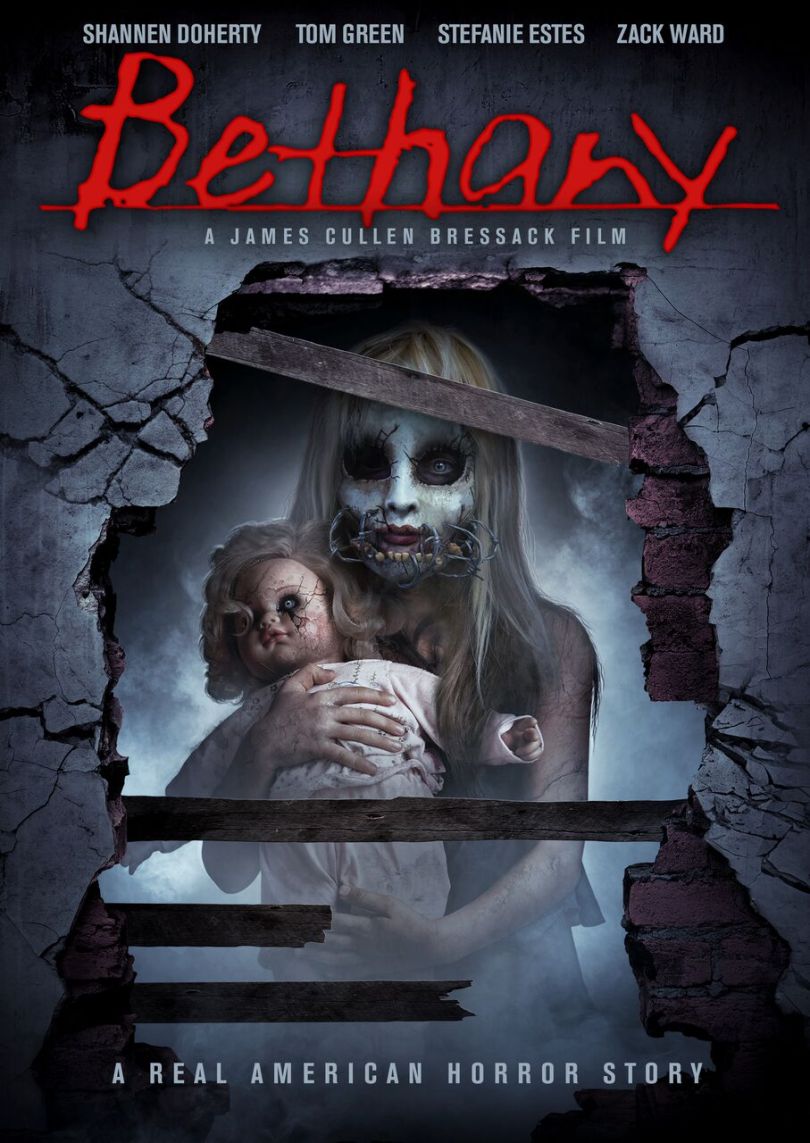
Bethany (2017), a full-length feature from the prolific twenty-four-year old writer-director James Cullen Bressack, is a surreal nightmare; an unnervingly successful contortionist’s act that ranges between past and present traumas. At a brisk ninety-minutes in length, Bressack luminously crosses these stages in time. Such accrues with a seamless mixture of classic gothic horror and modern shock. What is just as striking is how stalwartly Bressack’s latest endeavor aligns itself to the supernatural subtleties of author Shirley Jackson’s The Haunting of Hill House (1959). Such transpires in its earlier stretches. There are even bits which splendidly capture what can be deemed a modern sense of Jackson’s storytelling refinement. Once the presentation nears the second act, the photoplay becomes a nail-biting chain of ghastly, genre-related set-pieces. Each one is more creative and aggressive than the one prior.
Such commences with a distressing, aptly composed sequence at twenty-two minutes in. This segment oversees our troubled heroine, Claire (in a wrenching and ever-believable embodiment by Stefanie Estes) grimacing. This is as she unveils an unexpected crunch in her cereal. As she looks down, she sees roaches climbing out of the bowl. These events only spiral more wildly out of control. Such erupts as Claire’s grip on reality becomes more questionable. Until the comparatively tepid final fifteen minutes, Bressack brings forth a vivid extravaganza of these ethereal proceedings. The majority are made increasingly more delightful. This is in the method in which they constantly called to mind the fictions of Clive Barker. There are also many incidents which made me reflect upon the imaginative celluloid of Wes Craven. Primarily, Nightmare on Elm Street (1984) and New Nightmare (1994). Tobe Hooper’s masterpiece, Poltergeist (1982), was also a frequent echo found within the effort. Moreover, there is a memorable and jarring episode near the half hour mark. It involves Claire pulling on her cheeks. Such made me think a section in Brian Gibson’s Poltergeist II: The Other Side (1986). This is where the braces of Robbie Freeling (Oliver Robins) took on a life of their own. This only augmented the sheer joy the cinephile in me uncovered in the project.
Bressack is clearly inspired. Still, every shot and every scare emerges in a manner that makes it increasingly easier to gaze through Claire’s eyes. When the deftly executed plot begins to unfold, Claire finds herself moving back to her youthful abode. This is with her husband, Aaron (co-scripter Zack Ward in a layered and commanding depiction), in tow. Almost immediately, Claire hears the title personality, an entity that was once thought to be “an invisible friend”, calling her. Making matters worse are the visions of her mother, Susan (in a masterful depiction from Shannen Doherty), which gradually plague the woman. Haunted by flashbacks, which also operate as a gripping form of delivering exposition, the circumstances around Claire become ever more violent and bizarre. With Aaron and Claire’s psychologist, Dr. Brown (in a riveting enactment from comedian Tom Green), desperately seeking to disclose what is ailing Claire, she simultaneously questions her sanity and reality. This is as once buried affairs make their way back into her existence.
Despite this firm, but familiar, foundation, the characters and their motivations are stock. On a similar note, most of the dialogue which dominate Bressack and Ward’s otherwise astounding screenplay are archetypical. Yet, the narrative moves at such a breakneck pace that such demerits seem petty in comparison. Best of all, Bressack and Ward never once lose their fixation on the richly developed personas. The same can be said for the psychologically torturous atmosphere of terror the offering evokes. Such is induced in its opening: A quietly chilling two-minute long arrangement. This portion involves Young Claire (in a turn by Anna Harr that is dazzling), a stuffed bear and an unseen presence by the name of Bethany(which Harr portrays just as unflinchingly as the previously addressed portrayal). After this attention-garnering jolt, Bressack’s endeavor only gains a riveting, imagery-laden momentum. This is as it pushes forward. In so doing, Bressack and Ward offer an all-inclusive catalogue of tropes and uniquely apprehensive notions. Such is increasingly entertaining. This is without ever feeling excessive. A variety of the twists, such as one unveiled circa the halfway point, fall into the category of the tried and true. Still, it does little to damage the evocative, technically impressive nature of this Uncork’d Entertainment distribution. Bressack’s bravura guidance of the tale, as well as the concluding credits, carry this feeling to the last frame of the picture.
Continuing to help matters is the claustrophobic and skin-crawlingly resonant music, a medley of pianos and violins, from Alex Csillag. Likewise, John DeFazio orchestrates cinematography that is brooding gorgeous, suitable and consistently terrific. The editing from Bobby K. Richardson is sharp and seamless. Tiffany K. Wong’s production design, Ryan Henneman’s art direction and Alycia Belle’s costume creation is similarly exceptional. Furthermore, the make-up, sound and camera and electrical squad are captivating. Another marvel is the certainly eye-popping and credible work of the visual and special effects crew. Correspondingly, Leon Russom as Doctor Merman, Kevin Porter as Nurse Foster and Keith Jardine as Harrison reiterate the overall strength of the chronicle. This is with their high-quality performances. Felissa Rose as Janice the Realtor, Kristy Hill as Maternity Nurse and John Murray as Mr. Hodges are also phenomenal. Tiana Whitley as Young Susan, Ellen Gerstell as Marcy and Timmy Pistol as Carl only expand the transcendent edge of the cast.
The result of these herculean components is a configuration that redefines the term “white-knuckle”. Bressack’s item is both sophisticated and grueling. This ultimately exhibits the deft balance of the antiquated and the contemporary approaches to trepidation conjured in this undertaking. But, what is most remarkable is that Bressack, who also plays a hospital visitor, makes us care for Claire. This is also true of those close to her. Such is of the utmost necessity. This is for bystanders to be as absorbed and enthralled as possible as Claire undergoes hell itself. Consequently, the flick rises as resoundingly as a drama as it does a venture into the brooding heart of apprehension. Because of this, Bressack has crafted an exuberant display of talent; a surefire winner. Fellow aficionados of fright will want to check this highly-recommended tour de force out for themselves. You can do so when Bethany, a Brilliant Screen Studios and Grit Film Works fabrication, arrives in theaters April 7th, 2017.
Two of the most celebrated ingredients in cinematic horror are flesh and blood. Peelers (2016), a wildly entertaining ninety-five-minute feature from director Seve Schelenz and writer Lisa DeVita (who also did the casting), submits this in gleeful excess. Such is most notable in the all-embracing structure. Schelenz and DeVita set the affair up in a semi-traditional manner. This transpires within the initial forty-minutes. These flashes operate as a collage of sumptuously staged and captivatingly shot strip show sequences. This is mixed in with an equal dose of slyly delivered character and story development.
Utilizing nearly the initial half of the film to revel in the formerly stated attribute could’ve easily become monotonous. It could’ve also slowed down the fluent, meticulous pace of the effort immeasurably. But, there is a range of certainly unique themes that accompanies these segments. Never once are any of these notions repeated. Such a decision helps save the undertaking from such a fate. These sections fuse with the aforesaid exposition seamlessly.
The consequence of such an action paints a more thorough portrait of the occupational lives of our leads. For many related entries in the field, this would be enough to sell the flick. Yet, Schelenz’s project has a consistently successful wit. There is also an abundance of creative ideas coursing throughout the exertion. Not to mention, the progressive build-up of terror events unveiled in this section are just as effectively and organically administered as those stated above. For example, there is a memorable third act happenstance which incorporates these components. It involves our central figure, Blue Jean Douglas (in a charismatic and ever-watchable performance from Wren Walker), taking out an infected antagonist with a baseball. The brilliance of this bit, besides being a nod to her former profession, is that it is modeled after the conventional slow-motion sports-associated pitch commonly elucidated in movies. Much of the last fifty-five-minutes function just as well in this fashion. This is as the proceedings are crafted into an all-out parade of gore, grandiose fright and brilliantly honed humor. This is even if the configuration proves somewhat more engaging early on. Such is because of the method in with relationships bud and circumstances unveil in predictable fashion in the latter portion. Yet, the work never fails to be anything less than raunchy, low-budget fun. Best of all, it rarely resorts to artificial jump scares to punctuate its various episodes of intensity.
The narrative commences with an ominous and certainly attention-garnering scene. It transpires in a hospital. Over the course of its two-and-a-half minutes, the macabre allure of this piece establishes a jolting, though quietly eerie and foreboding, tone. Such becomes an early highlight of the venture. This is as it suggests the variety of great things to come. Simultaneously, it immediately begins to form questions in our mind as to what exactly we are seeing and why. It is a masterful foundation. Schelenz follows this up with a visually stunning arrangement that mechanizes just as triumphantly. There is a smooth marriage of music and sensual imagery augmented in this composition. Such particulars make the configuration play like a bravura inaugural extract of cast and crew recognition from an X-rated installment in the James Bond franchise. Moreover, LaLaa Love’s body language expressive presentation as the dancer viewed in this unit compliments the sheer artistry at hand. Such creates the ingenious rhythm of alternating fear and sensuality upon which the design stands.
As the tale unfolds, we find manager Blue Jean quietly pining. It is her last day as owner of The Happy Hour. Such is the erotically charged club where the narrative solely takes place. A nefarious businessman known as Chromagnum (in an exhibition from Al Dales that spectacularly personifies the efficiently sinister rich man archetype), has bought her out. He intends on using the building to his own whims officially at the stroke of midnight. When a group of miners arrive at the area, it is soon noted that these individuals seem to be covered in a strange ooze. Striking up conversation with one of the laborers, it is discovered that this group believes to have struck oil. They also state that they are planning to go back tomorrow. This is to see if they can uncover more of the presumed liquid. Such explains their festival-like spirit. It is also cause for their reasoning for stopping at Blue Jean’s venue. Yet, this scheme is abruptly halted. This is as the substance morphs these toilers, and everyone else in the building, into infected, zombie-like monsters who hurl black and green fluids. Such erupts moments prior to transformation.
Such is a simple, but surely intriguing, impetus for a chronicle such as the one Schelenz conveys. It is a fiction that garners supplementary points by drawing a definitive parallel to John Gulager’s stupendous Feast (2005). This is in its general setting and zany, go-for-the-jugular demeanor. Furthermore, our protagonists are all likable and diverse in personality. Best of all, they are undeniably outstandingly etched. The antagonists are also exceptional. This is especially true when considering them as a masterful illustration of the collaborative contribution of the thirty-eight people who make up the effects team. Though the look of the undead is a bit conventional, a mixture of the dark eyes uncovered so habitually in modern cinema and the writhing ick of a similar opus from the 1980’s, they are still an enjoyable departure. This is from the stiff and unimaginative veneer of so many mutants perceived in today’s full-length provisions. Correspondingly, the method devised to slaughter these entities is both convenient and clever. But, what shines the most is the endlessly confident and stylish direction from Schelenz. DeVita’s screenplay continues to assist and augment the quality of the attempt. This is primarily with credible, yet often hilarious dialogue. There is also a smart balance of the serious and the comic, the bold and the interesting inherent in the penned material. Such makes the predictably wicked intentions Chromagnum has with Blu Jean’s edifice, which are exposed in the final twenty-minutes, quickly forgivable.
The doggedly skillful on-screen portrayals only boost these sensibilities. Kirsty Peters as Licorice/ Carla, Nikki Wallin as Baby/ Elaine and Victoria Gomez as Tina are excellent in their principal roles. Caz Odin Darko as Remy, Madison J. Loos as Logan, Cameron Dent as Tony and Momona Komagota are also fantastic. Rafael Mateo as Pablo, David Torres as Mario, Edwin Perez as Jesus and Andrea Rosolia as Panuche are just as phenomenal in their respective enactments. The same can be said for Manny Jacinto as Travis, Emma Docker as Aja, Rob Scattergood as Officer Karl Robinson and Katherine Blaylock as Officer Simone Lacey. Lauren Martin as Nurse and Megan Duquette as Nasty Nanda are also impressive in their brief turns. The secondary cast of bar patrons, cooks (Jason Mullen, Chadderton W. Thornton and Mike Hurley in slight, but transcendent, parts), a deejay (voiced by Tim Chisholm) and a waitress (in a magnificent demonstration from Tatyanna Prior) enrich this already layered endeavor. Additionally, Schelenz is scene-stealing in his representation of Officer Carter.
Schelenz also provides sharp and remarkable editing. The cinematography from Lindsay George is gorgeous and ever-immersive. Nikki Blais’ costume as well as Todd Giroux and Schelenz’s production design is authentic and inventive. The seven-person make-up squad offers terrific input. Vincent Mai’s music, though evidently modeled after the conventional mechanisms of the genre score, is moody and unnerving. The art, electrical and camera, animation and sound department all afford an influence that is startlingly good.
Recorded in Vancouver, British Columbia, Canada, this Uncork’d Entertainment distribution and Pound (LBS) Pictures co-fabrication, is interminably delightful, amusing and relentless. It is everything audiences seek when searching for escape via celluloid. There are instances of intentional camp. But, it is not so much that it weighs down the wallop Schelenz packs when he yearns to subject bystanders to genuine shocks. This poise makes the sum increasingly well-rounded and easy to admire. The open to interpretation shot which arises before the concluding acknowledgments only adds to this category. Such is only a warm-up round for the astonishing mid-credits passage that is glimpsed later. When these become mutual with the last second jolt which finishes the photoplay, we smirk all the wider. This is as Schelenz appears to culminate the climax of his brainchild with another wholly new one. Such a radically over the top decision suits the overall attitude of the depiction beautifully. The title, an analogy that applies to the heroines as well as the overtaken, is just as perfect. When integrated, the outcome is an assuredly crowd-pleasing tour de force; a blood-soaked and ceaselessly engrossing reminder of why I originally fell in love with the genus of tongue-in-cheek revulsion. For those with similar affinities, this will prove to be one of the best movies of the year. I highly recommend seeking this out. You can do so when Peelers arrives on Video on Demand March 28th, 2017.
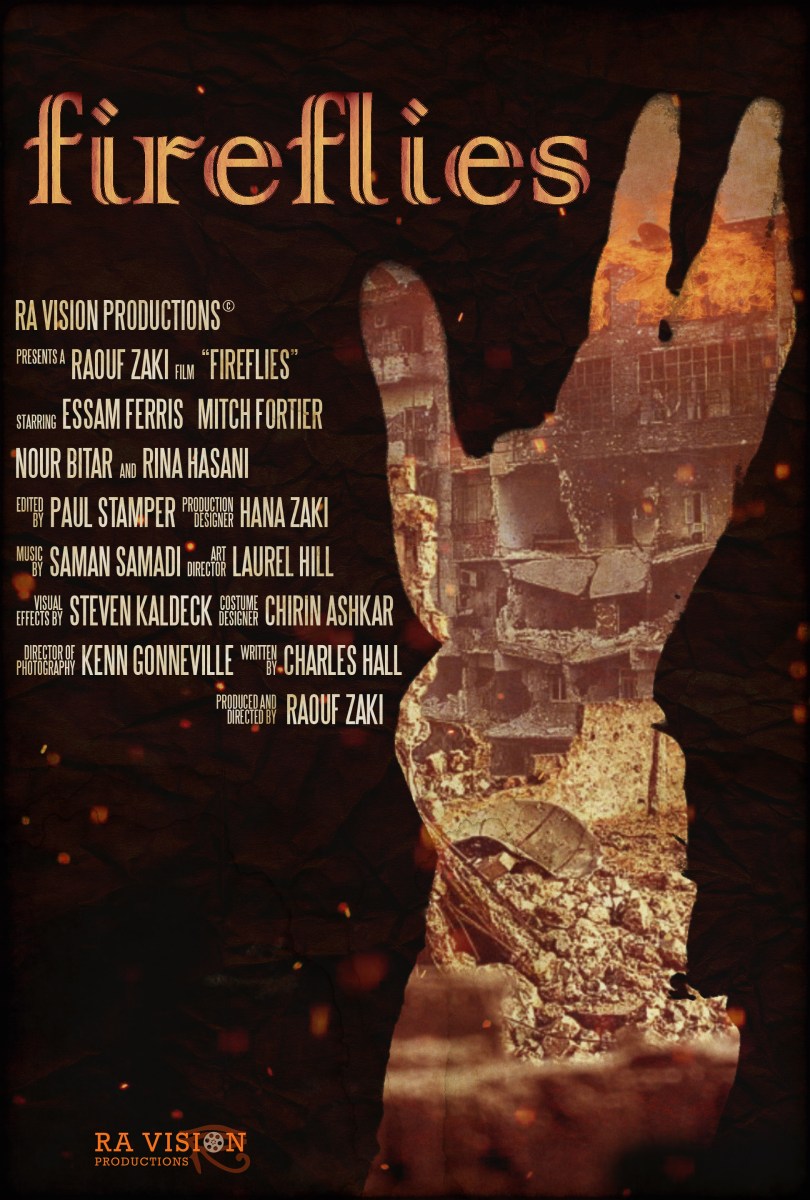
Often in cinema, as in life, silence is the most honest and sincere form of expression. “Fireflies” (2017), a short film of seventeen-minutes and twenty-one seconds from director Raouf Zaki and writer Charles Hall, is well-aware of the harrowing nature of such effects. It utilizes this on-screen with only the barest hint of dialogue. In turn, Zaki’s exertion magnificently demonstrates such visceral prowess. This is through many sparse, but swiftly effective, motions. For instance, a question raising glance from an employee to a customer. This arises a mere instant before the worker draws an unexplained X mark on a nearby calendar. As this bit is repeated, the meaning becomes vastly apparent. Yet, such an approach enhances audience intrigue grandly. Best of all, it also continues to project the untampered sensibility of watching life unfold. Such is pivotal. This is when maximizing the impact of a tale such as this one.
Much of the endeavor is composed of such quietly compelling and reenacted segments. Proof of this can be unveiled in a brief bit where our lead, Marwan (in an aptly honed and nuanced portrayal by Essam Ferris), wordlessly prays in a hotel room. We are also provided several cases where he appears both distant and uncomfortable. This is while being surrounded by the hushed discussion and laughter. Such erupts among others in the Boston café he frequents throughout the presentation. Zaki, via his brilliant and meticulously nuanced direction, wisely intercedes these serene circumstances. This is with a sudden terrified scream, a cry of pain or a sharp, attention-garnering explosion. These haunting flashes stem from the tragic flashbacks Marwan intermittently endures, unbeknownst to others, throughout the arrangement. Because of this, the piece becomes a rousing statement on an even larger topic. This is how the horrors of the past can shatter the presumed peace that surrounds our current state. It is also a masterclass on an entirely different plane. This is in its ability to delve intimately and authentically inside the mind-state of our protagonist. Simultaneously, the configuration operates on as a timely assessment of another psychological condition. This is that which, sadly, courses through a small fraction of the American mentality. Such is unveiled in its plotline. This concerns the suspicions cast from a headwaiter (in a terrific depiction from Mitch Fortier) towards our reserved, Middle Eastern central figure. Such transpires as he finds himself repeatedly returning to the aforesaid coffee bar.
It is a bold theme. But, it is treated organically and respectfully. Moreover, the brief exercise spellbindingly accomplishes an incredible balancing act. This is by dealing with the topic of judgment from others. Such transpires without ever becoming disapproving or overly critical itself. Such only augments the sobering, intelligent and mature traits inherent in the proceedings. This is as a courtesy of Hall’s beautiful, hauntingly penned and delicately structured screenplay. It is also just as much the consequence of Zaki’s stupendous behind the lens involvement. The result is a smooth, naturally paced endeavor. It is one that never abandons its human, character-oriented center. All the while it effortlessly culminates an emotional resonance. This is without ever being overly melodramatic or manipulative to do so. A great example of this would be the heart-wrenching, bittersweet and exuberantly made climax. The imaginative and eye-popping concluding acknowledgments section which follows only augments the wonder at hand.
These components are made even more elegiac and profound. This is when combined with combined with the cinematography from Kenn Gonneville. The editing from Paul Stamper, Steven Kaldeck and Zaki is equally proficient. The visual effects from Stamper and Kaldeck are seamless. They are also as persuasive as the meticulous manner of storytelling issued herein. Correspondingly, the sound work from Kevin Daggett and Jeff Majeau is also rousing and impressive. Kelton Vuilleiumier’s set decoration and Chirin Ashkar’s costume design is fantastic. The same can be said for Lori Grenier’s hair and make-up contribution. Outstanding input is provided from the camera and electrical crew. The art direction from Laurel Cunningham-Hill and production design from Hana Zaki are just as sensational.
This RA Vision Productions release, recorded in various areas of Massachusetts, also boasts magnificent acting all around. Nour Bittar as Syrian Mother and Rina Hassani as Syrian Daughter orchestrate top-notch representations. Their scant turns are nonetheless memorable. Kevin Daigneault as Unemployed Man, Harry McGuire as Bartender and John Melczer as Refugee Man generate a similarly terrific influence. The nine individuals credited as Restaurant Patron, Logan Raposo as Businesswoman and Brian Douglas Young as Guitarist #1 and William Bento as Guitarist #2 continue this striking trait. Additionally, Brooke Farrington as Refugee Young Girl, Christine Nordstrom as Refugee Woman, Christine Hunt as Mother and Judy Nadel as Daughter are also exceptional. Maurice Viteri as Buff Man, Yasmine Sabrah as Lead Singer Restaurant and Vanessa and Natalie Garnhum as Selfie Girl #1 and #2 respectively are also remarkable.
The outcome of these shining facets is undoubtedly one of the greatest and most impassioned presentations of 2017. This is a triumph of artistry and of inward peering life. Zaki takes imagery from the everyday, such as the constant hum and crackle we hear from a glowing red vacancy sign or a woman incessantly uttering “Check” into a microphone, and makes them perpetually mesmerizing. There is a semi-detached, thinly hallucinatory quality to these episodes. Such establishes a magnetic illustration to bystanders. It is a skillfull rendering of the way Marwan himself might be mentally perceiving such manifestations. This is as he evaluates his own existence as well as the world around him. Ultimately, this is one of the various reasons why “Fireflies” works so uncommonly well. It is because it yearns for us to look both inward and outwardly. Not only does it do this with restraint and dignity, but it does so with an unshakable, melancholy power. Such makes an already profound chronicle more insightful. Relatedly, the symbolism revealed in the appearance of the title insects heightens this factor immensely.
Zaki has a lot to say about the human condition. He transfers these ideas in a fashion that is clear and direct. This is also done without coming off as artificial or detracting from the unveiling fiction. Such makes this even more of a gripping triumph; a rousing tour de force. For both the cinephile interested in seeing an exhibition of sheer craft as well as those who want to perceive existence through someone else’s eyes: This is mandatory viewing.
The following is a new feature on my site. It is called “A Word of Dreams Recommends”. The function of this section is to shed light on high-quality, recently released works that I believe audiences will enjoy as much as I do. Unlike the full-length reviews which are otherwise found here, this column will issue my thoughts on the books, films or musical releases I am endorsing in just a few brief sentences. My initial entry in this arena covers Douglas Preston’s latest book, The Lost City of the Monkey God, director Martin Scorsese’s Silence and the documentary Unearthed & Untold: The Path to Pet Sematary.
THE LOST CITY OF THE MONKEY GOD
****1/2 out of *****.
So vividly written that you can simultaneously hear and feel the jungles of Mosquita coming to life around you, The Lost City of the Monkey God (2017) by Douglas Preston fascinates as both a non-fiction adventure and as a historical mystery. The 328 page volume, distributed through Grand Central Publishing and unveiled on January 3rd, chronicles Preston joining a team of explorers in Honduras. This is in hopes of unveiling the remains of Ciudad Blanca (“The White City”): a place often believed to be a myth. As he did with The Monster of Florence (2014), Preston entertainingly delivers a meticulously researched tome. It is one that is in-depth and thoughtful as it is intent on providing a three-dimensional portrait of the past, present and future. This is in respect to both his subject and those directly linked to such a theme.
SILENCE
***** out of *****.
Martin Scorsese’s Silence (2016) is exactly what a great film should be: a beautiful, challenging and emotive journey; an unforgettable and unflinching experience on celluloid. Scorsese stays true to the envy-inducing traits that has made him such a cinematic force over the past 50 plus years. In turn, he has given us an equal balance of visceral art, distinct vision, character insight and understanding. In adapting Shusaku Endo’s 1966 novel of the same name, which chronicles two Christian missionaries who go to Japan in the 17th century to find their long missing advisor and encounter a country which outlaws their belief system, Scorsese’s stylish and wholly cinematic guidance of the project often draws a remarkable and unmistakable alignment to the timeless films of Akira Kurosawa. Rodrigo Prieto’s Oscar-nominated cinematography as well as Andrew Garfield’s performance as our central figure, Rodrigues, are both sweeping and impassioned. Liam Neeson, as Ferreira, and Adam Driver, as Garupe, are also superb. Additionally, the screenplay from Jay Cocks is assuredly cerebral. To grand effect, it never loses focus of the plight of its leads. It is, just as you’d expect from Scorsese, an absolute masterpiece. Never once in its one-hundred and sixty-one-minute runtime does it falter. True cinephiles owe it to themselves to see this immediately on the biggest screen imaginable. This is, by all means, a real movie for real movie lovers.
UNEARTHED & UNTOLD: THE PATH TO PET SEMATARY
****1/2 out of *****.
Unearthed & Untold: The Path to Pet Sematary (2016) is an endlessly absorbing, brilliantly made and comprehensive documentary. It concerns the crafting of Mary Lambert’s film version of Stephen King’s Pet Sematary (1989) as well as the early inspiration for the novel of the same name (1983). The interviews with cast and crew in this ninety-seven-minute production are riveting. So are the various behind the scenes photographs and related materials John Campopiano and Justin White, whose direction is skillful and deft, issue throughout. The result is an ingenious, confidently paced and easy to enjoy slice of non-fiction. It is one which appealed immensely to both the cinephile as well as the King fanatic in me. If either, or both, of these terms describe you, I highly recommend giving this Terror Films distribution release a look.
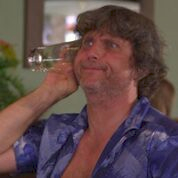
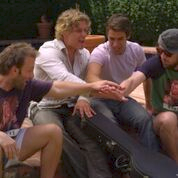
Indiana born musician turned writer-director Darren Dowler’s full-length feature debut, Rock & Roll: The Movie (2016), is a wildly successful rapid-fire comedy. It is one which just as engagingly acts as a loving homage to the popular culture of the 1980’s and 90’s. This is while embracing the immersive spirit of the melodic genre stated outright in its title. Evidence of this rests in Dowler’s witty incorporation of a deftly conveyed stoner duo by the name of Bill (Vince Corazza) and Ted (Chip Bent) into the proceedings. Such becomes a pulpit for slyly abounding references to the two film, Keanu Reeves and Alex Winter starring series. This began with Bill and Ted’s Excellent Adventure (1989) and ended with Bill and Ted’s Bogus Journey (1991). Such a factor is especially evident in the uproarious sequence at the twenty- minute marker. Here these certainly likable and well-played pals are introduced. Yet, the often unabashedly raunchy jokes, all playfully administered, are much in the mad cap, slapstick vain of another decade appropriate gem. This is Jim Abrahams’ and David and Jerry Zucker’s satirical parody masterpiece, Airplane! (1980). The Zuckers’ and Peter Segal’s The Naked Gun (1988), an adaptation of their detective style television show Police Squad! (1982), also springs to mind. Such is established immediately in a brilliantly conceived commencing bit. Such kids the inevitable “leaving my unconditionally ardent mother behind to chase my dreams” segment to endlessly guffaw-inducing effect. This is an inescapable tradition in cinematic stories such as these. A reoccurring pun concerning martial artist Jackie Chan, which is initiated into the fiction in the second half and later addressed in full while the flashily displayed concluding credits roll, is another highlight.
Keeping its tongue firmly planted in cheek for the entirety of its ninety-one-minute runtime, this delightfully entertaining romp has nary a gag or smartly penned piece of dialogue that doesn’t land with either a chuckle or an outright belly laugh. This is a courtesy of Dowler’s tremendously clever, confidently paced screenplay. The composition fully embraces its broad structure and characterizations. This also testifies to the great comic timing of the on-screen performers. Yet, this intimate epic also flourishes because Dowler fills his tale with charismatic, yet vastly sympathetic, central figures. All of whom are distinctly their own personality. Moreover, they are complete with their own eccentricities and amusing quirks. Though many of the anecdotes might haggle the easily offended, none of the people in Dowler’s effort are ever mean-spirited or overly villainous. Such only makes the undertaking more charming and decidedly old-fashioned. The effectiveness of this element is at its most memorable in Bill Oberst Jr.’s scene stealing performance of Moe. He is a sometimes bar tender who constantly pops up at random intervals throughout the affair. This is to dispense strange and off-key nuggets of nonsensical wisdoms and alternate words of motivation to both our leads as well as the audience.
But, the essence of the motion picture, Dowler’s twenty-five songs which are heard throughout, often bring about some of the heartiest laughs. For instance, there is a catchy tune presented in the last fifteen minutes, authored and performed by Dowler (as are all the tracks), which is called “I am Better Looking”. It is just as rib-tickling as the live concert/ music video manner it is presented. But, there are also some genuinely stirring and emotive moments. They pleasantly derive from the more serious numbers. “You Are the First Girl”, which is recited after a bet which transpires before the hour mark, is a beautiful, passionate ballad. It is enhanced by the quietly same said segment in which it takes place. “When We Were Young”, which our hero, Steve Taylor (in a wickedly good portrayal by Dowler) stages in the climactic competition, is just as poignant. Such illuminates Dowler’s bold storytelling and organizational capabilities. These episodes, which would otherwise conflict with the not entirely sentimental mood of the labor, are among the centerpieces of the film. Best of all, they blend seamlessly with everything else Dowler dishes out here. Such ultimately creates a more rounded, artistic and unpredictable arrangement.
Dowler chronicles an oft projected narrative. This is that of an unmistakably innocent man, David Roso (in a pitch perfect depiction by Clark Koelsch), who goes to Los Angeles in hopes of seeing his ambitions take flight. Almost immediately upon his arrival in California, David meets up with personal idol and agent to a catalogue of famous individuals, William Smythe (in an outstanding representation by Daniel Laney which frequently utilizes deadpan humor to punctuate its laughs). Smythe is more interested in obtaining Roso’s ’57 T-Bird than providing career advice to him. In so doing, Smythe makes a wager with Roso. The deal is that if Roso can get an unsigned talent a recording deal in four months or less, Smythe will officially make Roso an agent. If this doesn’t work out, Roso must hand over his prized vehicle to Smythe. Pretending that he is genuinely concerned with Roso, Smythe secretly sets him up for what he expects to be failure. This is by declaring to Smythe that the person he helps get a recording contract is Taylor. An individual who happens to be a porn star servicing drunk in his 40’s who never once glimpsed fame. Such is just the first of the numerous spins Dowler puts on the deliberately conventional trappings of this otherwise formulaic plot.
From a technical standpoint, Dowler issues editing which is every bit as sharp and impressive as his myriad other contributions to this wonderful project. This Entertainment Research Institute and Rocking and Rolling production also benefits from Dimitris Bogiantzis’ suitably cheery, vibrant cinematography. The make-up, camera and electrical as well as the four-person sound department are also remarkable. Likewise, Dowler’s stunts and Alexandra’s Pomerance’s wardrobes are exceptional. Further assisting matters is Cindy Merrill as Karen, Mara Marina as Gloria and Shawn Parikh as Don. All of whom offer delightful enactments.
This EskaGo and Uncork’d Entertainment distribution release is a true tour de force. Compelling and competent at all levels, Dowler’s photoplay has fun with its familiar ingredients. This is without every falling prey to them. Dowler, who is also the lead vocalist for Paul Revere and the Raiders, sends-up the industry that he has been a stealthy force in for many years. Yet, this is done in a spirited and admirable fashion. Such a design will surely appeal as much to insiders as it will general audiences. This is the increasingly rare comedy with real bite. Yet, it operates just as well as an exhibition of talent from all involved. Just don’t go into it expecting any unique insights into the underbelly of the music world. The multi-faceted Dowler, who is also an acclaimed novelist, has given us an amiable opus. It is one which lampoons the limitations of similar entries. This is with a knowing wink at itself and its patron. Because of this, the light-hearted nature and nostalgia at hand are increasingly infectious. Rock & Roll: The Movie triumphs. As a matter of fact, it is one of the best films of its ilk I’ve encountered in the past decade. I highly recommend you seek It out on video on demand today.








 awordofdreams.com