The Lure (2015), a horror/ musical based on Hans Christian Anderson’s “The Little Mermaid” (1837), is one of the most unique, imaginative, surreal and visually spectacular films I have seen in years. Jakob Kijowski’s cinematography is gorgeous, the writing and direction (from Robert Bolesto and Agnieska Smoczynska respectively) are beautifully done and Marcin Charlicki’s effects are credible and superb. Congruently, the acting is stellar. Michalina Olszanska and Marta Mazurek as our heroines, Zlota and Srebrna, are especially good. Moreover, the nearly wall to wall songs, and dance numbers that accompany them, are lively and emotive. Likewise, the moments of terror are memorable and effective. The non-linear storytelling, as well as its constant contrasts in cheery and ominous mood, only helps add a deeper sense of unpredictability, drama, poetry and art house allure to the proceedings. Additionally, the touches of love narrative and same treated, often darkly comedic elements are handled in a proficient and spectacularly blended fashion. It is in a manner that never takes away from the true focal point of the fiction: the bond of Zlota and Srebrna. Correspondingly, these cinematic components are anything but formulaic. Such only makes this production, originally titled Corki dancingu (Daughters of the Dance Club), increasingly layered.
The result is an awe-inspiring, ardent and breezily paced ninety-two- minute stroke of excellence. This is a consistently hypnotic endeavor. It is one that seems to take as many cues from Jim Sharman’s The Rocky Horror Picture Show (1975) as it does any number of grindhouse flicks from that era. Smockzynska’s feature length debut masterpiece, which concerns a pair of sea nymphs who find themselves working in an adult night club in Poland in the 1980’s, is as toe-tapping and, at times, head-banging as it is brilliant. From beginning to grisly and smirk-inducing end, this is one continually soaring, high-note of cinematic exhilaration. For those who claim there is little originality left in the genre, I strongly urge you to seek this one out.
Available now on demand and on DVD and Blu-ray.
Distributed in the USA by Janus Films.
(Unrated). Contains nudity, some graphic violence, sexuality and adult themes.
Co-writer and director Tory Jones’ The Wicked One (2017) is a knockout retro style slasher film. It is tense, blood-soaked fun. Furthermore, it is clearly inspired by a plethora of classics in the sub-genre. John Carpenter’s Halloween (1978) and the Friday the 13th series are among them. Even Alfred Hitchcock’s masterpiece Psycho (1960) gets a nod. Jones’ sly references to these previously mentioned features throughout this skillfully done work only augments the high entertainment value derived from this aspect.
Furthermore, the performances are strong. Correspondingly, Eryk Kyr (who is phenomenal here in his enactment of Mr. Miller), Sean Thomas and Vintage Voodoo’s music is atmospheric and haunting. The same can be said of Roman Jossart’s gritty cinematography. Andy Palmer and Jossart’s editing is terrific. Additionally, the project ends as grippingly, if abruptly, as it begins.
Jones also respects the many traditions, especially in terms of characterization and their often inexplicable actions, inherent in this brand of cinema. This is even if Jones and Cheyenne Gordon’s screenplay invests a bit too much time in the protagonists’ personal dramas. The simple, straightforward plot, which concerns a masked maniac (Jack Norman as the brutal, no- nonsense title protagonist) systematically hacking up a group of young friends on a weekend getaway, also reflects these qualities. Yet, never once does the narrative ever feel trite. It also rarely comes across as unimaginative or underwhelming.
Movies such as these hit audiences on a primal level. Therefore, they will never go out of style. Jones’ latest venture is invigorating proof of such a statement. It is also a testament to his prowess as a filmmaker and collaborative scripter. I eagerly anticipate the sequel the ninety-one-minute affair sets up in such a smirk-inducing fashion its concluding moments. See it!
(Unrated). Contains graphic violence and some nudity.
Well, this is a fascinating turn of events for me. Resident Evil: The Final Chapter (2017), the sixth addition in a video game inspired film franchise I always found satisfying (if for no other reason than these movies always seemed to know exactly what their spectators wanted and was unafraid to hand it to them in spades), is a gargantuan disappointment. Robotic enactments abound. This is most readily glimpsed in Mila Jovovich’s one-note and mumbling depiction of Alice. Worst of all, the movie jumps around at such a frenetic pace that within the first few moments it is hard to focus on anything but the rush this 106-minute presentation is in to get to its predictable climax. The incessantly annoying camera shots, largely evident in the first act, only further prove the stylistic mess writer-director Paul W.S. Andersen creates with the utilization of such components. It is also a testament to the jumbled storytelling, with the narrative concerning Alice returning to The Hive in Raccoon City after ten years to combat the evil Umbrella Corporation one final time, at hand. Moreover, the action scenes, though often intriguingly set-up, are poorly executed. They are also usually so brief that one can barely begin to figure out what is happening on-screen before they are gone. This is save for the occasionally gripping last half hour. We are also given an underwhelming battle that has been hinted at for ages in this section.
I will say that the various twists showcased in this afore-mentioned bit are unusually good. But, it does little to dilute the fact that there is little life and fun left in this ongoing saga. It doesn’t even provide sufficient number of run-ins with the undead to indulge bystanders from that basic angle. Congruently, Andersen’s paint by numbers screenplay fails to convey expository details as they were presented in earlier installments. I’m sure this isn’t just the zombie fatigue I’ve had for the last several years talking when I say, “Stay far, far away from this one.”
Rating: *1/2 out of *****.
(R). Contains occasionally graphic violence.
Now available to buy on video on demand.
On the other hand, Rings (2017), the third entry in a rebooted series I never really cared for before, is nowhere near as bad as most fellow critics and audience members would allow you to believe. It works better as a supernatural mystery than as a horror film. But, these elements still complement one another well. Likewise, the performances are strong all around. This is true of Johnny Galecki’s turn as Gabriel, a college professor, and Matilda Anna Ingrid Lutz’s portrayal of our heroine, Julia. Similarly, the script from David Loucka, Jacob Estes and Akiva Goldsman is paced in a confident and relatively character-oriented manner.
Correspondingly, the proceedings were rarely dull. The ending arrangement was also quite enjoyable. This is even if it was predictable from the get-go. It served as a nice apology for the ridiculous, if still attention-garnering, sequence set inside a plane that commences the 102-minute long feature. The picture also stands triumphant where most horror endeavors fail. This is in the fact that it doesn’t rely solely on its antagonist, Samara (Bonnie Morgan), to accrue intensity.
Additionally, the plot, which concerns Julia going searching for her boyfriend, Holt (in a well-done representation from Alex Roe), and becoming caught up in the dealings of a tape that is said to kill you seven days after you watch it, is vastly more arresting this time around. This is thanks, primarily, to the invigorating and unique manner director F.Javier Gutierrez utilizes to relay the fiction. The result of these qualities, in my opinion, is the best of The Ring ventures. See it!
Rating: *** out of *****.
(PG-13). Contains some violence and intense moments.
Now available to rent or purchase on video on demand.
These two features stand as definitive evidence that expectations, especially artistic ones, can be deceiving. Don’t let these pre-conceived notions hold you back from what could potentially be a pleasantly surprising and rewarding viewing experience.
Deep in the Wood (2015), from co-writer and director Stefano Lodovichi, is a deftly crafted, psychological labyrinth of a thriller. It takes a notion that parents often jokingly ponder in passing, if their child is really their own, to horrific and mostly unpredictable extremes. For the first hour of the occasionally slow yet, deliberately paced eighty-eight minutes of the runtime, it keeps us ruminating over this exact inquiry. This is in relation to our leads, Manuel Conci (Fillipo Nigro) and Linda Weiss (Camilla Filippi). Such transpires after an ominous, immediately attention-garnering and visceral opening section. This concerns four-year-old Tommi (Alessandro Corabi), the son of Manuel and Linda, going missing at the annual Krampus festival. After this intense and wonderfully mysterious commencement, Lodovichi’s presentation fast-forwards to five years later. Inexplicably, Manuel and Linda’s offspring, complete with matching DNA (but no name or telltale documents), is found. Even though the individual is far more reserved than the Tommi they once knew, which would be understandable given being gone for such an extended length of time, Manuel is quick to embrace their progeny. Regardless, Linda senses something off about the whole situation. There is a wickedness about the youth. It is a trait that becomes harder to ignore, for Linda at least, once he enacts violent deeds. Fearing that this youngster, whoever he may be, is out to kill her, the dynamic between the now divorced duo drastically shifts. From herein, Lodovichi, who penned the brilliantly nuanced screenplay with Isabella Aguilar and Davide Orsini, captivates audiences with this certainly intriguing plot.
What is just as fascinating is the various shifts in perspective extant throughout the piece. This is with Manuel’s viewpoint being the most prevalent. There is also a great amount of admiration to found in the manner Lodovichi fluently has us looking to all three of the central figures in this motion picture as simultaneously the protagonists and the antagonists. Often, and to ingenious results, this alternating factor occurs in the same sequence. This is as we keep asking ourselves are if Manuel and Linda are guilty of kidnapping. Or is it that they are the victims of an evil presence? One that would be along the likes of Damien Thorn: the Antichrist from Richard Donner’s horror masterpiece, The Omen (1976). Alas, one of the strongest attributes of the endeavor is the perplexing journey Lodovichi weaves from this angle. I state this because, sadly, the conclusion is a bit underwhelming. This is given all that came beforehand. It is too familiar and closely aligned to the climactic moments of your stereotypical genre effort.
Still, the minimalistic use of the supernatural elements is admirable. It helps instill more of a reality based sensibility to this already credible undergoing. The performances are all top-notch. They all burn with a quiet passion; an almost never clearly verbalized fervor. Teo Achille Caprio, who hauntingly portrays the nine-year-old version of Tommi, is especially noteworthy in this department. Given the surprisingly small number of arrangements he is included into in the movie, this is increasingly impressive. He parallels his adult counterparts, Nigro and Filippi, in this respect.
Continually, this mesmerizingly atmospheric contribution to Italian cinema is graced with masterfully ambient music from Riccardo Amorese. The same can be said for the magnificent, elegiacally bleak and immersive cinematography from Benjamin Maier. Roberto Di Tanna’s editing as well as the sound work and effects are just as spellbinding. All of this is capped off by Lodovichi’s bold, phenomenal and constantly Hitchockian behind the lens treatment of the material.
Though there are instances when the narrative seems as if it could be tightened, this does little to hinder the proceedings. As a matter of fact, it is all in tune with the richly developed, character-oriented nature of the exertion. The intensity, whether it be in the unfolding circumstances on-screen or in the emotional layering of the piece, is also non-stop. Best of all, Lodovichi never resorts to any of the trappings of paranormal related entries to evoke these sensations. This is with faux scares and bumps in the night galore. Instead, Lodovichi garners all of this from his simple and striking telling of the tale itself. Such makes the minor flaws inherent in the affair, such as those declared above, increasingly superfluous. In turn, Lodovichi has gifted spectators with an audacious, memorable and undeniably worthwhile experience. His latest labor is another superb installment in his ongoing filmography. I highly recommend seeking it out. You can do so when Deep in the Woods becomes available on video on demand on June 13th, 2017 through Uncork’d Entertainment.
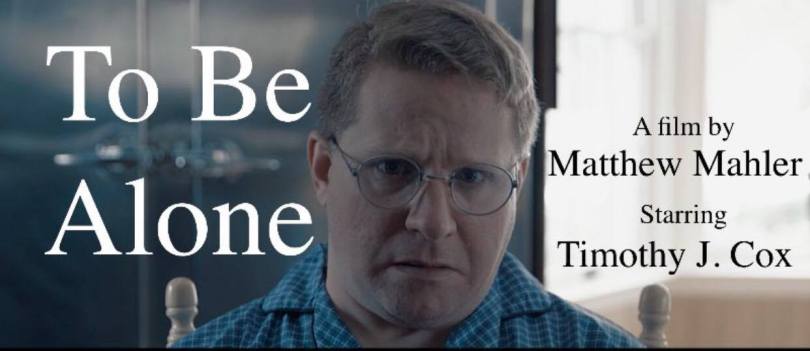
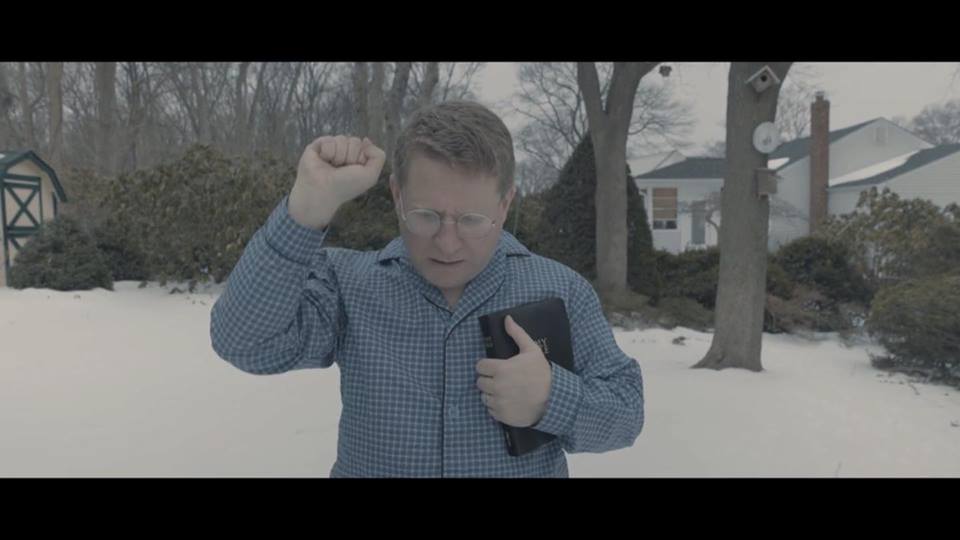
“To Be Alone” (2017), the seventh short film from writer-director Matthew Mahler, is a wholly unique, thought-provoking and brilliantly realized meditation on grief. Yet, it is as much about religious guilt, shame and the all-encompassing hopes of redemption which arise with theology. As a matter of fact, most of the sparse words spoken in the entirety of the twelve minute and forty-six second runtime are from unseen spiritual individuals. All of whom cry out from inside the television set to our lead, William (in a mesmerizing and quietly compelling turn from Timothy J. Cox). They angrily exercise the foremost element. In so doing, they almost immediately prompt William to run outside and engage in actions which suggest the last two latter stated emotions. Whether this is a symbol of the unquestioning fidelity or the apparently easy manipulation of the devout is left to the viewer. There is an equal balance of circumstances throughout the piece that could support both belief systems. Likewise, the non-judgmental tone Mahler crafts here, especially when dealing with such a touchy subject, certainly assists the piece. This is in evoking its continually haunting and meditative resonance.
What also helps is the underlying tension. This is erected most readily in a repeated sequence which involves law enforcement phoning William. Once this erupts, a certain darkness settles over the proceedings. This is as the audience begins to comprehend why he may be going through the previously stated catalogue of inward impressions. It also makes us understand how the pious personalities that are shouting at him have such swift control over his dealings.
The successfulness of these ingredients is a courtesy of Mahler’s deft, carefully constructed screenplay and same said direction. They perfectly compliment the material. What enhances this aspect is the inclusion of moments of sheer style. For instance, a spellbindly done sequence has William looking up the steps towards the closed door of his bedroom. The way it is shot, with Mahler’s ardently energetic music punctuating the bit with an electric fervor that makes it impossible not to step inside William’s nervousness at the unfurling situation, is reminiscent of what one might find in a classically designed opus of cinematic horror. Yet, there are other clever, smirk-inducing bits. For example, there is a near climactic episode that features William carrying a cross. This is in a manner that is reminiscent of Jesus Christ in the tale of his crucifixion. The item William is holding is arranged with Christmas lights and other season appropriate decorations. Such details suggest a bit of playfulness amid this otherwise somber narrative. These items work immeasurably. They also add to the admirable and well-rounded qualities of the endeavor. This is while finding new ways to augment the representative essence of Mahler’s theme. It also makes for imagery that is as unforgettable as the fiction itself.
Adding to the immersive beauty of the project is Jonathan Giannote’s brooding cinematography. Mahler’s editing is also superb. The exertion also benefits from terrific makeup from Maggie Kurth and Morgan Mahler. Correspondingly, Jack Fitzmaurice’s sound contribution is exceptional.
Produced by 8mm Films, Mahler’s latest is among his most accomplished configurations to date. The brief undergoing is massively entertaining. Still, its lasting impact is undeniable. Best of all, it makes you ponder your own convictions. In turn, you can’t help but wondering if you would go through the same repetitive cycle of reaction that William himself is going through. This is if you were in an equally fateful circumstance. With “To Be Alone”, Mahler has fashioned a mandatory movie-going experience. This is one of the best storytelling fabrications of the year.
Writer-director Liam Gavin’s invocation thriller A Dark Song (2016), is fascinating. This is true in the wide-spread knowledge of its subject matter that is dispensed throughout its one-hundred-minute length. Such a quality is also present in the manner Gavin keeps us questioning the motivations, actions and dedication of our credibly etched leads. These are the domineering Joseph Soloman and the vulnerable, audience sympathy-deriving Sophia Howard (Steve Oram and Catherine Walker respectively). This intriguing inquiry accrues in the deliberate lack of specifics in the early sequences. It is also spied in the authenticity of the unfolding event itself. Oram and Walker’s performances, Cathal Watters’ immersive cinematography and Ray Harman’s masterful, creaky and immediately classic score are just as riveting. Gavin’s ever-taunt guidance and meticulously crafted authorship of the project propels this factor. His dialogue is especially believable. The results are appropriately and endlessly eerie, unsettling and haunting.
In turn, Gavin’s impressive full-length feature debut calls to mind a decidedly darker version of several thematically related genre greats. These are Robert Wise’s The Haunting (1963), Tobe Hooper’s Poltergeist (1982) and Alejandro Amenabar’s The Others (2001). This is noteworthy in the methodical and carefully assembled structure inherent in these previously stated motion pictures. Such a comparison is also augmented in Gavin’s brilliant ability to immediately generate an unbroken mood of intensity and impending doom. This is while instilling an ever-extant sense of mystery. Best of all, Gavin avoids the easy trappings of narrative tropes, jump scares and clichés at every corner. As a matter of fact, the bulk of the nail-biting herein are held in the enigma of the unfolding plot itself. Such only immensely enhances the life-mirroring nature of the production.
Additionally, Gavin evokes an unyielding focus on characterization. Such makes this brooding, quietly tense tale of a woman who will go to great lengths to contact her deceased son again and a questionable occultist who may be manipulating her a stylistic masterclass. Correspondingly, the elegiac and engaging concluding configurations are perfect. They emotively cap off all the varied sensations that arose beforehand.
Ultimately, Gavin has provided viewers with an uncompromising, mature and unforgettable reminder of why movies such as these remain ever popular. In a year that is shaping up to be incredible for cinema of this ilk, A Dark Song, which was distributed through IFC Midnight, is certainly one of the standout entries in this category.
(Unrated). Contains brief nudity, adult themes and some gory moments.
Available today in select theaters and video on demand.
Patriot’s Day (2016), which chronicles the 2013 Boston Marathon bombing and the investigation it spawned, is an absolute knockout! Director and co-writer Peter Berg’s penchant for quiet moments of domestic character drama as well as claustrophobic, credible and tense action scenes shines through every frame of the film’s one-hundred-and-thirty-three-minute runtime. Stars Mark Wahlberg, Kevin Bacon and John Goodman are especially good in their respective turns. This is even if their on-screen personas could stand to be better developed. They also should’ve been given more dimension. There is also no insight whatsoever into the reasoning behind our reality based antagonists’ tragic dealings. Still, this does little to dilute the exceptional overall result.
Though it isn’t quite on par with Berg’s masterpiece Lone Survivor (2013), this uncompromising and appropriately gritty work comes awfully close. Berg’s latest is an emotionally layered and transcendent exhibition of craftsmanship. The concluding minutes are especially poignant. This appropriate send-off nicely balances out the nearly non-stop intrigue and deftly executed chase story suspense that came beforehand. Such further creates a well-rounded and admirable cinematic experience. This is a harrowing journey. It is one that, though rather routinely structured, is certainly worth taking.
(R). Contains adult language and violence.
Available now on video on demand.
UNDERWORLD: BLOOD WARS
Rating: **1/2 out of *****.
There is always a sense of urgency in the full-length feature debut of director Anna Foerster’s Underworld: Blood Wars (2016). This endures even in the dialogue heavy second act. The ninety-one-minute effort also sports stunning, handsome cinematography from Karl Walter Lindenlaub. Furthermore, there is a wonderfully gothic feel, present in the four other movies in this series, which is as modern as it is reminiscent of an archetypically circa 1960’s-1970’s Hammer Films horror entry. Additionally, Kate Beckinsale does an adequate job in her portrayal of our Vampire Death Dealer heroine, Selene. This is considering the one-dimensional material she is once again handed. Also, the action packed climactic twenty minutes prove a satisfying distraction. Likewise, Foerster’s behind the lens contribution is slick and stylish.
Yet, it is hard to ignore the fact that if you have seen any of the other Underworld pictures, you have already seen this latest installment. The laughable computer generated imagery and uninvolving plot also hinders this ongoing werewolves versus bloodsuckers tale immeasurably. There are also plenty of gaping holes in the broadly painted and moderately written screenplay from Cory Goodman. When combined with recycled shots and footage, the unyielding impression that this is but another unimaginative, assembly-line Hollywood product prevails. The result is a fair, but mostly forgettable, experience. Skip it.
Propelled by an intriguing and original plot as well as excellent execution, writer-director-star Sandy Robson’s Skyquake (2015) intimately crafts a haunting, meticulously paced portrait of mania from a plethora of genuinely unnerving horror elements. This is a primary courtesy of Robson’s afore-mentioned contributions. All of which are terrific. Relatedly, John Prowse is exceptional in his turn as Dr. Edwards. This can also be said of Bronwen Smith’s proficient enactment of Grace/Norma and Aidan Kokotilo-Moen’s phenomenal portrayal of young Jake. Byron Kopman’s cinematography, Keaton House’s foreboding music and Robson’s editing are also a highlight. Such results in the telling of tale of a man, Adam, and his obsession with a strange hum that is as eerie as it is engaging. This is augmented by the incorporation of a final act that satisfactorily balances characterization, narrative twists and accumulating tension. Regardless, the concluding sequence could’ve benefitted from less explanation and more mystery. Still, the high quality and sheer effectiveness of the production remains intact.
Runtime: 79 minutes.
(Unrated). Contains adult themes.
Available now on Amazon Prime.
Distributed through Brain Damage Films and Midnight Releasing on April 4th, 2017.
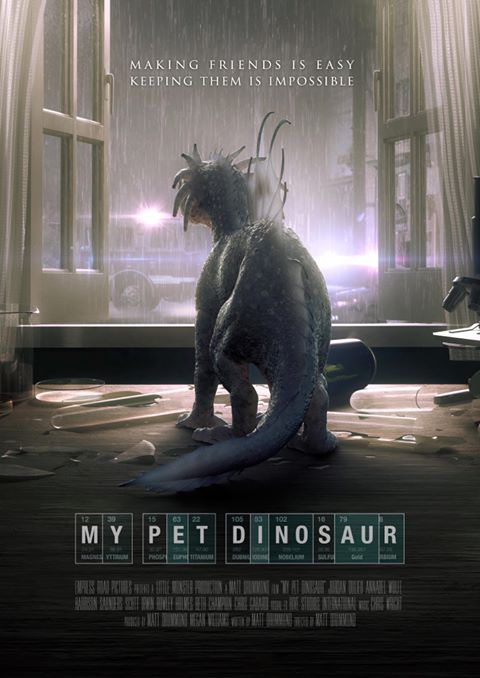
Charming, playful and awe-inspiring, My Pet Dinosaur (2017), the second full-length feature from writer-director Matt Drummond, brilliantly evokes the essence of the early efforts of Steven Spielberg. This ninety-seven-minute triumph, distributed through Empress Road Pictures, has the heart and innocence of E.T: The Extra-Terrestrial (1982). Such is manifest in its vastly compassionate and kind, child-mirroring perspective. Drummond’s latest masterpiece also shares a notable similarity to the afore-mentioned behemoth of popular culture. This is present in its general plot. The major difference of this being the exchange of an abandoned, otherworldly entity for a spontaneously growing, Styracosaur resembling fossil reptile named “Magnus”. There is also a continued comparison visible between these two photoplays. This resides in the varied small-town characterizations, structure and overall atmosphere of each presentation. Yet, Drummond’s exertion has the thrills, magic, adventure and respect for science that made Spielberg’s groundbreaking adaptation of Michael Crichton’s same titled 1990 novel, Jurassic Park (1993), an unparalleled movie-going experience. There are also elements of Close Encounters of the Third Kind (1977) sprinkled throughout the proceedings. This is evident in the exciting and beautifully crafted final forty-minutes. They call to mind the last act of the latter stated opus splendidly. It is also inherent in the ongoing belief of space invaders in the region.
One of the funniest moments in the offering also occurs in this section. It involves Magnus taking down a military drone. Such is ingeniously framed to look comparable to a giant U.F.O. There is also a similar gag involving an underwater menace, which is glimpsed earlier in the labor, which is just as victorious. Such signifies a mere example of the successful and clever use of humor which runs through the photoplay. Much of this is also overheard in the witty banter among our lead, Jake Emory (in an exceptional turn from Jordan Dulieu), and his likable and courageous band of friends. Among them are the ever-hungry Max Merriman (Sam Winspear-Schillings) and the young alien enthusiast Charles Altman (Tom Rooney). There is also the highly-intelligent Dylan Finkelstein (in a stellar performance by Jack Mars). His general demeanor is equitable to an adolescent version of Egon Spengler (1984’s Ghostbusters and 1989’s Ghostbusters II). This only enhanced my nostalgia-infused enjoyment of the fabrication. Their chemistry, especially in the many sequences where they are all present together, is infectious. It helps Drummond’s emotionally layered, yet joyous and endlessly entertaining, affair become ever more transcendent. In turn, it will assuredly resonate with audiences of all ages. The result of these high-caliber attributes is the greatest cinematic love letter of this genus since J.J. Abrams’ breathtaking, 1979 set Super 8 (2011).
Drummond centers his action in the fictional district of Brightwood. Prone to making trouble to break up the monotony of his surroundings, Jake finds himself dealing with the passing of his father. Such causes a rift in his relationship with his mother, Jennifer (in a credible and well-wrought depiction from Beth Champion). With Jake’s older brother, Mike (in a terrific representation from Harrison Saunders), this familial problem is even more aggressive and verbalized. Yet, when a science project goes awry, the potential for these aforesaid difficulties to turn worse is amplified. This is as Magnus, who is initially shown at twenty minutes into the production, is accidentally created in Jake’s bedroom. Swearing to secretly keep the small, puppy-like creature in his room and study him, his promise to keep Magnus’ presence unknown to others quickly falters. As Magnus accrues in size, pandemonium reigns down on Jake’s once peaceful neighborhood. This is as a combative governmental squad, headed by Cornel Roderick (in an intense and commanding exhibition from Rowland Holmes), quickly takes over the area. As Officer Alan Farraday (in a riveting portrayal from Scott Irwin) fights this team for authority, tales of monstrous animals seize the area. It is a truth Jake and his school partner, Abbey Tansy (in an engaging and proficient enactment from Annabel Wolfe), are forced to face for themselves. This is all in an act of keeping Magnus safe.
Such a story is the perfect recipe for an exhilarating, robust arrangement such as the one Drummond cooks up here. He excels at this from the cryptic and visually alluring opening, which would be at home in any of the previously addressed Spielberg pictures, until the sweet and uplifting conclusion. Drummond, via his marvelously honed scripting skills and guidance of the project, handles the material in a manner that is occasionally tense, but never frightening. There is a necessary maturity to the more dramatic segments. Still, a sense of adolescent wonder, joy and even anguish is ever-present. This is observable in the treatment of the various types of relationships in the narrative. This makes for a certainly well-rounded and satisfying account. Such also issues a tone that only punctuates the Spielbergian feel.
Also, assisting matters is Drummond and Hive Studios International’s impressive and lively effects. They make Magnus lovable, curious and adorable throughout the endeavor. This can be spied in a memorable configuration near the half hour mark. It involves Magnus comically roaming his new owner’s home when no one else is around. The outcome of this is simply adorable. It is utilized with abounding slapstick. Even when Magnus reaches adult size in the second half, and is notably more massive and powerful, this unthreatening sensation remains true. This is also a courtesy of Drummond and Bradley Betts’ seamless animation. Chris Wright’s music is, akin to the images they accompany on-screen, ceaselessly daring, sentimental and magical. There is a certainly appropriate John Williams-esque sensibility derived in the scoring. Additionally, the sound and camera and electrical department offer mesmerizing work. Tina Boody’s make-up contribution is fantastic. This general magnificence is also augmented in the sleek and immersive cinematography. It is also summoned in the previously unmentioned roles. For instance, David Roberts is terrific in his brief bit as Doctor. The same can be stated of Joanne Samuel as Doris Mercher. Tiriel Mora as Trevor Brown and Christopher Gibardi as Dr. Fred Tansy are also spectacular. Congruently, Stephen Davis is astonishing as Will Spencer. He is one half of a pair of intrepid local fishermen whose screen time is consistently comic gold.
My Pet Dinosaur is the perfect companion piece to Drummond’s astounding, Jules Verne reminiscent debut, Dinosaur Island (2014). Both presentations are wide in scope. Still, they are surprisingly intimate. They also showcase a strong focal point on their incredibly developed protagonists. There is also a palpable affinity for the subjects as well as the subject matter. These qualities make each respective undergoing increasingly illuminating. Correspondingly, they are genuinely good-natured and deftly constructed. These are the types of sincere and quietly moving children friendly ventures that infuse great lessons of life. This is while appealing to the often courageous spirit of youth. We rarely get these types of epic, blockbuster re-defining journeys anymore. Such provides more reasoning as to why Drummond is a talent to be watched. With My Pet Dinosaur, which was recorded partially in New South Wales, he has again provided audiences with an instant classic. This is the best family film of the year.
(PG). Contains some profanity.
In Australian Hoyts Cinemas theaters today. It will expand to New Zealand on May 27th.
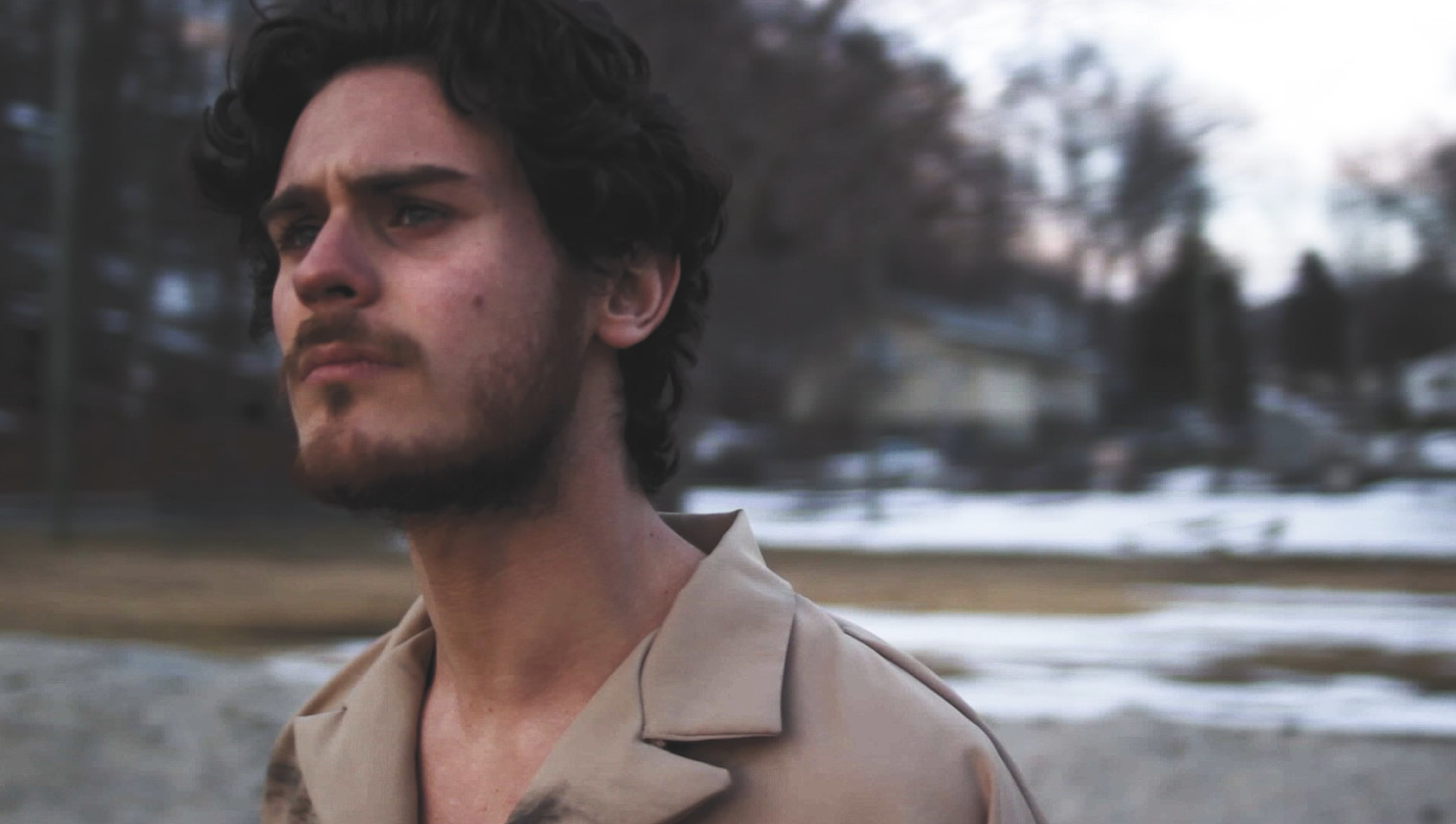
“Triangle” (2017), the debut short from sound mixer and composer turned writer-director Christopher Fox, is a triumph of the emotive power of minimalism on-screen. For five and a half out of the nine minutes which constitute the runtime of Fox’s effort, we sense both the confusion and inner-mechanisms of our hero, Dave (in a masterfully nuanced and purely convincing performance from Branden Macor). This is as he wakes up on a sidewalk and proceeds to survey his surroundings. There is not a stitch of dialogue during this section. Still, Macor’s facial expressions, clothing and often awe-struck gestures speak in-depth about the attempts of Fox’s protagonist to understand where he is in both time and place. Such is more than even an entire feature length picture of discourse into the subject would ever be able to do.
Fox also instills a quiet beauty to this section. It augments the transcendent impact of the work. Such is heard in the gentle, heart-stirring music from Nick Bohun. This sonic material highlights these afore-mentioned sequences. Such an alluring quality is also viewed in Fox’s immersive and illustrious cinematography. Such makes the many moments where Dave contemplatively looks out towards or treads alongside the nearby lake in this initial stretch increasingly astonishing and cerebral. Fox’s sharp editing and brilliant sound department contribution with Bohun makes these arrangements ever more affecting and encapsulating.
The destination Dave is seeking out makes this sentimental journey complete. It also continues the intimacy found in what came beforehand. Given that one of the wisest decisions Fox evokes, and one of the most breathtaking elements of the endeavor, is figuring out what is going on, I will not divulge this here. But, it is easy to state that the plot, which is given visual cues via brief flashbacks during Dave’s wanderings, is brilliant. It’s fusion of science-fiction and character-driven drama would make it wholly at home in a stand-out episode of Rod Serling’s groundbreaking American television series, The Twilight Zone (1959 to 1964). But, there is undoubtedly the core of a truly moving, independent fabrication glimpsed in every frame. The past, or possibly continuing, relationship between Dave and Diana (in a stalwart and charismatic enactment from Margo Goodman), which is unveiled late into the affair, moves the narrative spellbindingly into the formation of the title shape. The climax is just as clever and harrowing. What is most is noteworthy is its sincerity and subtlety. This is as the bit is propelled by two simple words.
The result is a complex, mind-bending and meditative display of Fox’s cinematic craftsmanship. All the previously addressed roles took over on this project are gorgeously administered. They demonstrate a new moviemaker who is certainly in top form. The rest of the cast and crew deliver just as well. Likewise, the resonance of all we encounter in the exertion lingers with fellow bystanders. It compels you to relate and become one with what Dave is undergoing. This fusion of enigmatic, anything but straightforward storytelling and sheer talent is just a fraction of what makes “Triangle” so exhilarating. For example, Fox’s latest demands multiple observances. This is to begin comprehending all its underlying themes and intricacies. Correspondingly, the dedication in the well-honed end credits also brings home the atmosphere of the depiction with profound strength. The result is undoubtedly one of the best presentations of its ilk I’ve witnessed all year. I highly recommend seeking this composition, which has been submitted to over fifty film festivals, when the opportunity arises.








 awordofdreams.com