Film and music critic for http://www.swurvradio.com/
http://www.swurvradio.com/wp-admin/profile.php
https://secure.gravatar.com/userimage/88874527/037b45cfa04eaee772e2ae9dccd5aba1.jpg
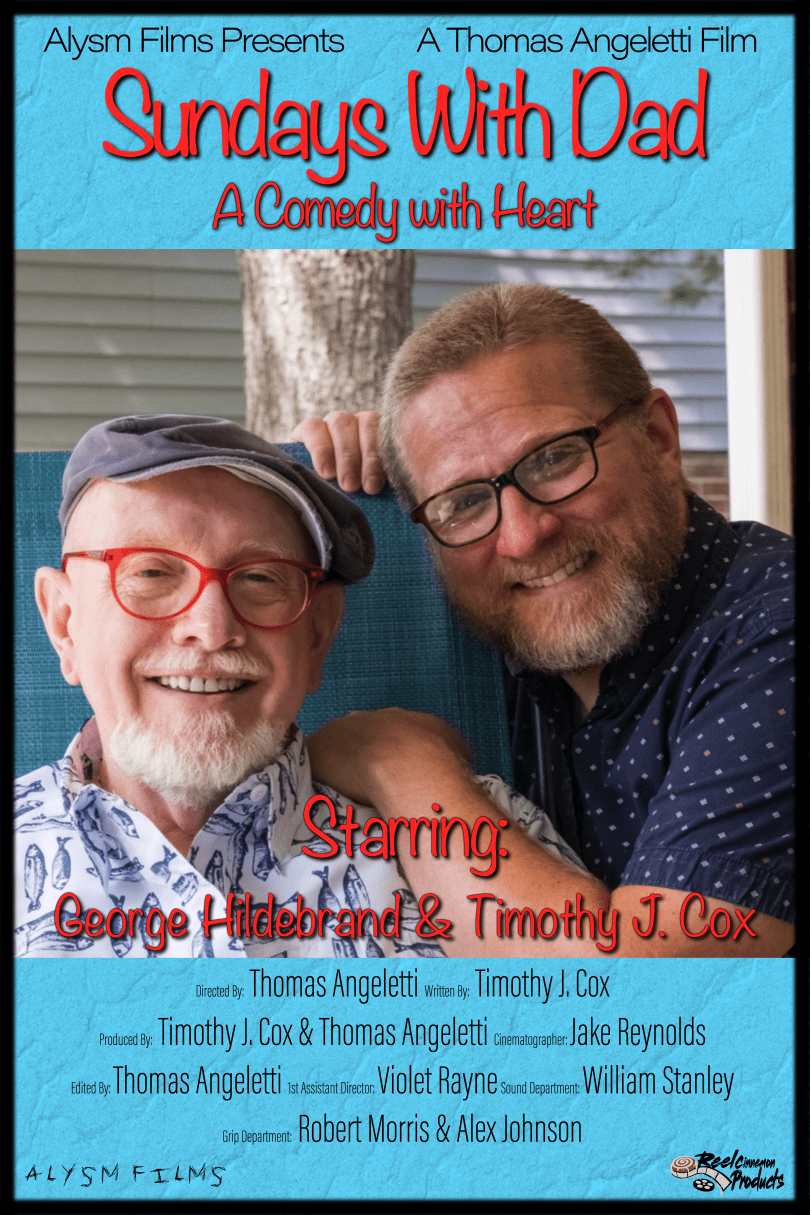
Propelled by earnest yet honest, organic, and relatable conversations destined to stir the souls of audiences of all ages and varieties, “Sundays with Dad” (2024), from writer and co-star Timothy J. Cox and director Thomas Angeletti, is easily summed up as My Dinner with Andre (1981) in a patio chair. Angeletti’s 22-minute production, like director Louis Malle’s latter-stated 110-minute triumph, are both entirely dialogue and character-driven works. Both projects also start out with casual banter. It is the type of chit-chat any passerby may encounter in almost any routine daily situation. Yet, there comes a gradual tipping point in both attempts where these discussions turn introspective, illuminating, and as emotionally frank for the main personas on the screen as they are for the viewers themselves. Such colloquial shifts give each exercise a striking undercurrent of further sincerity and quiet power. This is as universal themes, such as loneliness, companionship, and the results of change on the person in question, are tackled with the same innate successfulness both opuses executed in their earlier, more generalized deliberations. These exchanges, when combined with the similar focus in both pictures on credible leads, intimate, two-person casts, and stellar performances, make both entries uniquely timeless.
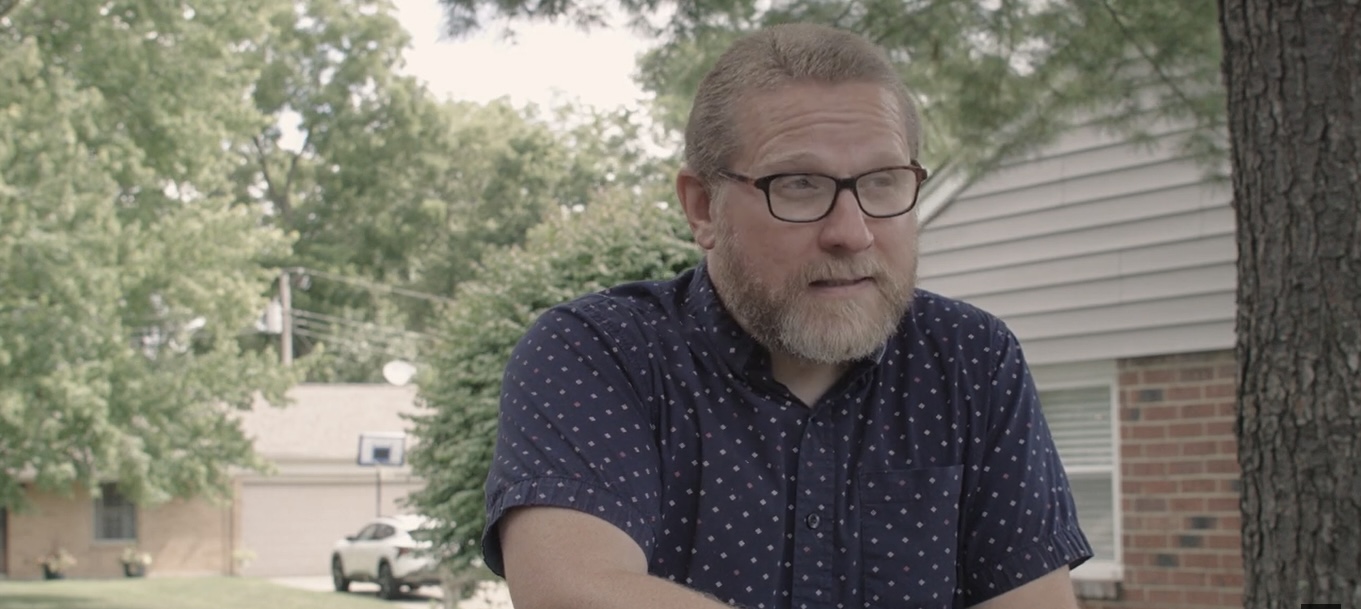
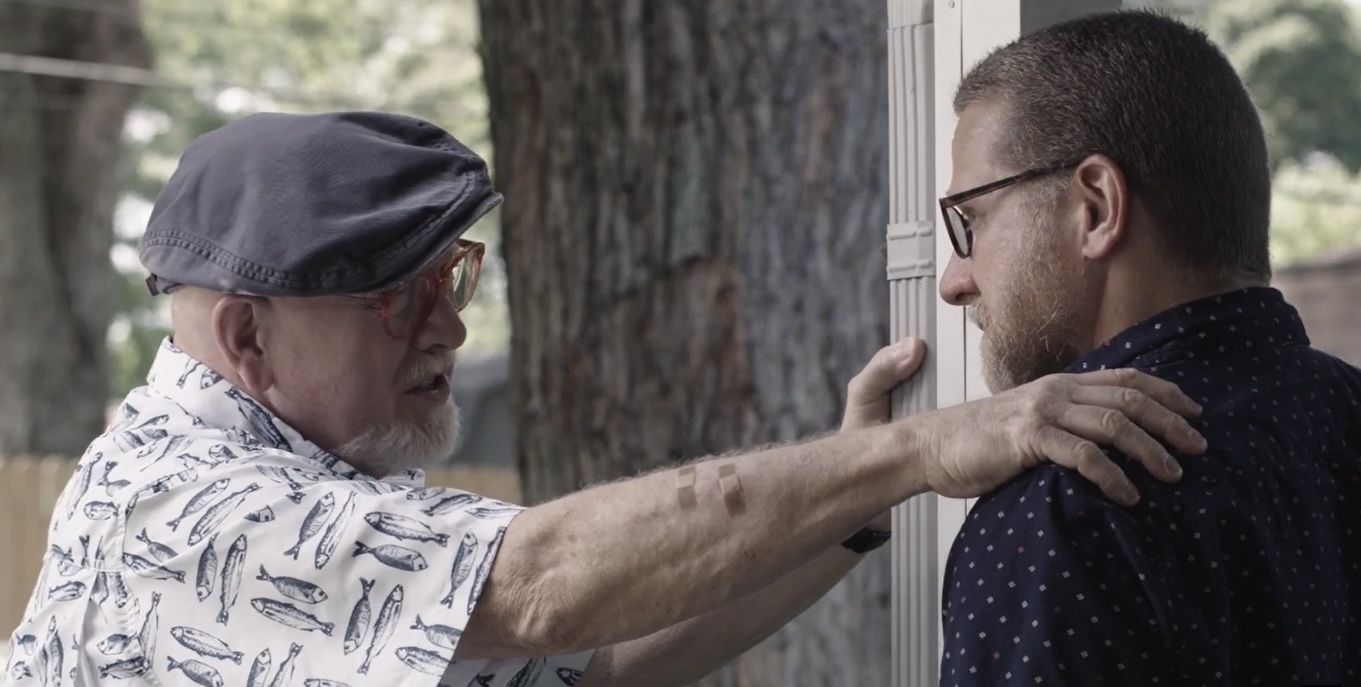
Angeletti’s endeavor concerns a widower named Ben (in a marvelous, ever-watchable turn from George R. Hildebrand). Still mourning the loss of his wife, Maggie, he finds himself looking forward to his weekly gatherings with his son, Jason (in an enactment by Timothy J. Cox that matches Hildebrand’s representation in its commanding and proficient nature), an actor whose recent material merits the funniest lines in the offering. Over time, Ben confesses to Jason that he has begun to seek out someone to cure his need for fellowship. When it is unveiled that this individual is a thirty-year-old prostitute, who is being solely utilized by Ben for the sense of camaraderie she brings and not for sexual reasons, Ben finds himself pulled into his father’s life in primarily awkward yet eventually evermore sentimentally significant ways.
Cox’s screenplay and Angeletti’s guidance of the effort are as smooth, spontaneous, and tender as both the narrative and the approach employed to convey the storyline demands. The skillfully straightforward, unshowy, and uncluttered handling of these attributes are a pitch-perfect counterpart for the overall atmosphere of the piece. These components just as deftly mirror the temperament of the heads of the tale themselves. The same can be said of the easygoing yet potent speech, pacing, and overall structure of the affair. In turn, Ben and Jason intrinsically emerge as fully developed personalities by the appropriately grounded conclusion of the undertaking.
Boosted by coolly vibrant yet down-to-earth cinematography from Jake Reynolds, who applies a veneer to the article that beautifully compliments both the tone and the intention of the composition, Angeletti’s latest opus is all-around technically superb. The editing by Angeletti is crisp and clean. The output is equally sharp in its implementation of William Stanley’s impressive sound design. Moreover, the incorporation of Stanley’s instrumental track, “Blue Skys” (2024), which is softly played throughout the venture, punctuates the breezy, dignified, thoughtful, and overall classic feel of the orchestration as a whole. This is also true of the impassioned talks revolving around music, memories, and mourning which bookend the enterprise. The simple yet stylish opening and closing credits also nicely reiterate these elements.
Like Angeletti and Cox’s prior collaboration “After” (2023), “Sundays with Dad” is a deeply human glimpse into the consequences of loss. Both chronicles are understated dramatic masterclasses which dare see their subjects through an unfiltered lens of compassion and understanding. They also never contain a moment which rings false or unmerited. In turn, these two cinematic creations prove, like My Dinner with Andre, that often the greatest special effects a fabrication of moving art can contain are a good heart and same said interchanges.
Charming, compelling, and endearingly low-key, “Sundays with Dad” is one of the best films of the year.
As someone who lost two grandparents to Alzheimer’s Disease at an early age, “Distant Memories” (2024), from writer-director Chris Esper, is undeniably effective. Outside of this personal experience, a large part of the inherent power found in Esper’s 10-minute short film lies in the fact that it gently, respectfully utilizes accessible symbolism. For example, the briefly glimpsed hourglass that is tapped and inspected in the opening moments as if it contains all of the answers to the mysteries of existence. Moreover, the mental representation which is the room where the entirety of the venture takes place. These visual emblems are incorporated in such a way that even those who haven’t been personally touched by the aforementioned ailment will find themselves swept up in emotion long before the climax of the undertaking reaches viewers‘ eyes.
The broadly relatable flashbacks in Esper’s latest project, which range from a marriage proposal to the first signs of familial forgetfulness, as well as the deeply human body language displayed when reliving such instances by the protagonist of the account, Anna (in a quietly heart-wrenching and exceptionally believable turn from Sissy O’Hara), only makes this effortless relatability more evident. Esper’s compassionate, character-driven, smoothly paced, and never melodramatic or maudlin script, stylish at times but smartly straightforward direction, and Nelson Reis’ colorful but never overly showy cinematography capture a somber yet uplifting tone of reminiscence. It is one which is established in the inaugural seconds and soulfully reiterated until the closure of the exercise. The sheer strength of these latter-stated qualities only enhance the former attributes. Consequently, everything on the screen is made evermore tonally appropriate and resonant.
Returning to the ever-stalwart themes of past recollections, life itself, and our impending, eventual fate, often through the lens of a home movie, that made Esper’s “Yesteryear” (2020) such a masterpiece, “Distant Memories” chronicles Anna, a victim of Alzheimer’s. The audience meets her as she searches a basement-like chamber. It is filled with objects and recordings illustrative of her time on Earth. The recent pain of failing to complete basic tasks, a telltale sign of the chronic condition which is now overtaking her, and the blissful nostalgia of her being beforehand seamlessly intertwine. In so doing, confusion, joy, ecstasy, and the inevitable sorrow we all feel as we look back on our lives greet her. This is as she travels through the familiar and foreign landscapes of both the mind and the seemingly new area immediately before her.
This narrative foundation works primarily because Esper injects his saga with the earnest simplicity it deserves. Esper weaves artistic touches into the plot. Nonetheless, it is done sparingly enough to give the orchestration an even stronger undercurrent of grace. The minimalistic use of dialogue, top-notch performances from a relatively small cast (including Christie Devine, who is terrific as Noelle, and an equally superb Alyson Muzila as Middle-Aged Anna), deft use of both end credit sequences and well-acquainted musical cues, and the scant runtime of the configuration heightens both the intense credibility and dream-like nature of the offering.
Flawlessly edited by Esper and incorporating same said sound and costume design from Jay Sheehan and Grace McDade Babikian respectively, “Distant Memories” commences and concludes on notes that are perfect bookends for the material. Empathetic, enigmatic, ardent, and engaging, Esper has crafted a marvelous example of cinematic art. It is one which is as memorable for its indelible imagery as it is for its eternally relevant commentary on the human condition. Reportedly made for $6,000, this is another spellbinding credit to both Esper and his production company, Stories in Motion, as well as On Edge Productions and Del Negro Entertainment. It’s also the best picture of its type this year.
Arena Wars (2024), from writer and director Brandon Slagle, is a scrappy, often entertaining variation on such dystopian science-fiction/action films as Paul Michael Glaser’s adaptation of Richard Bachman’s same titled 1982 novel, The Running Man (1987), and Joe D’Amato’s cult classic Endgame (1983). The latest cinematic exercise from Slagle also boasts a brutal tone that is successfully executed throughout the 95-minute project. It also incorporates crisp, all-around beautiful cinematography from frequent Mahal Empire Productions collaborator Michael Su. These elements, along with a plethora of one-on-one fight sequences that are quick, credible, grounded, and thrilling, continually lift the film up when the overfamiliarity of the material threatens to sink the composition. These conventions extend to the characters, their backstories and arcs, the dialogue, themes including corporate corruption and media greed, and, most notably, the plot, and the structure of the piece itself. Additionally, though the pace of the endeavor is smooth, the occasional slow-moving section creeps into the proceedings. This is especially true of the second and third acts of the undertaking. Nonetheless, Slagle has crafted an undemanding, pleasantly straightforward, ultimately satisfying picture that is perfectly suited for late-night viewing.
Set in 2045, the narrative revolves around a sporting event entitled Arena Wars. Taking place over seven rooms, the televised competition finds convicted death row criminals fighting for their freedom against seven of the most monstrous murderers in the country. Despite the high ratings of the program, audiences are growing tired of the violent spectacle. Sensing that viewers need someone to root for to make the show more intriguing, an innocent, undercover man and skilled marine, Luke Bender (John Wells, in a commanding portrayal that effortlessly exerts a gruff aura), is offered a chance to lead the inmates through the game. Upon accepting the proposal, Bender must guide through myriad trust issues within his group as well as the vengeful fists of his opponents in the name of liberation.
Though Michael Madsen and Eric Roberts (as Arena Wars co-host Samson and Admiral Jordan, respectively) provide workmanlike performances, their easily recognizable and likable presence erects welcome strong spots throughout the creation. Other highlights in this department can be found in Sheri Davis’ lively depiction of Arena Wars’ announcer, Holly Daze, Kylie Fulmer’s gripping turn as Billie, and Kevin Hager’s same said representation of Belladonna. Robert Donovan is marvelous as Samson’sco-hosting partner, Moses. Maria Bova is just as good as the off-the-wall, ever-watchable Cutie Pie. Robert LaSardo is tense and compelling as Perez.
Outside of the generally excellent enactments found in the design, the music from Scott Glasgow is appropriately rich, dramatic, and striking. Furthermore, the effects, particularly the plentiful gory bits, are memorable and impressive. The editing from Wayne Kent and costume design by Joseph Goratowski and Mercedes Peterson (who is outstanding as Domino), are extraordinary. The proficient sound utilized in the exertion helps Slagle’s outing roar clearly to life throughout every frame. The sets, makeup, and stunts are also deftly implemented.
Released on June 25th, 2024 on digital platforms through Gravitas Ventures, Arena Wars is an ambitious yet intimate example of the can-do spirit of independent moviemaking. The direction from Slagle is sharp. It is also injected with just the right amount of style. Though the screenplay from Slagle isn’t as sturdy, the attempt is filled with engrossingly wild, larger than life villains. It also contains a protagonist who is more authentic because his flaws aren’t hidden from the screen. Ultimately, the fabrication is a finely honed jolt of adrenaline. Like the hero of this tale, audiences will find it easy to cheer for this feature.
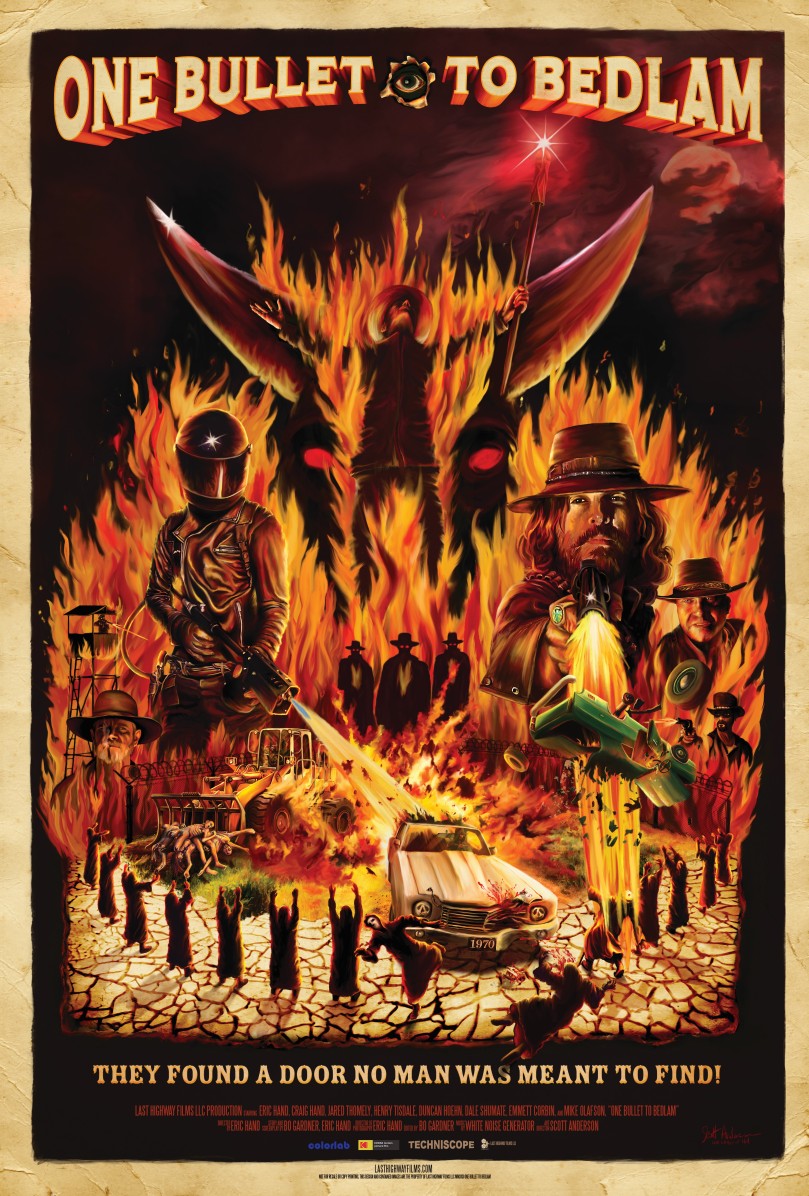
One Bullet to Bedlam (2023), the 93-minute sophomore feature from director, co-writer, and star Eric Hand, captures the most endearing qualities of 1960’s Spaghetti Westerns, particularly the era-appropriate contributions of film maestro Sergio Leone, as deftly and captivatingly as Hand’s prior picture, The Archivist (2021). Both movies are awe-inspiring in their profoundly cinematic, senses-commanding music from White Noise Generator, equally attention-garnering sound from Studio 70, and same said cinematography, which utilizes the Super Techniscope 35mm camera format, from Hand. Continually, these projects incorporate action scenes that are grounded and credible. They are also intimate yet epic in feel. This can also be said of both the well-chosen sets for this venture and the excursion itself. These characteristics, along with their classic cool, rapid clip, and ability to become a part of and not overwhelm the account, like so many modern genre outings are apt to do, also beautifully mirror the filmic output of the aforementioned decades.
As was the case with The Archivist, One Bullet to Bedlam follows Calder Benson (once again portrayed with such skill and gruff enigma that one can’t help but think of Clint Eastwood as The Man with No Name in Leone’s Dollars trilogy, which ran from 1964-1966). This time around, Benson, one of the members of the outlaw group The Six, finds himself separating from said sextet after they burglarize an age-old map and find themselves hunted by a villainous clique dubbed The Regulators. This is after each member of The Six takes a piece of the map for themselves. In order to make slaughtering everyone in The Six more difficult for The Regulators, the collective agree to split up and meet again in eighteen months for the Blood Moon. During this stretch, they will all individually search for a key that is rumored to be hidden in the surrounding wasteland. This key is meant to render asunder an otherwise unopenable door that is guarded by The Regulators. As self-serving acts threaten to tear apart The Six, an ancient power torments them in all new ways.
This terrific narrative template is made even more promising by the often brief, mysterious, poetic dialogue Hand and fellow co-screenwriter Bo Gardner inject into the material. Such a detail, while also another Leone-like alignment, fits the cryptic tone of the storytelling. Gardner and Hand also offer a time-tested structure and a brisk pace that mechanizes just as masterfully. David Noel’s sharp editing, the impressive visual effects from Studio 70, and a stunning title sequence that is filled with breathtaking art from Scott Anderson make the proceedings even more herculean. The tale-told-around-the-campfire tone of the opening five minutes of the effort as well as the manner in which the ending satisfactorily closes this chapter of Benson’s ongoing saga while quietly promising what is to come is just as admirable.
The performances are also noteworthy. For example, Emmett Corbin is superb as Emmett. Craig Hand is just as gripping as the evil cult figure Tate. Mike Olafson is marvelous as Cannon. Jared Williams Thomley is a standout as Whitey Carter. Lauran Wilson, who also heads the great work done by the makeup department in this presentation, is wickedly persuasive as Goat Lord.
Shot in Sopchoppy, Florida, U.S.A. for an estimated budget of $68,000, One Bullet to Bedlam is a massively entertaining retro western throwback. It’s lean and efficient in a way that few related attempts are nowadays. This is without a filler scene in sight. Still, the themes of the endeavor are standard fare. There isn’t any subject in One Bullet to Bedlam that comes close to the Fahrenheit 451 (1953) by Ray Bradbury-like insights into book burning that arrived in Hand’s previous exercise, The Archivist. Nonetheless, Hand’s latest production is every bit as exciting, visceral, engrossing, and tense as its predecessor. Also, like The Archivist was upon its release, One Bullet to Bedlam is one of the best movies of the year. It continues to establish Hand as a new master of a wonderfully old-fashioned form.
*Please note that the inclusion of the feature films on this list is based upon the criteria of an official release date of 2024 in the United States.*
50. Wildcat
Director: Ethan Hawke
49. Out of Darkness
Director: Andrew Cumming
48. The Beekeeper
Director: David Ayer
47. You’ll Never Find Me
Directors: Josiah Allen, Indianna Bell
46. Stopmotion
Director: Robert Morgan
45. Abigail
Directors: Matt Bettinelli-Olpin, Tyler Gillett
44. Irena’s Vow
Director: Louise Archambault
43. Gasoline Rainbow
Directors: Bill Ross IV, Turner Ross
42. Wicked Little Letters
Director: Thea Sharrock
41. The Taste of Things
Director: Tran Anh Hung
40. Infested
Director: Sebastien Vanicek
39. A Most Atrocious Thing
Directors: Christian Hurley, Ben Oliphint
38. Frogman
Director: Anthony Cousins
37. Land of Bad
Director: William Eubank
36. Bloodline Killer
Director: Ante Novakovic
35. In a Violent Nature
Director: Chris Nash
34. Freud’s Last Session
Director: Matthew Brown
33. Do Not Expect Too Much from the End of the World
Protanopia (2024), the debut feature from writer-director-co-star Matthew Mahler, is a 73-minute masterwork of surreal, experimental horror. Opening with a quote from Leviticus 14:37-38 concerning the cleansing of a leprous house, the symbolism of which gives the following narrative even more of a potent punch, the picture immediately creates a sense of urgent unease. This is with its agile exploitation of noise distortion, creepy commencing credits, and various other unsettling elements. All of these components are incorporated within the first five minutes of the production.
The use of a bright, bold red in these previously stated sections, as well as throughout the totality of the undertaking, cleverly and powerfully reflect the meaning of the title word (an inability to discern the aforementioned crimson color). It also becomes a glorious beacon for the incredibly memorable and haunting imagery utilized to chilling effect in Mahler’s offering. Most impressively, the piece never loses its natural ability to evoke a dread-infused atmosphere, to surprise, or to astonish from an artistic angle with its many stylish flourishes. This is once Mahler settles down to tell his tale after these striking early segments.
Mahler’s plot involves a man, Luke (in an excellent portrayal from Anthony Carey), falling prey to bizarre dreams of an unfamiliar house once his sister, Mallory (in a wonderfully gripping depiction from James Chase), goes missing. What Luke is unaware of is that the strangely behaved Alan Roscoe, Jr. (in an ever-captivating turn from Timothy J. Cox, which ranks as one of the foremost performances from the always reliable actor) has just inherited the home after the recent passing of his father, Alan Roscoe, Sr. (in an eerie and endlessly watchable representation from John Mahler). Luke and Roscoe, Jr. will soon find their paths crossing. This is as Luke’s nightmares seem to bleed out into the open-eyed reality of his waking days.
Concluding with a skillfully underplayed, but nonetheless impactful, finale, the meticulously paced project is a smartly written and deftly directed addition to Mahler’s filmography. It’s filled with contemplative yet organic dialogue and situations. Still, some of the avant-garde ingredients, such as the strobing lights and slow-motion shots, become less engaging the more often they are applied. This is especially true in the second half of the outing. Yet, the endeavor never loses its hypnotic, vice-like spell on its audience. Moreover, the inclusion of such frequently employed constituents as the poetic, ominous voice-over from Mahler, which contain the initial bits of speech heard in the enterprise, are perpetually operative.
Much of the visual strength of the article comes from Mahler’s evocative cinematography. The color palette chosen for the photoplay alternates between foggy gray and a plethora of far more vibrant shades. All of which marvelously fit the sharply honed ambiance of the proceedings. It also gives the presentation the look of both a giallo by Dario Argento and a prototypical 1970’s grindhouse flick. Furthermore, Mahler’s implementation of appropriately moody music, proficient editing, and his stellar illustration of Jack continually enhance the quality of the fabrication.
Correspondingly, the entire cast is first rate. Paula and Barbara Mahler are terrific as Janice and Gladys, respectively. Ross Mahler is outstanding as Jim. Andrea Norell fares just as well as Vanessa. John Heerlein’s rendering of Detective is spellbinding.
Protonapia is daring and ambitious yet credible and grounded. It also demonstrates sufficiently developed yet enigmatic enough to be intriguing characters. Its themes of service, ritual, and routine are quickly established. From herein, they are woven to dramatic, bloodcurdling, relatable, and all around superb consequence.
Boosted by a remarkable exhibition of sound from Nick Bavaro and Carey, the Ronkonkoma, New York-filmed, $2,000-budgeted exercise is an intense, imaginative, and finely crafted venture. It is one that should prove inspiring to aspiring filmmakers and cinephiles alike. Mahler’s latest proudly stands alongside Cameron and Colin Cairnes’ brilliant Late Night with the Devil (2024) as a top-tier genre effort. It is also one of the ten best movies of the year so far.