*Please note that the short films included in this list are done so based on an official release date, which excludes film festival premieres, in 2025 in the U.S.
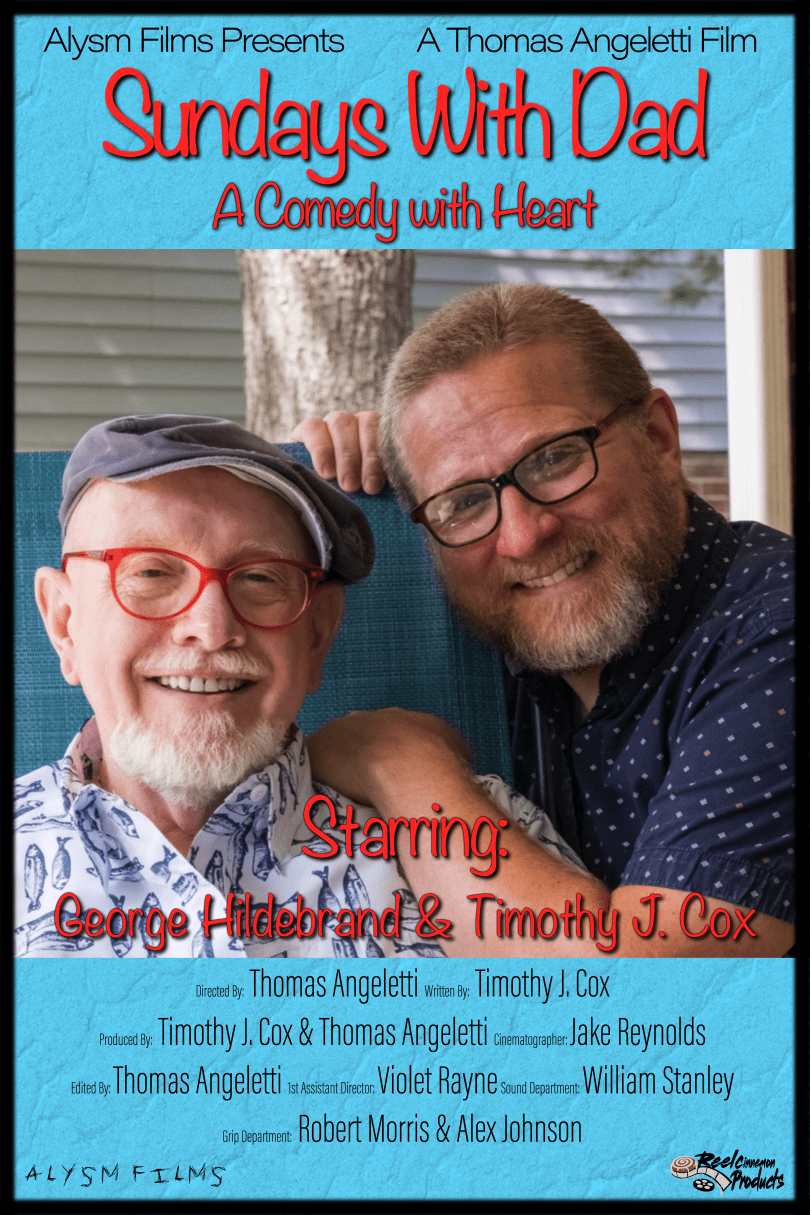
Propelled by earnest yet honest, organic, and relatable conversations destined to stir the souls of audiences of all ages and varieties, “Sundays with Dad” (2024), from writer and co-star Timothy J. Cox and director Thomas Angeletti, is easily summed up as My Dinner with Andre (1981) in a patio chair. Angeletti’s 22-minute production, like director Louis Malle’s latter-stated 110-minute triumph, are both entirely dialogue and character-driven works. Both projects also start out with casual banter. It is the type of chit-chat any passerby may encounter in almost any routine daily situation. Yet, there comes a gradual tipping point in both attempts where these discussions turn introspective, illuminating, and as emotionally frank for the main personas on the screen as they are for the viewers themselves. Such colloquial shifts give each exercise a striking undercurrent of further sincerity and quiet power. This is as universal themes, such as loneliness, companionship, and the results of change on the person in question, are tackled with the same innate successfulness both opuses executed in their earlier, more generalized deliberations. These exchanges, when combined with the similar focus in both pictures on credible leads, intimate, two-person casts, and stellar performances, make both entries uniquely timeless.
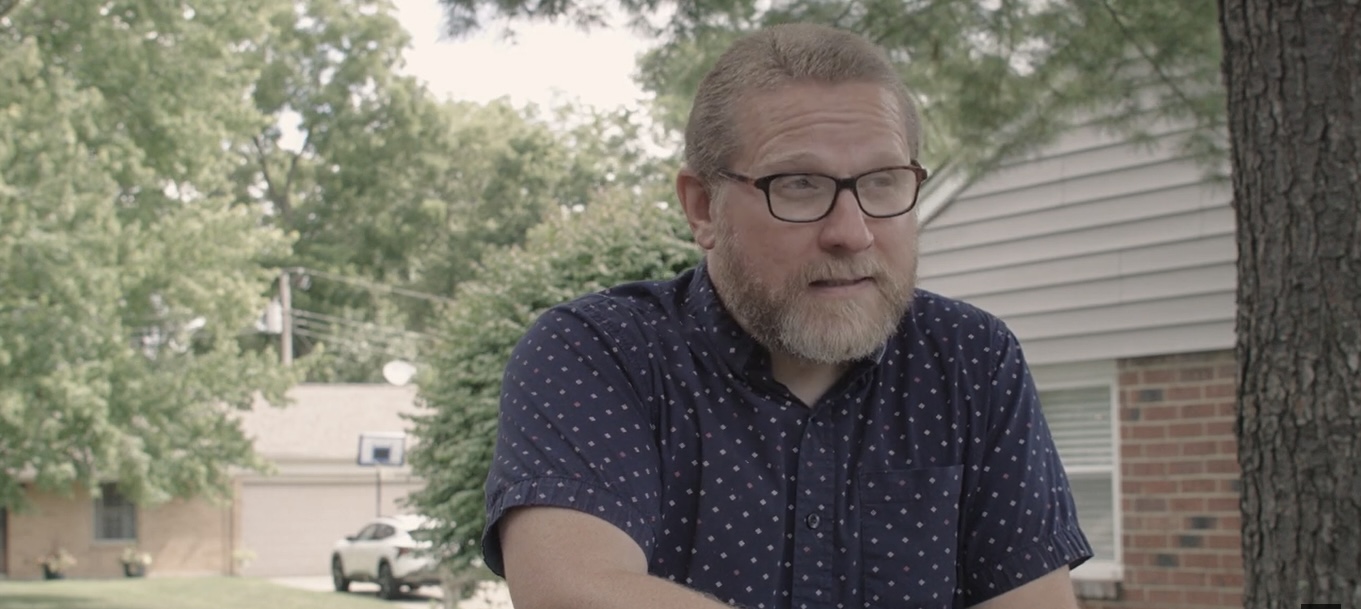
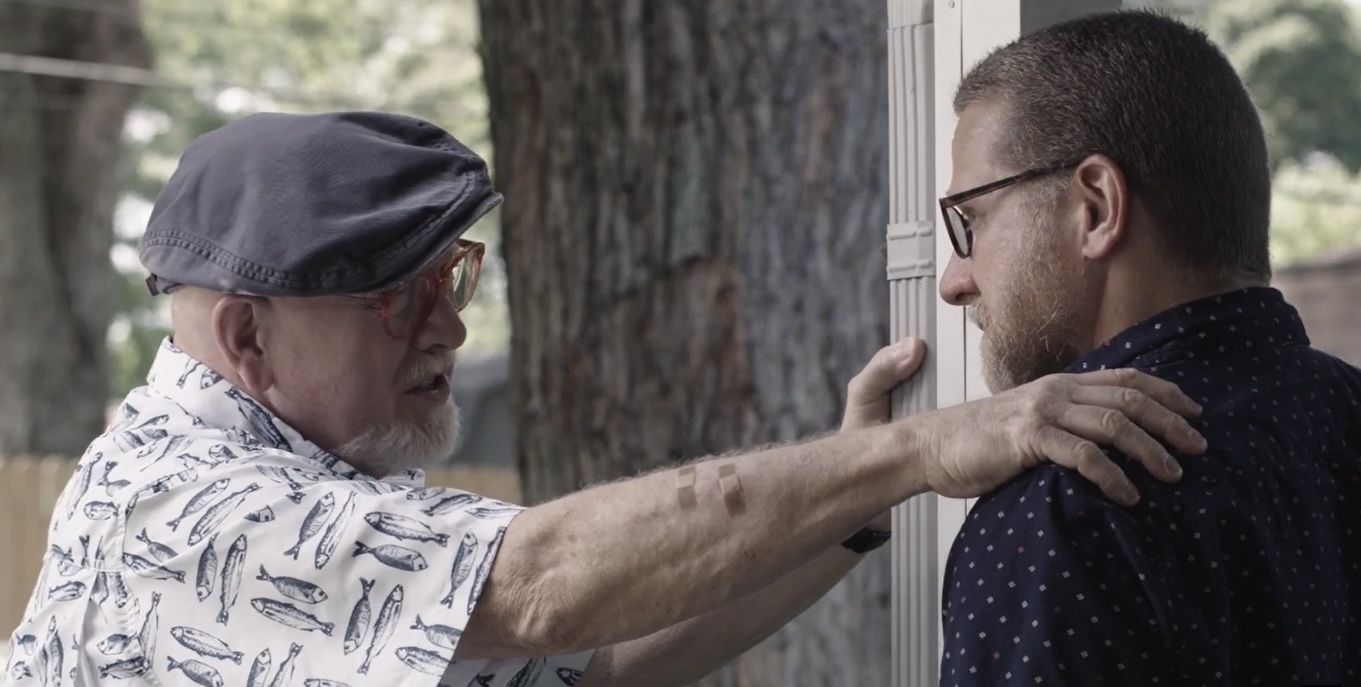
Angeletti’s endeavor concerns a widower named Ben (in a marvelous, ever-watchable turn from George R. Hildebrand). Still mourning the loss of his wife, Maggie, he finds himself looking forward to his weekly gatherings with his son, Jason (in an enactment by Timothy J. Cox that matches Hildebrand’s representation in its commanding and proficient nature), an actor whose recent material merits the funniest lines in the offering. Over time, Ben confesses to Jason that he has begun to seek out someone to cure his need for fellowship. When it is unveiled that this individual is a thirty-year-old prostitute, who is being solely utilized by Ben for the sense of camaraderie she brings and not for sexual reasons, Ben finds himself pulled into his father’s life in primarily awkward yet eventually evermore sentimentally significant ways.
Cox’s screenplay and Angeletti’s guidance of the effort are as smooth, spontaneous, and tender as both the narrative and the approach employed to convey the storyline demands. The skillfully straightforward, unshowy, and uncluttered handling of these attributes are a pitch-perfect counterpart for the overall atmosphere of the piece. These components just as deftly mirror the temperament of the heads of the tale themselves. The same can be said of the easygoing yet potent speech, pacing, and overall structure of the affair. In turn, Ben and Jason intrinsically emerge as fully developed personalities by the appropriately grounded conclusion of the undertaking.
Boosted by coolly vibrant yet down-to-earth cinematography from Jake Reynolds, who applies a veneer to the article that beautifully compliments both the tone and the intention of the composition, Angeletti’s latest opus is all-around technically superb. The editing by Angeletti is crisp and clean. The output is equally sharp in its implementation of William Stanley’s impressive sound design. Moreover, the incorporation of Stanley’s instrumental track, “Blue Skys” (2024), which is softly played throughout the venture, punctuates the breezy, dignified, thoughtful, and overall classic feel of the orchestration as a whole. This is also true of the impassioned talks revolving around music, memories, and mourning which bookend the enterprise. The simple yet stylish opening and closing credits also nicely reiterate these elements.
Like Angeletti and Cox’s prior collaboration “After” (2023), “Sundays with Dad” is a deeply human glimpse into the consequences of loss. Both chronicles are understated dramatic masterclasses which dare see their subjects through an unfiltered lens of compassion and understanding. They also never contain a moment which rings false or unmerited. In turn, these two cinematic creations prove, like My Dinner with Andre, that often the greatest special effects a fabrication of moving art can contain are a good heart and same said interchanges.
Charming, compelling, and endearingly low-key, “Sundays with Dad” is one of the best films of the year.
Protanopia (2024), the debut feature from writer-director-co-star Matthew Mahler, is a 73-minute masterwork of surreal, experimental horror. Opening with a quote from Leviticus 14:37-38 concerning the cleansing of a leprous house, the symbolism of which gives the following narrative even more of a potent punch, the picture immediately creates a sense of urgent unease. This is with its agile exploitation of noise distortion, creepy commencing credits, and various other unsettling elements. All of these components are incorporated within the first five minutes of the production.
The use of a bright, bold red in these previously stated sections, as well as throughout the totality of the undertaking, cleverly and powerfully reflect the meaning of the title word (an inability to discern the aforementioned crimson color). It also becomes a glorious beacon for the incredibly memorable and haunting imagery utilized to chilling effect in Mahler’s offering. Most impressively, the piece never loses its natural ability to evoke a dread-infused atmosphere, to surprise, or to astonish from an artistic angle with its many stylish flourishes. This is once Mahler settles down to tell his tale after these striking early segments.
Mahler’s plot involves a man, Luke (in an excellent portrayal from Anthony Carey), falling prey to bizarre dreams of an unfamiliar house once his sister, Mallory (in a wonderfully gripping depiction from James Chase), goes missing. What Luke is unaware of is that the strangely behaved Alan Roscoe, Jr. (in an ever-captivating turn from Timothy J. Cox, which ranks as one of the foremost performances from the always reliable actor) has just inherited the home after the recent passing of his father, Alan Roscoe, Sr. (in an eerie and endlessly watchable representation from John Mahler). Luke and Roscoe, Jr. will soon find their paths crossing. This is as Luke’s nightmares seem to bleed out into the open-eyed reality of his waking days.
Concluding with a skillfully underplayed, but nonetheless impactful, finale, the meticulously paced project is a smartly written and deftly directed addition to Mahler’s filmography. It’s filled with contemplative yet organic dialogue and situations. Still, some of the avant-garde ingredients, such as the strobing lights and slow-motion shots, become less engaging the more often they are applied. This is especially true in the second half of the outing. Yet, the endeavor never loses its hypnotic, vice-like spell on its audience. Moreover, the inclusion of such frequently employed constituents as the poetic, ominous voice-over from Mahler, which contain the initial bits of speech heard in the enterprise, are perpetually operative.
Much of the visual strength of the article comes from Mahler’s evocative cinematography. The color palette chosen for the photoplay alternates between foggy gray and a plethora of far more vibrant shades. All of which marvelously fit the sharply honed ambiance of the proceedings. It also gives the presentation the look of both a giallo by Dario Argento and a prototypical 1970’s grindhouse flick. Furthermore, Mahler’s implementation of appropriately moody music, proficient editing, and his stellar illustration of Jack continually enhance the quality of the fabrication.
Correspondingly, the entire cast is first rate. Paula and Barbara Mahler are terrific as Janice and Gladys, respectively. Ross Mahler is outstanding as Jim. Andrea Norell fares just as well as Vanessa. John Heerlein’s rendering of Detective is spellbinding.
Protonapia is daring and ambitious yet credible and grounded. It also demonstrates sufficiently developed yet enigmatic enough to be intriguing characters. Its themes of service, ritual, and routine are quickly established. From herein, they are woven to dramatic, bloodcurdling, relatable, and all around superb consequence.
Boosted by a remarkable exhibition of sound from Nick Bavaro and Carey, the Ronkonkoma, New York-filmed, $2,000-budgeted exercise is an intense, imaginative, and finely crafted venture. It is one that should prove inspiring to aspiring filmmakers and cinephiles alike. Mahler’s latest proudly stands alongside Cameron and Colin Cairnes’ brilliant Late Night with the Devil (2024) as a top-tier genre effort. It is also one of the ten best movies of the year so far.
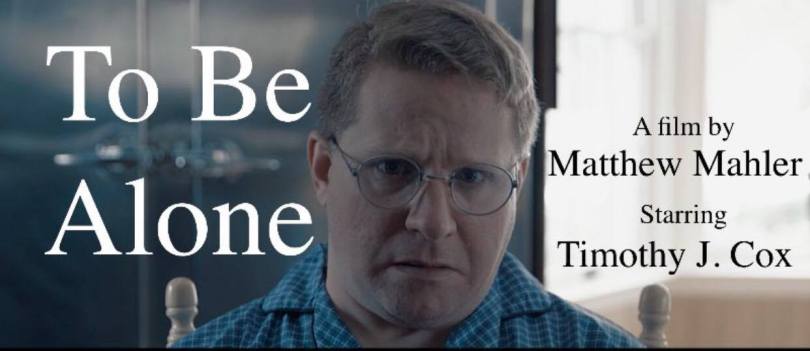
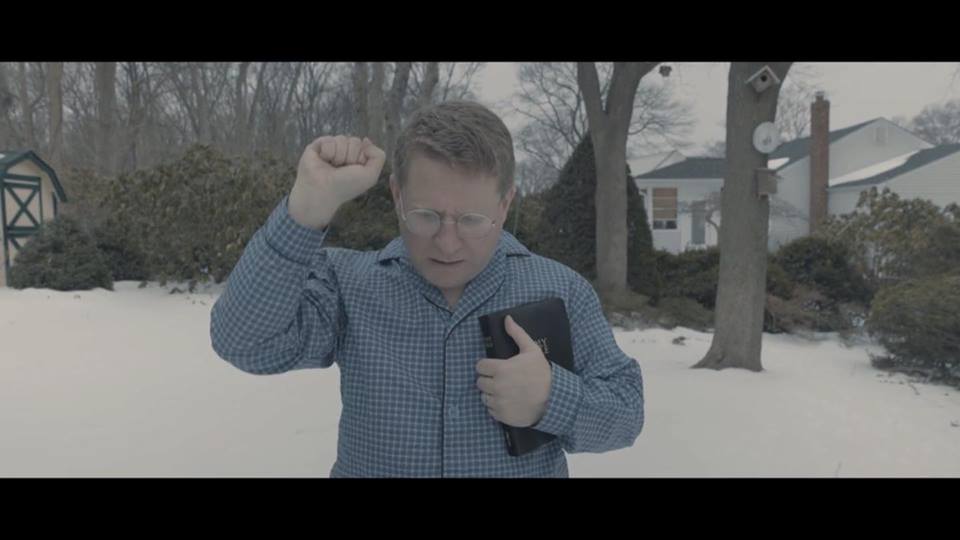
“To Be Alone” (2017), the seventh short film from writer-director Matthew Mahler, is a wholly unique, thought-provoking and brilliantly realized meditation on grief. Yet, it is as much about religious guilt, shame and the all-encompassing hopes of redemption which arise with theology. As a matter of fact, most of the sparse words spoken in the entirety of the twelve minute and forty-six second runtime are from unseen spiritual individuals. All of whom cry out from inside the television set to our lead, William (in a mesmerizing and quietly compelling turn from Timothy J. Cox). They angrily exercise the foremost element. In so doing, they almost immediately prompt William to run outside and engage in actions which suggest the last two latter stated emotions. Whether this is a symbol of the unquestioning fidelity or the apparently easy manipulation of the devout is left to the viewer. There is an equal balance of circumstances throughout the piece that could support both belief systems. Likewise, the non-judgmental tone Mahler crafts here, especially when dealing with such a touchy subject, certainly assists the piece. This is in evoking its continually haunting and meditative resonance.
What also helps is the underlying tension. This is erected most readily in a repeated sequence which involves law enforcement phoning William. Once this erupts, a certain darkness settles over the proceedings. This is as the audience begins to comprehend why he may be going through the previously stated catalogue of inward impressions. It also makes us understand how the pious personalities that are shouting at him have such swift control over his dealings.
The successfulness of these ingredients is a courtesy of Mahler’s deft, carefully constructed screenplay and same said direction. They perfectly compliment the material. What enhances this aspect is the inclusion of moments of sheer style. For instance, a spellbindly done sequence has William looking up the steps towards the closed door of his bedroom. The way it is shot, with Mahler’s ardently energetic music punctuating the bit with an electric fervor that makes it impossible not to step inside William’s nervousness at the unfurling situation, is reminiscent of what one might find in a classically designed opus of cinematic horror. Yet, there are other clever, smirk-inducing bits. For example, there is a near climactic episode that features William carrying a cross. This is in a manner that is reminiscent of Jesus Christ in the tale of his crucifixion. The item William is holding is arranged with Christmas lights and other season appropriate decorations. Such details suggest a bit of playfulness amid this otherwise somber narrative. These items work immeasurably. They also add to the admirable and well-rounded qualities of the endeavor. This is while finding new ways to augment the representative essence of Mahler’s theme. It also makes for imagery that is as unforgettable as the fiction itself.
Adding to the immersive beauty of the project is Jonathan Giannote’s brooding cinematography. Mahler’s editing is also superb. The exertion also benefits from terrific makeup from Maggie Kurth and Morgan Mahler. Correspondingly, Jack Fitzmaurice’s sound contribution is exceptional.
Produced by 8mm Films, Mahler’s latest is among his most accomplished configurations to date. The brief undergoing is massively entertaining. Still, its lasting impact is undeniable. Best of all, it makes you ponder your own convictions. In turn, you can’t help but wondering if you would go through the same repetitive cycle of reaction that William himself is going through. This is if you were in an equally fateful circumstance. With “To Be Alone”, Mahler has fashioned a mandatory movie-going experience. This is one of the best storytelling fabrications of the year.
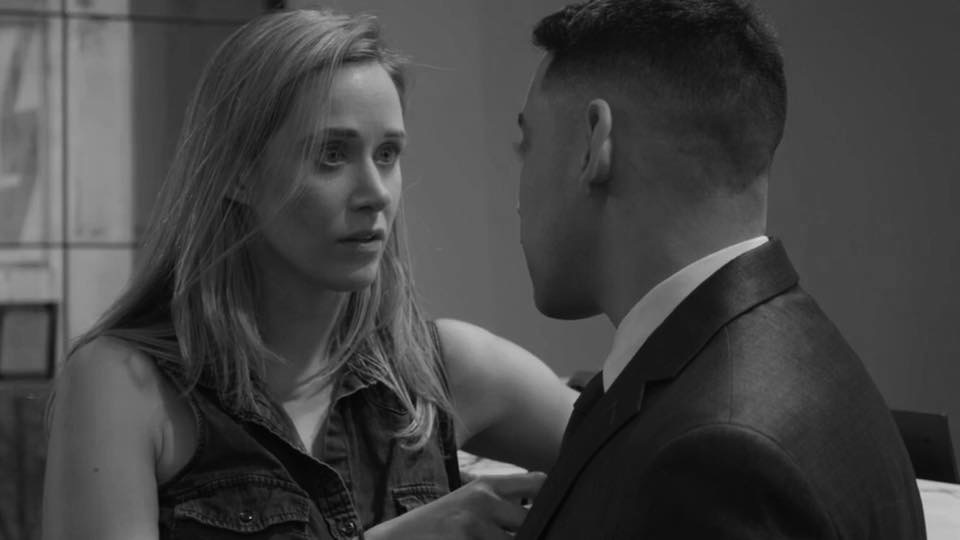
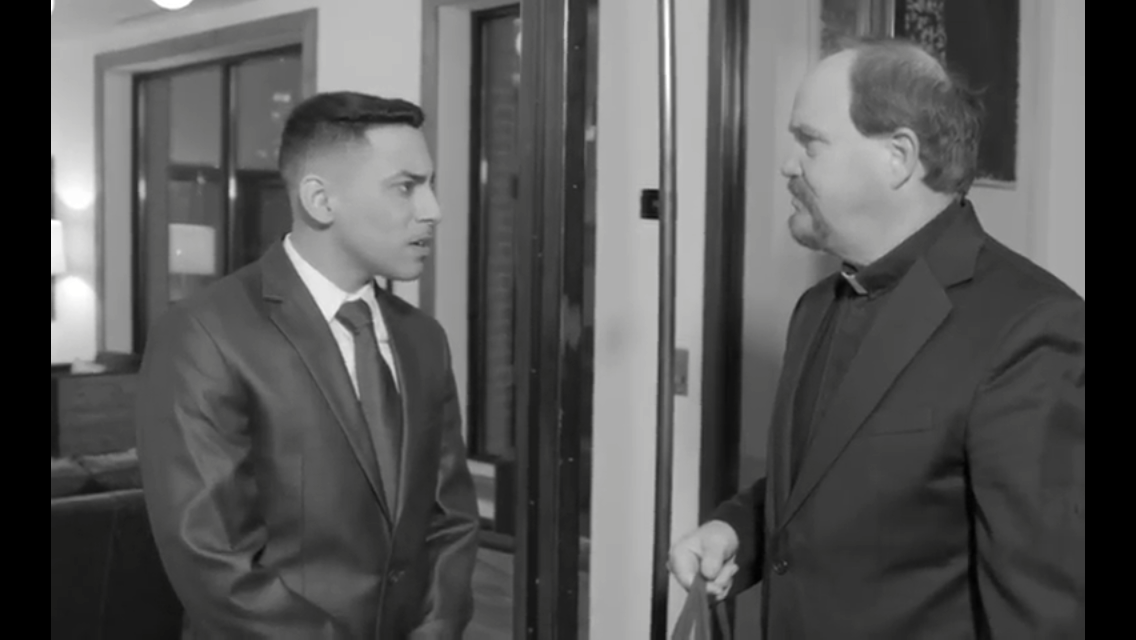
The strength of writer-director J. Antonio’s eighty-five-minute debut feature, Night Job (2017), is built on the unpredictable. More specifically, the various encounters with a wide assortment of individuals our ever-likeable hero, James (in a charismatic and always watchable personification of a fictional persona by Jason Torres), encounters. For example, he faces, in one of the most unexpected and amusing flashes in the invention, a priest (in a terrific depiction from Robert Youngren). The man of God has been summoned to James’ building to perform an exorcism. Likewise, one of the climactic passages, which involves an accusatory homeless man (in a smirk-inducing and wonderfully eccentric performance from Brignel Camilien), works just as well in this respect. Along the way, James meets a psychic by the name of Josephine (in an excellent representation from Shanane Christine Harris), a con man (Adam P. Murphy, who is terrific) and an adult DVD Vendor (in an extraordinary presentation from Lester Greene). There is even a woman that incites in James a flirtatious rapport. Her moniker is Catherine (in an endearing and proficient turn from Stacey Weckstein). Such transpires late in the endeavor.
These sections are all beautifully done. Moreover, they make the demonstration layered, rich and full of life. Adding to the mix are equally well-timed and successfully uproarious sequences involving various partygoers, cops and relationship related spats. Yet, each accruing happenstance is so apparently random that it makes the sum of the picture consistently entertaining. It also mirrors a certain reality. This is one that folks in twenty-three-year old James’ situation, whose first night shift as a temporary doorman in a Manhattan high-rise apartment building is the unique focus of the composition, must constantly undergo. This is as one of the various unwritten demands of his current employer.
But, what is just as pleasantly erratic is the tender sequences of heartfelt depth. These are seamlessly peppered among the many effectively humorous instances that run through the bulk of the composition. The most noteworthy of these items is a discussion with our central figure and a near blind woman, Stella (in a quietly powerful, consistently credible and charismatic performance from Bettina Skye). In this exceptionally harrowing bit, which comes right before the hour mark, we learn of James’ literary dreams. Stella makes this portion increasingly enchanting. This is with her shared life learned lessons and positive reinforcement of James’ ambitions. The segments involving Stella and James are the cornerstone of the movie. They tap into an emotional honesty that is natural, graceful and transcendent. These qualities enhance the variety. They also touch upon themes that will assuredly prove relatable to a widespread audience. The sole color configuration in the photoplay, which comes immediately after the portion involving James and Stella, is both smirk-inducing, eye-popping and heart-stirringly ambitious. Here James sees himself as the poised individual he could be. Such an image is conjured by Stella’s optimistic words. In this sense, Antonio seems to be balancing out the oddness of those James meets with an underlying message concerning the kindness and unexpectedly hope instilling measures of strangers. Such only adds to the sly profundity at hand.
Such a stalwart attribute is also a courtesy of Antonio’s smart, honest, confidently paced and surprisingly bold screenplay. His dialogue is perfect for the material. It elucidates the small talk and other commonplace discussions strangers engage in among one another splendidly. His characterizations are proudly born from this existence mirroring trait. Such details make it easy to understand the motivations and the frequent confusion James alternately embodies throughout the construction. The deliberate, meticulous pace of the script augments these physiognomies masterfully. The result, when combined with Antonio’s luminous and assured guidance of the project, is an endeavor that promotes a great new cinematic craftsman. Simultaneously, it summons the soaring charming inherent in the greatest independent films.
Also, building upon this magnificent foundation is the herculean impact of the enactments. Besides those mentioned above, Timothy J. Cox is brilliant in his fleeting role of Mr. Jones. Brandon J. Shaw, credited here as “Apartment 718”, fares just as well. Greg Kritikos as Romeo, Una Petrovic as Charlene and Carmen Borla as Olivia are also remarkable. The same can be said for Laeticia De Valer as Kelly, Steven L. Coard as Mark and Jose Espinal as Eddie. It is a distinctively large cast for an exertion that feels so intimate. Everyone involved delivers spectacularly. In turn, the labor is amended another of its many superior charms.
The crew is just as indispensable in creating the high-quality art that proudly radiates through every frame on-screen. T.J. Wilkins’ jazzy music is tone-setting and undoubtedly appropriate for the material. We notice this in the opening moments, which when combined with Valentin Farkasch’s immersive black and white cinematography, is guaranteed to generate nostalgia in fellow cinephiles. This is as an undeniable alignment to an old-fashioned noir from the 1930’s or 1940’s becomes evident. Such an impression is lifted throughout this comedy-drama. This is even when modern components which seem to dictate otherwise meet the bystanders’ gaze. Such an atmosphere is riveting and endlessly admirable. The seamless and sharp editing from Sam Druckerman makes this allusion complete. Correspondingly, Magda Suriel’s make-up is top-notch. Jennifer Humala and Luis Inestroza offer a crisp issuance of sound. Kyle Brown’s visual effects are a marvel. Unlike many modern mainstream undertakings, they do not take you out of what is occurring. Instead they vastly enhance the viewer absorption. Jonathan Alvarez’s camera department contribution is just as deft, capable and exciting.
Antonio has crafted a memorable masterpiece of movement and interaction. It calls to mind Kevin Smith’s ground-breaking debut, Clerks (1994). Not only is this noteworthy in its general focus on the inner-workings of a young man (or men as in Smith’s case), but it is true in the way it effortlessly develops its protagonists. This is while simultaneously diverting spectators via purportedly routine occupational dealings. Enhancing this comparison, is that in neither venture do any of the happenstances feel forced or inorganic. There is a low-key beauty to both, especially in its clever banter-oriented emphasis, that will keep cinema patrons repeatedly returning to the narrative. Such makes Antonio a promising talent. He has arranged an affair that is victoriously witty, graceful, funny and inspiring; a tour de force that onlookers will delight in seeing. Night Job, a Sacred 9 Films production, is scheduled to be released in November of 2017.
The Facebook page for the flick can be found here.
The Twitter page for Sacred 9 Films can be found here.
The title character of director Daniel Lofaso’s smart and darkly comedic five-minute and eight second short film, “Gary From Accounting” (2016), is an unassuming and mostly unwilling hero. He is not the same first named individual who our lead, Nathan (in another of Timothy J. Cox’s various show-stopping, wholly gripping performances), has thought to have developed such a strong rapport with via their respective occupations. Hence, his confusion and wrongful invitation to the incident that is about to unfold. Still, he is, nevertheless, forced to partake in an intervention which confronts Nathan’s alcoholism. This event has been put together by Nathan’s wife, Hannah (in a brilliantly realized and believable depiction from Thea McCartan). Upon entering his home, Nathan is met with heart-rendering declarations that would move even the stoniest of centers. For instance, Nathan’s sister, Belle (in a riveting enactment by Jake Lipman), cries out: “I can’t sleep at night because I worry about you driving drunk!” Hannah declares immediately afterward: “I have no one to talk to because you are out drinking every night!” Uncomfortable and desperately trying to find a way out of the situation, Gary (in an uproarious, bulls-eye representation from Mark Grenier), meekly chimes in with: “Your expense reports are sometimes a little late.” The rest of the tale teeters on this sharply established, seriocomic edge. This is as Nathan’s kin confront him with genuinely troubling episodes based on his intoxicating habits. All the while, Gary, whose presence Nathan seems solely enthusiastic and truly supported by, struggles to come up with something a fraction as unnerving as the myriad tribulations Nathan’s relatives are hurling at him.
Such is a distinctly clever premise. It is made more so by first time screenwriter Phoebe Torres’ and Lofaso’s decision to plant Gary, a highly likable persona who would fit all too contentedly in a working-class sitcom, in a circumstance of somber beings and high drama. The well-penned dialogue from Nathan’s loved ones is wrenching; full of pain and grief. Their embodiments of these entities are equally gripping. The centerpiece of this is a terse instance at around the three-minute mark. At this moment, Nathan’s children, cited as Little Boy and Little Girl (Christopher John and Rhea Kottakis respectively, in roles which showcase talent beyond their young years), confess to their father the difficulties he has inflicted on their lives. Despite the undeniable poignancy of these illustrations, Lofaso and Torres make an almost acrobatic exercise out of the composition. The effort finds just the right tone and balance for its affected and guffaw-inducing components. Such is instituted immediately. From this perfectly symmetrical juggling act it never wavers. It makes this briskly paced, well-penned and stalwartly guided affair even more masterful in both presentation and construction. Consequently, the laughs become increasingly triumphant. They hit us all more potently because of this divide. This is because we find ourselves snickering at subjects that otherwise would be met with the gravest approach.
Assisting matters is Jesse Bronstein’s handsome cinematography. It is accessed on an atmospherically appropriate palette; a beautifully blended collage of dusky colors and cheery hues. Such creates a wondrous visual interpretation of the opposing moods of the piece. Additionally, Gusta Johnson provides sensational editing. Cecilia Lewis’ makeup is every bit as exceptional as these aforementioned traits. Joseph Iacobazzo’s sound is top-notch. The proficient turns from the camera and electrical department, which consists of Mihai Bodea-Tatulea and Adehm Geller, heightens immeasurably the intimacy evident in this gathering. They help construct a closeness so palpable that one can easily relate to all who try to pull Nathan from his addiction in one manner or another. This makes the relation between viewer and narrative personality continually taut. It is so much so that its spectators can naturally find themselves sitting alongside these fictional protagonists; a silent bystander.
This Brooklyn, New York shot winner and Chirality Films release is also a masterclass in the power of brevity. In its brief runtime, Lofaso and Torres also successfully tackle the notion so prevalent in our society of feeling more of a bond, an excitement towards the proceedings of a popular television program than their our own personal measures. Such is utilized as an entry into the underlying commentary concerning the disconnect many of us impress upon ourselves. This is from the happenstance of our own existence. Perhaps this is an insight into Nathan afflictions. Either way, Lofaso and Torres have given us a chance to find the humor in ourselves. Yet, there are countless opportunities to reflect. All of this is implemented in a manner that is always respectful to the stern core of its commanding central themes. This is without ever falling into the trap of being pretentious, preachy or overwrought. What we are, ultimately, given is a largely dynamic, warm and inviting affair. This is a herculean display of cinematic storytelling and aptitude at its finest.
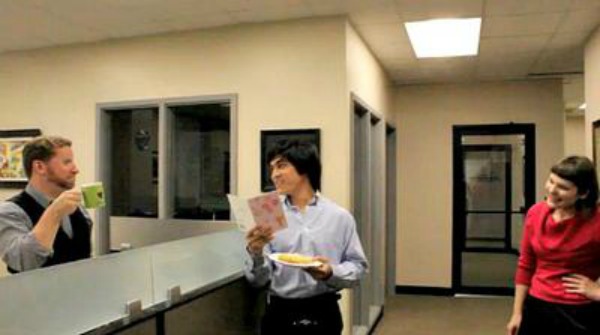
“Dark Romance” (2013), the debut short from co-writer and director Matthew Mahler, accomplishes in eight minutes what most thriller features need approximately an hour and a half or more to do. It tells a complete tale, albeit a familiar one, without the excess often utilized in a full-length fiction. But, the most intriguing element about Mahler’s account is that there is a considerable build-up. There is a high level of of suspense generated in its brief run. We, as cinematic patrons, are also offered a consistent focus on the obsessive signposts of affection directed toward our lead, Tim Cooper (another remarkable portrayal from Timothy J. Cox). They begin simply enough. But, soon they spiral quickly, wildly out of control. On Monday, Tim is given a card with a poem inside. They announce the regards of a mysterious someone in his office. By Tuesday, the chain of events have become violent. Wednesday is the bleakest day of them all. Thursday unveils a darkly smirk-inducing epilogue.
This condensed frame works beautifully. It also helps keep the intensity and pace wire tight. This also assists, in the tradition of the best white knuckle fabrications, in keeping our interest piqued to increasing levels throughout. Mahler makes the scenes showcasing the rapidly bizarre episodes for each of the previously stated spells as diminutive and to the point as possible. This narrative modus strengthens all of the aforementioned components terrifically well. Such is utilized via Mahler’s smart and claustrophobic direction. It is also strikingly unveiled in the sturdy screenplay he co-wrote with Ross Mahler. We are only allowed enough space in each sequence to see how unhinged Tim’s admirer is becoming. Before we can begin to fathom what is occurring, Mahler moves onto the next cringe-worthy instance. This makes for an undertaking that certainly delivers the exciting, expected ingredients of its genre.
To its discredit, the central figures are vaguely etched. Nevertheless, we know enough to care for them. It more than suffices given the scant duration of the piece. This is especially true of our labor-minded advertising executive antagonist. But, Cox more than makes up for this by being continuously affable. He fluently projects the type of managerial individual everyone at any place of employment, be it genuine or imagined, would like to have making the daily decisions. Tim’s secretary, Tiffany (Tiffany Browne-Tavarez), shares nearly as much screen time as Cox’s character. She proves herself to be a capable counterpart to Tim. This is with a simultaneously vulnerable, unflinching and bravura enactment. Though she is as broadly authored as the personality Cox brings to life, the duo both make their respective interpretations feel clearly unique. Because of this, we are more than willing to overlook the expository gaps in the Mahlers’ script. The proceedings are so well-done that we can also forgive another lingering sensation. This is that there is nothing new about the Fatal Attraction (1987) style confines of the straight-forward story arc. The twists are mostly expected. Correspondingly, the reveal of Tim’s devotee is obvious.
But, Mahler, who also provides the impressive cinematography and editing found herein, builds a plethora of memorable horror moments in an undersized expanse. Aside from the depictions and technical aspects, with Brian Shields and Ross Mahler both giving stirring turns in brief roles, this is where the real strength of the photoplay lies. Besides the already noted finale, what occurs on Tuesday is macabrely amusing. It is also masterfully designed. The segment optimizes its impact by eluding, but never glimpsing. Wednesday proves an appropriately unsettling, and grandly designed, climax. This arises as it more than ups the ante on the murderous crush taking place. The more light-hearted occasions of Monday mechanize just as well. They add a natural sense of enhanced disposition to Tim, Tiffany, and fellow employee, Cam (in a likable, credible and proficient representation by Cameron Rankin). It also adds similar personality to the composition as a whole. This is reflected in the natural, jesting banter that we hear early on. Such an attribute is just as active when the speech is more somber and terrifying in the advanced stretches.
Mahler has offered an all-around solid exertion with “Dark Romance”. The 8mm Films production, made for a mere $500 as a part of The 48 Hour Film project, excels as an exhibition of perpetually worrisome mood. It lacks the visual potency and risk-taking apparent in Cox and Mahler’s later collaboration, “What Jack Built” (2015). In this concoction not a word was spoken. Furthermore, the entirety of its eleven minutes was a one man display. Still, this is a gripping effort. The New York shot opus intends to both entertain and frighten. This is while summoning a vibrant aesthetic and authentic sensibility. It does this splendidly. The chemistry between Cox and Mahler, as well as the crew and their spectators, is more than visible in every frame. There is abundantly enough here to recommend this labor of fanatical love. The devotion to the craft from all involved resonates throughout. “Dark Romance” is a true gem. Because of this, I greatly anticipate seeing what Cox and Mahler’s next collaboration, “Finality” (2017), brings about.
“Transience” (2013), the seven minute debut short from writer-director Tan See Yun, is a testament to the power of images projected silently on-screen. Without the use of sound or dialogue, until a haunting piano melody creeps emotively over the soundtrack at five and a half minutes in, Yun relies on simple motions, facial expressions and repeated pictures to tell his tale. For instance, there is a sight early on where Tom (in an enactment by Joshua Michael Payne that is credible and accomplished) is shown putting his wedding ring back on his finger. Our minds are left to ponder the visage: is he not being faithful in the relationship? If so, why? What is causing this fracture between him and George (Timothy J. Cox in a wrenching, human and heartfelt bravura performance)? With no speech to push us along and provide an answer, we search through what Yun allows us to spy to find out why. Such only heightens the emotional resonance of all we encounter, enhanced by the brute professionalism radiating through every frame in its brief span, immensely.
Likewise, there is a continued spectacle of a batch of flowers sitting in the middle of a kitchen table. This comes off as a symbol of George’s attempts to bring peace and re-ignited intimacy to the duo. There is also a moment that stands as a cornerstone of the endeavor. It arrives at three and a half minutes in. Such a happenstance oversees Tom coming across George by accident in a public place. This is an example of Yun’s tremendous capability to give a sequence a dream-like, poetic quality while maintaining a thoroughly authentic grasp. Such occurs as the bridges, lake and trees in this park area loom entrancingly, like gothic figures, in the background. Such is utilized to beautiful, chill-inducing effect. We also get a glimpse of George in this instant, as he sits in slumber with his hands on his stomach, clearly through Tom’s visage. It is than that we understand both of the points of view which culminate the project. We also comprehend the ability Yun has over his audiences all the more in gut-wrenches cases such as these. The result is further proof that what the psyche can conjure, especially in this manner, is far more substantial to the individual than any such reply pre-woven into the fabric of the narrative.
Yun tells the tale of Tom and George. Tom appears to be unfaithful. He may be leading a life that George may be unaware exists. George is the most commitment inclined of the pair. He has a professional life that is thriving. All the while, George seems to want to cling onto the mannerisms of the young bachelor. This is where much of the turmoil derives in their multi-year marriage. We see George making many attempts to patch up this distance. This is via a hug or a kind glance. Still, Tom is distant. Such triumphs as a unique representation of the early and advanced phases in the cycle of the existence. What is all the more impressive is that Yun has put them in frame together. This act makes their polar opposite natures unmistakable. It also exemplifies wonderfully how different personalities create unique angles, which may become problems, in a romantic rapport.
This is a fascinating concept. It is one which is stirringly erected throughout. With this, Yun gives us just enough to take in through his visual modus. Such is without weighing down the flow of the natural storytelling. Correspondingly, his writing and directing are similarly brilliant. They parallel moviemaking maestros such as Ingmar Bergman. This is in the way that the production often can be viewed as an extension of the stage as cinema. It also draws a sharp parallel to Federico Fellini. This is in Yun’s masterful aesthetic emphasis and command. All of these elements are sure to please fellow cinephiles. Yet, Yun showcases as much authority in his balanced, fluent pacing as in the aforementioned components. He has taken as many strides to make the piece a mirror to life itself, in its flawed and often harsh light, as he has a display of sheer talent.
Also assisting matters is Mark Boyle’s breathless, illuminating and gorgeous black and white cinematography. Yun’s editing is exceptional. Ekin Asar compliments both the ordinary and extraordinary components of what we spy in the composition with splendidly done set decoration. The location design and assistant camera contribution Asar provides is incredible. Fairful Nizam’s lighting is immersive and spectacular. It makes every shot all the more potent, dramatic and delightful to the eye. The uncredited, lately used score fares just as astonishingly. These technical attributes all add on-going awe to an already hypnotic, cerebral and poignant endeavor.
“Transience” begins, endures and ends remarkably. Furthermore, the New York City, New York recorded exertion is artistic, daring and refreshing. Yun’s undertaking harkens wonderfully back to the eloquence of the days of abstract, silent photoplays. This is while maintaining a consistently modern approach. In turn, Yun has presented an illustrious melding of the classic and contemporary. It is one which is simultaneously refreshing and necessary. This is a love letter to the big screen, derived by stripping cinema down to its bare essentials. Yet, the SIGH production is also a nuanced, striking and multi-dimensional character-study. It never forgets that focus. Moreover, it is an affair where even the meekest of optical bits, such as a flash where a game of Chess is quietly glimpsed in frame, seems to personify the twosome’s constant struggle for dominance in their nuptial link. A fiction which makes its spectators look that closely at all the details in the proximity of the account is evidently operating on a whole new level of prodigiousness.
Yun has consummated this and more with this intensely evocative tour de force. This is that increasingly rare undertaking that satisfies on all levels. It will captivate and demand multiple viewings to fully appreciate and recognize all that lies beyond its surface. In this era, that is equally infrequent. We desperately need more moving pictures such as these. Yun has erected an envy-inducing exhibition of skill. This is film at its finest.
“Yeah, Love” (2008), the seventeen minute and fourteen second debut short from writer-director Becca Roth, is simple, straight-forward and honest. This is in the most effective manner possible. The gentle sincerity it takes towards its coming of age content and characterizations elevates both the general charm and overall optimism of the piece tremendously well. Unlike most romantic comedy-dramas of late, Roth has derived a narrative credibly built from reality imitating dialogue, circumstances, causes and effects. Never once do we sense the project is deliberately pushing its audience and manipulating its leads towards a pre-conceived destination. Instead, we are given a finale which is merited, spectacularly designed, quaintly ambitious and sentimentally rousing. To its continued praise, the means in which the configuration doesn’t weigh itself down in melodrama or overwrought idealism, so prevalent in similar fare, makes this all the more genuine, joyous, upsetting and refreshing.
There is no lack of subtlety in Roth’s use of symbolism. These often expose the men of the fiction as stereotypically hormonal and occasionally combative. Regardless, this certainly enhances the perspective of hurt, angst, confusion and unexpected bliss which formulates the singular outlook of the affair. It is also just as reflective of the largely confusing teenage years as a whole. This range works exceptionally throughout. This is because it mechanizes, though often in a standard fashion, as a way of getting us inside the interior of our awkward heroine, Emmily (in an ever-likable performance by Crystal Franceschini which is impossible not to be captivated by.).
Roth taps into a portrait of youth that is charming and endearing. This is because it is so universally relatable. For instance, Emmily often tries to mask the embarrassment her loving dad (Timothy J. Cox in a standout role that is hilarious and earnest; proving again his chameleon-like ability to make any character he is given completely his own) unintentionally casts her way. We are also given more than our share of tear-jerking moments. Such is apparent when Emmily tries to shut the world out entirely. There is an extended segment where she lies on the floor of her home in complete defeat. Such arrives late in the second half of the arrangement. This is a deft example of such tropes operating at uniquely high levels of relevance. Emmily’s voice-over, credited to Roth, also adds infinitely to these sharply drawn qualities. This is because this aspect stings with often self-deprecating humor and wit. It is also laced with tragic doubts and observations. Such makes for a rounded, smartly paced, tonally fluent and always enjoyable slice of cinema.
Roth chronicles the shy, Emmily. Often seen avoiding social situations and making a fool of herself when all eyes are on her, the unimaginable pressures of high school on the introverted is beautifully and tenderly expressed. The nervousness that Emmily elicits when around others is heightened when she finds herself having a crush on an older female student, Milo (Paton Ashbrook in a wonderful turn; a perfect counterpart to Franceschini’s bold enactment). After a chance meeting in a park between the two, the once seemingly unmanageable relationship Emmily would like to have with Milo doesn’t appear so unlikely. There is a comically successful and engaging montage where Emmily tries to put her feelings for Milo into words. The next day, Emmily hesitantly and fearfully delivers the composition to Milo. The harsh laughter it exudes from fellow classmates causes a crushing, and terrifically captured, flash of pain and humiliation. From herein, Roth seems intent to make the heart soar. This is as the exertion hits an impassioned and splenderous zenith. Such is a sensation it carries on its back victoriously in resonate concluding minutes. All of these incidents are given extra dimension by the perfectly punctual songs which formulate the soundtrack. “Be Be Your Love” by Rachel Yamagata is especially atmospheric.
It is this canvas of alternating ambiances Roth paints this undertaking with spectacularly. The aforementioned sequence involving Emmily’s writ impressions is undoubtedly the centerpiece of the tale. Still, Roth turns out an arc that has more than its share of familiar categorical beats. Such is perceived in an opening that finds our lead riding in a form of public transportation by herself to personify her loneliness and isolation. Yet, the product endures as stalwart and refreshingly authentic. It never for an instance becomes as noticeably rote and stale as the similarly ardor filled entries which fill theaters nowadays.
This is largely courtesy of Roth’s uncanny ability to immediately pull us deeply into the Emmily’s vulnerable world. It keeps this watchable hold on its audience for the runtime. The result is the raising of the emotional stakes to unfathomable levels. We dearly want Emmily to unveil her happiness just as desperately as she does. This is proof of the brilliant writing Roth orchestrates. It is also a bravura showcase of the apparently effortless directorial style she demonstrates. Such is also a testament to the incredible caliber of the portrayals herein. Representatively, Paul Fabre as Toby, Ryan Radermacher as Brad, Michael Steiner as Duke, Monisha Chowdhary as Therapist and Isabel Hilario as Morgan are all fantastic in their small bits. Likewise, various other technical angles fare just as luminously. The cinematography from Aaron Fisher and Roth, who also issue the proficient sound gracing the endeavor, adds a gritty edge to the proceedings. The same can be said for Roth’s editing.
The Finding Emma Productions release is a massively illuminating achievement. Though Milo and those in the background of the story are intentionally only vaguely formed personalities, Emmily is incredibly developed. Roth has given us an exhibition of singular viewpoint that is fully encapsulating. This is a courageous student film. It is one brimming with talent and endlessly successful risk-taking. Though the theme Roth presents has long been utilized on the silver screen, it is as direct and necessary as ever. There is a natural, unrushed and clear touch to all we come across in “Yeah, Love”. Where lesser indulgences would sink beneath the acquainted components Roth weaves into the fabric of the saga, this opus is largely strengthened by them. Roth has crafted a real winner. This is a display of art imitating life at its finest.
“It’s Not You” (2013), the four-minute debut short from writer-director Sophie Peters-Wilson, is a sentimentally searing powerhouse; a visual poem told largely via flashbacks. It is one where joy is overtaken by a hidden heartache. What makes the material all the more potent is that it these memories, and the emotive journey attached to them, personify what is occurring in the mind of a young girl. She is referred to in the credits merely as Daughter (a performance by Abigail Spitler that tremendously conveys all the conflicting sensations someone in her position would undergo in such a situation). As the undertaking commences, she is being told that her parents are about to partake in a divorce. What follows showcases magnificently, achingly Daughter’s altering perspective. This is concerning what initially appeared to be happy times.
Peters-Wilson communicates this to the audience with small tidbits, all of which suggest transformative secrets, which were either regressed or deliberately hidden from Daughter’s eyes. For instance, one sequence showcases a close-up of Father (in another commanding, passionate and hypnotic enactment from Timothy J. Cox) pulling himself out of the locked hand of Mother (in a phenomenal, well-rounded depiction by Sarah Ruth Blake). This is to address another woman who has stopped to ask Father a question. Yet, the moment, heightened by the angry glimmer in Mother’s eyes as the instant occurs, speaks of jealousy. There are also various other hidden undertones. These are of her suspicions that Father is not being faithful. As the mid-section becomes a balance of arguments between both the maternal and paternal halves of this familial unit, Peters-Wilson clearly states the concealed tiff, revolving around the fear of breaking the matrimonial bond, between the two. It is during this succession, more than ever, we also note how remarkably Peters-Wilson has put us into the mind of Daughter. This transpires as we find ourselves asking many of the same questions that the character herself must be forced to ask during this deliberation. These are inquiries like: “Is this particular time what caused their falling out? Was this simply part of a bigger sequence? What could’ve been done to change this while it happened?”
It all helps to make this brief affair, which was shot in New York City, victorious. This is as both a psychological portrait and a maturely fashioned character study. Likewise, Peters-Wilson, who created this haunting composition with a reported budget of only $100, provides a screenplay that is credible at every turn. This specific section is also brilliantly structured and fluently, suitably paced. Moreover, the sparse bits of dialogue Peters-Wilson provides her leads are endlessly believable. Such is especially accurate with the circumstances the collective kin unveils. Though Daughter’s outlook fuels the majority of this stalwart opus, Peters-Wilson goes out of her way to be respectful to the plight and perception of all involved. Such a decision amends the effort with all the more dimension and detail. In turn, it makes it feel all the more complete. Peters-Wilson’s stirring, meditative authorship is given a stylish visual component through her directing. It is one which is equally elegant and impressive. Both elements find the perfect note for the material immediately and execute it beautifully throughout. All of these aforementioned attributes are more than visible in the final product.
Peters-Wilson also offers cinematography which is absolutely stunning. This is from the aspect of its overall veneer and tonal mastery. The more upbeat moments are merry, bright and cheery. When the story exposes the dark underbelly of Mother and Father’s relationship, what we see on-screen is drenched in a color palette that is appropriately bleak. Peters-Wilson’s contribution in this respective category is all the more striking and wondrous because of how well she speaks to her audience through this, and all the previously stated, mediums. Her editing is just as sharp and seamless.
With the further assistance of tremendous camera work from four individuals, this is just as pleasurable to admire from a technical angle as it is to witness. Peters-Wilson and her moviemaking crew have provided a narrative that has undoubted resonance and true cathartic value. This is for those who, sadly, may find themselves in a similar condition as those we encounter within the venture. It is just as much for the personalities who can look back, much as Daughter may do years after the events of this tale have happened, in continued meditation. “It’s Not You” is a heartfelt, courageous, challenging and necessary drama. Peters-Wilson has crafted an unflinching, cerebral masterpiece. It is one which all of its spectators can utilize to understand, in one arena or another, and grow from. That, in itself, makes it certainly worthy of recommendation, seeking out and experiencing for yourself.











 awordofdreams.com