“Inspired”- (Short Film Review)

inspired pic 1

By Andrew Buckner

Rating: ****1/2 out of *****.

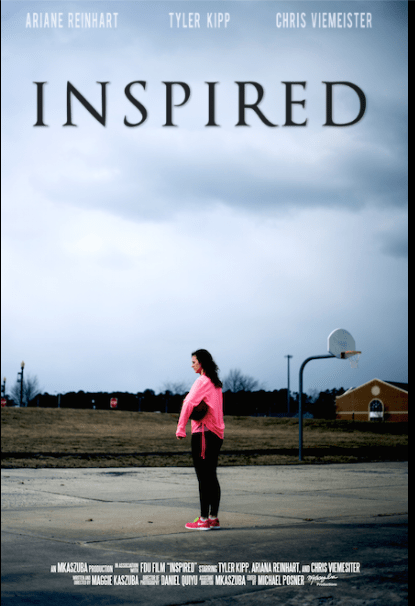
“Inspired”, a twenty minute Senior thesis film from first time writer and director Maggie Kaszuba, is an absolute triumph. Likewise, the 2015 release is fittingly titled. Kaszuba and her moviemaking crew put us through the emotional ringer. We feel anger, frustration, spats of teenage confusion and undeniable sorrow. Yet, it all resonates, through its sensational gym room monologues and tersely private at home instances, to uplift. It does this, especially in its concluding sequence, spellbindingly so. There is not a second of its runtime we don’t sense the drive and initiative Kaszuba has injected into every frame. It is seen in both the towering quality of Kaszuba’s material and her delicate crafting of scenes. Such is also calculable in the brilliantly honed individuals that dominate this outstanding yarn.

Kaszuba’s powerful tour de force concerns high school student Samantha Higgins (a tremendous and fantastically realized performance by Tyler Kipp). Plagued to lateness, she has developed a turbulent relationship with her basketball instructor, Coach Stafford (an unflinching depiction by Ariane M. Reinhart that is smart and courageous). The initial half of the narrative focuses to spectacular effect on the relationship between Higgins and Stafford. This is until a tragic ailment is introduced into their existence. It serves as a reminder to Higgins of the elusive balance of life and death. It also becomes a lesson in appreciating the time we have with those who stir us to better ourselves.

But, it is just as much about the path of dreams. Higgins’ seem plagued, as is the case of so many attempts to fulfill our personal ambitions, by unyielding detours of failure. In turn, the effort radiates hope beneath its mournful chain of events. It is proof of how well-rounded, tear-jerking and fulfilling this brief undertaking remains. Such is true as a relatable endeavor and a photographic experience.

Higgins, Stafford and Coach Bohn (an exceptional portrayal by Chris Viemeister) is credibly etched. Such is also the case with the chain of events Kaszuba builds around them. Because of this, the on-screen personages and the composition as a whole should prove accessible. It will likely prove personal to a widely varied group of cinematic patrons. A pre-end credits segment of this MKaszuba Productions and FDUF Films masterwork makes Kaszuba’s own intimate relation to the material glaringly apparent. Such makes the proceedings all the more impactful. This also evokes an autobiographical air. It brings about another of the many re-iterations of motivation spied in the enterprise itself.

Technically, the affair is as strong as it is in its account. The cinematography by Dan Quiyu is illustrious. It complements the accurate atmosphere of the exertion terrifically. Michael Posner’s editing fares just as well. Jalen Thompson and Foster Vernon’s sound contribution is top-notch. Matt McAndrew’s music trails the sentimental beats of the fiction wonderfully. Kaszuba’s directorial flare is impressive. Her screenplay is well-mounted and intelligent. It is filled with dialogue and situations that are as harrowing and believable as all other components we witness. This parallels beautifully all other aspects she visibly strives for throughout the venture.

Kaszuba’s labor of love begins on a note that immediately allows viewers to glimpse Higgins’ turmoil and plight. It is a riveting opener. Moreover, it is as natural, but attention-garnering, as all else that follows. The piece is just as credible in its organic pacing and sensibilities. Everything Kaszuba projects here comes from a place of authenticity and insight. This is issued meticulously and with genuine concern through the duration. Kaszuba has given us a dramatic slice of life. It is one that is character-oriented and exhilarating. This is mutually accurate as storytelling and as art. She is a tremendous talent. I look forward to seeing what future offerings she has in store.

“What Jack Built” – (Short Film Review)

what jack built 2

By Andrew Buckner

Rating: ****1/2 out of *****.

Director Matthew Mahler’s eleven minute short, “What Jack Built”, works tremendously well. It forces the imagination to look under its murky, brooding corners, retrace its steps and put the many enigmatic items of its narrative together themselves. The overall intensity and interest of the piece is garnered largely from the craftsmanship of the mystery at hand. This is just as true of Mahler’s skillful handling of the material. Such is a brilliant manner to tell a tale like this. Mahler provides a dialogue free composition. This is another smart move. It heightens the intrigue immensely.

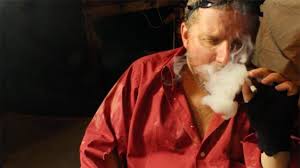
We watch the cigar-smoking and brooding, Jack (Timothy J. Cox, in another mesmerizing and masterful enactment), as he puts together blueprints in a secluded basement. He is also seen laboring over a trapping device. This is for the wholly concealed fiend lurking in the woods as well as inspecting his security cameras. Audience patrons view the succession of these immersive, hypnotically constructed and intriguing sequences of the affair’s arc in wonder. They are forced to uncover the meaning behind Jack’s actions themselves. This just adds to the appeal and quality of the item immensely.

What is going on inside of his psyche? How did he come to think of this device? What is its purpose? How did he put it together? Since he is the only one we meet, is he the only one left alive? What is exactly is this creature in the woods, if that is in fact what it is, he appears to be combating? Are they truly at war with one another? Are they linked somehow? It’s fascinating to ponder and assess these questions, left unanswered by the actual account, and come to our own conclusions based on the wisely sparse bits of details Mahler provides. These lack of particulars are a deliberate inclusion on Mahler’s behalf. Such is a bold choice that pays off handsomely. The result of this already attention-garnering saga is amplified by the minimalistic approach. The consequence is elevated far more than it would be if it was told in a traditionally straight-forward manner. This is not only thanks to Mahler’s taut direction, but also the cleverly paced, electrifying and meditative screenplay. This was penned by Matthew and Ross Mahler.

The title alone suggests a bit of a parallel to the popular British nursery rhyme, “This is the House That Jack Built”. In retrospect, it can even be perceived as an apocalyptic aftermath of the absurdly comic events that transpired in that tale. Yet, with a far more mature tone. “The man all tattered and torn”, as the folktale states, certainly applies to the brooding Jack realized in Mahler’s fabrication. He appears haunted, as if by the measures transcribed in the poem. Cox portrays this excellently. Not to mention, there is an underlying aggression to his motions. It is one which backs up the previously stated line splendidly. It is grasped in the various facial expressions Cox so expertly instills into the protagonist. Maybe this all circumstantial. It could be that this theory has nothing to do with its similarly captioned brute. But, it is this uncertainty, the many ‘what-ifs’ the endeavor captivatingly radiates, that makes it so thought-provoking and endlessly stirring.

what jack built

Matthew Mahler also issues music which is as spellbinding and ominous as the article itself. He utilizes a creaking soundtrack, reminiscent of one conventionally heard in a feature by Dario Argento, to chilling effect. It also sonically re-instates the endless atmospheric of the exertion beautifully. It makes the moments in the depths of the secluded area where Jack is hiding, as well as the ventures into the outside, all the more fearful and suspenseful. Adding further technical success to the project is Mahler’s sharp editing. There is also an inspired flare to the chronicle. The instances the smartly never spied beast is sensed creeping through the surrounding landscapes is reminiscent of the recurring shot which opens Sam Raimi’s The Evil Dead (1982) is where this is most evident. Even the setting itself calls this comparison to mind. Yet, Mahler’s attempt is far more than a simple homage. It is entirely its own entity.

In scenes such as the one recently addressed, Mahler’s aforesaid sonic contribution is most proficient. Yet, his appropriately dark, gorgeously honed cinematography drives this magnificent attribute home all the more victoriously. He also instates a credible, well-done input to the costume and wardrobe department. John Heirlein’s art department influence strengthens the believability and stalwart nature of the proceedings just as well.

This 8mm Films production is a true marvel. In an era where so much of cinema goes out of its way to show and tell, in excruciating specificity, its spectators what is hidden behind every door and explain every secret within a moving picture, “What Jack Built” is all the more necessary and refreshing. Those who expect everything ushered there way as far as a fully-fleshed out yarn, character development and all of the other trademark tools of the storytelling trade may find themselves frustrated. Such would be in the manner in which Mahler ceaselessly defies these expectations. They are assuredly the ones who will be put off by the undefined sum of the effort. Yet, those of us who like a new experience, one which gives us more inquiries than responses, will feel liberated.

Mahler drops us immediately into the exploits as if in the middle of a fiction already in progress. From herein, we are with Jack, hanging on his every motion, riveted through the duration. Despite the intentional vagueness of much of what we encounter, this can also be understood as an admirable experiment. This test concerns how much can be stated without a single word. Yet, the investigative nature reaches far beyond this single boundary. There is genuine risk-taking incorporated at nearly every turn. It makes the outcome all the more harrowing. For those of us who enjoy innovation as well as an adventurous take on the thriller, Mahler’s undertaking is a mandatory dose of adrenaline. It is a fantastic, illuminating, nail-biting spectacle which demands to be witnessed.

what jack 5

“Slimebuck” – (Short Film Review)

slimebuck pic 1

By Andrew Buckner
Rating: ***** out of *****.

“Slimebuck”, masterfully directed by Tom DeNucci (2013’s Army of the Damned, 2015’s Almost Mercy) and ingeniously written by K.C. Cerilli, is a wonderfully playful and charming masterpiece. The twenty minute short film, from Morbidly Amusing Productions and The Woodhaven Production Company, is proudly inspired. There are echoes of Joe Dante’s Gremlins (1984) and Stephen Spielberg’s ET: The Extra-Terrestrial (1982) resounding with a wink at the audience throughout this 2015 release. Even the rotund appearance of the title creature itself seems as if it could be a distant cousin of the Venus flytrap, Audrey II, in the unusually excellent 1986 musical remake of Roger Corman’s Little Shop of Horrors. Yet, it owes just as much to later Hollywood blockbusters of a completely different categorical ilk. Most discernibly, Christopher Columbus’ comedic Home Alone (1990). This is most clearly visible in the attention-garnering and well-done final act.

slimebuck pic 2

To add to the variety at hand, there are also elements of the mad scientist account woven into the proceedings. This comes into play with the entertainingly eccentric, Mike. Joe Siriani gives a fantastic, endlessly watchable portrayal as this individual. The individual is obviously carved with a deep felt passion for the previously addressed sub-genre. Siriani’s show-stopping, charmingly unhinged presentation is a delight to watch. It also makes the aforesaid characteristics and esteem all the more engagingly present. We see it in Siriani’s grandiose mannerisms. Such is also expressed in the way DeNucci frames the segments Siriani is involved in. This is largely noteworthy in the first half of the article. An attractively staged and smirk-inducing segment at four minutes into the affair is where this most evident. It showcases Mike in his laboratory, with test tubes and other trademark equipment of the filmic obsessive genius encompassing him, as he frantically labors. Such is an expertly conducted homage. All of this is given further incredible punctuation by Brad Piche’s quirky, endlessly fitting music. This aspect parallels the atmosphere of the construction beautifully. In turn, it enriches the jovial nature of the work immeasurably. Yet, despite the many peers the story summons, it finds a way to not rely on them. “Slimebuck” is clearly and refreshingly its own entity.

slimebuck pic 3

The intriguing concept behind this endeavor concerns Mike’s increasing interest in a meteor. Fascinated by the unique component within it, he brings the piece home. Soon after, he is reminded of an awards ceremony that he has forgotten that he must attend. For this event he will join his wife, Connie (Tess Degen in an outstanding depiction). Mike rushes to prepare for the occasion. As he leaves his residence with Connie in tow, he never realizes he left the irreplaceable item behind. All the while, their son, Tad (Jonah Coppelelli in a grand representation), has a sleepover at his house with his friend, Edgar (Jack Brunault, whose inaugural representation is excellent). Later that night, after a long session of Xbox, Tad wakes up to find the harmless, and immediately lovable, title creature in his room. This instant suggests, in part, the power of the imagination as Tad is seen drawing the harmless extraterrestrial a minute into the effort. Soon a band of bumbling robbers, Vladimir and Ivan (Fred Sullivan and Nick Principe; both in splendidly honed turns) attempt to steal the cosmic pillar Mike left behind. From this point forward, Slimebuck teams up with the children to foil the duo’s nefarious plans.

slimebuck pic 4

DeNucci finds an innocent, merry and inoffensive approach to the composition. It is one which is undeniably suitable for the material. Neither is it too juvenile to put off adult patrons, nor to terrifying to scare away younger viewers. This is established mesmerizingly in the first shot. From herein, it radiates admirably through the duration.

slimebuck 5

Both Cerilli, whose characterizations and dialogue are terrifically penned, and DeNucci offer exceptional influence to the quality of the material. The pace the duo conjure is even and the humorous moments are well-timed. It makes the undertaking all the more immersive. Moreover, the end outcome is all the easier to adore.

Furthermore, Maura McCarthy’s costumes are spectacular. The editing by Robbie Savage Jr. and Andrew Migliori is stupendously issued. Michael Zuccola is delightful as the pizza boy, Rickey. Billy ‘V’ Vigeant fares just as well as the limo driver. Additionally, Joe Cantor and Bobby “Boom” Brierly’s sound contribution is outstanding. Marissa Giammarco does a magnificent job with the hair and make-up. Puppeteer Erminio Pinque and special effects contributor Ben Bornstein cleverly bring Slimebuck to life. The result is a marvelously engaging and technically proficient opus.

slimebuck 6

“Slimebuck”, though brief, is every bit as well-etched and satisfying as a full-length feature. This is especially evident in how incredibly well the narrative is fleshed out. DeNucci and Cerilli have found a skillful manner to develop the personalities we encounter. They also provide a well-rounded and in-depth product. It is one which tells its fiction as completely as a lengthier enterprise. When considering this is done in about 1/6 of the space, such is all the more astonishing. This is another of many details mechanizing together to make this an absolute must. Such is particularly true of those of us who like to indulge the child within us now and again.

A sad tale lies behind this ultimately optimistic and laughter fueled tour de force. Thirty-year-old Cerilli, an avid genre devotee, wrote the script before passing away to muscular dystrophy in 2014. His parents, Vin and Annette, made it their mission to make sure his vision got to the screen. Though there is an abounding joy to everything we encounter in the piece itself, such adds an air of mourning to this warm, endearing and poignant exhibition of moving art.

“The Misogynist” – (Short Film Review)

By Andrew Buckner
Rating: ***** out of *****.

About eight and a half minutes into Chai Dingari’s beautifully constructed and absorbing thirteen minute short from 2011, “The Misogynist”, the lead of the tale, Harlan (Pascal Yen-Pfister in an incredible, multi-layered enactment), states, “I want to do something personal. Almost voyueristric. Like a glimpse into someone’s private life. I didn’t want to make it too pretty. I wanted to keep it raw.” This can be the most accurate description of the haunting, gritty veneer and overall impression left by this particular piece of Dingari’s work that there is.

It is as if the auteur of the piece is reaching out from behind the brilliant pages he penned and the exquisite frames of his composition and slyly speaking of his intentions through Harlan. This is just one of many various aspects in which the endeavor is an absolute triumph.

Dingari allows us into Harlan’s existence much like a documentarian. He doesn’t pass judgment on his flawed, but likable protagonist. The same can be said for Harlan’s wife, Allison (Rhea Sandstorm in a portrayal that is as authentic, unflinching and magnificent as Pfister’s). Much of the bulk of the runtime focuses in on this spousal correlation. Because of this the sum is consistently riveting throughout. We are grandly disheartened during the arguments the duo encounter. Furthermore, we are merry ourselves, uplifted when the two put aside their differences and recall their amorous affections for one another. This, in itself, is proof of how effortlessly we relate to Harlan and Allison. It is also an example of how proficient Dingari is at giving us natural character development. This is wholly without the expository force feed most filmmakers put us through. The consequence of this, as is true of the endeavor as a whole, is like watching life itself unfold before our eyes.

Dingari’s narrative finds Harlan with a photographic version of ‘writer’s block’. He is exhausted by the idea of snapping pictures of the same sights time and again. Once the notion arrives to him to tell the tale of his relationship with his wife through the medium of the lens, he finds excitement for his craft. He is reminded of why he once enjoyed engaging in such an activity. This, as all things, is short lived. A violent incident cuts this short in the last three minutes of the affair. Such a tragedy is unexpected and gripping. It brings to mind if such was part of Harlan’s plan all along. Dingari wisely leaves his audience hanging after this progression.

The end result is unsettling. It is a perfect punctuation point that shifts the positive light artistry is portrayed to help give someone a sense of purpose unexpectedly. The consequence is grimly poetic in what it says about personal drive. Just as eerie, and meditative, is what it doesn’t say.

Much of the narrative is about Harlan’s relationships. This is with both Allison and W.D. Frost (Timothy Cox in another show-stopping enactment); a man who is providing personal counsel for Harlan. The sequences with Frost exhibit powerfully that Harlan is a passionate fellow, interested in photography. He is trying to uncover a intrigue that he feels is solely his own. Such is one of the few planes that both Harlan and Frost seem to be on together. When Dingari cuts to a montage of a swarm of people taking pictures of everything before them, we admire the exquisiteness in which the moment is framed. Yet, we also see the deeper meaning. This is that Harlan aims to find his individuality but, everywhere he peers he is robbed of such a chance.

Such is an attribute sewn into all human beings. We want to be known. We want to be remembered for doing something unique. Yet, it is nearly impossible to find such avenues. This spoke to me especially well as someone who has struggled with my writing, and to etch a name for myself through such an avenue, all my life. I am certain it will speak to all those who view it just as potently.

Dingari executes his shots masterfully with deliberate rigor throughout. He keeps the pace consistently contemplative and even. Along with a hammering, uncredited piano score, “The Misogynist” is technically astonishing at every turn. These elements call to mind a film by Stanley Kubrick with splendid ease. The sound by Andrew Koller is excellent. These all greatly enhance the experience. It makes Harlan’s personal world come to life spectacularly as if via cinematic invite.

Such is verified proof that Dingari has accomplished the credible vision Harlan speaks about. There is believability and subtly garnered intrigue building from every frame. Much like life itself, it doesn’t overwhelm with emotion yet, the sentiment is visible beneath every subtle movement of the plot. Such only adds to the maturity and professionalism at hand. Dingari has crafted a masterwork; full of unwavering profundity and art. I greatly look forward to seeing what mirror of existence he holds up for his myriad spectators next.

“That Terrible Jazz”- (Short Film Review)

terrible jazz 1


By Andrew Buckner
Rating: **** out of *****.

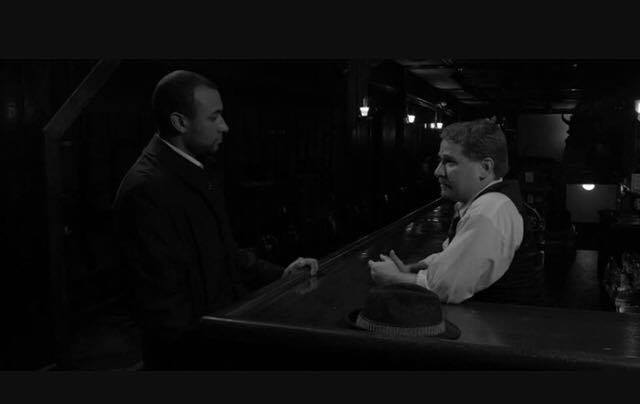
Inaugural writer and director Mike Falconi’s near seventeen minute short thesis film for The Art Institute of Philadelphia, “That Terrible Jazz”, is every bit as smooth, classy and elegant as its title musical genre suggests. It is complimented by the pulpy attitude one would expect from a 1930’s – 40’s noir. This Falconi has ardently fashioned his debut cinematic achievement after. Also, the narrative is similarly fitting in that it is packed with sly, diminutive, cryptic dialogue. This hallmark aspect is as intriguing, illusive and mesmerizing as ever. It is another of the fiction’s many trademark attributes. Regardless, it adds layers of additional mystery and sophistication to an already compulsively intriguing dramatic composition.

The plot concerns the chain-smoking and heavily drinking protagonist and private Investigator Sellers (Ephraim Davis in an enactment which brings to mind Humphrey Bogart with a uniquely splendid and well-executed spin) and his attempts to locate a missing saxophone player. The ticking clock motif, another common quality of similar affairs, is utilized here. This comes into play as Sellers learns that the individual needs to be uncovered before the jazz band performs that night. It is an amusing jump-off point. Such is perfect for the scant form it is presented in. Likewise, the account is punctuated with an underlying intensity throughout. Falconi and his moviemaking crew, keeping the enigmatic traits of its brood in check, frame the yarn largely as one interrogation sequence after another. This administers supplementary respect for the roots of similar entries of its ilk. It also mechanizes incredibly well as a tried and true manner of delivering exposition. With several genuinely unforeseeable twists in tow to add to the attention-garnering at hand, Falconi develops those who populate the screen in a consistently engaging, charismatic and alluring fashion.

These well-developed cinematic dispositions themselves endure as enigmatic as the lead himself. They follow the modus impeccably well of such a classically stylized entry. Such can also be said of Ellay Watson’s brilliant embodiment of Elizabeth Alksne. Timothy J. Cox gives us another of his many masterful turns in his portrayal of the barkeeper, Nicky. Cox’s always welcome presence is reserved for a small amount of the runtime. Still, he makes a certainly memorable impression. David A. Rodriguez is exceptional as Jimmy Calder. Jim Snyder as Gregory and John Rifici as Dean fare just as well in their respective depictions. Thomas Schmitt as Dallas, Bruce Clifford as Mac and Gyasi Howard as Wynn Dumont astound. Together these performers complete a cast of characters etched with both dimension and a hard-boiled edge. We, the audience, sit spellbound by everyone we meet herein.

What also heightens and illuminates such a parallel is Stephen Grancell’s moody black and white cinematography. This is complete with beautifully done lighting that augments the visual splendor. Contributing to this appeal is Earl Stepp’s immersive, era appropriate music. Such sophisticated luster is treated by the dress of the aforementioned period. There are suits, ties and pork pie hats aplenty. With these elements in mind, this could’ve easily come off as mere imitation. Instead, the sum of this labor soars far beyond such a broad description. This is accomplished by issuing a tautly-knit, relentless pace. It is also assisted by sharp editing from Falconi and Grancell. Additionally, Falconi has crafted a screenplay that is smart, absorbing and proficient. The well-constructed piece makes exceptional use of its low-key sensibility. Furthermore, this rousing effort demonstrates phenomenal make-up work from Frances Gonzalez-Chavarria. It also exhibits incredible sound from Strepp. These jaw-dropping components illuminate this magnum opus dazzlingly. They help establish the competence resounding from every technical facet.

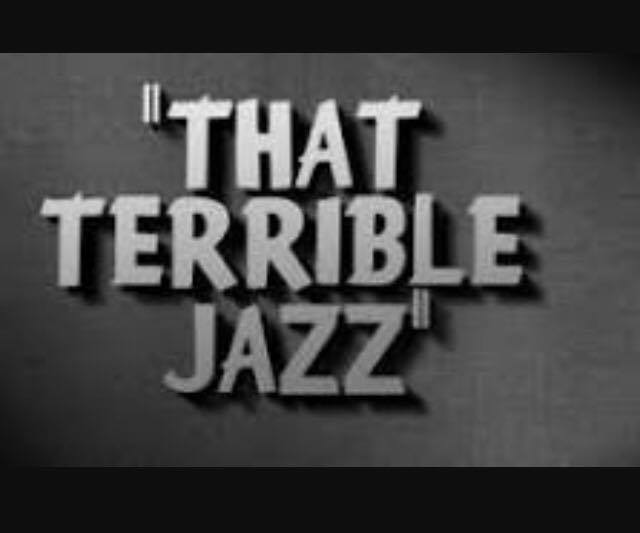
Among its other wise moves is opening, as if being dropped in the middle of a scene, with Watson hiding her face in a pillow. The words are uttered: “You better end this, Betty. Because you don’t want me to.” Such a display grips us immediately. It urges us to put the broken portions of this seemingly broken puzzle together quickly. This is before the actual narrative ventures in that direction. Falconi’s production is compulsively watchable from its first frame onward. As the tale moves on, the same sense only accumulates. When the end credits arrive, with a grey moniker in quotations that recollects the days when crime sagas such as these dominated movie theaters, we realize that we have been riveted in the manner this exertion commenced upon throughout.

Ending on a brilliant, suspenseful and pensive note that suggests the name of the effort represents the unpleasant goings-on of the leads’ daily lives, Falconi has given us a debut exertion that is sophisticated and clever. With a budget of only $1,000, Falconi has delivered a composition that mirrors the rugged gloss of an antiquated Hollywood production spectacularly. Falconi does this so well that one cannot help but feel awestruck by how well he creates the illusion of watching an eighty year old classic.

“That Terrible Jazz” is phenomenal. This is true as an example of old-fashioned storytelling as well as its enduring contemporary hold. It is also a promise of great things to come for Falconi. His contribution behind the lens is fantastic. Yet, this splendidly crafted love letter is striking all around. Falconi’s exertion proves that the genus it ardently models itself after needs a modern-day resurrection. It also subtly suggests that some definitions of ‘cool’ are eternal. They continue to excite and compel us as years stretch on and pass. Such is just one of the many reasons why Falconi has concocted both a wonderful love letter and a sight well worth seeing.

terrible jazz 2

“Under the Dark Wing”- (Short Film Review)


By Andrew Buckner
Rating: ***** out of *****.

Director Christopher Di Nunzio (2011’s “Her Heart Still Beats”, 2015’s A Life Not to Follow) continues to astound with his fifteen minute short film from 2014, “Under the Dark Wing”. Released through Creepy Kid Productions this is a darkly poetic, hypnotic and utterly unique take on the paranormal tale. This brilliant work, which plays like a combination of Ingmar Bergman and Martin Scorsese, is enriched by Nolan Yee’s gorgeous black and white cinematography. Further enhancing the visual appeal of this already dazzling endeavor is Di Nunzio’s masterful direction. In particular, his apparently effortless knack for framing alluring shots. Alongside this, Di Nunzio summons mesmerizing angles which heighten the sense of claustrophobia, always a necessity for thrillers such as these, on-screen. An extended conversation in a secluded area, an office of sorts, between Johnny Boy (a riveting, nuanced performance by Fiore Leo) and George (in a portrayal by David Graziano which is suitably menacing and extraordinary), which takes up most of the first half of the effort, are where such touches are most evident. But, it is also present in a beautifully rendered moment where Johnny Boy walks cautiously through a field, his left hand extended before us as if guiding, as the camera treads scant inches away from the young man. This is all a compelling build-up to coming face to face with The Girl (a fascinating enactment by Jessy Rowe which exhibits the character’s underlying currents of power and vulnerability spectacularly well). Di Nunzio also captures the isolation of the characters, and the region in which they dwell, with shots of largely empty streets and abandoned buildings. Such elements immerse us in the mind of Johnny Boy, as he treads through them in the affair’s earliest moments, instantly. These are all indicators of the high-arena of technical conception Di Nunzio and his crew are laboring at throughout.

The narrative revolves around Johnny Boy, who claims to have been drug free for a year, returning to his boss, George. Frustrated, Johnny Boy relates the failure of his past job, where he was supposed to slaughter a C.E.O., to the presence of a young girl. But, when an enigmatic female figure begins to find her way into the lives of the two: George is blind-sided by the idea of the profit she could bring in. Immediately afterward George and Johnny Boy begin to realize that the fate they thought they had a firm hold of could be in someone else’s hands entirely.


under the dark wing 2


“Under the Dark Wing” grabs ahold of our attention immediately, with a sharply done title scene, punctuated by the exclamatory clattering of bells, and concludes on a just as impressive climactic note. The piece is propelled by cryptic, noir-like dialogue. It is also fashioned with a non-stop pace that is both quick yet, authentic and brooding. Not only does this tighten the already wire-like grip on underlying suspense Di Nunzio has fabricated but, it adds heightened style, menace and intrigue to an already white-knuckle horror effort. What mechanizes just as tremendously to its acclaim is that it unveils a manner to develop its characters cleverly, through wordplay and ominous, poetic and visually stunning images that never shatter the tense guise hovering over the entirety of the project. Furthermore, they never seem artificial. This is as much a testament to Di Nunzio’s masterful guidance of the exertion as it is the intelligent, beautifully constructed screenplay he penned, from a story Di Nunzio (who has an uncredited role as the Dead C.E.O. in this venture) is solely attributed with conceiving, with Pedro Alvarado.


under dark 3


Di Nunzio, among his many prodigious contributions here, gives us music that is cloaked in temperament, perfect for the material and only adds to the classic veneer which hangs over the proceedings. He also contributes editing which is proficient, seamless and as eloquently crafted as the endeavor itself. The involvement from the rest of the crew is just as spectacular. Special make-up effects artist, Jessica Van-Winkle, does an astounding job with her respective participation. Boom-operator/ sound-recordist, Laura Grose, delivers sound that is crisp and alive. Alex Huang’s camera influence is terrific. Keith Bennet, who appears in the role of The Thug, is gripping. He makes an incredible impression with his brief time on-screen.


under dark 1


With “Under the Dark Wing” and the feature film he created one year later, A Life Not to Follow, Di Nunzio has proven that, not only he has absolutely mastered the creation of mature, grimly stunning and thoughtful thrillers. His characters are credibly etched, a vigorous facet which makes him stand triumphantly above the legion of those who toil in similar genres with antagonists and protagonists practically indecipherable from similar cinematic ventures. His stories walk the ledge of reality so well that we, the audience, never have any problem believing what our eyes are seeing. Not only is this because of the impeccable way he develops the personalities on-screen but, because he puts them first and makes us care for them all. It is a feat that many attempt but, few can pull off in such a consistently entertaining manner. Di Nunzio is an astonishing filmic auteur and “Under the Dark Wing” is every bit as tremendous as the other entries in his varied catalogue.


under dark poster

“Socks and Cakes” – (Short Film Review)

socks and cakes poster

By Andrew Buckner
Rating: **** out of *****.

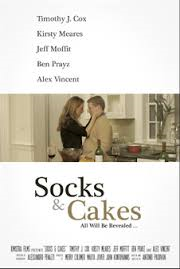
Writer and director Antonio Padovan’s twelve and a half minute short, “Socks and Cakes”, produced by Kimistra Films, is exhilarating entertainment. It is a sly comedy with delicately woven dramatic touches that is stylistically and tonally reminiscent of a Woody Allen venture. The magnificent composition wins its audience over immediately. Such is accomplished with both its widely relatable characterizations as well as a deftly honed screenplay (courtesy of Padovan). It is one filled with biting observations about life itself. The clever dialogue sharply reflects this characteristic. Often, its most effective humorous bits echoes such components. We laugh with those on-screen as we nod our heads in agreement. The serious bits are just as potent. This is because they evoke these attributes and hone them in a way that is not only sentimentally riveting but, intensely credible. For example, a stirring monologue delivered near the finale regarding the drudgeries of daily labor and other responsibilities gradually replacing dreams as one ages and matures is where such qualities are most evident. The commonplace attributes of those included within make their likability all the more transcendent. In turn, this becomes all the more accessible to a wide, varied audience. The result is a delightful concoction. It is one which is well-rounded, intelligent and uniquely meditative.

Padovan’s tale concerns five individuals who meet at a dinner party in Greenwich Village. Discussions of the past, the present and the future inevitably intermingle as the guests await the preparation of their meal. All the while, the chief personalities attending this event try to keep about a proper, respectable air as secrets involving these individuals are released. Emotions resonate but, seem to be pushed to the side until they can no longer be contained. This is where the piece gains its hefty dramatic intensity and sentimental resonance. Such arrives as the endeavor becomes largely a succession of clandestine talks between pairings of exes, lovers and friends after its stupendously mood-setting opening credits, which is resurrected just as successfully in its end acknowledgments. These segments are complete with fitting selections of music that only enhances its warm, hypnotic effect.

The topic of the production largely concerns the various relationships of the leads. It toys with the idea that men and women can attain pure friendships. This is, of course, after an isolated incident of giving into initial passions(as the French literature professor Harry Mogulevsky, a sophisticated and outstanding enactment by Timothy J. Cox that is pitch perfect for the material, informs us in one of his several Shakespearean lectures to the audience). Not only does this provide one of the most comedic moments in the effort but, it provides a grand example of the appropriately subtle manner in which such instances are handled.

The laughs are beautifully woven into the fabric of the narrative. Such is done in a way that doesn’t take away from the overall effect. Instead, it enhances the sensibility that one is watching a collection of close-acquaintances, people we immediately sense we’ve known for a long time, gather, reminisce and indulge in great conversation. The smartly smooth pace mimics this illusion of being present to what transpires; a silent comrade as the measures of the account unfold. Yet, Padovan also concerns his brief work of cinema with decision. Primarily, the ones which existence wields at us unexpectedly. This is most notable in its open-ended resolution. Not only is this a perfect punctuation point for the endeavor but, it draws the audience in all the more. Because of this the proceedings become all the more warmly intelligent, personal and gripping.

What also makes the effort all the more impactful is that it contains beautiful performances all around. Kristy Meares embodies the character of Amanda, Mogulevsky’s ex-wife, masterfully. Jeff Moffitt is terrific as the architect, Richard, Amanda’s present spouse (who just happens to be Mogulevsky’s best friend). Ben Prayz, as jovial and joking David, (whose impeccable comedic timing is utilized to great effect throughout) and Alex Vincent, as Sophie, fare just as spectacularly.

The affair also boasts gorgeous cinematography by Alessandro Penazzi and Redmond Stevenson. The veneer found on-screen is classy, elegant and natural; creating an immaculate visualization of the demeanor and atmosphere found in both the antagonists and beneath the surface of the material. Padavan’s direction is marvelous and his editing is seamless. Jackie Caruso’s use of make-up is phenomenal. Robert Albrecht’s sound is stellar. The same can be said for the art direction from Gabriela Guidino Jaime. All these wonderful elements come together strikingly well; the charm of the composition is infectious. Because of these wonderfully constructed technical elements the composition radiates triumphantly from the screen and into our own hearts.

Among the many fantastic feats Padovan and his filmmaking crew accomplishes here is how we leave this brief bit of cinema feeling that we have known the characters on-screen intimately all our lives. Padovan provides rollicking glimpses into those who populate his story through speech that is consistently fascinating and exposition that is just as natural and engaging. The fact that the exertion is so beautifully crafted, acted and provides such an exceptional example of the power of nuance makes the effort all the more admirable. Padovan’s ambitions to discourse on the human condition in such a quaint setting is all the more awe-inspiring. The reality that this is executed as brilliantly and effortlessly as all the high-caliber herein makes the piece all the more worthy of our time and attention. “Socks and Cakes” is terrific.

socks and cakes 2

“Nihan: The Last Page”- (Short Film Review)

By Andrew Buckner

Rating: ***** out of *****.

Nihan poster

“Nihan: The Last Page” is an evocative, elegiac and enigmatic fourteen minute dramatic short, released through Angry Student Productions and directed with an impeccably masterful eye for communicating emotion through both sight and sound by Tofiq Rzayev. It is one which is achingly beautiful. This is true in both its plot, symbolism and execution. It addresses the wrenching transition from clinging to a painful loss, unable to let go because of the agony associated with saying farewell to a loved one, to the early stages of acceptance spectacularly well. This expressive turmoil the piece accomplishes with endless sincerity and maturity. It also elucidates an understated tone that is perfect for the material. These aforementioned characteristics are unveiled in the gorgeously honed performances. They are also erected mesmerizingly from both Rzayev’s dark, moody and glorious cinematography and smoothly fashioned editing.

The somber luster illustrated within this endeavor not only helps set the contemplative tone of the piece instantly but, also works terrifically with the sounds of an unseen storm raging off-screen. This occurs in its opening four and closing three minutes. It not only adds to the poetic sensibilities so meticulously woven throughout the endeavor but, it also evokes an intimate extension of the inner-turmoil welling within the lead of the narrative, The Man (a portrayal by Erhan Sancar that is as brilliant and riveting as Rzayev and Mustafa Erdogan Ulgur’s spectacularly crafted screenplay demands). The piece holds onto the sentimental impact it ruminates from these early instances and sharpens them greatly throughout the sparse runtime. This, along with the meticulous and stunning craftsmanship that has obviously gone into conjuring this impression, results in a composition that resonates constant endless quiet and pensive power. These merits exist on all technical and storytelling levels. Its potent effects linger with you long after its ethereal and gripping conclusion.

Nihan pic 1

This multi-layered and absorbing endeavor concerns the gentle, and previously stated, chief individual. He is on the final sheet of a volume he is penning about his deceased love, Nihan (an enactment by Sevgi Uchgayabashi, who is also credited with the original idea for this phenomenal effort, which is fittingly tender and transcendent in equal doses). The book addresses the life the two lived together, as well as their ambitions as a couple. Hearing Nihan’s tender voice from behind him, an incident which transpires on both occasions the turbulent weather is heard raging to heighten the already overwhelming emblematic and demonstrative effect, The Man fights to finish the task at hand. But, as he speaks to Sister (an outstanding depiction by Alsen Buse Aydin), as he does in the riveting mid-section sequence of this brief bit of cinema, we learn that the house once held the promise of fulfilling the numerous desires he is currently writing about. This, along with putting the romantic rapport behind him, coerces a realization that the home, as much as actual association, could be the largest obstacles present in ending his literary effort. The protagonist’s problems become all the more immediate, in both their need to be addressed and resolved, when The Man finds out that Nihan’s wishes were unwittingly disrespected. This arises when he uncovers that others will soon be moving in to the once joyous domicile.

The storyline is undoubtedly thoughtful, soul-stirring and heart-tugging. Furthermore, the sign evident in the final page, and this being aligned along the completion of an ardent affiliation cut short before it could take root, presents various layers of allegory and depth in itself. Yet, Rzayev and his filmmaking crew find a way to bring these numerous inner-meanings to the surface. Such is issued with a consistently stunning allure. This is astonishing, as it is always formulated in a fresh and continually sophisticated manner.

What is all the more impressive is that the tale continously utilizes a dependably smooth, steady pace. It is one that never impresses upon the mind the idea of being anything less than the movement of life itself as we, the audience, watch it unfold before us. There is a natural progression to the proceedings which allows both engaging character-development and the necessary notes of melancholy and personal growth to take front stage without feeling either too gradual or rushed. This is achieved in a way that is striking and, simultaneously, makes the pain The Man is suffering all the more accessible to every viewer. Such makes the high sensitivity flowing throughout the affair all the more illustrious and impactful. Gergo Elekes’ luminous and memorable music, Busra Ozturk’s outstanding make-up and the sleek art direction by Zhivko Petrov only further punctuate these already palpable attributes. This results in an absolute masterpiece of short cinema; one of the most fully feeling configurations of its ilk that I have witnessed in quite some time.

Rzayev is a colossal talent. The proof shines in the credible dialogue he has given the three distinct personalities which populate his tale. It is also apparent in his visible mastery of framing and the manner in which “Nihan: The Last Page” makes you feel like a quiet witness to a succession of ravishingly done segments, all of which appear taken directly from the perpetual turmoil of human existence. What is just as remarkable is that the approach present here is reminiscent of the legendary filmic maestro, Ingmar Bergman. There is also a theatrical quality to this cinematic invention, a characteristic often present in Bergman’s material, that makes its artistic and life-imitating aspects combine marvelously. This creates a singular, and defiantly brilliant, experience. It is one that commands both multiple observances and awe from those lucky enough to be caught in its hypnotic and grandly compelling presence.

Nihan pic 3

You can check out the IMDB page for the short film here.

“Here Lies Joe”- (Short Film Review)

here lies poster

By Andrew Buckner

Rating: ***** out of *****

From the opening moments of director Mark Battle and Sweven Films’ hauntingly beautiful twenty-three minute short, “Here Lies Joe”, a riveting tonal balance of melancholy, peppered with effective humor and an ebbing sense of optimism, is brilliantly established. We watch our lead, whose name is referenced in the title of the piece (rivetingly played by Dean Temple in a performance that is always watchable, absolutely perfect for the material and showcases his incredible abilities by speaking volumes through frequently sorrowful facial gestures) taping up the windows of his beat-up car, full of books and family photographs, in an attempt at ending his life. This sequence lasts but a minute. Regardless, it immediately pulls us into Joe’s world. This early bit is so triumphant at doing so that we instantly care for and desperately want to learn more about this lonely soul.

This segment is just the first of many such smart moves on Battle’s behalf. Such decisions result in a towering achievement. It is one which reaches its sentimental zeniths through the lens of credibility and realism. Such is presented through its continued emphasis on sheer subtlety. This occurs in both characterization and in the way the entire endeavor is crafted. These factors, thanks to the gorgeous and perfectly suited for the overall atmosphere attributes of Battle’s superb cinematography, ravishingly compliment the atmosphere and the narrative impeccably well.

The story, dazzlingly constructed by both Pamela Conway and Battle, concerns Joe meeting an unpredictable young woman known as ‘Z’ (in a portrayal by Andi Morrow that is every bit as intriguing, well-honed and fantastic as Temple’s) at a Suicide Anonymous meeting. This is one headed by Bill (Timothy J. Cox in another of the many magnificent enactments herein). He is a self-proclaimed “suicide addict”. In this same sequence we also meet several other immediately gripping personalities. For instance, Joe is confronted by Carol (a presentation by Mary Hronicek that is both exceptional and charismatic) who believes her fish is clinically depressed. Even with the brief screen time Hronicek is given she makes Carol just as absorbing as the forerunners of the account. It proves the high-caliber of both the writing and the acting talent at hand.

hlj_z

Though Joe is quiet and introverted, and Z is more than happy to make her presence known to the entire group upon introduction, they inexplicably find a common bond with one another. The rest of the saga focuses sharply on this relationship. The friendship between Joe and Z demonstrates their unspoken dependence upon one another. Because of this the interest initially garnered when we first see each of these characters becomes unwavering. It also increases in its stalwart nature. Such is especially true with each new breathtaking scene.

Battle and Conway’s bold screenplay takes full advantage of the differences in personality between Joe and Z. This is largely evident up until the seventeen minute mark in the composition. It is utilized as a chance to provide phenomenal discussions between the two. These often relate these differences in either a direct or ancillary fashion. This works as entertaining character development. Yet, these instances are so well-written and immersive that we find ourselves even more captivated by these opposite personalities. What is just as mesmerizing is their semi-unlikely attachment and the strange fate which has pulled them together. This prior focus only makes the last six minutes, complete with elegiac and instantly memorable lines such as Z’s: “I am an ugly thing in a beautiful world”, all the more of an emotional knockout. It all comes together to create a certainly well-rounded and touching dramatic portrait as the endeavor becomes more sentimental and heart-wrenching in this conclusive stretch.

This attribute is punctuated by a final bit of dialogue, a reference between a shared interest among Joe and Z, which, in its context, calls back to mind all of the mournful, hilarious and poignant instances which came beforehand. It makes the endeavor all the more masterful as it finds the perfect climax for such a touching, intimate and relatable effort. This is done simply in its last touch of underplayed, but smirk-inducing, dialogue. Yet, the imprint it leaves lingers, much like the sum of the material itself, long afterwards.

From a technical standpoint this often unexpectedly exuberant affair is just as impressive. Battle’s editing is seamless. It is also spectacularly orchestrated. Robert Beal III and Sean Meehan’s sound is crisp, alive and continuously striking. Hair stylist and makeup artist Nicole Celso evokes a great contribution to the overall quality of the piece in her respective arenas. This makes this short picture all the more of deft and alive.

“Here Lies Joe” is an example of how much can be done, stated, examined, as well as the lasting impact conducted, in a brief span. Battle has an incredible aptitude in his respective fields. The same is true for the rest of his moviemaking crew. The proof of such a statement is illuminated in every second of this wonderful and often unexpectedly life- affirming tour de force. This is an intelligent, meditative affair. It is one with just the right balance of heart and laughter. Furthermore, every on-screen personage herein is highly likable. Every individual we encounter throughout seems deserving of being the principal of their own cinematic endeavor. This is an exhibition of moving art that audiences can grow with as the years pass and age and accruing wisdom inevitably takes further hold. This is a visual treasure trove. One destined to bring about new pearls of insight and continue to enthrall and move moviegoers with each viewing. Because of this, Battle’s latest demands to be seen.

You can check out the website for the short here.

You can check out Sweven Films’ Facebook page here.

You can check out Timothy J. Cox’s web site here.

You can check out the IMDB page for “Here Lies Joe” here.

hi joe bottom


Blood Moon- (Short Film Preview/ Review)

By Andrew Buckner

**** out of *****.

Director and screenwriter Nic Carcieri’s six minute short, Blood Moon, is a triumph of craft, storytelling and cinematic art. It is an intelligent, suspenseful, tightly paced horror endeavor credited with a sharp focus on captivating viewers through ever illusive mystery. This angle makes it immediately accessible for the audience to get into the mentality of its charismatic lead, Alex (Alexandra Cipolla in a wonderfully layered performance). Such is especially true as she finds that tragedy has befallen her husband, Zach (Topher Hansson in a strong and quietly compelling portrayal). Here the collective moments of this brief, yet sharp and undoubtedly proficient, piece come together. We feel every ounce of the increasing heart-break, sorrow and the pain Alex is going through. Moreover, this attribute heightens the intrigue.

Such is beautifully introduced in the opening seconds. During this time, Alex and Zach drive down a lonely and deserted road on their wedding night. They are blissful and visibly full of love for one another. It is the perfect set-up for the always gripping, and sentimentally varied, experience which follows. This also makes the proceedings, especially in retrospect, all the more grimly poetic, haunting and surreal.

This is just one of many wise moves on behalf of the moviemaking crew. There is also a flashback scene introduced around the two minute mark. It gorgeously illustrates Zach’s proposal to Alex. From this point the film flashes forward to exquisitely conceived glimpses into the couple’s wedding. Though this instance lasts approximately twenty seconds it succeeds as in-depth character development. This brief span is operative at getting us to know Zach and Alex. It is so efficient at this task that when she wakes up afterward, her white wedding dress covered in blood, to the unfortunate circumstances mentioned beforehand that the transition in tone becomes all the more riveting.

Carcieri lands the first of several unexpected blows here. This adds curiosity. It also brings to a zenith the evocative nature that the almost too idyllic segments that came before it seemed to hint at quietly. Furthermore, it becomes the centerpiece of the tale; an item which Carcieri utilizes to rapidly increase our concern for Alex and her situation. It is also sharply maneuvered to keep the intensity ever-mounting. This is a brilliant move. It proves a perfect example of how well-orchestrated the narrative, especially Carcieri’s spellbindingly written script, remains. Such impact comes again in a rousing finale that ends on an equally potent note. Characters we come to know as The Stranger (Michael Thurber in an ominous and commanding turn) and Kaine (Jose Gonsalves in an excellent portrayal) are especially terrific in this late section.

What also makes this composition so stalwart is that all technical facets are outstanding. The cinematography by James R. DeMello is crisp and vibrant. It perfectly captures the sunny disposition the recently wed individuals must be feeling in its early sections. When the account turns to terror in its last four minutes the veneer is endlessly atmospheric. It resonates ample beauty in both its joyous and frightening turns. The same can be said for the endeavor itself. This is further complimented by elegantly fashioned editing by DeMello. The make-up and visual effects by Christina Cook and Greg Easton are stellar. This production is further assisted by hypnotic title and end credit sequences by Marguerite Cass. Here a procession of endlessly imaginative images are summoned. This captures the enchanting, eerie and gothic impression of the exertion masterfully.

Blood Moon is genuinely effective. It gets its authoritative command as much from what it informs its spectators of as much as what it ultimately leaves unsaid. This is an example of the genre of fear working at its peak through nuance and proficient skill. There are many nods to the approach of similarly themed classics. Regardless, the effort is distinctly its own entity. It is a smart, character-driven, beautifully done and unsettling. In the tradition of the best horror works, the composition will have you mentally re-evaluating its chain of events. Most importantly, it will have you looking over your shoulder long after its shudder-inducing conclusion.