Andrew Buckner’s 10 Favorite Short Films of 2025

by Andrew Buckner

*Please note that the short films included in this list are done so based on an official release date, which excludes film festival premieres, in 2025 in the U.S.

10. “Fireflies in the Dusk”

Director: Jonathan Hammond

9. “Don’t Forget About Me”

Director: Elle Mills

8. “Two The Flowers”

Directors: Aaran McKenzie, Adam Savage

7. “Better the Devil You Know”

Director: Daniel Silverman

6. “The Guest on Topsfield Road”

Director: Luke St. Germaine

5. “Sweeps Week”

Director: Steve Blackwood

4. “Wander to Wonder”

Director: Nina Gantz

3. “The Tell-Tale Heart”

Director: Jeremy Arruda

2. “Good Luck to Me”

Director: Maya Ahmed

1. “Say Hello”

Director: David Graziano

Runners-up:

“Mugs”

Director: Samuel DeAngelis

“The Review”

Director: Dean Midas

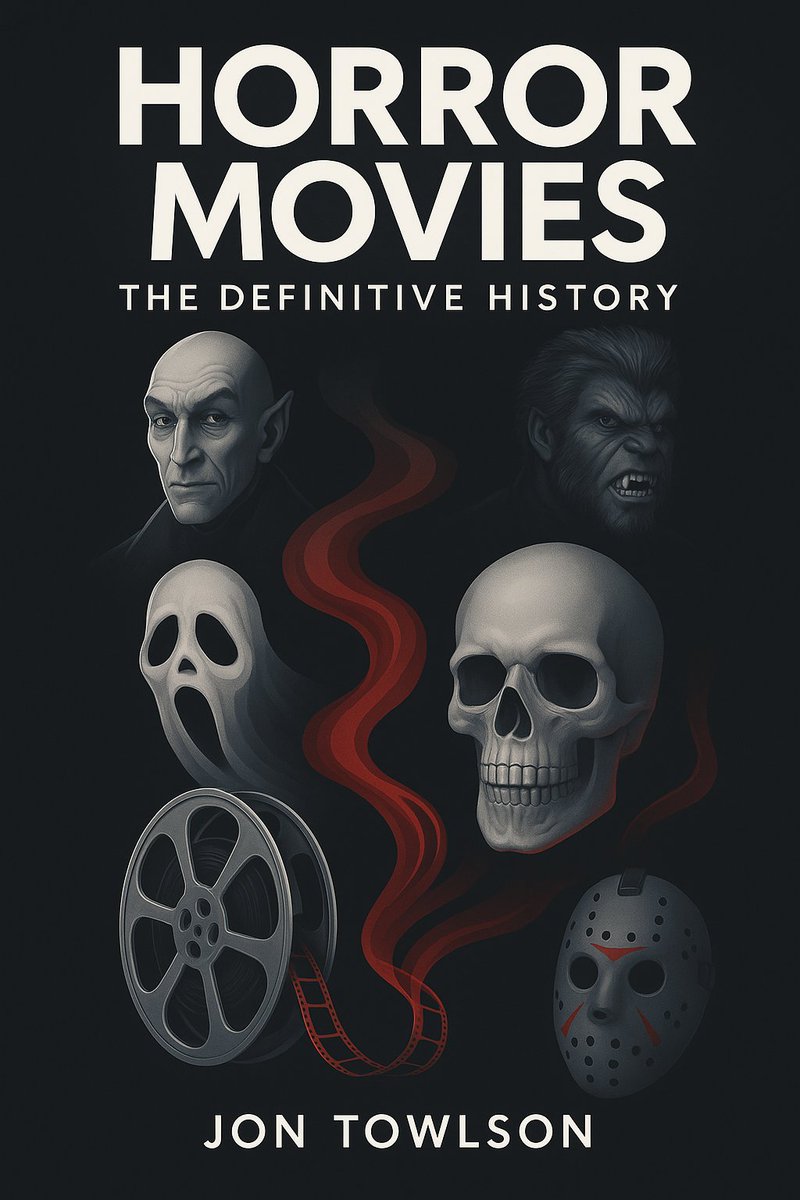
Horror Movies: The Definitive History (2025) by Jon Towlson – (Book Review)

by Andrew Buckner

Rating: ***** out of *****.

Horror Movies: The Definitive History (2025) by Jon Towlson is as significant for its intelligent, meticulously researched, concise, straightforward prose as it is for the abounding respect it holds for the title-referenced genre. Clocking in at a brisk 302 pages in length, the latest volume from Towlson ambitiously covers nearly one hundred years of audiovisual terror. It does so by cleverly and efficiently discussing, as they are first called in the subtitle to the engrossing Introduction to the project, the Three Golden Ages of Horror. These are 1931-1945, 1968-1982, and 1999-present. 

Such an approach, which showcases Towlson tackling the creation and impact of key fright films in their corresponding age, makes the wide scope of the endeavor evermore intimate, organized, and focused. It also makes many of the long-standing social issues and major events that are frequently reflected upon, whether directly or indirectly, in the full-length presentations Towlson speaks about in the undertaking (such as racial injustice, the Kent State massacre [1970], The Vietnam War [1955-1975], and the Manson murders [1969]) more visible. What is just as striking is the manner in which Towlson demonstrates how these on-going matters and aforesaid incidents continue to shape modern masterpieces of the macabre. The method in which the chronicle also addresses how censorship drastically altered these compositions throughout the years, especially when it is considering how the Hays Office began enforcing the Motion Picture Production Code in 1934 in Part 1: The First Golden Age of Horror (1931-1945), is similarly captivating.

What immediately riveted me about the tome is how the early sections utilize passages of script from the features being talked about at the time. It also incorporates reviews from critics, journalistic commentary, letters from filmmaking insiders, and initial audience reactions to make the enterprise as immersive as possible. The emphasis on distinct cycles, such as both the pre-code horror and the early stages of the Universal Monsters cycle discoursed in Part 1, as well as associated features that were once considered “lost”, like Michael Curtiz’s two-tone Technicolor wonder Mystery of the Wax Museum (1933), in the literary design is just as fascinating. 

Towlson also does a terrific job of showcasing the trials and tribulations many of the artists whose arrangements are mentioned in his document underwent to get their ventures out into the world in a fashion they deemed acceptable. This is while fighting the ever-shifting barriers of creative suppression and audience expectations. The units in Part 1 which detail these particular difficulties during the making of Tod Browning’s Dracula (1931), James Whale’s Frankenstein (1931), and Browning’s brilliant and revolutionary Freaks (1932) were of the most interest to me. 

Part 2: The Second Golden Age of Horror (1968-1982) is as consistently intriguing and informative as Part 1. The essays Towlson weaves herein on both the fabrication and release of George A. Romero’s magnum opus Night of the Living Dead (1968), Roman Polanski’s seminal Rosemary’s Baby (1968), and Wes Craven’s controversial and uncompromising Last House on the Left (1972) were the standout pennings in this portion. 

Part 3: The Third Golden Age of Horror (1999-Present), aside from a riveting and wildly entertaining probe into Daniel Myrick and Eduardo Sanchez’s groundbreaking found footage classic, The Blair Witch Project (1999), and a few other associated endeavors, doesn’t seem as concentrated on individual features as the two previous parts. Though this section is also the most critical of the configurations it disputes, it envelops the largest selection of silver screen offerings. Such a diversion from the formula Towlson has already established is welcome and refreshing. It helps make this component every bit as valuable and enjoyable as Part 1 and Part 2. The related legacies and trends conveyed in Conclusion: Beyond the Horror Boom, which arrives directly after Part 3, ends the configuration on a satisfying and appropriately punctuative note.

I cannot imagine anyone with even a passing interest in fearful cinema not being completely spellbound by every word of Horror Movies: The Definitive History. It’s a superb companion piece and extension of many of the ideas crafted in Towlson’s equally enlightening and in-depth 40 Cult Movies: From Alice, Sweet Alice to Zombies of Mora Tau (2023) and 40 More Cult Movies (2025). Thematically rich and resonant, smoothly paced, endlessly entertaining, and featuring a relatively even amount of time offered to most of the exercises examined in the publication, Horror Movies: The Definitive History is an essential guide to many of the most memorable big screen outings of the past. It ranks among the best books I’ve read all year. 

You can purchase Horror Movies: The Definitive History in Kindle or in paperback format here.

Flesh of the Unforgiven (2025) – Movie Review

by Andrew Buckner

Rating: ****½ out of *****.

Filmed in Canada in late-winter for eight thousand dollars over the course of twelve days, Flesh of the Unforgiven (2025), from writer-director Joe Hollow, is as striking for its memorable, macabre visual strengths as it is for the emotional core, the turbulent relationship between a couple who are desperately trying to stay together and find forgiveness, that fuels the eighty-eight-minute masterwork. The project immediately establishes this symmetry of sinister sights and forthright feelings which courses wall-to-wall and unblemished throughout the endeavor in its three-and-a-half-minute opening sequence. This bit brilliantly, unnervingly showcases the focus on dreams, phantasmagoric imagery, distorted sounds, and hauntingly utilized music that gives the exercise its skillfully demonstrated, consistently raw, tense, and unapologetic tone. All of these elements perfectly compliment the material. 

From herein, Hollow’s smart, stylish direction and sharply paced, character-driven screenplay, which is filled with organic dialogue, as well as the intimate, ever-credible, standout turns from Debbie Rochon as Sienna Russo and Hollow as Jack Russo (who form the aforementioned pair), deftly guide the offering through its labyrinthine maze of alternately heart-tugging and heart-rendering moments. This also occurs throughout the thrilling, satisfying climax, which nicely ties together nearly all of its narrative components. The resolution also intelligently leaves just enough enigma in regards to its diegesis for audiences to ponder the film long after it has reached its indelible conclusion. The ominous yet breathtaking cinematography from Kevin McMillan, proficient editing from Hollow, and the simultaneously retro and ghoulishly believable effects segments, especially the numerous gory bits, persistently punctuate the high-quality nature of these cinematic ingredients.

Incorporating an inherently intriguing plotline that feels drawn from equal shades of Hellraiser (1987) and The Shining (1980), Hollow tells the tale of Jack and Sienna Russo moving to a cabin in Quebec to combat Jack’s writer’s block and help repair their ailing relationship after Sienna’s infidelity. With three days to pen a treatment for his upcoming novel, Jack finds his grip on reality deteriorating. This is after watching a VHS tape, which is meant to give Jack “inspiration”, filled with violence, death, and depravity. Soon, the Russos find themselves battling both personal and otherworldly demons.This is as the Death Dealer, an instantly iconic villain brought to life in mesmerizing fashion by another scene-stealing turn from Hollow, and his underlings begin to prey upon and psychologically manipulate Jack and Sienna with their wicked ways.

Meticulously crafted with storytelling that delicately balances both a straightforward and complex approach, the latest feature film from Hollow also benefits from classic yet enduringly powerful genre themes such as absolution, the sins of the past, and the fear of the unknown. These topics, along with the top-tier enactments from a terrific, wisely chosen cast of performers including John E. McClenachan as Michael the Bartender, August Kyss as Vivienne, and Adriana Uchishiba as Livinia blend auspiciously with the even-handed mix of timely and timeless horror elements, all of which are impactfully implemented, Hollow fashions throughout the production. 

Moreover, the leads are amply developed and, even if there are instances when the quarreling between the Russos becomes too familiar and repetitive, Hollow never loses sight of detailing their plight. These arrangements, alongside the authentic, hard-hitting costume, makeup, and sound department work make the piece evermore superb.

Further boosted by commencing and concluding credits scenes that are as marvelous from a perceptual angle as they are atmospheric, Flesh of the Unforgiven is stunning across the board. The undertaking also erects an unbroken timbre of gritty menace that is as admirable as it is reminiscent of the stories of Clive Barker and Stephen King. Hollow’s picture is imaginative, graphic, relentless, and often erotically charged. It’s one of the best independent genre outings of its type in quite some time.

Andrew Buckner’s 35 Favorite Christmas Movies of All-Time

by Andrew Buckner

* Please note: The films in this list are in no particular order, but Gremlins always has been and always will be my favorite Christmas movie.

The Muppet Christmas Carol (1992)

Gremlins (1984)

It’s a Wonderful Life (1946)

Santa Claus Conquers the Martians (1964)

Bad Santa (2003)

The Nightmare Before Christmas (1993)

The Holdovers (2023)

Black Christmas (1974) 

Silent Night, Deadly Night (1984)

The Nativity Story (2005)

Krampus (2015)

Christmas Evil (1980)

Miracle on 34th Street (1947)

A Christmas Carol (1951)

Hail Mary (1985)

Little Women (2019)

Eyes Wide Shut (1999)

Blast of Silence (1961)

Anna and the Apocalypse (2017)

Tangerine (2015)

Inside (2017)

The Lodge (2019)

The Best Christmas Pageant Ever (2024)

Silent Night (2023)

The Grinch (2018)

The Children (2008)

The Christmas Chronicles (2018)

Spencer (2021)

Prancer (1989)

White Christmas (1954)

I Trapped the Devil (2019)

All Through the House (2015)

Remember the Night (1939)

Better Watch Out (2016)

Violent Night (2022)

Arena Wars – (Movie Review)

By Andrew Buckner

Rating: ***½ out of *****.

Arena Wars (2024), from writer and director Brandon Slagle, is a scrappy, often entertaining variation on such dystopian science-fiction/action films as Paul Michael Glaser’s adaptation of Richard Bachman’s same titled 1982 novel, The Running Man (1987), and Joe D’Amato’s cult classic Endgame (1983). The latest cinematic exercise from Slagle also boasts a brutal tone that is successfully executed throughout the 95-minute project. It also incorporates crisp, all-around beautiful cinematography from frequent Mahal Empire Productions collaborator Michael Su. These elements, along with a plethora of one-on-one fight sequences that are quick, credible, grounded, and thrilling, continually lift the film up when the overfamiliarity of the material threatens to sink the composition. These conventions extend to the characters, their backstories and arcs, the dialogue, themes including corporate corruption and media greed, and, most notably, the plot, and the structure of the piece itself. Additionally, though the pace of the endeavor is smooth, the occasional slow-moving section creeps into the proceedings. This is especially true of the second and third acts of the undertaking. Nonetheless, Slagle has crafted an undemanding, pleasantly straightforward, ultimately satisfying picture that is perfectly suited for late-night viewing.

Set in 2045, the narrative revolves around a sporting event entitled Arena Wars. Taking place over seven rooms, the televised competition finds convicted death row criminals fighting for their freedom against seven of the most monstrous murderers in the country. Despite the high ratings of the program, audiences are growing tired of the violent spectacle. Sensing that viewers need someone to root for to make the show more intriguing, an innocent, undercover man and skilled marine, Luke Bender (John Wells, in a commanding portrayal that effortlessly exerts a gruff aura), is offered a chance to lead the inmates through the game. Upon accepting the proposal, Bender must guide through myriad trust issues within his group as well as the vengeful fists of his opponents in the name of liberation. 

Though Michael Madsen and Eric Roberts (as Arena Wars co-host Samson and Admiral Jordan, respectively) provide workmanlike performances, their easily recognizable and likable presence erects welcome strong spots throughout the creation. Other highlights in this department can be found in Sheri Davis’ lively depiction of Arena Wars’ announcer, Holly Daze, Kylie Fulmer’s gripping turn as Billie, and Kevin Hager’s same said representation of Belladonna. Robert Donovan is marvelous as Samson’s co-hosting partner, Moses. Maria Bova is just as good as the off-the-wall, ever-watchable Cutie Pie. Robert LaSardo is tense and compelling as Perez.

Outside of the generally excellent enactments found in the design, the music from Scott Glasgow is appropriately rich, dramatic, and striking. Furthermore, the effects, particularly the plentiful gory bits, are memorable and impressive. The editing from Wayne Kent and costume design by Joseph Goratowski and Mercedes Peterson (who is outstanding as Domino), are extraordinary. The proficient sound utilized in the exertion helps Slagle’s outing roar clearly to life throughout every frame. The sets, makeup, and stunts are also deftly implemented.

Released on June 25th, 2024 on digital platforms through Gravitas Ventures, Arena Wars is an ambitious yet intimate example of the can-do spirit of independent moviemaking. The direction from Slagle is sharp. It is also injected with just the right amount of style. Though the screenplay from Slagle isn’t as sturdy, the attempt is filled with engrossingly wild, larger than life villains. It also contains a protagonist who is more authentic because his flaws aren’t hidden from the screen. Ultimately, the fabrication is a finely honed jolt of adrenaline. Like the hero of this tale, audiences will find it easy to cheer for this feature.   

Protanopia (2024) – (Movie Review)

By Andrew Buckner

Rating: ***** out of *****.

Protanopia (2024), the debut feature from writer-director-co-star Matthew Mahler, is a 73-minute masterwork of surreal, experimental horror. Opening with a quote from Leviticus 14:37-38 concerning the cleansing of a leprous house, the symbolism of which gives the following narrative even more of a potent punch, the picture immediately creates a sense of urgent unease. This is with its agile exploitation of noise distortion, creepy commencing credits, and various other unsettling elements. All of these components are incorporated within the first five minutes of the production. 

The use of a bright, bold red in these previously stated sections, as well as throughout the totality of the undertaking, cleverly and powerfully reflect the meaning of the title word (an inability to discern the aforementioned crimson color). It also becomes a glorious beacon for the incredibly memorable and haunting imagery utilized to chilling effect in Mahler’s offering. Most impressively, the piece never loses its natural ability to evoke a dread-infused atmosphere, to surprise, or to astonish from an artistic angle with its many stylish flourishes. This is once Mahler settles down to tell his tale after these striking early segments. 

Mahler’s plot involves a man, Luke (in an excellent portrayal from Anthony Carey), falling prey to bizarre dreams of an unfamiliar house once his sister, Mallory (in a wonderfully gripping depiction from James Chase), goes missing. What Luke is unaware of is that the strangely behaved Alan Roscoe, Jr. (in an ever-captivating turn from Timothy J. Cox, which ranks as one of the foremost performances from the always reliable actor) has just inherited the home after the recent passing of his father, Alan Roscoe, Sr. (in an eerie and endlessly watchable representation from John Mahler). Luke and Roscoe, Jr. will soon find their paths crossing. This is as Luke’s nightmares seem to bleed out into the open-eyed reality of his waking days. 

Concluding with a skillfully underplayed, but nonetheless impactful, finale, the meticulously paced project is a smartly written and deftly directed addition to Mahler’s filmography. It’s filled with contemplative yet organic dialogue and situations. Still, some of the avant-garde ingredients, such as the strobing lights and slow-motion shots, become less engaging the more often they are applied. This is especially true in the second half of the outing. Yet, the endeavor never loses its hypnotic, vice-like spell on its audience. Moreover, the inclusion of such frequently employed constituents as the poetic, ominous voice-over from Mahler, which contain the initial bits of speech heard in the enterprise, are perpetually operative.

Much of the visual strength of the article comes from Mahler’s evocative cinematography. The color palette chosen for the photoplay alternates between foggy gray and a plethora of far more vibrant shades. All of which marvelously fit the sharply honed ambiance of the proceedings. It also gives the presentation the look of both a giallo by Dario Argento and a prototypical 1970’s grindhouse flick. Furthermore, Mahler’s implementation of appropriately moody music, proficient editing, and his stellar illustration of Jack continually enhance the quality of the fabrication. 

Correspondingly, the entire cast is first rate. Paula and Barbara Mahler are terrific as Janice and Gladys, respectively. Ross Mahler is outstanding as Jim. Andrea Norell fares just as well as Vanessa. John Heerlein’s rendering of Detective is spellbinding. 

Protonapia is daring and ambitious yet credible and grounded. It also demonstrates sufficiently developed yet enigmatic enough to be intriguing characters. Its themes of service, ritual, and routine are quickly established. From herein, they are woven to dramatic, bloodcurdling, relatable, and all around superb consequence. 

Boosted by a remarkable exhibition of sound from Nick Bavaro and Carey, the Ronkonkoma, New York-filmed, $2,000-budgeted exercise is an intense, imaginative, and finely crafted venture. It is one that should prove inspiring to aspiring filmmakers and cinephiles alike. Mahler’s latest proudly stands alongside Cameron and Colin Cairnes’ brilliant Late Night with the Devil (2024) as a top-tier genre effort. It is also one of the ten best movies of the year so far.

“Clean Up Duty” (2023) – Short Film Review

By Andrew Buckner

Rating: ****½ out of *****.

“Clean Up Duty” (2023), from director Christopher Di Nunzio, is a grounded yet quirky, disarmingly funny, and exceptionally well made take on the type of violent gangster sagas commonly associated with filmmakers like Martin Scorsese. The eleven-minute presentation further aligns itself with Scorsese in the sense that it masters the deftly sewn character focus and underlying intensity that coolly courses through Scorsese’s trademark style of picture. Yet, the last act of Di Nunzio’s undertaking takes on an unexpected, darkly comedic tone. It is one which wonderfully fuses with the ambiance of the otherwise generally sincere production. Moreover, it showcases a propensity to successfully surprise and take risks with the material which is always welcome. 

The jokes demonstrated during this final stretch can be seen as lowbrow. Still, the organic and all-around terrific performances from lead David Graziano (Henry) and supporting actor Fiore Leo (Lou) make them work. The effectiveness of these instances, as well as the exercise as a whole, also masterfully reverberates from the excellent screenplay from Skip Shea. Said script is alternately thoughtful and playful. This is especially evident in the dialogue, particularly the banter between Henry and Lou, that is lifted from this arena. Furthermore, the climactic gag, which is exhibited in the effort as a twist of sorts, is a potently punctuative note for the piece. While slyly winking at the title of the composition, the humor spied here may also prove to some viewers to be cathartic. This is given certain fears that culminated during the Covid-19 pandemic.

The narrative revolves around Henry, who is in the Witness Protection Program, having his daily routines upended. This is when Lou, a shadowy figure from Henry’s past, appears in Henry’s house with a gun aimed at Henry’s head. Utilizing the ruse of having to use the bathroom before he is killed, Henry tries to outsmart Lou. When these attempts turn unconventional, it becomes another sign of the incredibly adventurous abilities of both Henry and the creation itself.  

Such is an intriguing, if overly familiar, setup. The plot is at its finest in its dialogue-free opening four minutes and also in its previously stated conclusion. In the commencement, as we spy Henry going about his usual paces while nervously keeping an eye out on his surroundings, the affair is fueled by an addictive air of enigma and suspense. It’s compelling because it casually shows instead of blandly telling its audience what is transpiring. Such heightens the atmosphere of believability brought to the forefront by Di Nunzio’s superb editing, cinematography, and guidance of the project. The midsection, though engaging and pleasantly carrying on the nail-biting demeanor executed in the first act, is when the routine components of the story are most perceptible. Such elements momentarily hinder the fabrication.

Recorded in Exeter, Rhode Island, “Clean Up Duty” is boosted by a strong demonstration of sound from Laura Fietz and Patrick Timothy Yeo. It also implements tenor-appropriate music, which is wisely used in small doses, to pepper the proceedings. In turn, these items help make the construction an ambitious, layered, and memorable short subject. Di Nunzio’s latest offering is a marvelous venture and one of the best of its type that I have seen all year. It cleverly echoes the spirit of his brilliant features A Life Not to Follow (2015) and Delusion (2016). This is while proudly standing as a triumph on its own merits.

The Devil’s Left Hand (2023) – (Movie Review)

By Andrew Buckner

Rating: **** out of *****.

The Devil’s Left Hand (2023), from prolific writer-director-co-producer Harley Wallen, instantly establishes its laser-like focus on its characters and on its classic horror atmosphere. This occurs in an attention garnering three-minute long opening sequence which involves a medium, Vesna (Aphrodite Nikolovski), a seance, and an evil spirit. From herein, the 98-minute picture, which was filmed in Pontiac, Michigan, U.S.A., rarely wavers from these admirable points of initial interest. This is as practically every scene in the tightly paced, if routinely structured, movie either further develops the relationships and dealings of the leads or gives us acutely assembled and photographed bits of terror fused tension. These latter stated ingredients masterfully recall the time tested tone established in the commencement of the piece. Oftentimes, these elements are issued in the same section to great emotional and unnerving effect.

The narrative concerns Richie (in a strong, credible, and commanding chief turn from Kris Reilly). He is a young man who is forced to face both his murderous past and his bleak future after a shapeshifting demonic entity, Agramon (persuasively depicted by Calhoun Koenig), takes control of his life, threatens him and his friends, and challenges his perceptions. This is after a chaotic supernatural event at a housewarming party. Soon the fiend begins growing in power and killing those closest to Richie and his companions. In an attempt to thwart these violent actions, Richie and his confidants band together to find a way of obliterating the hellhound.

In The Devil’s Left Hand, Wallen smartly continues the central theme of dysfunctional families that he previously utilized in an equally gripping fashion in his excellent backwoods slasher feature, Ash and Bone (2022). This topic is at its most impactful in the early moments in the production, which involve Richie and his hospitalized mother, Sharon Stann (brilliantly played by Laurene Landon). The aforementioned segment reminded me in setting, tenor, and in its subtle displays of internal grief of the harrowing episodes that take place in Bellevue Hospital between Father Damien Karras (Jason Miller) and his mother, Mary (Vasiliki Maliaros), in the originating stretches of William Friedkin’s masterpiece, The Exorcist (1973). A similar resonance is also spied just as capably in a flashback to Richie’s childhood involving Carter Stann (in a marvelously ominous performance from Yan Birch) which arrives in the second half of the fabrication. This is a compliment to both the ability of the players as well as Wallen’s auteurship of the extract.

The dialogue resorts a bit too often to overused terminology. Still, the all-around solid cast, with Kaiti Wallen’s depiction of Cassidy and Harley Wallen’s representation of Zeb being some of the many standouts, as well as Wallen’s assured direction are more than enough to forgive these slight misgivings. Adding to the potent skill of the excursion is Bon Lucas’ moody and remarkable score. Moreover, the editing from Alex Gasparetto is top-notch. The introductory and concluding credits are slick and visually stylish. Additionally, the sound design from Kaizad and Firoze Patel is impressive. The special effects are wisely sparse, but enjoyable. Conclusively, the cinematography from Michael Kettenbeil is tremendous. It nicely enhances the overall timbre of the exercise.

The last few seconds of the cryptic and otherwise engrossing finale are less haunting than they aim to be. Furthermore, the undertaking, which starts to feel too talky in the climactic expanses of its third act, could benefit from a ten or so minute trim. Regardless, The Devil’s Left Hand, from Painted Creek Productions and Auburn Moon Productions, remains another stellar installment in Wallen’s terrific filmography. Tense, entertaining, and thoughtful, it’s one of the best genre outings of the year.   

The 51 Best Albums/EPs of 2022

By Andrew Buckner

51. It’s Almost Dry

By Pusha T

50. Sad Girl Blues (EP)

By Lauren Brabson

49. Marvelous

By Yung Gravy

48. Back in Black

By Cypress Hill

47. Dawn FM

By The Weeknd

46. Laurel Hell

By Mitski

45. Lucifer on the Sofa

By Spoon

44. Spirit Exit

By Caterina Barbieri

43. Theory of Becoming

By Evgueni Galperine

42. Ramona Park Broke My Heart

By Vince Staples

41. Driplomatic Immunity

By 183rd, Nym Lo, Smoke DZA

40. Get Well Soon

By King ISO

39. The Brave

By Tom MacDonald, Adam Calhoun

38. The Gospel According to Nikki Giovanni (feat. Nikki Giovanni)

By Javon Jackson

37. Mood Swings (EP)

By Real Bad Man, Smoke DZA

36. The Three Fantastic Supermen Epics (EP)

By Killah Priest

35. SICK!

By Earl Sweatshirt

34. Cocodrillo Turbo

By Action Bronson

33. Mr. Morale & the Big Steppers

By Kendrick Lamar

32. The Elephant Man’s Bones

By Roc Marciano, The Alchemist

31. Drillmatic – Heart vs. Mind

By The Game

30. First of da Month

By The Snowgoons

29. What Has Been Blessed Cannot Be Cursed

By Big Ghost Ltd., Conway the Machine

28. Onyx Versus Everybody

By Onyx

27. Peter

By Bizarre

26. Firestarter (Original Motion Picture Soundtrack)

By John Carpenter, Daniel Davies, Cody Carpenter

25. Unanimous Goldmine (The Original Soundtrack of “Neptune Frost”)

By Saul Williams

24. Super Beast

By Madchild

23. Skylar Grey

By Skylar Grey

22. Continuance

By Curren$y, The Alchemist

21. He Got a Gun

By Bizarre

20. Sometimes Y

By Yelawolf, Shooter Jennings

19. Tana Talk 4

By Benny the Butcher

18. God Don’t Make Mistakes 

By Conway the Machine

17. Saturday Afternoon Kung-Fu Theater (EP)

By RZA,  DJ Scratch

16. No Fear of Time

By Black Star

15. Medicine at Midnight

By Foo Fighters

14. Forever

By Phife Dawg

13. 1993 

By Onyx

12. Sentimental Ballad

By Teagan Johnston

11. Renaissance Kings 

By The Snowgoons

10. Detroit Life 2

By Swifty McVay

9. Zhigeist

By Elzhi, Georgia Anne Muldrow

8. Czarmageddon!

By Czarface

7. Aethiopes

By Billy Woods

6. Harbor City Season One

By Crooked I, Joell Ortiz, 

5. Cost of Living

By Apollo Brown, Philmore Greene 

4. Last of a Dying Breed

By Kool G Rap

3. Cheat Codes

By Black Thought, Danger Mouse 

2. Horrah Scope 

By Killah Priest

1. King’s Disease III

By Nas

The 105 Best Feature Films of 2022

By Andrew Buckner

*Please note: The inclusion of the films on this list is based on the criteria of an official 2022 release date in the U.S.

105. Is That Black Enough for You?!?

Director: Elvis Mitchell

104. Utama

Director: Alejandro Loayza Grisi

103. Women Talking

Director: Sarah Polley

102. Causeway

Director: Lila Neugebauer

101. Fire of Love

Director: Sara Dosa

100. Argentina, 1985

Director: Santiago Mitre

99. White Noise

Director: Noah Bambauch

98. The Fallout

Director: Megan Park

97. Empire of Light

Director: Sam Mendes

96. Jurassic Punk

Director: Scott Leberecht

95. The VHS Strangler – The Giallo Tapes

Directors: Rob Ceus, Jim Stramel, Inge Vanleene, David Strojan, Tony Newton, Joe Cash, Fabrizio Spurio, Gore Filth, Wilhelm Muller, Derek Braasch, Glen Cook, Bo Sels, Kaylan Jordan-Sen, John Migliori

94. Infinite Storm

Directors: Malgorzata Szumowska, Michael Englert

93. Men

Director: Alex Garland

92. See How They Run

Director: Tom George

91. Emily the Criminal

Director: John Patton Ford

90. Triangle of Sadness

Director: Ruben Ostlund

89. Glass Onion: A Knives Out Mystery

Director: Rian Johnson

88. Operation Mincemeat

Director: John Madden

87. The Last Thing Mary Saw

Director: Edoardo Vitaletti

86. The Whale

Director: Darren Aronofsky

85. Deep Water

Director: Adrian Lyne

84. You Are Not My Mother

Director: Kate Dolan

83. The Sadness

Director: Rob Jabbaz

82. Straight to VHS

Director: Emilio Silva Torres

81. Studio 666

Director: BJ McDonnell

80. Scream

Directors: Matt Bettinelli-Olpin, Tyler Gillet

79. Hellbender

Directors: John Adams, Zelda Adams, Toby Poser

78. Flux Gourmet

Director: Peter Strickland

77. Nezura 1964

Director: Hiroto Yokokawa

76. Belle

Director: Mamoru Hosoda

75. RRR (Rise Roar Revolt)

Director: S.S. Rajamouli

74. We’re All Going to the World’s Fair

Director: Jane Shoenburn

73. You Won’t Be Alone

Director: Goran Stovelski

72.  VHS Love: Cult Cinema Obsession

Director: Tony Newton

71. The Found Footage Phenomenon

Directors: Sarah Appleton, Phillip Escott

70. Fall

Director: Scott Mann

69. Bones and All

Director: Luca Guadagnino

68. Armageddon Time

Director: James Gray

67. Pearl

Director: Ti West

66. Shakespeare’s Sh*tstorm

Director: Lloyd Kaufman

65. Clerks III

Director: Kevin Smith

64. Beavis and Butt-head Do the Universe

Director: Mike Judge

63. Nope

Director: Jordan Peele

62. Speak No Evil

Director: Christian Tafdrup

61. The Black Phone

Director: Scott Derrickson 

60. Terrifier 2

Director: Damien Leone

59. Apollo 10½: A Space Age Childhood

Director: Richard Linklater

58. Elvis

Director: Baz Luhrman

57. Strawberry Mansion

Directors: Albery Birney, Kentucker Audley

56. X

Director: Ti West

55. Cow

Director: Andrea Arnold

54. All Quiet on the Western Front

Director: Edward Berger

53. Devotion

Director: J.D. Dillard

52. Vesper

Directors: Kristina Buozyte, Bruno Samper

51. The Menu

Director: Mark Mylod

50. A Wounded Fawn

Director: Travis Stevens

49. Barbarian

Director: Zach Cregger

48. Fiddler’s Journey to the Big Screen

Director: Daniel Raim 

47. Aftersun

Director: Charlotte Wells

46. Prey

Director: Dan Trachtenberg 

45. Piggy

Director: Carlotta Martinez-Pereda

44. Resurrection

Director: Andrew Semans

43. Lady Chatterley’s Lover

Director: Laure de Clermont-Tonnerre

42. Pennywise: The Story of It

Director: Chris Griffiths 

41. Nocturna: Side A – The Great Old Man’s Night

Director: Gonzalo Calzada

40. Luci and Desi

Director: Amy Poehler

39. Downfall: The Case Against Boeing

Director: Rory Kennedy

38. A Hero

Director: Asghar Farhadi

37. Lunana: A Yak in the Classroom 

Director: Pawo Choyning Dorji

36. Cyrano

Director: Joe Wright

35. Weird: The Al Yankovic Story

Director: Eric Appel

34. Mona Lisa and the Blood Moon

Director: Ana Lily Amirpour

33. Bardo, False Chronicle of a Handful of Truths

Director: Alejandro Gonzalez Inarritu

32. Something in the Dirt

Directors: Justin Benson, Aaron Moorhead 

31. Sr.

Director: Chris Smith

30. Decision to Leave

Director: Park Chan-wook

29. Crimes of the Future

Director: David Cronenberg

28. Petite Maman

Director: Celine Sciamma

27. The Woman King

Director: Gina Prince-Bythewood

26. Uncle Sleazo’s Toxic & Terrifying T.V. Hour

Director: Lucky Cerruti

25. The Man in Room 6

Directors: Trevor Juenger, Carrie Juenger

24. The Northman

Director: Robert Eggers

23. The House

Directors: Paloma Baeza, Emma De Swaef, Niki Londroth von Bahr, Marc James Roels

22. Marcel the Shell with Shoes On

Director: Dean Fleischer-Camp

21. Disorienting Dick

Director: Richard Griffin

20. The Outfit

Director: Graham Moore

19. Soft & Quiet

Director: Beth de Araujo

18. Nitram

Director: Justin Kurzel

17. Nocturna: Side B – Where the Elephants Go to Die

Director: Gonzalo Calzada

16. The Worst Person in the World

Director: Erik Vogt

15. Higher Methods

Director: Nathan Suher

14. Jurassic World: Dominion

Director: Colin Trevorrow 

13. Babylon 

Director: Damien Chazelle

12. Tar

Director: Todd Field

11. The Banshees of Inisherin

Director: Martin McDonagh

10. Till

Director: Chinonye Chukwu

9. She Said

Director: Maria Schrader

8. The Innocents 

Director: Eskil Vogt

7. Happening

Director: Audrey Diwana

6. Guillermo del Toro’s Pinocchio

Director: Guillermo del Toro

5. Mad God

Director: Phil Tippett

4. The Fablemans

Director: Steven Spielberg

3. Neptune Frost

Directors: Saul Williams, Anisia Uzeyman

2. Moonage Daydream

Director: Brett MOrgen

1. Vortex

Director: Gaspar Noe

Runners-Up:

All Jacked Up and Full of Worms

Director: Alex Phillips

Ash and Bone

Director: Harley Wallen

Blonde

Director: Andrew Dominik

Bodies Bodies Bodies

Director: Halinah Reijn

Brian and Charles

Director: Jim Archer

Emancipation

Director: Antoine Fuqua

The Eternal Daughter

Director: Joanna Hogg

Everything Everywhere All At Once

Directors: Daniel Kwan, Daniel Scheinert

Hatching

Director: Hanna Bergholm

Jackass Forever

Director: Jeff Tremaine

The Leech

Director: Eric Pennycoff

Scare Package 2: Rad Chad’s Revenge

Directors: Aaron B. Koontz, Anthony Cousins, Rachele Wiggins, Alexandra Barreto, Jed Shepherd

To Leslie

Director: Michael Morris

Troll

Director: Roar Uthaug

The Wonder

Director: Sebastian Lelio