Andrew Buckner’s 10 Favorite Short Films of 2025 (So Far)

by Andrew Buckner

*Please note that the short films included in this list are done so based on an official release date, which excludes film festival premieres, in 2025 in the U.S.

10. “The Review”

Director: Dean Midas

9. “Mugs”

Director: Samuel DeAngelis

8. “Fireflies in the Dusk”

Director: Jonathan Hammond

7. “Don’t Forget About Me”

Director: Elle Mills

6. “Two The Flowers”

Directors: Aaran McKenzie, Adam Savage

5. “Better the Devil You Know”

Director: Daniel Silverman

4. “The Guest on Topsfield Road”

Director: Luke St. Germaine

3. “Sweeps Week”

Director: Steve Blackwood

2. “Wander to Wonder”

Director: Nina Gantz

1. “The Tell-Tale Heart”

Director: Jeremy Arruda

Andrew Buckner’s 10 Favorite Books of 2025 (So Far)

by Andrew Buckner

*Please note that the books included in this list are done so based on the criteria of an original publication date of 2025.

10. What Kind of a Name is Lolly Anyway?

by Lucy Brighton

9. Curse of the Blood Witch

by Dawn Colclasure

8. Rule of Extinction (The Preservation of Species 1)

by Geoff Jones

7. Going Home in the Dark

by Dean Koontz

6. Witchcraft for Wayward Girls

by Grady Hendrix

5. 3 A.M. Poetry

by Dawn Colclasure

4. Paper View

by Laughton J. Collins, Jr.

3. 40 More Cult Movies

by Jon Towlson

2. Never Flinch: A Novel 

by Stephen King

1. The Fourth Mind

by Whitley Strieber

Andrew Buckner’s 51 Favorite Feature Films of 2025 (So Far)

by Andrew Buckner 

*Please note that the feature films included in this list are done so based on an original wide theatrical or streaming/ physical media premiere release date of 2025 in The United States.

51. The Ruse

Director: Stevan Mena

50. Sinners

Director: Ryan Coogler

49. Until Dawn

Director: David F. Sandberg 

48. The Woman in the Yard

Director: Jaume Collet-Serra

47. The Gorge

Director: Scott Derrickson

46. A Working Man

Director: David Ayer

45. The Last Showgirl

Director: Gia Coppola

44. Audrey’s Children 

Director: Ami Canaan Man

43. Rule Breakers

Director: Bill Guttentag

42. Juliet & Romeo

Director: Timothy Scott Bogart

41. Mickey 17

Director: Bong Joon Ho

40. The Day the Earth Blew Up: A Looney Tunes Movie

Director: Pete Browngart

39. Novocaine

Directors: Dan Berk, Robert Olsen

38. Mission Impossible – The Final Reckoning

Director: Christopher McQuarrie

37. Wolf Man

Director: Leigh Whannell

36. Marshmallow 

Director: Daniel Delpurgatorio

35. Heart Eyes 

Director: Josh Ruben 

34. The Severed Sun

Director: Dean Puckett

 33. The Damned

Director: Thordur Palsson 

32. Dead Mail

Directors: Joe DeBoer, Kyle McConaghy

31. Rosario

Director: Felipe Vargas

30. Clown in a Cornfield 

Director: Eli Craig

29. Frewaka

Director: Aislinn Clarke

28. The Alto Knights

Director: Barry Levinson

27. Locked 

Director: David Yarovesky 

26. Final Destination: Bloodlines 

Directors: Zach Lipovsky, Adam B. Stein

25. The Rule of Jenny Pen

Director: James Ashcroft

24. Death of a Unicorn 

Director: Alex Scharfman

23. One of Them Days

Director: Lawrence Lamont

22. George A. Romero’s Resident Evil

Director: Brandon Salisbury

21. Cheech & Chong’s Last Movie

Director: David Bushell

20. The Room Next Door

Director: Pedro Almodovar

19. The Luckiest Man in America 

Director: Samir Oliveros

18. Black Bag

Director: Steven Soderbergh

17. Drop

Director: Christopher Landon

16. Companion

Director: Drew Hancock

15. The Monkey

Director: Osgood Perkins

14. Dinner with Leatherface

Director: Michael Kallio

13. Cannibal Mukbang

Director: Aimee Kuge

12. The Colors Within

Director: Naoko Yamada

11. Queen of the Ring 

Director: Ash Avildsen

10. The Legend of Ochi

Director: Isaiah Saxon 

9. The Ugly Stepsister

Director: Emilie Blichfeldt

8. Presence

Director: Steven Soderbergh

7. Warfare 

Directors: Alex Garland, Ray Mendoza 

6. Becoming Led Zeppelin 

Director: Bernard MacMahon

5. September 5th

Director: Tim Fehlbaum

4. I’m Still Here

Director: Walter Salles

3. Sly Lives! (aka The Burden of Black Genius)

Director: Questlove

2. The Girl with the Needle

Director: Magnus von Horn

1. The Seed of the Sacred Fig             

Director: Mohammad Rasoulof

Runners-up:

Ash

Director: Flying Lotus

It Feeds

Director: Chad Archibald

Last Breath

Director: Alex Parkinson
“Sweeps Week” (2025) – (Short Film Review)

by Andrew Buckner

Rating: ****½ out of *****.

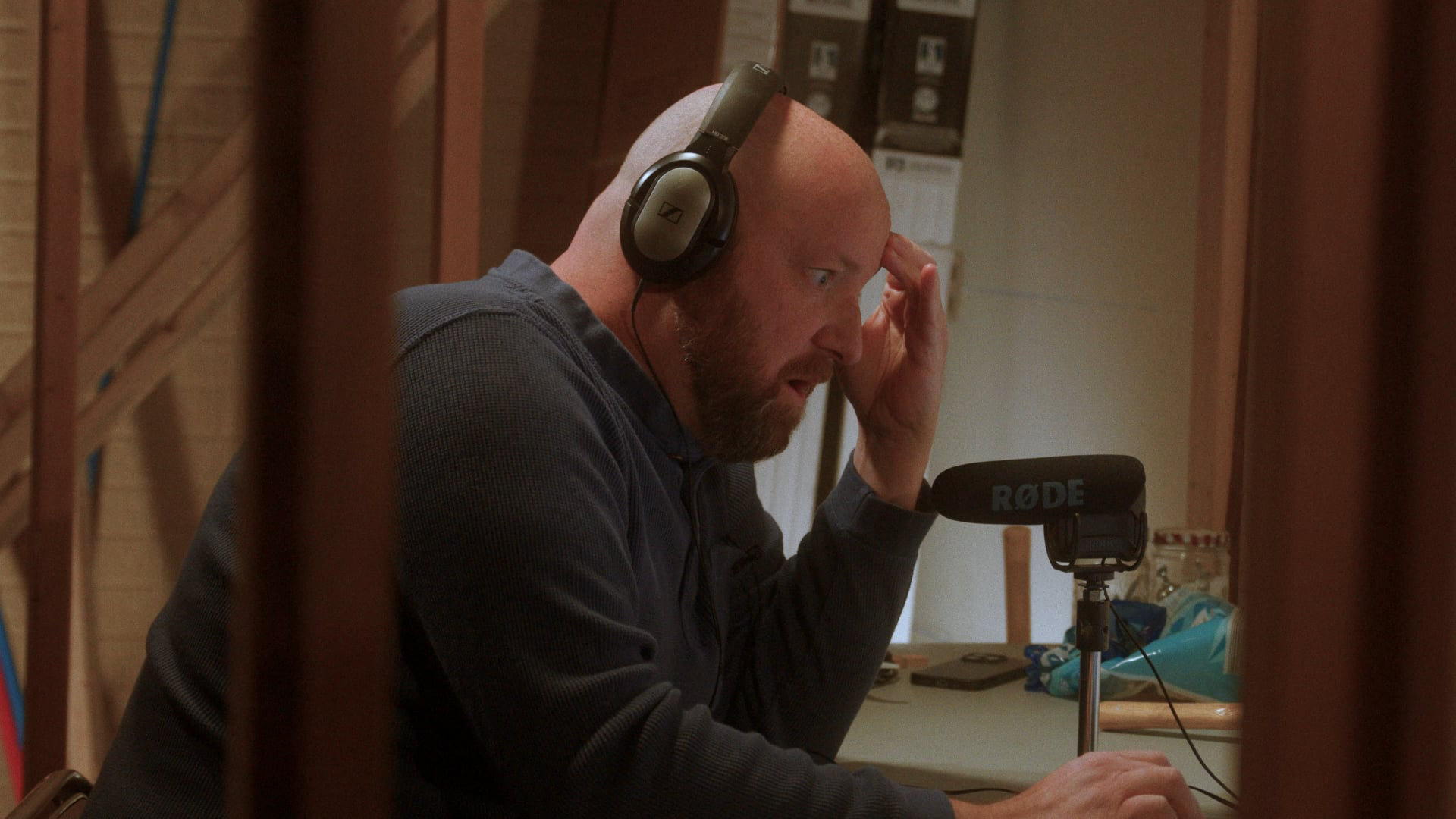
Former Days of Our Lives (1965-present) star Steve Blackwood has crafted a marvelously well-acted, uproarious, and rapid-fire twelve-minute short comedy that brilliantly satirizes the behind-the-scenes workings of soap stars with “Sweeps Week” (2025). Smartly penned and directed by co-star Blackwood, the project opens with its best scene: A two-minute parody filled with all the melodramatic plot points, exaggerated performances, and overblown dialogue that may come to one’s mind when pondering the negative stereotypes of daytime dramas. From herein, the creation employs a quick, concise yet enjoyable and stylishly low-tech commencing credits sequence. It is one that is much in line with the semi-mockumentary feel of the endeavor. 

This is followed up by the centerpiece of the affair. It’s an engaging and lively bit, based on Blackwood’s own experience, where the overly optimistic producer of the show, Steve Hyman (in a wonderful, scene-stealing portrayal from Blackwood), informs one of the long-standing actors in the program, Brock (in an excellent, appropriately grounded depiction from Brian J. McDonald), of all the ways the writers of the serial which he is featured in have been thinking of killing off his character. Despite Hyman’s attempts to put an upbeat spin on this explosive grenade of recent news that has just been casually handed to him, Brock knows this means that he will soon be without a job. The bulk of this extended segment revolves around Brock’s exploits to mentally deal with this unexpected loss of employment. This is without letting his disappointment and confusion about this sudden circumstance become broadcast too heavily upon his countenance. 

Punctuated by a concluding credits scene that is as focused, tonally consistent, and visually appealing as everything that has come beforehand, “Sweeps Week” ultimately offers just enough of a glimpse into Brock’s personal life to make him a sufficiently-rounded individual. The rest of the central figures of the fabrication are deliberately shadowy in this arena, which is true of many of the people we align with in a professional environment. Nonetheless, Blackwood’s leads endure as lively, memorable, and singular entities. This is as much a credit to the top-notch casting of the exercise, with Halle Curley providing a standout in this department with her remarkable representation of both Marla and her onscreen persona, Kellie, as it is the fine line of believability and lampoonery the undertaking delicately balances itself upon throughout the entirety of the runtime. 

Aside from the string of successfully executed gags in the enterprise, Blackwood’s latest venture is smoothly paced and efficiently edited by Christopher Bowden. It also often incorporates Blackwood and Bowden’s music in a fashion that cleverly calls to mind the classic soap opera format. The effort is also complimented by Jeffrey Buchbinder’s intimate yet eye-popping cinematography at every turn. Blackwood’s script is also skillfully constructed. It implements savagely funny yet knowing, credible situations and speech. The makeup, sound, production, and costume design are equally superb.

Though the themes explored in the arrangement are never more than what is expected of the material, “Sweeps Week” is a simple yet relatable story that is sharply observed and told. It utilizes its sparse cast and minimalistic sets in a manner that greatly enhances the private nature of the number. Human, compelling, and, as is the case with all the best humorous entertainments, never so preposterous that one cannot find their own footsteps in the unfolding narrative, Blackwood has erected another stalwart entry in his impressive filmography. It should prove cathartic to both actors and audiences alike.

TRIVIAL (2024) – Movie Review

by Andrew Buckner

Rating: **** out of *****.

A generally one-setting horror outing that plays like a trivia version of James Wan’s masterpiece, Saw (2004), Trivial (2024), from writer-director-co-star James L. Edwards, is a twisty, knife-sharp cinematic nightmare. The 103-minute effort captivates with its game show-style questions and answers, smooth pace, and remarkable gore and make-up effects. Edwards’ production also incorporates a mesmerizing, massively entertaining turn from Sasha Graham as the wonderfully unhinged host of the title-referenced program, Laurel Edmonds. The aforementioned contributions from Edwards, both behind of and in front of the camera, are just as proficient. 

Edwards’ portrayal of Dean Mathers is engrossing and credible. Moreover, his guidance of the affair is sturdy and stylish. Nonetheless, he never lets his prowess for imagery overwhelm the telling of his tale. Edwards’ screenplay is confidently erected. It’s also filled with believable dialogue and sufficient character focus and development. My only problem in this arena is that many of the backstories and hidden secrets of these central figures are slowly teased-out in a manner that has become routine for endeavors of this ilk.

Edwards chronicles five individuals who are made to partake in an online quiz show helmed by Edmonds. With no idea why they are there, the unwilling participants in the program soon find out that a violent death will be the punishment for losing against their opponent. Winners advance to the next round, where the same threat hangs over their heads if they do not triumph once more. As these players begin to unravel why they have been chosen to be a part of this fatal contest, they realize that fear isn’t the only elevated emotion that Trivial will bring to the surface.

Wisely told in a straightforward, effective fashion, Edwards’ consistently engaging plot starts out on a riveting note and rarely loses its momentum. It also concludes with a fittingly thrilling climax. Though the themes in Trivial aren’t particularly groundbreaking, they do mechanize well within the context they are presented within the parameters of the picture. Likewise, the surprises are often unexpected and finely delivered. Most notably, there is an impressive narrative curveball around the forty-five-minute mark that admirably seems to have taken cues from a certain major storyline shift in Alfred Hitchcock’s masterpiece, Psycho (1960).

The arrangement also benefits from gritty yet intimate cinematography from Gordon Cameron, which aptly matches the tone of the project. Further assisting matters is the tight, skillful editing from Larry Dubose. Additionally, the implementation of sound in the configuration is sharp and clear. The entire cast is also uniformly excellent. This is with Drew Fortier and Rick Jermain offering memorable depictions as Brian Sands and Randy Durden, respectively. 

Boosted by its frequent use of black and white, circa 1950’s game show footage, which heightens the bizarre and unnerving feel of the endeavor while brilliantly mirroring Edmonds’ fractured mindstate, Edwards has crafted a tense and immersive cinematic rollercoaster ride. The opening credit sequences are atmospheric and visually spectacular. Continually, the post-credit sequences, which run throughout the bulk of the equally enjoyable closing credits, help thoroughly flesh-out Edward’s account. It also adds new inquiries and levels of intrigue to the composition. 

Alongside being exceptionally well-made, Trivial is fascinating and frightening. It is also fully satisfying. With his latest opus, Edwards has gleaned a monumental ode to the power of independent filmmaking. It’s one of the best works of its type this year.

”Sundays with Dad” – (Short Film Review)

by Andrew Buckner

Rating: ***** out of *****.

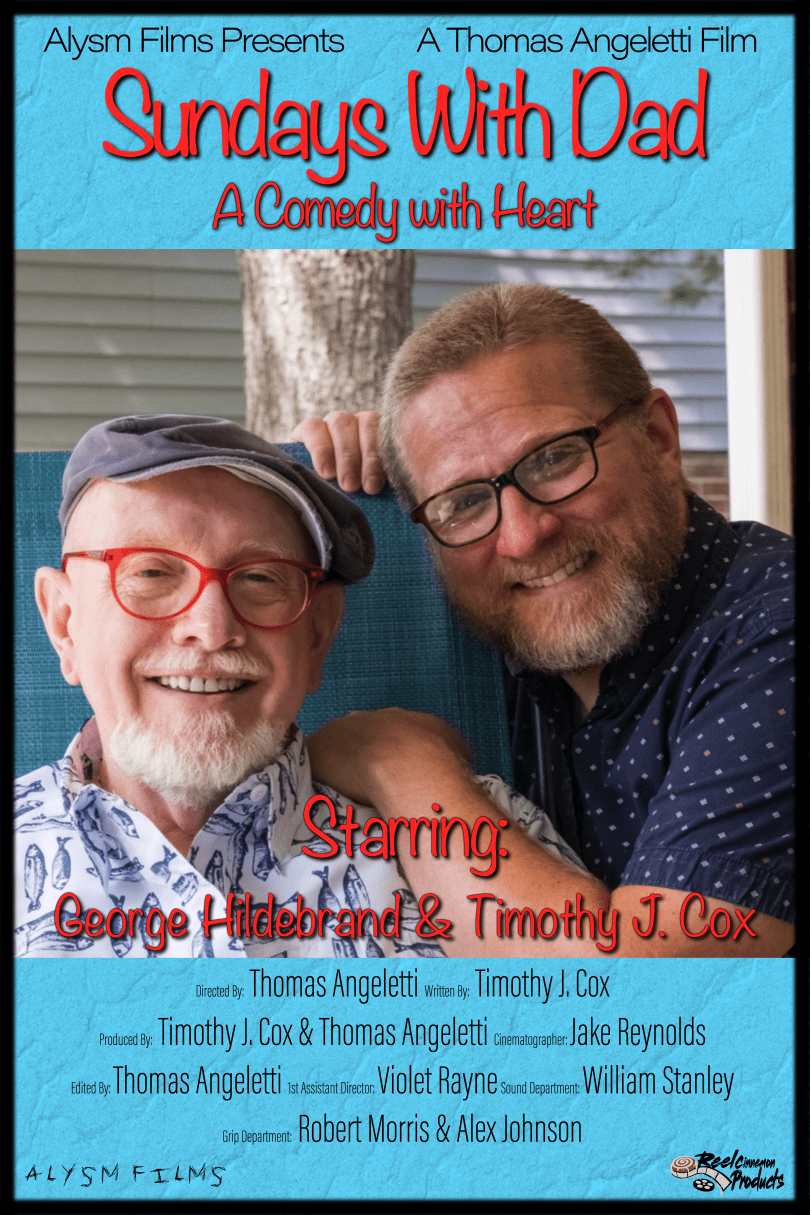
Propelled by earnest yet honest, organic, and relatable conversations destined to stir the souls of audiences of all ages and varieties, “Sundays with Dad” (2024), from writer and co-star Timothy J. Cox and director Thomas Angeletti, is easily summed up as My Dinner with Andre (1981) in a patio chair. Angeletti’s 22-minute production, like director Louis Malle’s latter-stated 110-minute triumph, are both entirely dialogue and character-driven works. Both projects also start out with casual banter. It is the type of chit-chat any passerby may encounter in almost any routine daily situation. Yet, there comes a gradual tipping point in both attempts where these discussions turn introspective, illuminating, and as emotionally frank for the main personas on the screen as they are for the viewers themselves. Such colloquial shifts give each exercise a striking undercurrent of further sincerity and quiet power. This is as universal themes, such as loneliness, companionship, and the results of change on the person in question, are tackled with the same innate successfulness both opuses executed in their earlier, more generalized deliberations. These exchanges, when combined with the similar focus in both pictures on credible leads, intimate, two-person casts, and stellar performances, make both entries uniquely timeless.

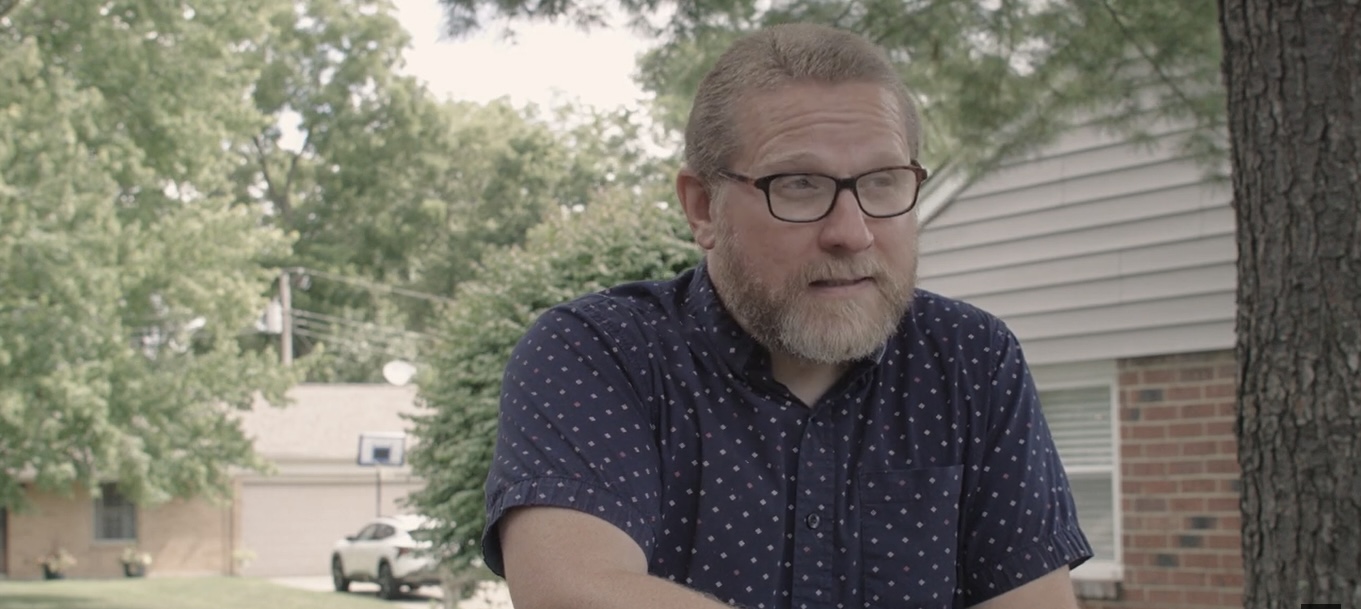
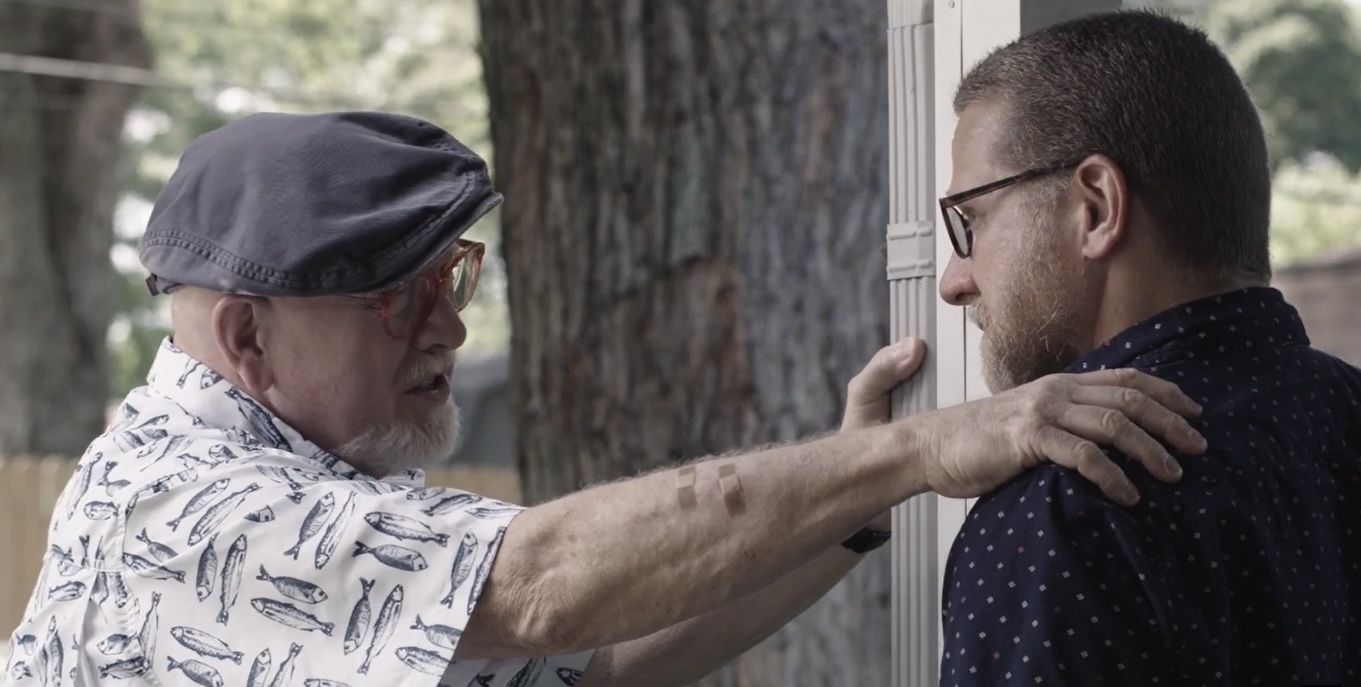
Angeletti’s endeavor concerns a widower named Ben (in a marvelous, ever-watchable turn from George R. Hildebrand). Still mourning the loss of his wife, Maggie, he finds himself looking forward to his weekly gatherings with his son, Jason (in an enactment by Timothy J. Cox that matches Hildebrand’s representation in its commanding and proficient nature), an actor whose recent material merits the funniest lines in the offering. Over time, Ben confesses to Jason that he has begun to seek out someone to cure his need for fellowship. When it is unveiled that this individual is a thirty-year-old prostitute, who is being solely utilized by Ben for the sense of camaraderie she brings and not for sexual reasons, Ben finds himself pulled into his father’s life in primarily awkward yet eventually evermore sentimentally significant ways.

Cox’s screenplay and Angeletti’s guidance of the effort are as smooth, spontaneous, and tender as both the narrative and the approach employed to convey the storyline demands. The skillfully straightforward, unshowy, and uncluttered handling of these attributes are a pitch-perfect counterpart for the overall atmosphere of the piece. These components just as deftly mirror the temperament of the heads of the tale themselves. The same can be said of the easygoing yet potent speech, pacing, and overall structure of the affair. In turn, Ben and Jason intrinsically emerge as fully developed personalities by the appropriately grounded conclusion of the undertaking.

Boosted by coolly vibrant yet down-to-earth cinematography from Jake Reynolds, who applies a veneer to the article that beautifully compliments both the tone and the intention of the composition, Angeletti’s latest opus is all-around technically superb. The editing by Angeletti is crisp and clean. The output is equally sharp in its implementation of William Stanley’s impressive sound design. Moreover, the incorporation of Stanley’s instrumental track, “Blue Skys” (2024), which is softly played throughout the venture, punctuates the breezy, dignified, thoughtful, and overall classic feel of the orchestration as a whole. This is also true of the impassioned talks revolving around music, memories, and mourning which bookend the enterprise. The simple yet stylish opening and closing credits also nicely reiterate these elements. 

Like Angeletti and Cox’s prior collaboration “After” (2023), “Sundays with Dad” is a deeply human glimpse into the consequences of loss. Both chronicles are understated dramatic masterclasses which dare see their subjects through an unfiltered lens of compassion and understanding. They also never contain a moment which rings false or unmerited. In turn, these two cinematic creations prove, like My Dinner with Andre, that often the greatest special effects a fabrication of moving art can contain are a good heart and same said interchanges.

Charming, compelling, and endearingly low-key, “Sundays with Dad” is one of the best films of the year.

”Distant Memories (2024)” – (Short Film Review)

by Andrew Buckner

Rating: ***** out of *****.

As someone who lost two grandparents to Alzheimer’s Disease at an early age, “Distant Memories” (2024), from writer-director Chris Esper, is undeniably effective. Outside of this personal experience, a large part of the inherent power found in Esper’s 10-minute short film lies in the fact that it gently, respectfully utilizes accessible symbolism. For example, the briefly glimpsed hourglass that is tapped and inspected in the opening moments as if it contains all of the answers to the mysteries of existence. Moreover, the mental representation which is the room where the entirety of the venture takes place. These visual emblems are incorporated in such a way that even those who haven’t been personally touched by the aforementioned ailment will find themselves swept up in emotion long before the climax of the undertaking reaches viewers‘ eyes. 

The broadly relatable flashbacks in Esper’s latest project, which range from a marriage proposal to the first signs of familial forgetfulness, as well as the deeply human body language displayed when reliving such instances by the protagonist of the account, Anna (in a quietly heart-wrenching and exceptionally believable turn from Sissy O’Hara), only makes this effortless relatability more evident. Esper’s compassionate, character-driven, smoothly paced, and never melodramatic or maudlin script, stylish at times but smartly straightforward direction, and Nelson Reis’ colorful but never overly showy cinematography capture a somber yet uplifting tone of reminiscence. It is one which is established in the inaugural seconds and soulfully reiterated until the closure of the exercise. The sheer strength of these latter-stated qualities only enhance the former attributes. Consequently, everything on the screen is made evermore tonally appropriate and resonant. 

Returning to the ever-stalwart themes of past recollections, life itself, and our impending, eventual fate, often through the lens of a home movie, that made Esper’s “Yesteryear” (2020) such a masterpiece, “Distant Memories” chronicles Anna, a victim of Alzheimer’s. The audience meets her as she searches a basement-like chamber. It is filled with objects and recordings illustrative of her time on Earth. The recent pain of failing to complete basic tasks, a telltale sign of the chronic condition which is now overtaking her, and the blissful nostalgia of her being beforehand seamlessly intertwine. In so doing, confusion, joy, ecstasy, and the inevitable sorrow we all feel as we look back on our lives greet her. This is as she travels through the familiar and foreign landscapes of both the mind and the seemingly new area immediately before her. 

This narrative foundation works primarily because Esper injects his saga with the earnest simplicity it deserves. Esper weaves artistic touches into the plot. Nonetheless, it is done sparingly enough to give the orchestration an even stronger undercurrent of grace. The minimalistic use of dialogue, top-notch performances from a relatively small cast (including Christie Devine, who is terrific as Noelle, and an equally superb Alyson Muzila as Middle-Aged Anna), deft use of both end credit sequences and well-acquainted musical cues, and the scant runtime of the configuration heightens both the intense credibility and dream-like nature of the offering.

Flawlessly edited by Esper and incorporating same said sound and costume design from Jay Sheehan and Grace McDade Babikian respectively, “Distant Memories” commences and concludes on notes that are perfect bookends for the material. Empathetic, enigmatic, ardent, and engaging, Esper has crafted a marvelous example of cinematic art. It is one which is as memorable for its indelible imagery as it is for its eternally relevant commentary on the human condition. Reportedly made for $6,000, this is another spellbinding credit to both Esper and his production company, Stories in Motion, as well as On Edge Productions and Del Negro Entertainment. It’s also the best picture of its type this year.

Andrew Buckner’s 20 Favorite Albums/ EPs of 2024 (So Far)

By Andrew Buckner

*Please note: The albums and EPs included this list are done so based on an original release date of 2024.

20. Remember Me Like This

by Jonezen

19. Blue Lips

by Schoolboy Q

18. Black & Whites

by Big Hit, Hit-Boy, The Alchemist

17. Only God Was Above Us

by Vampire Weekend

16. Ratt Poison (EP)

by Bizarre

15. Trigger Treat (EP) 

by Bizarre, Dope D.O.D.

14. Ghostbusters: Frozen Empire (Original Soundtrack)

by Dario Marianelli

13. YHWH is Love

by Jahari Massamba Unit, Karriem Riggins, Madlib 

12. Saviors

by Green Day

11. Class of Strange Music (Cosm)

by Tech N9ne Collabos

10. Everybody Can’t Go

by Benny the Butcher

9. War Story

by Yelawolf

8. Heads I Win, Tails You Lose

by The Alchemist, Oh No, Gangrene

7. Please Don’t Cry

by Rapsody

6. HGG3: Art Peace

by Bizarre, Foul Mouth

5. Richmond Hill

by Masta Ace, Marco Polo

4. Tapestry

By KXNG Crooked, Joell Ortiz

3. Set the Tone (Guns & Roses)

by Ghostface Killah

2. The Auditorium, Vol. 1

by Common, Pete Rock

1. The Death of Slim Shady (Coup De Grace)

by Eminem

Arena Wars – (Movie Review)

By Andrew Buckner

Rating: ***½ out of *****.

Arena Wars (2024), from writer and director Brandon Slagle, is a scrappy, often entertaining variation on such dystopian science-fiction/action films as Paul Michael Glaser’s adaptation of Richard Bachman’s same titled 1982 novel, The Running Man (1987), and Joe D’Amato’s cult classic Endgame (1983). The latest cinematic exercise from Slagle also boasts a brutal tone that is successfully executed throughout the 95-minute project. It also incorporates crisp, all-around beautiful cinematography from frequent Mahal Empire Productions collaborator Michael Su. These elements, along with a plethora of one-on-one fight sequences that are quick, credible, grounded, and thrilling, continually lift the film up when the overfamiliarity of the material threatens to sink the composition. These conventions extend to the characters, their backstories and arcs, the dialogue, themes including corporate corruption and media greed, and, most notably, the plot, and the structure of the piece itself. Additionally, though the pace of the endeavor is smooth, the occasional slow-moving section creeps into the proceedings. This is especially true of the second and third acts of the undertaking. Nonetheless, Slagle has crafted an undemanding, pleasantly straightforward, ultimately satisfying picture that is perfectly suited for late-night viewing.

Set in 2045, the narrative revolves around a sporting event entitled Arena Wars. Taking place over seven rooms, the televised competition finds convicted death row criminals fighting for their freedom against seven of the most monstrous murderers in the country. Despite the high ratings of the program, audiences are growing tired of the violent spectacle. Sensing that viewers need someone to root for to make the show more intriguing, an innocent, undercover man and skilled marine, Luke Bender (John Wells, in a commanding portrayal that effortlessly exerts a gruff aura), is offered a chance to lead the inmates through the game. Upon accepting the proposal, Bender must guide through myriad trust issues within his group as well as the vengeful fists of his opponents in the name of liberation. 

Though Michael Madsen and Eric Roberts (as Arena Wars co-host Samson and Admiral Jordan, respectively) provide workmanlike performances, their easily recognizable and likable presence erects welcome strong spots throughout the creation. Other highlights in this department can be found in Sheri Davis’ lively depiction of Arena Wars’ announcer, Holly Daze, Kylie Fulmer’s gripping turn as Billie, and Kevin Hager’s same said representation of Belladonna. Robert Donovan is marvelous as Samson’s co-hosting partner, Moses. Maria Bova is just as good as the off-the-wall, ever-watchable Cutie Pie. Robert LaSardo is tense and compelling as Perez.

Outside of the generally excellent enactments found in the design, the music from Scott Glasgow is appropriately rich, dramatic, and striking. Furthermore, the effects, particularly the plentiful gory bits, are memorable and impressive. The editing from Wayne Kent and costume design by Joseph Goratowski and Mercedes Peterson (who is outstanding as Domino), are extraordinary. The proficient sound utilized in the exertion helps Slagle’s outing roar clearly to life throughout every frame. The sets, makeup, and stunts are also deftly implemented.

Released on June 25th, 2024 on digital platforms through Gravitas Ventures, Arena Wars is an ambitious yet intimate example of the can-do spirit of independent moviemaking. The direction from Slagle is sharp. It is also injected with just the right amount of style. Though the screenplay from Slagle isn’t as sturdy, the attempt is filled with engrossingly wild, larger than life villains. It also contains a protagonist who is more authentic because his flaws aren’t hidden from the screen. Ultimately, the fabrication is a finely honed jolt of adrenaline. Like the hero of this tale, audiences will find it easy to cheer for this feature.   

One Bullet to Bedlam (2023) – Movie Review

By Andrew Buckner

Rating: ***** out of *****.

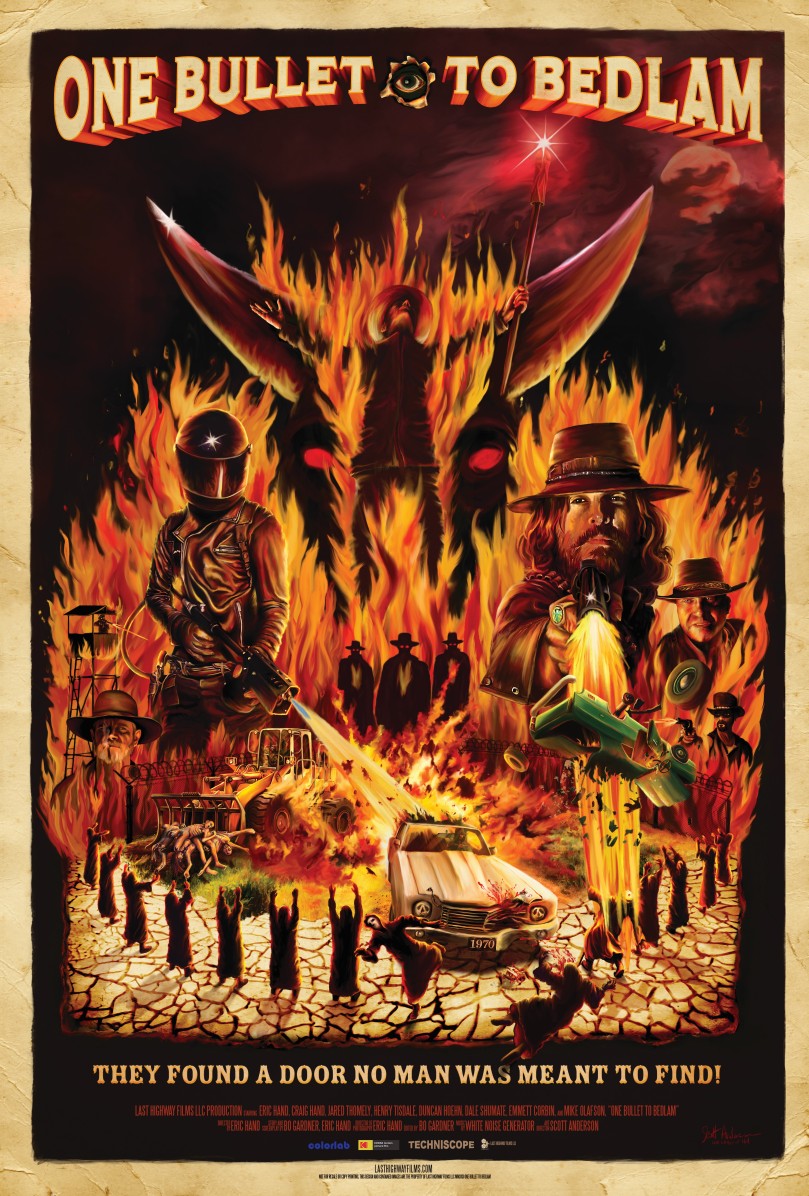
One Bullet to Bedlam (2023), the 93-minute sophomore feature from director, co-writer, and star Eric Hand, captures the most endearing qualities of 1960’s Spaghetti Westerns, particularly the era-appropriate contributions of film maestro Sergio Leone, as deftly and captivatingly as Hand’s prior picture, The Archivist (2021). Both movies are awe-inspiring in their profoundly cinematic, senses-commanding music from White Noise Generator, equally attention-garnering sound from Studio 70, and same said cinematography, which utilizes the Super Techniscope 35mm camera format, from Hand. Continually, these projects incorporate action scenes that are grounded and credible. They are also intimate yet epic in feel. This can also be said of both the well-chosen sets for this venture and the excursion itself. These characteristics, along with their classic cool, rapid clip, and ability to become a part of and not overwhelm the account, like so many modern genre outings are apt to do, also beautifully mirror the filmic output of the aforementioned decades.  

As was the case with The Archivist, One Bullet to Bedlam follows Calder Benson (once again portrayed with such skill and gruff enigma that one can’t help but think of Clint Eastwood as The Man with No Name in Leone’s Dollars trilogy, which ran from 1964-1966). This time around, Benson, one of the members of the outlaw group The Six, finds himself separating from said sextet after they burglarize an age-old map and find themselves hunted by a villainous clique dubbed The Regulators. This is after each member of The Six takes a piece of the map for themselves. In order to make slaughtering everyone in The Six more difficult for The Regulators, the collective agree to split up and meet again in eighteen months for the Blood Moon. During this stretch, they will all individually search for a key that is rumored to be hidden in the surrounding wasteland. This key is meant to render asunder an otherwise unopenable door that is guarded by The Regulators. As self-serving acts threaten to tear apart The Six, an ancient power torments them in all new ways.

This terrific narrative template is made even more promising by the often brief, mysterious, poetic dialogue Hand and fellow co-screenwriter Bo Gardner inject into the material. Such a detail, while also another Leone-like alignment, fits the cryptic tone of the storytelling. Gardner and Hand also offer a time-tested structure and a brisk pace that mechanizes just as masterfully. David Noel’s sharp editing, the impressive visual effects from Studio 70, and a stunning title sequence that is filled with breathtaking art from Scott Anderson make the proceedings even more herculean. The tale-told-around-the-campfire tone of the opening five minutes of the effort as well as the manner in which the ending satisfactorily closes this chapter of Benson’s ongoing saga while quietly promising what is to come is just as admirable.

The performances are also noteworthy. For example, Emmett Corbin is superb as Emmett. Craig Hand is just as gripping as the evil cult figure Tate. Mike Olafson is marvelous as Cannon. Jared Williams Thomley is a standout as Whitey Carter. Lauran Wilson, who also heads the great work done by the makeup department in this presentation, is wickedly persuasive as Goat Lord. 

Shot in Sopchoppy, Florida, U.S.A. for an estimated budget of $68,000, One Bullet to Bedlam is a massively entertaining retro western throwback. It’s lean and efficient in a way that few related attempts are nowadays. This is without a filler scene in sight. Still, the themes of the endeavor are standard fare. There isn’t any subject in One Bullet to Bedlam that comes close to the Fahrenheit 451 (1953) by Ray Bradbury-like insights into book burning that arrived in Hand’s previous exercise, The Archivist. Nonetheless, Hand’s latest production is every bit as exciting, visceral, engrossing, and tense as its predecessor. Also, like The Archivist was upon its release, One Bullet to Bedlam is one of the best movies of the year. It continues to establish Hand as a new master of a wonderfully old-fashioned form.