The Blackcoat’s Daughter (2017) is this year’s answer to The Witch (2016). Quietly chill-inducing, deliberately paced and unsettling, writer-director Oz Perkins crafts every shot in a manner that is meant to hypnotize and evoke fear with maximum impact. This is elevated by the continuously brilliant use of Elvis Perkins’ masterful score. Some may find this tale of two girls battling evil in a boarding school an empty case of style over substance. I, for one, found it riveting. Recommended! 94 minutes. (Unrated).
THE BYE BYE MAN
**1/2 out of *****.
The Bye Bye Man (2017) is generic in narrative and conception and never tops its opening five minutes. It also implements nearly every supernatural slasher cliche imaginable into its practically bloodless, 96 minute runtime. The finale is especially underwhelming. But, this variation on features like Candyman (1992) and Urban Legend (1998) is still a fair amount of fun. Though the performances are merely adequate, the decidedly retro vibe that vaguely courses throughout, viewed most readily in James Kniest’s well-fashioned cinematography, is also beneficial. (PG-13).
HIDDEN FIGURES
****1/2 out of *****.
Hidden Figures (2016), a Best Picture nominee at The 88th Academy Awards, is wonderful; endlessly entertaining, quietly moving and terrifically paced. This is even if the feature refuses to waver from the standard structure of similar big-budget, A-list Hollywood biographies. Still, director Theodore Melfi, who co- scripted with Allison Schroeder, keeps this adaptation of Mary Lee Shetterfly’s same titled historical tome crackling. This is with a charmingly successful blend of the upbeat, the emotive and the humorous. Correspondingly, Taraji P. Henson is exceptional as our heroine, Katherine G. Johnson. The same can be said for Kevin Costner’s representation of Al Harrison. In turn, this true story of a group of barrier-breaking female Mathematicians in Nasa soars. Definitely recommended. (PG). 127 minutes.
Rogue One: A Star Wars Story
****1/2 out of *****.
Rogue One: A Star Wars Story (2016) is truly exhilarating escapist entertainment. Likewise, the myriad comparisons to director Irvin Kershner’s The Empire Strikes Back (1980) are certainly validated. This is evident in both the largely no nonsense tone and striking overall quality of the film. Additionally, Gareth Edwards’ direction and Michael Giacchino’s music match one another in pulse-pounding grandiosity. The result is epic in every sense of the word. This prequel to the original Star Wars (1977), which sports astonishing effects as well as a superb lead performance from Felicity Jones as Jyn Erso, could well be one of the best entries in this wildly popular series to date. (PG-13). 133 minutes and 55 seconds.
Hidden Figures, The Bye Bye Man and Rogue One: A Star Wars Story are available now on DVD, Blu-ray and digital.
The Blackcoat’s Daughter can be seen in select theaters and on digital.
Child Eater (2016) is a terrific, no-holds-barred creature feature that will reaffirm your youthful fear of the dark. Backed by Erlingur Thoroddsen’s masterfully paced writing and mood-laced direction, the plot of this Icelandic-American photoplay, an adaptation of Thoroddsen’s short film from 2012 of the same name, centers around Helen Connolly (in a brilliant depiction from Cait Bliss). She has been handed the job of babysitting Lucas Parker (in a wonderful enactment from Colin Critchley). But, soon this simple task turns into a nightmare. This is as Connolly finds out that Parker’s closet harbors an evil mythological entity. He is one who has an affinity for gouging out eyeballs as well as devouring the young.
Thoroddsen turns what sounds like a conventional genre storyline into a refreshingly unique, intense and beautifully made eighty-two minute presentation. The performances, especially Jason Martin as Robert Bowery and James Wilcox as Sheriff Connolly, are exceptional all around. John Wakayama-Carey’s cinematography is lush and ominous. Einar Sv. Tryggvason’s music is as haunting as the scenes they punctuate. Jonty Pressinger’s visual effects are marvelous. Best of all, Thoroddsen keeps the beast at the heart of this tale in the shadows for most of the runtime. This is with only the briefest glimpses of the fiend dominating the affair. It is a time-tested method for these types of motion pictures. With Thoroddsen’s full-length debut, it is again proven wildly effective. The same sentiment can be attached to this Wheelhouse Creative Production Company release as a whole. Thoroddsen starts off on an atmospherically nail-biting angle. From herein, he only accelerates the suspense. This is especially punctuated by the many imaginative kill scenes herein. Such transpires until the startlingly memorable climax.
(Unrated). Contains graphic violence.
Child Eater is currently screening in film festivals. It can also be seen on video on demand.
The Void
****1/2 out of *****.
Endlessly atmospheric, taut and uncompromisingly well-made, The Void (2016), from the writing and directing team of Jeremy Gillespie and Steven Kostanski, will assuredly go down as one of the year’s best horror films. Gillespie and Kostanski evoke a surreal, visceral experience. It is one that owes as much to the blood-soaked genre efforts of the 1980’s as it does the American author H.P. Lovecraft (1890-1937). The jaw-dropping special effects from Stefano Beninati, as well as the dozen individuals who constitute the visual department of this arena, carry on both of these attributes wonderfully. Samy Inayeh’s cinematography, Aaron Poole’s lead performance as Daniel Carter and the hypnotic soundtrack make this tale all the more impactful. The plot itself, which involves a group of hooded figures gathering around a hospital after the arrival of a patient signifies increasing violence in the building, is undeniably intriguing. It is made all the more so in the breakneck, yet confident and novel-like, manner in which Gillespie and Kostanski allow the unpredictable events of their chronicle to unfold. The influences from John Carpenter’s The Thing (1982) and the work of George Romero certainly add to the nostalgia-laden fun of the piece. This is even more amplified as the fantastically gothic final fifteen minutes definitely resonate a heavy Clive Barker feel. Though the characters themselves are a bit archetypal, the rest of this ninety-minute endeavor is so strong that you will have no problem looking past such comparatively minor faults.
(Unrated). Contains graphic violence and adult language.
Production Companies: Cave Painting Pictures and Jo Bro Productions Film Finance.
The Void is showing in select theaters and on video on demand.
Irish writer-director Ken Wardrop’s seventy-seven-minute documentary, Mom and Me (2015), is a sweet, poignant and frequently amusing love letter to the unbreakable mother-son bond. Told in a deceptively simple manner, which benefits the general demeanor of the production splendidly, Wardrop centers his action around a local radio broadcast in Oklahoma. The host of said program is the charming and earnest Joe Cristiano. As the photoplay commences, we soon learn he is doing a Mother’s Day special. Cristiano takes this as a chance to invite listeners to call and discuss their relationships with those who are celebrated on this holiday. From herein, Wardrop fashions a varied, complex, gripping and undoubtedly impactful portrait of the subject matter. This is as we meet the callers and hear their tales. Wardrop also opens the door to see even more intimately into the lives of these individuals. He does this by allowing viewers a chance to personally witness scenes between these aforesaid familial counterparts unfold.
Though every narrative is strikingly different, they are all uniquely effective. In turn, Wardrop takes us through the emotional ringer with gentle, quiet sincerity. This is especially evident as this efficient, tightly paced and beautifully fashioned chronicle alternates between themes of regret, drug addiction, imprisonment and Alzheimer’s Disease. These more wrenching episodes match the generally upbeat air of the effort masterfully. The concluding sequences are especially harrowing. They balance all the prior beats of the endeavor spectacularly well. Consequently, they bring every individual yarn to a satisfying conclusion. John E.R. Hardy and Benjamin Talbott make this arrangement all the more immersive with their phenomenal musical contributions. This can also be said of the editing from Mark Bankhead.
The result is consistently ardent and brilliant; one of the best films of the year. This is a testament to true masculinity. It is one which will undoubtedly prove relatable to audiences of all ages and backgrounds. I whole-heartedly recommend you check out Wardrop’s latest, which is being distributed through Uncork’d Entertainment and Visit Films, when it is released theatrically and on video on demand May 5th, 2017.
Production Companies: Boom Pictures and Venom Films.
Since movies about the lives of fellow poets are such a rarity nowadays, it is my honor to recommend two terrific, recently released films that fall into that category. These are the bold, beautiful and purely cinematic biography Neruda (2016) and the hilariously droll, exceptionally acted, cleverly penned and quietly emotive, Paterson (2016). The last twenty minutes of this later stated production are especially impactful. Though their tones and greatest qualities are almost wholly dissimilar, I’d rate both ****1/2 out of *****.
Neruda stars Gael Garcia Barnal and Luis Gnecco. It was directed by Pablo Larrain (who was the behind the lens chairman for another feature from 2016: the Natalie Portman led mixed bag Jackie.) The screenplay was by Guillermo Calderon.
Runtime: 107 minutes and fifty-six seconds.
(R). Contains nudity and some violence.
Paterson stars Adam Driver and Golshifteh Farahani. It was written and directed by Jim Jarmusch.
(R). Contains some adult language and themes.
Runtime: 118 minutes and 14 seconds.
Both photoplays are available on video on demand and on Blu-ray and DVD.
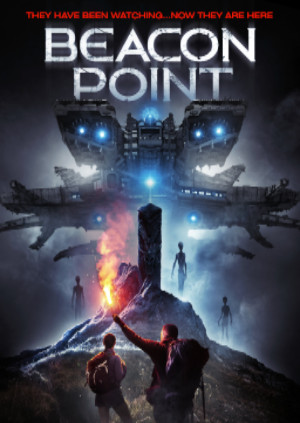
Beacon Point (2016), the debut feature from co-writer and director Eric Blue, is a subtle, intelligent and enigmatic alien invasion tale. Yet, there is a human center, reflected in the familial motivations ultimately unveiled in the late stretches, which becomes the most masterful element in the cinematic arsenal of this eighty-two-and a half minute long production. Such a component draws an undeniable comparison to Robert Zemeckis’ brilliant adaptation of Carl Sagan’s same said 1985 novel, Contact (1997). There is also an undeniable alignment to be found in these aforesaid traits with Denis Villeneuve’s exceptional big-screen treatment of Ted Chiang’s fantastic short literary piece, “Story of Your Life” (1988), Arrival (2016). Additionally, the calculated, slow-burn method in which the events unfold, as well as the general setting itself, calls to mind Daniel Myrick and Eduardo Sanchez’s ground-breaking found footage exertion, The Blair Witch Project (1999). Adding to this varied pot of movie-going ingredients is the inclusion of a brief opening, that runs approximately two minutes, which appears to mimic the beefed up, action-oriented nature of John McTiernan’s Predator (1987). Though this commencing bit feels out of place with the cerebral and dramatic turns that take place throughout the rest of the attempt, it is an intriguing, if all too familiar, way to lure audiences into the narrative at hand. The next few arrangements afterward, oddly enough, seem as if they are lifted from another entirely different category of chronicle: the buoyant comedy. Such creates a strange confection of genre beats. Yet, Blue, blends them into the arc seamlessly and sharply. This makes the overall result of the affair additionally admirable and unique.
Blue tells the account of a realtor, Zoe (in an unflinching, well-rounded and always captivating portrayal from Rae Oliver a.k.a. Rachel Marie Lewis). In the previously addressed early comic stages of the photoplay, we see her deliberately trying to get her potential buyers out of the house as quick as possible. This, we learn, is so that she can start a ten-day hiking trip through the Appalachian Trail. Yet, almost as soon as she departs on this journey, which promises an escape from the tribulations and stresses of the laboring world, she finds herself plagued by surreal nightmares. These are horrific visions she silently believes to be true. As those around her start to get sick and act strange, and sights lapse unexpectedly into her brain from her childhood, she soon learns that there is an extraterrestrial menace that has chosen the group. From herein, viewers are treated to a perfectly symmetrical balance of finely tuned and staged horror arrangements and personal drama. This is as we follow Zoe in her attempts to reveal why she has been targeted in this fashion.
The plot is both bold and amusing. It is made increasingly gripping via Blue’s taut, visceral direction. The highlights of the fabrication, a terrifying flashback segment spied at the midway mark and the appropriately cryptic and beautifully made climax, are definitive proof of Blue’s abilities in this arena. Yet, the script Blue penned with Traci Carroll is just as solid. It is smartly, meticulously paced. Correspondingly, it is filled with credibly authored and delivered dialogue. Even if the twists are a mixed bag, with about half being expected and the rest a genuine surprise, this respective item is another pleasant component of the photoplay. It starts early on and is administered frequently throughout the runtime. The constant character focus is just as admirable. Likewise, the spectacular performances all around only augment this factor. Jon Briddell is excellent in his turn as the often-hostile group spearhead, Drake Jacobs. Eric Goins’ enactment of the overworked, but still frequently comical, Dan, is magnificent. Jason Burkey gives a stellar depiction of Brian. He quickly summons a flirtatious rapport with Zoe. RJ Shearer as Cheese is also wonderful in his particular representation. Furthermore, Jason MacDonald as Zoe’s Dad, Paisley Scott as Young Zoe, Jayson Warner Smith as Hunter and Randall Taylor as Phil are immensely proficient in their secondary roles.
Also, assisting matters is Kevin Riepl’s gently melodic, and ear-pleasing, musical score. Such punctuates every movement of the picture splendidly. The cinematography from Jim McKinney is illustrious and always striking. Scott Salamon’s editing is fluent. The make-up, costume, camera and sound department institute a terrific contribution. Deron Hoffmeyer’s visual effects are similarly impressive. Best of all, Blue’s flick mechanizes them in a manner that has proven most successful and effective with anecdotes of this ilk: only sparingly. Such makes this Georgia and North Carolina recorded endeavor refreshing and noteworthy. It even adds a welcome, old-fashioned touch to the proceedings. Bystanders only get the briefest glimpses of the creatively designed otherworldly entities that dominate the title area. This is with our fullest view transpires at the thirty-four minute mark to great consequence. But, what we see is certainly enough to enduringly haunt and intrigue us.
In this category, as well as many others, Blue succeeds at getting our psyches to ponder what we have seen. Yet, he doesn’t use the creature from outer space scenario purely for fear (as is the case of far too many similar efforts nowadays). There is a sense of awe; a yearning to understand what is occurring that is ever-present. This decision immerses us in Zoe’s attempts to unravel this ancient secret that has been thrust her way even more. Consequently, it makes us care. This is while giving us something to think about. Such makes Beacon Point, which will be released on video on demand and DVD through Uncork’d Entertainment on May 2nd , 2017, tower above its predecessors. In turn, Blue has crafted an illuminating and electrifying experience. This is a must-see for fanatics of thought-provoking science-fiction and horror alike.
(Unrated) Contains violence, adult themes and language.
The Facebook page for the project can be found here.
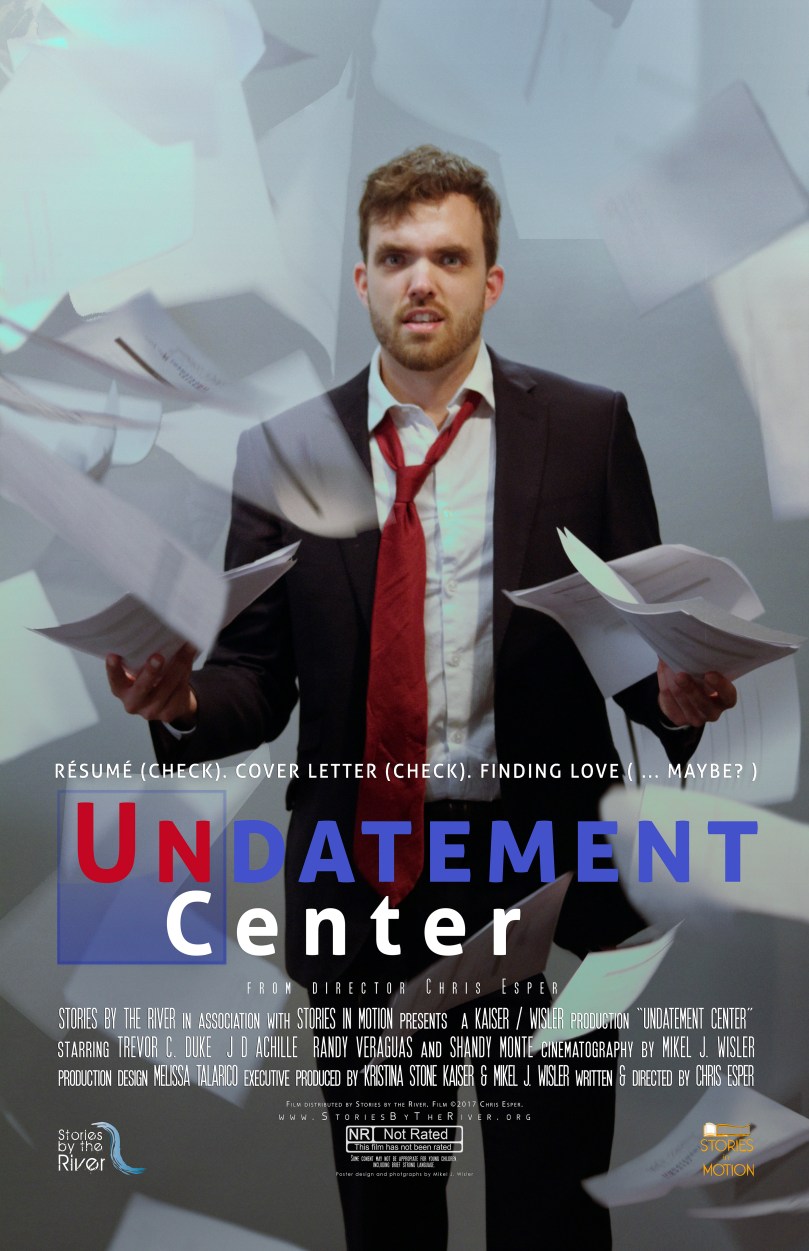
“Undatement Center” (2017), a nine-minute short film from writer-director Chris Esper, is effortlessly charming, consistently humorous and always likable. It carries on the same seamless marriage of upbeat and hopelessly romantic tones that made his prior inventions Please Punish Me (2015) and The Deja Vuers (2016) such an incredible success. This Stories by the River and Stories in Motion co-production is also a fantastic showcase of Esper’s ability, which has been ever-present throughout his career, to project fully fleshed-out, relatable characters. Such transpires in a heartwarming and enchanting, yet undeniably human, manner. This detail is made increasingly admirable with the incorporation of a pace that is as breakneck as view of the world of dating that is the focal point of Esper’s endeavor. Yet, none of the sequences, even the laughter-fueled montage that takes over the mid-section, feels rushed or superficial. There is a breezy demeanor to the proceedings that even makes the most familiar beats of the plot triumphantly sing. This is apparent in the relationship that forms between our twenty-six-year old lead, Jack (in a phenomenal turn from Trevor Duke), who turns to the title corporation in hopes of finding love after a twelve-year hiatus, and Lindsey (in a depiction by J.D. Achille that is consistently marvelous, engaging and authentic). The opening and concluding notes are also evidence of Esper’s mastery in this aforesaid department. Yet, these segments ring with a sweetness, an earnest simplicity and lack of pretension that is genuine and captivating. Despite its often-modern attitude (reflected most readily in the intriguing plot itself), the project feels wonderfully old-fashioned. Such only increases its amiability. Randy Veraguas’ depiction of the quirky desk clerk, Shelley, as well as Shandy Monte’s enactment of the similarly positioned Jennifer enhance the agreeable nature of the picture. Christie Devine is also stalwart in her quick role as Annie. Acei Martin, in a brief part dubbed “Urine Sample Woman”, is also stellar. When combined with the masterful moviemaking and deftly constructed literary contributions Esper incites herein, with his ear for often clever dialogue being another high-quality trait, it’s becomes immediately evident that the Secaucus, New Jersey born maestro has delivered another all-around winner.
This Quincy, Massachusetts recorded endeavor is also graced with illustrious cinematography from Mikel J. Wisler. Such a veneer reiterates the sunny atmosphere of the piece fantastically. Wisler’s seamless and sharp editing fares just as well. Also, assisting matters is Steven-Lanning Cafaro’s cheery and deeply cinematic music. Dominic Kaiser’s sound issuance is spectacular. J.L. Major and Rich Simpson’s assistant camera work is equally proficient.
Esper intends to comment on how intimate associations have become more akin to a business transaction, a one-sided meeting that is based on quick facts and reams of paper, than a personal experience. The conclusion, which hints at the latter method as the more beneficial, is evidence of this bitingly brilliant, but undeniably true, observation. In less capable hands, this is a storyline akin to this could’ve become a bitter, somber experience. But, Esper keeps the jokes cracking and the smiles brimming on our faces throughout. This is without ever diminishing the impact of his thesis statement. Such is, like the totality of “Undatement Center” itself, a tremendous accomplishment. Esper’s latest, an extension of many of the themes present in his earlier photoplays, is an all-out confirmation of his continually broadening talent. It is also a testament to his exceptional skill as a photographic craftsman. The result is side-splitting and deeply transcendent; an endlessly entertaining, quietly emotive must-see!
Premiered on April 1st, 2017.
(Unrated). Contains brief language and some sexual humor.
Stories in Motion’s page for the film can be found here.
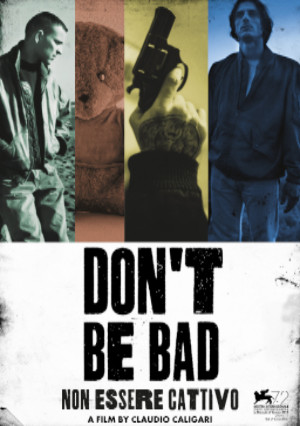
Don’t Be Bad (2015), the final flick from acclaimed Italian co-writer-director Claudio Caligari, continuously calls to mind the works of legendary poet, novelist, essayist, political activist and fellow moviemaker Pier Paolo Pasolini. This is most visible in Caligari’s deft ability to muster intrigue through his deliberately aimless anecdotal sensibilities. This is inherent in both the pace and general events of the respectable, if wholly familiar, script Caligari (who also formulated the storyline) co-penned with Giordano Meacci and Francesca Serafini. Such a factor is a trait most accessibly glimpsed in Pasolini’s ground-breaking, Franco Citti starring debut picture, Accattone (1961). It is also noticeable in Pasolini’s earlier novels, Boys of Life (1955) and A Violent Life (1959). This is the tome which Accattone is rumored to be partially based upon. Besides, the character-oriented essence that bridges these earlier stated creations, there is also an emphasis on our leads being thieves that is as much a part of Accattone and Pasolini’s brilliant literary fiction, A Street Life (1955), as it is in Caligari’s Toxic Love (1983). Interestingly, the later declared construction is referenced early on in Caligari’s seventh feature, Don’t Be Bad. The exception is that Pasolini was known to fixate on pimps and prostitutes in these prior addressed classics, the central figures of Caligari’s landscape were frequently an assortment of partially misunderstood drug dealers. The hedonistic individuals unveiled in these masterpieces were frequently those who, in hindsight, yearned for a better existence. This is despite the underlying tragedy that recurrently taunted them.
There is also a detached, clinical approach, that burns with an emotion that is present but rarely expressed, to both of Pasolini’s mediums. It is much in line with Caligari’s overall narrative tactics in Don’t Be Bad. Such adds an increasingly authentic, almost ruggedly documentary-like, veneer to the proceedings. The gritty cinematography from Maurizio Calvesi, as well as the everyday, straight-forward, though intermittently comic, dialogue, further heighten this impression. Thus, when a genuinely heartfelt illustration is conveyed it makes the scenes that they occur in, such as one in the aforesaid opus that transpires at circa the one hour mark, evermore painful and powerful. In turn, these arrangements force themselves to standout and linger on in our subconscious. Yet, one can’t help but think that there is still not enough of these moments to make the entire presentation memorable. Consequently, this lack of open sentimentality, as commendable as it endures throughout, and as perfect as it is for the types of people who dominate this tour de force, makes for protagonists that come off as assuredly angry. Yet, they are undeniably cold. Furthermore, it gives them the sensation of not being sufficiently fleshed-out. This makes them appear no different than those we’ve encountered in similar ventures. Maybe this is the purpose of such an exercise. Regardless, the distance Caligari and Pasolini creates, which can also be perceived as another of the life mirroring qualities on display, is as frustrating as it is invigorating.
Set in the peripheries of Rome (another connection to the tales of Pasolini) in the 1990’s, Caligari chronicles the relationship between Vittorio (in a solid enactment from Alessandro Borghi) and Cesare (Luca Marinelli, who is quietly riveting in his portrayal). They are self-proclaimed “brothers for life”. When the depiction begins, we spy them engaging in a life of excessive alcohol and drugs. Their nights are largely spent at the local disco. They also appear to be drawn to material flash. This is with fancy automobiles being among the shared interests of the duo. When Vittorio encounters Linda (in a unflinchingly stalwart turn from Roberta Matteia), he sees this as a chance to get out of the endlessly risqué being he has erected with Cesare. Yet, where Vittorio has found love, Cesare has uncovered a world that is slowly unraveling around him. Still, the distance between the pair is not eternal. Soon Vittorio and Cesare reunite. From herein, they attempt to live a “normal” being; one that is sewn from honest labor. But, will the past catch back up with them? Or will they be able to maintain this less hazardous, more gradual, routine they are currently building?
The plot, though sturdy, offers no real surprises. Not to mention, the otherwise well-made climax is cut from far too many similarly themed photographic entries. It also comes across as slightly overlong. But, Caligari has an eye that never leaves what should be the focus of any truly good narrative: those who dominate the presentation itself. Also, assisting matters is that none of the occurrences herein feel inorganic. Nothing in the one hundred and two minute and twenty-five second runtime of Don’t Be Bad, which has also been translated to Don’t Be Mean, comes off as placed in the invention to fashion unearned dramatic or tense instances. Such would simply be for the sake of garnering audience attention. The tone is also striking. This is especially true given the changes Vittorio and Cesare undergo throughout the affair. Yet, Caligari finds a method for the entire piece to continuously echo a tough, gritty, yet, somber and mature atmosphere. Such is a wondrous feat itself. This is made all the more awe-provoking given the fact that all of this unravels in a confident and unrushed fashion. Additionally, the performances are captivating all-around. Silvia D’Amico’s turn as Viviana is a magnificent highlight in this arena. When these exceptional constituents are combined with the consistently impressive reality that the photoplay unveils: it is all too easy to look away from the minor flaws of the application. Because of this, one cannot deny the satisfactory, ever-admirable nature of the production.
This endearing marker of quality, is made progressively evident by Caligari’s taunt, proficient direction. Co-composers Alessandro Sartini and Paolo Vivaldi offer terrific music. Their numbers marvelously illuminate all that is transpiring in Caligari’s construction. In turn, this detail augments both the beats of the exertion as well as impact of the bits they transpire within. Likewise, Mauro Bonanni offers seamless and sharp editing. Chiara Ferrantini’s costume design is superb. Paolo Soldini’ set decoration is masterful. Franco and Paolo Galiano’s special effects blend perfectly with the authenticity Caligari has meticulously carved into the effort itself. The same can be said for the team of individuals who put together the visual component of these celluloid illusions. Correspondingly, the make-up and sound squads are equally remarkable in their respective contributions.
The consequence of these elements is a reliably cinematic fabrication. This is most apparent in the quieter episodes. For example, the second act configurations which involve Vittorio and Cesare toiling alongside one another in a more commonplace location for employment. They are far more arresting than the combative notes the presentation commences upon. Yet, this Italian entry for Best Foreign Language Film at the 88th Academy Awards, soars because it provides what all great works should unveil: a demanding, beautifully crafted and singular experience. There is an easy, graceful movement to both Caligari’s on-screen style that is evident in the smooth handling of the various relationships, especially that of Linda and Vittorio, in the endeavor. It is also viewable in the manner the sequences and fiction unfold. This is another of the many attributes Caligari shares with Pasolini. With Don’t Be Bad, which opens in theatres on April 7th and will be available on video on demand May 23rd, 2017 through Uncork’d Entertainment, Caligari has erected a satisfying, stalwart conclusion to a fantastic career.
(Unrated). Contains violence, language and adult themes.
Lion (2016) is a harrowing, haunting, inspiring and undeniably human experience; an achingly beautiful masterpiece. This is even if the last hour cannot compete with the sheer emotional resonance and filmmaking perfection of the first. Director Garth Davis’ direction is as honest and intimate as Saroo Brierley’s autobiographical source material, A Long Way Home (2013), demands the work to be. Additionally, the lead performances, as well as Luke Davies’ academy-award nominated screenplay, are all spellbinding. In turn, Davis has delivered a debut feature that is as much a sentimental journey as the riveting plot, which concerns a young man trying to find his lost family and his way back to his childhood home after twenty-five years, is itself. The cinematography by Greg Fraser as well as the expected, though nonetheless rousing, climax of the endeavor are similarly striking, triumphant and full of life. Such results in a must-see; undoubtedly one of the best cinematic works of 2016. (PG-13) 118 minutes. Starring: Dev Patel, Rooney Mara, David Wenham, Nicole Kidman.
The following is a collection of short reviews of movies that have been recently made available on video on demand. The Devil’s Candy and The House on Willow Street are, in addition to being showcased on the platform mentioned above, also currently showing in select theatres.
ASSASSIN’S CREED
Rating: ** out of *****.
Though the general concept is intriguing, Assassin’s Creed (2016) becomes another popular video game series adaptation that is given mediocre treatment via wooden performances, uninspired action sequences, direction and writing . The story arc is also rather by the numbers. Skip it. 115 minutes. (PG-13) Starring: Michael Fassbender, Marion Cotillard. Director: Justin Kurzel.
THE DEVIL’S CANDY
Rating: ****1/2 out of *****.
A masterful melding of metal, muse and the memorably macabre, The Devil’s Candy (2015), the latest horror film from writer-director Sean Byrne, perfectly parallels the paranormal with artistry. The result is a beautifully built, stunningly stylish, efficient and effectively ghoulish gem that constantly called to mind the cinema of Mario Bava, Lucio Fulci and Rob Zombie. Highly recommended! 79 minutes. Unrated. Starring: Ethan Embry, Shiri Appleby.
THE HOUSE ON WILLOW STREET
Rating: ** out of *****.
The House on Willow Street (also known as From a House on Willow Street) (2017) starts out as a unique take on the abduction tale. Sadly, after an intriguing first act, the film descends into the usual barrage of cheap jump scares and garden-variety demonic possession shtick for the rest of the runtime. Making matters worse: characterizations and storyline generally get the cold shoulder during these later stages. Such gives us no reason to care and no one to root for. The ending, as well as the effects, are especially tepid. A cliché-ridden disappointment. 86 minutes. Unrated. Starring: Carlyn Burchell, Gustav Gerdener. Director: Alastair Orr.
A MONSTER CALLS
Rating: ***1/2 out of *****.
J.A. Bayona’s film version of A Monster Calls (2016) is a well-meaning, respectable and generally faithful adaptation of screenwriter Patrick Ness’ young adult fantasy novel of the same name. Yet, it only intermittently recaptures the narrative poetry, beauty and deeply symbolic nature that made Ness’ work such a mammoth achievement. Additionally, the cartoonish creature effects and broad characterizations further hold the production back from hitting the mark of greatness. 109 minutes. (PG-13) Starring: Lewis MacDougall, Sigourney Weaver.
New York born Writer-director Jared Cohn delivers a beautifully made, splendidly acted and engrossing take on an oft utilized concept in Devil’s Domain (2016). Cohn’s invention concerns a cyber-bullied teenager, Lisa (in a compelling performance from Madi Vodane that immediately and continuously draws sympathy from audience patrons). Frustrated by the torment that she undergoes daily, and a video of our central figure that only makes our central figure more of a target for harassment, Lisa meets an appealing stranger online. She initially states that her name is Destiny (in a hypnotic and superb enactment from Linda Bella). Almost immediately Destiny reveals herself to be The Devil. Drawn into the powerful and seductive promise of having her desires fulfilled, Lisa makes a deal with Destiny. The promise soon turns to tragedy. This is as Lisa’s peers find themselves the unwilling victim of this unholy pact.
Despite the familiarity inherent in the general plot, Cohn’s feature never feels predictable or overdone. Such is a courtesy of Cohn’s competent pace. It is also the consequence of his terrific balance of characterization and story. The horror sequences, especially a third act arrangement involving Lisa watching someone who recently confessed her feelings to our protagonist being hit by a car, are all effectively staged and tremendously executed. Cohn also implements a finale that shares the generally tried and true sensation of the tale itself. Yet, still it arises as a potent punctuation point to this memorable thrill ride. It also serves as a necessary extension of where the narrative appears to be naturally headed.
Such an ability to turn tropes into triumphs is the result of Cohn’s masterful, ever-taunt guidance of the project. His script, which is immersed in realistic dialogue and motivations, provides a consistently solid backbone to this celluloid exhibition. The photoplay is also made increasingly stalwart by Josh Maas’ atmospheric and striking cinematography. Additionally, Rob Pallatina’s editing is seamless and sharp. Correspondingly, the special effects are so credible that they greatly enhance the believability of what we are watching on-screen. Furthermore, unlike many similar genre efforts of the day, there isn’t an overreliance on these filmmaking illusions to mount intensity or culminate dread. This is another indicator of the sheer craftsmanship at hand.
Also, assisting matters are the top-notch depictions. Michael Madsen is especially good as Lisa’s compassionate and understanding stepfather, Bill. The music from Iggy & The Stooges, DMX and Onyx, reiterates both the tone and the overall beats of the affair uniquely and spectacularly. Likewise, the piece casually ebbs and flows eye-catching style. This is evident instantly in an opening credits sequence that is filled with comic book-like renderings of the leads. This is paired with Satanic symbols and images. The section is capped off by excellent animation work from Devin J. Dilmore. In turn, this bit calls to mind the bravura cinematic flash of a Gallo feature from legendary Italian moviemaker Dario Argento. This visceral flare, and alignment to the aforesaid maestro, is recaptured in the variety of imaginative and grisly kill scenes found throughout the labor. The outcome of these elements is a gripping and ever-immersive example of all-around talent; a brilliant tour de force. See Devil’s Domain when it is released in limited theaters and on video on demand on May 30th, 2017.
Runtime: 92 minutes and 48 seconds.
Distribution Company: The Orchard.
Production Company: Cleopatra Films, Cleopatra Records.








 awordofdreams.com