“Playing with Dolls: Havoc” – (Movie Review)

By Andrew Buckner

Rating: *** out of *****.

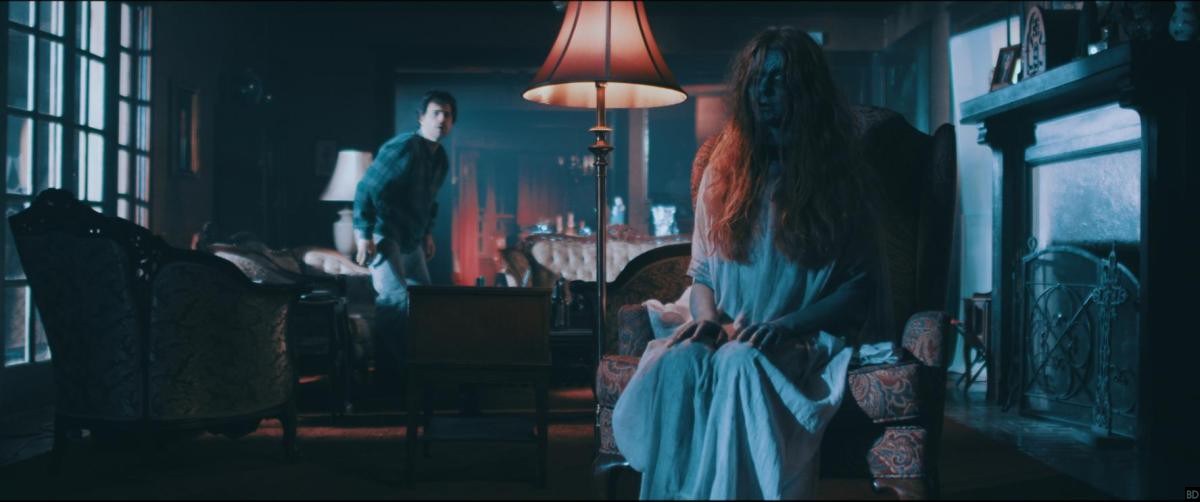
Jumpy, grisly and straight-forward, writer-director Rene Perez’s Playing with Dolls: Havoc (2017) holds rigorously to the formula established in the two prior entries in this series. They are the admirable, if dialogue-heavy, Playing with Dolls (2015) and the superior follow-up, Playing with Dolls: Bloodlust (2016). Such a presence of familiarity as that mentioned above is a classic trait of the slasher sub-genre in which all the Playing with Dolls flicks are firmly rooted. Still, it makes Havoc almost indecipherable from its predecessors. The lean, seventy-eight-minute “uncut” version of the picture has enough stalk and chase moments, brutal acts of on-screen violence and comforting tropes to pose as satisfying entertainment. This is even if the project never comes across as remotely tense or terrifying.

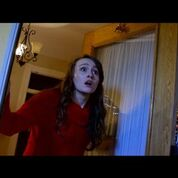
The latest admission into this low-budget saga showcases Havoc, who holds more than a slight resemblance to Jason Voorhees, breaking up an unsuspecting meeting between Timothy Curry (Kyle Clarke), his wife, Sara (Nicole Stark), and Timothy’s girlfriend, Mia (Jade Ellis). This occurs in the Curry’s cabin in the woods. Mia arrives at the secluded location in hopes that Timothy will make a proposal of marriage. What she gets is an unanticipated confrontation with Sarah. Once Timothy makes it to his destination, any thoughts he has of a relaxing getaway are torn by the unfaithful secret that has recently been disclosed. Yet, it isn’t long into Timothy’s strained attempts to explain himself to his matrimonial partner that this tearful situation turns deadly.

It’s a simple, yet worthwhile, premise for a feature of this ilk. Though the first and second act sequences which chronicle the turbulence Mia puts into Sara and Timothy’s relationship are handled in the manner of a soap opera, it doesn’t take too much away from the iDiC Entertainment produced labor. This is because Clarke, Stark and Ellis all turn in solid enactments. They make Perez’s often stiff dialogue better than it should be. These often-theatrical flashes are also assisted by the effective bits of Havoc living up to his name that are placed in between these episodes.

What also helps matters is the colorful, eye-popping cinematography from Perez which dominates the effort. It takes full advantage of the snowy landscapes surrounding the indoors retreat where the venture is set. Such also makes the plentiful instances of gore evermore visceral. Perez also contributes seamless editing. Her largely synth and piano driven music is evocative and haunting. It heightens the atmosphere of the exercise. The tone is further punctuated by her skillful guidance and fair, if routine, penning of the affair.

The lighting, make-up and sound work found herein are certainly proficient. Likewise, it opens with a near ten-minute arrangement that is as attention-garnering as it is deftly executed. Stormi Maya, who is cast in this section in a small role dubbed Girl in Caves, is solid in her enactment. The commencing credits configuration which arises immediately after this part is clever and visually stunning. Havoc also ends well. This is with a final act that delivers just what audiences have come to expect from this type of B-movie. The characters are archetypical. Yet, they are developed sufficiently. The result is an occasionally fun, unassuming journey into cinematic fear. It certainly doesn’t break new ground. Yet, there is no reason horror fanatics shouldn’t be able to fully appreciate this latest installment in the on-going Playing with Dolls narrative. This is especially if you enjoyed the last pair of films in this franchise.

(Unrated). Contains graphic violence, nudity, adult content and profanity.

Available now at Amazon.

“Shin Godzilla” – (Movie Review)

By Andrew Buckner

Rating: ***** out of *****.

Epic in every sense of the word, Shin Godzilla (2016) is one-hundred and twenty minutes of breathless, deftly executed excitement. Also known as Godzilla: Resurgence, the effects and pacing in this thirty-first installment in the franchise are spectacular. Augmenting the sheer quality at hand is Kosuke Yamada’s colorful, impressive cinematography. The same can be said of the rousing, vastly cinematic music from Shiro Sagisu. Likewise, Hideaki Anno’s screenplay and collaborative direction with Shinji Higuchi is surprisingly tense, dramatic and cerebral. The result is undoubtedly one of the greatest entries in this long-standing series to date.

Boosted by terrific performances, especially Hiroki Hasegawa as Rando Yaguchi and Ren Osugi as Prime Minister Seiji Okochi, this Toho Pictures and Cine Bazar production is the third reboot of this well-known tale. The movie follows an emergency cabinet that is assembled after an unexpected incident occurs in the Tokyo Bay Aqua-Line. Soon after this transpires, an evolving, radioactive giant terrorizes the citizens which reside nearby. From herein, the team of governmental heavyweights institute all items at their disposal to stop the radioactive, fire-breathing beast.

The film, which reinstates the political commentary that made the original Gojira (1954) so potent, holds firmly onto the trademark turns and general arc of prior chapters in this series. Yet, it never feels like a retread. The modernized outlook and approach make the unique vigor felt in the previously stated tropes evermore astonishing. They also heighten the immediately classic impression pulsating through the endeavor.

Anno and Higuchi also impart an operatic sensibility to the piece. Such makes the fervent urgency the effort demonstrates increasingly dazzling and palpable. This is notable in the various scenes exposing the frantic discussions between the squad members. It is just as evident in the more obviously rousing instances. For example, when Godzilla’s spine is aglow with purple light. Such is a signal of the calamitous force which is about to be expunged. But, what is just as striking is the perfect symmetry of human interaction and beastly annihilation which is incorporated within the presentation. In turn, the intimate sequences of character development are just as pulse-pounding as the sweeping episodes which showcase the wrath of Anno and Higuchi’s legendary behemoth. Serious in atmosphere and demeanor, these high-caliber attributes culminate into a top-tier creature feature. Recent Hollywood blockbusters like Kong: Skull Island (2017) are child’s play in comparison.

(Unrated). Contains violence and adult themes.

Available now to purchase at Amazon.

“Volumes of Blood: Horror Stories” – (Movie Review)

By Andrew Buckner

Rating: ****1/2 out of *****.

The original Volumes of Blood (2015) was a smart and wildly entertaining anthology. Co-executively produced by veteran actress Lynn Lowry, the ninety-seven-minute excursion was a showcase of talent for all of those involved. It was also a wonderful homage to its genre. There was no denying that it was created for and by those who obviously have a deep-felt passion for the genus of cinematic dread. The various conversations of the main characters, all of whom were huddled together around a table in a library telling terrifying tales to one another throughout the presentation, and clever nods to moving picture frights of the past cemented this quality. Volumes of Blood: Horror Stories (2016), the Petri Entertainment distributed sequel to the afore-mentioned success, stalwartly carries on these ingredients. It lacks some of the more intentionally tongue-in-cheek flashes of the first outing. Chiefly, the dialogue and delivery of the lines heard in the opening moments of the initial affair. Still, the one-hundred and eighteen-minute follow-up, which parallels its precursor in being shot in and centered around the city of Owensboro, Kentucky, towers as an all-around improvement over its predecessor.

Where this enhancement is most visible is in the brilliant, complex manner the more recent effort is structured. Taking place after the conclusion of the foremost venture, this seven-spiel saga concerns a couple, Ash and Laurie (Jacob Ewers and Erin Troutman respectively). They are interested in purchasing an on the market home. This becomes James Treakle’s engrossing wraparound narrative, “A Killer House”. As the fiction endures, the duo is guided through their potential residence by the ominous realtor, Mr. Stine (in a superb depiction from Christopher Bower). As they wander around the confines of the domicile, the audience glimpses a violent scenario that erupted in or around the area these individuals are investigating. This provides a tremendous springboard for staggering enactments of such incidents. For example, there is the smirk-inducing and unique spin on the monster in the closet trope. This is John William Holt’s terrific Thanksgiving related labor, “Feeding Time”. Born from this notion is also John Maynard’s inventive brainchild, “Blood Bath”. It concerns a shower that is the source of unexpected slaughter. The latter item, which emerges on Father’s Day, is one of my favorite pieces in the project.

Though the Dark Cuts publication takes its time getting to this set-up, it is all a part of the sheer, envy-inducing craftsmanship at hand. For example, the article starts with the beautifully executed short from Nathan Thomas Milliner, “Murder Death Killer”. It than moves to a highly amusing orchestration from co-producer P.J. Starks. This portion, a daring extension of “Murder Death Killer”, is called “Haters”. The section integrates a great argument about remakes. This is while incorporating solid portrayals from Milliner (as Troll Nate) and Kevin Roach (as Troll Kev). There is also a conversation about “nostalgia blindness”. It transpires at twenty minutes into the feature. This sequence, inciting the exchange that Hollywood is devoid of fresh ideas, I especially enjoyed.

After Milliner’s chronicle, bystanders witness Sean Blevins’ “Trick or Treat”. This account ties seamlessly to Milliner’s undertaking. It also thematically carries on the psychotic killer facets of “Murder Death Killer”. Concerning a woman, Mallory (in a marvelous turn from Shelby Taylor Mullins), who finds herself alone on Halloween night, “Trick or Treat” is tense and compelling. It also introduces the holiday theme which prevails through most of these cracks at trepidation. Such an aspect forms the backdrop of Milliner’s powerful, Christmas Eve set “Fear, For Sinners Here”. This, the sixth endeavor in the order of the arrangement, is another of the best episodes found herein. Completing the compendium is Justin M. Seaman’s twisty, birthday related finale, “The Deathday Party”. Seaman’s contribution is thrilling. It is the perfect climax to one of the greatest collections of chilling morsels I have viewed in years.

Augmenting the overall delight is how slyly the film harkens back to the originating Volumes of Blood. For instance, the location of this previously addressed exercise is cited. There are even some familiar sights which reoccur in Horror Stories. A certain red-eyed mask comes immediately to mind. These bits heighten the already immense appeal for those of us who have seen the earlier opus. It also offers further proof of just how impeccable the construction of the photoplay is altogether.

Humorous, gory, visceral and guaranteed to please a crowd, this Blood Moon Pictures release also benefits from fantastic cinematography from Alexander Clark, Austin Madding and Holt. Josh Coffey, Rocky Gray and Mikel Shane Prather’s music increases the intense atmosphere of the undergoing remarkably well. The editing from Blevins, Holt, Maynard, Milliner and Treakle is exceptional. Barbie Clark, who triumphantly tackles the role of Vallie, issues costume design that is masterful. Additionally, the effects, camera work, lighting and sound are just as impressive. The writing from Blevins, Milliner, Starks and Jason Turner is sharp. Blevins, Holt, Maynard, Milliner, Seaman and Treakle offer proficient direction. Correspondingly, Aric Stanish is brutal and imposing as the rampaging fiend from “Murder Death Killer”, Atticus Crow.

The result is an illustration of boundless skill, effectiveness, efficiency and fun. Given that the yarns included herein generally clock in at around fifteen minutes, each composition is brief and to the point. Usually, the major downfall of such fleeting anecdotes is that it provides little time to get to know the leads. This is before the events of the plot begin to unfold. Yet, nearly everyone we meet on-screen avoids this trap. There is a wide-reaching variety of quirks and a relatable foundation unveiled in the central figures. Such makes their quick scenes memorable. In turn, “Fear, For Sinners Here” may have you cheering on the poor taking on the rich plight of its antagonist. It is these astounding elements, mixed with the deft juggling of its subtly differing tones and execution, that allows this perpetuation to be so consistently engrossing.

Simultaneously, the pacing is top-notch. The end credits are respectful and astute. Likewise, the post-acknowledgments configuration spied in the last few seconds of the movie is most agreeable. Ultimately, this is a massive achievement. I greatly anticipate the third installment in this trilogy, Volumes of Blood 3: Devil’s Knight. It is scheduled to be unleashed in 2018.

Volumes of Blood: Horror Stories will arrive on DVD, Blu-ray and Video on Demand August 1st, 2017.

“The Domicile” – (Movie Review)

By Andrew Buckner

Rating: ****1/2 out of *****.

The Domicile (2017), from writer-director Jared Cohn, is a terrific paranormal suspense yarn. Produced through Traplight Pictures, the lean and efficient eighty-two-minute affair is situated around fictional playwright Russell Brody (in a mesmerizing and emotionally layered portrayal from Steve Richard Harris). After the sudden demise of his pregnant wife, Estella (in a stellar turn from Katherine Flannery), in the deftly executed and atmospheric opening of the feature, Cohn’s tale moves forward one year. Dealing with the troubled Samantha (in a phenomenal enactment from Amanda Ruth Ritchie), who spends the bulk of her time on-screen confined to her upstairs bedroom in Brody’s home, our central figure focuses his grief and devastation towards trying to replicate the success of his last play. Frustrated and desperate to escape via his literary pursuits, he uncovers alcohol helps fuel the quality of his storytelling. In a twist that heightens the wonderful alignment to both Stephen King’s brilliant 1977 novel, The Shining, and Stanley Kubrick’s same said film from 1980, this action aids in Brody’s distorted grasp on reality. Seeking advice from his collaborator on the project, David Stanley (in a riveting portrayal from Demetrius Stear), Brody attempts to rekindle his relationship with Lucy (in a magnificent representation from Sara Malukal Lane). She is a romantic entanglement from Brody’s past. It is than that the spectral form of Estella decides to make itself known through provocation and violence.

Cohn has crafted a wonderfully intriguing plot. It is one erected in the classic, slow-burn design of such genre efforts as Robert Wise’s The Haunting (1963) and Peter Medak’s The Changeling (1980). There are even touches of William Friedkin’s groundbreaking adaptation of William Peter Blatty’s 1971 best-seller, The Exorcist (1973). This is most noticeable in the harrowing moments involving Samantha which are spied primarily in the first act. Yet, the material doesn’t go the conventionally accepted route and use these aforesaid comparisons for fan service. It is engraved as an unspoken statement of the impeccably fashioned nature of Cohn’s meticulously paced script. This is also true of his mesmerizing guidance of the venture. These elements can also be witnessed in the deftly executed atmosphere of dread Cohn conjures throughout the entirety of this enigmatic exercise. The masterful manner with which Cohn toys with the idea of Brody’s obsessions pushing him towards madness give the undergoing a stirring, mind-bending component. Though a familiar trope in photoplays of this ilk, it victoriously transports viewers inside the increasingly unsure psyche of Cohn’s lead. The tried and true scares utilized within the exertion also endure as effective because of these previously addressed reasons. Recorded in Pasadena, California, the gorgeously honed essence of Cohn’s cinematic construction is complete with a satisfying, smirk-inducing finale. There is also an equally dazzling concluding credits bit.

From a technical standpoint, the movie also delivers. For example, Josh Maas’ dark and brooding cinematography is as impressive as it was in Cohn’s recent Locked Up (2017). The theme music by Ryan D. Wood and supplementary sonic compositions from Chase Kuker enhance the spellbinding, mood-draped pulse of the narrative immensely. Likewise, Chris Kaiser’s editing is sharp and seamless. The make-up, camera, lighting and sound squad contributions are spectacular. Simultaneously, the small roles are just as proficient as the stars of the endeavor. The potent depictions from Angela Nicolas as Bonnie, Cara Mitsuko as Grace and Todd Carroll as Julian augment this factor luminously. David Palmieri as Officer Thompson and Julian Bane as Officer White are just as good.

As is true of many other accounts of this genus, Cohn’s ethereal thriller is, at its heart, a character study. Luckily, this is also one of the strongest attributes of the chronicle. Brody’s transformation in personality throughout the presentation is gradual and believable. Simultaneously, Cohn is unafraid to paint him as a flawed individual. Such gives Brody added dimension and depth. It also makes him evermore relatable. When combined with the sly, quiet commentary on the struggles of being creative Cohn administers into the labor, which will assuredly appeal to artistic-minded spectators everywhere, Cohn’s latest works just as well as a psychological drama as it does an outing in fear. The result of these high-caliber qualities is an exceptional example of modern day horror. This cerebral, subtle and ambitious tour de force is among the best excursions of its type I have glimpsed all year.

The Domicile will be released on DVD August 22nd, 2017 through MTI Home Video. It will be available at Redbox and Family Video.

“The Mason Brothers” – (Movie Review)

By Andrew Buckner

Rating: **** out of *****.

The one-hundred and fourteen-minute debut feature from thirty-year-old writer-director Keith Sutliff, The Mason Brothers (2017), is a handsomely fashioned, if all too familiar, revenge tale. Deriving inspiration from Brian De Palma’s The Untouchables (1987) and Quentin Tarantino’s oft-mimicked Reservoir Dogs (1992), the KS Pictures production has all the tough talk and sudden bouts of violence expected from a crime story of this ilk. In this arena, Sutliff’s endeavor soars. The opus also triumphs in its Tarantino-like ability to entertain via dialogue. A great example of this would be in the many cases throughout the exertion where Sutliff’s fictional personas describe the failed scheme that takes place immediately before the commencement of the piece. Where lesser filmmakers would punctuate such arrangements with actual flashbacks to the event out of fear of losing audience intrigue, Sutliff forces spectators to participate by imagining the episode themselves. Such occurs via the verbal illustrations painted by our central figures in their frequent discussions among one another. The backstories of our leads and related expository instances are similarly addressed to equally potent consequence in this manner.

In turn, Sutliff creates a slick, classically designed caper. It is one which is as gripping when the fists fly as it is in its quieter episodes. Yet, this otherwise engaging movie, despite its penchant for narrative, never feels as if it fleshes out its characters in any satisfactory way. Yet, this works masterfully to make those we follow on-screen enigmatic. The same can be said for the relatively routine arc of events. Correspondingly, this celluloid vehicle offers no true surprises. Still, it succeeds far more frequently than it falters.

Sutliff chronicles Ren (in an intense, commanding performance from Sutliff), Jesse (in an exceptional depiction from Brandon Sean Pearson) and Orion Mason (in a brilliant, consistently compelling representation from Michael Ryan Whelan). They are a group of close brothers and expert robbers. When their botched plan to steal $10,000,000 via a Los Angeles bank results in the death of one of the members of this outlaw clique, it becomes evident that this fatal event was anything but an accident. This soon becomes believed to be a set-up. Seeking payback, Ren, the eldest and head of the team, hires a bounty hunter, Jerry (in a captivating enactment from Tim Park). His assignment is to uncover who was involved in this tragic incident. But, these fervently sought-after answers come with unwanted results. Soon one felonious mind is battling with another. This is as a rival neighborhood gang is declared to be the guilty party.

Co-producer Sutliff augments this intriguing plot with a script that is confidently paced. Though it concludes on a predictable note, the undertaking remains an all-around solid venture. This is largely a courtesy of the plethora of brutal, deftly executed action scenes Sutliff incorporates throughout the runtime. There is also an unwavering, no-nonsense atmosphere found in the labor. Such is a signpost of Sutliff’s taut, claustrophobic and ever-stylish guidance of the project. When combined with the dark, mood-setting cinematography from Errol Webber Jr. and Federico Vaona’s immersive music, the effort continues to astonish. Complete with a magnificent portrayal from Carlotta Montanari as Allena, splendid visual effects from John Myers and sharp editing from Gio Arias, the affair endures as a consistently dazzling genre outing. I highly recommend seeking it out.

The Mason Brothers will be released on Video on Demand in the United States of America, Germany/ Austria, Japan and in the United Kingdom on August 2nd, 2017 through Adler & Associates.

(R). Contains graphic language and violence.


“Land of Mine” – (Movie Review)

By Andrew Buckner

Rating: ****1/2 out of *****.

A nominee for Best Foreign Language Film at the 89th Academy Awards, writer-director Martin Zandvliet’s Land of Mine (2015) is a tense, intimate and naturally gripping post-World War II tale. Inspired by true events, this Nordisk Film distribution release, concerns a team of 14 young men, all of whom are German Prisoners of War, that are trained to personally defuse the 2,000,000 landmines said to be left over from the recently ended combat. Set in Denmark during May of 1945, the bulk of the action in Zandvliet’s 101-minute feature focuses on the attempts of the group to clear a beach of its 45,000 hidden explosives. This is while being overseen by a Danish Army member, Sgt. Carl Rasmussen (in a spellbinding depiction from Roland Moller), who initially seems unconcerned with the general well-being of the squad.

The story alone is fascinating. Yet, Zandvliet’s screenplay makes this nightmarish chronicle evermore intriguing with its near-perfect pace. It is meticulously-moving and cerebral; exactly what the material demands. Moreover, Zandvliet also orchestrates a terrific balance of character development and nail-biting instances. The latter of which are all beautifully executed. Correspondingly, the believable dialogue and interactions by our on-screen personas further heightens the credibility the effort radiantly reflects. This triumphant attribute is a courtesy of Zandvliet’s top-notch authorship and guidance of the project. The same can be said of the powerhouse performances found within the presentation. Louis Hoffmann as Sebastian Schumann and Joel Basman as Helmut Morbach are especially good in their respective turns. Even though Rasmussen’s transformative attitude towards his crew is too sudden, it does little to detract from these high-functioning qualities.

Originally titled Under sandet (Under the Sand), this spellbinding endeavor is also illuminated by Camilla Hjelm’s masterful, 1960’s inspired cinematography. Sune Martin’s music is both haunting and marvelously emotive. Simultaneously, the persistent underlying dramatic and narrative intensity heightens the urgency at hand. It makes the feature evermore rousing and immensely watchable. Though not always satisfactorily detailed in its exposition, the picture is nonetheless memorable and masterful. The theme of youth risking life and limb in the name of violent confrontation, as well as the impactful finale, only drive these remarkable and unsettling traits home with stalwart force. The result is a bold, mesmerizing and singular cinematic experience; a must-see work.

(R). Contains adult language, adult themes and violence.

A Brief Word on Recent Releases: “Nerve”, “Revenge of the Lost” and “20th Century Women”

By Andrew Buckner

Nerve

Rating: *1/2 out of *****.

Though incorporating sporadic moments of intrigue, Henry Joost and Ariel Schulman’s Nerve (2016) is but another generic, superficial and over-stylized teens and technology thriller. The plot concerns a high school senior, Vee (in a likable enactment from Emma Roberts), who becomes caught up in an increasingly dangerous online game. The risks of this financially beneficial amusement, which consists of a variety of outrageous dares, are controlled by an anonymous group of participants. They are called The Watchers.

Throughout the ninety-six-minute runtime, Joost and Schulman build no true suspense. Likewise, the script by Jessica Scharzer fails to break out of the routine arc and one-note characterizations of so many similar genre entries. Shot in New York, this forgettable affair does boast eye-popping cinematography and is carefully paced. Still, it isn’t enough to overcome its detracting elements. Based on a novel of the same name, published in 2012, by Jeanne Ryan.

(PG-13). Contains adult language, violence and brief nudity.

Revenge of the Lost

Rating: ***1/2 out of *****.

Co-writer, director and star Erik Franklin’s dinosaur flick, Revenge of the Lost (2017), is a roaring good time. It is also a full-bodied, engaging and breakneck-paced B-movie from the first frame to the last. The eighty-nine-minute tale, which suffers from a by-the-numbers story arc, focuses in on a sudden outbreak of prehistoric creatures in modern times. Our central figures, all of whom are satisfactorily developed archetypes, are a band of survivors who attempt to make their way to a government base for safety.

Though unimpressive special effects and a predictable finale hinders matters, it does little to dissuade the spirit of delight which hangs over the proceedings. Franklin’s guidance of the project and screenplay (co-penned by producer Daniel Husser) are sturdy. Regardless, the impressive variety of extinct giants that fill the screen, as well as the constant sense of excitement and impending doom Franklin instills, helps the effort triumph immeasurably over these previously-stated shortcomings.

(Unrated). Contains adult language and violence.

20th Century Women

Rating: ***** out of *****.

Brilliantly written and directed by Mike Mills, 20th Century Women (2016), is life-mirroring cinema at its finest. Set in Southern California in the 1970’s, this one-hundred and nineteen-minute gem concerns the influence Jamie (Lucas Jade Zumann) derives from his mother, Dorothea (Annette Bening). Such an impact also extends to the two young ladies who live in the same home. They are Annie (Greta Gerwig) and Jamie’s childhood friend, Julie (Elle Fanning).

This humorous, poignant and intimate masterpiece showcases gorgeous cinematography by Sean Porter. The same can be said of the music from Roger Neill. Stirring and impassioned, the heart to the rousing success of the feature is the powerhouse performances all-around. The result is undoubtedly one of 2016’s best films.

(R). Contains adult language and themes.

*All three of these motion pictures are now available on Amazon Prime.

“The Confessions” – (Movie Review)

By Andrew Buckner

Rating: ****1/2 out of *****.

Co-writer and director Roberto Ando’s The Confessions (2016), originally titled Le confessioni, is as riveting in its philosophical discourse as it is in its unique whodunit. Throughout the development of the masterfully paced one-hundred and three-minute runtime of the film, Ando weaves a naturally gripping tale. It concerns an enigmatic Italian monk, Roberto Salus (in a spellbinding depiction from Toni Servillo that dazzles in its underlying power and restraint), who accepts an invitation by the director of The International Monetary Fund, Daniel Roche (in a phenomenal turn from Daniel Auteuil). Such a summons leads Salus to a meeting conducted by The Group of Eight (G8), a civic-minded committee made up of governmental contacts from around the globe, at a luxury hotel on the German coast. That night, Roche asks Salus if he could discreetly engage in the title action. The next morning, Roche is discovered lifeless.

Ando brilliantly keeps an ever-accruing sense of mystery and maturity pulsating throughout the proceedings. Such is made evermore alluring when mixed with the complex political, detective and metaphysical components of the production. This is as much a courtesy of Ando’s smart, Hitchcockian direction as it is the same said screenplay he co-authored with Angelo Pasquini. Though much of the plot unfolds via character interaction, primarily intimate speeches among one another, the cerebral suspense rarely wavers. This is because Ando gives us just enough subtly placed notions, questions of personal motivations and uncertainties to keep audiences stirred for the duration of the fiction. Though the answer to whom is responsible for Roche’s demise is obvious, the various paradoxical layers Ando issues on the trail to this conclusion more than make up for this shortcoming. Ando’s ability to avoid genre trappings in so doing is also refreshing.

Alongside lavish cinematography from Maurizio Calvesi and mesmerizing music from Nicola Piovani, this Uncork’d Entertainment distribution release is among the year’s best cinematic undertakings. The performances are rich and proficient all-around. For example, Connie Nielsen is terrific as Claire Seth. Moritz Bleibtreu is exemplary as Mark Klein. Likewise, Clelio Benevento’s editing is seamless. Maria Rita Barbera’s costume design is magnificent.

With these high-caliber attributes in mind, Ando’s effort astounds from all angles. This is even if the picture is unsure as to what it wants to be on occasion. Correspondingly, it is also hindered by being a bit one-dimensional in painting Salus as saintly. Still, the exertion is graced by an untainted atmosphere of maturity and elegance. In turn, this multi-lingual follow-up to Ando’s witty satire, Long Live Freedom (2013), remains superbly crafted and nonetheless breathtaking.

(Unrated).

Now showing in select theaters.

“Toni Erdmann” – (Capsule Movie Review)

By Andrew Buckner

Rating: ***1/2 out of *****.

Though sluggish and lingering on occasion, Toni Erdmann (2016), a Best Foreign Language Film nominee at the 89th Academy Awards, is a pleasant and leisurely, quietly charming journey for most of its massive 162-minute runtime. The performances are solid, natural and believable. This is especially accurate when considering Sandra Huller’s lead depiction of the hardworking Ines Conradi. Peter Simonischeck is just as impressive as Conradi’s practical joker of a father, Winifred. Coincidentally, he is responsible for setting the amusing, yet threadbare, plot in motion. This is when he creates the title alter ego in an endeavor to push his way into his daughter’s business life.

Throughout the course of the narrative, there are enough similarly authentic moments of offbeat laughter, engaging character development and subtle drama to keep the project afloat. Additionally, Maren Ade’s sharp and sophisticated writing and direction, as well as Patrick Orth’s ruggedly immersive cinematography, highlight the previously stated life-mirroring qualities of the project well. Still, this can’t mask the fact that there simply isn’t enough story to merit the extended length. The result is a flawed, but ultimately rewarding and mature, cinematic venture.

(R). Contains adult language, graphic nudity, sexuality and drug use.

Released theatrically in the United States on December 25th, 2016.

Available now to rent or buy at Amazon.

“Alien: Reign of Man” – (Movie Review)

By Andrew Buckner

Rating: ***1/2 out of *****.

Much in line with Ridley Scott’s vastly underappreciated Prometheus (2012) and Alien: Covenant (2017), writer-director Justin Price’s Alien: Reign of Man (2017) is cerebral, ambitious science-fiction. Though bound by the iconic series Scott started with Alien (1979) in name only, there is a sharp focus on characterization, origin and exposition prevalent in Price and Scott’s aforesaid efforts. Such sharpens the many quiet moments of awe, planetary exploration and seamlessly woven elements of fear utilized in these endeavors. There is also a gradual and fluent pace to these presentations. Such makes each respective venture much more than a collection of routine space scares. A remarkable eye for masterfully designed shuttle interiors as well as a beautifully constructed atmosphere of impending dread also uplifts these exertions.

Yet, Price’s feature is distinctly its own endeavor. Chronicling a group of interstellar travelers who are tasked with triggering a mechanism which will bring Earth back to a time before its decline, the account is naturally intriguing. The marvelous, claustrophobic direction and pleasantly inquisitive scripting from Price make this low-budget narrative evermore engaging. This stellar handling of the material extends to the backstory of our lead, Zan (in a solid turn from co-producer Khu). Such bits are potently glimpsed in dream-like flashbacks throughout the endeavor. The inclusion of this element augments the sense of urgency and intimacy coursing through the proceedings. It also makes the wonderfully understated finale dramatically tense and satisfying. Correspondingly, this is a terrific bookend to a picture that grips audiences with its personal touch, elegiac essence, scope and inventiveness immediately. The commencing credits sequence is where this latter-addressed quality is especially evident.

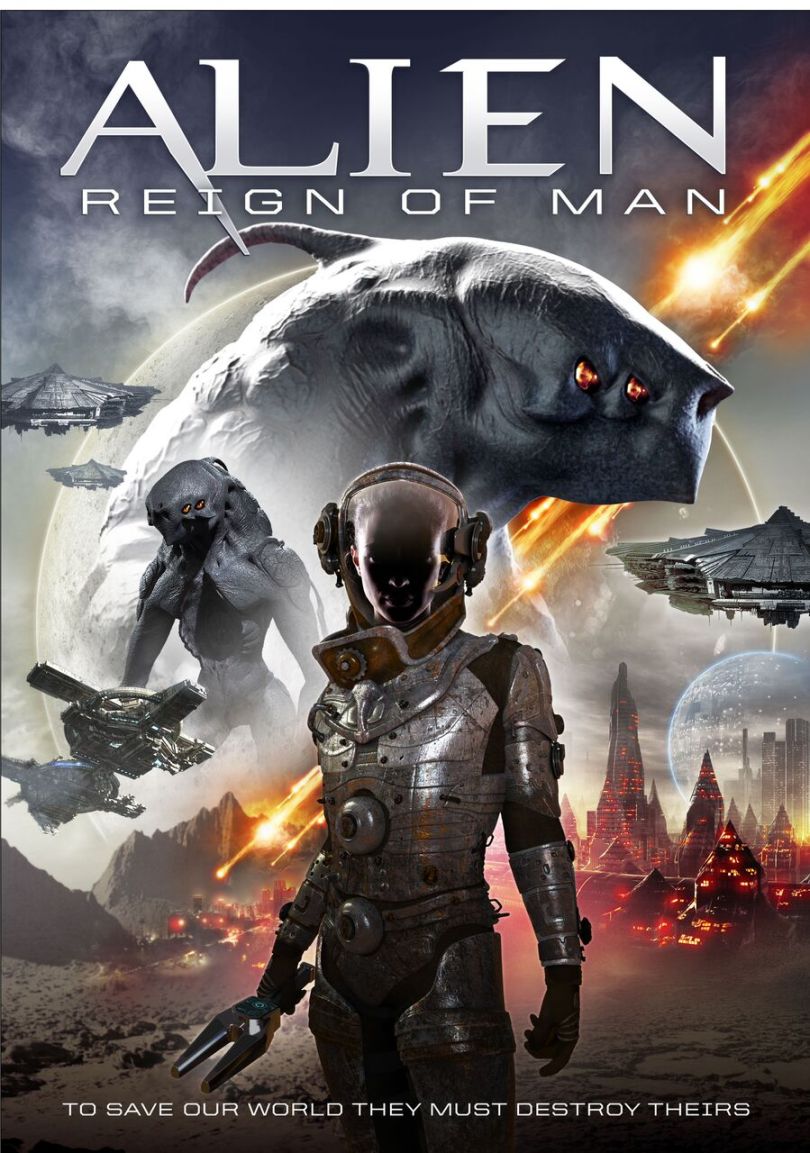
This lean, effective and efficient eighty-five-minute affair, distributed through Uncork’d Entertainment, has a heavy reliance on effects. Luckily, they are largely impressive. Still, the animation of the multi-eyed entities spied in the creative cover art is questionable. Given that the viewing of these creatures is primarily reserved for a few quick moments during the opening and concluding acts, this isn’t as much of a problem as it could be.

Though the delivery of the otherwise fascinating dialogue is underwhelming at times, Price’s labor still sports solid performances all-around. Torrei Hart as Viceroy, Deanna Grace Congo as Constance and Cameron White as Reed provide solid proof of such a statement with their robust enactments. This is even if Price doesn’t focus on what drives them from a human level as much as he does with Zan. Further helping matters is the rousing, highly cinematic music from Julian Beeston.

In turn, Price has assembled a superior B-movie. Some of the motions of the film’s arc of events are routine in hindsight. Regardless, the photoplay is so well-made, thoughtful and broodingly tense that such criticisms barely register. It is also a lot of fun. Because of this. Price’s latest triumphs from both a technical and chronicle-oriented standpoint. Price’s work may not be as groundbreaking as Scott’s similar in moniker franchise. Regardless, it is a small wonder unto itself; a successful on-screen persona-minded action-thriller that pulsates with real heart.

Alien: Reign of Man will be available on Video on Demand on August 1st, 2017. It will be released on DVD November 14th, 2017.