“Land of Mine” – (Movie Review)

By Andrew Buckner

Rating: ****1/2 out of *****.

A nominee for Best Foreign Language Film at the 89th Academy Awards, writer-director Martin Zandvliet’s Land of Mine (2015) is a tense, intimate and naturally gripping post-World War II tale. Inspired by true events, this Nordisk Film distribution release, concerns a team of 14 young men, all of whom are German Prisoners of War, that are trained to personally defuse the 2,000,000 landmines said to be left over from the recently ended combat. Set in Denmark during May of 1945, the bulk of the action in Zandvliet’s 101-minute feature focuses on the attempts of the group to clear a beach of its 45,000 hidden explosives. This is while being overseen by a Danish Army member, Sgt. Carl Rasmussen (in a spellbinding depiction from Roland Moller), who initially seems unconcerned with the general well-being of the squad.

The story alone is fascinating. Yet, Zandvliet’s screenplay makes this nightmarish chronicle evermore intriguing with its near-perfect pace. It is meticulously-moving and cerebral; exactly what the material demands. Moreover, Zandvliet also orchestrates a terrific balance of character development and nail-biting instances. The latter of which are all beautifully executed. Correspondingly, the believable dialogue and interactions by our on-screen personas further heightens the credibility the effort radiantly reflects. This triumphant attribute is a courtesy of Zandvliet’s top-notch authorship and guidance of the project. The same can be said of the powerhouse performances found within the presentation. Louis Hoffmann as Sebastian Schumann and Joel Basman as Helmut Morbach are especially good in their respective turns. Even though Rasmussen’s transformative attitude towards his crew is too sudden, it does little to detract from these high-functioning qualities.

Originally titled Under sandet (Under the Sand), this spellbinding endeavor is also illuminated by Camilla Hjelm’s masterful, 1960’s inspired cinematography. Sune Martin’s music is both haunting and marvelously emotive. Simultaneously, the persistent underlying dramatic and narrative intensity heightens the urgency at hand. It makes the feature evermore rousing and immensely watchable. Though not always satisfactorily detailed in its exposition, the picture is nonetheless memorable and masterful. The theme of youth risking life and limb in the name of violent confrontation, as well as the impactful finale, only drive these remarkable and unsettling traits home with stalwart force. The result is a bold, mesmerizing and singular cinematic experience; a must-see work.

(R). Contains adult language, adult themes and violence.

A Brief Word on Recent Releases: “Nerve”, “Revenge of the Lost” and “20th Century Women”

By Andrew Buckner

Nerve

Rating: *1/2 out of *****.

Though incorporating sporadic moments of intrigue, Henry Joost and Ariel Schulman’s Nerve (2016) is but another generic, superficial and over-stylized teens and technology thriller. The plot concerns a high school senior, Vee (in a likable enactment from Emma Roberts), who becomes caught up in an increasingly dangerous online game. The risks of this financially beneficial amusement, which consists of a variety of outrageous dares, are controlled by an anonymous group of participants. They are called The Watchers.

Throughout the ninety-six-minute runtime, Joost and Schulman build no true suspense. Likewise, the script by Jessica Scharzer fails to break out of the routine arc and one-note characterizations of so many similar genre entries. Shot in New York, this forgettable affair does boast eye-popping cinematography and is carefully paced. Still, it isn’t enough to overcome its detracting elements. Based on a novel of the same name, published in 2012, by Jeanne Ryan.

(PG-13). Contains adult language, violence and brief nudity.

Revenge of the Lost

Rating: ***1/2 out of *****.

Co-writer, director and star Erik Franklin’s dinosaur flick, Revenge of the Lost (2017), is a roaring good time. It is also a full-bodied, engaging and breakneck-paced B-movie from the first frame to the last. The eighty-nine-minute tale, which suffers from a by-the-numbers story arc, focuses in on a sudden outbreak of prehistoric creatures in modern times. Our central figures, all of whom are satisfactorily developed archetypes, are a band of survivors who attempt to make their way to a government base for safety.

Though unimpressive special effects and a predictable finale hinders matters, it does little to dissuade the spirit of delight which hangs over the proceedings. Franklin’s guidance of the project and screenplay (co-penned by producer Daniel Husser) are sturdy. Regardless, the impressive variety of extinct giants that fill the screen, as well as the constant sense of excitement and impending doom Franklin instills, helps the effort triumph immeasurably over these previously-stated shortcomings.

(Unrated). Contains adult language and violence.

20th Century Women

Rating: ***** out of *****.

Brilliantly written and directed by Mike Mills, 20th Century Women (2016), is life-mirroring cinema at its finest. Set in Southern California in the 1970’s, this one-hundred and nineteen-minute gem concerns the influence Jamie (Lucas Jade Zumann) derives from his mother, Dorothea (Annette Bening). Such an impact also extends to the two young ladies who live in the same home. They are Annie (Greta Gerwig) and Jamie’s childhood friend, Julie (Elle Fanning).

This humorous, poignant and intimate masterpiece showcases gorgeous cinematography by Sean Porter. The same can be said of the music from Roger Neill. Stirring and impassioned, the heart to the rousing success of the feature is the powerhouse performances all-around. The result is undoubtedly one of 2016’s best films.

(R). Contains adult language and themes.

*All three of these motion pictures are now available on Amazon Prime.

“The Confessions” – (Movie Review)

By Andrew Buckner

Rating: ****1/2 out of *****.

Co-writer and director Roberto Ando’s The Confessions (2016), originally titled Le confessioni, is as riveting in its philosophical discourse as it is in its unique whodunit. Throughout the development of the masterfully paced one-hundred and three-minute runtime of the film, Ando weaves a naturally gripping tale. It concerns an enigmatic Italian monk, Roberto Salus (in a spellbinding depiction from Toni Servillo that dazzles in its underlying power and restraint), who accepts an invitation by the director of The International Monetary Fund, Daniel Roche (in a phenomenal turn from Daniel Auteuil). Such a summons leads Salus to a meeting conducted by The Group of Eight (G8), a civic-minded committee made up of governmental contacts from around the globe, at a luxury hotel on the German coast. That night, Roche asks Salus if he could discreetly engage in the title action. The next morning, Roche is discovered lifeless.

Ando brilliantly keeps an ever-accruing sense of mystery and maturity pulsating throughout the proceedings. Such is made evermore alluring when mixed with the complex political, detective and metaphysical components of the production. This is as much a courtesy of Ando’s smart, Hitchcockian direction as it is the same said screenplay he co-authored with Angelo Pasquini. Though much of the plot unfolds via character interaction, primarily intimate speeches among one another, the cerebral suspense rarely wavers. This is because Ando gives us just enough subtly placed notions, questions of personal motivations and uncertainties to keep audiences stirred for the duration of the fiction. Though the answer to whom is responsible for Roche’s demise is obvious, the various paradoxical layers Ando issues on the trail to this conclusion more than make up for this shortcoming. Ando’s ability to avoid genre trappings in so doing is also refreshing.

Alongside lavish cinematography from Maurizio Calvesi and mesmerizing music from Nicola Piovani, this Uncork’d Entertainment distribution release is among the year’s best cinematic undertakings. The performances are rich and proficient all-around. For example, Connie Nielsen is terrific as Claire Seth. Moritz Bleibtreu is exemplary as Mark Klein. Likewise, Clelio Benevento’s editing is seamless. Maria Rita Barbera’s costume design is magnificent.

With these high-caliber attributes in mind, Ando’s effort astounds from all angles. This is even if the picture is unsure as to what it wants to be on occasion. Correspondingly, it is also hindered by being a bit one-dimensional in painting Salus as saintly. Still, the exertion is graced by an untainted atmosphere of maturity and elegance. In turn, this multi-lingual follow-up to Ando’s witty satire, Long Live Freedom (2013), remains superbly crafted and nonetheless breathtaking.

(Unrated).

Now showing in select theaters.

“Toni Erdmann” – (Capsule Movie Review)

By Andrew Buckner

Rating: ***1/2 out of *****.

Though sluggish and lingering on occasion, Toni Erdmann (2016), a Best Foreign Language Film nominee at the 89th Academy Awards, is a pleasant and leisurely, quietly charming journey for most of its massive 162-minute runtime. The performances are solid, natural and believable. This is especially accurate when considering Sandra Huller’s lead depiction of the hardworking Ines Conradi. Peter Simonischeck is just as impressive as Conradi’s practical joker of a father, Winifred. Coincidentally, he is responsible for setting the amusing, yet threadbare, plot in motion. This is when he creates the title alter ego in an endeavor to push his way into his daughter’s business life.

Throughout the course of the narrative, there are enough similarly authentic moments of offbeat laughter, engaging character development and subtle drama to keep the project afloat. Additionally, Maren Ade’s sharp and sophisticated writing and direction, as well as Patrick Orth’s ruggedly immersive cinematography, highlight the previously stated life-mirroring qualities of the project well. Still, this can’t mask the fact that there simply isn’t enough story to merit the extended length. The result is a flawed, but ultimately rewarding and mature, cinematic venture.

(R). Contains adult language, graphic nudity, sexuality and drug use.

Released theatrically in the United States on December 25th, 2016.

Available now to rent or buy at Amazon.

“Alien: Reign of Man” – (Movie Review)

By Andrew Buckner

Rating: ***1/2 out of *****.

Much in line with Ridley Scott’s vastly underappreciated Prometheus (2012) and Alien: Covenant (2017), writer-director Justin Price’s Alien: Reign of Man (2017) is cerebral, ambitious science-fiction. Though bound by the iconic series Scott started with Alien (1979) in name only, there is a sharp focus on characterization, origin and exposition prevalent in Price and Scott’s aforesaid efforts. Such sharpens the many quiet moments of awe, planetary exploration and seamlessly woven elements of fear utilized in these endeavors. There is also a gradual and fluent pace to these presentations. Such makes each respective venture much more than a collection of routine space scares. A remarkable eye for masterfully designed shuttle interiors as well as a beautifully constructed atmosphere of impending dread also uplifts these exertions.

Yet, Price’s feature is distinctly its own endeavor. Chronicling a group of interstellar travelers who are tasked with triggering a mechanism which will bring Earth back to a time before its decline, the account is naturally intriguing. The marvelous, claustrophobic direction and pleasantly inquisitive scripting from Price make this low-budget narrative evermore engaging. This stellar handling of the material extends to the backstory of our lead, Zan (in a solid turn from co-producer Khu). Such bits are potently glimpsed in dream-like flashbacks throughout the endeavor. The inclusion of this element augments the sense of urgency and intimacy coursing through the proceedings. It also makes the wonderfully understated finale dramatically tense and satisfying. Correspondingly, this is a terrific bookend to a picture that grips audiences with its personal touch, elegiac essence, scope and inventiveness immediately. The commencing credits sequence is where this latter-addressed quality is especially evident.

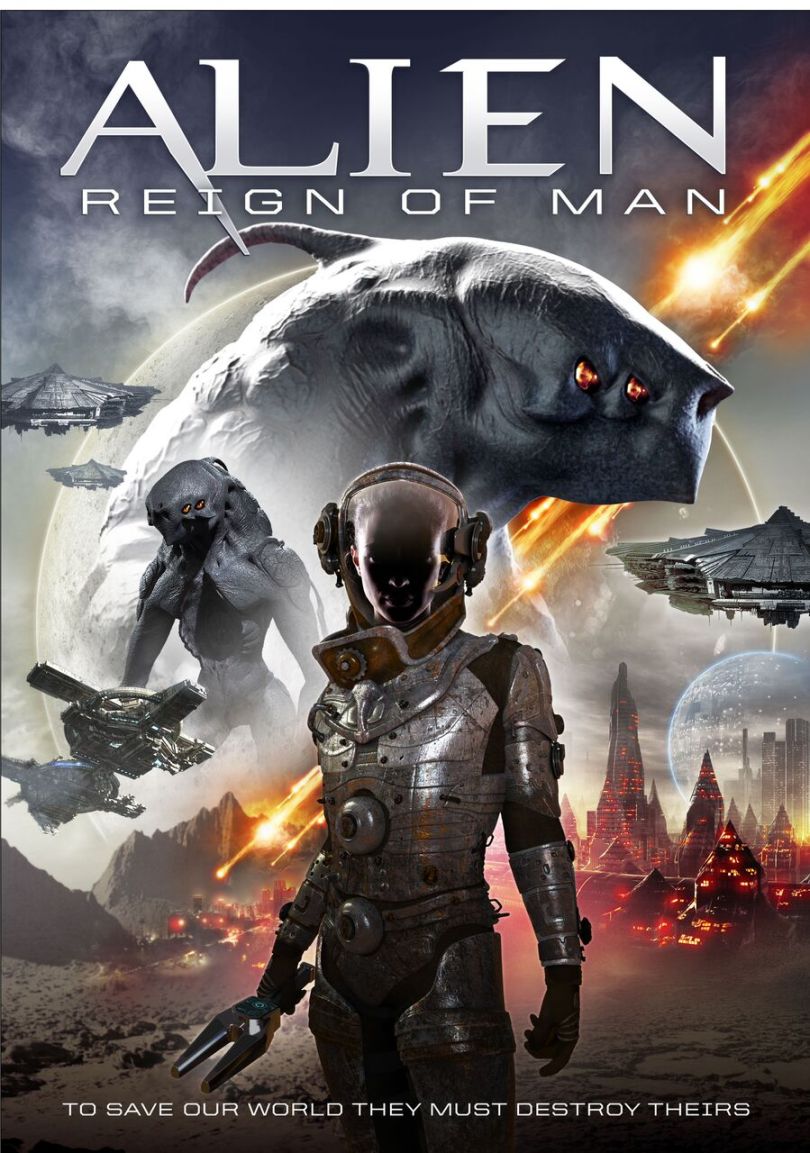
This lean, effective and efficient eighty-five-minute affair, distributed through Uncork’d Entertainment, has a heavy reliance on effects. Luckily, they are largely impressive. Still, the animation of the multi-eyed entities spied in the creative cover art is questionable. Given that the viewing of these creatures is primarily reserved for a few quick moments during the opening and concluding acts, this isn’t as much of a problem as it could be.

Though the delivery of the otherwise fascinating dialogue is underwhelming at times, Price’s labor still sports solid performances all-around. Torrei Hart as Viceroy, Deanna Grace Congo as Constance and Cameron White as Reed provide solid proof of such a statement with their robust enactments. This is even if Price doesn’t focus on what drives them from a human level as much as he does with Zan. Further helping matters is the rousing, highly cinematic music from Julian Beeston.

In turn, Price has assembled a superior B-movie. Some of the motions of the film’s arc of events are routine in hindsight. Regardless, the photoplay is so well-made, thoughtful and broodingly tense that such criticisms barely register. It is also a lot of fun. Because of this. Price’s latest triumphs from both a technical and chronicle-oriented standpoint. Price’s work may not be as groundbreaking as Scott’s similar in moniker franchise. Regardless, it is a small wonder unto itself; a successful on-screen persona-minded action-thriller that pulsates with real heart.

Alien: Reign of Man will be available on Video on Demand on August 1st, 2017. It will be released on DVD November 14th, 2017.

A Word of Dreams Presents: The 101 Greatest Films of the 21st Century (So Far)

By Andrew Buckner

101. Persepolis (2007)
Directors: Vincent Paronnoud, Marjane Satrapi.
Genre: Animation, Biography, Drama.

100. The Hurt Locker (2008)
Director: Kathryn Bigelow.
Genre: Drama, History, Thriller.

99. Spotlight (2015)
Director: Tom McCarthy.
Genre: Crime, Drama, History.

98. Babel (2006)
Director: Alejandro Gonzalez Inarritu.
Genre: Drama.

97. Cameraperson (2016)
Director: Kirsten Johnson.
Genre: Documentary.

96. The Counterfeiters (2007)
Director: Stefan Ruzowitzky.
Genre: Crime, Drama, War.

95. Gasland (2010)
Director: Josh Fox.
Genre: Documentary.

94. The Lives of Others (2006)
Directors: Florian Henckel von Donnersmarck.
Genre: Drama, Thriller.

93. The Best of Youth (2003)
Director: Marco Tullio Giordana.
Genre: Drama.

92. Capturing the Friedmans (2003)
Director: Andrew Jarecki.
Genre: Documentary.

91. Manchester by the Sea (2016)
Director: Kenneth Lonergan.
Genre: Drama.

90. The Master (2012)
Director: Paul Thomas Anderson.
Genre: Drama.

89. A Prophet (2009)
Director: Jacques Audiard.
Genre: Crime, Drama.

88. The Grand Budapest Hotel (2014)
Director: Wes Anderson.
Genre: Adventure, Comedy, Drama.

87. The Secret in their Eyes (2009)
Director: Juan Jose Campenella.
Genre: Drama, Mystery, Romance.

86. Film Socialisme (2010)
Director: Jean-Luc Godard.
Genre: Drama.

85. Flags of our Fathers (2006)
Director: Clint Eastwood.
Genre: Drama, History, War.

84. Letters from Iwo Jima (2006)
Director: Clint Eastwood.
Genre: Drama, History, War.

83. The Dreamers (2003)
Director: Bernardo Bertolucci.
Genre: Drama, Romance.

82. I Am Not Your Negro (2016)
Director: Raoul Peck.
Genre: Documentary.

81. Stories We Tell (2013)
Director: Sarah Polley.
Genre: Documentary.

80. Love (2015)
Director: Gaspar Noe.
Genre: Drama, Romance.

79. Apocalypto (2006)
Director: Mel Gibson.
Genre: Action, Adventure, Drama.

78. Irreversible (2002)
Director: Gaspar Noe.
Genre: Crime, Drama, Mystery.

77. Notes on a Scandal (2006)
Director: Richard Eyre.
Genre: Crime, Drama, Romance.

76. Mystic River (2003)
Director: Clint Eastwood.
Genre: Crime, Drama, Mystery.

75. La Vie en Rose (2007)
Director: Olivier Dahan.
Genre: Biography, Drama, Musical.

74. Milk (2008)
Director: Gus Van Sant.
Genre: Biography, Drama, History.

73. The Departed (2006)
Director: Martin Scorsese.
Genre: Crime, Drama, Thriller.

72. Lion (2016)
Director: Garth Davis.
Genre: Biography, Drama.

71. Brokeback Mountain (2005)
Director: Ang Lee.
Genre: Drama, Romance.

70. Zodiac (2007)
Director: David Fincher.
Genre: Crime, Drama, Thriller.

69. Inland Empire (2006)
Director: David Lynch
Genre: Mystery, Thriller.

68. Django Unchained (2012)
Director: Quentin Tarantino.
Genre: Drama, Western.

67. Goodnight Mommy (2014)
Directors: Severin Fiala, Veronika Franz.
Genre: Horror, Thriller.

66. Amores Perros (2001)
Director: Alejandro Gonzalez Inarritu.
Genre: Drama, Thriller.

65. The Piano Teacher (2001)
Director: Michael Haneke.
Genre: Drama, Romance.

64. Room (2015)
Director: Lenny Abrahamson.
Genre: Drama.

63. Tanna (2015)
Directors: Martin Butler, Bentley Dean.
Genre: Drama, Romance.

62. Bad Education (2004)
Director: Pedro Almodovar.
Genre: Crime, Drama.

61. Elle (2016)
Director: Paul Verhoeven.
Genre: Crime, Drama, Thriller.

60. Monster (2003)
Director: Patty Jenkins.
Genre: Biography, Crime, Drama.

59. Million Dollar Baby (2004)
Director: Clint Eastwood.
Genre: Drama, Sports.

58. Pan’s Labyrinth (2006)
Director: Guillermo del Torro.
Genre: Fantasy, War.

57. The Black Swan (2010)
Director: Darren Aronofsky.
Genre: Drama, Thriller.

56. Anomalisa (2015)
Directors: Duke Johnson, Charlie Kaufman.
Genre: Animation, Comedy, Drama.

55. The Boy in the Striped Pajamas (2008)
Director: Mark Herman.
Genre: Drama, War.

54. Doubt (2008)
Director: John Patrick Shanley.
Genre: Mystery.

53. Lilith’s Awakening (2016)
Director: Monica Demes.
Genre: Horror, Thriller.

52. Nocturnal Animals (2016)
Director: Tom Ford.
Genre: Drama, Thriller.

51. Amelie (2001)
Director: Jean-Pierre Jeunet.
Genre: Comedy, Romance.

50. Enter the Void (2009)
Director: Gaspar Noe.
Genre: Drama, Fantasy.

49. A Separation (2011)
Director: Asghar Farhadi.
Genre: Drama, Mystery.

48. Kinsey (2004)
Director: Bill Condon.
Genre: Biography, Drama.

47. North Country (2005)
Director: Niki Caro.
Genre: Drama.

46. Revolutionary Road (2008)
Director: Sam Mendes.
Genre: Drama, Romance.

45. A Man Called Ove (2015)
Director: Hannes Holm.
Genre: Comedy, Drama.

43. The Salesman (2016)
Director: Asghar Farhadi.
Genre: Drama, Thriller.

42. Lincoln (2012)
Director: Steven Spielberg.
Genre: Biography, Drama, History.

41. Shame (2011)
Director: Steve McQueen.
Genre: Drama.

40. Her (2013)
Director: Spike Jonze.
Genre: Drama, Romance, Science-Fiction.

39. Capote (2005)
Director: Bennett Miller.
Genre: Biography, Crime, Drama.

38. Prisoners (2013)
Director: Dennis Villeneuve.
Genre: Crime, Drama, Thriller.

37. The Diving Bell and the Butterfly (2007)
Director: Julian Schnabel.
Genre: Biography, Drama.

36. Hotel Rwanda (2004)
Director: Terry George.
Genre: Biography, Drama, History.

35. Munich (2005)
Director: Steven Spielberg.
Genre: Crime, Drama, History.

34. Fruitvale Station (2013)
Director: Ryan Coogler.
Genre: Biography, Drama, Romance.

33. Ex Machina (2014)
Director: Alex Garland.
Genre: Science-Fiction.

32. Ida (2013)
Director: Pawel Pawlikowski.
Genre: Drama.

31. Under the Skin (2013)
Director: Jonathan Glazer.
Genre: Science-Fiction.

30. Mad Max: Fury Road (2015)
Director: George Miller.
Genre: Action, Science-Fiction.

29. The Revenant (2015)
Director: Alejandro Gonzalez Inarritu.
Genre: Adventure, Thriller.

28. Gangs of New York (2002)
Director: Martin Scorsese.
Genre: Crime, Drama.

27. Boyhood (2014)
Director: Richard Linklater.
Genre: Drama.

26. Fences (2016)
Director: Denzel Washington.
Genre: Drama.

25. A Serious Man (2009)
Directors: Ethan Coen, Joel Coen.
Genre: Comedy, Drama.

24. Antichrist (2009)
Director: Lars von Trier.
Genre: Horror.

23. Nymphomaniac Vol. 1-2 (2013)
Director: Lars von Trier.
Genre: Drama.

22. Away from Her (2006)
Director: Sarah Polley.
Genre: Drama.

21. The King’s Speech (2010)
Director: Tom Hooper.
Genre: Biography, Drama.

20. The Aviator (2004)
Director: Martin Scorsese.
Genre: Biography, Drama, History.

19. The Pianist (2002)
Director: Roman Polanski.
Genre: Biography, Drama, History.

18. The Wolf of Wall Street (2013)
Director: Martin Scorsese.
Genre: Biography, Comedy, Drama.

17. Hacksaw Ridge (2016)
Director: Mel Gibson.
Genre: Action, Drama, War.

16. Amour (2012)
Director: Michael Haneke.
Genre: Drama, Romance.

15. The White Ribbon (2009)
Director: Michael Haneke.
Genre: Drama, Mystery.

14. The Great Beauty (2013)
Director: Paolo Sorrentino.
Genre: Drama.

13. The Artist (2011)
Director: Michel Hazanavicius.
Genre: Comedy, Drama, Romance.

12. Moonlight (2016)
Director: Barry Jenkins.
Genre: Drama.

11. Silence (2016)
Director: Martin Scorsese.
Genre: Adventure, Drama, History.

10. Life Itself (2014)
Director: Steve James.
Genre: Biography, Documentary.

9. Blue is the Warmest Color (2013)
Director: Abdellatif Kechiche.
Genre: Drama, Romance.

8. Selma (2014)
Director: Ava DuVernay.
Genre: Biography, Drama, History.

7. Inside Llewyn Davis (2013)
Directors: Ethan Coen, Joel Coen.
Genre: Drama, Musical.

6. Downfall (2004)
Director: Oliver Hirschbiegel.
Genre: Biography, Drama, History.

5. 12 Years a Slave (2013)
Director: Steve McQueen.
Genre: Biography, Drama, History.

4. There Will Be Blood (2007)
Director: Paul Thomas Anderson.
Genre: Drama, History.

3. Nightcrawler (2014)
Director: Dan Gilroy.
Genre: Crime, Drama, Thriller.

2. No Country for Old Men (2007)
Directors: Ethan Coen, Joel Coen.
Genre: Action, Thriller.

1.The Tree of life (2011)
Director: Terrence Malick.
Genre: Drama.

Runners-Up (in alphabetical order):

A Life Not to Follow (2015)
Director: Christopher Di Nunzio.
Genre: Crime, Drama, Thriller.

Atonement (2007)
Director: Joe Wright.
Genre: Drama, Mystery, Romance.

The Babadook (2014)
Director: Jennifer Kent.
Genre: Horror.

Blood! Sugar! Sid! Ace! (2012)
Director: Mike Messier.
Genre: Comedy, Drama.

Casino Royale (2006)
Director: Sam Mendes.
Genre: Action, Adventure.

Chi-Raq (2015)
Director: Spike Lee.
Genre: Comedy, Crime, Drama.

The Cove (2009)
Director: Louie Psihoyos.
Genre: Documentary.

David Lynch: The Art Life (2016)
Directors: Jon Nguyen, Rick Barnes, Olivia Neergaard-Holm.
Genre: Drama, Documentary.

Elephant (2003)
Director: Gus Van Sant.
Genre: Crime, Drama, Thriller.

The Handmaiden (2016)
Director: Park Chan-wook.
Genre: Drama, Mystery, Romance.

House of Pleasures (2011)
Director: Bertrand Bonello.
Genre: Drama.

House of Sand and Fog (2003)
Director: Vadim Perelman.
Genre: Drama.

Little Children (2006)
Director: Todd Field.
Genre: Drama, Romance.

Long Night in a Dead City (2017)
Director: Richard Griffin.
Genre: Mystery.

Match Point (2005)
Director: Woody Allen.
Genre: Drama, Romance, Sports.

Mulholland Drive (2001)
Director: David Lynch.
Genre: Drama, Mystery, Thriller.

Nightmare Code (2014)
Director: Mark Netter.
Genre: Horror, Science-Fiction, Thriller.

The Passion of the Christ (2004)
Director: Mel Gibson.
Genre: Drama.

Tangerine (2015)
Director: Sean Baker.
Genre: Comedy, Crime, Drama.

Trespassing Bergman (2013)
Directors: Jane Magnusson, Hynek Pallas.
Genre: Documentary.

Trinity (2016)
Director: Skip Shea.
Genre: Drama, Horror.

20th Century Women (2016)
Director: Mike Mills.
Genre: Comedy, Drama.
A Brief Word on New Releases: “All Eyez on Me”, “The Belko Experiment”, “Darkness Rising”, “Dead Awake”, “Personal Shopper” and “Pool Party Massacre”

By Andrew Buckner

All Eyez On Me

Rating: ****1/2 out of *****.

All Eyez On Me (2017) is a near perfect biopic. This massive achievement is courtesy of debut actor Demetrius Shipp Jr. He is largely convincing as the iconic and controversial rapper, poet, political activist and actor Tupac Shakur. Danai Gurira is just as triumphant as Shakur’s revolutionary-minded mother, Afeni.

Though liberties have been taken with Shakur’s naturally riveting life story, the effort still stands as one of the best pictures of the year. Correspondingly, director Benny Boom’s structure and guidance of the venture is uniquely exhilarating. Likewise, Boom captures the many sides of his complex central figure masterfully. The outcome of these high-caliber traits is a film of unflinching engagement and power. It is one further punctuated by Shakur’s own brilliant and timeless music.

Released in theaters on June 16th, 2017.

Runtime: 139 minutes.

(R). Contains violence, adult language, adult themes, scenes of sexuality and nudity.

The Belko Experiment

Rating: *** out of *****.

Director Greg McLean’s The Belko Experiment (2016) has enough moments of wit, gore, laughter, intensity and intrigue to pose as serviceable entertainment. Still, this is exactly what you’d expect from a cinematic presentation with the Saw (2004) in the workplace set-up that this movie demonstrates. Additionally, the central figures, story arc and central themes are just as commonplace. Though the last act is grim and action-packed, it all leads to a rote finale. Even with its efficient 89-minute runtime and quick pace added into the equation, this is a mixed bag at best.

(R). Contains graphic violence and adult language.

Darkness Rising

Rating: ***1/2 out of *****.

Darkness Rising (2017), from IFC Midnight, is lean, fast-paced and chock full of time-tested haunted house scares. Austin Reading’s direction is atmospheric. Additionally, the portrayals and special effects are deft. The result is familiar, especially when considering the personas on-screen and general plot, B-movie fun.

Released in select theaters and Video on Demand on June 30th, 2017.

Runtime: 81 minutes.

(Unrated). Contains violence, terror, adult themes and adult language.

Dead Awake

Rating: **1/2 out of *****.

Dead Awake (2016) turns the naturally unsettling topic of sleep paralysis into horror cliché. Phillip Guzman’s direction is taut and proficient. Moreover, the performers do the best they can with their one-dimensional characters. Still, the poor effects, routine scripting from Jeffrey Reddick and pained attempts to align the production to The Ring (2002) hinder the project. The result is forgettable; a missed opportunity all-around.

Runtime: 99 minutes.

(Unrated). Contains violence and adult language.

Released on May 12th, 2017 in select theaters and on Video on Demand.

Personal Shopper

Rating: ****1/2 out of *****.

Writer-director Olivier Assayas’ Personal Shopper (2017) is one of the most cerebral, satisfying and uniquely riveting ghost stories I’ve seen in years. Assayas’ latest endeavor is a layered, deftly constructed masterpiece. The 105-minute affair unravels its multi-genre tale gradually, seamlessly and with meticulous care and craftsmanship. Simultaneously a drama, thriller and mystery, the picture is also noteworthy for Kristen Stewart’s ingeniously haunting portrayal of our heroine, Maureen Cartwright. Utilizing successfully spine-tingling bits early on and ending with an equally remarkable episode of emotion and intrigue, this tale of a woman seeking to contact her deceased twin brother is as Hitchcockian as it is highly unpredictable.

(R). Contains scenes of terror, sexuality, adult language, mild violence and adult content.

Available now at Amazon.

Pool Party Massacre

Rating: ***1/2 out of *****.

Writer-director and co-star Drew Marvick’s Pool Party Massacre (2017) is pure fun; a delightfully tongue-in-cheek 1980’s style slasher opus that orchestrates both laughter and gore galore. The straight-forward plot, which concerns a murderous individual slaughtering a gathering of opulent young women one by one, is a terrific pulpit for an independent feature of this ilk. In the tradition of the best entries in this sub-genre, the kills are imaginative and high in number. Furthermore, the depictions, as well as the opening credits sequence, capture the tone of the piece brilliantly. The result is as much a consistently engaging midnight movie as it is a display of Marvick’s talent behind the lens.

Runtime: 81 minutes.

(Unrated). Contains graphic violence, adult language, nudity and scenes of sexuality.

Available now at Amazon.

“The Silent Corner: A Novel of Suspense” – (Book Review)

By Andrew Buckner

Rating: **** out of *****.

Hindered by a repetition of ideas and scenarios in its midsection, Dean Koontz’s latest work, The Silent Corner: A Novel of Suspense (2017), is at least fifty pages overlong. Likewise, it is oddly fashioned. For example, many of the sequences, especially in the second half, seem unnecessarily drawn-out. Correspondingly, the pace seems to stop and go as it pleases. In turn, the chain of events never becomes as fully encapsulating as one would hope. Furthermore, the characters, though fully realized, are archetypical to tales of this genus. This attribute also encompasses our twenty-seven-year-old heroine, Jane Hawk. Though she is painted with a plethora of engaging personality traits and is designed to make audiences cheer her along, she holds too rigorously to the worn “FBI agent on leave turned rogue” formula. The same can be said of the general story arc.

Yet, Koontz’s rich, musical prose is strikingly beautiful. It is filled with the consistent insights that audiences have come to expect from the best-selling author. Additionally, Koontz successfully keeps the sense of brooding menace, intensity and intrigue cranked up on high through most of the volume. Even when the narrative drags, Koontz does his best to keep the adrenaline-pumping. This admirable act extends to the vividly penned, if relatively underwhelming, finale.

Koontz constructs a uniquely alluring and hypnotic plot. It concerns the gun-toting and recently widowed Hawk exploring a rash of inexplicable suicides. This is after her Military Colonel husband, Nick, suffers the same fate. What is strange about these deaths is that they are all caused without any of the obvious triggers. The victims seem to be happy and well-adjusted individuals. Such a search leads Hawk down a darkening path. It is one where the timely theme of the rich using the less privileged as servants for their own whims and benefit is ever-present. The easily manipulative nature of technology is also effectively explored. Bound by her own impression of righteous duty, Hawk’s discoveries throughout Koontz’s tome are remarkable.

The four-hundred and fifty-four-page opus, published by Bantam Books on June 20th, 2017, is noteworthy for utilizing each detail and observation, however minute, Koontz administers along the way. Evidence of this is seen in how many of the tidbits mentioned early on, even fleetingly, are again addressed in an intriguing latter-presented form. Such is a wonderful display of both Koontz’s meticulous craftsmanship and attentive eye for specificity. Koontz’s effort also immerses itself in a barrage of clever, pop-culture related plot points. The references to Bill Condon’s literary political-thriller The Manchurian Candidate (1959) and John Frankenheimer’s 1962 film of the same name are among the most astute. Such results in a flawed, but challenging and rewarding, read. Ultimately, the missteps of Koontz’s chronicle are well-worth enduring. This is for the numerous passages of awe and humanity Koontz issues throughout the project.

Hawk will return in The Whispering Room (2017). It is scheduled for a November 21st, 2017 release.

“The Loudest Sound” – (Movie Review)

By Andrew Buckner

Rating: ***** out of *****.

The Loudest Sound (2015), the feature debut from Boston-based writer-director Jason Miller, is a quintessential illustration of what makes independent filmmaking such a singular and uniquely rewarding experience. Emotionally rich and challenging, the one hundred and nineteen-minute drama is also unapologetically open and relatable. Such factors combine to spellbinding consequence with an often painful, yet assuredly cathartic, intimacy. This is visible from the powerful commencing bit, which is made far more jarring by the snapshot-like collection of occurrences that arrive in quick succession directly beforehand, until the gloriously melancholy finale. There is also a high-functioning artistry to the proceedings. For example, the presentation is hypnotically painted with a mixture of alternating color and black and white sequences. This is with the more defining instances of the relationships which are conveyed on-screen frequently framed in the latter quality. When combined with the unpredictable and often unpronounced transitions in time that transpire through the endeavor, which is marked by eight title card triggered sections, Miller effortlessly evokes an impression akin to sifting through memories.

These, we quickly reveal, are the recollections of our conflicted and twentysomething protagonist, Michael (in a brilliant and achingly genuine representation from Michael Reardon). This is as he inwardly ruminates on his ardent affiliations with Alice (in a wonderful depiction from Johanna Gorton), who is sent to rehab for substance abuse in the early stretches, and Nancy (in a layered and transcendent portrayal by Hillary Coughlin). She is a neighbor to Michael. More specifically, one who soon takes the place of affection the now absent Alice once held in Michael’s heart. Yet, there is an unannounced surprise Michael finds shortly after Alice turns to therapy. It is a bind to Alice that will constantly bring into question his feelings for both her and Nancy. Such a sentimental tug-of-war is the crux in which the picture triumphantly stands. The connection to Alice, a pregnancy, augments the immediacy of Michael’s plight. Such results in an underlying intensity that, when intertwined with the episodes of love and grief which compose the bulk of the undertaking, make this beautifully constructed masterpiece as moving as it is fascinating. The result is an unblemished tone poem. It is one which is full of quiet insight and haunting life lessons.

This is undoubtedly a courtesy of Miller’s mature, lyrical scripting and same said guidance of the project. As a matter of fact, the handling of the material is so strong, especially in terms of credible dialogue and characterizations, that one can naturally draw a parallel to Ingmar Bergman’s groundbreaking Swedish Television mini-series Scenes from a Marriage (1973). The focus on how the passage of eras change the leads of each respective opus (with Miller’s labor spanning three years and Bergman’s tour de force encompassing a decade) are where this comparison most rigorously stems. The unflinching concern invested in our flawed and deeply human central figures increases the correspondence between these two photoplays. There is also a deliberate, methodical pace to each orchestration. Such makes this alignment complete.

The technical aspects of Miller’s affair are just as accomplished. Nolan Yee’s consistently impressive cinematography is as immersive and alluring as the harrowing subject matter demands. The music from composer Matthew Whiteside poignantly punctuates every arrangement it is utilized within. Likewise, Emma Freter and Matthew Watkins’ editing is seamless and superb.

Additionally, the previously unmentioned performers are deft in their individual enactments. Vladimyr B. Mondelus is terrific as Michael’s confidant, Nathaniel. Rob Healey is mesmerizing in his role as Alice’s Dad. Danielle Shaina as Jennifer, Ellen Soderberg as Bride and John Weeks as Jeremy are especially good.

Reality doesn’t always sway toward easy inquiries. Nor does it offer simple solutions. Miller’s stunning fabrication, a Patricia Films presentation, is well-aware of this struggle. It can be perceived as a thesis statement for the exertion. Such a realization shouts from the most silent corners of Miller’s narrative. It illuminates the many one-on-one, domestic arguments which ensue between Michael and Nancy or Alice within the confines of the story. This can also be unveiled in the pensive air that floods through Michael’s endless introspection and soul-searching. Not only is this riveting, and worthy of recommending the undertaking on the strength of this merit alone, but it further enhances the authenticity and kinship between audience and fictional persona. Such surges unbounded throughout the duration.

What also helps matters is that alongside the bold themes explored, there is an understanding of the complex affiliations of mortal world with one another that is universal. It is delivered with an observant, yet non-judgmental, eye; evidence of Miller’s raw talent and craftsmanship. In an era where stories of passion are largely burdened by cliché and unnecessary heavy comedy, Miller’s attempt avoids these accessible trappings. Because of this, The Loudest Sound, which is currently being submitted to a variety of related festivals, towers above its peers. Consequentially, Miller’s account is a thought-provoking and wrenching wonder; an insurmountable reflection of cinema as a beacon of existence itself.

(Unrated). Contains adult language and sexuality.

The Facebook page for the film can be found here.

“Locked Up (2017)” – (Movie Review)

By Andrew Buckner

Rating: ***** out of *****.

Locked Up (2017), writer-director Jared Cohn’s brilliantly realized take on the women in prison sub-genre of exploitation film, is gritty, unflinching, no-nonsense entertainment. Boosted by a stellar, star-in-the-making portrayal from Kelly McCart as our ruggedly endearing heroine, Mallory, the eighty-six-minute picture is spectacularly well-made on all accounts. For example, the pace is pitch-perfect. The various turns in the chronicle are seamless. Even from a technical standpoint Cohn’s application, produced through The Asylum, is just as spellbinding. Proof of this can be unveiled in Josh Maas’ immersive and brooding cinematography. Maas’ influence compliments the gorgeously dark tone of the manufacture masterfully. The same can be said of the stirring and vastly cinematic music from Christopher Cano and Chris Ridenhour. Rob Pallatina’s editing is just as triumphant. The camera and electrical team is similarly phenomenal. Furthermore, the affair is an exemplary showcase for Cohn’s deft characterizations. Relatedly, it is filled with his trademark ear for rich, credible dialogue. This Thailand recorded endeavor also rises as a bravura demonstration of Cohn’s magnificent ability to instantly transport viewers into the quietly wounded, repressed and aggressive mind-state of his protagonist.

Such is established in an equally jarring and captivating five-minute opening sequence. It takes place in Mallory’s soon to be ex-school in Southeast Asia. The succession concerns Cohn’s lead violently attacking a peer out of vengeance and frustration. This is after the continual taunts of a group of young women become too much for our lead to bare. Such an act gets Mallory sentenced to two years in a reformatory. Yet, there is a horrific underbelly writhing beneath the sanitized veneer Mallory’s uncle, Tommy (in a terrific and charismatic turn from Cohn), whom Mallory is currently residing with, spies. This is as he explores the area Mallory will be staying to pay her debt to society alongside the soon-to-be inmate. What Mallory has yet to discover is that there is a sadistic side to the institution. It is one where the guards rape and abuse Cohn’s central figure. She is also forced to fight fellow detainees. When the promise of her freedom is introduced by a malicious higher-up in the third act, Mallory’s stakes and necessity to win increase dramatically. But, is this reward simply a ruse to get her to become more brutal and relentless in her combat? Or is this nefarious keeper simply providing another in her long line of lies to see a genuine showcase of Mallory’s conflict-oriented skill? These inquiries only add to the nail-biting attention Cohn fluently generates throughout this top-notch invention.

As can be ascertained from the plot description above, Cohn weaves an intriguing plot. It is one that revolves around the expected tropes from similar tales. Regardless, the fiction hardly comes across as anything less than groundbreaking. This is because Cohn’s execution of the piece, particularly in his mesmerizing scripting and behind the lens contributions, pushes audiences immediately into Mallory’s corner. Throughout the labor we find ourselves cheering her on to rise above her overwhelmingly grim surroundings. This as we glimpse the extent of her victimhood. Correspondingly, we impress upon ourselves her intensity and passion to do so. Such occurs via the physically and emotionally compelling components of the narrative. All of which are proportionately balanced. Likewise, the riveting incidents of hand-to-hand combat, from which every action scene in the flick is composed, ring with a teeth-gnashing authenticity. Such factors build up an ever-accruing wall of fascination. It is a captivating allure that effortlessly pulls bystanders through the runtime. It also makes the tremendously fashioned concluding twenty-minutes especially thrilling.

Further assisting matters are the electrifying performances. Katrina Grey is exceptional as Mallory’s trainer and eventual love interest, Kat. Christiana Chaiwanna as Nenita and Anastasia Maslova as Mallory’s final opponent, Riza, are terrific. Maythavee Weiss is incredible, memorable and enthrallingly nefarious as The Warden.

Packed with a relentless barrage of moments so explicit they call to mind frequently banned, cult classic features such as Ilsa, She Wolf of the SS (1975), Cohn’s creation is harrowing even in its bleakest segments. A midway arrangement which details an attempted suicide in the shower is proof of the effectiveness of such elements. Yet, there is a layered artistry to the fabrication. Such makes the undergoing much more than an assembly of engagingly nerve-frying and fist-flying flashes. This is because Cohn administers a concern for Mallory. It pulsates resplendently from the first frame to the last. He also augments an always in bloom curiosity as to her plight. This extends to those who fill the screen with her. Such prevalent attributes are as noticeable in the quiet instances as they are in its rowdier episodes.

In a year that has repeatedly showcased Cohn as one of the most talented and exciting figures in independent cinema, Locked Up stands among his best work to date. The labor is uncompromising, ever-serious and powerful. Best of all, it doesn’t give into the tongue-in-cheek trappings of far too many related entries in this storytelling genus. The result of these forever welcome qualities is a superbly accomplished, adrenaline-pumping masterpiece. Cohn has crafted a must-see for fellow B-movie admirers and sincere cinephiles alike.

(Unrated). Contains graphic violence, nudity and scenes of sexuality.

Available now on FlixFling, Netflix and Vudu.