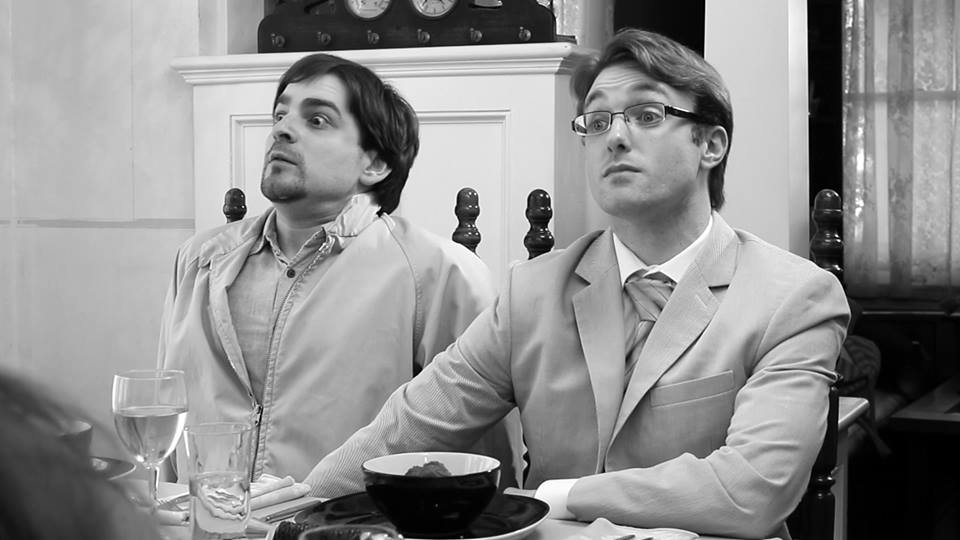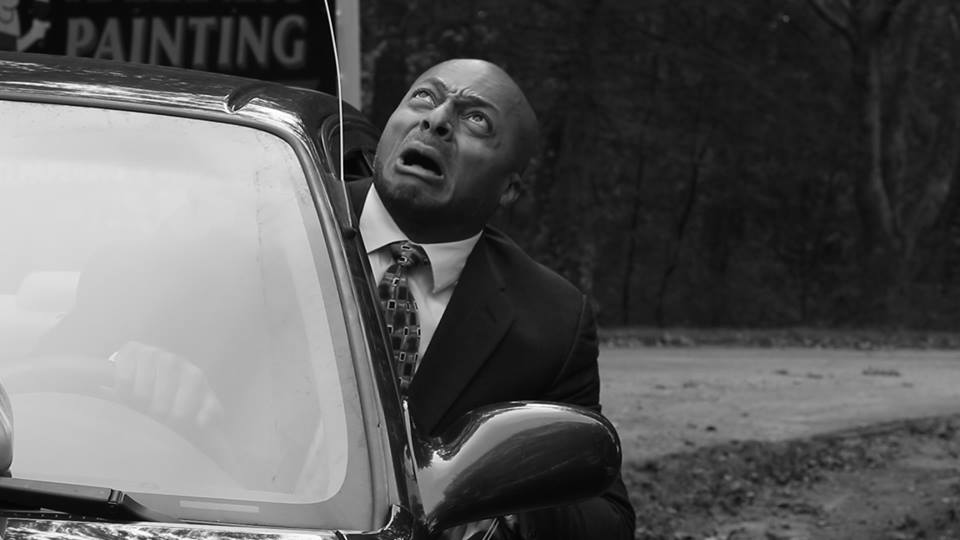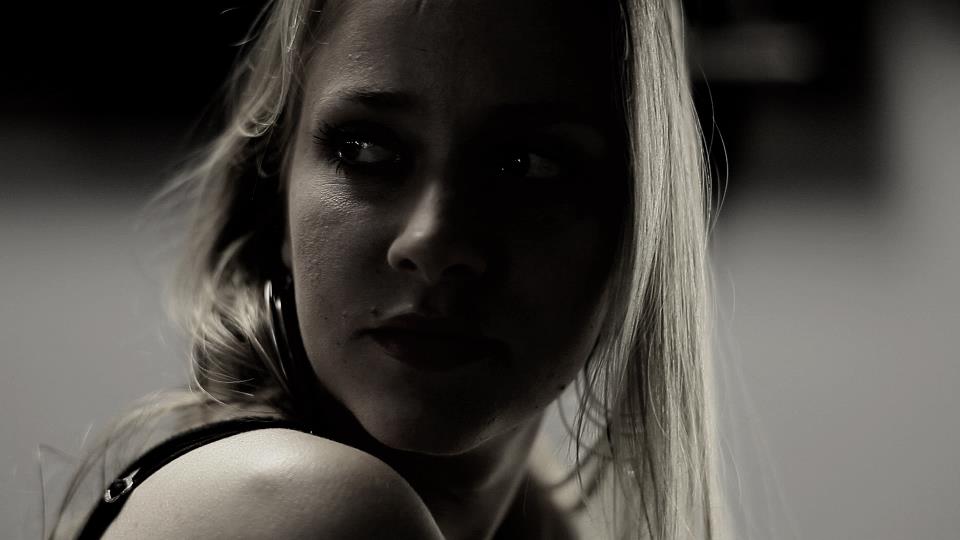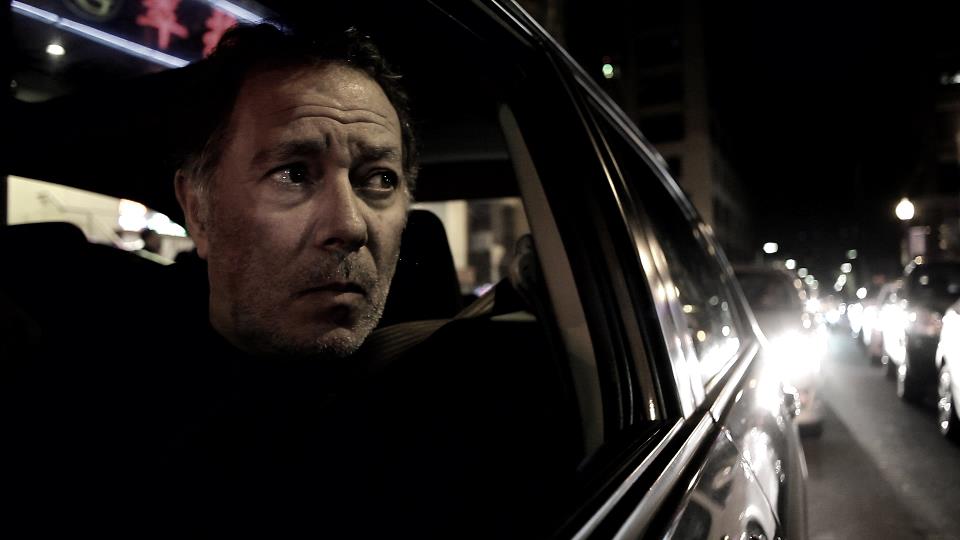
“Zoombies” – (Movie Review)

zoombies pic 1

By Andrew Buckner

Rating: ½ star out of *****.

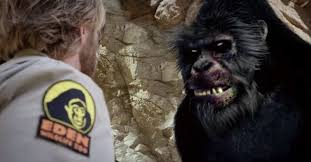
Zoombies, from director Glenn R. Miller and screenwriter Scotty Mullen, desperately wants to link itself to the ground-breaking Jurassic Park series. The most obvious of this is the tagline, seen on the fairly intriguing cover art, which screams: “It’s Jurassic World, of the Dead”. At one point, a character even shrieks: “It’s a zoo, not Jurassic Park.” In a later bit, two giraffes rip a man apart in the same manner a pair of Tyrannosaurus Rexes do to a human entre in 1997’s The Lost World: Jurassic Park. Even the logos the employees adorn on their shoulder are eerily similar to the JP design. Yet, Miller and Mullen seem to forget what made the original film in that series so legendary.

Miller and Mullen tell the story of a safari park dubbed Eden. As a gathering of patrons assemble at the area, so does a virus. It is one which turns the animals of the once tranquil area into the undead. From herein, as with all other entries of the ilk, there is little more narrative. What account remains, predictably, concerns the individuals involved in this catastrophe trying to band together and survive the violent onslaught.

Stephen Spielberg brilliantly spent the first half of Jurassic Park (1993) believably developing his intelligent, heroic and uniquely quirky entities. This is much as Michael Chrichton did with his same named novel from 1990. All the while, Spielberg spent the time gradually building suspense. There were instances aplenty of sheer awe amid the theoretical discourse the beloved individuals on screen engaged in. It was these gentle, meditative sections that made Jurassic Park so much more than ‘just another monster movie’. Moreover, when the second half kicked in, Spielberg delivered one spectacular, now classic sequence of nail-biting action after another. All of these previously addressed elements are noticeably missing from The Asylum’s latest disaster.

zoombies pic 2

Instead of the charismatic, paleontological Indiana Jones that was Dr. Alan Grant (Sam Neill), the quiet strength of Dr. Ellie Sattler (Laura Dern) in Jurassic Park or even Owen, Chris Pratt’s unique interpretation of much of Grant’s personality traits in Jurassic World, we are given a half-hearted, annoying cluster of one-dimensional archetypes. None of whom have anything that is stimulating in the least to add to its endless reams of chatter. There is nothing new or defining about any of these on-screen personalities. They all follow The Asylum’s routine, garden variety representations and general arc. This is done blindly and without wavering from them. Miller and Mullen aren’t out to make us care for the humans or the wildlife that is chasing them. This is, yet, another undeniable differentiation between Jurassic Park and this sad imitation.

The pace is choppy. It isn’t anywhere near as meticulously crafted as Spielberg’s masterwork either. In Miller’s exertion, we are no more than five minutes into the feature before the beasts begin their attack. It is no more than fifteen-minutes later when ‘all hell is breaking loose’. This breakneck progression wouldn’t be so difficult to look past if Miller and Mullen used the sixty-two minutes that was left of its eighty-seven minute runtime to generate intensity and interest. At the least they could provide us a reason to care or even try to ‘wow’ us with an original idea. As it is, the most creative turn of events occurs in the aviary near the finale, when Miller and Mullen turn to Ridley Scott’s Alien (1979) for their inspiration. Instead, the whole composition, as well as the team behind it, is in a rush to go nowhere. Such is evident from the poorly executed two-minute opening segment. This attempts to be a clever wink of an advertisement for Eden.

Yet, the most evident alteration between Zoombies and the Jurassic Park series is in the quality of the illusion created by the graphics. Where Jurassic Park remains arguably the single most jaw-dropping display of such a technical aspect put on screen, Zoombies gives us cringe-worthy, cheaply rendered computer generated imagery. It is the type that is blatantly cartoonish and laughable. What’s worse: the re-animated giraffes, monkeys, apes, birds, koalas and various other re-animated figments of nature involved in this absurd, derivative yarn are rarely seen. Given the shoddy quality of Denise M. Chavez’s special and Glenn Campbell led visual effects. Perhaps, this is for the best.

But, the most inescapable crime for a cinematic venture that is trying to be merely a guilty pleasure, a B- style romp is that it cannot even be seen as mindless, mild entertainment. Since the rampant beasts are so rarely viewed, and the people who dominate the screen and their shallow dialogues are ingratiating, we do nothing but wait for most of the picture. We wait for something to happen. We wait for it to end. We wait for some redeeming value. Even the rare emotive plot points, especially one involving a young girl named Thea (La La Nestor) and a gorilla she adores named Kifo (Ivan Djurovic), are hollow and obvious.

The performers are from adequate to grossly underwhelming. From Ione Butler as Lizzy, Andrew Asper as Gage, to Kim Nielsen as Dr. Ellen Rogers this attribute is just as uninspired as the rest of the affair. To its credit, Christopher Cano’s music is thrilling. It summons the feel of an old-fashioned adventure well. Bryan Kross’ cinematography is solid, despite its low budget trappings. James Kondelik’s editing is outstanding. Erica D. Schwartz’s costume design and Daria Castellanos’ art direction is admirable. The same can be said for the sound and make-up department. Yet, it cannot overcome the sense of exhaustion that hangs over the proceedings.

Miller’s production is a failure down to its concluding shot. Such appears copied from innumerable ‘last jump’ scares before it. Even this is treated as an afterthought. It’s an impression left in the way it shrugs its shoulders at all the mechanisms which make a moving picture a standout, a triumph or, even, slightly stimulating. This is especially sad given the unique potential the tale could’ve contained. Instead, we are given a forgettable trek through a photographic wasteland. It is one so pointless that even its brightest moment is constructed from a vastly superior undertaking. Even Jurassic Park III (2001) was better than this.

zoombies pic 3

“Darling”- (Movie Review)

darling movie pic 1

By Andrew Buckner

Rating: **** out of *****.

Darling, the fourth motion picture from writer and director Mickey Keating, draws heavy inspiration from Roman Polanski’s 1965 masterpiece Repulsion. It also aligns itself with David Lynch’s truly unnerving Erasherhead from 1977, Jack Clayton’s The Innocents from 1961 and a number of pictures by Alfred Hitchcock. The most noticeable of these is Hitchcock’s timeless adaptation of Robert Bloch’s novel from 1960, Psycho. This is especially true in the last half hour of the project, when a certain household item involved in the previously stated magnum opus’ most popular sequence is involved and returned to constantly. The symmetry is also amplified given the context in which it is cleverly used. Keating’s labor of fear conjuring also calls to mind Edmund E. Mirhige’s audacious and disturbing 1990 effort, Begotten. Such is evident in its meticulous, slowly grinding pace. Such is also noteworthy in its ability to unnerve through its coldly projected sights. This is as well as its emphasis on merciless atmosphere over gore. A warning within the first minute of the attempt about the “strobe lights and hallucinatory images”, which are excessively and exhaustingly utilized in the concluding act, is reminiscent of an attention-garnering trick from the maestro of the low-budget gimmick, William Castle. This all adds to the claustrophobic fun on display, for cinephiles particularly, immeasurably.

The work overall is proof that beautifully executed style, though often interrupted by its obvious imitation, is enough to carry a tale. This is even given one such as this which is as sparse on plot as it is effects, locations and characters. The crisp, striking and gorgeous black and white cinematography by Mac Fisken highlights this parallel all the more. This is obviously an exercise in approach, restraint and minimalism, made apparent in its wisely taut seventy-six minute runtime, as much as it is a love letter to the aforementioned architects of the silver screen. In that sense, Keating’s undertaking mechanizes spectacularly well. Yet, this does little to detract from the reality that this is simply a handsomely established retread of the same essential fiction, and much the comparable chain of events, that we have seen in far too many horror enterprises beforehand. The mileage each viewer will get from this particular offering is determinate on how deeply their admiration for the classic model, and the singular panache associated with it, is above all other items of moviemaking. This is as exact of a patron’s ability to appreciate such attributes with the sacrifice of any genuine bits or originality. Personally, this resulted in a largely solid endeavor. Darling is a good silver screen venture overall. This is even if it just misses the great benchmark it is striving admirably for. The piece left me exhilarated through most of my sit-down with it. Yet, ultimately, it left me feeling hollow and, somehow, not fully satisfied.

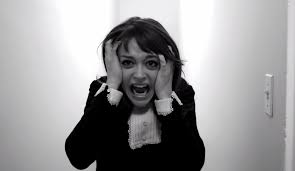
Keating’s production concerns the young, lonely title woman (Ashley Lauren Carter in a mesmerizing performance that mirrors Catherine Deneuve in Repulsion eerily well). She is given the task of being left to watch over a home. Much in the tradition of the set-up of uncountable dread inducing exertions from the past, this is without being fully aware of what has occurred within its walls. Slowly, she begins to question herself and her surroundings as unnatural events, that may be a product of her own psyche, begin to taunt her. This is another example of a photoplay asking its spectators the question: Is it the house or the girl herself who is haunted?

darling picture 2

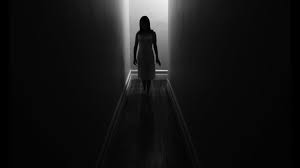
The configuration toys with the answer to these question brilliantly. It does so by giving us long shots of isolated corridors, also in the archetypical custom. This is punctuated with ominous doors, some of which open by themselves as if welcoming her in, that could contain any manner of unspeakable things. There are also further age tested, enduring elements such as the winding staircase, hearing voices unexpectedly and the occasional ringing of a phone, which also maintain a fittingly retro veneer in this composition, to shock Darling and her audience. Yet, none of this is done artificially. This never elucidates a cheap jump, as it would in a lesser picture.

The first fifteen minutes, when the effort plays up these enduring ghost chronicle facets to boundless consequence, are when the flick is at its best. It is also when it is at its most promising. There is also much interest garnered afterward when Darling becomes obsessed with an individual named The Man (an enactment by Bryan Morvant that is as sophisticated and well-done as the article itself). This takes up much of the second act. Though these particular physiognomies are rehashed from about as large a number of sources as the bits of spectral narrative announced previously, it signals a shift in the creative temperament; a curtain being pulled on the destination where we, the onlookers, are being led.

Such a manipulative turn changes the direction of the Glass Eye Pix release several times throughout the picture’s six ‘chapters’. It is riveting; an honest display of storytelling craftsmanship. It is one that makes the familiar sections, so prevalent herein, easier to overlook. Alas, it assures us of much more than the affair actually delivers. The conclusive destination of the piece, though as tremendously put together as the rest of the endeavor, is just as acquainted as many of its ingredients. Such exposes these alterations in the movement of the arc of the yarn as window dressing. That these high-quality details were meant merely as another diversion from how often this account has been told before is disheartening to say the least.

But, what a terrific job it does of distracting us from the obvious. This is courtesy of the proficient technical angles all around. Sean Young’s brief portrayal of Madame is excellent. Al-Nisa Petty is remarkable as Miss Hill. Larry Fessenden, as Officer Maneretti, and John Speradakos, as Officer Maneretti, also do well with their respective depictions. The lighting is terrific. This quality assists in evoking the illusion of being immersed in a new variation of unsettling exertions from the past abundantly. Giona Ostinelli’s music, often reminiscent of a score by Hitchcock’s Psycho composer Bernard Herman, fits the old-school impression of the proceedings impeccably. Valerie Krulfiefer’s editing is just as impressive. Pete Gerner, Flynn Marie Pyykkonen and Brian Spear’s make-up is pleasing. Contributions from the sound department, by Sean Duffy and M. Parker Kozak, give off the sensation that we are watching a classic from the 40’s- early 60’s. This is issued with jaw-dropping accuracy. Spears’ special and Sydney Clara Bafman’s optical effects are ominous and credible. The upshot is certainly the amazing, obsolescent replica Keating was going for.

What is most welcome is the subtlety. In an age where terror seems defined by how much they show, Keating has proven with Darling, as well as his prior effort, Pod (2015), that scares are best delivered when much of what is causing them is left in the shadows. The imagination is the most frightening place of all. Keating knows this. He uses it to tremendous influence. The fact that it is mostly a one-woman show, with a large weight of the quality of the endeavor based on Carter’s ability to transform into our central personality, shows signs of courage and confidence. These two words can be applied to much of Darling. This is so much so that when Keating has shown us all he has for us to see and the drapes are pulled on the well-kept mystery at large, that we believe we should be blown away, frenziedly applauding the film. But, in the end, Keating is a bit too reliant on the proven, and a plot could most politely be described as ‘bare bones’, for it to be the tour de force he obviously yearns for it to become. Instead, we admire the parts more than the sum. Yet, the whole is far superior to the bulk of the dime a dozen genre entries which flood theatres and streaming services nowadays. It is sure to please fans of avant-garde trepidation. Its audience are those who rightly applauded The Witch from earlier this year. If you were among those who were left scratching their heads over the praise for the aforementioned feature, this is not for you. For all others, this comes highly recommended.

mickey keating darling 4

“Where To Invade Next” – (Movie Review)

where to invade next 1

By Andrew Buckner
Rating: ***** out of *****.

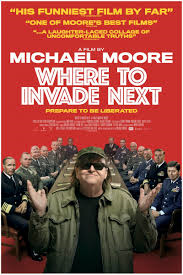
After a six year silence, the director whose last film was 2009’s Capitalism: A Love Story, Michael Moore,  has proven he is as subversive, hilarious and entertaining as ever. This is with his latest feature, Where to Invade Next. The one hundred and twenty minute silver screen affair, released on December 23rd of 2015 through Dog Eat Dog and IMG Films, can be seen as a grand expansion on the themes present in his previous works. Our broken health care system, education and woman’s rights get explored magnificently and illuminatingly. Additionally, he focuses a great amount of the runtime on international lifestyles. Despite this, Moore almost ceaselessly maintains an unexpectedly upbeat, often poignant atmosphere.

Such is established with special emphasis on how other countries regard their fellow neighbors. This is both in and out of the work place. A special prominence is put on this fact as designated by their employers. There is also a stirring, and undoubtedly eye-unveiling, focus on the prison complex. Primarily, its treatment of the inmates. An extended segment where Moore visits both a minimum and maximum security reformatory in Norway is especially fascinating. Yet, he focuses just as much on the mutual love and respect the many countries he visits showcase to one another. This is illuminated as well as the alterations America needs. They make a riveting assessment. Such is all the more undeniable when layered together in the manner Moore does here.

One of the most recurring themes throughout is the age old principal of being a good neighbor. What is just as prevalent is the message, delivered by one German cop states when discussing his attitude towards his fellow citizens, “Human dignity above all.” That is certainly something America could benefit greatly, and immediately, from. This is if such a suggestion was applied more often to its residents’ demeanor. Such is just as true of their routine activities.

The movie focuses in on Moore lightheartedly ‘occupying’ other nations through interrogation. He encounters students, higher-ups, workers and an assortment of other differing personalities throughout this cinematic trip around the world. In so doing, he attempts to find out what ideas assist other principalities in getting superior results in the areas America lags behind in. Every time he finds a potential solution to our republic’s problems, he plants an American flag at the scene. Hence forth, he promises to steal the notion and bring it back to his homeland.

It’s a brilliant concept. One that mechanizes as a parody of America’s ability to take the philosophies of others and pass them off as their own. It is also an absorbing international glimpse into how others subsist. These humorous and enlightening elements, delicately woven throughout, are a perfect pulpit. It is one custom-fitted for the equal doses comedic and sobering sensibilities equated with Moore’s often imitated, trademark style.

Also true to form, the piece is briskly and expertly paced. For the most part, each issue is given well-divided intervals. Such a component is smartly utilized as to not weigh down the progression of the narrative. Because of this approach, there is no excess here. In terms of the previously stated aspect, this is especially true.

This opus begins with a perfect, immediately tone-setting introductory segment. In a sequence which plays as if it was taken directly from Moore’s own dreams, American officials summon Moore to find an answer to their states’ problems. Such is followed-up, just as smartly, with a commencing credits sequence. Moore than flashes many of these issues via news report. We are no more than five minutes into the motion picture when Moore begins his global ‘invasion’ of Italy. Yet, the breakneck movement of these early sections certainly do not undermine Moore’s stance being cemented and made distinctly evident. It also doesn’t undermine the stalwart nature of what he is showing us. These early glimpses are harrowing, and often horrific. Moore’s position towards American tribulations is clearly and evocatively sent.

This is another illuminating instance, another genius decision on Moore’s behalf. Such is because the scenes of police brutality and bloodshed which flash on-screen before Moore’s worldwide travel begins instantly give us culture shock. What follows after the grim, cringe-inducing actions of the acknowledgements is almost continuously peaceful and serene. After what graces our senses beforehand, this is a welcome atmosphere that is largely elucidated throughout. That, in itself, is one of the many successful ingredoents herein. Another is the continued range of emotion buried just beneath the surface of this boldly ambitious  Moore has undoubtedly crafted another incredible addition to his celluloid catalogue.

Also, keeping to the tradition of Moore’s previous ventures: the quiet, smaller moments are just as memorable and operative as the larger, more punctuative ones. For example, there is a sequence where a young French girl is given a sip of Coca-Cola at a school lunch table. Almost immediately she begins to fidget and shake. This is just as potent as the finale. Here, Moore reminisces with a friend from his home state of Michigan about taking down a wall in Berlin. A discussion with Krista Kiuru, the Finnish Minister of Education, and Tim Walker, a teacher who is also a representative of Finland, is just as mesmerizing. Yet, there are occasional bits, such as an instant where Moore tours a factory in Germany to see the workers relaxing in a room and merrily talking, which appears too convenient. It as if this section was established simply to help illustrate Moore’s point concerning the vastly superior treatment of laborers in realms outside of America. Mercifully, such intrusions are few.

What is just as phenomenal is that there are no repeated ideas here reintroduced to simply fill the runtime. Instead, Moore keeps the story fresh. This is with new information, thoughts and suggestions billowing from every new scene and location. Despite this, the composition never seems rushed. Furthermore, the whole never appears to be disrespecting the many personal tales and theories at hand. This is respectfully issued by giving the many personalities we encounter their due chance to make their statement and tell their tale.

There is a leisure to the narrative that is meditative but, never overwrought. This is perfect for the tourist-like aspect of the proceedings. Such is as much the courtesy of Pablo Proenze, Todd Woody Richman and Tyler H. Walk’s phenomenal editing. This is also visible in Moore’s jovial, ever-likable presence. Such is also true of his style as both interviewer and documentarian.

Technically, the rest of the project is just as striking. Rick Rowley and Jayme Roy’s cinematography is lush and gorgeous to the eye. Walter Thomson’s still photography is superb. The sound department, a collective contribution from thirteen individuals, is crisp and skillful. Likewise, Dan Evans Farkas and Heather Kreamer’s musical endowment is outstanding. But, the pinnacle of all these details is Moore’s exceptional direction. It is as commanding, welcome and attention-garnering as always.

Since it is practically impossible to review an undertaking by Michael Moore without the interference of politics, I admit that in the distance between Moore’s last feature the subject has lost its personal appeal. Perhaps the notion of difference making commonly associated with this often controversial theme is not a result I, a working class American, find plausible anymore. It could be an outcome of being weathered by age and cynicism. More than likely is that it is the product of bearing witness to one self-serving failure after another in the governmental sphere for the entirety of my adulthood. This sentiment endures in me regardless of the party associated to the individual in office. So it was out of admiration for Moore’s prior accomplishments, and not the belief that it would be able to hear concepts which America would ever dare mix into their commonplace existence, that I approached his latest offering.

The alternating doses of rage and sadness for the state of our country were still undeniably present while viewing his latest affair. It was felt as much with Where To Invade Next as it was after I initially saw 2002’s Bowling For Columbine in a college English class. These sensations also lingered and brimmed within me as much as it did after coming out of a screening of 2004’s Fahrenehit 9/11 and 2007’s Sicko during their respective theatrical runs. Yet, I didn’t initially feel the sense of empowerment that usually erupted within me during a Moore production.

That was until a pivotal, underplayed bit of information was dropped in the dialogue of the second half. Soon after this was unveiled it became a late thesis statement of the effort. Upon a follow-up sit through the movie proved to be every bit in line with the liberated impression equated to his prior on-screen journeys. In the end, this helped me realize how necessary engagements like these are. It convinced me again that it isn’t too late to re-fashion the complications America faces. This is mandatory so that we can live in a region where the reverie of tranquility and admiration for one another is as prominent here as it is in this meticulous and timely labor’s depiction of other areas.

Where To Invade Next gives us hope. Not only is that a start to a better society, it is the first necessary step to seeing this vision Moore has shown us take root. This reason alone makes Moore’s latest masterpiece a compulsively watchable, mandatory experience.

The exertion can also be defined by a casually addressed sequence where Moore declares, “My mission is to pick the flowers, not the weeds.” Ultimately, the purpose here is to communicate to all of of us, Americans especially, that we all can use a little bit more of that in our lives. Moore illustrates and drives home this proposition beautifully. The proof radiates through every shining frame of this galvanizing tour de force.

where to invade next 2

“Hush”- (Movie Review)

hush picture 1

By Andrew Buckner
Rating: *** out of *****.

As an exercise in continued suspense, director Mike Flanagan’s Hush works incredibly well. The film echoes superior efforts, most noticeably the 1967 Audrey Hepburn starring tour de force Wait Until Dark, in its apparently unproblematic ability to shred our nerves. More often than not, this is derived from its capacity to evoke panic amid mundane surroundings. Remarkably, such transpires while keeping audience patrons’ devotion almost constantly peaked throughout with the implement of its deadly game of cat mouse. Flanagan’s latest, parallel to the adaptation of Frederick Knott’s play mentioned above, also incorporates the impairment of senses. Hepburn suffered blindness in the previously mentioned nail-biter. With Hush, the condition is deafness. This our heroine accrued as a teenager. The result, though ultimately retracing the motions of far too many analogous thrillers, is still surprisingly effective.

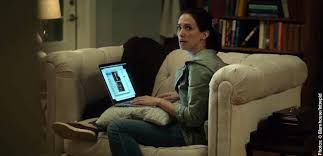
Such is thanks to Kate Siegel’s hypnotic and believable turn as the lonely writer, Maddie. Siegel injects her otherwise one-dimensional character with a wounded likability. This makes it all the easier to root for her. Such is especially visible when the murderous madman she sees watching her outside her secluded residence in the woods threatens to slaughter her by morning. Siegel projects a vulnerability from the on-set that still quietly cries out of her eventual refusal to be victimized. It is one that we can sense making her easy prey for the psychotic, and similarly archetypically penned, villain of the tale. This individual is known exclusively as The Man (John Gallagher, Jr.).

Yet, where Siegel, who had a small bit in Flanagan’s underappreciated Oculus from 2013, fashions her protagonist into a sum far greater than the part she co-wrote with Flanagan: Gallagher’s enactment doesn’t fare nearly as well. His portrayal is adequate. Still, he has difficulty rising above the generic trappings of the nefarious role he has been provided. Michael Trucco as John, Samantha Sloyan as Sarah and Emilia Graves as Max correspondingly do as well as they can. This is considering their run of the mill, plot-serving on-screen personalities. The climax also feels rehashed and, ultimately, underwhelming. It also attempts to make a commentary about the dangers of our era’s technological obsession. But, this too is distributed in no new way. In the end, it is this familiarity, as well as these shortcomings in the character development, which make Hush a solid, but forgettable, outing in fear.

There is nothing innovative or surprising about anyone we meet in this cinematic journey. Furthermore, many of the events herein are equally uninspired. A proposed ‘twist’ as to The Man’s real identity, which transpires late in the third act, smacks of much the same repackaged sensation. Additionally, one scene where Maddie writes, “My boyfriend is on the way”, in lipstick on glass as a message to the killer seems like it was molded after the brilliant opening of Wes Craven’s 1996 game changer, Scream. The only consequence is it comes off as an imitation of Craven’s far sturdier and better executed sequence. This becomes one of many other small details that temporarily throw us out of this otherwise well-honed vehicle. These flaws become more difficult to overlook. What hurts the attempt most of all is that it serves to constantly remind us of the imitation, as well as loftier entries in the slasher on the loose sub-genre, buried beneath the feature’s intriguing surface.

Regardless, many of the technical attributes help sustain the uncertainty and keep our consideration invested. James Kniest gives us dark, brooding cinematography. It is perfect for the piece. Flanagan’s editing compliments the aforementioned attributes splendidly. Ken Gorrell’s top-notch minimalistic special, as well as Bret Culp and Brian Jeremiah Smith’s visual, effects add authenticity to the project. Jaan Child’s set decoration helps this previously stated characteristic spectacularly. The art department does a great job. Brock and Bruce Larsen create a mask for the killer which is unsettling. This is even if Flanagan and Siegel make the fatal mistake of having The Man reveal his face, and therefore diminish much of the mystery, far too early. Joshua Adeniji, Kate Jesse and Michael B. Koff issue sound which makes the long periods of quiet interrupted by sharp, sudden noises, which Flanagan instills into the work often to build anxiety, all the more creepy and disturbing.

Flanagan’s behind the lens contribution which, when combined with Siegel’s high-caliber representation, makes the movie compulsively watchable. He heightens the tension dazzlingly with minimal dialogue. As a matter of fact, it totals less than fifteen minutes of the runtime. He also conjures haunting images aplenty. The craftsman of 2011’s gem, Absentia, uses the largely subtle instincts of terror building, though all tried and true, he utilized in his past features here with just as successful an outcome. Flanagan’s brilliant and striking use of The Newton Brothers’ unsettling music becomes a potent punctuation point for these already stalwart facets. It increases these already uncomfortable instances throughout to levels above the general formula that plays into all angles of the narrative. These elements could’ve easily become cliché, given they have been dispensed on uncountable circumstances in comparable endeavors, in less capable hands. Yet, the piece peaks our attention after its opening ten minutes of quickly fading serenity and brief, yet satisfactory enough, exposition. For the rest of the wisely compact length, Flanagan keeps the pace moving expertly with an almost unwavering intensity pulsating throughout.

This detail mechanizes well enough to keep our mind from returning too often to the reality that this is all strictly serviceable material. The trepidation victoriously produced is window dressing for an otherwise hollow, by the numbers undertaking. Yet, Hush, though far from Flanagan or even 2016’s best horror submission, is worth a glimpse simply for the enduring strength of this quality alone. It keeps Flanagan in the running as a chief of his respective field. This is despite the fact that compared to the baker’s dozen of cinematic treats in his directorial catalogue, Hush is more mediocre than masterwork.

hush movie picture 2

“Hardcore Henry”- (Movie Review)

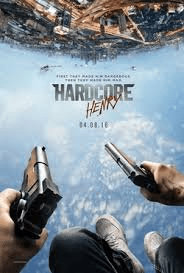
hardcore henry 3

By Andrew Buckner
Rating: ***1/2 out of *****.

Hardcore Henry, a proudly R-rated action vehicle from thirty-year old director Ilya Naishuller projected almost entirely from the first person point of view, is an unusually successful cinematic experiment. With practically wall to wall violence from its slightly off commencing sequence to it’s certainly smirk inducing finale, the too often heard comparisons of film to a video are certainly impossible to ignore. As a matter of fact, it seems tailor-made for such tech savvy enthusiasts. Similarly, its general attitude is destruction of everything in sight without taking the time to ask why. It delivers only the most necessary bits of its narrative design to project the story from one jaw-dropping, breathtaking sequence of explosion and gun-fire to the next. Even the general plot, which concerns a robotic being with an unusually well-honed knack for fighting waking up with no recollection of prior events to find out he is a wanted man, seems lifted from the same comparative source.

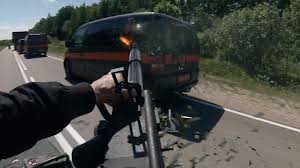
The result is a spectacularly over the top, endlessly entertaining ninety-six minutes. It astonishes by showing us things we’ve seen far too many times before with a unique angle. This is that we are thrust directly into the sights and perceptions of our lead, Jimmy (Sharlto Copley, who proves he is certainly suited for his role; even if his actual performance is hard to assess). Furthermore, the composition moves at a relentlessly breakneck pace throughout. There is no denying the ground-breaking take on the brutal, yet conventional, exploits Jimmy dabbles in. The whole work, from one amazingly done early sequence atop a plane to the massive brawl incorporated in the completion, seems to be trying to top itself time and again. This is especially true in terms of sheer ravenous spectacle. A dynamic extended sequence inside a brothel and an equally terrific one involving a unique take on a car chase are among the most memorable such incidents herein. There are also several successfully humorous sections sprinkled throughout the bloodshed and ferocity. One such incident, where Jimmy fails to mount a horse near the hour mark, plays like a riotous western parody. It can also be seen, at best, as a hilarious outtake from such a genre offering. It is such unexpected moments amid the modern-day carnage which keeps the proceedings continuously fresh and unpredictable. These portions only heighten the joy at hand.

Yet, it isn’t until we leave this silver screen wonder that we realize we know little more about the individual whose shoes we’ve walked in as we did going into it. We are awed by its brazen, in your face attitude. This fascination continues with its sharp twists (one particular third act reveal is especially surprising) and the pure energy surging from every frame. Yet, it never asks us to peer any deeper. Such makes for a rousing, but, ultimately, hollow experience. Those who are looking for brisk, mindless excitement will more than get their money’s worth. All others may be underwhelmed by its lack of dimension. Those individuals may be just as disappointed with the by the numbers story arc.

Besides wisely avoiding showing the face of our protagonist by having Jimmy cleverly duck out of range of all the mirrors that surround him until one pivotal instant, which heightens the effectiveness of the gimmick Naihsuller engages us in, the screenplay continuously injects inventive ways to keep its rowdy spirit fresh and alive. The picture rarely repeats itself in terms of violence. Likewise, the incorporation of Akan (Danila Kozlovsky), an engaging albino villain with telekinetic powers, adds to both the wow factor. It also greatly enhances the creativity on display. This is noticeable when he is seen psychically picking up anything in his possession and hurling them at Jimmy. These range from tables to actual human beings. Either way, such sights suit the approach remarkably well.

hardcore henry 1

Sadly, none of that conception can be found in the other aspects of the conclusively rote Will Stewart and Naishuller penned screenplay. The duo offer strictly serviceable dialogue. They serve up to spectators’ ears the brand of perfunctory conversation that is just meant to move us from one scene to the next. That is when the feature settles down, as it rarely does, enough to allow such discourse. There isn’t even the expected degree of quips we would find in a classically honed vehicle. For instance, the brand that would’ve typically showcased Arnold Schwarzenegger or Bruce Willis. Additionally, all of the characters we meet herein are written as thinly as Jimmy.

Moreover, the ploy begins to grow tedious near the climax. There is also a staggeringly unexpected, and rather pointless, musical number in the third act. This weighs down the energy. Such an absurd bit plays as if the tale is suddenly lampooning itself. It throws us out of the account during the minute or two it lasts. What is worse is that the feeling that this segment is pure filler, in a flick where this word otherwise does not apply, is undeniable.

Yet, these detracting elements are saved by composer Darya Charusha’s kinetic, pulse-pounding soundtrack. The cinematography from Chris W. Johnson, Pasha Kapinos, Fedor Lyass and Vsevolod Kaptur, as well as the editing by Steve Mirkovich, are crisp, rugged and grimly beautiful. Such is true of both components. This is even when they mimic the erratic shaky camera movements commonly equated to a found footage effort. Anna Kudevich’s costume design is stylish and appropriate. Igor Byoko, Regan Livingstone and Tanit Phoenix offer terrific make-up. The sound, composed from a department of seventeen individuals, makes the various blows issued throughout all the more immersive and heart-pounding. The massive visual effects and stunt crew only enhance the credibility and the illusion that we are actually a part of what is unfolding.

Haley Bennett paints Jimmy’s wife, Estelle, with equal doses strength and vulnerability. Bennett gives a powerhouse performance in a role that is more layered than her introductory sequences, when Jimmy wakes up, would allow you to believe. Tim Roth is just as convincing as Henry’s Father. Andrei Dementiev as Slick Dimitri, Oleg Poddubnyy as Yuri and Stewart as Robbie are just as wonderful. They are continuously gripping in their respective portrayals.

I was initially put off by the concept of Hardcore Henry. It appeared that, with the found footage sub-genre long past its prime and audiences unafraid to announce their fatigue with such opuses, Naishuller and company were attempting to offer us a new moneymaking alternative to the aforementioned sub-genre. Moreover, the trailer made the actual execution of the idea appear juvenile. I couldn’t be more wrong. This is a well-done, ruthless, fierce and mostly mature endeavor. It should have no problem packing adrenaline junkies of all ages into cinema theaters with the enjoyment afterwards evident all around. Naishuller guides the piece with taut direction and more artistry than one might expect from such an undertaking. This is visible from the moment Jimmy opens his eyes after the initial prologue.

Though the affair can be equated to the likes of the Jason Statham starring Crank ventures, both entries in the Hitman series, James Bond, The Terminator and any given found footage exertion thrown into a blender: the result is, for now, purely original. My only hope is that when the movie’s success at recycling these familiar ingredients brings forth an era of first person vantage movies: that they are injected with the inspired spirit of virtuoso fun that is visible throughout so that this impression will not become tainted. Even though the tactic utilized has been done in cinema before, Naishuller has crafted a film that is still uniquely trailblazing. Though far from a masterpiece, this assuredly dazzles. Such comes as much from the novelty still ingested into its device as it does from its ability to wink at its audience while exhilarating us. The results are undeniable, and highly recommended.

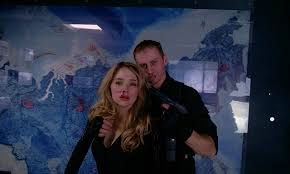
hardcore henry 4

“Accidental Incest”- (Movie Review)

Rating: ***** out of *****
By Andrew Buckner

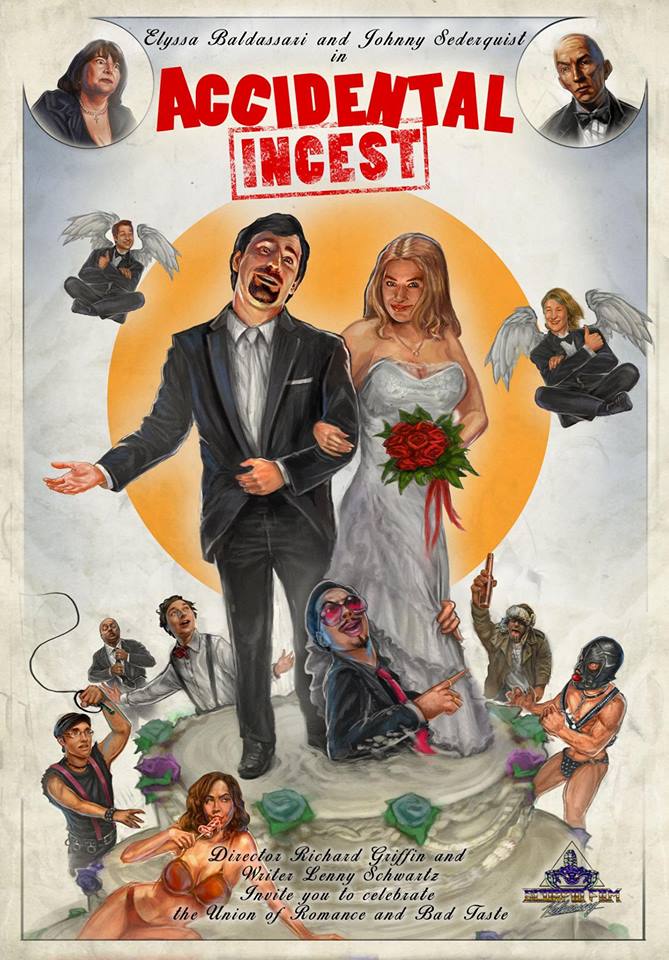
Accidental Incest, based on the off-Broadway production (published through Indie Theater Now) by Lenny Schwartz, plays like a gloriously successful mash-up of John Waters, Kevin Smith and South Park creators Matt Stone and Trey Parker at their most riotous and wildly unhinged. Schwartz has engineered a consistently funny, beautifully constructed and intelligent screenplay adaptation. It is one that is alternately meditative and unabashed. Likewise, it is consistently cunning, engaging and conclusively uplifting in its own respect. These elements assist in making this one hundred and two minute piece undeniably bold. Not only is this visible in the taboo bridled title subject matter, with much of its humor deriving from its sexual frankness, but also in the stances it takes against religious persecution. Additionally, the faux sense of superiority instilled in those who take the reins of such facets. This is the increasingly rare feature that utilizes the comedy genre as not only an instrument to entertain but, also, to drive home its timely thematic conscience. From the first effective comic segment, a tone-setting quote by Irving Berlin that flashes over a dark screen in its initial seconds, to the splashy extravaganza marking its heaven sent conclusion: the proof of this statement reverberates through every frame of its expertly paced one hundred and two minute runtime. This audacity is also visible in the unconventional manner the endeavor is told. It is just as foreseeable in the truly impulsive chain of events which dominate the general story arc. Such makes the whole affair endlessly intriguing; a vigorous breath of fresh air for those of us who are long exhausted, dulled to fury with the timid, rote manner in which the genre of laughter is so often served up on the silver screen.

accidntal movie picture 3

The narrative concerns Milton and Kendra (courageous, attention-garnering enactments by Johnny Sederquist and Elyssa Baldassarri that are full of surprising dimension and heart). After an extended six-minute opening, that is just as successful in establishing Milton’s carnal promiscuity as it is the string of rousingly victorious and well-timed unorthodox gags which pop up throughout the duration of the picture, our male lead swears to better himself and absolve such sinful deeds. Cut to Kendra waking up “Somewhere in Mexico”. She is disoriented, disrobed and has little remembrance of how she got there. As can be readily anticipated, the paths of the two unite during a motel stay. A date soon ensues that pushes the promises the two have made quickly out of the way. After finding out that they have the same father, their collective passions and fleshly indiscretions heighten to new zeniths entire. Eventually,  this anything but standard issue romance is tested. Such occurrs as the outside world, especially a pair of religious fanatics that the second half of the chronicle gets to know in depth, try to enact their fervent sense of moralism upon them.

accidental movie picture 2

This represents another show-stopping exhibition of range for both Scorpio Film Releasing and the incredibly talented and the always reliable director, Richard Griffin. Being his third collaboration with Schwartz, their first such venture was the spectacularly inventive 2012 slasher saga Murder University and the 2013 drama Normal, the duo remain a terrific creative team. Griffin, who is marked as the ‘Drunken Film Director’ in the end credits, and his behind the lens work here is the perfect combination of indie artistry and its respective spirit. In particular, his ability to bring us something wholly unique and liberated from the conventional trappings of mainstream cinema. This characteristic is visible in the ravishing manner in which it incorporates five endlessly uproarious tunes throughout. Each of these ravishing, anything but commonplace ditties are every bit as side-splitting and amusing as the one which came beforehand. Among these are the Crimson-Al Khelmia (who depicts Angel #1) penned ditty “Nicolas Cage”, which utilizes the title actor’s movies as erotic innuendos with magnificent results, and “Circuit Board Christ”. The latter track oversees The Lord, God Almighty (played with fervent relish by the author of the number, Aaron Andrade) displaying his lyrical prowess in what can be described as a dead-on parody of modern hip hop clichés. Not only are these show-stopping, off-the wall segments that represent the un-fettered spirit of the piece entire but, they are among the best moments in the entirety of the exertion. The send-off tune, “Sentimental Incest”, sung by Jesse DuFault, The Young Adults performed and co-scribed “Kill Yourself”, and the Mark Cutler authored and Patrick Keefee executed, “Next Door Neighbor”, are unswervingly adroit. Such sonic oddities, and the routines which often accompany them, simultaneously remind us of the story’s stage roots (as does the leads’ various intimate discussions with the camera as if such is a silent audience). Similarly, it succeeds as both extensions of tone and sheer entertainment. Griffin, true to the form he established in earlier endeavors, drapes the project in nods to various other genres. An example of this is seen in a repeated shot of a sign for a motel. Composed over Jill Poisson’s gorgeous and sleek black and white cinematography, this scant segment wonderfully calls to mind a noir fabrication from the 30’s. Yet, despite such occasional departures the general demeanor of the composition is rooted in our modern times. The attitudes and point of views from the personages on-screen highlight this point incessantly.

Not only is this escapade beautiful to look at, with its brief color bits as eye-catching as its aforementioned classic cinema veneer, but its allure stretches beyond the screen. There are layers of emotion to the tale that are made all the more immersive and powerful due to the sheer talent at hand. Timothy Fife’s music is brilliant. The visual effects by Jill Poisson and John Dusek are skillful and astounding. Griffin’s contribution as editor is just as exceptional here as it was in his previous escapadeses such as 2015’s similarly genius Seven Dorms of Death and Flesh for the Inferno. Angela Shulman’s art direction is astounding. Also, every cast member is spectacular in their roles and make them wholly their own. Tonya Free as the oblivious wife of a homosexual, Susan, does a fantastic job of delivering wild guffaws. This is through the medium of facial expressions and the well-hewn dialogue coursing throughout the affair. Jose Guns Alves as The Anxious Man, Anna Rizzo as Tabitha, Jamie Lyn Bagley as Jen, Jesse Dufault as Rex and Christian Masters as Alex fare just as incredibly. Laura Pepper delivers another display of her magnificent rib-tickling aptitude in her brief, but certainly memorable, part as The Brain Damaged Wife. Bernard Larrivvee Jr. is just as stupendous as the eye-patched hotel manager. Paul Lucenti as Issac, Kevin Kilavey as Tool, Dan Mauro as Bob, Sean Carufel as Wesley, Christopher L. Ferreira as Tyler, Rich Tretheway as Kevin, Ryan Hanley as St. Peter, Michael Thurber as Harrison, Rosemary Pacheco as a receptionist, Sissy O’ Hara as a landlady, James Bagley as a doctor, Mark Hutchinson as a bartender and Steven O’ Broin as Dr. Emil Locust are delightful in their corresponding depictions. Knate Higgins as Sven, Casey Wright as Ariel and Erin M. Olson as Mary also embody their portrayals just as masterfully as those mentioned previously.

Accidental movie picture 1 Jose Gonsalez

Griffin and Schwartz’s latest collaboration is an example of high-risk taking resulting in a singular, innovative and distinctively captivating experience. There is a finely etched concern for all of the individuals we meet along the way. It is both smart and exuberant. Furthermore, the arrangement entire showcases proudly the admiration for motion pictures of the past and present. This has become another of Griffin’s many charming staple attributes. In an age when mainstream romantic-comedies are so by the numbers we can predict every movement the story takes before we even sit down to view it, Accidental Incest seems determined to take these routine twists and demolish them. In turn, we are delivered a completely capricious undergoing. The result is wall to wall cackles at situations ‘polite society’ would turn their nose up at. There is also an unexpected mirth, a merriment to the proceedings that is genuine. Such is another component multi-million dollar Hollywood productions package artificially, as if via an assembly line. Griffin’s feature is a grand masterpiece; authentic, rousing and both ground and rule-breaking. For those of us who enjoy boundaries being pushed so far away from our eyes that we are capable of enjoying the briefly held sense of being truly and utterly free: this feature, along with all of Griffin’s other celluloid journeys, should go immediately to the top of your ‘must-see’ list.

accidental movie picture 4

“The Witch”- (Movie Review)

By Andrew Buckner

Rating: ****1/2 out of *****.

The Witch, from first time feature director Robert Eggers, is that increasingly uncommon, and boldly unconventional, horror feature that sets its sights far beyond simple jump scares and the genre’s various tired recycled staples of fright. Instead, it is out to coil gradually beneath your skin, burrow itself into your imagination and linger there for an extended period; long after its ninety-three minute runtime is far behind you. Eggers takes the long exhausted topics of possession, necromancy, religious persecution and fear of the unknown and transforms them into a composition of endless magnificence. He appears doggedly determined to go out of his way to deliver these well-worn topics into a succession of riveting sequenceso that is, not only as believable as possible, but, unlike anything we’ve seen before.

Backed by powerhouse performances, immaculate attention to the dress (courtesy of Linda Muir’s immaculate costume design), dialogue and demeanor of its circa 1630 period detail: Eggers has crafted an instant genre classic; one where the term ‘unnerving’ and ‘spine-chilling’ seems custom made to describe its lasting impression. What is just as extraordinary is that Eggers, who also wrote the meticulously erected screenplay, delivers a slow-burn thriller whose pace only heightens the suspense to almost unbearable levels while being both confident and intelligent. The effort never talks down to its audience or goes outside the confines of what would logically occur within the narrative for an unearned scream. That, in itself, makes this more than worthy of a recommendation. Moreover, it looks and feels wonderfully old-fashioned. This cinematic experience brings to mind timeless terror masterpieces, most notably Stanley Kubrick’s 1980 magnum opus The Shining (which Eggers declared was a great inspiration for the piece), while appearing fresh and wholly original. The similarities are remarkably evident in both Mark Koven’s brilliantly sparse orchestral score, Louise Ford’s seamless film editing and Jarin Blaschke’s ominous, eerie and elegiac cinematography. This results in a tremendous achievement; one that is exceptionally well-done on all accounts.

Eggers’ extraordinarily mounted and intense “New England folktale”, as the opening informs us and which we uncover immediately before the end credits has portions taken directly from the diaries of 17th Century Puritans, can be seen as a precursor to the religious fervor of The Salem Witch Trials. This occurred sixty-two years after the chronicle takes flight. To accomplish this goal Eggers has constructed a piece which concerns a family who is made to leave a plantation because of the father, William (in a portrayal by Ralph Ineson that is passionate and commanding), and his severe biblical interpretation. Later, the group of seven settles down to build a new life. They construct a home with a barn in front of a strangely brooding and deeply-reaching wooded expanse. Soon William and his children seem drawn to the region and find themselves making up excuses to explore its recesses. Almost immediately afterward a series of unearthly events begin to build. These are all surrounding the forest and the strange acting animals within and around it.

The unconsecrated sensibility emanating from the area becomes all the more palpable when the youngest child, in an effectually staged first act sequence, vanishes during a game of peak-a-boo with oldest daughter, Thomasin (in a depiction by Anya Taylor-Joy which is as gripping, varied and alive as the striking images Eggers puts on-screen). The mother, Katherine (in an enactment by Kate Dickie that is successfully accomplishes turns of vulnerability and outright danger masterfully), and William are understandably grief-stricken. Caleb (Harvey Scrimshaw) and twins Mercy (Ellie Grainger) and Jonas (Lucas Dawson), all of whom are wonderfully and uncannily played, seem to either be dealing with the loss in their own way or strangely removed from the situation altogether. Soon the presence of evil, which becomes pinpointed to a scene-stealing goat named Black Phillip, who is rumored to talk to Mercy and Jonas, grows. This existence of a malicious entity continues to steadily make itself known. Such disturbing goings-on progressively transpires until the clan is pitted against one another. From herein, the word ‘witch’ is hurled to practically everyone involved. This is distributed with increasing rapidity as the wickedness takes over.

The feature is a triumphant combination of both drama and visceral gothic horror. Most importantly, it avoids the clichés of the genre at nearly every turn. A large part of the success of this exertion derives from the factor that Eggers treats nearly every personality we encounter on-screen as if they are the lead of the tale, especially in the beginning  thirty-five minutes. Eggers builds his characters with the patience of a work by Ingmar Bergman and, simultaneously, finds the way to craft moments of menace that are sly and quietly intimidating. This balance is evoked so seamlessly that it makes the increasingly accruing evil appear all the more authentic. Initial scenes involving a rabbit with an unnerving stare, though it is initially difficult to declare exactly why it produces such an outcome, is initial proof of how meritoriously this blend of real-life and the unholy is accomplished. Often the terror is carved, just as masterfully as the more obvious jolts, from extended periods of unsettling silence.

There are moments, mostly reserved for the first and last ten minutes, which also brought to my mind thoughts of F.W. Murnau’s ground-breaking, expressionistic approach in his silent 1922 vampire masterpiece, Nosferatu. This duration also contains a sense of the abstract quality and rhythms of David Lynch’s 1977 avant-garde classic, Eraserhead. In these early and late sections, Eggers showcases terror sequences at his most grimly poetic and evidently visceral. Though these are obviously designed to chill your blood and stay with you, and they certainly achieve their intended consequence, these more obvious attempts at trepidation are just as victorious as the more subtle anxiety setting starts that take up the bulk of the picture. Moreover, Eggers never betrays the Kubrickian catalyst flowing throughout the endeavor. The result is a big-screen endeavor which commences brilliantly, grabs our attention and continues to defy our expectations just as smartly until its appropriately understated conclusion. The Witch works so well because it leaves just enough to get our imagination to fill in the blanks while it tosses one beautifully macabre image after another our way. This is an incredible feat, made all the more plausible due to the always believable credible contribution from both Luc Benning’s special and Andrew Alzner’s visual effects team, that Eggers pulls off without a hitch.

There are many other terrific technical attributes which make this endeavor such a one of a kind marvel. Christopher Guglick, Jason Perriera, Adam Stein, Orest Sushko and Robert Turi’s influence in the sound department is terrific. Mary Kirkland has issued tremendous set decoration, which only adds to the painstaking period authenticity present. The make-up department, credited to Francois Dagenais and seven others, does excellent work. These consistently high-quality markers help illuminate all that radiates from the screen and make the overall effort all the more immersive.

Eggers’ intentions with this project, besides scaring the hell out of us, was to understand the spiritual mania of the era and, alternately, give us a precursor to The Salem Witch Trials. Because the individuals here are so well-honed, and he elicits such concern for them, we understand William’s actions as he accuses those around him of witchcraft. Yet, we are just as sympathetic of those who are the indicted. In so doing, we often wonder if he is handling himself in such a manner as to cover up his own personal dabbling in such a field. This is because the production, true to the tradition of the best terror endeavors, effortlessly transports us inside the mind of those the tale follows. The spectacularly constructed shocks are all the more potent because Eggers and company dare to do what few horror features wish to do nowadays. This is gaze far beyond the surface and into the beating heart of those involved. Such is one of the primary reasons The Witch is so uncommonly effective. It is guaranteed to remain a favorite for both genre and art-house aficionados for years to come.

the witch poster

“A Life Not To Follow”- (Movie Review)

935067_456716641080190_2079564807_n (2)

By Andrew Buckner

Rating: ***** out of *****.

A Life Not To Follow, written by Pedro Alvarado and director Christopher Di Nunzio and released through Creepy Kid Productions, is a knockout neo-noir, gangster crime- drama set in Boston, Massachusetts. It garners its endless effectiveness by investing as much time and concern in the personal lives of its leads as it does sharpening its increasingly gritty narrative edge. Also helping the stalwart nature of this achievement is that the composition is propelled by a brilliantly crafted script. It drips with smart, yet credibly graphic banter and appropriately dark cinematography by Nolan Yee. The proficient editing by Di Nunzio and an astonishing contribution from the sound department only enhances these previously stated characteristics with its rugged veneer. With the further incorporation of a spectacularly mood-setting score from Eros Cartechini, convincing visual effects by Mike Shea and Jessice-Lee Van Winkle as well as riveting performances from everyone involved, Di Nunzio has crafted an indie masterpiece. It is one that plays like a gloriously original hybrid of the distinct storytelling attributes of Quentin Tarantino, with three ‘chapters’ which each act as both a single saga and an interconnected narrative with each of its leads is the star, with the constant craftsmanship and demeanor of an early Martin Scorsese classic. This stylistic blend makes the one hundred and five minutes of this already tightly-knit picture appear to move all the more briskly and engagingly. It also helps the proceedings radiate an art house sensibility. Such is one that also alternates as pure entertainment. These characteristics, along with Di Nunzio’s singular and stupendous directorial eye, concoct a raw, human filmic experience.

539706_423713927713795_840366741_n (1)

Such a conclusion is drawn primarily due to the tremendous restraint shown here from drawing distinct lines between whom is protagonist or antagonist. There is no judgment on any of our central characters as a lesser movie would be all too apt to do. Alvarado and Di Nunzio have created real people. They are complete with both regrets, faults and unique accomplishments in tow. Because of this we spend each of its trio of segments getting fairly and equally acquainted with our leads. These are the youthful ruffian, Eric DiVenardi (a remarkable portrayal by Fiore Leo that is fiery, vulnerable and endlessly engrossing), the hitman, Angelo (a depiction by John Martellucci where many of the same sentiments apply) and the Insomnia gripped F.B.I. agent, Tobias Kane (a representation by David Graziano that is just as absorbing as those he is paired up against). This makes for a far more intimate, multi-layered endeavor. It is one where the perspective and personal lives of each of these individuals is carefully fleshed out. Furthermore, it is smartly given its own time to unveil its respective side to the audience. This, ultimately, makes its stirring, tremendously done finale all the more nail-bitingly harrowing and intense. In its climactic moments we find ourselves on all sides at once. This is because we have endowed so much interest into DiVenardi, Angelo and Tobias Kane. It’s an act that few silver screen affairs have attempted. Even more notably, it is one even less cinematic exertions have pulled off in such a rousingly triumphant fashion.

314895_415388715212983_765347664_n (1)

Retribution and vengeance, two undeniably similar subjects which are well-represented in features such as these, are recurring themes throughout the first pair of segments. In the first section, we meet DiVenardi just short of the five minute mark. He is adorned in a gray sweatshirt with the hood pulled over most of his countenance; a look of fear and alarm visibly striking him. Before he even speaks we are wondering about his plight and why he is so apprehensive. Soon we learn that he is terrified of losing his life and a violent atonement may be his only answer to avoid such a fate. The second division continues this contemplation. It does this by introducing us to Angelo, whose closest acquaintance may have to take a bullet from him or else find himself on the receiving end of one. In the closing forty-three minutes all three personalities link. This transpires as Kane’s search for a young woman takes him down an unexpected route.

734911_415385675213287_1613012835_n (1)

There are twists aplenty to the account. Unlike many celluloid epics nowadays which want to show off their narrative cleverness, they never feel forced. Instead these events go the more admirable course and follow the natural progression of events. This only adds to the genuine display of aptitude that flows consistently through every frame. Alvarado and Di Nunzio sprinkle elements of relationships, romantic and professional, into the plotline. These take us even further into the already richly erected, and singular, worlds of DiVenardi, Angelo and Kane. Moreover, it makes the stakes all the higher for each individual as we know all of them so personally. In turn, the intensity is made all the more ruthless and palpable, especially in the more sentimental instances, as we anxiously await the outcome in store. There is a care shown here from commencement to conclusion for characterization. It is as alive in its central personas as it is in for its secondary cast. Even those with extremely limited screen time, like The Razor (James L. Leite) or Victor (Angel Garcia), have a magnetic charisma, an enigmatic likability to them that makes us want to know more. Their enactments, as well as Michael Capozzi as Luca Trapini, Molly Kay as Eliza Cushing, Ericka Derrickson as Finola and the rest of the crew, are phenomenal. This only makes these well-developed personages seem to leap all the more effortlessly off the screen and forever into our hearts and minds.

428247_415388398546348_1115200709_n

DiNunzio’s A Life Not To Follow works spectacularly on all fronts. It transitions from drama to thriller easily. What is just as incredible is that it respects the traditions of similar entries in its sub-genre without ever forgetting to be its own entity. It never peers away from the emotional focus, whether visibly stated or subtly drawn, in the way it follows it stays close to those who populate the screen. This is also accomplished with the numerous sequences of love and anger which often intermingle throughout. This makes for a well-rounded, strikingly made rollercoaster ride for the senses. It is one that can only be defined as ‘pure experience’. This is a journey that I am eager to take again. Additionally, it is one that I highly recommend taking yourself. DiNunzio is a fantastic talent. The proof of this is emblazoned throughout every moment herein.

408470_415368195215035_1292388657_n

“The Boy”- (Movie Review)


By Andrew Buckner

Rating: ** out of *****.

The fourth William Brent Bell (2012’s The Devil Inside, 2013’s Wer) directed horror effort, The Boy, is too reliant on the tried and true to be effective. It spends seventy-seven of its ninety-seven minutes trying to subtly build an ominous atmosphere. Yet, it only creates tedium. It also falls back on stock scares far too frequently. This is utilized with a particular affinity for dream sequences that have little baring on the actual narrative. These are languidly utilized to provide a quick startle amid the endless barrage of chitchat that takes up the bulk of the picture. This only heightens the sense of a potentially intriguing story bogged by Stacy Menear’s watered down, strictly functional screenplay. Menear has given us a piece of writing that is too safe, mirrored more after a stagy soap opera than a nail-biting scarefest, uneventful and molasses paced to be anything more than another mediocre genre offering. This is expressly dispiriting because the steady progression of events could’ve worked. Such could’ve occurred if the picture concerned itself less with melodramatic bits from our lead, Greta Evans (well played by Lauren Cohan of “The Walking Dead”), and her personal life. Additionally, it could’ve used its hour plus of dialogue to delve further into the strange, and gradually fascinating, mother/ child relationship (which provides several terrific bits) that forms between Evans and an ominous doll named Brahms.

To its credit, the isolated manor most of this account occurs is large, beautiful and offers a Gothic touch to it that is perfect for a labor such as this. Also, much in line with this old-fashioned characteristic is a bare minimum of gore and light use of special effects (credited to Paul Benjamin). Sadly, these go from solid to another lazy exhibition of computer generated imagery when the story finally shifts into gear in its rollickingly entertaining final twenty minutes. Its climax is also complete with a certainly intriguing twist. This is one which will leave patrons wishing, more than ever, that Menear’s script allowed us to learn more about the mysterious Brahms. Likewise, the cinematography by Daniel Pearl compliments the above attributes well. It adds to its timeless sensibility. Pearl does this by casting all we see in an appropriately ominous and bleak, but darkly beautiful, veneer. He has impeccably recreated the look of classic slow-burn supernatural thrillers; particularly those Hammer Films erected by the bundle in the 60’s and 70’s. Bear McCreary’s original music, James Steuart’s art direction and Brian Berdan’s sharp editing all further evoke this general impression.

The Boy chronicles Evans, an American Nanny, who is hired to watch after what she initially thinks will be a young lad. This is done as a service to the parents, known only as Mr. and Mrs. Heelshire (brilliantly and sophisticatedly performed by Jim Norton and Diana Hardcastle), so they can go on a long overdue holiday. Soon after her entrance at The Heelshire’s English manor she finds out that the parents’ so called ‘son’ is actually a life-sized, inanimate model of a child. He is, in a testament to one of the many captivating ways The Heelshire’s treat this large figurine as their own progeny, adorned in one of his many suits and a tie when Evans first sees him. When the duo, who are just as enigmatic and hair-raising as Brahms himself, go on vacation Evans blatantly ignores the daily schedule Mr. Heelshire demanded her to follow with Brahms. After The Heelshire’s real intentions are exposed, in a segment which is generally surprising and among the most successful flashes in this on-screen affair, she finds herself questioning her sanity. This transpires as she begins to believe, much like The Heelshires, that Brahms is alive.

What is most disheartening about this experience is that Brahms, who is phenomenal model of design, is just as fitting into the delightful mold of timeless terror compositions from the past. His general appearance is unnerving. He seems to slide all too well along the likes of Chucky from the Child’s Play features and the multitudes of his unearthly cinematic  brethren. With a cold, pale, expression-less countenance, quietly calculating brown and green speckled eyes and a stare you can almost feel lurking beneath his immobile porcelain it is all too easy to find yourself seeing him coming to life when someone’s back is turned. Because of this we await such an instant through the various lulls before the surprisingly rousing finale. This anticipation becomes one of the few genuinely victorious tension building instants herein. This expectant sensation is also most palpable when Brahms is doing nothing more than sitting on a chair and blasting classical music or simply lying in his bed (as he does throughout most of the duration). These simple, blood chilling touches are far more accomplished than the endless others orchestrated herein where the fear factor appears constructed as if via exclamation points. For example, a wonderfully underplayed third act scene involving Brahms being outlined in chalk and watched for movement is genuinely potent. Yet, these instances are so rare they ultimately feel like an unfulfilled promise. This realization is almost unavoidable as the majority of the production becomes another assortment of long-exhausted haunted house/ killer on the loose clichés.

Moreover, it is the predictable, and unnecessary, subplot involving Evans fleeing her domineering ex-boyfriend, Cole (Ben Robson), a just as inconsequential relationship between grocery clerk Malcolm (a fair, generic portrayal by Rupert Evans), appearances by James (James Russell) and friend, Sandy (in an enactment by Stephanie Lemlin which is on par with Robson and Evans’ portrayals) that makes this such a pedestrian misfire. Cole, Malcom, James and Sandy seem to exist for no other reason than to pad the runtime. They appear included simply to give our protagonist someone to talk to and express her growing catalogue of uncertainties and concerns in a garden variety fashion indistinguishable from similar genre offerings. These characteristics only remind us how primarily plot-serving these characters are in retrospect. The suspense would’ve been much tighter, and the tale infinitely more intriguing, if it revolved solely around Evans, Brahms and their increasingly strange bond after The Heelshires depart.

But, more than anything it is the filmmakers’ penchant for cheaply executed jump scares which sinks the flick. It makes the endeavor all the more frustrating as we wonder why they couldn’t have went the route suggested by the aforementioned elements and built shocks organically. What is just as underwhelming is how it goes into Brahms’ backstory. This is done in an equally rote and conventional manner. Malcolm’s flat, gradual filling in of such details makes one think that Bell and Menear saw the backstory as more of a task than another chance to build curiosity.

This makes The Boy a desperate, often dull and forgettable trek. It is one that we have seen in various forms on uncountable instances beforehand. Bell wants to respect the traditions of both bygone and current attempts at producing trepidation. Yet, more than anything, it feels like more of the same. This results in a big-screen exertion which is more than suitably deemed as ‘serviceable’. It is more than content to give the audience almost exactly what Bell and his crew think they want to see. That is the most gaping problem here. There a few unexpected revelations sprinkled throughout and several well-done scenes. Still, it does little to conceal the fact that most of what we witness here is anything but ground-breaking. Fellow horror aficionados will be more than content to watch it once just to say they have seen it. All others may want to skip it completely.

“Chi-Raq”- (Movie Review)


By Andrew Buckner
Rating: ***** out of *****.

Spike Lee has created one the most ferociously original movies of the year with Chi-Raq. Lee utilizes the Greek comedic play Lysistrata by Aristophanes, first performed in 411 B.C., as inspiration for a full-bodied, robust, lively and ground-breaking cinematic opus. In its blisteringly unique and endlessly watchable one hundred and twenty-seven minutes, Lee’s latest informs, teaches (a haunting early bit fills our sights with terrifying statistics concerning gun violence), preaches and fills us with alternating bouts of love, heartache, drama, tragedy and sorrow.

True to many of Lee’s prior efforts, the composition is largely a musical. This is complimented by much of the dialogue being formulated in couplets (as was true with Aristophanes’ play which this is based upon). Such gives the already highly emotive proceedings a heightened sense of poetry. Yet, this exertion is also filled with genuinely effective humor, tragedy, smart writing from Kevin Willmott and an unbridled confidence in risk-taking from director and co-scripter Lee. This is the type of film you watch in sheer admiration, with mouth unhinged throughout, at the sheer genius, range, allegory and victoriously executed and novel ideas which fills every frame of the runtime.

The movie concerns itself with topics that are both timeless and pulled from front page news. Heightening the immediacy of what Lee is stating this often occurs simultaneously within the same second, passage or context. Lee addresses, in his trademark and always admirable no-holds barred manner, America’s increasing gun obsession, sex, death, politics and war. This approach makes the material all the more commanding and authoritative. Still, it takes time to intimately know every one of its characters. It never betrays the operatic stage-play roots of the source material. This transpires as various members peer into the camera, as if addressing their captive audience, and speak of their life, experience or personal beliefs. Sometimes they simply announce their own notions on what is transpiring in the plot at that particular second. This adds to the bravura style, singularity and genuine respect towards the perspective of Lee’s varied cast.

This is most evident in a large plot-point taken from Lysistrata. Here women withhold intimacy from the men in their lives in an endeavor to negotiate peace. The work radiantly uses this as a chance to discuss the differing viewpoints of males and females. Not only does this give us a chance to dig deeper into the minds, hearts and souls of those we follow on this harrowing journey, but it also uses the story as a pulpit for a plethora of themes many motion pictures are too timid to touch on. This is especially in the brazen fashion Lee does here. Elements such as these are employed in such a way that they also build upon and enhance other aspects of the narrative. It all comes together to make the endeavor as a whole all the more substantial and strong. Furthermore, this all helps make the effort consistently relatable, fresh and striking. It is guaranteed to bring about lively discussion afterward.

This is the definition of a well-rounded movie-going experience.
Lee tells the tale of Lysistrata (Teyonah Parris in a herculean and always gripping portrayal). She arranges a demonstration against the brutality in the streets of south-side Chicago after a young, innocent child is killed by a bullet. This eventually turns the men against the women. This, in turn, creates further divides among residents and political officials in the area. These components gradually become global. As Lysistrata fights for peace against the war zone she resides in, such is where the title comes into play, the world debates, follows or denies Lysistrata’s actions. It gives the proceedings even more of a news broadcast flare. This is illuminated by repeated instances. Here we watch reports of our characters’ actions and ideologies causing the world to ‘wake up’, as Lee informs us to do before the end credits here just as he did in his 1989 magnum opus Do the Right Thing, and let their own voices be collectively heard.

As can be easily recognized the chronicle is compelling, highly dramatically charged material. If this was done even in a straight-forward manner it would be immediate and masterful in its own right. Yet, among this Lee furthers the breadth and ambitious scope of the feature and adds lavish musical numbers aplenty. These owe as much to the adapted story’s stage roots as big-budget Hollywood productions of such an ilk from the 1940’s and 50’s. Every last one of these successions, whether portrayed for tears or for laughs (as is the case with one highly amusing satirical piece involving a Civil-War canon called “Whistling Dick”), are riveting and triumphantly done in their own right. One late scene where rapper Chi-Raq (Nick Cannon in a beautifully done and convincing performance) and Lysistrata take their battle of the sexes onto a brass bed is especially memorable. It is also appropriately reserved for near the finale. This is because it seems to cumulate all the symbolism, uses addressed beforehand into one breathless experience. There is a gritty, poetic, watchable energy beneath this late sequence all that in many ways a mirror to an early part, a tuneful number in its own right, where Chi-Raq raps at a club. During this time, text message-like blurbs announcing his lyrics and comments from his spectators surround him. This is an imaginative image, one of many that are guaranteed to stay engraved in your psyche long after the feature has concluded, that is as aesthetically pleasing and artistic as it is entertaining. Both incidents are fascinating for both ear and eye. The same can be said for the film itself.

All the technical components are just as successful in transmitting Lee’s distinct vision to the screen. Matthew Libatique’s cinematography is crisp, striking and gorgeous. Ryan Denmark and Hye Mee Na’s editing and Cynthia Anne Slagter and Kl Kenzie’s set decoration are just as remarkable. The special and visual effects and Ruth E. Carter’s costume design are also terrific. This is punctuated by a score from Terrence Blanchard that captures all of the strength in the emotions of the account. These high-quality factors contribute to the extra value of the piece tremendously.

Samuel L. Jackson, as Dolmedes, and John Cusack, as Father Mike Corridan, deliver fiery, charismatic performances. When we first meet Cusack’s character giving a speech to a congregation the sheer passion he radiates in his anti-gun violence message and in Cusack’s enactment evokes one of the best, fully-feeling moments in a movie wall to wall with one great section after another. Angela Bassett, as Miss Helen, Jennifer Hudson, as Irene, and Dave Chapelle, as Morris, are all phenomenal in roles which demonstrate stupendous range. Wesley Snipes, as Cyclops, and David Patrick Kelley, as General King Kong, all make their respective personages singular and full of life with equally memorable cast contributions.

Lee has crafted one of his best undertakings to date here. He continues to present subject matter that has been a constant in this visionary artist’s compositions since She’s Gotta Have It in 1986. Regardless, he continues to find fresh, new ways to communicate his message. These are clear and articulate yet, much unlike any way we have quite seen or heard them given to us before. He also goes in invigorating new avenues. It makes the joyous sum of this endeavor all the more liberating to be swept up in. This is cinema as a tool of education and engagement. Lee is a professor and Chi-Raq is a masterclass.