“Bloodthirst” – (Movie Review)

By Andrew Buckner

Rating: **** out of *****.

Bloodthirst (2023), from director Michael Su and screenwriter Adrian Milnes (from a story by Massimiliano Cerchi), is an immensely entertaining, 88-minute mix of blood-drenched vampire tale, Mad Max (1979)-style post-apocalyptic action picture, and old-fashioned western yarn. It gleefully utilizes these categorical elements, which have been woven together on various occasions beforehand, into a briskly paced endeavor. It is one which rarely lets up in terms of its 1980’s grindhouse-influenced brand of brutally fun excitement. This is while sharply developing its central figures. In so doing, audiences are immersed into the lives of both the on-screen protagonists and antagonists, which prove relatable, engaging, and easy to root for in all arenas. It’s this impressive blend of compelling leads and situations which assist Su’s latest configuration in becoming so immersive and effortlessly enjoyable. I just wish the themes were richer and the plotline wasn’t so familiar and routinely structured.

The narrative revolves around John Shepard (in a bravura performance from Costas Mandylor that plays like a unique spin on Clint Eastwood’s pairing with director Sergio Leone in 1964-1966’s Dollars Trilogy). He is a vampire hunter who is tasked with a seemingly impossible errand. Shepard must find and kill the Vampire Queen (in a fantastic enactment by Tara Reid, who is clearly relishing her role). Led by the Vampire Master (in a commanding turn from Robert LaSardo), a coven of these immortal fiends begin terrorizing and transforming the locals into an undead brood. With the lives of these citizens at stake, Shepard must think and act as quickly as possible to complete his assignment.

Bookended by an appropriately thrilling opening and closing fifteen minutes, Bloodthirst also offers standout depictions from Elissa Dowling and Sarah French as Elena and Brooke Thompson, respectively. Bishop Stevens is just as memorable as Torque. What is just as noteworthy is that, despite a larger than usual cast (all of whom are terrific in their corresponding representations), the feature is equal doses intimate and ambitious. The sparse yet imaginative use of locations, efficient runtime (with not an excess scene in sight), and deft editing also helps matters.

Though the dialogue is at times difficult to discern, the venture is still competent in this field. Said speech is consistently natural and ominous in both sound and delivery. Additionally, these interchanges recall to grand consequence the most endearing traits of the previously-stated sub-genres from which they derive motivation. The commencing narration is where such an observation is most readily apparent. These virtuoso facets are complimentary of both the high-caliber on-screen portrayals as much as they are Milnes’ gripping, smartly penned script.

Moreover, the makeup and special effects, particularly the gore, are never overdone. They impeccably suit the intended tone of the exercise. This is also true of the skillful, focused, and captivating orchestration and breathtaking cinematography from Su. His output in these individual departments makes the simultaneously brooding and classically diverting atmosphere of the undertaking evermore proficient. The grounded yet stirring sequences of combat and gothic horror are where these attributes are most evident. 

From Mahal Empire Productions, Bloodthirst stands alongside Andre Ovredal’s brilliant, well-mounted adaptation of the seventh chapter of Bram Stoker’s Dracula (1897), The Last Voyage of the Demeter (2023), and Harley Wallen’s thoughtful and character-driven Beneath Us All (2023) as a triumphant example of the lingering power of the cinematic vampire saga. Guided by tense and emotive music from Scott Glasgow, Su’s composition, like Ovredal and Wallen’s above-stated work, is considerate of time-tested genre idiosyncrasies. This is while feeling wholly fresh and new.  Like Su did with recent outings such as the exhilarating, pleasantly straightforward zombie opus Bridge of the Doomed (2022) and Death Count (2022), which was inspired by Saw (2004), he delivers exactly what spectators demand from his movies. Because of this, Su frequently provides engrossing, endlessly rewatchable material. Bloodthirst is no exception. 
DEATH COUNT (2022) – Movie Review

By Andrew Buckner

Rating: **** out of *****.

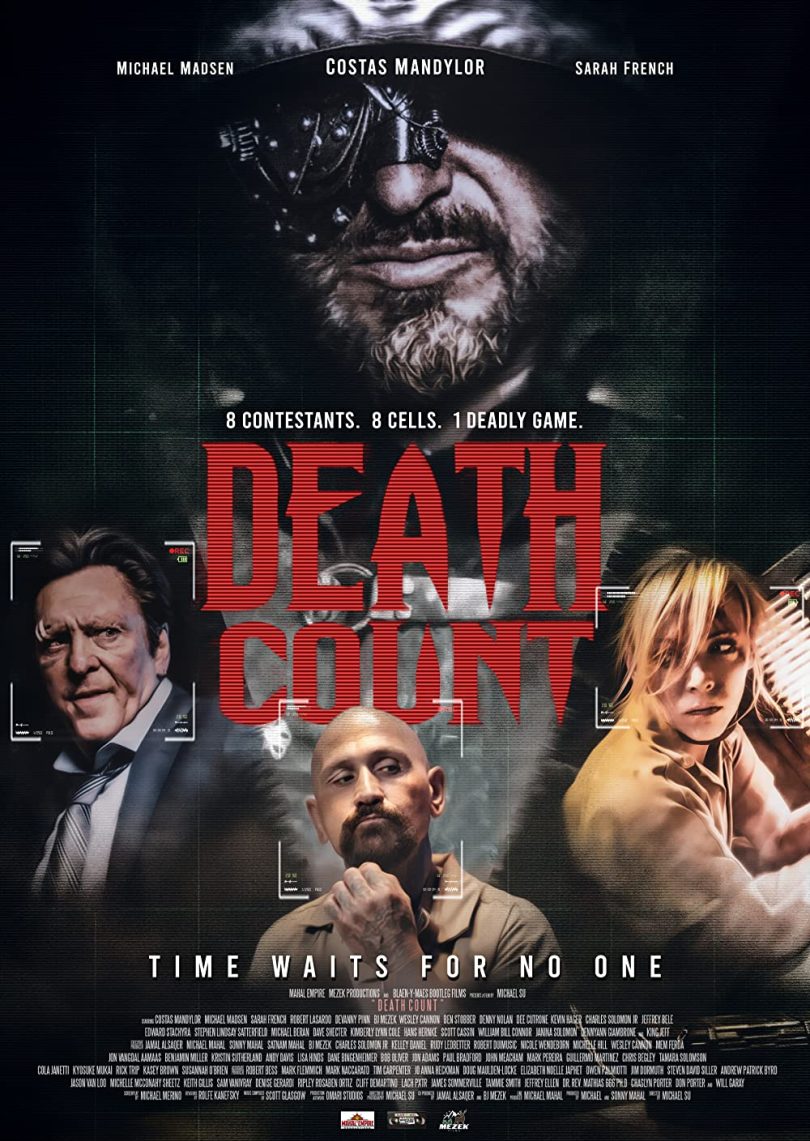
Death Count (2022), from director Michael Su and screenwriter Michael Merino (with revisions by Rolfe Kanefsky), is a lean, efficient, captivating, and grisly take on Saw (2004) style horror pictures. After a visually bravura and claustrophobic commencing acknowledgements segment, Su’s offering even begins in a related manner to James Wan’s previously stated masterpiece. Continually, there is an explicit mention of Saw, as well as the narratively similar Hostel (2005) from director Eli Roth, in one sly late first act sequence. It involves a montage of news reports. Aside from being an opportunity to address the oft-utilized theme of the operation, the sadistic underbelly of The Internet, this short episode is also a refreshing nod to the photoplays from which it evokes motivation. The presence of Costas Mandylor, who deftly enacted Detective Lieutenant Mark Hoffman in Saw III (2006) through Saw: The Final Chapter (2010) and just as capably depicts the wonderfully ominous Warden in Su’s latest effort, greatly enhances this correlation.

Michael Madsen, who magnificently portrays Detective Casey, delightfully offers his gruff, commanding charm to the material. His bits of dark humor also pepper the proceedings. Yet, none of these items are employed so frequently that they take away from the superbly fashioned and anxiety-fueled tone of the enterprise. The beautifully orchestrated mood of the article skillfully permeates the appropriately brisk 81-minute attempt from the initial frame to the last.

The story concerns a group of eight strangers who find themselves in a foreign environment. They are isolated in holding cells and cannot recall how they got to be in such a situation. Their conditions become even more dire when the frightful Warden announces that they are being forced to play a deadly game. It is one which involves getting the most “likes” on social media. This is achieved by partaking in violent escapades, all of which have a ten-second time limit per unwilling contestant, that revolve around self-harm.

It’s exactly the type of plot one would expect from a tale of this ilk. The characters are also familiar archetypes. The exposition and general development they are handed is satisfactorily dispersed yet garden variety. Even the inevitable climactic reveal of why these individuals were gathered and how they are connected follows suit. The dialogue the central figures are handed is sharper and more successful. Nonetheless, it still falls under the banner of what spectators foresee from such an outing.

Notwithstanding, the film is relentless in terms of its taut pacing and same said tension. The project expertly erects its setup in the initial ten minutes of the venture. From herein, it imaginatively crafts increasingly macabre ordeals for our leads to endure. The account is just as creative in its plentiful and exceptionally well done gory bits. A courtesy of the confident guidance of the vehicle from Su, the solid script, and the all-around high-caliber performances in the construction, the suspense rarely wavers. It is smoothly concocted from the engaging and enigmatic opening to the grimly gratifying conclusion. The latter cleverly hints at a potential sequel.

What is just as impressive is the fascinating way in which the affair combines numerical, literary, and sonic clues which may aid in the contributors’ survival in the second half of the fiction. The quickness and unpredictability with which most of the cast gets slaughtered in the mesmerizing first act is just as noteworthy. Such measures create a welcome balance to the more routine beats of the composition. It also makes the endeavor far more palpable in the nerve-shredding anticipation it brilliantly builds.

From a technical perspective, the work is equally stalwart. The cinematography from Su and music from Scott Glasgow is atmospheric and immersive. I especially enjoyed the incorporation of the fitting track from Psycho Synner, the Jeremy Spencer and Shawn McGee penned “The Torture Never Stops” (2021), during the enthralling end credits. Moreover, the editing from Jeremy Wanek, costume design by Joe Lujan, sound, makeup, stunts, and effects are all outstanding.

Also identified as Numbers, Death Count is a scrappy, in-your-face midnight movie. It isn’t as groundbreaking as the features from which it derives inspiration. Regardless, it will assuredly please those of us who are always frantically searching for a stellar dose of grueling cinematic terror. A Mahal Empire, Mezek Films, and Blaen-Y-Maes Bootleg Films production, Su’s exercise is twisted fun. It’s also one of the best genre undertakings of the year.

Death Count will be released in North America on July 19th, 2022.