Andrew Buckner’s 105 Favorite Feature Films of 2024

by Andrew Buckner 

*Please note that all the feature films included herein are done so on the basis of an official 2024 release date in the U.S.

105. Nosferatu

Director: Robert Eggers

104. Wildcat

Director: Ethan Hawke

103. A Complete Unknown

Director: James Mangold

102. Firebrand

Director: Karim Ainousz

101. Super/Man: The Christopher Reeve Story

Directors: Ian Bonhote, Peter Ettedgui

100. Woman of the Hour

Director: Anna Kendrick

99. The Critic

Director: Anand Tucker

98. A Quiet Place: Day One

Director: Michael Sarnoski 

97. Disappear Completely 

Director: Luis Havier Henaine

96. Power

Director: Yance Ford

95. Didi

Director: Sean Wang

94. Kneecap

Director: Rich Peppiatt

93. Slay

Director: Jem Garrard

92. Here

Director: Robert Zemeckis

91. Juror #2

Director: Clint Eastwood

90. Lee

Director: Ellen Kuras

89. Perfect Days

Director: Wim Wenders

88. Little Bites

Director: Spider One

87. New Life 

Director: John Rosman

86. Terrifier 3

Director: Damien Leone

85. Anxiety

Director: Eric Stanze

84. Smile 2

Director: Parker Finn

83. Freud’s Last Session 

Director: Matt Brown

82. The Order

Director: Justin Kurzel

81. Beezel

Director: Aaron Fradkin

80. A Most Atrocious Thing

Directors: Christian Hurley, Ben Oliphint

79. Godzilla x Kong: The New Empire

Director: Adam Wingard

78. Kill

Director: Nikhil Nagesh Bhat

77. MadS

Director: David Moreau

76. V/H/S Beyond

Directors: Jay Cheel, Jordan Downey, Christian Long, Justin Long, Justin Martinez, Virat Pael, Kate Siegal

75. Abigail

Directors: Matt Bettinelli-Olpin, Tyler Gillett

74. Rebel Ridge

Director: Jeremy Saulnier

73. The Once and Future Smash/ End Zone 2

Directors: Sophia Cacciola, Michael J. Epstein

72. Cuckoo

Director: Tilman Singer

71. Oddity

Director: Damian Mc Carthy

70. Hell Hole

Directors: John Adams, Toby Poser

69. Grave Torture

Director: Joko Anwar

68. Eight Eyes

Director: Austin Jennings

67. Beetlejuice Beetlejuice 

Director: Tim Burton

66. Maxxxine

Director: Ti West

65. The Front Room

Directors: Max Eggers, Sam Eggers

64. Infested

Director: Sebastian Vanicek

63. My Old A**

Director: Megan Park

62. The 4:30 Movie

Director: Kevin Smith

61. Joker: Folie à Deux

Director: Todd Philips

60. Thelma

Director: Josh Margolin

59. Wicked Little Letters

Director: Thea Sharrock

58. Tiger Stripes

Director: Amanda Nell Eu

57. Inside Out 2

Director: Kelsey Mann

56. Daddio

Director: Christy Hall

55. Sting

Director: Kiah-Roache Turner

54. You’ll Never Find Me

Directors: Indianna Bell, Josiah Allen 

53. Hundreds of Beavers

Director: Mike Cheslik

52. Challengers

Director: Luca Guadagino

51. Drive-Away Dolls

Director: Ethan Coen

50. Alien: Romulus 

Director: Fede Alvarez

49. Lisa Frankenstein

Director: Zelda Williams

48. Spaceman

Director: Johan Renck

47. Ordinary Angels

Director: Jon Gunn

46. The Greatest Night in Pop

Director: Bao Nguyen

45. The Book of Clarence

Director: Jeymes Samuel

44. The Bikeriders

Director: Jeff Nichols

43. Mars Express 

Director: Jeremie Perin

42. Ghostbusters: Frozen Empire

Director: Gil Kennan

41. Am I Racist?

Director: Justin Folk

40. Will & Harper

Director: Josh Greenbaum

39. The Devil’s Bath

Directors: Severin Fiala, Veronika Franz

38. Handling the Undead

Director: Thea Hvistendahl

37. Exhuma

Director: Jang Jae-hyun

36. Kim’s Video

Directors: David Redmon, Ashley Sabin

35. The Coffee Table

Director: Caye Casas 

34. In a Violent Nature

Director: Chris Nash

33. One Life

Director: James Hawes

32. Black Barbie: A Documentary 

Director: Lagueria Davis

31. I Saw the TV Glow

Director: Jane Schoenbrun

30. Longlegs

Director: Oz Perkins

29. God & Country

Director: Dan Partland

28. The Abiding Nail

Director: William Victor Schotten 

27. The First Omen

Director: Arkasha Stevenson

26. The Peasants

Directors: D.K. Welchman, Hugh Welchman

25. Monkey Man

Director: Dev Patel

24. Heretic

Directors: Scott Beck, Bryan Woods

23. Anora

Director: Sean Baker

22. Saturday Night

Director: Jason Reitman

21. Furiosa: A Mad Max Saga

Director: George Miller

20. Kingdom of the Planet of the Apes

Director: Wes Ball

19. Inside a Spider

Director: Arseniy Gonchukov

18. Protanopia

Director: Matthew Mahler

17. Sasquatch Sunset

Directors: David Zellner, Nathan Zellner

16. Late Night with the Devil

Directors: Cameron Cairnes, Colin Carnes

15. Jim Henson: Idea Man

Director: Ron Howard

14. Strange Darling

Director: J.T. Mollner

13. Doc of Chucky

Director: Thommy Hutson

12. Music by John Williams 

Director: Laurent Bouzereau

11. Civil War

Director: Alex Garland

10. Love Lies Bleeding

Director: Rose Glass

9. Conclave

Director: Edward Berger

8. Dario Argento Panico

Director: Simone Scafidi

7. Cabrini 

Director: Alejandro Gomez Monteverde

6. Origin

Director: Ava DuVernay

5. Ennio

Director: Giuseppe Tornatore

4. Kinds of Kindness

Director: Yorgos Lanthimos

3. Sing Sing

Director: Greg Kwedar

2. Memoir of a Snail

Director: Adam Elliott

1. The Substance 

Director: Coralie Fargeat

Runners-up:

Amelia’s Children

Director: Gabriel Abrantes

Bonhoeffer: Pastor. Spy. Assassin.

Director: Todd Komarnicki

Gladiator II

Director: Ridley Scott

The Lord of the Rings: The War of the Rohirrim

Director: Kenji Kamiyama

Megalopolis

Director: Francis Ford Coppola

Stopmotion

Director: Robert Morgan

Trivial

Director: James L. Edwards

Y2K

Director: Kyle Mooney

ANDREW BUCKNER’S 50 FAVORITE FEATURE FILMS OF 2024 (SO FAR)

By Andrew Buckner

*Please note that the inclusion of the feature films on this list is based upon the criteria of an official release date of 2024 in the United States.*

50. Wildcat

Director: Ethan Hawke

49. Out of Darkness 

Director: Andrew Cumming

48. The Beekeeper 

Director: David Ayer

47. You’ll Never Find Me

Directors: Josiah Allen, Indianna Bell

46. Stopmotion

Director: Robert Morgan

45. Abigail 

Directors: Matt Bettinelli-Olpin, Tyler Gillett

44. Irena’s Vow

Director: Louise Archambault

43. Gasoline Rainbow 

Directors: Bill Ross IV, Turner Ross 

42. Wicked Little Letters

Director: Thea Sharrock

41. The Taste of Things

Director: Tran Anh Hung

40. Infested

Director: Sebastien Vanicek

39. A Most Atrocious Thing

Directors: Christian Hurley, Ben Oliphint

38. Frogman

Director: Anthony Cousins

37. Land of Bad

Director: William Eubank

36. Bloodline Killer

Director: Ante Novakovic

35. In a Violent Nature

Director: Chris Nash

34. Freud’s Last Session

Director: Matthew Brown

33. Do Not Expect Too Much from the End of the World

Director: Radu Jude

32. Sting

Director: Kiah Roache-Turner

31. Kim’s Video

Directors: David Redmon, Ashley Sabin

30. Hundreds of Beavers

Director: Mike Cheslik

29. Challengers

Director: Luca Guadagnino

28. Drive-Away Dolls

Director: Ethan Coen

27. Lisa Frankenstein

Director: Zelda Williams

26. Spaceman

Director: Johan Renck

25. Ordinary Angels

Director: Jon Gunn

24. I Saw the TV Glow

Director: Jane Schoenbrun

23. The Greatest Night in Pop

Director: Bao Nguyen

22. The Book of Clarence

Director: Jeymes Samuel

21. Mars Express 

Director: Jeremie Perin

20. Power

Director: Yance Ford

19. One Life

Director: James Hawes

18. lo Capitano

Director: Matteo Garrone

17. Perfect Days

Director: Wim Wenders

16. God & Country

Director: Dan Partland

15. The First Omen

Director: Arkasha Stevenson

14. The Peasants

Directors: D.K. Welchman, Hugh Welchman

13. Monkey Man

Director: Dev Patel

12. Furiosa: A Mad Max Saga

Director: George Miller

11. Kingdom of the Planet of the Apes

Director: Wes Ball

10. Civil War

Director: Alex Garland

9. Protanopia

Director: Matthew Mahler

8. Sasquatch Sunset

Directors: David Zellner, Nathan Zellner

7. Love Lies Bleeding

Director: Rose Glass

6. Late Night with the Devil

Directors: Cameron Cairnes, Colin Carnes

5. Dario Argento Panico

Director: Simone Scafidi

4. Cabrini 

Director: Alejandro Gomez Monteverde

3. Origin

Director: Ava DuVernay

2. Ennio

Director: Giuseppe Tornatore

1. Ghostbusters: Frozen Empire 

Director: Gil Kenan

Runners-up:

Bob Marley: One Love

Director: Reinaldo Marcus Green

Dune: Part Two

Director: Denis Villeneuve

The Fall Guy

Director: David Leitch

Godzilla x Kong: The New Empire

Director: Adam Wingard

If

Director: John Krasinski

Mean Girls

Directors: Samantha Jayne, Arturo Perez, Jr.

Slay

Director: Jem Garrard

Protanopia (2024) – (Movie Review)

By Andrew Buckner

Rating: ***** out of *****.

Protanopia (2024), the debut feature from writer-director-co-star Matthew Mahler, is a 73-minute masterwork of surreal, experimental horror. Opening with a quote from Leviticus 14:37-38 concerning the cleansing of a leprous house, the symbolism of which gives the following narrative even more of a potent punch, the picture immediately creates a sense of urgent unease. This is with its agile exploitation of noise distortion, creepy commencing credits, and various other unsettling elements. All of these components are incorporated within the first five minutes of the production. 

The use of a bright, bold red in these previously stated sections, as well as throughout the totality of the undertaking, cleverly and powerfully reflect the meaning of the title word (an inability to discern the aforementioned crimson color). It also becomes a glorious beacon for the incredibly memorable and haunting imagery utilized to chilling effect in Mahler’s offering. Most impressively, the piece never loses its natural ability to evoke a dread-infused atmosphere, to surprise, or to astonish from an artistic angle with its many stylish flourishes. This is once Mahler settles down to tell his tale after these striking early segments. 

Mahler’s plot involves a man, Luke (in an excellent portrayal from Anthony Carey), falling prey to bizarre dreams of an unfamiliar house once his sister, Mallory (in a wonderfully gripping depiction from James Chase), goes missing. What Luke is unaware of is that the strangely behaved Alan Roscoe, Jr. (in an ever-captivating turn from Timothy J. Cox, which ranks as one of the foremost performances from the always reliable actor) has just inherited the home after the recent passing of his father, Alan Roscoe, Sr. (in an eerie and endlessly watchable representation from John Mahler). Luke and Roscoe, Jr. will soon find their paths crossing. This is as Luke’s nightmares seem to bleed out into the open-eyed reality of his waking days. 

Concluding with a skillfully underplayed, but nonetheless impactful, finale, the meticulously paced project is a smartly written and deftly directed addition to Mahler’s filmography. It’s filled with contemplative yet organic dialogue and situations. Still, some of the avant-garde ingredients, such as the strobing lights and slow-motion shots, become less engaging the more often they are applied. This is especially true in the second half of the outing. Yet, the endeavor never loses its hypnotic, vice-like spell on its audience. Moreover, the inclusion of such frequently employed constituents as the poetic, ominous voice-over from Mahler, which contain the initial bits of speech heard in the enterprise, are perpetually operative.

Much of the visual strength of the article comes from Mahler’s evocative cinematography. The color palette chosen for the photoplay alternates between foggy gray and a plethora of far more vibrant shades. All of which marvelously fit the sharply honed ambiance of the proceedings. It also gives the presentation the look of both a giallo by Dario Argento and a prototypical 1970’s grindhouse flick. Furthermore, Mahler’s implementation of appropriately moody music, proficient editing, and his stellar illustration of Jack continually enhance the quality of the fabrication. 

Correspondingly, the entire cast is first rate. Paula and Barbara Mahler are terrific as Janice and Gladys, respectively. Ross Mahler is outstanding as Jim. Andrea Norell fares just as well as Vanessa. John Heerlein’s rendering of Detective is spellbinding. 

Protonapia is daring and ambitious yet credible and grounded. It also demonstrates sufficiently developed yet enigmatic enough to be intriguing characters. Its themes of service, ritual, and routine are quickly established. From herein, they are woven to dramatic, bloodcurdling, relatable, and all around superb consequence. 

Boosted by a remarkable exhibition of sound from Nick Bavaro and Carey, the Ronkonkoma, New York-filmed, $2,000-budgeted exercise is an intense, imaginative, and finely crafted venture. It is one that should prove inspiring to aspiring filmmakers and cinephiles alike. Mahler’s latest proudly stands alongside Cameron and Colin Cairnes’ brilliant Late Night with the Devil (2024) as a top-tier genre effort. It is also one of the ten best movies of the year so far.

The 15 Best Short Films of 2017

By Andrew Buckner

Included below are A Word of Dreams’ fifteen favorite short films of 2017. The title of the work is proceeded by the name of the director or directors of the project. Enjoy!

15. “Ghost Bikes” – (Ethan Brooks)
14. “Alone” – (Tofiq Rzayev)
13. “Female” – (Aissa Carnet)
12. “Cosmic Bowling” – (Emily Berge, Spencer Thielmann)
11. “Tales to Line the Coffin” – (Evan Schneider)
10. “I Feel”- (Steve Blackwood)                                                                                                                                                                                                 9. “In a Heartbeat” – (Esteban Bravo, Beth David)
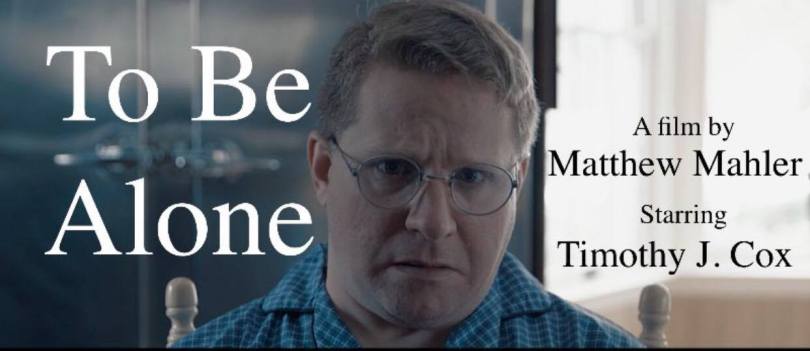
8. “To Be Alone” – (Matthew Mahler)
7. “The Stranger” – (Jeremy Arruda)
6. “Disregard the Vampire: A Mike Messier Documentary” – (Mike Messier)
5. “Undatement Center” – (Chris Esper)
4. “The Girls Were Doing Nothing” – (Dekel Berenson)
3. “Triangle” – (Christopher Fox)
2. “Leftovers” – (Tofiq Rzayev)
1. “Fireflies” – (Raouf Zaki)

“To Be Alone” – (Short Film Review)

By Andrew Buckner

Rating: ***** out of *****.

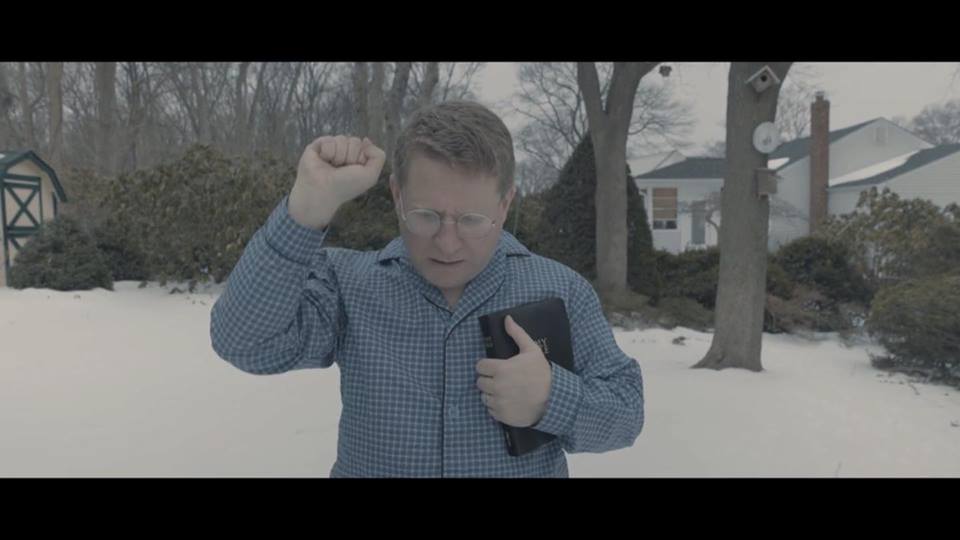
“To Be Alone” (2017), the seventh short film from writer-director Matthew Mahler, is a wholly unique, thought-provoking and brilliantly realized meditation on grief. Yet, it is as much about religious guilt, shame and the all-encompassing hopes of redemption which arise with theology. As a matter of fact, most of the sparse words spoken in the entirety of the twelve minute and forty-six second runtime are from unseen spiritual individuals. All of whom cry out from inside the television set to our lead, William (in a mesmerizing and quietly compelling turn from Timothy J. Cox). They angrily exercise the foremost element. In so doing, they almost immediately prompt William to run outside and engage in actions which suggest the last two latter stated emotions. Whether this is a symbol of the unquestioning fidelity or the apparently easy manipulation of the devout is left to the viewer. There is an equal balance of circumstances throughout the piece that could support both belief systems. Likewise, the non-judgmental tone Mahler crafts here, especially when dealing with such a touchy subject, certainly assists the piece. This is in evoking its continually haunting and meditative resonance.

What also helps is the underlying tension. This is erected most readily in a repeated sequence which involves law enforcement phoning William. Once this erupts, a certain darkness settles over the proceedings. This is as the audience begins to comprehend why he may be going through the previously stated catalogue of inward impressions. It also makes us understand how the pious personalities that are shouting at him have such swift control over his dealings.

The successfulness of these ingredients is a courtesy of Mahler’s deft, carefully constructed screenplay and same said direction. They perfectly compliment the material. What enhances this aspect is the inclusion of moments of sheer style. For instance, a spellbindly done sequence has William looking up the steps towards the closed door of his bedroom. The way it is shot, with Mahler’s ardently energetic music punctuating the bit with an electric fervor that makes it impossible not to step inside William’s nervousness at the unfurling situation, is reminiscent of what one might find in a classically designed opus of cinematic horror. Yet, there are other clever, smirk-inducing bits. For example,  there is a near climactic episode that features William carrying a cross. This is in a manner that is reminiscent of Jesus Christ in the tale of his crucifixion. The item William is holding is arranged with Christmas lights and other season appropriate decorations. Such details suggest a bit of playfulness amid this otherwise somber narrative. These items work immeasurably. They also add to the admirable and well-rounded qualities of the endeavor. This is while finding new ways to augment the representative essence of Mahler’s theme. It also makes for imagery that is as unforgettable as the fiction itself.

Adding to the immersive beauty of the project is Jonathan Giannote’s brooding cinematography. Mahler’s editing is also superb. The exertion also benefits from terrific makeup from Maggie Kurth and Morgan Mahler. Correspondingly, Jack Fitzmaurice’s sound contribution is exceptional.

Produced by 8mm Films, Mahler’s latest is among his most accomplished configurations to date. The brief undergoing is massively entertaining. Still, its lasting impact is undeniable. Best of all, it makes you ponder your own convictions. In turn, you can’t help but wondering if you would go through the same repetitive cycle of reaction that William himself is going through. This is if you were in an equally fateful circumstance. With “To Be Alone”, Mahler has fashioned a mandatory movie-going experience. This is one of the best storytelling fabrications of the year.

“Dark Romance” – (Short Film Review)

dark romance pic 1

By Andrew Buckner
Rating: **** out of *****.

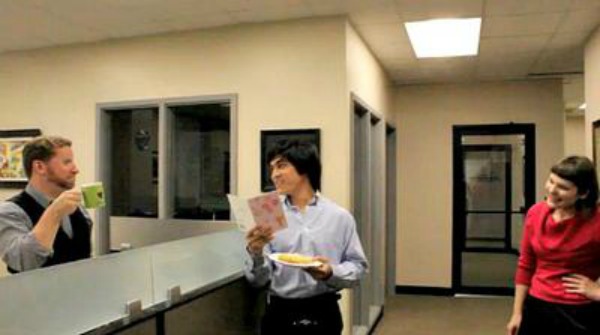
“Dark Romance” (2013), the debut short from co-writer and director Matthew Mahler, accomplishes in eight minutes what most thriller features need approximately an hour and a half or more to do. It tells a complete tale, albeit a familiar one, without the excess often utilized in a full-length fiction. But, the most intriguing element about Mahler’s account is that there is a considerable build-up. There is a high level of of suspense generated in its brief run. We, as cinematic patrons, are also offered a consistent focus on the obsessive signposts of affection directed toward our lead, Tim Cooper (another remarkable portrayal from Timothy J. Cox). They begin simply enough. But, soon they spiral quickly, wildly out of control. On Monday, Tim is given a card with a poem inside. They announce the regards of a mysterious someone in his office. By Tuesday, the chain of events have become violent. Wednesday is the bleakest day of them all. Thursday unveils a darkly smirk-inducing epilogue.

This condensed frame works beautifully. It also helps keep the intensity and pace wire tight. This also assists, in the tradition of the best white knuckle fabrications, in keeping our interest piqued to increasing levels throughout. Mahler makes the scenes showcasing the rapidly bizarre episodes for each of the previously stated spells as diminutive and to the point as possible. This narrative modus strengthens all of the aforementioned components terrifically well. Such is utilized via Mahler’s smart and claustrophobic direction. It is also strikingly unveiled in the sturdy screenplay he co-wrote with Ross Mahler. We are only allowed enough space in each sequence to see how unhinged Tim’s admirer is becoming. Before we can begin to fathom what is occurring, Mahler moves onto the next cringe-worthy instance. This makes for an undertaking that certainly delivers the exciting, expected ingredients of its genre.

To its discredit, the central figures are vaguely etched. Nevertheless, we know enough to care for them. It more than suffices given the scant duration of the piece. This is especially true of our labor-minded advertising executive antagonist. But, Cox more than makes up for this by being continuously affable. He fluently projects the type of managerial individual everyone at any place of employment, be it genuine or imagined, would like to have making the daily decisions. Tim’s secretary, Tiffany (Tiffany Browne-Tavarez), shares nearly as much screen time as Cox’s character. She proves herself to be a capable counterpart to Tim. This is with a simultaneously vulnerable, unflinching and bravura enactment. Though she is as broadly authored as the personality Cox brings to life, the duo both make their respective interpretations feel clearly unique. Because of this, we are more than willing to overlook the expository gaps in the Mahlers’ script. The proceedings are so well-done that we can also forgive another lingering sensation. This is that there is nothing new about the Fatal Attraction (1987) style confines of the straight-forward story arc. The twists are mostly expected. Correspondingly, the reveal of Tim’s devotee is obvious.

But, Mahler, who also provides the impressive cinematography and editing found herein, builds a plethora of memorable horror moments in an undersized expanse. Aside from the depictions and technical aspects, with Brian Shields and Ross Mahler both giving stirring turns in brief roles, this is where the real strength of the photoplay lies. Besides the already noted finale, what occurs on Tuesday is macabrely amusing. It is also masterfully designed. The segment optimizes its impact by eluding, but never glimpsing. Wednesday proves an appropriately unsettling, and grandly designed, climax. This arises as it more than ups the ante on the murderous crush taking place. The more light-hearted occasions of Monday mechanize just as well. They add a natural sense of enhanced disposition to Tim, Tiffany, and fellow employee, Cam (in a likable, credible and proficient representation by Cameron Rankin). It also adds similar personality to the composition as a whole. This is reflected in the natural, jesting banter that we hear early on. Such an attribute is just as active when the speech is more somber and terrifying in the advanced stretches.

Mahler has offered an all-around solid exertion with “Dark Romance”. The 8mm Films production, made for a mere $500 as a part of The 48 Hour Film project, excels as an exhibition of perpetually worrisome mood. It lacks the visual potency and risk-taking apparent in Cox and Mahler’s later collaboration, “What Jack Built” (2015). In this concoction not a word was spoken. Furthermore, the entirety of its eleven minutes was a one man display. Still, this is a gripping effort. The New York shot opus intends to both entertain and frighten. This is while summoning a vibrant aesthetic and authentic sensibility. It does this splendidly. The chemistry between Cox and Mahler, as well as the crew and their spectators, is more than visible in every frame. There is abundantly enough here to recommend this labor of fanatical love. The devotion to the craft from all involved resonates throughout. “Dark Romance” is a true gem. Because of this, I greatly anticipate seeing what Cox and Mahler’s next collaboration, “Finality” (2017), brings about.

dark romance pic 2

“What Jack Built” – (Short Film Review)

what jack built 2

By Andrew Buckner

Rating: ****1/2 out of *****.

Director Matthew Mahler’s eleven minute short, “What Jack Built”, works tremendously well. It forces the imagination to look under its murky, brooding corners, retrace its steps and put the many enigmatic items of its narrative together themselves. The overall intensity and interest of the piece is garnered largely from the craftsmanship of the mystery at hand. This is just as true of Mahler’s skillful handling of the material. Such is a brilliant manner to tell a tale like this. Mahler provides a dialogue free composition. This is another smart move. It heightens the intrigue immensely.

We watch the cigar-smoking and brooding, Jack (Timothy J. Cox, in another mesmerizing and masterful enactment), as he puts together blueprints in a secluded basement. He is also seen laboring over a trapping device. This is for the wholly concealed fiend lurking in the woods as well as inspecting his security cameras. Audience patrons view the succession of these immersive, hypnotically constructed and intriguing sequences of the affair’s arc in wonder. They are forced to uncover the meaning behind Jack’s actions themselves. This just adds to the appeal and quality of the item immensely.

What is going on inside of his psyche? How did he come to think of this device? What is its purpose? How did he put it together? Since he is the only one we meet, is he the only one left alive? What is exactly is this creature in the woods, if that is in fact what it is, he appears to be combating? Are they truly at war with one another? Are they linked somehow? It’s fascinating to ponder and assess these questions, left unanswered by the actual account, and come to our own conclusions based on the wisely sparse bits of details Mahler provides. These lack of particulars are a deliberate inclusion on Mahler’s behalf. Such is a bold choice that pays off handsomely. The result of this already attention-garnering saga is amplified by the minimalistic approach. The consequence is elevated far more than it would be if it was told in a traditionally straight-forward manner. This is not only thanks to Mahler’s taut direction, but also the cleverly paced, electrifying and meditative screenplay. This was penned by Matthew and Ross Mahler.

The title alone suggests a bit of a parallel to the popular British nursery rhyme, “This is the House That Jack Built”. In retrospect, it can even be perceived as an apocalyptic aftermath of the absurdly comic events that transpired in that tale. Yet, with a far more mature tone. “The man all tattered and torn”, as the folktale states, certainly applies to the brooding Jack realized in Mahler’s fabrication. He appears haunted, as if by the measures transcribed in the poem. Cox portrays this excellently. Not to mention, there is an underlying aggression to his motions. It is one which backs up the previously stated line splendidly. It is grasped in the various facial expressions Cox so expertly instills into the protagonist. Maybe this all circumstantial. It could be that this theory has nothing to do with its similarly captioned brute. But, it is this uncertainty, the many ‘what-ifs’ the endeavor captivatingly radiates, that makes it so thought-provoking and endlessly stirring.

what jack built

Matthew Mahler also issues music which is as spellbinding and ominous as the article itself. He utilizes a creaking soundtrack, reminiscent of one conventionally heard in a feature by Dario Argento, to chilling effect. It also sonically re-instates the endless atmospheric of the exertion beautifully. It makes the moments in the depths of the secluded area where Jack is hiding, as well as the ventures into the outside, all the more fearful and suspenseful. Adding further technical success to the project is Mahler’s sharp editing. There is also an inspired flare to the chronicle. The instances the smartly never spied beast is sensed creeping through the surrounding landscapes is reminiscent of the recurring shot which opens Sam Raimi’s The Evil Dead (1982) is where this is most evident. Even the setting itself calls this comparison to mind. Yet, Mahler’s attempt is far more than a simple homage. It is entirely its own entity.

In scenes such as the one recently addressed, Mahler’s aforesaid sonic contribution is most proficient. Yet, his appropriately dark, gorgeously honed cinematography drives this magnificent attribute home all the more victoriously. He also instates a credible, well-done input to the costume and wardrobe department. John Heirlein’s art department influence strengthens the believability and stalwart nature of the proceedings just as well.

This 8mm Films production is a true marvel. In an era where so much of cinema goes out of its way to show and tell, in excruciating specificity, its spectators what is hidden behind every door and explain every secret within a moving picture, “What Jack Built” is all the more necessary and refreshing. Those who expect everything ushered there way as far as a fully-fleshed out yarn, character development and all of the other trademark tools of the storytelling trade may find themselves frustrated. Such would be in the manner in which Mahler ceaselessly defies these expectations. They are assuredly the ones who will be put off by the undefined sum of the effort. Yet, those of us who like a new experience, one which gives us more inquiries than responses, will feel liberated.

Mahler drops us immediately into the exploits as if in the middle of a fiction already in progress. From herein, we are with Jack, hanging on his every motion, riveted through the duration. Despite the intentional vagueness of much of what we encounter, this can also be understood as an admirable experiment. This test concerns how much can be stated without a single word. Yet, the investigative nature reaches far beyond this single boundary. There is genuine risk-taking incorporated at nearly every turn. It makes the outcome all the more harrowing. For those of us who enjoy innovation as well as an adventurous take on the thriller, Mahler’s undertaking is a mandatory dose of adrenaline. It is a fantastic, illuminating, nail-biting spectacle which demands to be witnessed.

what jack 5