“Everest” – (Movie Review)


Rating: **1/2 out of *****
By Andrew Buckner

Everest, from director Baltasar Kormakur (2012’s fair Contraband, 2013’s disappointing 2 Guns), is a film that is every bit as generic as its title suggests. It is structured far too visibly after standard issue big-budget natural disaster works. Franc Roddam’s K2, from 1991, and Frank Marshall’s Alive, from 1993, come instantly to mind. It’s evidence that we have all seen this done far better many times beforehand.

To its credit, there are potentially interesting characters in this fact based story. The problem is that William Nicholson and Simon Beaufoy’s unappealing screenplay turns them all into plot-serving conventions. They become walking genre tropes who deliver heavy doses of personal backstory when the script deems it necessary to combat its numerous lulls. One extended scene, at about thirty-five minutes in, makes this especially obvious. Predictably, the screenplay summons the cast to expose their heroism and individual weaknesses at other standard intervals. This comes off as just as calculated. It also drains the movie of any potential emotional impact it wishes to attain.

This all could’ve been compelling material. Such would’ve been the case if the endeavor wasn’t so adamant about making everything so familiar. To be fair, most of the leads are generally easy to root for. Oddly, any trace of relatability to these individuals seems to be completely removed. It spends so much of the duration forcing us to care for those who populate the screen that it never really tries to make them unique and worthy of our concern. Because of this Everest never quite gets out of the shadow of this glaring failure. This immeasurably hinders the proceedings. It also makes its shortcomings all the more visible.

The always watchable Jake Gyllenhaal provides one of the few bright spots as Scott Fischer. Though he is likeable, and captures the attention in every bit he is in, he is used sparingly. Emily Watson, as Helen Wilton, and Josh Brolin, as Beck Weathers, turn in serviceable portrayals. They go through the motions with equally bland results. They are greatly held back by the writers treating these personalities like cinematic stock. This is depressing given the high-caliber talent these A-list individuals convey. Prior roles prove this. Still, they can only do so much with such scant material. The same can be said for Sam Worthington, as Guy Cotter, and Keira Knightly as Jan Hall.

Salvatore Totino’s cinematography is undoubtedly beautiful. Still, it is no better than what can be found in similar undertakings. This is especially disappointing given that the movie seems to be often abandon characterizations to floor audiences on this aspect alone. Such is true in the uneven and unfocused second hour. Like far too many attributes in this failed attempt at making the audience hold their breath in anticipation of what will occur next: this cinematic affair plays things far too safely.

The one hundred and twenty one minute depiction attempts to portray a disaster on Mount Everest. This occurs in March, 1996. Such an event finds two expedition groups fighting for their survival. Such transpires when a snow storm threatens the title mountain. Leaders of these groups are Rob Hall, Jason Clarke in a fair enough performance, and Fischer (Gyllenhaal). As the situation becomes increasingly worse one potentially nail-biting coincidence leads to another. All the while the individuals trapped in these horrific conditions band together in hopes that they will make it through this terrifying circumstance.

Much of the second half is where the exertion makes its most obvious attempts at generating suspense. This is where the composition succeeds. It also has strong stretches of promising build-up preluding these instances. As the risks become all the more daunting, Kormakur gives us tremendously designed and credible segments of peril. They are endearing and almost always intriguing because of their understated nature. Moreover, they never abandon the dramatic origins of the tale. If only more of these words could be applied to more of the feature’s technical aspects we might’ve truly had something special here.

The pace is choppy. Oddly enough, the piece seems hell-bent on constantly disemboweling viewer interest as soon as it begins to become genuinely compelling. Such is done almost singularly on its bizarre structure. This is after a first hour that is desperate, lumbering and made all the more faux and painful by its constantly forced and inane dialogue. Such incorporates the many failed attempts to establish the protagonists.

Kormakur dearly wants to make us care about those who populate the screen. This is certainly admirable. He wants us to impress upon ourselves the worry, fear, heartache and sorrow that accrues once these individuals’ lives are later endangered. Such could’ve put us in the leads’ shoes easily. It could’ve also added a potency that simply is not there. The underwhelming execution, even with its well-done buildup in check, is what sinks this honest exertion.

When the focus turns to full-on intensity, as is the case in the last forty-five minutes, it accumulates attention. Sadly, this is intercepted by hackneyed attempts to keep the personal stories going. These elements are so poorly handled throughout that they always distract us when the story seems to be building momentum. If this pivotal aspect functioned better this would’ve been far more engaging and satisfactory. What’s worse is that this all leads to a finale that is glaringly obvious from its commencement. This provokes a groan where should be exhilaration. Such can also be applied when summarizing the impression of sitting through the effort itself.

The score by composer Dario Marianelli is also highly generalized. This attribute is used subtly, smartly. It gives the sequences it is administered in a quietly hypnotic power. Moreover, it isn’t overused, as is the case of many similar pictures, to heighten emotional intensity by becoming overblown. Such works to its benefit.

Mick Audsley’s editing is proficient. The sound, as well as the visual and special effects, follow suit. There are many positive traits employed throughout. But, ultimately, there just simply aren’t enough of these stalwart details to overcome its obvious shortcomings.

It all creates a motion picture which is largely stale and often seems like it is on auto-pilot. Everest is confident that it will make your jaw-drop with the veneer of the claustrophobia inducing mountains. The same conviction is unveiled in the spectacularly sweeping glean and menace of the hazardous weather hammering down upon those trapped on the elevation. Furthermore, it is just as assured that it will make your heart frenziedly beat in your chest from its various cliffhanger scenarios. Because of this it blatantly appears to all but ignore the meat, the substance which makes an otherwise mediocre exercise genuinely worthwhile.
“Ashley Bell” by Dean Koontz- (Book Review)

By Andrew Buckner

Rating: ***1/2 out of *****.

Ashley Bell, the latest novel by Dean Koontz, is appropriately enigmatic, endlessly imaginative and often brilliant. It displays Koontz’s mastery of form by constructing much of its massive 560 page length as a mostly fascinating, if certainly overlong, puzzle. Though the ultimate resolve is obvious in hindsight, and presented far too early in the narrative, the manner in which the tale is told overcomes these otherwise unavoidable flaws. Besides the engrossing, subtle manner in which much of the story is formatted Koontz’s illustrious, endlessly quotable writing makes even the more lumbering, repetitious moments within the effort strangely enchanting. Koontz’s December 8th of 2015 released read is, more often than not, a joy to be swept up in.

The exertion details a young twenty-two year old author named Bibi Blair. After suffering a sudden pain while writing at her computer desk, which leads to the belief she has had a stroke, she is rushed to the hospital. Soon after this happens she receives a diagnosis which threatens to cut her literary dreams, and her life, short. Yet, after telling a nurse “We’ll see” when she is told that she only has a year to live something miraculous occurs. She is almost immediately cured of her ailment. That is when Koontz begins to shuffle between Blair’s memories. He distorts reality in an always gripping fashion. Soon after Blair, who is attempting to find the solution to her quick cure, becomes convinced that saving the title character is her ultimate mission. Such is a jump-off point for a grand succession of increasingly bizarre and unique coincidences.

Blair herself allows Koontz to give one of his most insightful glimpses into his own mentality and personal viewpoints as a writer. These elements are consistently fascinating. Moreover, he mixes them well into the account itself. Our lead is all the more vivid and authentic because Koontz uses her in this manner. The rest of the cast is rich, finely etched and distinctly their own entity. It makes the material all the more lifelike. This also makes the indistinct components the plot balances itself upon all the more credible and imaginative.

Such also becomes problematic in the grand scheme of the composition. This is so because Blair is obviously the true focus here, which makes sense once certain revelations take flight, but it makes everyone else appear all the more secondary. Evidence of this is most perceivable in Blair’s surfer parents, Nancy and Murphy, and a male friend named Pogo. They are included in many sequences. Still, the audience never feels as if Koontz cares as much as them as for Bibi. These individuals come off as somewhat of an afterthought.

Sadly, the pace often feels leaden and aimless. Again, this could be attributed to the previously mentioned dealings. Yet, these aren’t unveiled until well into the last third of the book. During this time these apparently random assemblage of events are admirable. This is for how they ring unique instances out of what can often be perceived as commonplace. Often it even mechanizes itself in a vice versa fashion. This is when credibility takes a back seat to Koontz’s unbridled imagination. Still, so much of the piece resolves around this sensation that it makes the results overall, even with its numerous twists and cleverly put together structure, seem underwhelming. The overall craft on display here just isn’t enough to overcome how much of Ashley Bell dwells on these apparently isolated proceedings.

There are various moments of suspense. Here the story impresses upon the mind the idea that it will take off in true Koontz fashion. Yet, it never really does. This holds true until the dazzling final thirty or so pages. Koontz gives us some genuinely moving dramatic instances. They ultimately feel just as sporadic. Koontz offers segments of great poetry, where the heart that goes into these sequences pulsates through every word on the page. These always astonish. These are a bit more frequent than the times mentioned above. Still, they come up lacking. Despite this, the climax fulfills on all of these levels at once. It does this so successfully that even after the occasionally lumbering impression the tale besieges us with, especially in the mid-section, we can almost forgive Koontz for his overindulgence.

Regardless, it is this excess where Ashley Bell gets its singularity. If this were a more tightly knit, commonplace exercise it might be more immediate and wholly enjoyable. Still, it would not be as collectively memorable. Koontz wants us to close the tome with a sense that we had just been on an epic journey. One that we have searched for the title protagonist with Blair as long as she has and know her as intimately as she does herself. This Koontz succeeds at immeasurably. The piece is far more fulfilling to look back upon and to peer over every corner again knowing full well where the author was taking us. It is than we can fully appreciate the painstaking artistry, precision and confidence behind it all.

Much of this comes from the fact that Koontz often deliberately leaves us confused. This can also be seen as part of a higher point that is cleared up in the finale. Still, this remains a distorting experience. Yet, Koontz’s insistence on repeated images, such as a dense fog that always seems to be blanketing the surroundings and gradually encompassing our heroine and the emphasis on a dog named Jasper, adds a layer of fascination. This makes these muddled ingredients thrilling to mentally piece together. It is just what is needed to keep the volume from becoming as frustratingly out of touch as a fiction penned in this fashion could easily become. This is just another component of the triumphant risk-taking Koontz incorporates throughout.

What else helps matters is that even some of the red-herrings Koontz throws in are noted. One scene in particular captures this in its dialogue tremendously well. It is a wink at the audience that adds impeccably to the overall fun. Not all of the discourse is quite as intriguing as this segment. Still, it all assists in the delicate juxtaposition of drama, lyricism, intensity, credibility and dreaming mentioned above.

At first glance, the many claims that this is one of Koontz’s best labors appear unfounded. It is defiantly literary. Moreover, it refuses to classify itself as simple entertainment. This is certainly welcome. Such is especially correct in a time when it is far too appealing for best-selling authors to pump out such surface level amusements. The endeavor is also contemplative and daring. Such is also appreciated. Despite this, the problem is at a fundamental level. Much of the general narrative, and story arc, is especially basic. Though Koontz uses this as a pulpit to let his creative instincts soar, and weaves the piece in a manner that makes it easy to forget this aspect, we never fully overcome the effects of this detracting aspect.

The excitement here is in forgetting the world immediately around us. In so doing, we are wonderfully wrapped up in another. It helps us relate to Blair all the more. She becomes pleasantly accessible. This gives Koontz’s insights into the writer’s mind all the more punch. These are wise moves. They come together to make this well-worth combing through, and a great addition to the author’s literary canon. Such remains true even if it doesn’t quite live up to both its potential and the gargantuan hype attached to it. Still, Ashley Bell is satisfactory, charismatic art. It will prove especially valuable to those of us who often find ourselves daydreaming of honing the kind of living Koontz has made for himself and Blair, simultaneously, appears on the cusp of attaining.

“Love”- (Movie Review)

By Andrew Buckner

Rating: **** out of *****.

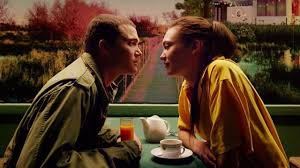
Writer and director Gasper Noe’s Love is nowhere near as revolutionary as what he has provided viewers beforehand. These are 1998’s excellent thriller, I Stand Alone, 2002’s Irreversible and 2009’s Enter the Void. Yet, it remains a largely satisfying expression of film as liberation and as art.

True to the form of Noe’s previous work his latest has a fearless spirit. This is a topic expressed outright in a portion of credible second act dialogue. Because of this the unrated feature displays its NC-17 equivalent proudly throughout its 135 minutes.

What we also hear rippling through the mouths of its leads is the thesis statement of the movie. This is that Noe’s endeavor wishes to be a sentimental expression of ardor. It is one fashioned through the lens of sexuality. Such an achievement certainly arises with a build-up of subtle power after a lumbering first half hour. Regardless, it is never as maudlin as such a concept could’ve easily become. Also, it is never as bitter as it appears to be in the opening sequences.

These initial thirty minutes do have moments of intrigue. This element shines even when our lead, Murphy (Karl Glusman, in a performance which gets better as the script offers him better material) is at his most loathsome. During these early segments he spends the time apparently aimless. His intent is only on elucidating a general mean-spiritedness.

Here he mumbles tired observations. This is done in a weak attempt at narration. These concern the title emotion, and his life, to the audience. It becomes grating quick. Luckily, this is largely abandoned as the composition moves on.

Even in this desperate stretch our interest is captivated. This occurs in these blind-spot moments through the gorgeous shots Noe evokes. These are made all the more jaw-dropping by his utilization of his trademark non-linear style. Such elements illuminate more than it should with a narrative as simple the one Noe gives us. This is due to the audience mentally scrambling to put the story pieces together.

What also helps us overlook these initial problems is that the cinematography by Benoit Debie is just as lush and Noe’s style dictates. This transcendent beauty makes much of Noe’s framing appear all the more masterful. It is like watching a succession of brilliant paintings brought to life in rapid succession through the medium of a moving picture.

Most intriguingly, the film’s personality often mirrors Murphy himself. At first it seems cold and distant. But, as it slowly peels away its intricate layers it gradually lets us deeper into the lives of those dominating the screen. This is proven as the chronicle slowly opens up and takes its time revealing its ardent core.

Noe’s sensual drama hits an undeniable stride of excellence. This is especially true from the hour mark until the emotionally gripping and strangely beautiful climax. The note is heightened as the last sight is frozen to over the end credits sequence. It is just one of the many wonderful tricks the director effortlessly delivers.

Love, especially in its second half, reminded me of French New Wave director Jean-Luc Godard’s work from the 60’s and 70’s. Much in this spirit, Noe slyly incorporates personal viewpoints, often regarding politics and cinema, into the discourse which ring with an everyday validity. We can easily imagine passing by these people on the streets and hearing such a conversation. It is also a clever, entertaining way of providing exposition that doesn’t seem spoon fed and unnatural.

It is this high-style which salvages the otherwise standard issue story. The exertion oversees Murphy and his lover, Electra (Aomi Muyock, in an exceptional portrayal which culminates believability at every turn). Hoping to make their fantasies become reality they add a third component to their relationship, Omi (Klara Kristen, in another well-done and charismatic performance).

Kristen’s character is used as a varied symbol throughout. This only adds to our fascination. The final use of this representation is the most interesting of them all. It adds punctuation to an already highly metaphoric, stunning climax.

In hindsight, the tale is simply a jumping off point for the experience Noe yearns to evoke. If this wasn’t so uniquely structured, uplifting and moving the familiarity of the chronicle could’ve sunk the movie down to mediocrity. Instead Noe seems intent on taking these commonplace motions as a challenge. This is one meant to break through their mundane constraints. In turn, he wishes to create something entirely new. This he succeeds in doing many times over.

Some elements do come off in a clichéd manner. These are especially evident when Noe seems to be reaching melodramatically. Regardless, the ultimate result is well-rounded, satisfying cinematic feast. It is one that both the mind and eye consumes with eager delight.

The sensual sequences are certainly well-done. They illustrate their intended effect. One extended bit, which transpires around the thirty-five minute mark, runs seven minutes. Yet, it never appears excessive. The feature continuously balances the emotional and the carnal without neglecting one for the other.

There is also often an underlying eroticism to much of the conversational moments. In turn, the instances that focus on physical intimacy never seem as if they are too far removed from the character oriented focus. It also never loses its dominant gaze on their concerns. This is what really gives the piece its heart.

Dennis Bedlow and Noe’s editing is sharp. The visual effects credited to ten individuals has rough touches of obvious C.G.I. that otherwise come off as seamless. Music supervisor Pascal Mayer gives us work that appears often conventional during the amatory sections. In its more dramatic moments the score issued seems a perfect fit. These technical aspects help propel the endeavor to its fantastic consequence.

There are a few moments which seem almost laughable. One involves a slow-motion close-up on genitalia near the ninety minute mark. They take away, however briefly, from this otherwise immersive experience. Moreover, they seem designed specifically for its 3-D format. It seems low-brow and out of place.

I have no problem calling Love one of the ten best films I have seen in the year. Regardless, it is not a full-fledged masterpiece. Furthermore, it does not approach the high benchmark Noe has set for himself in his three prior efforts.

Still, there is an admiration for the craft radiating through the emblematic and surface appeal. It endlessly garners our attention. This component is victorious even when the exertion is at its worst. Moreover, it makes the shortcomings forgivable.

Like Noe’s prior films, Love lingers in the mind long after the endeavor is finished. This is a haunting love letter to the spirit of cinema. It will merit additional watches. In turn, we may glean many new wonders, intricacies and nuances that we missed the first time around.

“Goodnight Mommy”- (Movie Review)

By Andrew Buckner

Rating: ****1/2 out of *****.

The Austrian chiller Goodnight Mommy (originally titled Ich seh, Ich she) gets its unsettling power from being such a voyeuristic, distant and cold experience.

Furthermore, it garners its stalwart nature from being almost alarmingly quiet throughout the bulk of its runtime. Because of this there are long stretches where only brief bits of dialogue or natural sounds crackle through the soundtrack.

This assists in creating a maturely fashioned, psychological portrait. It grips us more for the way it teases us with where the story could be headed, especially in its first seventy minutes, than filling us with outright trepidation.

Such is most evident in the final act. This portion could’ve easily become overblown. Instead it respects the foundation it delicately constructs in prior sequences. The result is a theatrical homerun.

Most endeavors meant to produce dread would use this delightfully realized sense of isolation to give us low-brow jump scares. This would be especially likely as we stare into the shadows, as this work often does, convincing ourselves something will pop out.

Olga Neuwirth’s score is used sparingly and precisely at the right instant. The music she creates is striking, atmospheric and memorable.

But, Goodnight Mommy gets under our skin because it forces us to think. It makes us contemplate what is beneath this darkness. This is opposed to using this circumstance, as is often the case, as surface dressing for novelty shocks.

This is far more satisfying, in relation to the on-screen personalities and the general chronicle, and discomforting than any cheap effect the filmmakers can throw at us.

Such is done with unproblematic confidence throughout. The movie is worthy of recommendation based on this factor alone.

What makes this aforementioned statement even more verified is that the composition is brilliantly written and directed. This is done with impeccable restraint, construction and command of form by Severin Fiala and Veronika Franz throughout its one hundred minutes.

In turn, the proceedings are the definition of a slow burn thriller. It delights in the way it toys with audience expectations.

In one of the wisest moves this highly-literate nail-biter elucidates is that it successfully makes all three of the main personages appear villainous at various intervals.

It has a sharp sense of individual perspective. These transitions in viewpoint appear natural and seamless.

For instance, we see the heavily bandaged mother (Susanne Wuest in a compulsively watchable performance that captures her dreadful and vulnerable turns terrifically) through the eyes of her twin children, Lukas and Elias (both portrayed with creepy precision by real life brothers Lukas and Elias Schwarz), as a monster.

So when the boys begin to believe that there is someone else behind the bandages covering their mother’s face we believe them. In the end, this is one of the most disturbing acts this bit of gritty cinema commits.

Another great move is that this entry in fear is wisely vague with backstory. It hardly gives us any details from the main characters’ past.

This makes it easier to look past the red herrings, seen in hindsight, and its more transparent bits. Such is so because of the intelligent way it hides otherwise important elements such as this for sheer impact.

In so doing a wall is built up against our ability to find an antagonist. This evokes further restlessness and captivation as we are at war with ourselves for over 2/3 of the exertion. Even when the question is resolved we admire how well the truth was concealed.

Many will be off put by the gradual pace. Admittedly, I left the piece feeling that I appreciated how terrifically well-made it all was as opposed to being instantly captivated or enthralled. It was only when I found myself mulling it over that I realized the effectiveness at hand.

Those of us willing to tap into its distinct rhythm will be largely fascinated. But, immediate amusement is not the focus here.

Goodnight Mommy is a terror production, made all the more cinematic from being shot on 35 millimeter film, from the old-school. It wants to turn your blood to ice by making us wonder.

The intention here is to haunt us, not by excessive gore or endless violence (though this work does have its moments), but by forcing us to turn its chain of events over repeatedly in our head long after it has finished.

It accomplishes this spectacularly. This is true even if it has a sadly predictable, after a certain late third act plot-point comes into play, conclusion.

Besides perfectly honed performances by its convincingly painted leads the composition benefits from gloriously bleak cinematography by Martin Gschlacht. An early scene with Lukas and Elias in a cornfield showcases this, as well as the earthy realism the picture constantly elicits, beautifully.

Furthermore, Michael Palm’s editing is proficient and wonderfully done. The costume design by Tanja Hausner helps give our leads an everyday air.

Such contributing details makes what we are seeing all the more believable and realistic. Given that this is an attribute Fiala and Franz are obviously striving for these technical triumphs are all the more vital.

This is most evident in the plain-spoken dialogue. It doesn’t feel the need to force feed its audience answers through exposition as many modern offerings are apt to do. Because of this the effort strikes a continuously heightened sense of unease and credibility.

Goodnight Mommy is being heralded as one of the best features of its kind for the year. Though it doesn’t have the invention of David Robert Mictchell’s 80’s style take on the genre and only visible competition, It Follows, this claim is certainly valid.

It has various similarities to Jennifer Kent’s 2014’s masterpiece The Babadook. This is especially apparent in style, theme and general story arc. Still, this affair isn’t quite as remarkable overall.

Moreover, the presentation has a theme of spontaneously having a loved one replaced that is highly reminiscent of Invasion of the Body Snatchers.

Yet, what makes it work so well is that it stays true to the tradition of the most accomplished horror films. It does this by being a drama, a character study at heart.

These all assist in the quality of this endeavor. Still, it leaves a lingering impression after all the pieces fall into place that we have seen it all assembled far more successfully beforehand. Alfred Hitchcock’s controversial 1960 ground-breaker, Psycho, comes immediately to mind.

If you are a member of the group who likes rugged fright, the type that makes you feel as if you are a helpless witness to the proceedings, you will love this exertion. If you like motion pictures where everything is explained at every turn you may want to look elsewhere.

Fiala and Franz’s feature is harrowing but certainly not for everyone.

“What the Doctor Ordered”- (Short Film Review)

Writer and star Audrey Noone

By Andrew Buckner

Rating: ***** out of *****.

Director Yvonne Labarge and screenwriter (and star) Audrey Noone deliver an uproarious glimpse into a decidedly unconventional relationship with the phenomenal five and a half minute short, “What the Doctor Ordered”.

The comedic endeavor concerns Sandra (Noone in a tremendously realized and well-timed performance) and Thomas (Sean McPherson in a portrayal that evokes the simultaneous confusion and varied attempts to keep the romance going in whatever manner possible his character conveys beautifully). While speaking to a psychiatrist (Jeanne Lohnes in a wonderful acting turn) the pinnacles of anger and admiration between Sandra and Thomas, and the underlying notion that these motions might all be an elaborate game between the two, are addressed in a succession of flashbacks.

These moments are always amusing. They induce a perfectly conceived atmosphere for the continuously light-hearted gaze of the narrative.

Moreover, Labarge and Noone never loses sight of their humorous intentions. Reccurring gags about food fights, and how Sandra uses the source of the combat to win Thomas over, are especially effective. It also provides a smirk-inducing punctuation mark for the story to conclude on.

These components provide verified proof that the comic nature of this brief film endures unflinchingly stalwart throughout the affair. Still, there is an innocent, caring heart beneath the joviality and the mirth that makes the leads charismatic, endearing, relatable and authentic.

The original music by Zachary Krodel is perfectly fitting for the defiantly upbeat, sitcom-like nature of this chronicle. This is what strikes us instantly in the opening instances of this exertion and it wins us over immediately.

Krodel’s immediately mood-setting, optimistic score is heard over a dark screen as the title is written out in whipped cream, in a nod to another of the numerous successful jokes, in the opening moments. Such an achievement, heightened by the fantastic sound design by Jeremy Eisener and vibrant cinematography and lighting from Mike Sun, are just a few of the many triumphs this work generates.

There is also an incredible display of animation from Danielle Lauretano. This contribution captures the spirit of the plot splendidly. It also adds considerably to the on-screen visual appeal.

The composition also victoriously settles into a rapid-fire pace. This attribute appears so casual, and is simultaneously so enthralling throughout, that the piece never feels rushed.

Such is surely an envy deriving characteristic. It is also a compliment to how apparently graceful, striking and well-done the whole endeavor remains during its runtime.

The writing by Noone and direction by Labarge, who also provides the seamless editing on display here, is brisk, sharp and vivid. They make an incredible team. This factor illuminates the final result spectacularly.

“What the Doctor Ordered” is the product of a year- long undertaking. It is a labor of love where the time, effort and commitment by all of those involved is emitted gloriously. This makes what we are given here all the more delightful to behold and wondrous to laugh along with.

Noone and Labarge have utilized all the endlessly witty and high-caliber ingredients mentioned above. This, as well as the welcome contributions from an equally capable cast, come together to craft a truly special cinematic treat.


Director Yvonne Labarge.

“Abandoned Dead”- (Horror Movie Review)

By Andrew Buckner

Rating: *** out of *****.

A film noir take on the supernatural thriller, writer and director Mark W. Curran’s Abandoned Dead, suffers from an all too familiar late twist.

Curran’s film focuses on Rachel Burke (Sarah Nicklin in a competent performance). She is a security guard for a healing facility. Called into the night shift she eventually begins sensing a terrifying presence slowly resonating about her. But, what is it? What does it want and why?

Despite an atmospheric score and mood draped cinematography by Robert Adams the seventy-seven minute feature (the DVD is reported to run eighty-five minutes) never dares peer that pensively at its narrative.

Instead Curran’s story follows suit with many horror works of our day. It does this by keeping everything on a surface level.

In turn, most of the effort is composed of many long shots. This is punctuated by the far too common sight of Nicklin pointing a flashlight into darkness. We are also handed endless walks down hallways. Alongside this we get ample doses of what could perhaps be paranormal activity.

All of these elements are well done. They provide stupendous atmosphere if that is all you wish for from a terror venture. Still, it leaves us with little to distinguish it from its genre peers.

The pace moves in much the same traditional fashion. For most of the piece Curran and his filmmakers successfully build a gradual sense of menace that, ultimately, leads nowhere new.

When Night of the Living Dead star Judith O’ Dea shows up late in the cinematic composition the sight of such a genre legend adds an element of credibility to the feature. Her performance as Doctor Pamela Myers is solid and enjoyable.

Moreover, the rest of the cast, especially Robert E. Wilhelm as Doctor Thaddeus Mayfield and Carlos Ramirez as Detective Phillip Haggis, fares just as well.

The special effects by Melanie Aksamit and Hannah Sherer are effective. They are also minimally used. This helps heighten the impact of the picture as a whole.

The nuance of these characteristics often gives the proceedings a classic thriller veneer. Such an attribute is much appreciated.

Curran’s impressive directorial flare and intriguingly constructed screenplay also help matters.

The main function of Abandoned Dead is to build an impression of unease. It does this satisfactorily.

Moreover, it incorporates a few moments that are genuinely unnerving. Regardless, it often feels as if it is going through the motions. It also appears unsure of itself at times.

This is overall fair entertainment. Still, I can’t help but think that we could’ve had something truly special.

This entry in fear evoking comes up a bit lacking in the end. Such an impression is brought upon because we leave the picture wishing that as much emphasis was put on the resolution as there was with building suspense.

Abandoned Dead is one case where the pieces are far more fascinating than the actual scene they together visualize.

Curran’s latest is more about the experience, the journey than the actual destination.

“Nature of the Flame”- (Short Film Review)

By Andrew Buckner

Rating: ***** out of *****.

There’s an abstract beauty beneath the equally appealing visual style of writer and director Mike Messier’s 2014 short film, “Nature of the Flame”.

It is established early with shots of a body of water and feet, in a suggestion of serenity, wading in the stream. Suddenly we cut to a woman (Lindsey Elisabeth Cork in a tremendously wrought performance) sleeping.

After being told she isn’t prepared for enlightenment by an elusive figure (Jocelyn Padilla in an appropriately transcendent acting turn) in a monastery Cork wakes up in a cave.

From here the rapt audience participant wonders: “Did she die in her sleep?”, “Is this a glimpse of what awaits for her in the afterlife?”, “Is this merely a dream?”

Messier wisely gives us the room to come to our own conclusions with these inquiries. This is welcome since if concrete answers were provided it might’ve taken away from the ethereal, haunting, meditative experience at hand.

Despite these lingering questions one thing we know for certain is that Messier and company have captured the confusion and potential sense of ascension that can be tied to the narrative elements terrifically well. Furthermore, Messier evokes an even, appropriate pace throughout the endeavor.

But, the smartest move is that Messier allows the audience to attach his or her own conclusion as to the proceedings. This is done by letting a succession of gentle, intimate, ardent, and attractively executed and shot, sequences speak for itself.

There is no dialogue in the last five and a half minutes. This decision adds layers of skillfulness, invention and sentiment upon an already gripping set-up.

The musical score, along with Chris Hunter’s editing, enhances the illusion of going to what could be perceived to be a higher plane.

Moreover, Messier’s writing and directing are intelligent and illuminating.

The cinematography captures the allure and enigma of the storyline with an equally striking veneer.

“Nature of the Flame” captures all of the sentiment and drama of a full-length feature in just under eight minutes. It is always stunning to look at, to be caught up in and to think about long after its serene conclusion.

This is more than a brief fling with cinema: it is an exhibition of craft.

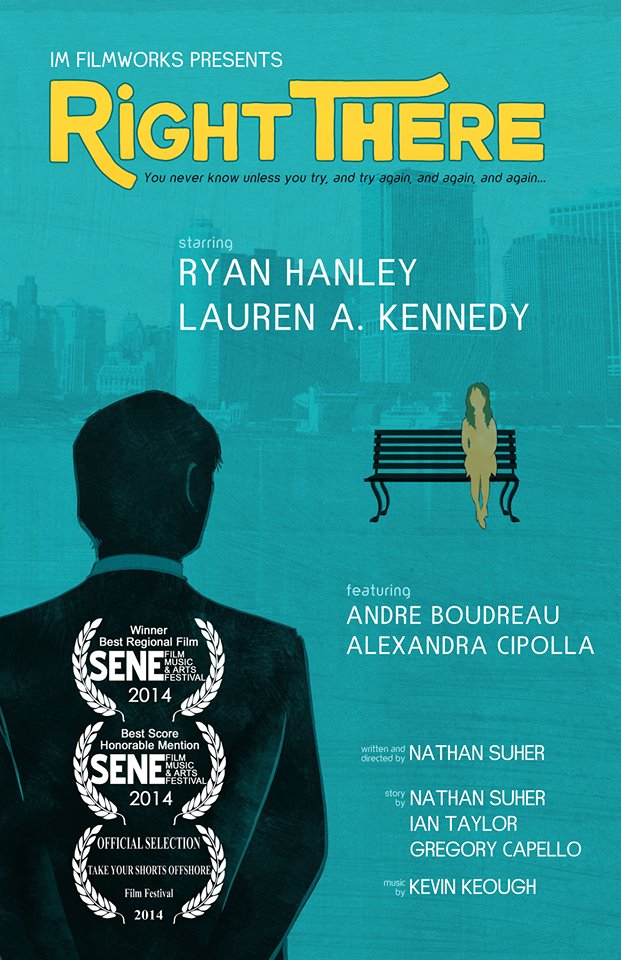
“Right There”- (Short Film Review)

By Andrew Buckner

Rating: ***** out of *****.

The beauty of the silent film era lies primarily in the actuality that the actors had to use facial expressions to supplant the sentiment that would later be inserted into dialogue. This was usually accompanied by either recorded or live music being played in the theater the work was being projected in to punctuate the emotions glimmering through actions and countenances on-screen.

These, along with tale-telling through striking camera angles, shadows, mimes and title cards, were the sparse tools of the filmmaking trade in the years from 1894-1929. It gave the cinematic compositions of this period an underlying sense of poetry, even in comic endeavors, which have proven to be forever endearing.

This time frame, more often than not, elucidates a constant sense of admiration for these aforementioned attributes alone. Such is just one of the many reasons “Right There”, a masterful eleven minute short from director Nathan Suher (2015’s “Next/ Door” and “Scary Little F*ckers”), is so immediately enjoyable and charismatic.

Suher, who wrote the delightful, well-paced script (from a story by Gregory Capello, Suher and Ian Taylor), captures the essence of Charlie Chaplin and the spirit of European cinema, which he has stated was his intention with this glorious piece, immaculately.

This wonderful, breezy homage concerns a man, The Guy (Ryan Hanley in a performance that is as energetic, endearing and enjoyable and perfectly fitting for the era Suher tributes) who tries to garner the attention of a woman, The Girl (Lauren A. Kennedy who does as phenomenal a job as Hanley, as does the entirety of the secondary cast, in conveying story through gestures).

He is drawn to her immediately. This intrigue only grows as he finds her sitting everyday on the same bench. Over the course of several weeks he tries to get her to notice him.

All the while we find ourselves riveted and wondering: “Is it his own shyness holding him back? Could he have been hurt in prior relationships? Was this pain recent? Will he get the girl?”

Because of the profoundly artistic nature of the epoch “Right There” is sending up we are drawn in by the nuance. Moreover, our intrigue is piqued by the high-caliber technical facets, the joy and broken-heartedness (sometimes in the same scene) that Suher and his filmmaking team pull off so effortlessly. Yet, because of the well-woven dramatic touches that balance the humor and heart terrifically we are forced to look deeper.

This is a testament to the profundity of the style of cinema Suher emulates so masterfully here. It is also a demonstration of the terrifically executed brilliance, the obvious admiration for the truly golden age of cinema Suher is tackling radiating on-screen. This is a gem.

The merry, often tender, and beautiful result of “Right There” is also thanks to a wonderful bit of opening animation by Dave Lubelczyk. Make-up artist Morgan Duffy captures the appearance of stars from the early 1900’s spectacularly. Chris Esper’s film editing is tremendous.

Jill Poisson’s cinematography and Kevin Keough’s score is striking and beautifully rendered. These characteristics, combine to make it all the easier to envision that we are sitting in a theater, before the age of “talkies”, and enthralled by this new invention that they call “moving pictures”.

Suher continues to showcase further range and a willingness to risk differing genres, atmospheres and approaches. The work he makes is transcendent to, not only fellow admirers of filmmaking, but everyone.

“Right There” is a sweet, lively brief work that reminds us of the tenderness, merriment, relatability and undeniable artistry the craft of unspoken big-screen storytelling can evoke.

“Dead Hearts”- (Short Film Review)

By Andrew Buckner

Rating: ****1/2 out of *****.

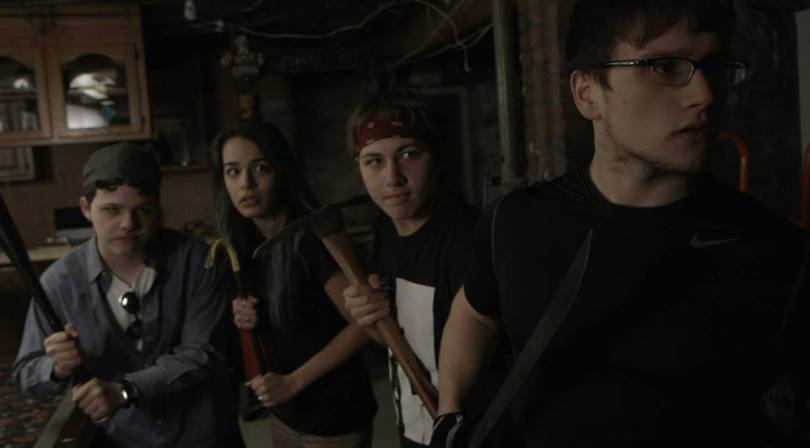
“Dead Hearts”, a sixteen minute short from director Ramzees Carvalho (2014’s “Night of the Damned”), opens with four young adults trapped in a cellar. Radio broadcasts are announcing that the reanimated are coming back to life. When a chilling chain of events transpire it is up to Dan (Carvalho himself in an impressive, spectacularly wrought performance) to take the reins of heroism. With this action he must face the ravenous hoards of the undead.

It’s a classic set-up that brings to mind visions of George A. Romero’s timeless 1968 gem, Night of the Living Dead. To further the sense of unabashed reminiscence this wonderful short (the second by Carvalho) induces is crisp, vivid and rich cinematography from Nelson Reis.

The special makeup effects by Manny Savini only heightens the appeal. The zombies, and their veneer, are stalwart, gritty and credible at every turn.

Such attributes resonate amid the numerous well-done decapitations and various other gory bits. This is because there is a palpable sense of camaraderie between all the leads.

This is most noticeable between Dan and Liz (in a performance by Alyssa Paige Moreno that is every bit as strong and understated as the role demands). Their relationship is the propelling force of most of the narrative. The work is all the more commanding because of the sheer strength of their portrayals.

Ramzees Carvalho and Moreno prove they are more than apt to take on what the taunt, intelligent script that has a Stephen King-like eye for characterizations, also by Carvalho, demands.

Cameron Perrault, as Luke, and Luke Eleuterio, as Alex, fare just as spectacularly. They further add to the sense of kinship and authenticity pulsating through every frame.

This isn’t the only factor which contributes to this triumphant success. The work constructed in all other technical arenas are phenomenal. They come together to formulate something truly special.

The smooth film editing by Ramzees and Luis Carvalho are further evidence of these high-quality characteristics solidifying to evoke brilliance.

In its quick-moving runtime it creates an atmospheric mood. In an exhibition of the artistry on display this is done before the story even begins to unfold.

It carries this impression out effortlessly. All the while it is constantly building upon this solid foundation. We are issued mounting trepidation throughout.

In turn, “Dead Hearts” is a persistent wall of ever-increasing suspense. It grips us with increasing intrigue until well after its elegiac, and cleverly wrought, finale.

We remain mesmerized, awe-struck by how well conceived the sum of this exertion remains. This is especially remarkable given its compact length.

The composition creates an illusion, brought forth by its genuine dialogue, performances, zombie make-up and effects, that we are with our leads.This is a credit to the incredible talent all around.

“Dead Hearts” has an obvious affection for the sub-genre it is rooted in. It showcases a knowledge of undead works of yore. Yet, there is also an abundance of originality here.

Carvalho’s brief film is distinctly its own entity. It is always fresh, vigorous and smart. Moreover, it is endlessly engaging, gripping and terrifying in ample doses.

“Dead Hearts” is riveting. It establishes Carvalho as a great new talent. Simultaneously it breathes fresh life and perspective into the much documented account of cannibalistic ghouls.

This is a must-see. It is a testament to how much can be done on a small budget. Furthermore, it proves the potency inherent when the components of affection and respect, as well as a phenomenal natural aptitude, for the craft and the composition being operated on unify among the respective contributions of all involved.

“Scary Little F*ckers: A Christmas Movie”- (Short Film Review)

By Andrew Buckner

Rating: ***** out of *****.

“Scary Little F*ckers: A Christmas Movie”, directed with tongue in cheek brilliance by Nathan Suher (2014’s “Right There”, 2015’s “Next/ Door”) and written with same said characteristics by Lenny Schwartz (2012’s Murder University, 2013’s Normal) is endlessly uproarious. Furthermore, it is an immediately gratifying, wonderfully amusing dark comedy. It also fares just as well as a horror venture.

This fast paced, twenty-three minute short film sinks its vicious teeth into the usually quaint presumptions of its holiday setting. In turn, it merrily turns it blood red.

“S.L.F”, as it has been abbreviated, tells the tale of a functioning alcoholic, Saul (impeccably realized and charismatically played by Rich Tretheway). Hoping to purchase a Christmas gift which will help replace some of the distance between him and his son, Kyle (Josh Fontaine; who does just a tremendous job as Tretheway in giving his character a distinct, multi-layered and likable personality), Saul buys a vicious little creature called a Fookah.

When he returns home the terror begins. It is than up to Kyle and Saul, along with local girl Peggy (Anna Rizzo in a gratifyingly wild, endlessly terrific performance), to stop the ensuing rampage.

Suher and Schwartz fill the screen and dialogue with on-point gags. Moreover, it contains many sly nods to Joe Dante’s genre re-defining 1984 classic Gremlins galore.

For example, the story itself begins on Christmas Eve of the year Dante’s work was released. In another parallel: the Fookah also comes with its own set of rules that the owner must precisely follow.

We see this most readily in the opening sequence. It is set inside a quaint shop. This is one uncannily akin to the commencing segment of Dante’s aforementioned gem.

This is a wink at the audience that showcases both Suher’s immediate tonal mastery and a prelude to the continuous stride of cleverness “S.L.F” issues through the whole effort.

There are many bulls-eye bits from composer Timothy Fife. The scores he conjures in this short captures the spirit of the proceedings beautifully. This is especially evident in an early credits sequence which plays like “Silent Night” as performed by The Crypt Keeper.

Those who grew up admiring both of Dante’ Gremlins films, as well as the four features produced under the Critters moniker, will have an especial affinity for “S.L.F”.

We see the similarity between Suher’s composition and these fellow beloved classics in, not only fragments of the Fookah appearance, but in their quirky characteristics.

Yet, the Fookah is matchlessly its own entity. There’s a unique attitude it has that is as diverse as the specific personality traits awarded to all three of the leads. This is only heightened by visual effects supervisor Richard Griffin’s tremendous work.

These previously stated characteristics are, like the sum of the short itself, charmingly crafted. They will have you grinning with increasing merriment from the first frame to the last.

But, this is much more than a homage. It is a character study about the bond between a father and son. There is genuine sentiment propelling the story forward.

“S.L.F.” cares about its leads. It’s one of the various elements Suher instills to keep us riveted throughout the whole endeavor.

The rest of the cast also contributes brilliantly to the project. Jill Poisson does a masterful job with the cinematography issued. The film editing by Chris Costa is sharp and well-done. Margaret Wolf’s art direction is phenomenal.

“S.L.F.” is a nostalgia inducing, witty terror-fest. It may model itself after monster films from the 1980’s, which it succeeds delightfully at, but it never forgets its soul.

It builds a glorious bridge to both the modern and the classic. This is the type of film Hollywood often tries to replicate with multi-million dollar budgets with results that are tepid at best.

Suher and company have, once again, astonished. “S.L.F” is affectionate, fun and never loses sight of its leads.

This is a deliciously grisly holiday treat.