
By Andrew Buckner
Rating: ***** out of *****.
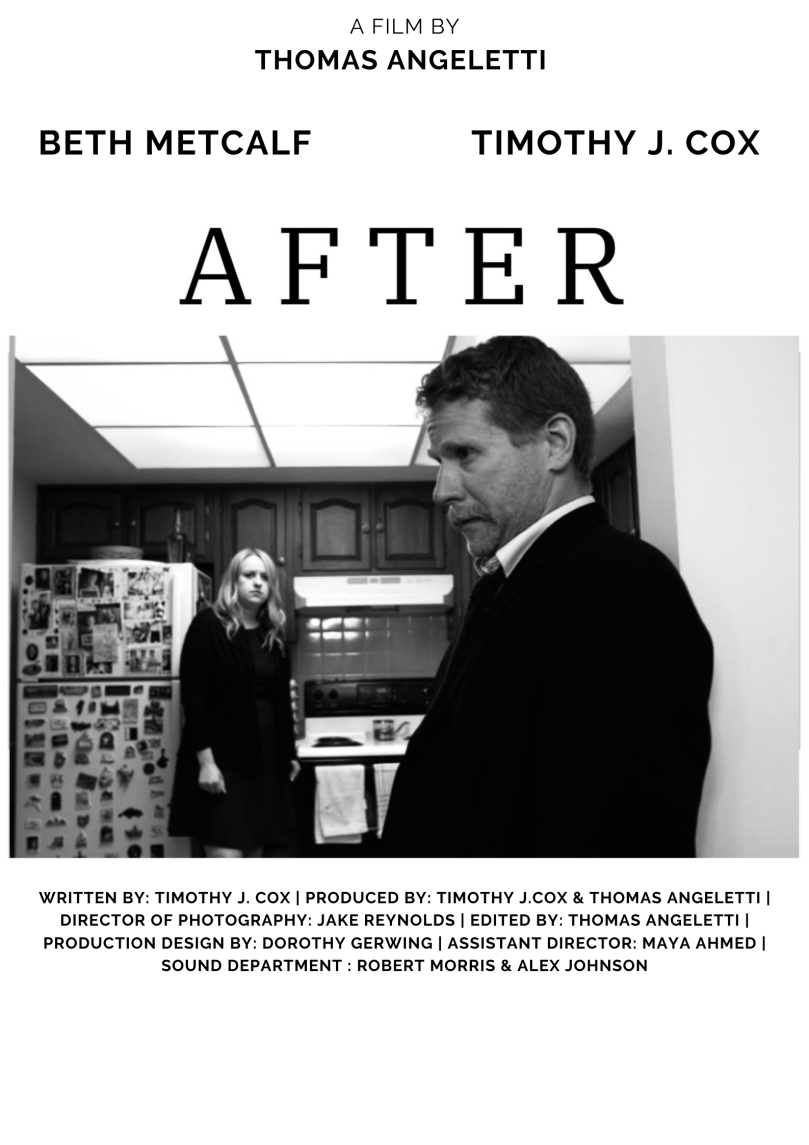
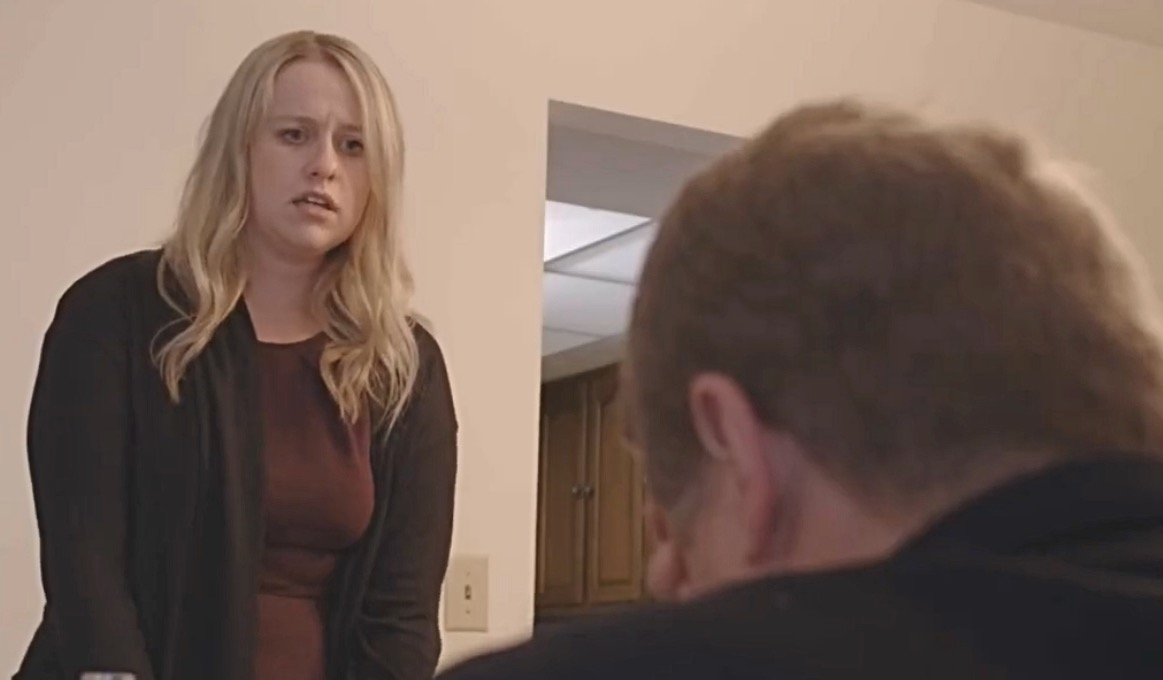
“After” (2023), from director Thomas Angeletti and writer/star Timothy J. Cox, is a one-setting, two-person, seventeen-minute meditation on anger, grief, and revenge. It is one where the oft-uttered expressions “riveting”, “poignant”, and “powerful” can be attached to practically every facet of the endeavor. This is most visible in the pain-filled primary performance from Cox, which immediately draws viewers in with its intelligence and emotional depth. Cox’s take on his character, the adept police detective Michael Darcy, is an all-around brilliant portrayal. Ranking among Cox’s finest achievements to date, it convincingly illustrates a father torn between warring thoughts which revolve around enacting his own vengeance or putting his hopes for retribution in an unreliable legal system. This is after his son, who was a police officer, is slaughtered while on assignment.
In the venture, what functions just as dominantly as Cox’s depiction is the believable on-screen chemistry between Cox and Beth Metcalf. Metcalf plays Cox’s daughter, Annie Darcy, with quiet, focused effectiveness. Her nuanced, sensitive depiction of someone who, like her father, is trying to understand, in her own ways, the cruel hand fate has dealt her family compliments, in tenor and sentiment, Cox’s lead delineation. Moreover, it is, like Cox’s enactment, credible every step of the way.
The equally organic, cryptic, and brief dialogue Cox has crafted for the undertaking, which gradually fleshes out the events and details of the story in an almost noirish manner, is every bit as impressive and skillful as the aforementioned representations. Said speech adds to the general mystery, ardor, and suspense mounting from the previously mentioned decision Cox must make, which forms the focal point of the narrative. These verbal exchanges, like all genuinely strong conversational elements in cinema, is a looking glass into the essence of the central figures of the exercise. It is one which sheds far more light into their hearts and minds than what is being stated outright in the piece. The Herculean nature of this discourse alone is as much a compliment to Cox’s internally and externally tense, flawlessly paced, sharply realized, and always character-oriented script as it is the capabilities of the individuals reciting these words.
Deftly directed by Angeletti in a fashion that is as mature and compassionate as the material dictates, the effort is further bolstered by Jake Reynolds’ striking, tonally appropriate cinematography. The editing from Angeletti is seamless. Alex Johnson and Robert Morris offer crisp, remarkable sound work. The production design from Dorothy Gerwing is just as apt. Additionally, the beautiful, haunting, piano-driven track “Waiting”, marvelously penned and performed by Kadir Demir, is heard over the sleek, smartly simple credits sequences. The tune helps fashion perfectly atmospheric bookends for the project.
“After” is an undeniably affecting and deeply human drama. It is one which uses both of its guiding personalities to potently exemplify two differing approaches to a traumatic situation. Moreover, they masterfully personify the moral quandary that arises from such an event. Utilizing compelling and relatable themes, Angeletti’s understated presentation is as commanding in its plot as it is in its execution. Stirring, memorable, and technically triumphant, it is undoubtedly one of the best short films of the year.
 awordofdreams.com